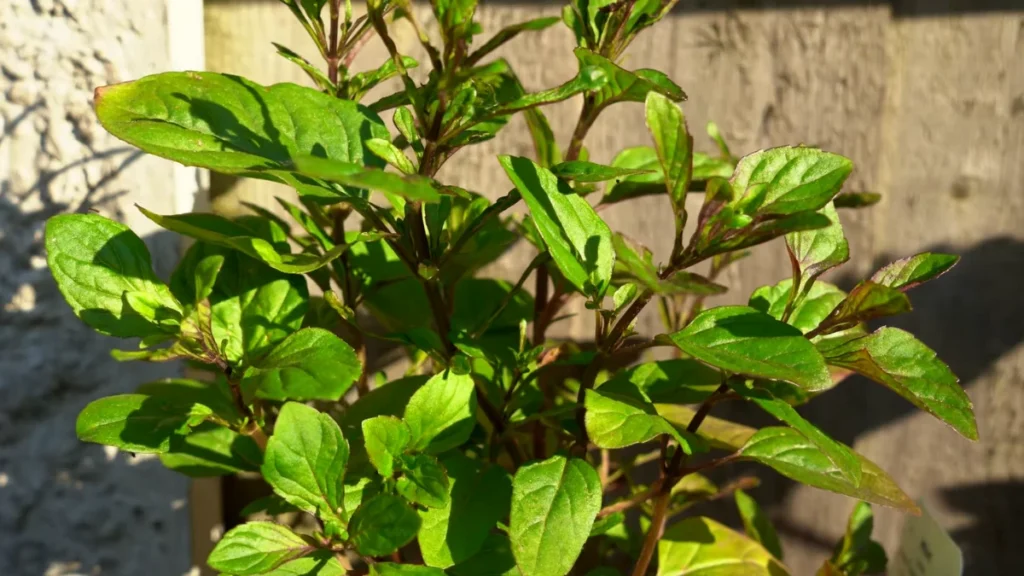
Mint is often sold as a “beginner-proof” herb, but on balconies it behaves very differently. One week it looks lush and unstoppable — the next, the leaves darken, soften, or turn black at the edges. This can feel sudden and confusing, especially when you haven’t changed anything obvious. So, why do mint leaves turn black?
Mint leaves turn black when the plant is under root stress rather than leaf disease. On balconies, this usually happens when moisture gets trapped in the pot, roots overheat from hard surfaces, or airflow is too limited for soft mint leaves to dry properly. The blackening is a reaction to environmental imbalance, not a sign the plant is dying.
This guide explains why mint leaves turn black specifically on balconies, what signals actually matter, and how to correct the problem without guesswork. We’ll focus on balcony-specific causes, not generic garden advice, so you can fix the issue at the root instead of chasing symptoms.
Table of Contents
Balcony-Specific Constraints That Affect Mint
Mint doesn’t fail randomly. On balconies, its environment is compressed and exaggerated — water, heat, airflow, and container limits all stack together.
Unlike garden mint, balcony mint deals with:
- Restricted root space, which changes how moisture moves
- Hot surfaces that radiate heat upward into pots
- Wind tunnels that dry leaves unevenly
- Drainage limits, especially in decorative containers
- Sudden micro-climate shifts between morning and afternoon
Blackening leaves are usually a response to stress timing, not disease alone.
The Real Reasons Mint Leaves Turn Black on Balconies
| What’s happening below the soil | What you’ll notice on the plant | Why it happens on balconies |
|---|---|---|
| Roots staying wet longer than leaves expect | Leaf tips or patches darken before the plant wilts | Pots often stay wet at the bottom while the surface dries quickly, reducing oxygen around the roots |
| Heat stress that mimics disease | Dark spots appear suddenly, especially in the afternoon | Radiant heat rises from tiles, walls, or railings and overheats roots faster than soil moisture can regulate |
| Sudden humidity with poor airflow | Leaves blacken where they overlap or touch | Moisture lingers on soft mint leaves when air can’t move freely, creating damp micro-zones |
| Root crowding in “healthy-looking” pots | Blackened leaves appear even though growth looks full | Circling roots move water unevenly, causing some areas to stay too wet while others dry too fast |
1. Roots Staying Wet Longer Than Leaves Expect
Mint likes moisture — but not trapped moisture.
On balconies, pots often stay wet at the bottom while the top dries fast. This creates a mismatch: leaves transpire (release moisture) normally, but roots sit in low-oxygen soil.
When roots can’t breathe, they begin to decay slightly. The first visible sign is darkening leaf tips or patches, not full wilting.
This is closely related to what happens in small containers where drainage is limited. If this sounds familiar, the issue often overlaps with container drainage problems rather than watering frequency alone.
2. Heat Stress That Mimics Disease
Black leaves don’t always mean rot.
Balcony mint is especially sensitive to radiant heat — heat rising from tiles, concrete, or metal railings. When roots overheat, the plant can’t regulate water fast enough, and leaf tissue collapses in spots. These damaged areas turn dark, then black.
This is common on:
- West-facing balconies
- Shelves mounted against walls
- Dark-coloured pots
It’s similar to the stress patterns seen in other herbs exposed to afternoon heat, even when soil moisture seems adequate.
3. Sudden Humidity + Poor Airflow
Mint leaves are soft and dense. On balconies with limited airflow, moisture lingers on leaf surfaces longer than the plant can handle.
This creates micro-zones of dampness, especially where leaves overlap. Those areas darken first, often mistaken for fungal disease.
If your balcony traps humidity — or plants are grouped tightly — this is a common trigger.
You may notice similar patterns if you’ve dealt with fungus appearing on pot soil, as both issues stem from stagnant moisture.
4. Root Crowding in “Healthy-Looking” Pots
Mint spreads aggressively — but quietly.
Even when the plant looks fine above the soil, roots may already be circling and compressing underneath. Crowded roots can’t move water evenly, so parts of the plant stay wet while others dry too fast.
This imbalance causes leaf tissue failure, which appears as blackening rather than yellowing.
This often happens sooner in balcony pots than people expect, especially with nursery-grown mint.
How to Fix Black Mint Leaves Without Starting Over
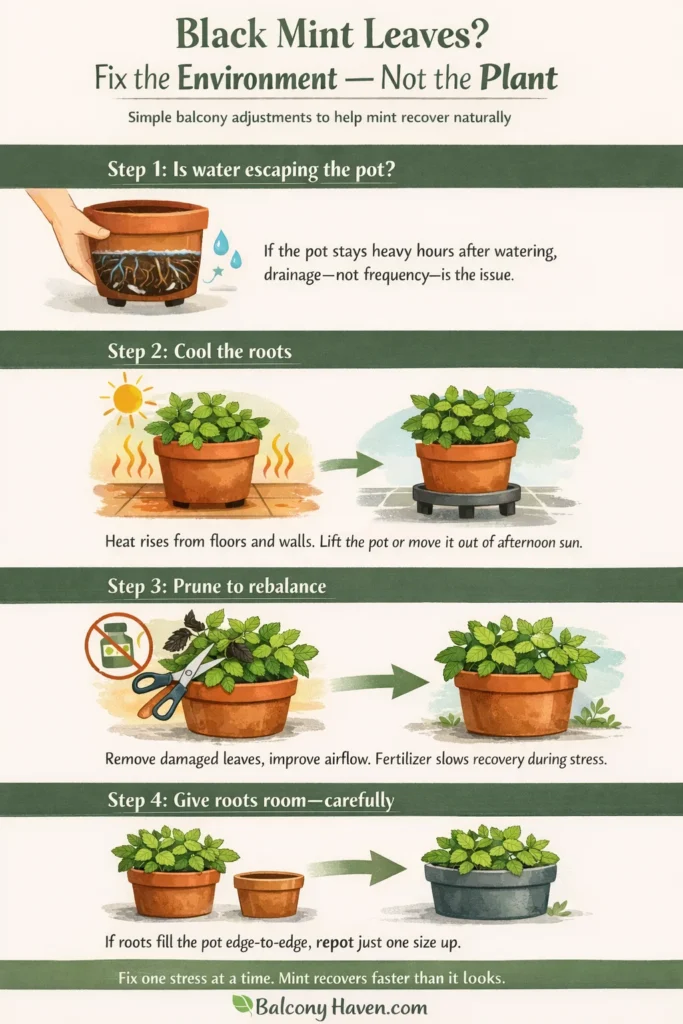
Step 1: Check Drainage, Not Watering Frequency
Before changing how often you water, confirm that excess water can actually escape. Lift the pot after watering — if it feels heavy hours later, drainage is the issue.
This aligns closely with common balcony drainage mistakes that trap moisture even in “well-draining” mixes.
Step 2: Reduce Root Heat Exposure
Move mint away from:
- Direct contact with balcony floors
- Metal shelves
- West-facing walls
Even lifting the pot slightly can lower root temperature enough to stop leaf damage.
Step 3: Thin, Don’t Feed
When leaves turn black, fertiliser makes things worse. Instead:
- Remove the most affected leaves
- Thin dense growth to improve airflow
- Let the plant rebalance itself
Mint recovers faster from pruning than from added nutrients during stress.
Step 4: Repot If Roots Are Packed
If roots fill the pot edge-to-edge, repot into a container just one size larger. Oversizing can worsen moisture retention, so keep the change modest.
If your mint spreads aggressively, this connects directly with managing mint in small balcony pots without letting it dominate.
Options & Variations Based on Balcony Conditions
| Balcony condition | What to do for mint | Why it helps |
|---|---|---|
| Small balconies | Use breathable pots and avoid self-watering containers | Prevents moisture from getting trapped in limited root space |
| Hot balconies | Give morning sun only and shade the roots, not the leaves | Reduces root overheating without limiting photosynthesis |
| Humid balconies | Space plants wider and avoid clustering herbs | Improves airflow so leaves dry faster |
| Windy balconies | Shelter the roots while allowing gentle leaf movement | Protects soil moisture while preventing stagnant air |
Mint adapts — but only if one stress factor is corrected at a time.
Practical Tips That Actually Help
- Water deeply, then wait — don’t “top up” daily
- Elevate pots to reduce radiant heat
- Prune blackened leaves early to prevent spread
- Avoid misting mint on humid balconies
- Rotate pots weekly to even out exposure
- Use lighter-coloured containers in summer
You don’t need to apply all of these at once. Pick one or two that match your balcony conditions and observe the plant for a few days.
Common Mistakes to Avoid
- Treating black leaves as a fertiliser problem
- Cutting all leaves at once
- Moving mint from shade straight into full sun
- Using decorative pots without drainage holes
- Assuming “mint loves water” means constant moisture
Most mistakes come from reacting too fast. Black leaves often appear after the stress has already passed, so correcting everything at once can create a new imbalance instead of solving the original one.
Seasonal Context That Matters
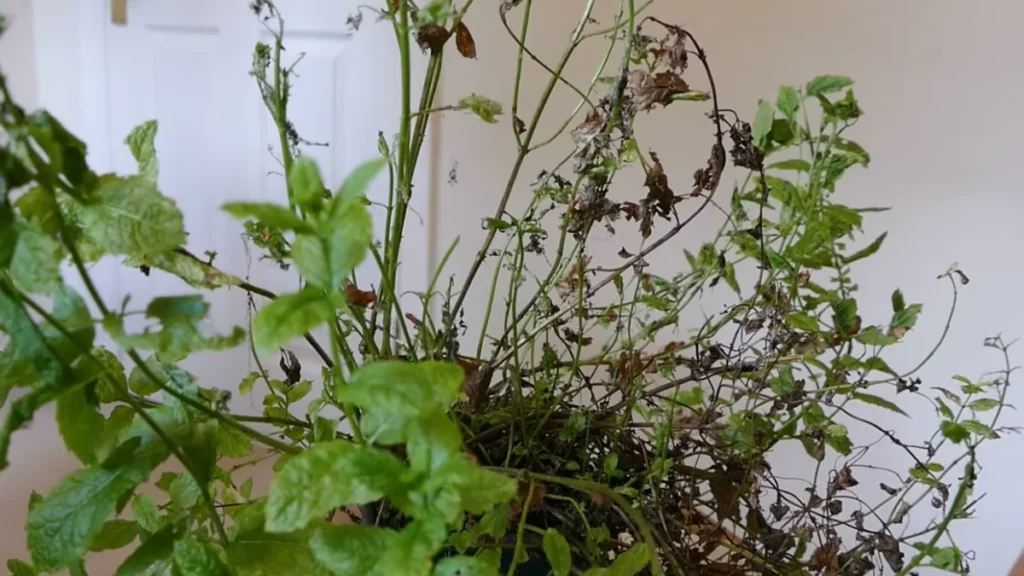
Black leaves are more common during season transitions, especially when temperatures rise faster than daylight changes. On balconies, this shift is amplified — pots warm up quickly during the day but cool just as fast at night. Mint reacts to these swings at the root level first, and the leaves show the stress before growth slows or wilting appears.
A common trigger is summer heat combined with lingering winter watering habits. Soil that once dried slowly in cooler months can stay too wet once temperatures climb, reducing oxygen around the roots. Mint continues pushing leaf growth while the roots struggle to keep up, leading to darkened or collapsing leaf tissue.
Watching how quickly the pot dries — not the calendar — is the most reliable seasonal adjustment. When roots regain balance, new mint leaves usually return green and healthy without further intervention.
Balcony Haven Note
Mint taught me that “easy herbs” still have rules — just quieter ones. On balconies, the plant usually isn’t failing; it’s reacting faster than we notice. Once you read the signs correctly, mint becomes predictable again.
If this pattern feels familiar, it’s because leaf colour changes often point to the same underlying stress. We explored this idea more deeply in Why are my plants losing their colour?, where the signals are different but the root causes are very similar.
FAQs
Should I cut off all black leaves?
Remove the worst ones first, especially leaves that feel soft or slimy. Leave healthy growth intact so the plant can keep photosynthesizing and recover without shock. New leaves usually appear within a week once conditions improve.
Is black leaf fungus common on mint?
It’s less common than moisture imbalance on balconies. Most blackening comes from trapped moisture and poor airflow rather than infection. Improving drainage and spacing often clears the issue without needing treatments.
Can mint recover after leaves turn black?
Yes. Mint rebounds quickly once root conditions stabilise. If new leaves emerge green and firm, recovery is already underway even if older leaves still look damaged.
Should I move mint indoors?
Usually no. Indoor light and airflow are often weaker than balcony conditions. Adjust pot placement, airflow, and watering habits first — moving the plant should be the last step, not the first.
Final Thoughts
Black mint leaves aren’t a sign that you’ve failed — they’re the plant’s way of responding to an environment that changed faster than its roots could adapt. On balconies, heat, moisture, and airflow shift quickly, and mint often shows that stress through leaf colour before anything else slows down.
Resist the urge to fix everything at once. Adjust one condition, give the plant time to respond, and watch the new growth. Mint is resilient, and once its roots regain balance, healthy leaves usually return on their own.
Happy Balcony Gardening!
Leave a Reply