Growing food on a tiny balcony can feel frustrating at first. You might have limited floor space, uneven sunlight, and pots that dry out faster than expected. Many apartment growers start with excitement, only to realise their balcony behaves very differently from a backyard garden.
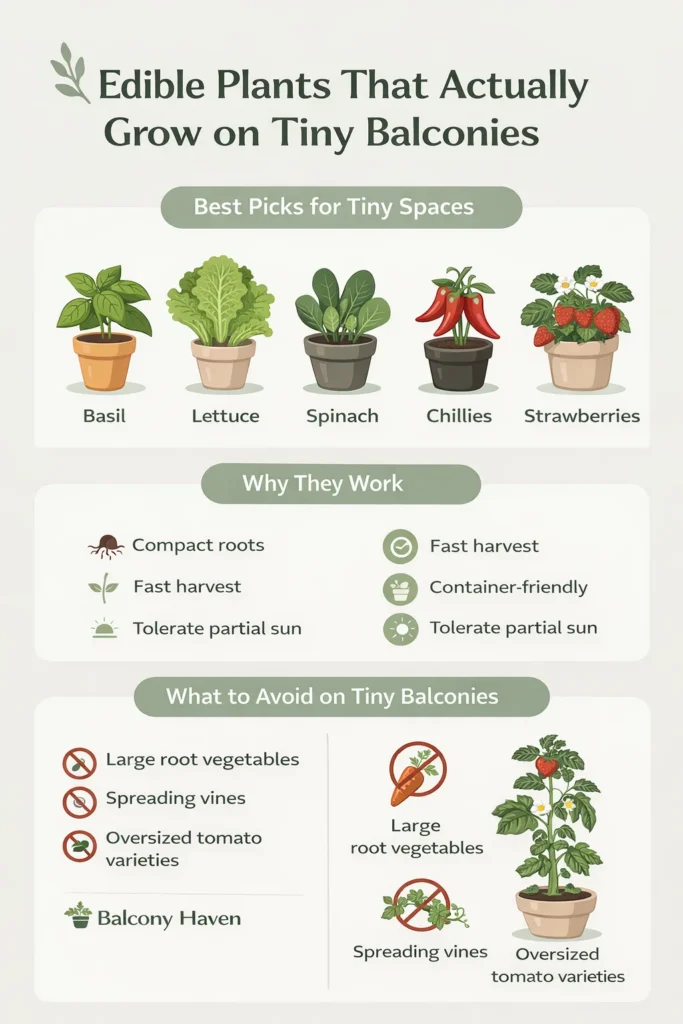
The best edible plants for tiny balconies are compact, fast-growing plants that handle containers well and don’t rely on deep soil or wide root systems. Herbs, leafy greens, chillies, and some compact fruiting plants tend to perform best because they adapt more easily to small pots, filtered light, and balcony airflow.
When space is tight, the wrong plant choice can lead to crowded pots, weak growth, or plants that struggle through heat and wind. This often makes people think they’re doing something wrong, even when the issue is simply a mismatch between the plant and the balcony environment.
The good news is that tiny balconies can still support a useful and rewarding edible garden. With realistic plant choices and an understanding of how balconies behave, it becomes much easier to grow food successfully without needing extra space or complex setups.
Table of Contents
Understanding the Reality of Tiny Balcony Spaces
Tiny balconies come with limits that affect what can grow well. Sunlight is often partial or directional rather than full-day sun. Wind tends to move faster between buildings, which dries soil quickly and stresses taller plants. Weight limits also matter, meaning large pots filled with heavy soil may not be practical.
Another common challenge is root space. Many edible plants need more room below the soil than people expect. On a small balcony, shallow or narrow containers can restrict growth even if the plant looks healthy at first. This is why compact, container-friendly plants usually outperform larger vegetable varieties.
Instead of trying to grow everything, it helps to work with plants that naturally suit tight spaces and adapt to container life.
Edible Plants That Grow Well on Tiny Balconies
Herbs That Thrive in Small Containers
Herbs are often the easiest edible plants for tiny balconies because they stay compact and recover quickly after harvesting. Many herbs also tolerate partial sun and can be grown in smaller pots without becoming root-bound too quickly.
Basil, parsley, coriander, mint, chives, and thyme are popular choices. These plants focus more on leaf growth than large root systems, making them well-suited to narrow planters or grouped pots. Regular trimming also helps keep them manageable in limited space.
Leafy Greens for Limited Space
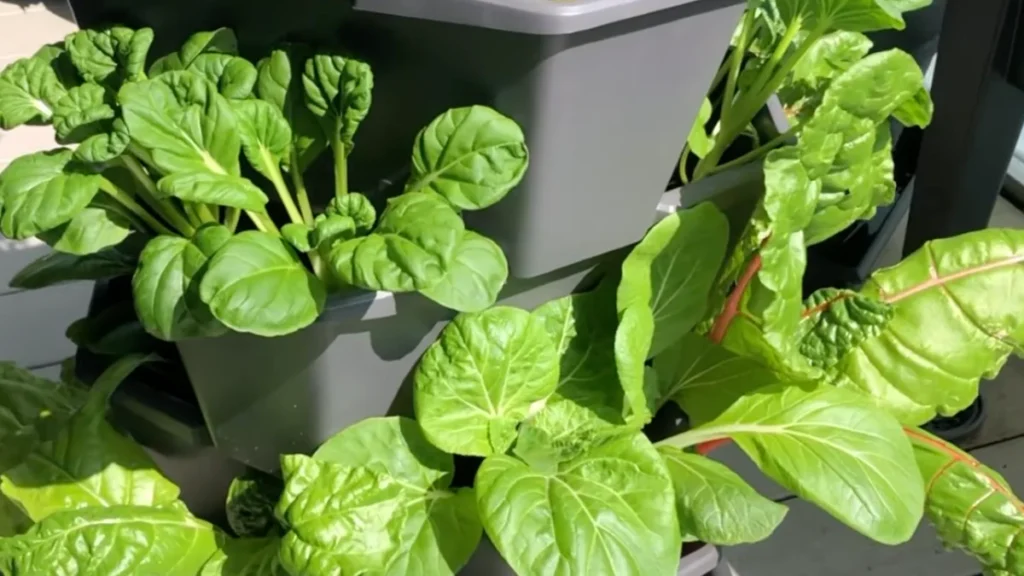
Leafy greens are another strong option for tiny balconies, especially where sunlight is limited to a few hours a day. Lettuce, spinach, rocket, and Asian greens grow quickly and don’t require deep soil to produce usable leaves.
Because they grow low and wide rather than tall, leafy greens are less affected by balcony wind. They can also be harvested gradually, which makes them practical for small households.
Chillies and Compact Fruit Plants
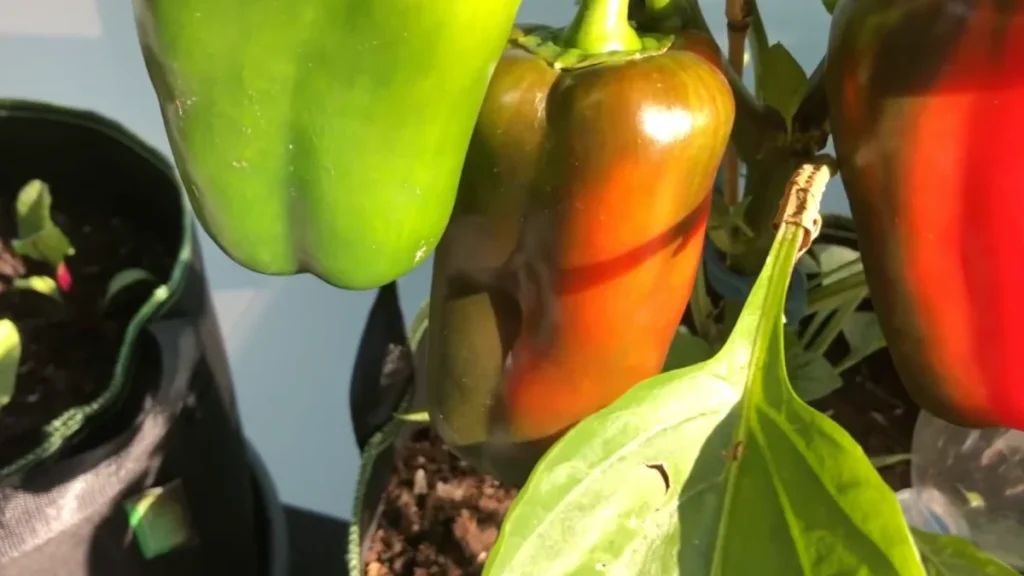
Chilli plants are surprisingly well-suited to balcony growing. They stay relatively compact, handle container life well, and continue producing fruit even in smaller pots when conditions are stable.
Some dwarf or patio varieties of tomatoes and strawberries can also work on tiny balconies, provided the pot size is realistic and the plant isn’t overcrowded. These plants usually perform better when given vertical support rather than extra floor space.
Which Vegetables Can You Grow on a Small Balcony?
Many vegetables struggle on tiny balconies because they need deep soil, wide spacing, or consistent sun all day. However, some vegetables adapt better than others.
Leaf vegetables, herbs, and compact fruiting plants tend to be more forgiving than root vegetables or large vines. Instead of aiming for high yields, small balcony gardens often work best when focused on fresh, frequent harvests.
Are Low-Maintenance Edible Plants Better for Balconies?
Low-maintenance plants are usually a better fit for apartment balconies because conditions change quickly. Pots dry out faster, temperatures fluctuate, and wind exposure can vary day to day.
Plants that show stress early and recover quickly are easier to manage than plants that decline slowly without obvious signs. Herbs and leafy greens often give clearer signals when something isn’t working, making them more forgiving for beginners.
Practical Tips for Growing Food on Tiny Balconies
A few small adjustments can make a big difference when space is limited:
- Use pots that match the plant’s root depth rather than the plant’s height
- Group smaller pots to reduce moisture loss from wind
- Choose lightweight containers to allow flexibility in placement
- Prioritise airflow without exposing plants to constant strong wind
- Harvest regularly to keep plants compact and productive
Common Mistakes on Tiny Balcony Gardens
Even experienced gardeners run into issues when growing in small spaces:
- Using pots that are too small for fruiting plants
- Overcrowding multiple plants in one container
- Choosing plants based on popularity rather than suitability
- Ignoring wind exposure between buildings
- Expecting backyard-level yields from balcony conditions
Balcony Haven Note
On a small apartment balcony, I’ve noticed that the edible plants that cope best are usually the compact ones.Herbs and leafy greens seem to respond more to the available space, airflow, and light than to how carefully everything is managed. Small changes in container size or position often make a noticeable difference. This can vary from one balcony to another depending on layout and exposure.
If sunlight is your main limitation, Plants for balconies with 2–4 hours sun explains which edible and non-edible plants cope best with short daily light windows and why some plants still grow well with limited sun exposure.
Frequently Asked Questions
What vegetables grow best on tiny balconies?
Leafy greens, herbs, and compact fruiting plants grow best because they adapt well to containers and limited space. These plants usually focus more on leaf or fruit production than on developing large root systems.
Can you grow tomatoes on a very small balcony?
Yes, but only compact or patio varieties, and they need enough root space to avoid stress during fruiting. Larger tomato types often struggle in tight containers and inconsistent balcony conditions.
Are herbs easier than vegetables on balconies?
In most cases, yes. Herbs are more forgiving, recover quickly, and tolerate smaller pots better than most vegetables. They also tend to show stress earlier, which makes changes easier to notice.
How much sunlight do edible balcony plants need?
Many edible plants grow well with 3–5 hours of sun, especially leafy greens and herbs. Fruiting plants usually need more consistent light to produce reliably.
Final Thoughts
Tiny balconies don’t need to limit your ability to grow food. The key is choosing edible plants that match the space rather than forcing large plants into small conditions.
By focusing on compact, container-friendly edibles and observing how your balcony responds to light, wind, and heat, growing food becomes far more manageable. Over time, your balcony will show what it can support, and small successes often lead to steady improvement rather than frustration.
Happy Balcony Gardening!
Leave a Reply