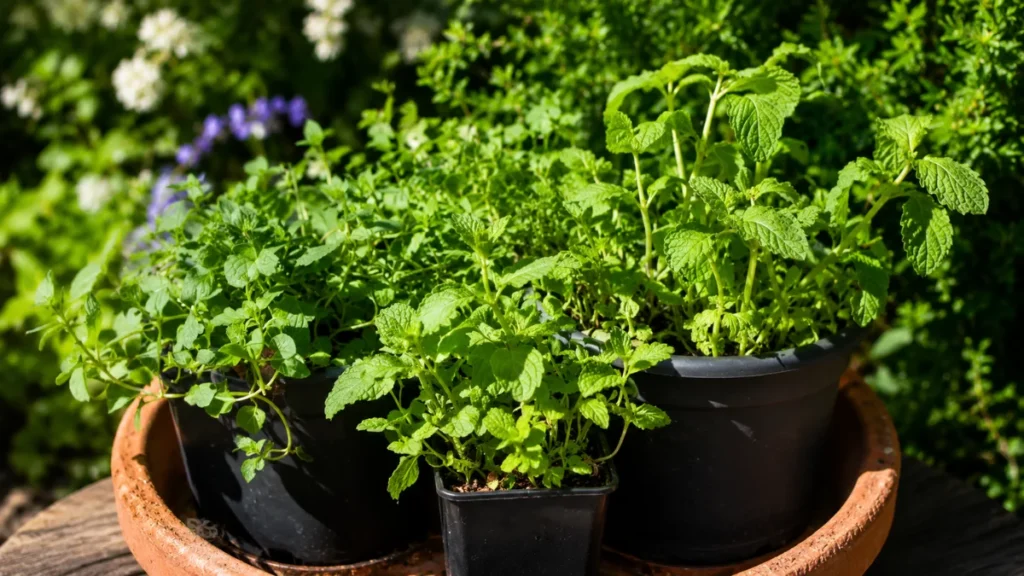
Plants for balconies with 2–4 hours sun can feel confusing because most gardening advice is written for backyards, open garden beds, or balconies that receive strong direct light for most of the day. Many apartment balconies are different. They may only receive a short window of sun before buildings, rooflines, balcony walls, or nearby apartments block the light.
Balconies with 2–4 hours of sun can grow leafy greens, some herbs, shade-friendly flowers, and low-maintenance foliage plants. Lettuce, spinach, mint, parsley, coriander, chives, begonias, impatiens, ferns, peace lilies, snake plants, and ZZ plants are more realistic choices than fruiting plants that need long hours of strong sunlight.
The main challenge is not that the balcony has “too little sun” for every plant. The real issue is choosing plants that match the amount and type of light available. A balcony with two hours of gentle morning sun behaves very differently from a balcony with four hours of hot afternoon sun.
This article explains what actually grows well in 2–4 hours of sun, why leafy plants often do better than fruiting plants, how balcony light changes through the day, and how to choose plants that suit your real balcony conditions.
What 2–4 Hours of Sun Really Means on a Balcony
Two to four hours of sun usually means your balcony receives a short period of direct sunlight, then spends the rest of the day in bright shade, reflected light, or filtered light. This is common in apartments, especially where nearby buildings, balcony roofs, fences, railings, or deep walls block the sun.
This does not mean the balcony is useless for plants. Many plants can still grow well when they receive a mix of direct sun and bright indirect light. The key is understanding that direct sun is only one part of the light picture.
Morning sun is usually gentler and easier for leafy plants. Afternoon sun can be stronger, hotter, and more drying, even if it only lasts a few hours. A balcony with three hours of morning sun may suit lettuce, spinach, parsley, and coriander. A balcony with three hours of harsh afternoon sun may be better for tougher herbs, begonias, ferns, and hardy foliage plants.
Balconies also receive reflected light from walls, windows, pale floors, glass doors, and nearby buildings. This light is weaker than direct sun, but it still helps many shade-tolerant plants stay healthy. If you are unsure how much usable light your balcony receives, this guide on how to measure sunlight on a balcony can help you understand your space more clearly.
What Most Plant Advice Misses About Low-Sun Balconies
Many plant lists describe plants as full sun, part sun, or shade plants, but balcony conditions are rarely that simple. A balcony can be bright near the railing and dim near the back wall. It can be shaded for most of the day but still become hot in the afternoon. It can look bright to people while still being too weak for fruiting plants.
This is why generic advice can be frustrating. A plant may be described as suitable for partial sun, but it may still need more open sky, airflow, root space, or warmth than a small apartment balcony can provide.
Another overlooked issue is wind. A low-sun balcony can still be windy, especially on upper floors or between buildings. Wind can dry leaves and potting mix even when the balcony does not receive much sun. If wind is a regular problem in your space, the guide on plants for windy balconies may help you choose tougher options.
Plants That Grow Well With 2–4 Hours of Sun
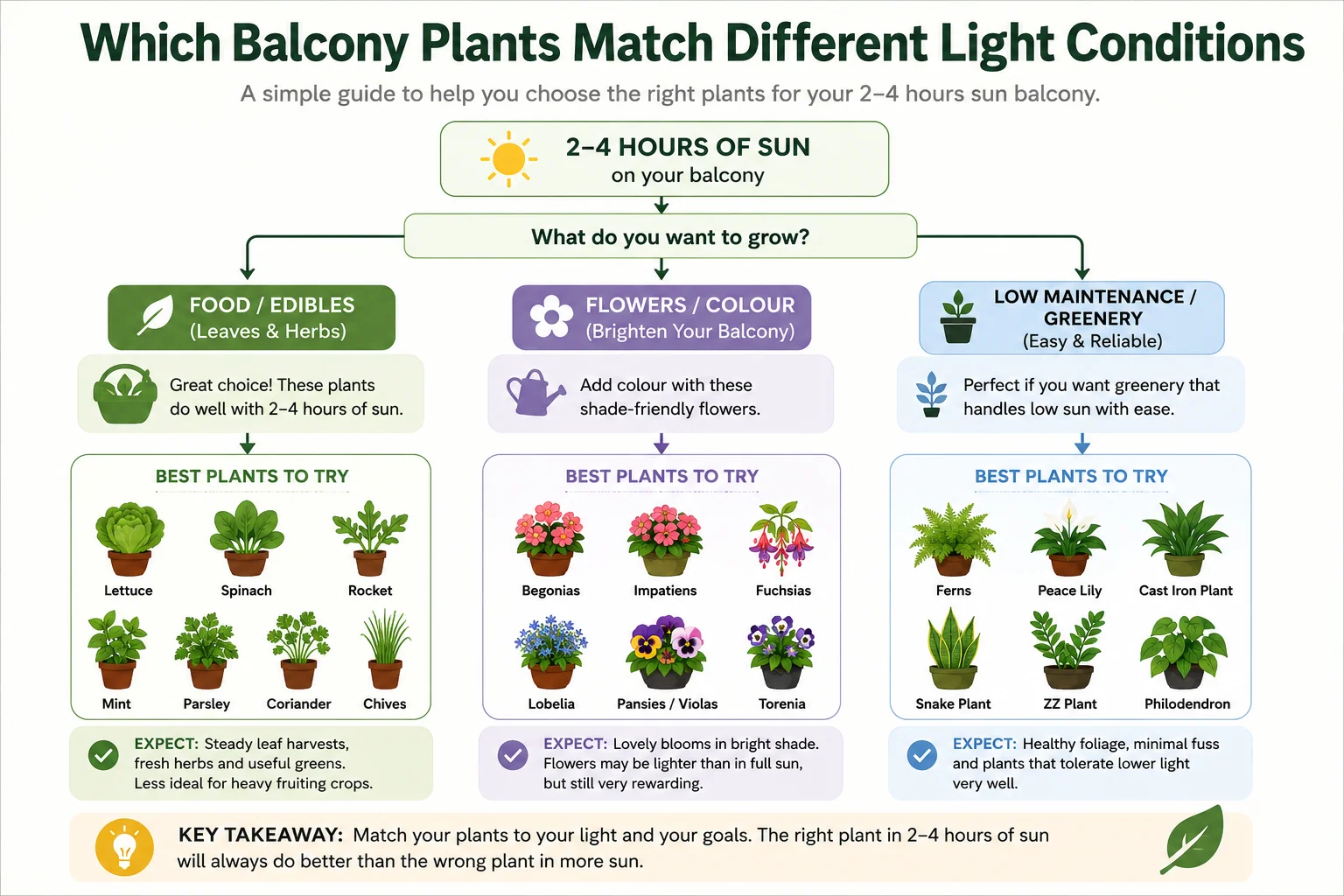
The most reliable plants for 2–4 hour sun balconies are usually plants grown for leaves, stems, fragrance, or foliage rather than large fruit. These plants need energy, but they do not need as much direct sunlight as tomatoes, cucumbers, peppers, eggplants, or large fruiting crops.
The table below gives a simple way to compare realistic plant choices for balconies with limited sunlight. Not every plant listed will perform equally on every balcony, but these are among the most reliable options for apartments receiving limited direct sunlight.
| Plant | Plant Type | Edible? | Best Balcony Condition | Realistic Expectation |
|---|---|---|---|---|
| Lettuce | Leafy green | Yes | Morning sun or bright shade | Good for regular leaf harvests, especially in mild weather. |
| Spinach | Leafy green | Yes | Cool bright shade or gentle sun | Often grows better with protection from harsh heat. |
| Silverbeet | Leafy green | Yes | Partial sun | More forgiving than many leafy crops and useful in containers. |
| Rocket | Leafy green | Yes | Morning sun | Can grow quickly, but may become stronger tasting in heat. |
| Mint | Herb | Yes | Partial sun or bright shade | Very reliable in pots, but needs its own container. |
| Parsley | Herb | Yes | Morning sun or bright shade | Good for small pots and gentle balcony light. |
| Coriander | Herb | Yes | Cool morning sun | Can do well in cooler weather but may bolt quickly in heat. |
| Chives | Herb | Yes | Bright shade or partial sun | Compact and useful for small balcony herb pots. |
| Begonias | Flowering plant | No | Bright shade | Good for colour without needing strong all-day sun. |
| Impatiens | Flowering plant | No | Bright shade | Reliable for shaded colour when moisture is steady. |
| Ferns | Foliage plant | No | Bright shade and sheltered spots | Good for greenery where flowers or vegetables struggle. |
| Snake plant | Low-maintenance foliage | No | Bright shade to low light | Very forgiving, especially for busy beginners. |
| ZZ plant | Low-maintenance foliage | No | Bright shade to low light | Slow-growing but very easy to maintain in sheltered spots. |
Why Leafy Greens Often Do Better Than Fruiting Plants
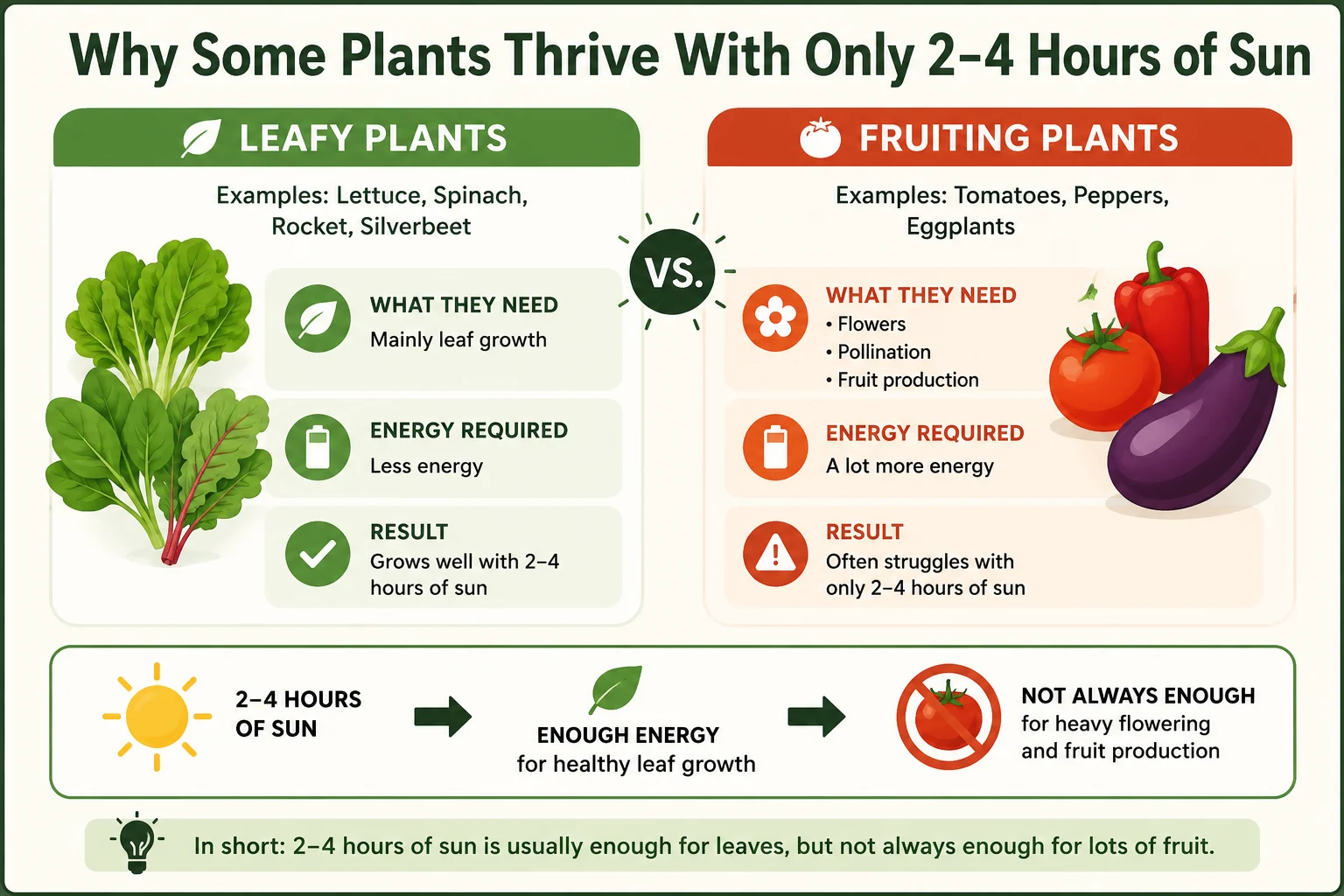
Leafy greens are often the best starting point for balconies with 2–4 hours of sun because they are grown for leaves, not fruit. A lettuce plant does not need to support flowers, pollination, and fruit development in the same way a tomato plant does.
This matters because fruiting takes more plant energy. Tomatoes, peppers, cucumbers, and eggplants usually need stronger and longer sunlight to grow well, flower properly, and produce a useful harvest. They may survive with only a few hours of sun, but survival is not the same as good production.
Lettuce, spinach, rocket, and silverbeet can be more forgiving because the harvest is the leafy growth itself. Even if growth is a little slower, the plant can still be useful. This is why shaded or partly shaded balconies often feel more successful when the plant choices focus on leaves rather than fruit.
For more detail on one of the best low-light leafy crops, this article on spinach for low light balconies explains why spinach can suit gentler balcony conditions better than many fruiting plants.
Herbs That Handle Limited Sun
Some herbs grow surprisingly well with only a few hours of sun, especially when the balcony is bright for the rest of the day. Mint, parsley, coriander, and chives are some of the most realistic choices.
Mint is one of the most forgiving herbs for partial sun. It can grow strongly in containers, but it is best kept in its own pot because it spreads quickly. In small balcony gardens, this is helpful because it keeps the plant controlled while still giving you regular leaves.
Parsley is also useful for 2–4 hour sun balconies because it does not need the same heat and intensity as Mediterranean herbs like rosemary or thyme. It can grow well in morning sun or bright shade, especially when the potting mix stays lightly moist without becoming soggy.
Coriander can handle gentle light, but heat changes its behaviour. On a warm balcony, coriander may bolt quickly, which means it starts flowering and setting seed instead of producing soft leaves. A cooler balcony with morning sun usually gives better results.
Basil is more mixed. It can grow with limited sun, but it usually wants the brightest part of the balcony and protection from cold wind. If basil is one of your main goals, this guide on basil growing tips for shaded balconies is a useful next read.
Flowering Plants for Balconies With 2–4 Hours Sun
A balcony with limited sun can still have colour, but the best choices are usually shade-friendly flowers rather than plants bred for hot sunny garden beds.
Begonias and impatiens are two of the most realistic flowering choices for bright shade and gentle partial sun. They do not need long hours of direct sunlight to look attractive, and they usually suit containers well.
Fuchsias can also work on cooler, sheltered balconies. Their hanging flowers suit baskets and railing planters, but they may struggle in hot, dry, windy spots. Peace lilies are often grown more for their glossy leaves, but they can still add soft white flowers in bright sheltered conditions.
The important thing is to expect softer flowering rather than nonstop colour. In 2–4 hours of sun, many flowers bloom more slowly or seasonally. That does not mean the plant is failing. It usually means the balcony light is enough for growth, but not strong enough for heavy flowering.
If your balcony is closer to shaded than partly sunny, this guide on best plants for shaded apartment balconies can help you compare more low-light options.
Low-Maintenance Plants for Low-Sun Balconies
Not every low-sun balcony needs to be used for food or flowers. Sometimes the most successful option is a simple green balcony that stays tidy without needing constant attention.
Ferns, snake plants, ZZ plants, cast iron plants, and peace lilies are useful choices for this kind of balcony. These plants are usually grown for foliage, so they are less dependent on strong sun than fruiting vegetables.
Snake plants and ZZ plants are especially forgiving for beginners and busy people. They grow slowly, handle lower light, and do not need frequent watering. They are better suited to sheltered balcony spots than exposed railings where wind, rain, or strong heat may damage them.
Ferns are better for balconies that stay bright, cool, and slightly humid. They can struggle in dry wind, but they are excellent for soft greenery when the balcony is too shaded for many flowers or edible crops.
How Sunlight Changes on Apartment Balconies
One of the biggest differences between a balcony and a garden bed is that balcony sunlight can change sharply during the day. A balcony may receive direct sun for a short time, then lose it suddenly when the sun moves behind a building, roofline, balcony above, or side wall.
This means a balcony with 2–4 hours of sun may still feel bright for much longer than that. Plants near the railing may receive direct sun first, then reflected light from the open sky. Plants near the back wall may receive much less light, even though they are only a metre or two away.
This small difference can change plant performance. Lettuce near the railing may grow steadily, while the same lettuce tucked into a dark corner may stretch or grow slowly. A begonia in bright shade may flower, while one in deep shade may stay green but produce fewer blooms.
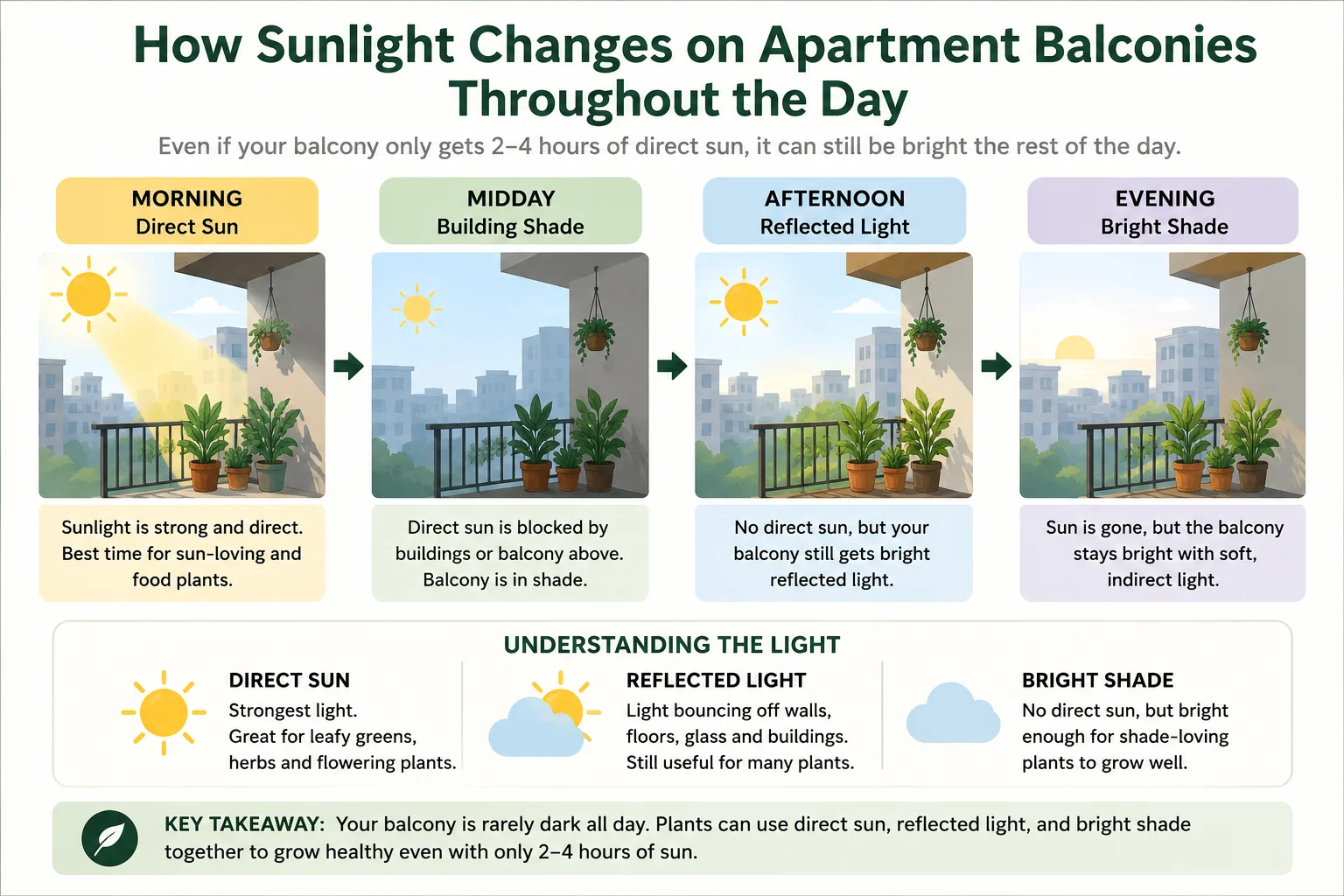
Covered balconies can make this even more noticeable. A roof or balcony above can block high-angle sun, while the open front still allows reflected light. If your balcony is covered and bright but not sunny, this article on best plants for covered balconies with light may help you choose more suitable plants.
Matching Plants to Different Low-Sun Balcony Conditions
The best plant choice depends on the type of low-sun balcony you have. Two balconies can both receive three hours of sun, but the plant results may be different because the timing, heat, wind, and reflected light are different.
| Balcony Condition | What It Usually Feels Like | Better Plant Choices | Plants to Be Careful With |
|---|---|---|---|
| Morning sun balcony | Gentle light, cooler temperatures, less heat stress | Lettuce, spinach, parsley, coriander, chives, begonias | Large fruiting plants that need longer sun |
| Afternoon sun balcony | Short sun window, but hotter and more drying | Mint, begonias, snake plants, ZZ plants, tough foliage plants | Soft leafy greens during hot weather |
| Bright shade balcony | No strong direct sun, but open and bright during the day | Ferns, peace lilies, impatiens, begonias, parsley, chives | Tomatoes, peppers, cucumbers, eggplants |
| Covered balcony with light | Protected from direct sun and rain, often bright near the edge | Peace lilies, ferns, snake plants, ZZ plants, herbs near the railing | Plants that need rain, strong sun, or pollinator access |
| Windy low-sun balcony | Less sun but still dries leaves and pots quickly | Mint, chives, snake plants, compact begonias, tougher foliage plants | Soft ferns, tall weak herbs, delicate flowering plants |
Notice that the same plant can appear in more than one balcony category. This is because plant performance depends on several factors working together, including temperature, airflow, reflected light, pot size, and seasonal conditions.
Practical Insights for 2–4 Hour Sun Balconies
A balcony with limited sun usually becomes easier to manage when expectations match the light. The goal is not to copy a full-sun garden. The goal is to use the light your balcony already has.
- Leafy greens usually give better results than fruiting vegetables.
- Morning sun is often easier for soft herbs and salad greens.
- Afternoon sun can still be stressful even when it only lasts a few hours.
- Bright shade is useful, especially near railings and open edges.
- Low-sun pots usually dry more slowly, so overwatering becomes easier.
- Wind can still dry plants quickly, even on shaded balconies.
Small placement differences matter. A pot placed near the balcony railing may receive more usable light than the same pot placed against a back wall. For small spaces, this can be the difference between steady growth and weak, stretched plants.
Common Mistakes With Low-Sun Balcony Plants
Most failures on 2–4 hour sun balconies come from mismatched plant choices rather than poor gardening skill. The balcony may be suitable for plants, but not for every plant.
- Choosing tomatoes, peppers, or cucumbers and expecting strong harvests.
- Assuming “bright” means the same as direct sun.
- Placing edible plants in the darkest corner instead of near the railing.
- Watering too often because growth looks slow.
- Using very large pots that stay wet for too long in shade.
- Ignoring wind because the balcony does not feel sunny.
Slow growth does not always mean the plant needs more water or fertiliser. In low light, plants naturally use water more slowly and grow at a calmer pace. Adding more water can make the potting mix stay wet, which can lead to root problems.
If your low-sun balcony also has no direct sun at all, the guide on gardening on balconies with no direct sun may be more useful because it focuses on bright shade and indirect light rather than short sun windows.
Seasonal Context for Australian Balconies
In many Australian apartments, 2–4 hours of sun can be more useful than it sounds, especially when the sun arrives in the morning. Gentle morning light can support herbs and leafy greens without exposing them to harsh afternoon heat.
Summer can change the balance. A balcony that feels mild in spring may become hot and dry once the sun angle shifts and surrounding surfaces heat up. In warmer months, spinach, lettuce, and coriander may struggle more with heat than with low light.
Winter can bring the opposite problem. The balcony may stay cooler, the days are shorter, and growth may slow down. Many low-sun plants can still survive, but they may grow more slowly and need less water than they do in warmer months.
This is why the same balcony can suit different plants at different times of year. A low-sun balcony is not fixed. It changes with the season, the sun angle, wind, and how much heat nearby walls and floors hold.
Balcony Haven Note: I noticed that plants grown for leaves often feel more forgiving on balconies than plants grown for fruit. Even when my balcony receives a bit more sun, herbs and leafy plants usually seem easier to manage than crops that need strong flowering and fruiting. Every balcony is different, but this reminded me that matching the plant to the available light often matters more than chasing the most popular plant.
Frequently Asked Questions
What plants grow best with 2–4 hours of sun?
Leafy greens, soft herbs, shade-friendly flowers, and foliage plants usually grow best with 2–4 hours of sun. Lettuce, spinach, mint, parsley, coriander, chives, begonias, impatiens, ferns, snake plants, and ZZ plants are realistic choices for many low-sun balconies.
Can tomatoes grow with only 2–4 hours of sun?
Tomatoes may survive with only 2–4 hours of sun, but they usually do not produce well. They need more light to flower strongly and form fruit, so a low-sun balcony is usually better used for leafy greens, herbs, or shade-tolerant plants.
Is morning sun or afternoon sun better for balcony plants?
Morning sun is often better for leafy greens and soft herbs because it is gentler and less drying. Afternoon sun can still be useful, but it is usually hotter and may stress soft plants more quickly, especially in summer.
Can herbs grow with only a few hours of sun?
Some herbs can grow with only a few hours of sun if the balcony is bright for the rest of the day. Mint, parsley, coriander, and chives are usually more realistic than rosemary, thyme, or other herbs that prefer stronger sun.
What is the easiest plant for a low-sun balcony?
Snake plants and ZZ plants are among the easiest low-sun balcony plants if the space is sheltered. For edible plants, mint and parsley are often more forgiving than many vegetables.
Why are my plants growing slowly with 2–4 hours of sun?
Plants often grow more slowly when light is limited because they have less energy available. Slow growth does not always mean something is wrong. It may simply mean the plant is adjusting to a lower-light balcony environment.
Final Thoughts
Plants for balconies with 2–4 hours sun can grow well when the choices match the balcony. Limited sunlight does not mean the space cannot support plants. It simply means leafy greens, herbs, shade-friendly flowers, and foliage plants are usually more realistic than heavy fruiting crops.
The most useful shift is to think less about what grows in a perfect garden and more about what suits your actual balcony. Morning sun, afternoon heat, reflected light, wind, pot size, and balcony position all change what will grow well.
A low-sun balcony can still become green, useful, and enjoyable. When the plant choice fits the light, balcony gardening feels less frustrating and much easier to understand.
In many cases, choosing the right plant for a low-sun balcony produces better results than trying to force a sun-loving plant into conditions it was never designed for.
Leave a Reply