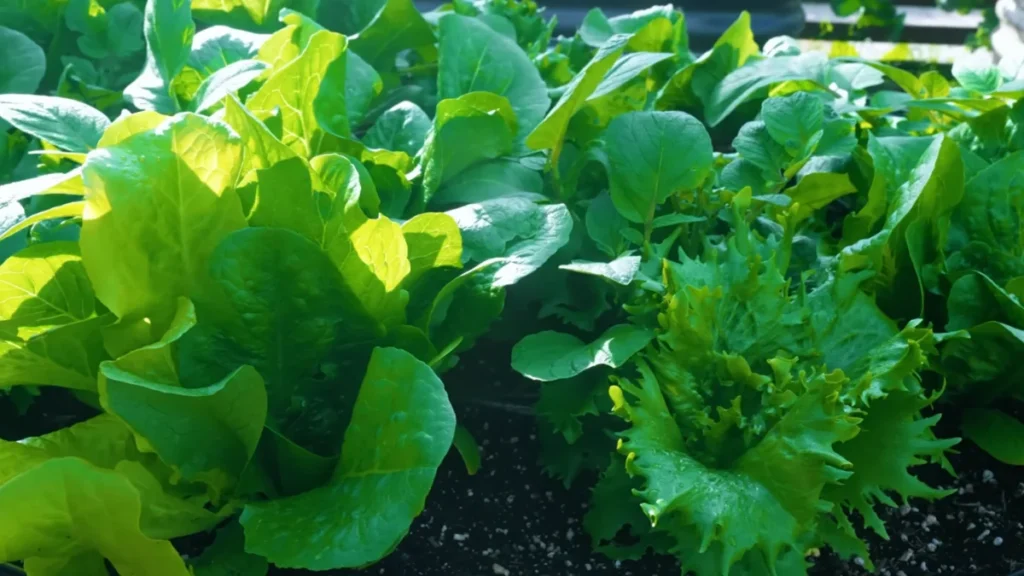
Shaded apartment balconies can feel frustrating when most gardening advice talks about full sun. You may have pots ready, space available, and real motivation to grow plants, but nearby buildings, balcony roofs, privacy screens, or the direction your apartment faces may block most of the direct sunlight.
The best plants for shaded apartment balconies are usually foliage plants, shade-tolerant herbs, and leafy greens that can grow with bright indirect light instead of long hours of direct sun. Ferns, pothos, snake plants, peace lilies, ZZ plants, mint, parsley, chives, lettuce, rocket, spinach, and spring onions are some of the most realistic choices for shaded balcony spaces.
The important thing is understanding that shade is not the same on every balcony. Some shaded balconies still receive bright reflected light for most of the day. Others sit in deeper shade between buildings and only support a smaller range of plants.
This article explains what plants actually grow well on shaded apartment balconies, how different shade levels affect plant choices, which edible plants are realistic, and what common mistakes make shaded balcony gardening harder than it needs to be.
Understanding the Reality of Shaded Apartment Balconies
Many apartment gardeners assume a shaded balcony receives no useful light. In reality, most shaded balconies still receive some kind of daylight. It may be indirect light from the open sky, reflected light from nearby walls, or soft light that reaches the balcony for part of the day.
The challenge is that balcony shade is often uneven. One corner may stay dark all day, while the railing area feels much brighter. A balcony with a clear sky view may grow more plants than a balcony blocked by another building, even if both spaces are called shaded balconies.
Apartment features also matter. Roof overhangs, side walls, privacy screens, glass panels, neighbouring buildings, and seasonal sun angles can all change how much usable light reaches the plants. This is why two balconies in the same building can give very different results.
The amount of usable light can also change dramatically depending on balcony direction. For example, a north-facing balcony may behave differently from an east-facing or covered balcony, even when all three feel shaded at certain times of the day.
If you are unsure how much light your balcony receives, this guide on how to measure sunlight on a balcony can help you understand whether your balcony has bright shade, partial shade, or deeper shade.
What Most Advice About Shade Plants Misses
A lot of shade plant advice focuses only on whether a plant can survive. But survival and good balcony growth are not always the same thing.
A tomato plant may stay alive in a shaded balcony, but it may never produce the harvest people expect. A flowering plant may grow leaves but produce very few flowers. A herb may survive, but grow much more slowly than it would in stronger light.
This does not mean the gardener has failed. It usually means the plant and the balcony conditions are not well matched. Shaded balcony gardening works better when plant choices are based on realistic growth, not just survival.
Plants grown mainly for leaves usually cope better in shade than plants grown for fruit or heavy flowering. This is why ferns, pothos, peace lilies, mint, parsley, lettuce, and other leafy plants are often more dependable than tomatoes, peppers, strawberries, or sun-loving flowers in shaded apartment spaces.
How Much Shade Is Too Much for Balcony Plants?
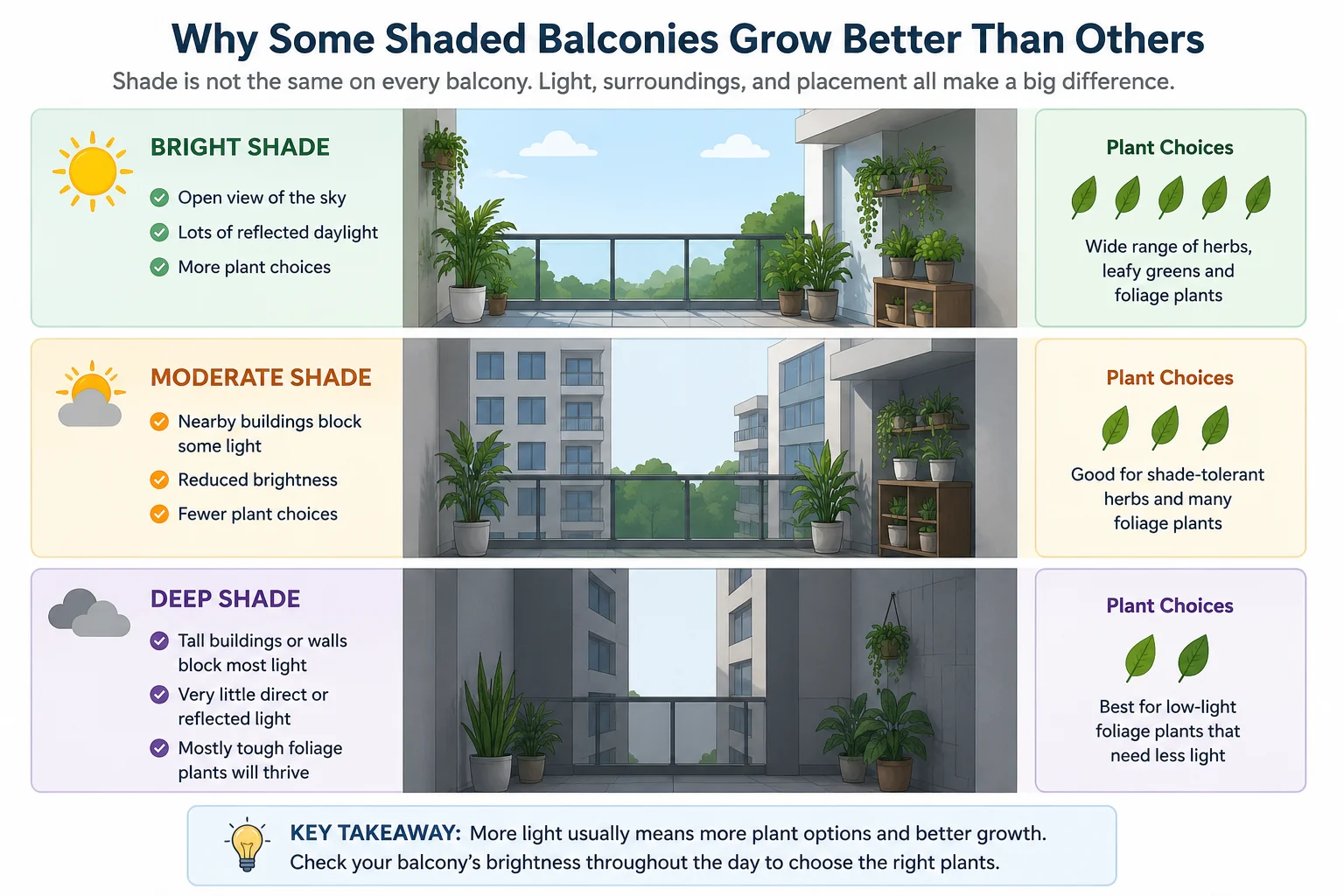
Not all shaded balconies should be treated the same. A balcony with bright open shade can support more plants than a balcony that feels dim even in the middle of the day.
Bright shade usually means the balcony receives plenty of daylight without much direct sun. Moderate shade means daylight reaches the balcony, but buildings, walls, or covers reduce the brightness. Deep shade is more difficult because very little natural light reaches the plants during the day.
The table below gives a simple way to think about shade levels before choosing plants.
| Shade Level | What It Usually Looks Like | Plant Choices | Realistic Expectation |
|---|---|---|---|
| Bright shade | Open sky is visible, but direct sun is limited. | Many foliage plants, herbs, and leafy greens. | Slow but useful growth is realistic. |
| Moderate shade | Nearby buildings, walls, or covers reduce daylight. | Mostly shade-tolerant foliage plants and selected herbs. | Growth may be steady but slower. |
| Deep shade | The space feels dim for most of the day. | Mainly tough foliage plants such as snake plant, ZZ plant, and pothos. | Very slow growth is normal. |
If your balcony receives no direct sunlight at all, this article on gardening on balconies with no direct sun may also help because it explains what changes when direct sun is almost completely absent.
Best Plants for Shaded Apartment Balconies Comparison
The best plants for shaded apartment balconies are usually plants that stay useful or attractive without needing strong sunlight. Some are decorative, some are edible, and some are useful for softening balcony edges, corners, and hanging areas.
| Plant | Shade Tolerance | Edible? | Best For |
|---|---|---|---|
| Fern | High | No | Soft decorative greenery in shaded corners. |
| Pothos | High | No | Hanging baskets, shelves, and trailing balcony setups. |
| Snake plant | High | No | Low-care foliage in deeper shade. |
| ZZ plant | High | No | Very low-light apartment balcony corners. |
| Peace lily | Medium-high | No | Leafy structure and calm shaded spaces. |
| Spider plant | Medium-high | No | Hanging pots and bright shaded balcony edges. |
| Mint | Medium-high | Yes | Easy edible growing in containers. |
| Parsley | Medium | Yes | Small herb pots in bright shade. |
| Chives | Medium | Yes | Compact edible growing in narrow pots. |
| Lettuce | Medium | Yes | Leaf harvesting in bright shade. |
| Rocket | Medium | Yes | Small salad harvests in cooler shaded spots. |
| Spring onion | Medium | Yes | Compact edible pots with limited space. |
Best Foliage Plants for Shaded Apartment Balconies
Foliage plants are often the most reliable choice for shaded apartment balconies because they are grown for their leaves rather than flowers or fruit. They do not need as much energy from direct sun to stay attractive.
Ferns are one of the strongest options for shaded balcony spaces. Many ferns naturally grow under tree cover, where light is filtered rather than direct. On a balcony, they can soften hard walls, corners, and railings with gentle leafy texture.
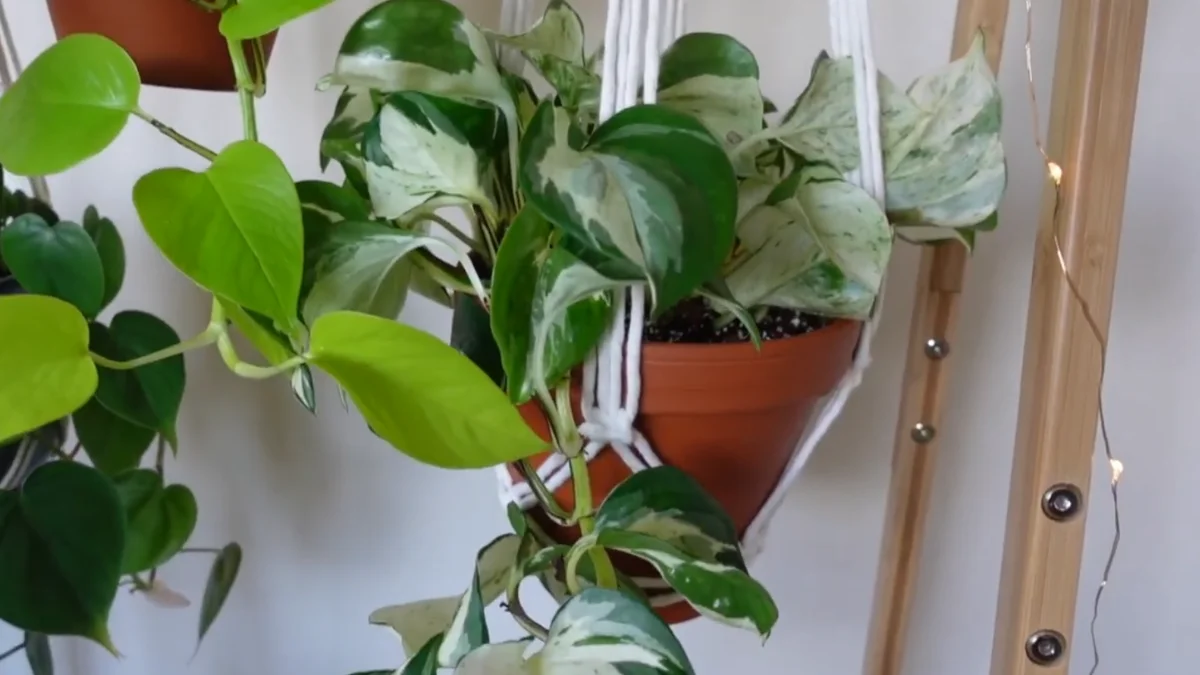
Pothos and philodendrons are also useful because they can trail from shelves, hanging baskets, or vertical setups. They make shaded balconies feel greener without needing much floor space.
Snake plants and ZZ plants are especially helpful for darker balcony corners. They usually grow slowly, but they can stay tidy and strong in lower light where many other plants become weak or stretched.
Peace lilies and spider plants can also work well when the balcony has bright shade rather than deep shade. They are useful when you want greenery that feels soft, calm, and suitable for apartment living.
Some covered balconies receive more reflected light than people expect. If your balcony is protected by a roof but still receives good daylight, this guide to best plants for covered balconies with light may help you compare more suitable plant options.
Best Herbs for Shaded Apartment Balconies
Many herbs prefer sun, but some herbs tolerate shade better than others. The most realistic choices are usually herbs grown for leaves rather than flowers, seeds, or woody growth.
Mint is often one of the easiest herbs for shaded balconies. It can keep producing leaves in bright shade and does not need the same strong sunlight as basil, rosemary, or thyme. It still grows better with more light, but it is usually more forgiving than many other herbs.
Parsley can also work well in bright shade, especially when the balcony is not too hot or dry. Chives are useful because they stay compact and can grow in small containers near the brighter edge of the balcony.
Coriander may grow on some shaded balconies, especially in mild conditions. In hot weather, a little shade can sometimes help coriander last longer before bolting, although deep shade can still slow growth too much.
If your balcony gets a small amount of direct sun each day, this article on plants for balconies with 2–4 hours sun may help because many herbs sit between full shade and full sun needs.
Best Edible Plants for Shaded Apartment Balconies
Edible gardening is more limited in shade, but it is not impossible. The key is choosing edible plants that produce useful leaves instead of fruits.
Lettuce, rocket, spinach, Asian greens, spring onions, parsley, mint, chives, and coriander are more realistic than tomatoes, cucumbers, capsicums, or strawberries in shaded balcony conditions.
Leafy greens can still grow with indirect light if the balcony is bright enough. They may grow more slowly, and harvests may be smaller, but they are often more reliable than fruiting vegetables that need stronger sun to flower and produce well.
A shaded apartment balcony may not become a heavy food-producing garden, but it can still become a small fresh-leaf space. For many apartment gardeners, that is a more realistic and enjoyable goal.
Can Flowering Plants Grow on Shaded Apartment Balconies?
Some flowering plants can grow on shaded apartment balconies, but the results are usually more limited than leafy plants. Flowering takes more energy, so plants often need brighter shade or gentle partial shade to bloom well.
Impatiens, begonias, torenia, fuchsias, violas, and pansies are more realistic than sun-loving flowers such as petunias, marigolds, zinnias, or sunflowers. Even then, flowering may be softer, slower, or more seasonal.
For a shaded balcony, it is often better to treat flowers as a bonus rather than the main goal. Healthy leaves and steady growth are usually more reliable signs of success in low-light apartment spaces.
What Can You Grow on a Shaded Apartment Balcony?
A shaded apartment balcony is usually best suited to plants that value consistency over intensity. These plants can handle gentler light, slower growth, and the changing conditions that often come with apartment spaces.
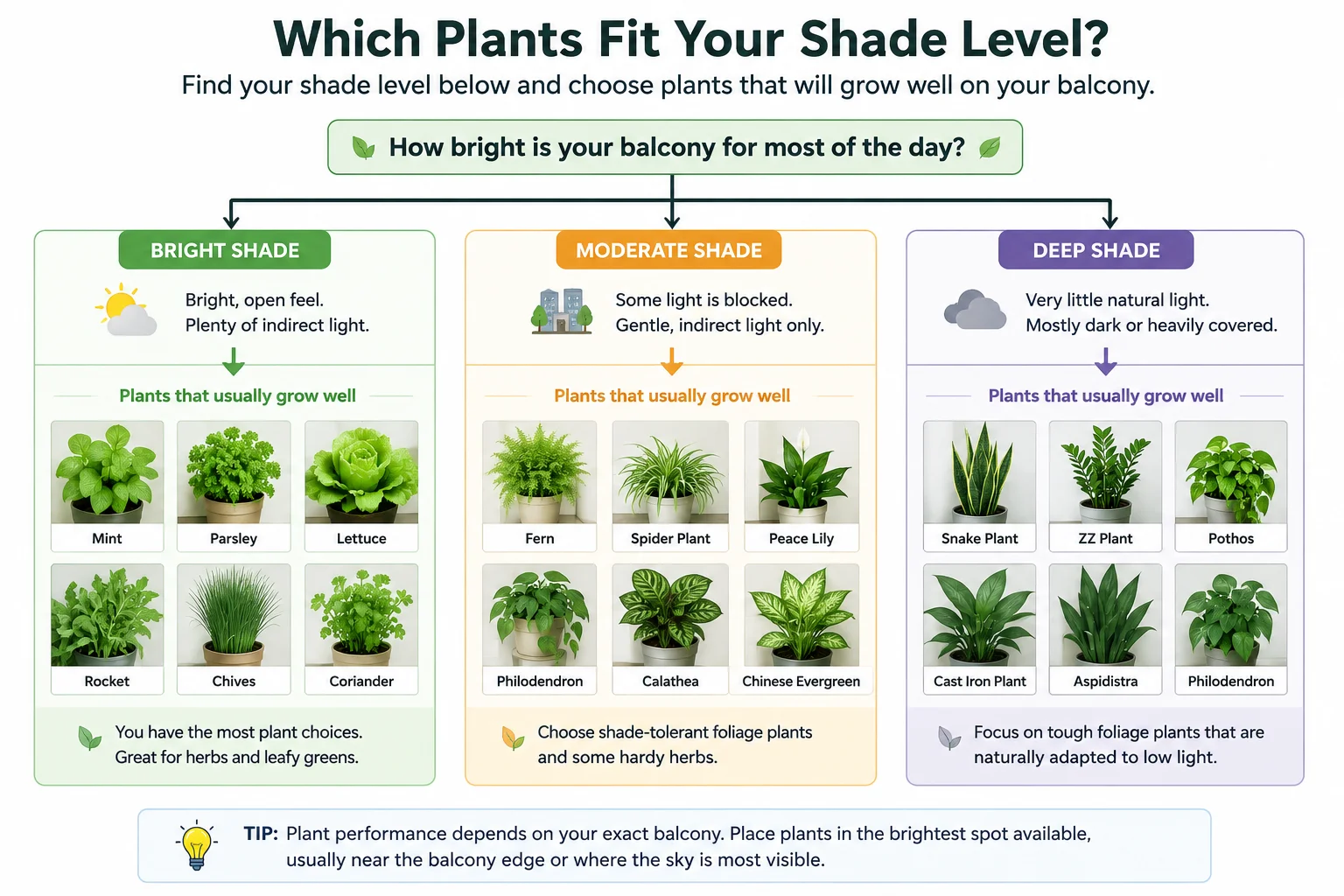
In bright shade, mint, parsley, lettuce, rocket, spring onions, spider plants, pothos, and peace lilies are often worth trying. In moderate shade, ferns, pothos, philodendrons, peace lilies, snake plants, and ZZ plants tend to be more dependable. In deep shade, plant choices become narrower, and tough foliage plants usually make the most sense.
Rather than asking which single plant is best, it is often more helpful to first identify your shade level and then choose plants that naturally fit those conditions. A plant placed near the bright railing may perform much better than the same plant tucked into a dark back corner.
Where to Place Plants on a Shaded Balcony
Plant placement matters more on shaded balconies because every bit of usable light counts. The brightest area is often near the railing, near an open side, or close to the part of the balcony where the sky is most visible.
The back wall, deep corners, and areas under shelves or furniture are usually dimmer. These spots may still work for tough foliage plants, but they are less suitable for herbs, leafy greens, or flowering plants.
Even small changes in balcony conditions can influence plant performance. Wind exposure, reflected heat, and airflow sometimes affect growth just as much as light levels. If your shaded balcony is also exposed to strong wind, this guide to the best plants for a windy balcony may help you choose plants that handle both shade and movement better.
Practical Insights for Growing Plants in Balcony Shade
Shaded balcony gardening becomes easier when expectations match the space. The aim is not fast growth or heavy harvests. The aim is steady, healthy growth from plants that naturally suit lower light.
- Bright indirect light is usually more useful than a few minutes of direct sun.
- Leafy plants often perform better than flowering or fruiting plants.
- Slow growth is normal in lower light and does not always mean the plant is unhealthy.
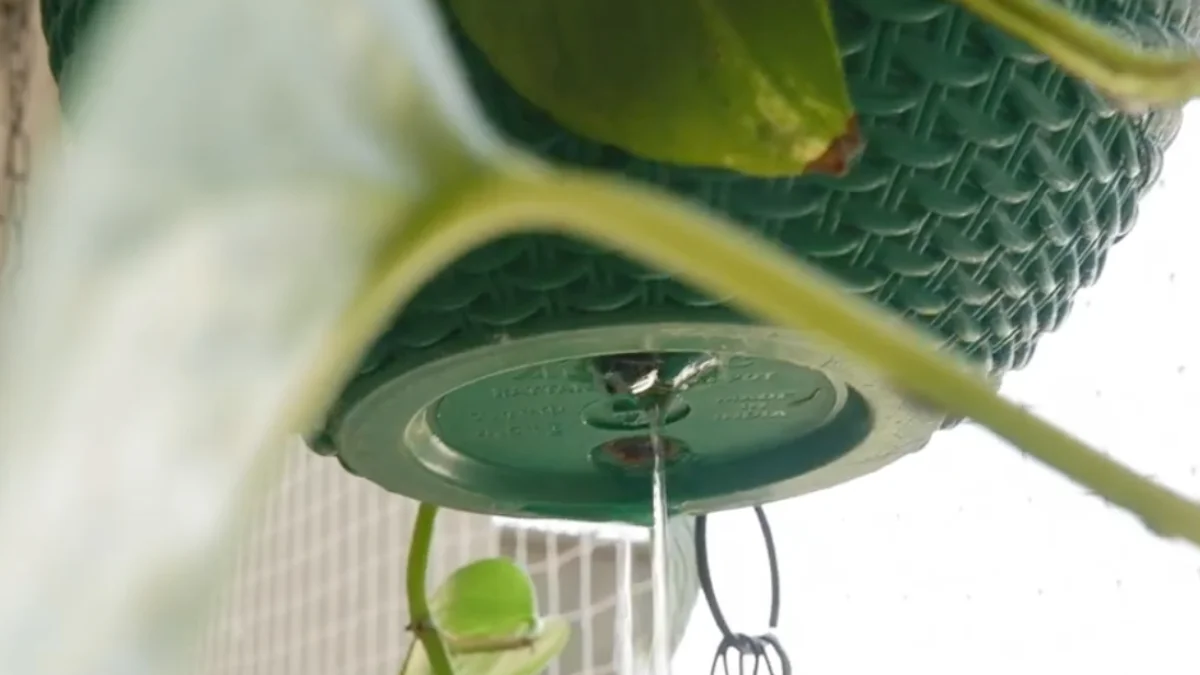
- Overwatering is more common because shaded pots dry more slowly.
- Placement near the railing often gives plants more usable light than the back wall.
- Too many pots can block light and airflow in an already shaded space.
Small placement changes can matter more than complicated care routines. Moving a plant from a dark corner to a brighter edge may improve growth more than changing fertiliser, soil, or watering habits.
Common Misunderstandings About Shaded Balcony Plants
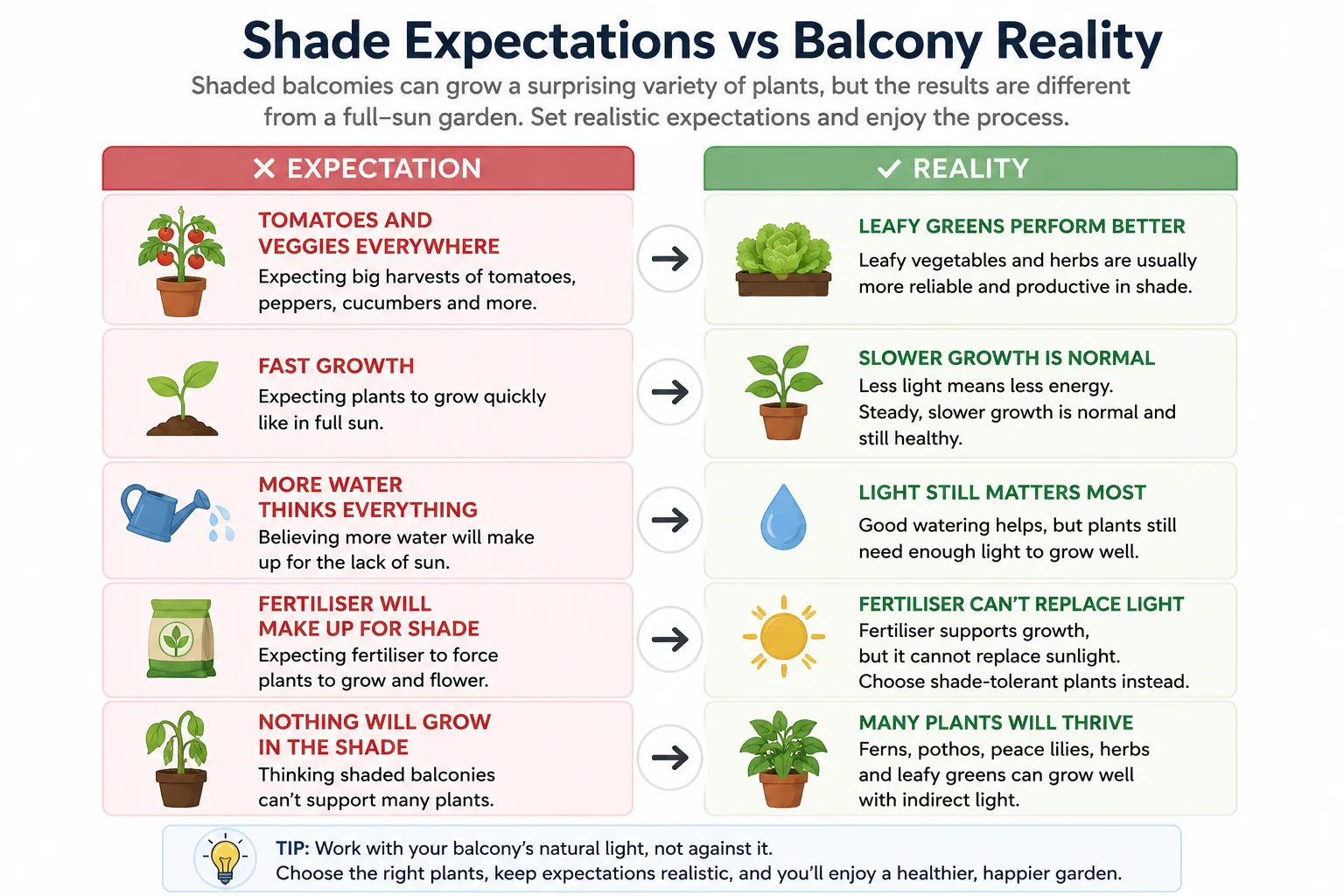
Many shaded balcony problems come from expecting low-light spaces to behave like sunny gardens. Once that expectation changes, plant care becomes much less confusing.
- Shade does not always mean complete darkness.
- Slow growth does not automatically mean poor care.
- More water does not replace missing light.
- Fertiliser cannot make a sun-loving plant behave like a shade plant.
- Plants near the balcony edge may grow better than plants near the back wall.
- Fruiting vegetables usually need more light than leafy greens.
The biggest mistake is often choosing plants for the garden you wish you had rather than the balcony you actually have. A shaded balcony can still become green and useful, but it works best with plants that naturally fit the space.
The diagram below highlights a few common expectations that often cause frustration on shaded balconies.
Seasonal Context for Australian Apartments
In Australian apartments, shaded balconies can change noticeably across the year. A balcony that feels dim in winter may become brighter in spring or summer as the sun angle shifts. A balcony that feels comfortable in autumn may become humid, still, or warmer in summer if airflow is limited.
These seasonal changes affect how plants grow. Herbs and leafy greens may slow down in winter when daylight is weaker. Some foliage plants may stay healthy but produce fewer new leaves. In warmer months, shaded balconies may hold moisture longer, which can make overwatering more likely.
This is why shaded balcony gardening often improves with observation. The same pot may behave differently across the year, even when the plant and soil remain the same.
Balcony Haven Note: On my own balcony, I have noticed that shaded areas are not all equal. A plant near the brighter edge can behave very differently from a plant sitting closer to the wall, even when both are technically in shade. What works on one shaded balcony may not work exactly the same way on another, so watching how light moves through the space has often been more helpful than following strict rules.
Frequently Asked Questions
What plants grow best in full shade on a balcony?
Foliage plants usually grow best in full shade because they do not rely on strong sunlight for flowers or fruit. Snake plants, ZZ plants, pothos, ferns, and peace lilies are common choices for shaded balcony spaces, although growth is usually slower in deep shade.
Can herbs grow on a shaded apartment balcony?
Some herbs can grow on a shaded apartment balcony if the space still receives bright indirect light. Mint, parsley, chives, and coriander are more realistic than sun-loving herbs such as rosemary, basil, and thyme.
Can vegetables grow on a shaded balcony?
Some leafy vegetables can grow on a shaded balcony, especially lettuce, rocket, spinach, Asian greens, and spring onions. Fruiting vegetables such as tomatoes, cucumbers, capsicums, and strawberries usually need more direct sun to produce well.
Can indoor plants live on a shaded balcony?
Some indoor plants can live on a shaded balcony if the space is protected from harsh wind, heavy rain, and strong temperature changes. Pothos, peace lilies, spider plants, snake plants, and ZZ plants are common indoor-style plants that may adapt well to sheltered shaded balconies.
Do shaded balconies get enough light for plants?
Many shaded balconies receive indirect, reflected, or filtered light rather than complete darkness. This can be enough for shade-tolerant plants, especially foliage plants and leafy edibles, but it may not be enough for plants that need strong sun.
Why do plants grow slowly on shaded balconies?
Plants grow slowly on shaded balconies because lower light gives them less energy for new growth. Slow growth is normal in shaded conditions and does not always mean the plant is unhealthy or being cared for badly.
Should shaded balcony plants be watered less often?
Shaded balcony plants often need less frequent watering than plants in full sun because the soil dries more slowly. The exact timing depends on pot size, soil mix, airflow, temperature, and how much light reaches the balcony.
Final Thoughts
Shaded apartment balconies are not failed growing spaces. They simply work by different rules than sunny balconies, open patios, or backyard garden beds.
The best results usually come from choosing plants that naturally suit lower light. Ferns, pothos, snake plants, peace lilies, ZZ plants, mint, parsley, lettuce, rocket, spinach, and spring onions are far more realistic than forcing full-sun plants into deep shade.
Once the plant choice matches the balcony, gardening becomes calmer and more predictable. Growth may be slower, harvests may be smaller, and flowers may be limited, but a shaded balcony can still become green, useful, and genuinely enjoyable to grow in.
Leave a Reply