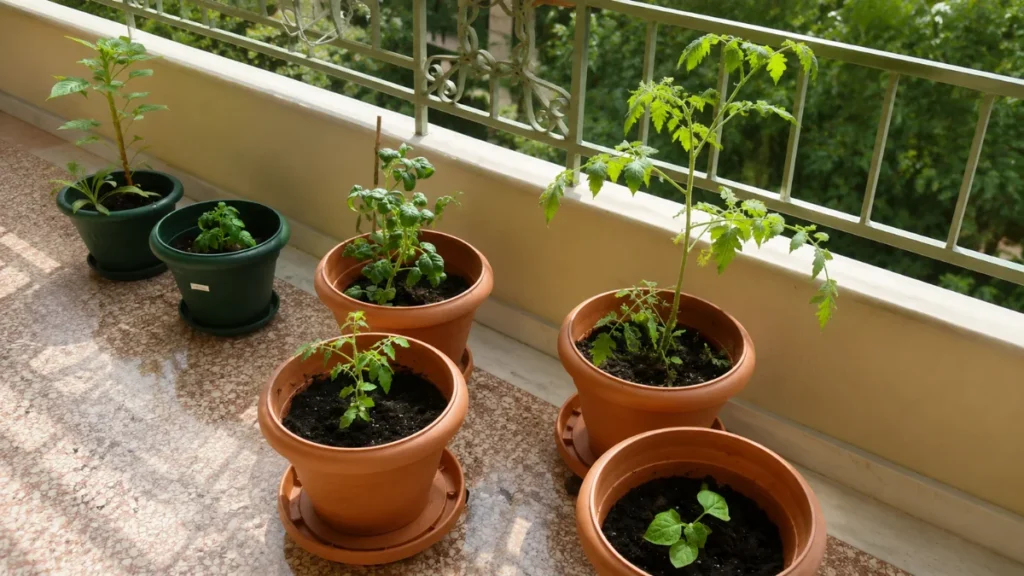
Learning how to choose pots for balcony gardening is not only about picking something that looks nice. On a balcony, the pot affects how often you water, how hot the roots get, how stable the plant is in wind, and how much weight you add to a small outdoor space.
The best balcony pot is usually one that matches the plant’s root depth, holds enough moisture for your weather, drains properly, and is light enough to move safely. For most beginners, medium-sized plastic, resin, fibreglass, or lightweight ceramic-look pots are easier to manage than very small pots, heavy ceramic pots, or decorative containers with poor drainage.
Many balcony gardeners buy their first pot based on appearance, then later find that it dries out too quickly, becomes too heavy to move, or does not suit the plant they want to grow. Choosing the right pot from the start can save time, money, water, and frustration.
This guide will help you understand pot size, material, drainage, weight, shape, and balcony conditions before you buy. It will also help you avoid common mistakes, such as choosing a pot that dries out too fast, blows over easily, or becomes too heavy to move once filled with wet soil.
Why Choosing Pots Is Different on a Balcony
In a backyard, plants can spread roots into deeper soil. On a balcony, the pot is the whole growing space. If the pot is too small, the plant dries out quickly. If it is too large for the plant or the balcony, it can stay wet too long, take up too much space, or become hard to move.
Balconies also have stronger microclimates than many garden beds. A pot near a hot wall may heat up quickly in the afternoon. A railing planter may dry out in wind. A covered balcony may stay damp after watering because rain and airflow are limited.
Renters also need to think about practical limits. You may need pots that are easy to move, do not stain the floor, do not drip onto neighbours below, and do not require drilling or permanent fixtures.
This is why balcony pots need to be chosen for the space, not just the plant label.
Start With the Plant, Not the Pot
The easiest way to choose a balcony pot is to start with what you want to grow. A small herb, a tomato plant, a dwarf fruit tree, and a trailing flower do not need the same container.
Some plants have shallow roots and can grow well in low bowls or window boxes. Others need deeper soil to stay steady and hold enough moisture. Fruiting vegetables usually need more root space than leafy herbs because they support flowers and fruit for a longer time.
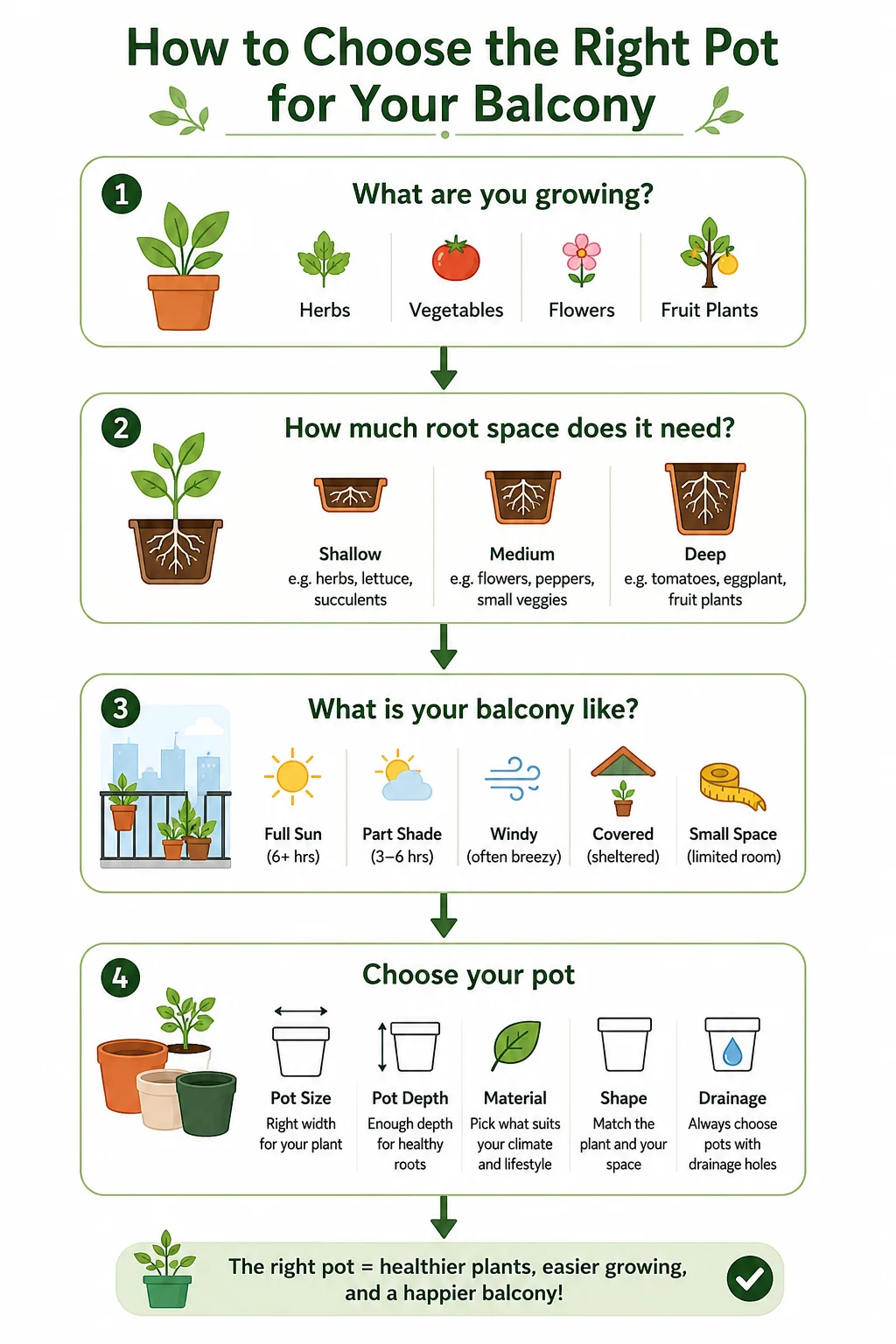
This diagram shows a simple decision path: what you are growing, how much root space it needs, what your balcony conditions are like, and which pot type is most suitable. It helps beginners make a choice before buying.
| Plant Type | Pot Style That Usually Works | Why It Helps |
|---|---|---|
| Small herbs | Small to medium pots or railing planters | Easy to reach, move, and water. |
| Leafy greens | Wide shallow containers | Gives several plants space without needing deep soil. |
| Tomatoes and chillies | Deep medium to large pots | Supports stronger roots and steadier moisture. |
| Strawberries | Narrow planters or hanging baskets | Good for edges, rails, and small spaces. |
| Dwarf fruit plants | Large stable pots | Gives root space and prevents tipping. |
If you are planning to grow vegetables, the guide on Deep vs Shallow Pots for Balcony Veggies explains why some balcony crops need more depth than others.
Choose the Right Pot Size
Pot size is one of the most important decisions in balcony gardening. A tiny pot may look neat, but it can dry out fast and restrict roots. A very large pot may hold too much wet soil for a small plant and become difficult to move.
For beginners, it is usually better to choose a pot that gives the plant a little room to grow without being extreme. Medium pots are often easier to manage than tiny decorative pots because they hold moisture more steadily.
| Plant | Helpful Pot Size | Balcony Note |
|---|---|---|
| Basil, parsley, coriander | 15-25 cm wide | Use a deeper pot in hot or windy spots. |
| Mint | 25-30 cm wide | Keep it in its own pot because it spreads. |
| Lettuce and leafy greens | 20-30 cm deep tray or planter | Wide containers are often more useful than very deep ones. |
| Chilli plants | 25-35 cm wide | Choose a stable pot if the balcony is windy. |
| Tomatoes | 35-45 cm wide or larger | Small pots dry out quickly and may reduce fruiting. |
| Dwarf citrus or blueberry | 40-50 cm wide or larger | Use a strong, stable pot with good drainage. |
Tomatoes are a good example of why pot size matters. If you want to grow them in containers, Best Pot Size for Balcony Tomatoes gives a more detailed look at container size, moisture, and root space.
Think About Pot Depth and Root Space
Pot width gives plants surface space, but pot depth gives roots room to anchor and search for water. On balconies, this matters because the soil dries from the top, the sides, and sometimes the bottom if the pot is raised.
Shallow pots can work well for lettuce, baby greens, small flowers, and some herbs. Deep pots are better for tomatoes, chillies, eggplants, peas, dwarf fruit plants, and anything that becomes tall or top-heavy.
A plant in a shallow pot may need watering more often, especially in hot wind. A plant in a deeper pot often has a better moisture buffer, but only if the drainage is good.
Choose the Best Pot Material for Your Balcony
Pot material changes how the container behaves. Some pots stay moist longer. Some dry faster. Some are light but may tip over. Others are stable but too heavy for renters or small balconies.
There is no perfect pot material for every balcony. The best choice depends on your sunlight, wind, weight limits, plant type, and how often you can water.
| Pot Material | Best For | Watch Out For |
|---|---|---|
| Plastic | Beginners, renters, herbs, vegetables, lightweight setups | Can heat up in full sun, especially dark colours. |
| Resin or fibreglass | Large pots that still need to be light | Quality varies, so check strength and drainage holes. |
| Terracotta | Plants that dislike staying wet | Dries quickly and can be heavy when large. |
| Ceramic | Sheltered balconies and decorative spots | Often heavy and may be hard to move once filled. |
| Fabric grow bags | Potatoes, some vegetables, flexible seasonal growing | Can dry out fast in wind and full sun. |
| Metal | Decorative cover pots in shaded spots | Can become very hot in strong sun. |
If you are mainly comparing plastic and ceramic, Do Plants Grow Better in Plastic or Ceramic Pots? can help you understand how both behave in real balcony conditions.
Check Drainage Before Looks
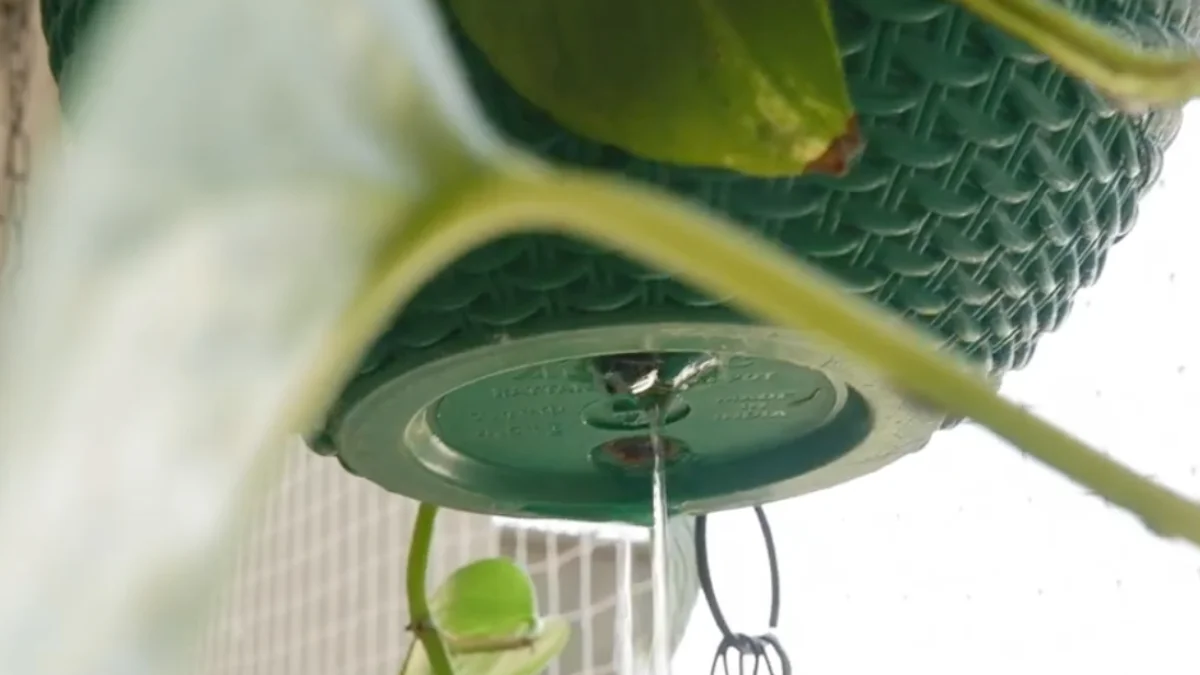
A nice-looking pot can still be a poor growing container if it has no drainage hole. Balcony plants need water to move through the pot. Without drainage, water can sit around the roots and cause drooping, yellow leaves, fungus, or root rot.
For most balcony plants, choose pots with drainage holes. If you love a decorative pot with no hole, use it as a cover pot instead. Keep the plant in a nursery pot inside it, then remove the inner pot when watering so extra water can drain away.
This is especially important on balconies because water may also drip onto lower balconies. A saucer, tray, or careful watering routine can help, but the pot still needs somewhere for excess water to go.
For more detail, Drainage Tips for Small Balcony Containers explains how to avoid soggy soil without making a mess below.
Think About Weight and Safety
Weight matters more on balconies than in gardens. A pot that feels fine when empty can become very heavy once filled with wet potting mix and a mature plant.
This does not mean you need to be afraid of using pots. It just means you should think before placing several large, heavy containers in one small area. Spread larger pots out, avoid blocking doors, and keep heavy containers where they are easy to access.
Lightweight pots are often more practical for renters because they are easier to move when cleaning, changing layouts, or moving house. The guide on Lightweight Pots for Apartment Balconies is useful if you want safer container options for apartments.
Match Pots to Sun, Heat, and Wind
The same pot can behave differently on different balconies. A small black plastic pot may be fine in morning sun, but it may overheat in strong afternoon sun. A tall lightweight pot may look good near a railing, but it may tip over in wind.
Hot balconies usually need pots that hold moisture more steadily. Windy balconies need heavier, wider, or lower pots that do not dry out or fall over easily. Shaded balconies may need pots that drain well so the soil does not stay wet for too long.
| Balcony Condition | Better Pot Choice | Avoid If Possible |
|---|---|---|
| Hot afternoon sun | Light-coloured medium to large pots | Small dark pots that heat up fast. |
| Strong wind | Low, wide, stable containers | Tall narrow lightweight pots. |
| Covered balcony | Pots with strong drainage | Containers that hold water for too long. |
| Small narrow balcony | Rectangular planters and vertical pots | Round pots that waste walking space. |
| Busy renter setup | Lightweight pots with saucers or trays | Very heavy decorative pots. |
If wind is one of your main problems, Protecting Balcony Pots from Strong Winds gives more practical ideas for keeping containers stable.
Choose Pots That Fit a Small Balcony
On a small balcony, pot shape can matter as much as pot size. Round pots are common, but they do not always use space well. Rectangular planters can sit along a wall, railing, or edge and leave more room to walk.
Pot shape also changes how the balcony feels. A round pot can work well for one feature plant, such as a dwarf citrus or tomato. But several round pots can waste corner space and make a narrow balcony harder to walk through.
Rectangular planters are useful along walls, railings, and balcony edges because they create a neat growing strip. Corner pots can help use awkward spaces. Railing planters can free up floor space, but they need to be secure and suitable for your building rules.
Tall pots can look tidy, but they are not always the best choice in wind. Low, wide containers are often more stable and easier to manage for leafy greens, herbs, strawberries, and small flowers.
| Pot Shape | Best Balcony Use | Watch Out For |
|---|---|---|
| Round pots | Feature plants, tomatoes, chillies, dwarf fruit plants | Can waste space when many are placed together. |
| Rectangular planters | Herbs, lettuce, flowers, narrow balcony edges | May dry unevenly if one end gets more sun or wind. |
| Low wide pots | Windy balconies, leafy greens, strawberries, small flowers | Not deep enough for larger fruiting plants. |
| Tall pots | Sheltered corners and decorative feature plants | Can become top-heavy in wind. |
| Railing planters | Saving floor space on very small balconies | Must be secured safely and allowed by your building. |
Stacking too many pots on the floor can make watering harder and reduce airflow. It can also make the balcony feel messy, even when the plants are healthy. A few well-sized pots are usually easier to manage than many tiny pots.
For very small balconies, choose containers that match the way you move through the space. Keep taller plants at the back or sides, place herbs where you can reach them, and avoid putting heavy pots where you need to step around them every day.
If layout is difficult, How to Organise Plants in a Small Balcony? can help you think about plant placement before buying more containers.
What Pots Should Beginners Buy First?
If you are buying your first balcony pots, start simple. You do not need a full set of matching containers straight away. It is often better to buy two or three useful pots, grow a few plants, and learn how your balcony behaves.
A good beginner setup might include two or three medium-sized plastic, resin, or fibreglass pots with drainage holes. These are usually light enough to move, affordable enough to replace, and flexible enough for herbs, flowers, chillies, leafy greens, or compact vegetables.
Once you understand how quickly your balcony dries out, how strong the wind feels, and where the best light falls, you can buy larger or more specialised pots with more confidence.
Should You Use Self-Watering Pots?
Self-watering pots can be helpful for busy balcony gardeners, especially in warm weather. They usually have a water reservoir at the bottom, which helps the plant draw water more steadily.
They are not magic pots, though. They still need drainage, cleaning, and checking. Some plants like steady moisture, while others dislike sitting near too much water. They also may not suit very shaded or cool balconies where the soil already stays damp.
Self-watering pots can be useful for herbs, leafy greens, and some thirsty vegetables. They may be less useful for plants that prefer drier conditions, such as rosemary, succulents, and some Mediterranean herbs.
For a deeper look, read Best Self-Watering Pots for Balconies.
Before You Buy a Pot Checklist
Before buying a pot online or bringing one home from the shop, pause for a quick check. This can prevent many common balcony gardening problems.
- What plant am I growing?
- How much root depth does it need?
- Is my balcony hot, windy, shaded, covered, or narrow?
- Can I move this pot when it is full of wet soil?
- Does it have drainage holes?
- Will water drip safely into a tray or saucer?
- Will the pot still fit once the plant grows larger?
- Can I reach the plant easily for watering, pruning, and harvesting?
This checklist is especially useful for renters and beginners because it keeps the decision practical. A pot can look perfect in a shop photo but still be difficult to use on a real balcony.
Practical Pot Choosing Tips
When you are standing in a shop or looking online, these simple checks can help you choose better balcony pots.
- Check for drainage holes before checking the colour.
- Choose slightly larger pots for hot or windy balconies.
- Use low, wide pots for plants that may tip over.
- Avoid very dark pots in strong afternoon sun if roots often overheat.
- Choose lightweight pots if you rent or need to move plants often.
- Use saucers carefully so water does not sit around the roots for days.
- Buy fewer, better-sized pots instead of many tiny containers.
Small choices like these make balcony gardening easier because they reduce watering stress, root stress, and space problems.
Common Pot Buying Mistakes
Most pot problems begin before the plant is even planted. The pot may look fine, but it may not suit the plant or the balcony conditions.
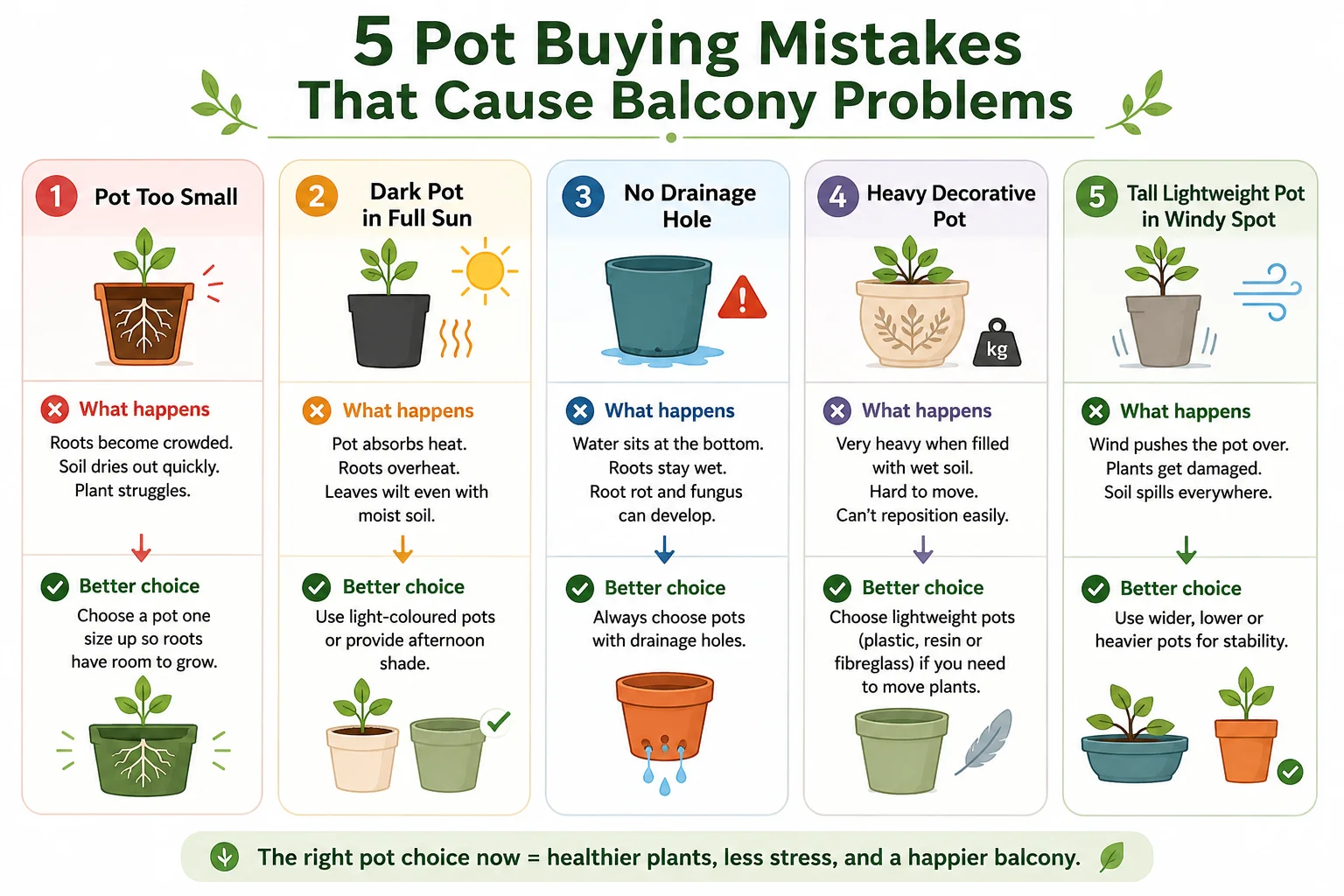
This diagram shows five common mistakes: pot too small, dark pot in harsh sun, no drainage hole, heavy decorative pot, and tall lightweight pot in strong wind. Each mistake shows the likely result so readers understand the cause and effect.
- Buying pots only because they match the balcony decor.
- Using tiny pots for thirsty vegetables.
- Choosing heavy ceramic pots before thinking about moving them.
- Using decorative pots with no drainage holes.
- Putting tall lightweight pots near windy railings.
- Choosing dark containers for very hot afternoon balconies.
The best pot is not always the most attractive one. It is the one that helps the plant survive your actual balcony conditions.
Seasonal Pot Considerations
Pot choice can also change with the season. In summer, small pots dry out faster and dark containers may heat up more. In cooler months, large pots in shaded areas may stay wet for longer.
If your balcony gets strong summer heat, choose pots that reduce stress rather than add to it. Larger containers, lighter colours, and better mulch can help the soil stay more stable. If your balcony is shaded or covered, drainage becomes more important because water may not evaporate quickly.
In windy seasons, check whether pots are stable before the plant grows tall. A pot that is safe for a small seedling may become top-heavy later.
Balcony Haven Note: I have noticed that pot problems often look like plant problems. A plant may wilt, yellow, or stop growing, but the real issue can be a small pot, hot container wall, poor drainage, or soil drying faster than expected.
Frequently Asked Questions
What type of pot is best for balcony gardening?
For most beginners, lightweight plastic, resin, or fibreglass pots are the easiest to manage. They are easier to move, hold moisture reasonably well, and come in many useful sizes. The best type still depends on your plant, sunlight, wind, and watering habits.
Are plastic pots good for balcony plants?
Yes, plastic pots can be very useful on balconies because they are light and affordable. They hold moisture better than terracotta, but dark plastic pots can heat up in strong afternoon sun.
Do balcony pots need drainage holes?
Yes, most balcony plants grow better in pots with drainage holes. Without drainage, water can sit around the roots and cause problems. If using a decorative pot with no hole, use it as a cover pot instead.
Are terracotta pots good for balconies?
Terracotta pots can work well for plants that dislike wet soil, but they dry out quickly and become heavy in larger sizes. They are often better for sheltered spots or plants that prefer drier conditions.
How big should balcony pots be?
Small herbs can often grow in 15-25 cm pots, while tomatoes, chillies, and dwarf fruit plants usually need larger and deeper containers. Bigger is not always better, but very small pots usually make watering harder.
Can I use indoor decorative pots on a balcony?
You can use them if they suit outdoor conditions and have safe drainage. Many indoor decorative pots have no drainage holes, so they are better used as cover pots rather than direct planting containers.
Final Thoughts
Choosing balcony pots becomes easier when you stop looking for the perfect container and start looking for the right match. The plant, balcony size, sunlight, wind, drainage, and weight all matter.
A good balcony pot gives roots enough room, holds moisture long enough, drains properly, and fits safely into your space. It does not need to be expensive or fancy to work well.
Start with a few sensible pots, watch how they behave in your balcony conditions, and adjust from there. Balcony gardening becomes much less stressful when the container is helping the plant instead of working against it.
Leave a Reply