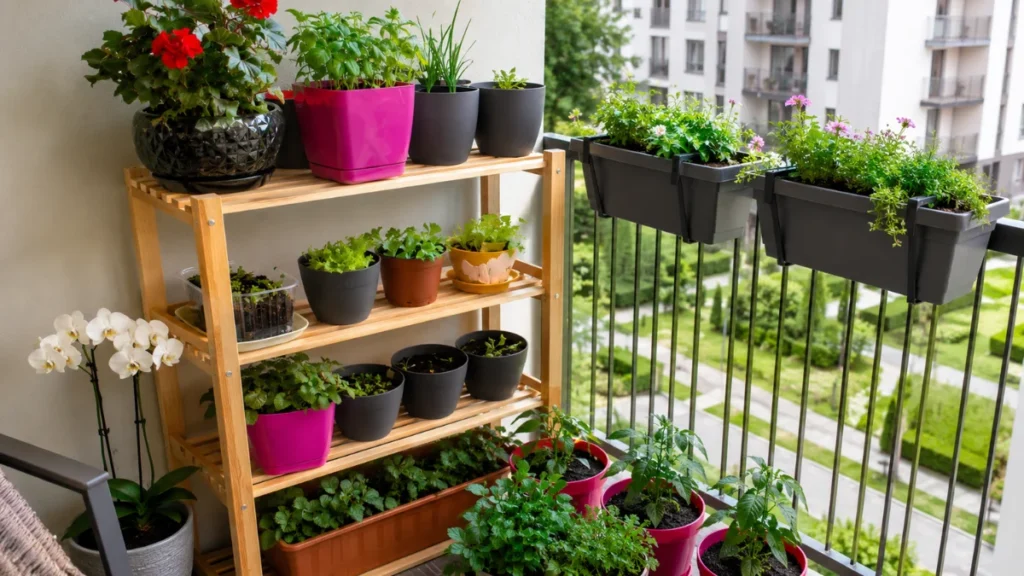
Organising plants in a small balcony can look easy at first, until the pots start taking over the floor, blocking the path, and making watering harder than it should be. A balcony is not like a backyard garden bed. Every pot affects space, airflow, sunlight, drainage, and how easy the balcony is to use each day.
The best way to arrange plants on a small balcony is to group them by care needs, place heavier pots in stable corner zones, use vertical space without blocking light, and keep a clear path for watering and movement. This keeps the balcony easier to manage while helping plants stay healthier in a tight apartment space.
This guide will help you understand how to organise plants in a small balcony without making it feel crowded. You will learn how to map your balcony zones, group plants by behaviour, use height carefully, avoid blocked airflow, and adjust your layout as the seasons change.
Why Small Balconies Need a Different Plant Layout
Small balconies have limits that normal garden advice often ignores. You do not have open soil, wide paths, or unlimited space to move plants around. You may also need to protect the floor, avoid water dripping below, and keep the balcony safe for daily use.
Wind can funnel between buildings and dry some pots faster than others. Sunlight may only hit one side of the balcony for part of the day. Walls can trap heat, while shaded corners can stay damp for longer. These small differences create microclimates, even on a tiny balcony.
This is why a good balcony plant layout is not only about making the space look nice. It should also help with watering, airflow, sunlight, drainage, and access. When the layout supports care, the balcony usually feels calmer and the plants are easier to manage.
If wind is one of your biggest problems, this guide on protecting balcony pots from strong winds may help you choose safer positions for taller or lighter containers.
Start by Understanding Your Balcony Zones
Before moving pots around, look at your balcony as a set of small zones. Even a narrow balcony usually has a brighter area, a more sheltered area, a hotter wall, and a clearer walking space.
The brightest zone is often near the railing or open edge. This is usually where herbs, vegetables, and flowering plants should go first. The most sheltered zone is often near a side wall or corner. This can be useful for plants that dislike strong wind.
The back wall may seem like a good place to line up pots, but it can be darker than the rest of the balcony. It can also trap heat in summer or hold dampness in cooler weather. The centre area should usually stay open, even if the balcony is small.
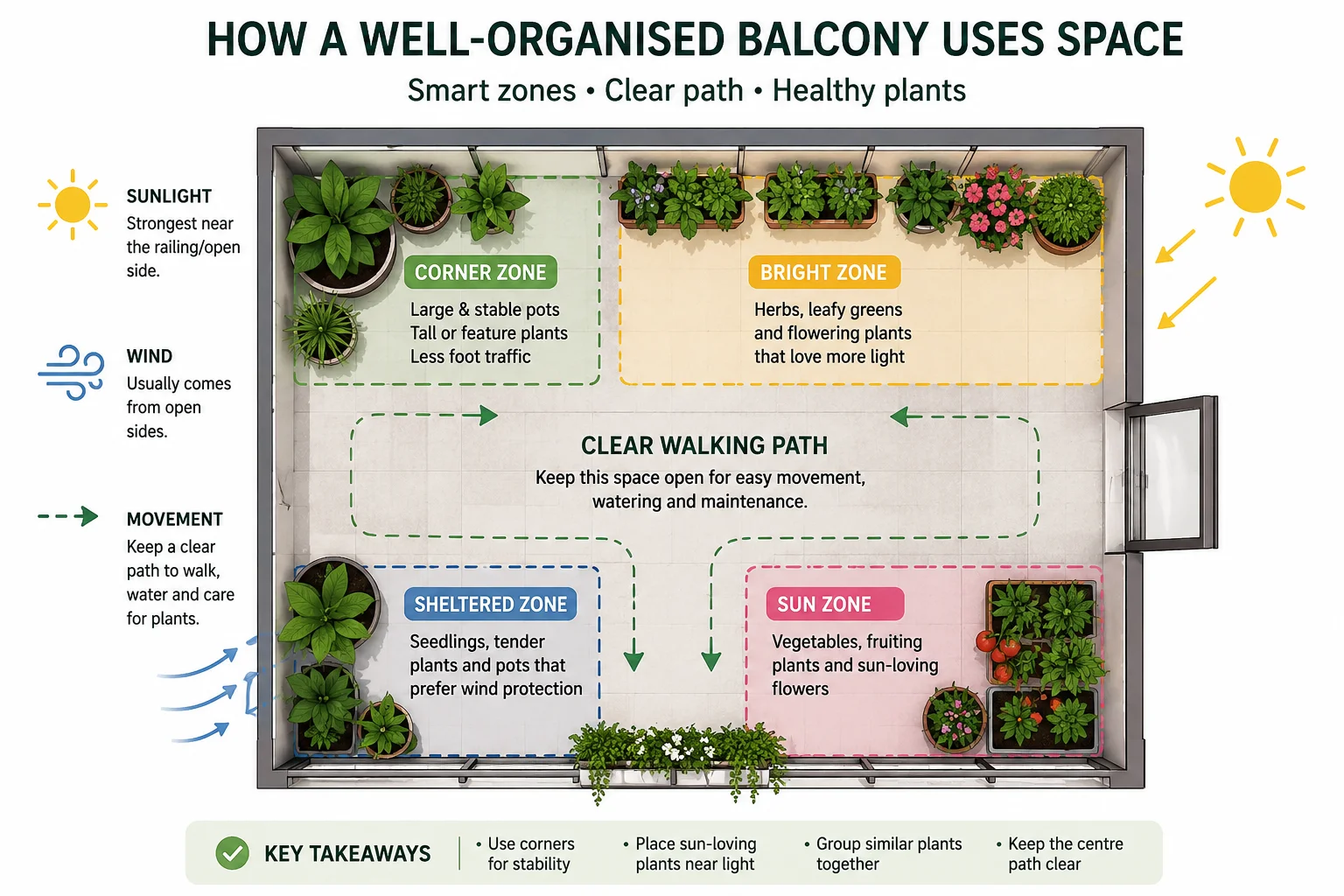
If your main challenge is getting enough light to each plant, the article on how to organise pots for maximum sunlight is a useful next step because it focuses more deeply on sun access and plant placement.
How to Organise Plants in a Small Balcony
The goal is not to fit as many pots as possible into the space. The goal is to create a layout that is easy to water, easy to walk through, and suitable for the plants you are growing.
A small balcony can still hold many plants, but it needs order. The best layouts usually use edges, corners, and height carefully while leaving open space on purpose.
Group Plants by Behaviour, Not Just Size
One common mistake is arranging plants only by how tall they are or how pretty they look together. This can work visually, but it often makes care harder.
A better method is to group plants by how they behave. Some plants dry out quickly. Some hold moisture longer. Some can handle heat and wind, while others wilt easily. When plants with similar needs sit together, watering becomes easier and problems are easier to notice.
| Plant Behaviour Group | Examples | Best Balcony Position | Why This Helps |
|---|---|---|---|
| Fast-drying plants | Small herbs, leafy greens, shallow pots | Near the door or easy watering area | You can check them often without moving other pots. |
| Slow-drying plants | Large containers, deeper pots, moisture-loving plants | Slightly sheltered but not dark | They stay more stable and are less likely to be overwatered by mistake. |
| Heat-tolerant plants | Rosemary, succulents, drought-tolerant plants | Brighter edges or warmer areas | They can handle exposed positions better than softer plants. |
| Wind-sensitive plants | Basil, seedlings, tender leafy plants | Protected corners or behind sturdier pots | They receive some shelter without being completely hidden from light. |
This kind of grouping also helps you avoid watering every plant the same way. If soil dries out too quickly in some pots, this guide on balcony soil drying out too fast explains why that happens and what can help.
Use Corners as Stable Anchor Zones
Corners are useful because they usually have less foot traffic and more natural support from nearby walls or railings. They are often the best place for heavier pots, taller plants, or grouped containers that you do not need to move every day.
Start with the corners before filling the rest of the balcony. Place the biggest or most stable pots there first. This gives the layout a clear structure and stops the balcony from feeling like pots were placed randomly wherever space was left.
Corner zones can also help protect more delicate plants. A stronger plant in a corner can sometimes reduce wind exposure for smaller pots placed nearby, as long as it does not block too much light or airflow.
Keep a Clear Walking and Watering Path
A small balcony starts to feel crowded when the centre path disappears. Even a narrow open strip can make the space feel calmer and easier to use.
Try to leave enough room to step out, turn around, and water plants without brushing against leaves or knocking pots over. This matters because plants that are hard to reach are usually the first ones to be neglected.
The clear path does not need to be wide or perfect. It simply needs to make daily care possible. A balcony that is easy to move through encourages regular checking, watering, pruning, and small adjustments.
If you need to step around pots every time you water, the layout is probably too crowded.
Use Vertical Space Without Blocking Light
Vertical space can help a lot on a small balcony, but it can also create new problems. Tall shelves, crowded stands, and pots stacked directly above each other can block light, trap moisture, and cause water to drip onto plants below.
A better approach is to create gentle layers. Heavier pots can stay on the floor. Medium plants can sit on low stands or benches. Lightweight pots or hanging baskets can go higher, as long as they still allow light and air to pass through.
Plants should be offset rather than stacked directly on top of one another. If the upper pot shades the lower pot all day, the layout is not helping. If water from one pot keeps dripping into another, the vertical setup needs adjusting.
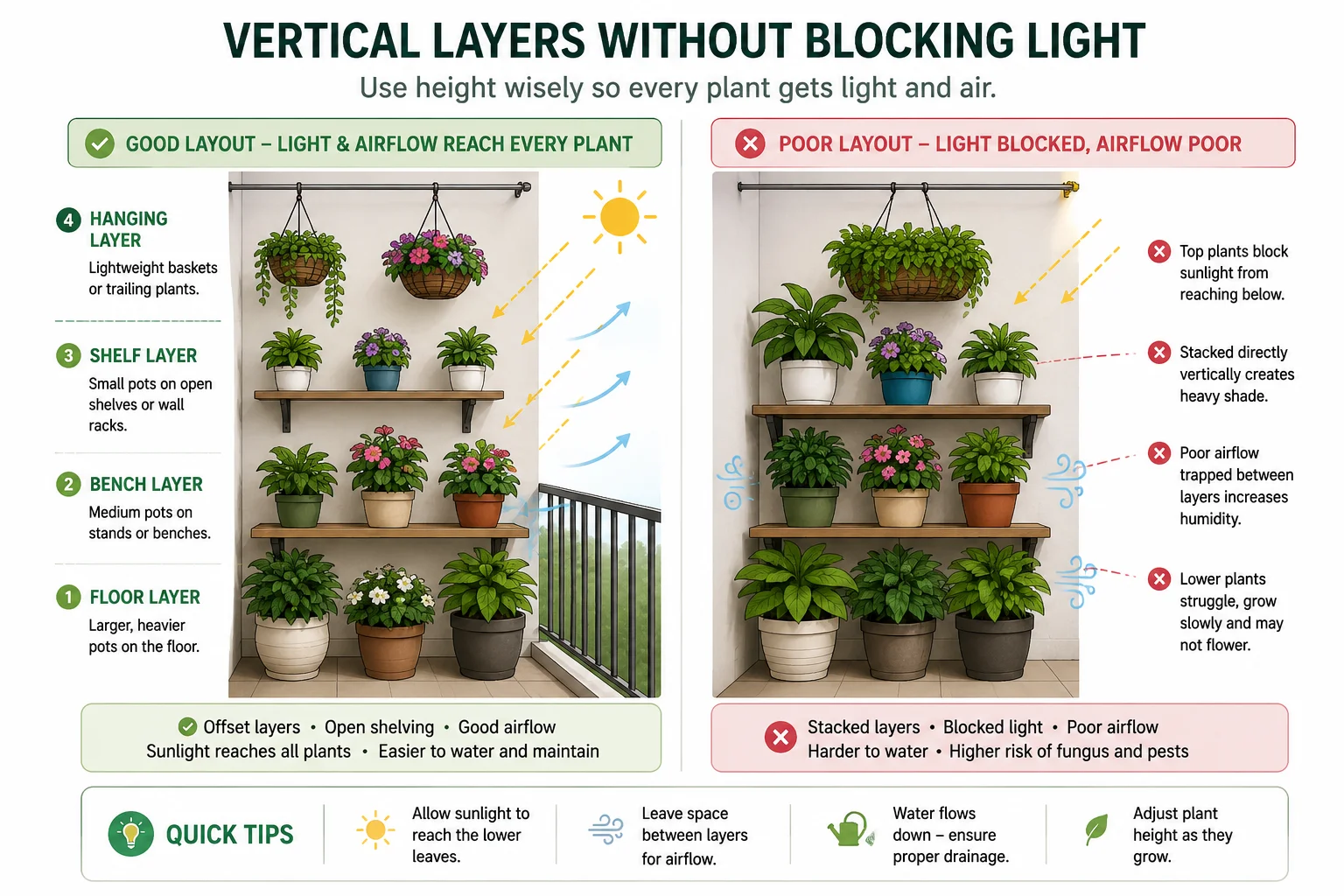
For more ideas on using height in a small space, see best vertical garden ideas for tiny balconies. The most useful vertical setups are usually open, lightweight, and easy to adjust.
Leave Air Gaps Between Pots
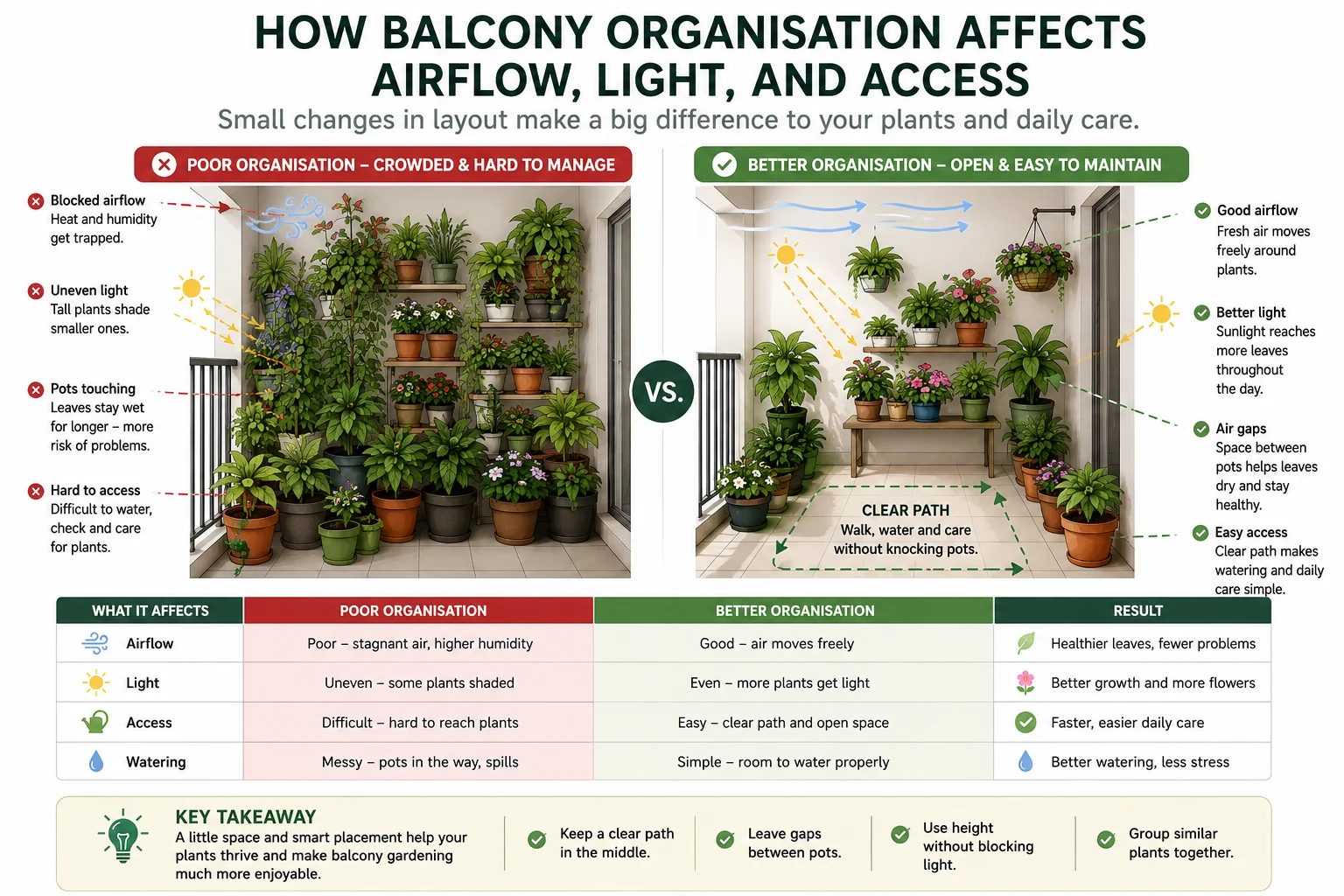
It is tempting to push pots tightly together to save space, but plants need small gaps around them. Air gaps help leaves dry after watering and reduce the still, damp conditions that can make plant problems worse.
This does not mean every pot needs a large empty space around it. Even a few centimetres can help, especially between leafy plants. If leaves are always pressed together or pots are touching on all sides, the layout is probably too dense.
Airflow matters even more on enclosed, shaded, or humid balconies. If your balcony often feels still or damp, this article on balcony pot spacing for airflow explains why small spacing changes can make plant care easier.
Make Every Plant Easy to Reach
A plant should not be so hidden that you avoid caring for it. If you need to lift three pots to reach one small herb, that plant will probably be missed when you are busy.
Place plants that need frequent checking close to the door or along the easiest side of the balcony. This includes herbs, seedlings, leafy greens, and plants in smaller pots. Larger, slower-changing plants can sit further away or in corner zones.
Easy access also helps you notice early problems. You can spot yellow leaves, dry soil, pests, or leaning growth before they become harder to fix.
Layout Ideas for Different Balcony Types
Not every balcony needs the same layout. The best arrangement depends on width, light, wind, and whether you are renting or able to install more permanent fixtures.
| Balcony Type | Best Layout Approach | What to Avoid | Why This Works |
|---|---|---|---|
| Very narrow balcony | Place most plants along one long side and keep the other side open. | Putting pots on both sides until the walking space disappears. | It keeps the balcony usable and prevents the space from feeling boxed in. |
| Balcony with strong sun on one edge | Put sun-loving plants near the light and shade-tolerant plants behind them. | Letting tall plants block the only bright area. | Plants receive more suitable light without competing as much. |
| Windy balcony | Use corners for taller pots and keep lightweight containers lower. | High, top-heavy pots near exposed railings. | The layout feels safer and reduces stress on delicate plants. |
| Rental apartment balcony | Use movable stands, trays, and lightweight containers. | Permanent fixtures that may damage walls, floors, or railings. | You can adjust the layout without making changes to the building. |
| Shaded balcony | Keep plants closer to the brightest open edge and avoid deep stacking. | Placing plants against the darkest back wall. | It gives plants better access to usable daylight. |
If your balcony has little or no direct sunlight, this guide on gardening on balconies with no direct sun may help you choose a more realistic plant layout and plant list.
Seasonal Adjustments for Balcony Plant Layouts
A balcony plant layout should not stay exactly the same all year. Light angles, wind, heat, and watering needs can change with the season. A layout that works well in mild weather may feel too crowded in summer or too exposed in windy periods.
Instead of rebuilding the whole balcony, make small seasonal adjustments. Move sensitive plants into more sheltered spots, increase spacing when airflow matters, and keep one flexible area open for temporary plant moves.
| Season or Condition | Layout Adjustment | Why It Helps |
|---|---|---|
| Hot summer periods | Increase spacing and move sensitive plants away from heat-trapping walls. | Better airflow helps reduce heat stress and uneven drying. |
| Cooler months | Move plants closer to brighter areas and reduce deep shade where possible. | Plants often grow slower and need more usable light. |
| Windy weather | Shift tall or light pots into corners or lower positions. | This makes the balcony safer and reduces plant damage. |
| Rainy periods | Keep drainage areas clear and avoid grouping wet pots too tightly. | It reduces soggy soil, dripping problems, and poor airflow. |
| New plant growth | Recheck spacing as leaves spread and vines grow. | A layout that looked open at first can become crowded later. |
Practical Tips That Make a Small Balcony Feel Less Crowded
Small changes can make a balcony feel more organised without removing all your plants. The most useful tips are the ones that make daily care easier.
- Keep at least one small empty spot for moving plants during heat, wind, or heavy rain.
- Use trays to group small pots visually, but do not let water sit in them for too long.
- Place the plants you check most often closest to the door.
- Use open-frame stands instead of solid shelves where airflow is important.
- Step back and view the balcony from inside your home to spot visual clutter.
- Rotate pots only when needed, especially if plants lean strongly toward light.
- Choose lightweight pots carefully if you need to move plants often.
For renters or apartments where weight matters, lightweight pots for apartment balconies can help you choose containers that are easier to move and safer for small spaces.
Common Mistakes That Make Balcony Plants Feel Messy
Many small balconies feel messy not because there are too many plants, but because the layout works against daily care. A few small mistakes can make the whole space feel harder to use.
- Filling every bit of floor space with pots.
- Putting tall plants in front of smaller plants that need light.
- Stacking pots directly above each other without thinking about shade or dripping water.
- Mixing fast-drying and slow-drying plants in the same tight group.
- Using solid shelves that block airflow on already enclosed balconies.
- Keeping plants that need regular care in hard-to-reach corners.
The easiest fix is often not buying more storage. It is removing one blockage, opening one path, or moving one group of pots to a better zone.
Balcony Haven Note: On my own balcony, the layout started to make more sense when I stopped thinking only about how the plants looked together. Once I paid more attention to airflow, walking space, and which plants needed checking most often, the balcony felt easier to care for even without adding more shelves.
Frequently Asked Questions
How do I organise plants in a small balcony without making it crowded?
Start by keeping a clear walking path, then place heavier pots in corners and group plants by similar care needs. Use vertical space carefully, but avoid stacking plants in a way that blocks light, airflow, or access.
Should balcony plants be arranged by height?
Height matters, but it should not be the only rule. It is usually better to arrange plants by light needs, watering needs, wind tolerance, and how often you need to reach them. Then use height to stop taller plants from shading smaller ones.
How many plants are too many for a small balcony?
There is no exact number. It is probably too many if you cannot walk safely, water easily, reach each pot, or leave small gaps for airflow. A balcony with fewer well-placed plants often works better than one filled edge to edge.
Are shelves good for small balcony plants?
Shelves can help if they are open, stable, and do not block light or airflow. Solid shelves or crowded plant racks can create shade, trapped moisture, and watering problems, especially on enclosed balconies.
Where should the biggest pots go on a balcony?
The biggest pots usually belong in stable corner zones or along strong edges where they do not block the path. Avoid placing heavy pots where they need to be moved often or where they make watering awkward.
How do I organise balcony plants for better sunlight?
Place sun-loving plants in the brightest area first, usually near the railing or open edge. Keep shorter plants in front and taller plants behind or to the side so they do not block the limited light.
Final Thoughts
Learning how to organise plants in a small balcony is less about creating a perfect display and more about making the space work. A good layout should help you move, water, check, and enjoy your plants without feeling cramped.
Start with your balcony zones, then group plants by behaviour. Use corners for stability, keep the centre path open, and leave small air gaps on purpose. These simple choices can make a balcony feel calmer and easier to care for.
Your layout can change as your plants grow and the seasons shift. That is normal. A small balcony does not need to be perfectly arranged forever. It just needs to stay flexible, usable, and supportive for the plants you are growing.
Leave a Reply