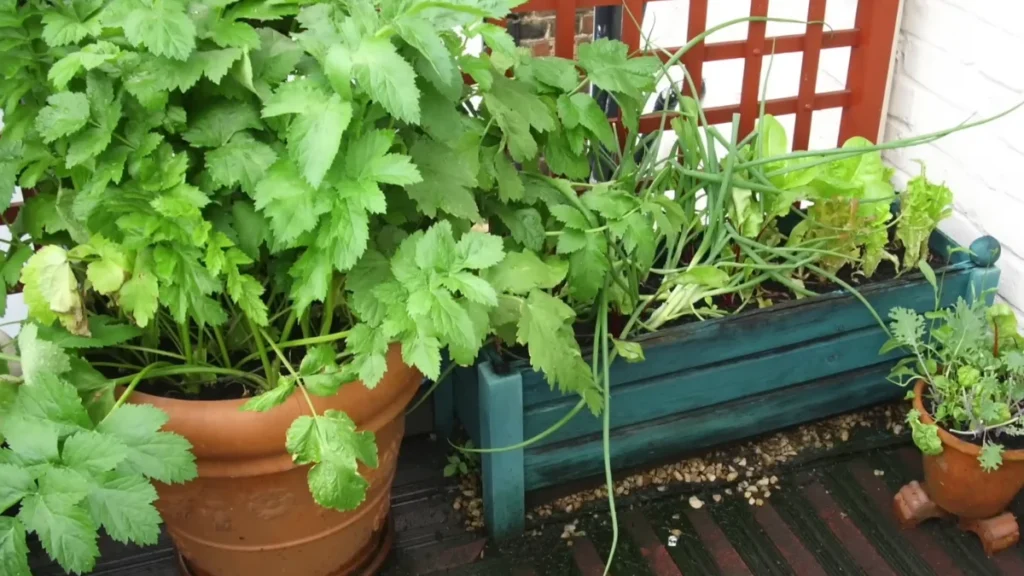
Protecting balcony pots from strong winds can feel frustrating because apartment balconies often behave differently from normal gardens. A pot that looks steady on a calm day can suddenly shift, lean, or fall over when wind moves between buildings, around railings, or through narrow balcony spaces.
Protecting balcony pots from strong winds is mainly about reducing movement, not blocking every gust. Heavier containers, wider pot shapes, lower placement, sheltered balcony zones, and grouped pots all help keep plants more stable. The goal is to help pots stay grounded so roots, soil, and stems are not disturbed every time the wind picks up.
Many balcony gardeners blame the plant first when leaves droop, stems lean, or soil dries out quickly. But in windy apartments, the pot itself is often part of the problem. When a container shifts often, the plant never fully settles.
This article explains why balcony wind affects pots so strongly, where wind pressure is usually highest, what pot shapes handle wind better, and how small layout changes can make a windy balcony feel more manageable.
Why Apartment Balconies Feel Windier Than Gardens
Apartment balconies often catch wind in a way that ground-level gardens do not. Air can move faster between buildings, along walls, over railings, and through open gaps. This can make a balcony feel calm one moment and gusty the next.
Wind also behaves differently depending on balcony height, railing style, nearby buildings, and how open the balcony is. A fully open balcony may feel exposed most of the time, while a semi-enclosed balcony may feel calm near the wall but gusty near the edge.
This is why general garden advice does not always work well for apartment pots. In a backyard, a pot may sit on stable ground with more surrounding shelter. On a balcony, the same pot may sit on smooth flooring, close to railings, and inside a small space where wind bounces around.
If your balcony is very exposed, plant choice also matters. This guide on what are the best plants for a windy balcony? can help you think about plants that naturally cope better with moving air.
Where Wind Pressure Is Highest on a Balcony
One of the most useful things to notice is that wind does not usually hit every part of a balcony equally. Some areas stay calmer because they are close to walls, corners, or solid barriers. Other areas are more exposed because they sit near open railings or wind channels.
This helps explain why one pot may fall over while another pot on the same balcony stays perfectly still. The problem is not always the pot by itself. Sometimes it is the position of the pot in the strongest wind path.
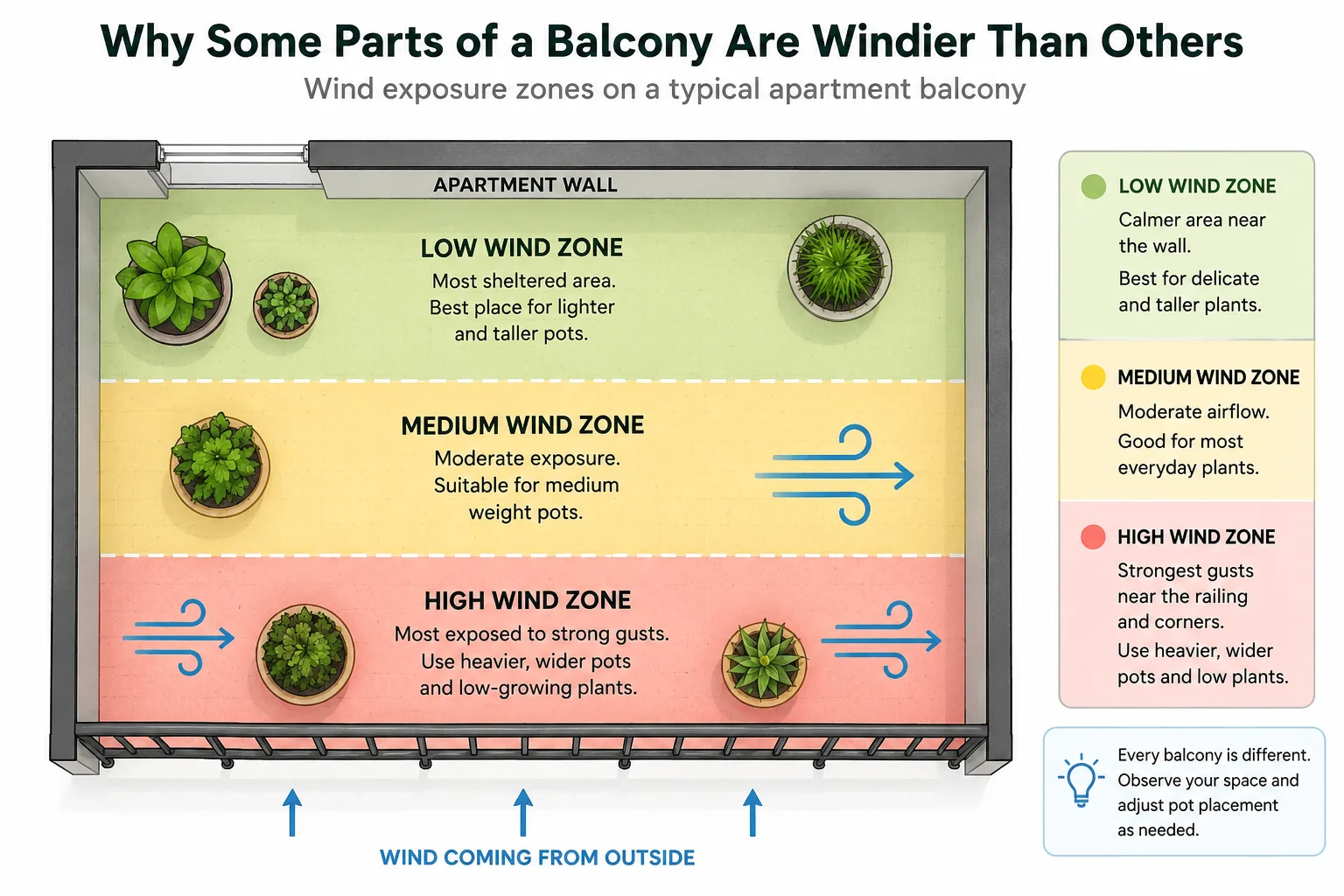
In many apartments, the highest wind pressure is often near open railings, balcony corners, and narrow gaps where air speeds up. Calmer areas are usually closer to the back wall, behind solid furniture, or beside heavier grouped containers.
What Strong Wind Does to Balcony Pots
Strong wind does not only knock pots over. It can also make plants struggle in quieter ways. A pot that shifts often can loosen roots, disturb soil, and make the plant lean toward a more sheltered direction.
Wind can also dry potting mix faster. This is especially noticeable in small containers, lightweight pots, and balconies that also receive strong sun. A plant may look thirsty even when watering habits have not changed.
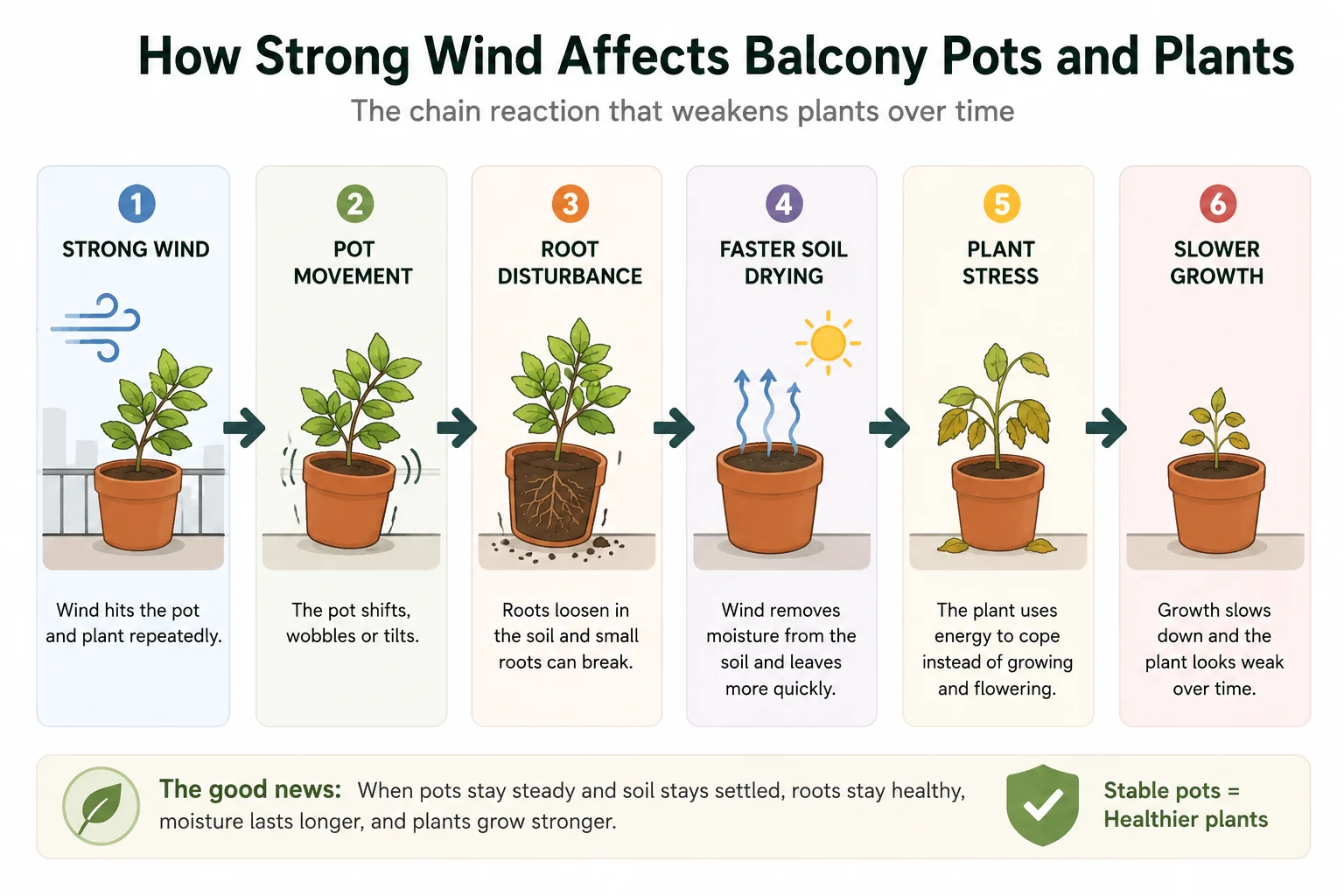
This is why wind problems sometimes look like watering problems. Leaves may wilt, soil may dry quickly, and the plant may stop growing well. If this sounds familiar, the article on balcony soil drying out too fast may help you understand the moisture side of the problem.
What Makes a Balcony Pot More Stable?
A stable balcony pot usually has three things working together: enough weight, a wide enough base, and a position where wind does not hit it directly. Weight matters, but shape and placement matter too.
A heavy pot can still tip if it is tall and narrow. A lighter pot may stay in place if it is short, wide, and tucked into a calmer part of the balcony. This is why pot stability is not only about choosing the heaviest container possible.
Lower pots usually cope better because their weight sits closer to the floor. Wide pots also spread pressure more evenly, so wind has a harder time pushing the whole container over.
How Different Pot Shapes Handle Wind
Pot shape is one of the easiest details to overlook. Two pots can hold the same amount of soil but behave very differently in strong wind because one has a narrow base and the other spreads its weight lower and wider.
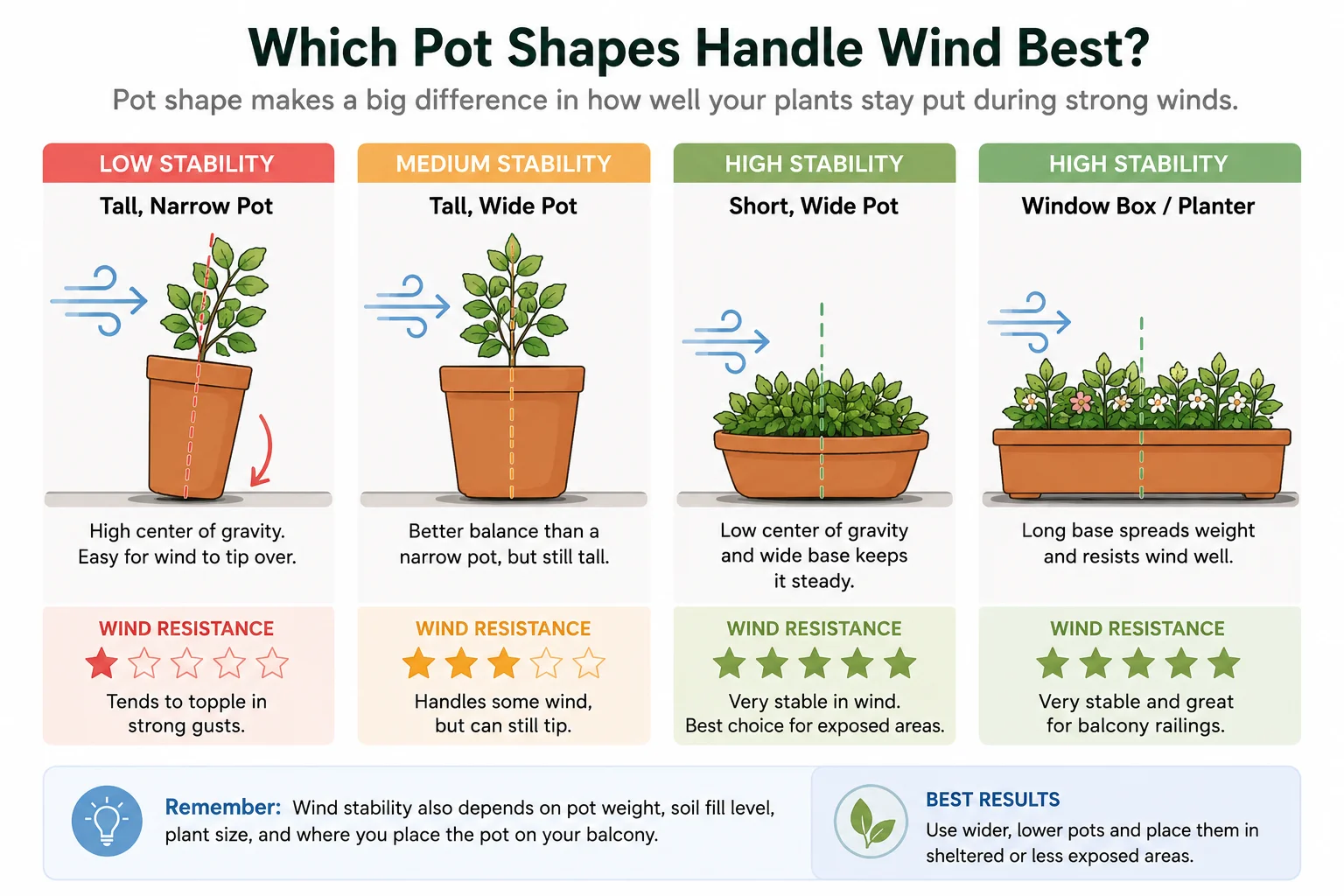
The diagram above gives the quick visual idea, but the table below explains why each shape behaves differently. This is useful when choosing new containers or deciding which existing pots should stay in calmer areas.
| Pot Shape | Wind Stability | Why It Behaves This Way | Best Balcony Use |
|---|---|---|---|
| Tall narrow pot | Low | The height makes it easier for gusts to tip the pot sideways. | Sheltered corners only. |
| Tall wide pot | Medium | The wider base helps, but taller plants can still catch wind. | Larger plants placed near a wall. |
| Short wide pot | High | The weight sits lower and spreads across a wider base. | Exposed balcony areas where space allows. |
| Window box planter | Medium to high | The long base gives good contact with the floor or railing support. | Herbs, flowers, and low-growing plants. |
If you already use light containers, this article on lightweight pots for apartment balconies may help you balance safety, weight limits, and stability.
Best Pot Materials for Windy Balconies
Pot material also affects wind stability. Some materials stay grounded better because they are naturally heavier. Others are easier to move but may need more careful placement on exposed balconies.
| Pot Material | Stability in Wind | Main Advantage | Main Caution |
|---|---|---|---|
| Plastic | Low | Light, cheap, and easy to move. | Can tip easily when empty, dry, or exposed. |
| Terracotta | Medium | Heavier than plastic and breathable. | Can dry out faster in wind and heat. |
| Ceramic | High | Good weight and strong visual appeal. | Can be heavy for balconies and harder to move. |
| Concrete | Very high | Very stable in exposed areas. | Often too heavy for renters or small balconies. |
| Grow bag | Medium | Flexible and useful for vegetables. | May slump or shift if not well filled and positioned. |
For a deeper comparison of common container materials, this guide on whether plants grow better in plastic or ceramic pots may help you choose a pot that suits both the plant and the balcony.
Where to Place Pots on a Windy Balcony
Placement often matters as much as the pot itself. A pot near the railing usually faces stronger wind than a pot closer to the apartment wall. Corners can be helpful if they create shelter, but some corners can also speed wind up if air is being funnelled through a gap.
Grouped pots usually cope better than single pots because they reduce exposed sides. A group of containers can act like a small wind buffer, especially when heavier pots sit on the outside and lighter pots sit behind them.
Low plant stands can be useful when they are stable, but tall narrow stands can make wind problems worse. Raising a pot higher often exposes it to stronger air movement and increases the chance of tipping.
If you need stronger safety-focused ideas, the article on how to secure plant pots on a balcony covers more direct ways to keep containers safer in apartment spaces.
What to Put in Planters to Weigh Them Down
Adding weight near the bottom of a planter can help improve stability. The key is keeping the weight low, because low weight helps the pot stay grounded without making the plant more top-heavy.
Stones, gravel, broken terracotta pieces, and heavier potting mix can all add weight. These materials can be useful when the container itself is too light, but they still need to leave enough space for healthy roots and proper drainage.
- Stones or pebbles can add low weight to larger pots, but too much can reduce soil space.
- Broken terracotta pieces can add weight while keeping some gaps, but sharp edges need careful handling.
- Gravel can help small planters feel more grounded, but it can make pots harder to move.
- Heavier potting mix may help very light mixes dry out less quickly, but it should not become compacted.
Drainage becomes even more important when adding weight to containers. If you are unsure whether your pots are draining well, this guide on drainage tips for small balcony containers may help you avoid creating a new problem while trying to solve wind movement.
Practical Tips for Windy Balcony Pots
Small changes can make a windy balcony feel more manageable, especially when weight, shape, and placement work together.
- Place heavier pots in the more exposed parts of the balcony.
- Keep lighter pots closer to walls, corners, or sheltered areas.
- Use wider pots where wind is strongest.
- Group containers so they support and shelter each other.
- Avoid tall stands in areas that already catch strong gusts.
- Check pots after windy days to see which ones shifted.
These observations help you learn how your own balcony behaves. Over time, the windy spots and calmer spots usually become easier to recognise.
Common Mistakes That Make Wind Problems Worse
Wind problems often come from small setup choices that seem harmless at first. These choices may not matter on a calm balcony, but they can become obvious once strong gusts arrive.
- Using tall narrow pots near open railings.
- Putting lightweight plastic pots in the most exposed area.
- Raising pots on narrow stands without thinking about wind.
- Leaving top-heavy plants unsupported.
- Spacing pots too far apart when grouping would give more shelter.
- Assuming all parts of the balcony receive the same wind pressure.
Some plants also struggle more than others in exposed balcony wind. Basil is a good example because its soft stems and leaves can suffer quickly in moving air. This article on why basil dies on windy balconies explains that problem in more detail.
Seasonal Wind and Weather Considerations
Wind problems can change through the year. Some balconies feel manageable most days but become difficult during storms, seasonal weather changes, or very dry windy periods.
In Australian apartments, hot windy days can be especially hard on pots because wind and heat often work together. The pot may stay upright, but the soil can dry quickly and leaves may lose moisture faster than expected.
During stronger weather, lightweight pots, hanging baskets, and tall plants may need more attention than heavy containers sitting close to the floor. This does not mean every balcony needs a major redesign. It simply means the most exposed pots are usually the first ones to show stress.
Balcony Haven Note: On my own balcony, I noticed that wind problems were not always about the strongest gusts. The pots that moved often were usually the ones sitting in the wrong spot or shaped in a way that caught more wind. Some parts of the balcony stayed much calmer than others, so the same plant could behave differently just by being moved a short distance.
Frequently Asked Questions
How do I stop balcony pots from blowing over?
Balcony pots are less likely to blow over when they are heavier, wider, lower to the ground, and placed away from the strongest wind path. Grouping pots together and using sheltered balcony zones also helps reduce movement.
Are plastic pots bad for windy balconies?
Plastic pots are not bad, but they are light. This makes them more likely to shift or tip in exposed areas, especially when the soil is dry. They usually work better near walls, in grouped setups, or in calmer parts of the balcony.
Should I use heavy pots on an apartment balcony?
Heavy pots can help with wind stability, but balcony weight limits still matter. For renters and apartment gardeners, the better choice is often a balanced setup with moderate weight, wider pots, good placement, and grouped containers.
Can strong wind damage plant roots?
Strong wind can disturb roots when pots keep shifting, tilting, or falling over. The movement can loosen the soil around the roots, making the plant less settled even if the leaves and stems are not visibly broken.
Do balcony screens help protect pots from wind?
Balcony screens can help reduce wind pressure if they slow gusts rather than create stronger wind tunnels around the sides. Solid barriers, furniture, and grouped pots can all create calmer pockets, but every balcony behaves a little differently.
What plants cope better in windy balcony pots?
Plants with tougher leaves, flexible stems, and compact growth usually cope better than soft, tall, top-heavy plants. Herbs like rosemary and many drought-tolerant plants often handle airflow better than delicate leafy plants.
Final Thoughts
Protecting balcony pots from strong winds becomes easier when the focus shifts from stopping wind to reducing movement. Apartment balconies will always have airflow, but pots do not need to fall, slide, or dry out too quickly every time the weather changes.
The most useful changes are often simple. Wider pots, lower placement, better grouping, added bottom weight, and calmer balcony zones can all help containers stay more settled.
Every balcony has its own wind pattern. Once you notice which pots move, which areas stay calmer, and which containers handle gusts better, protecting your plants becomes less about guessing and more about working with the balcony you already have.
Leave a Reply