Balcony gardening often looks calm and controlled, but keeping plant pots stable is one of the most overlooked safety problems. Unlike ground gardens, balconies deal with sudden wind, smooth flooring, limited space, and nearby edges, which can make pots easier to shift, tilt, or fall.
You can secure plant pots on a balcony by using wide, stable containers, keeping weight low in the pot, placing pots on anti-slip surfaces, grouping pots together, and positioning them away from balcony edges or strong wind exposure. The safest setups usually combine several small stability methods instead of relying on one heavy pot or one tie.
A pot that tips over can damage plants, crack containers, create mess, and become a safety concern if it falls near or over a balcony edge. This is why pot stability matters before there is a visible problem.
This guide explains why balcony pots move, how to secure them without complicated tools, which methods suit different balcony types, and what mistakes to avoid if you want your plants to stay safe and steady.
Why Balcony Pots Move, Slide, or Tip Over
Balcony pots behave differently from pots in a ground garden. In a garden bed, the surrounding soil, uneven ground, and nearby plants can help reduce movement. On a balcony, the pot often sits on a hard, smooth surface with nothing holding it in place.
Wind is one of the biggest reasons balcony pots become unstable. Air can move quickly between buildings, around corners, and across higher floors. A tall plant in a pot can act like a small sail, especially when the plant has large leaves, long stems, or heavy fruit.
Water also changes stability. After watering, soil can become heavier on one side, drainage water can make the floor slippery, and loose potting mix may settle unevenly. Over time, a pot that felt stable at first can slowly shift, lean, or rotate.
Pot choice matters too. Lightweight pots are useful for apartment balconies, but they can move more easily in wind or on smooth flooring. If you use lightweight containers, this guide on lightweight pots for apartment balconies can help you balance convenience with safety.
How to Secure Plant Pots on a Balcony
Securing balcony pots works best when you build stability in layers. A single method may help, but several small improvements together usually work better.
For example, a wide pot is helpful. A wide pot on an anti-slip mat is better. A wide pot on an anti-slip mat, placed against a wall, with compact plant growth, is much safer again.
The goal is not to make every pot extremely heavy. The goal is to reduce movement before it starts.
Step 1: Start With a Stable Base
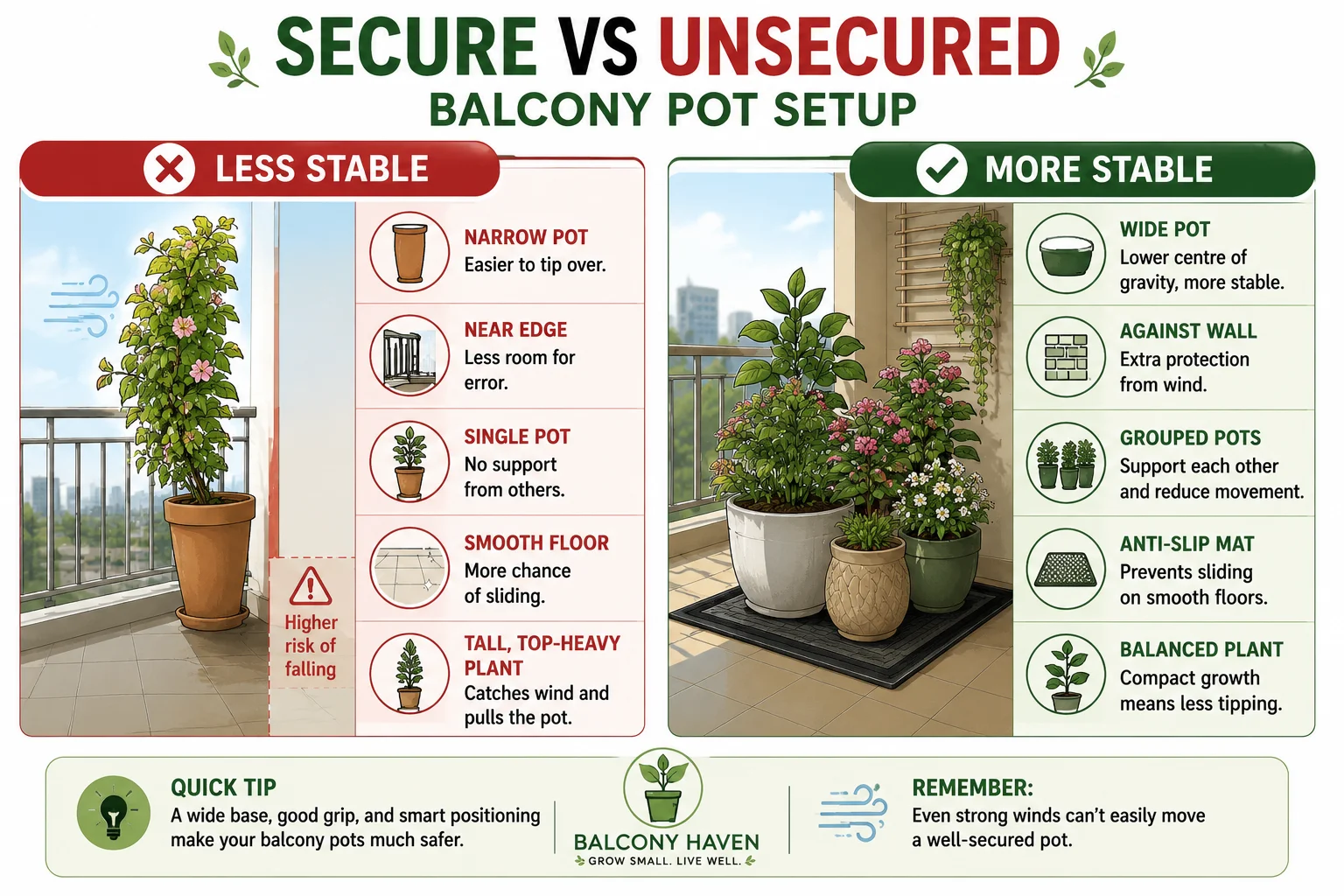
The base of the pot is the most important part of stability. If the pot rocks, leans, or sits unevenly, it will be harder to secure later.
Wide pots are usually safer than tall, narrow pots because they have a lower centre of gravity. This means the bottom of the pot has more control over the weight above it. A tall narrow pot may look tidy, but it can become unstable when the plant grows taller.
If the pot is too light, you can add a small amount of weight near the bottom. A thin layer of gravel, small stones, or a heavier outer cachepot can help keep the base grounded. This does not mean filling the whole pot with rocks. Too much weight can create other balcony concerns and may reduce useful root space.
A good rule is simple: the bottom of the setup should feel stronger than the top.
Step 2: Reduce Top-Heavy Plant Growth
Many balcony pots become unstable because the plant grows too tall or too wide for the container. The pot may be fine at first, but after a few weeks the plant can become top-heavy.
This is common with tomatoes, chillies, basil, cucumbers, dwarf fruit plants, and fast-growing herbs. When leaves and stems catch wind, they pull the pot sideways. If the container is narrow or light, the whole setup may start leaning.
Light pruning, simple staking, and regular turning can help keep growth balanced. If the plant is very exposed, placing it closer to a wall can reduce wind pressure. For windy spaces, this guide on protecting balcony pots from strong winds is a useful next step.
For tall edible plants, the pot size also matters. A plant may need a deeper or wider pot than expected once it starts carrying fruit or heavy foliage. This is especially true for crops like tomatoes, where pot depth and stability often work together.
Step 3: Use Anti-Slip Surfaces to Stop Sliding
Sliding is one of the easiest balcony pot problems to prevent. Many balcony floors are smooth tile, sealed concrete, timber decking, or painted surfaces. These can become slippery after watering or rain.
Anti-slip mats are simple and renter-friendly. Rubber mats, outdoor grip pads, anti-slip liners, or cut pieces of old yoga mats can all add friction under pots. This helps stop the container from slowly moving across the floor.
Friction matters most when pots are light, when the balcony floor is smooth, or when the container sits near a walking path. Even a small grip layer can make the pot feel more secure.
If your pots often dry, shrink, or loosen after hot weather, soil moisture can also affect how steady the pot feels. This article on why balcony plants dry out overnight may help you understand how fast-changing moisture affects container behaviour.
Step 4: Anchor Pots Without Drilling
Many renters cannot drill into balcony walls, floors, or railings. The good news is that you can still improve pot stability without permanent changes.
One of the easiest no-drill methods is grouping pots together. When pots sit close to each other, they support one another and reduce movement. A larger pot can shield smaller pots from wind, while smaller pots can fill gaps and stop containers from rolling or shifting.
Wall-side placement also helps. Pots placed against a solid wall, corner, or protected side of the balcony usually move less than pots sitting in the middle of an open floor.
Rail planters, shelving units, and plant stands can also help, but they need to be stable themselves. If the stand is narrow, light, or overloaded at the top, it may create a bigger safety problem than the pots alone.
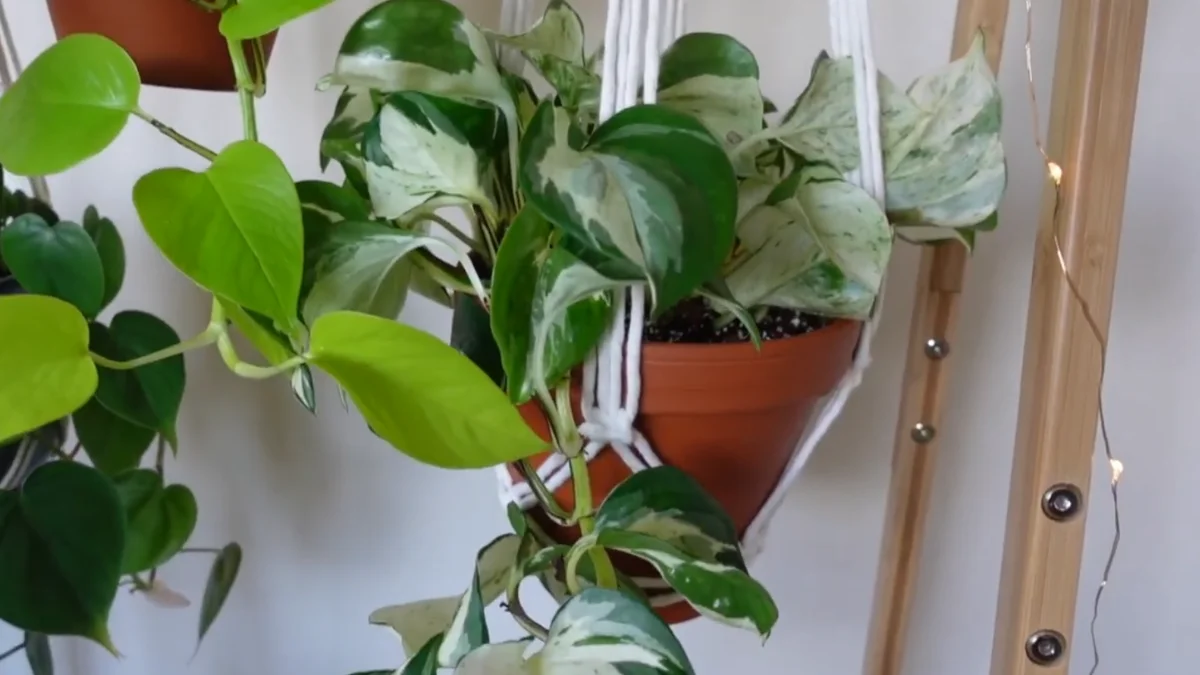
If you are using hanging or rail-based containers, this guide on how to hang planters on a balcony can help you think about safe placement and support.
Step 5: Manage Water and Drainage Carefully
Water affects pot stability more than many beginners expect. A pot can become heavier after watering, but not always evenly. If water drains slowly or collects on one side, the container can become unbalanced.
Standing water can also make the floor slippery. This is a bigger problem on smooth balcony surfaces, especially when pots sit inside saucers that overflow or stay wet for too long.
Good drainage holes, steady watering, and emptying saucers after heavy watering can all help. The pot should stay moist enough for the plant, but not so wet that the whole setup becomes heavy, slippery, or unstable.
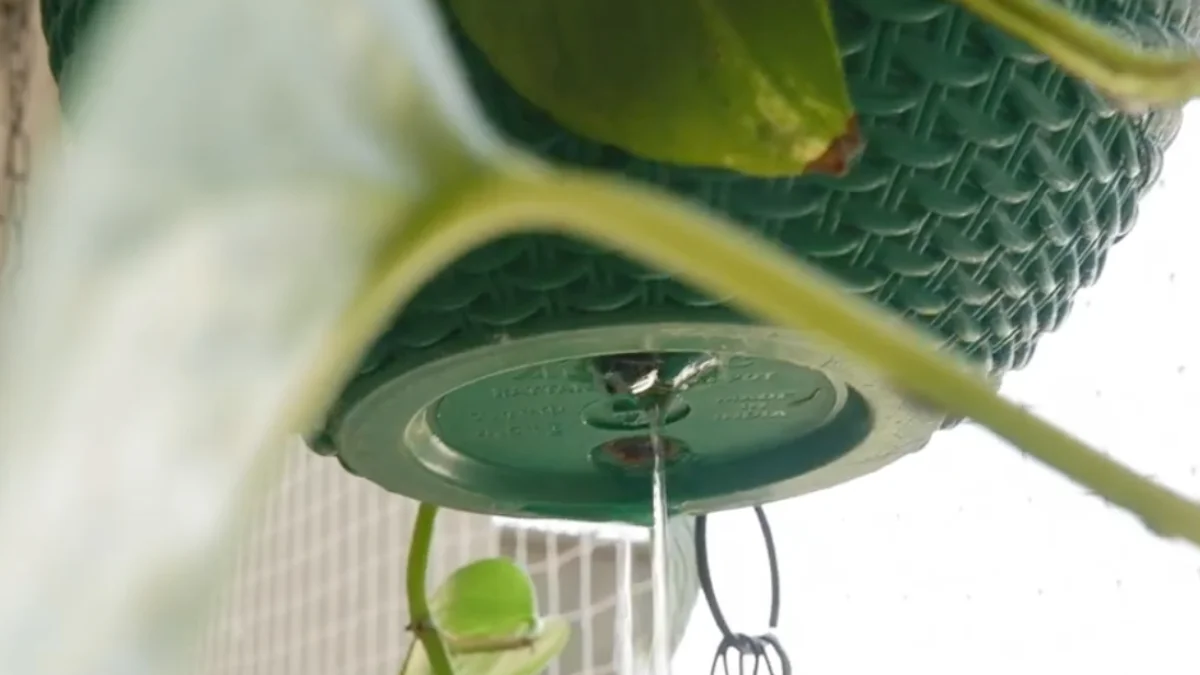
If water dripping is a concern on your balcony, you may also find this guide on how to stop water dripping on lower balconies helpful.
Best Pot Securing Method by Balcony Type
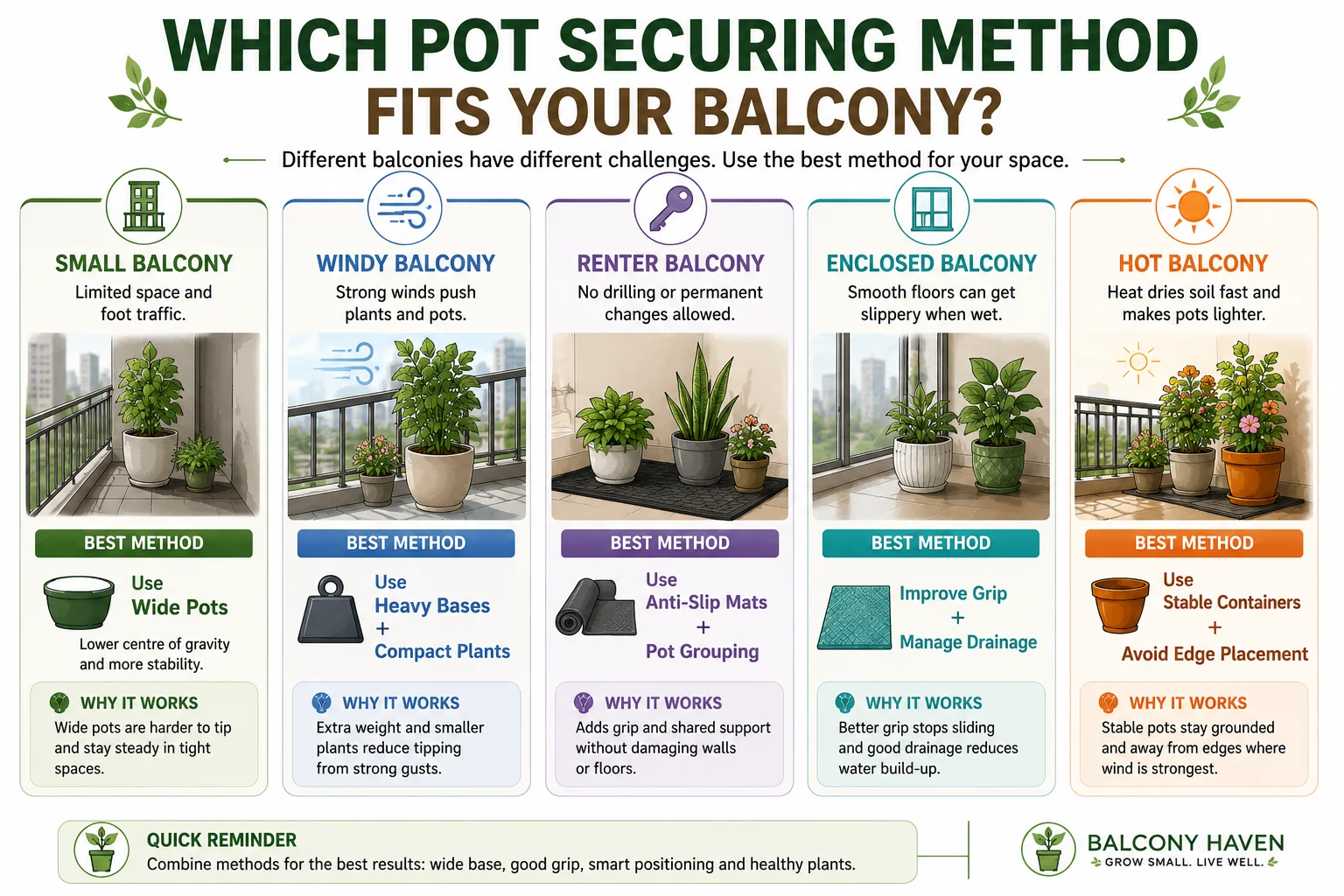
Different balconies need slightly different stability methods. A small sheltered balcony does not have the same risk as a windy high-floor balcony. A renter-friendly setup also needs different solutions from a balcony where permanent fixtures are allowed.
| Balcony Type | Main Risk | Best Stability Strategy |
|---|---|---|
| Small balcony | Pots tipping due to tight space and foot traffic | Use wide pots and place them against walls or corners. |
| Windy balcony | Wind pressure pushing tall plants sideways | Use heavier bases, compact plant growth, and protected positioning. |
| Renter balcony | No drilling or permanent mounting allowed | Use anti-slip mats, pot grouping, and movable support systems. |
| Enclosed balcony | Pots sliding on smooth floors after watering | Improve floor grip and manage drainage carefully. |
| Hot balcony | Soil drying unevenly and pots becoming lighter | Use stable containers, mulch lightly, and avoid placing pots near exposed edges. |
Hot balconies can create their own stability issues because containers may dry quickly and become lighter than expected. If your balcony gets strong afternoon heat, this guide on why balcony plants wilt in the afternoon sun explains how heat changes plant and pot behaviour.
Simple Balcony Pot Stability Check
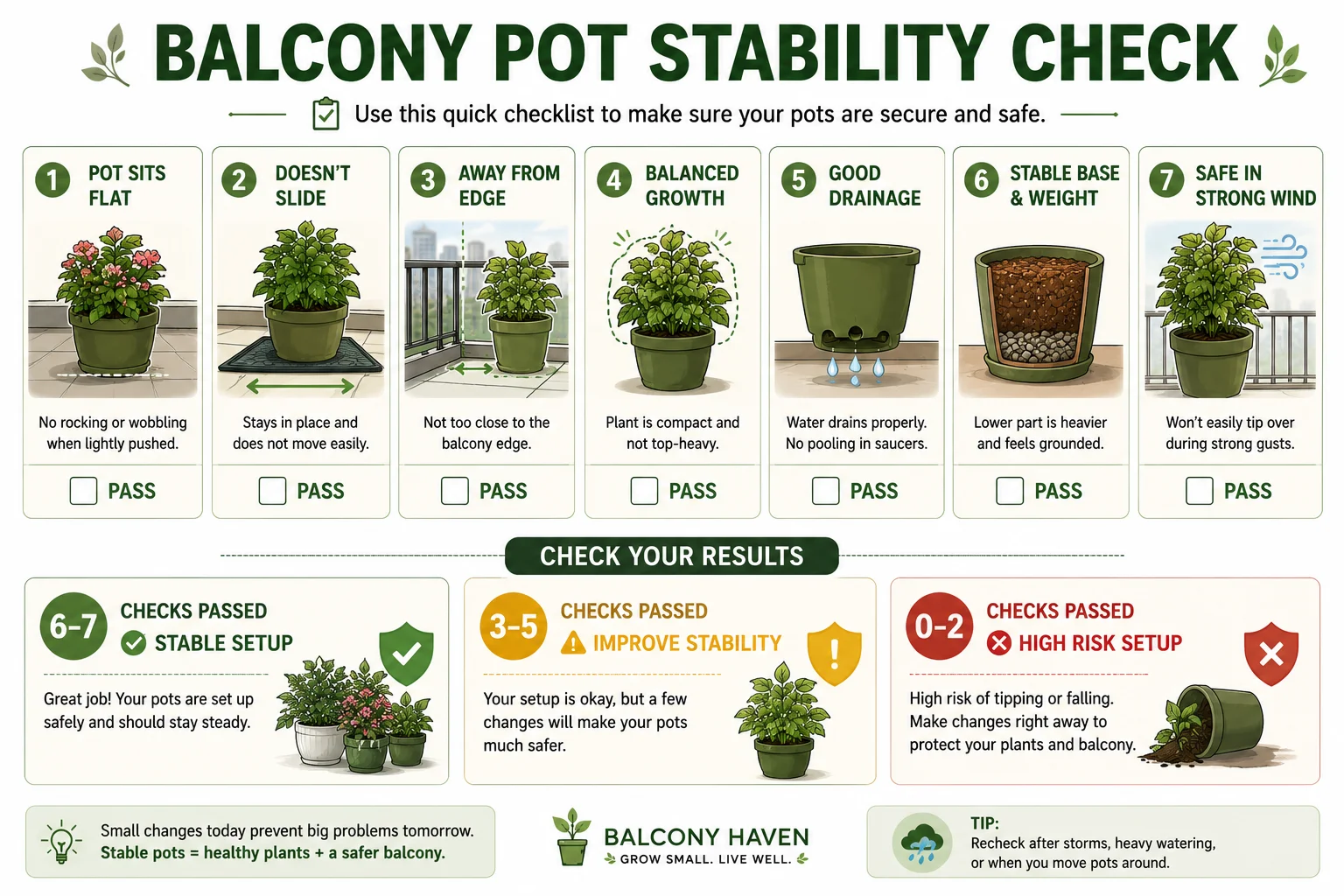
You do not need a complicated inspection routine. A quick check after watering, windy weather, or moving pots is usually enough.
| Check | What to Look For | Simple Fix |
|---|---|---|
| Base stability | The pot sits flat and does not rock. | Move it to a flatter spot or use a wider container. |
| Weight balance | The bottom feels stronger than the top. | Add small base weight or reduce top-heavy growth. |
| Surface grip | The pot does not slide when pushed lightly. | Add an anti-slip mat or grip liner. |
| Plant height | The plant is not leaning strongly or catching wind. | Prune lightly, stake, or move closer to a wall. |
| Position | The pot is not too close to the balcony edge. | Move it inward or group it with other pots. |
| Drainage | Water is not pooling under or around the pot. | Empty saucers and improve drainage. |
This simple check is especially useful after rearranging your balcony. If you are working with a tight space, the article on how to organise plants in a small balcony may help you place pots safely without wasting room.
Common Mistakes to Avoid
Most balcony pot stability problems come from small choices that seem harmless at first. A pot may not fall right away, but it can slowly become less safe over time.
- Using tall, narrow pots for large plants.
- Placing lightweight pots near balcony edges.
- Putting pots on smooth flooring without any grip underneath.
- Ignoring wind direction, especially on higher balconies.
- Allowing plants to become too tall or top-heavy.
- Leaving water to pool under pots or inside saucers.
- Using unstable plant stands that are narrower than the pots they hold.
- Spacing pots too far apart when grouping would create better support.
- Copying ground garden layouts that do not suit balcony conditions.
The biggest mistake is thinking only about the pot and forgetting the whole setup. Pot shape, plant height, floor surface, wind exposure, watering habits, and position all work together.
Timing and Seasonal Behaviour
Securing pots is not something you only do once. A pot that feels stable in one season may become less stable later because the plant, weather, and soil conditions change.
Spring and summer often bring faster plant growth. This can make containers more top-heavy than they were earlier in the year. A pot that felt stable a month ago may become less stable as foliage increases and catches more wind.
Heavy rain can also change pot behaviour. Soil becomes heavier, drainage water can pool, and wet balcony surfaces may become slippery. After windy or rainy weather, it is worth checking whether pots have shifted, leaned, or rotated.
Hot weather creates a different problem. Soil may dry quickly, containers can become lighter, and plants may lean toward shade or away from heat. These small changes can slowly affect balance.
Instead of following a strict schedule, check your pots after weather changes. Movement usually starts with small signs: a pot no longer sits straight, a saucer has shifted, a plant leans more than before, or soil has settled unevenly.
Balcony Haven Note: I have noticed that pots rarely fall suddenly. They usually shift little by little until one day they tip or slide. It often starts with something small, like a slight movement after watering or a gentle lean from wind. That is why I prefer to build stability early, before the pot looks unsafe.
Frequently Asked Questions
How do I secure pots without making them too heavy?
Focus on balance rather than adding too much weight. Use wider pots, keep heavy material near the bottom, add an anti-slip mat, and place pots against walls or corners. A small amount of base weight is often enough when the container shape and position are also stable.
Are plastic pots safe for balconies?
Plastic pots can be safe on balconies, but they are more likely to move because they are lightweight. You can make them safer by using wider plastic pots, placing them on anti-slip surfaces, grouping them together, or putting them inside slightly heavier outer containers.
Should I tie pots to railings?
In most cases, it is better to use stable positioning, anti-slip mats, and pot grouping first. If you tie a pot to a railing, make sure it is secure, balanced, and allowed by your building rules. Avoid tight ties that pull the pot awkwardly in one direction.
Can wind knock over heavy pots?
Yes, wind can still knock over or shift heavy pots if the plant is tall and top-heavy. The shape of the plant matters as much as the weight of the container. A heavy pot with a tall plant can still become unstable if wind keeps pushing the foliage sideways.
Is grouping pots effective?
Yes, grouping pots can be very effective. Pots that sit close together support one another and reduce movement. Grouping also helps protect smaller or lighter pots from direct wind exposure.
Can I place heavy pots directly on a balcony floor?
Usually yes, but it is sensible to think about weight distribution and building rules. Several medium-sized pots spread across the balcony are often easier to manage than one very heavy pot in a single spot. If you are unsure, check your apartment or building guidelines.
What can I put under plant pots to stop them sliding?
You can use rubber mats, anti-slip liners, outdoor grip pads, or cut pieces of old yoga mats. These add friction between the pot and the balcony floor, which helps stop slow sliding after watering, rain, or wind.
Final Thoughts
Securing plant pots on a balcony is not about making every container as heavy as possible. It is about understanding how movement starts and reducing that movement early.
Wide pots, low weight balance, anti-slip surfaces, careful positioning, compact plant growth, and good drainage all work together. When these small details are in place, your balcony feels safer, cleaner, and easier to manage.
The best setup is usually simple. Choose stable containers, keep them away from exposed edges, check them after weather changes, and adjust before small movement becomes a bigger problem.
Leave a Reply