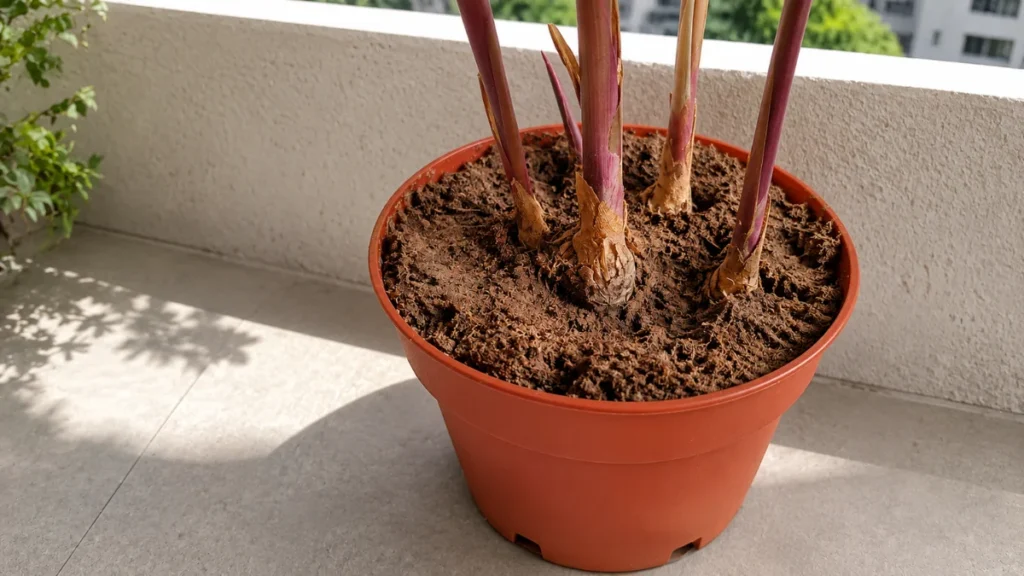
It can feel confusing when balcony plants look fine in the evening, but the soil feels dry again the next morning. This is especially frustrating when you already watered carefully and expected the pot to stay moist for longer.
Balcony plants drying out overnight usually means moisture is leaving the container faster than expected. The cause is often a mix of small pots, warm balcony surfaces, wind exposure, afternoon sun, mature plant growth, and limited soil volume. What seems to happen overnight often starts during the day and continues after sunset.
This problem is common on apartment balconies because balcony gardens behave differently from garden beds. A pot on a balcony cannot pull moisture from surrounding ground soil, and it may be exposed to heat, wind, and reflected sunlight from several directions.
This article explains why balcony plants dry out overnight, what most general gardening advice misses, and how different balcony conditions affect moisture loss in small-space gardens.
Why Balconies Dry Pots Faster Than Gardens
A balcony container only has the moisture stored inside that pot. Unlike a garden bed, the roots cannot spread into surrounding soil to find cooler or wetter areas. Once the water inside the container is used or lost, the plant has very little backup.
Balconies also collect heat in unusual ways. Concrete floors, tiled surfaces, glass doors, metal railings, and nearby walls can absorb warmth during the day. Some of that warmth stays around the pots even after the sun goes down.
Wind is another balcony factor that is easy to underestimate. Air can move strongly between buildings, across railings, and through open corners. Even when the weather does not feel extreme, steady airflow can pull moisture from leaves and soil.
This is why a balcony pot can dry faster than a similar pot in a backyard. The plant is not only dealing with sunlight. It is also dealing with container limits, reflected heat, moving air, and a small root zone.

What Most Advice Misses About Overnight Drying
Many general gardening guides treat dry soil as a simple watering issue. In a backyard, that advice may often make sense because the soil volume is larger and the plant has more space to buffer moisture changes.
On a balcony, the situation can be different. A plant may be watered well, but the container may still dry quickly because the pot is small, the balcony is windy, or the afternoon sun has heated the root zone.
This is why two people can grow the same plant in the same city and get very different results. One balcony may be sheltered and slow to dry. Another may be open, hot, and windy enough to dry pots by morning.
If this is a regular problem on your balcony, the article Balcony Soil Drying Out Too Fast (What Actually Helps) may also help because it explains why moisture disappears quickly from balcony containers.
Why Heat Still Matters After Sunset
One overlooked reason balcony plants dry out overnight is that the pot may still be warm after the day has ended. This is especially common when plants sit near concrete, tiles, brick walls, glass doors, or metal balcony edges.
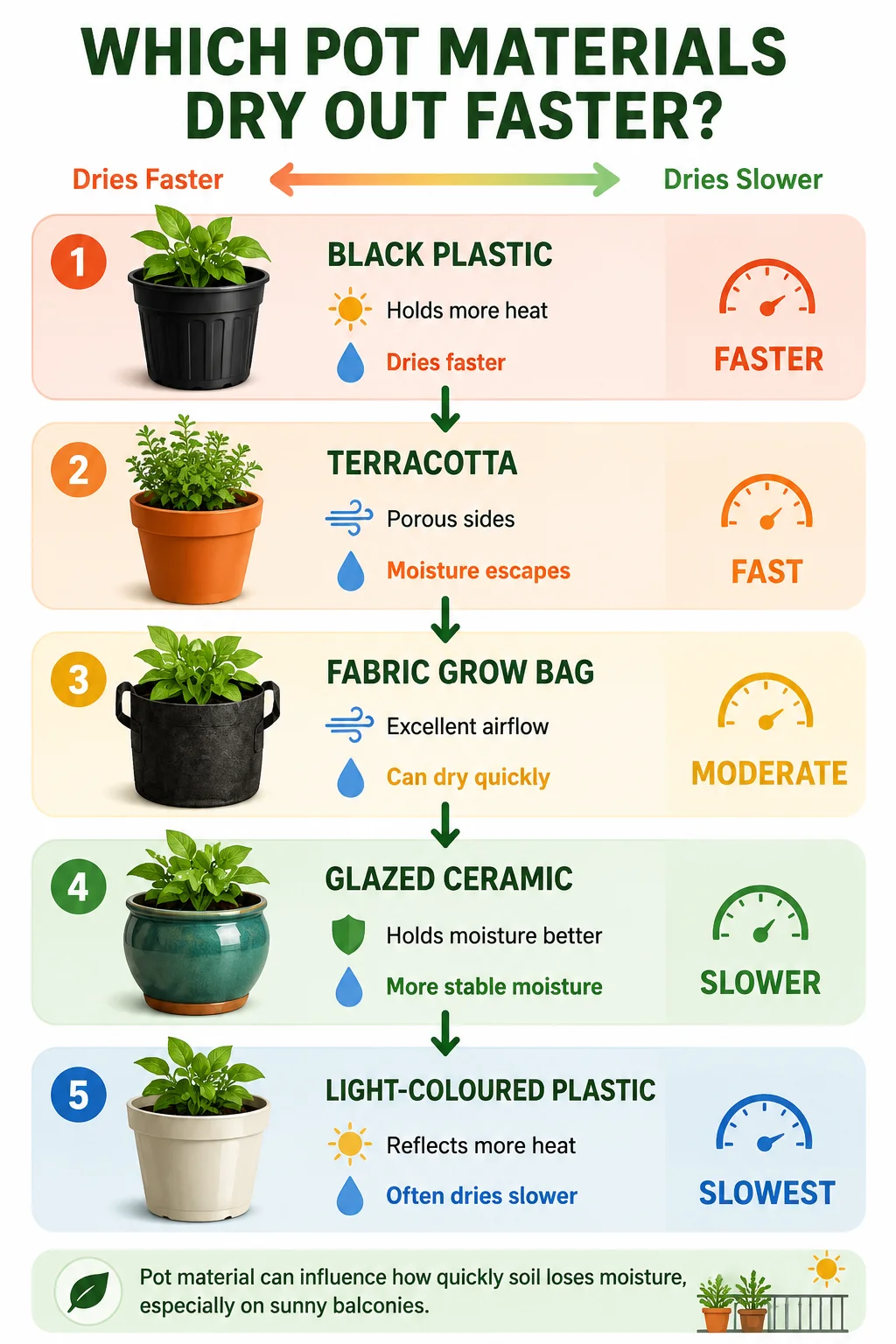
A pot does not cool down instantly when the sun disappears. Dark-coloured containers, small pots, and thin plastic pots may hold or transfer heat in ways that keep the soil warmer than expected.
Pot material can also change how quickly soil warms, cools, and dries. Some containers absorb heat more strongly, while others may breathe, insulate, or release moisture differently.
When the soil stays warm, moisture can continue leaving the pot. The plant may also keep using water during the evening, especially if it has lots of leaves, flowers, or fruit.
This can make the soil feel much drier in the morning, even if the real drying process began many hours earlier.
Common Reasons Balcony Plants Dry Out Overnight
When balcony plants dry out overnight, there is usually more than one cause. The table below shows how different balcony conditions can affect moisture loss.
| Balcony Condition | What Happens Overnight | Why It Matters |
|---|---|---|
| Small containers | Moisture reserve runs out quickly | There is less soil available to hold water. |
| Strong wind exposure | Air keeps pulling moisture from leaves and soil | The plant may dry even when the night feels cool. |
| Afternoon sun | Pots stay warm after sunset | Stored heat can continue drying the soil. |
| Mature plants | Roots and leaves use more water | A pot that worked earlier may dry faster as the plant grows. |
| Dark-coloured pots | Containers may absorb more heat | The root zone can become warmer and drier. |
| Exposed concrete or tiles | Hard surfaces release stored warmth | Plants may keep losing moisture after sunset. |
Open Balconies vs Sheltered Balconies
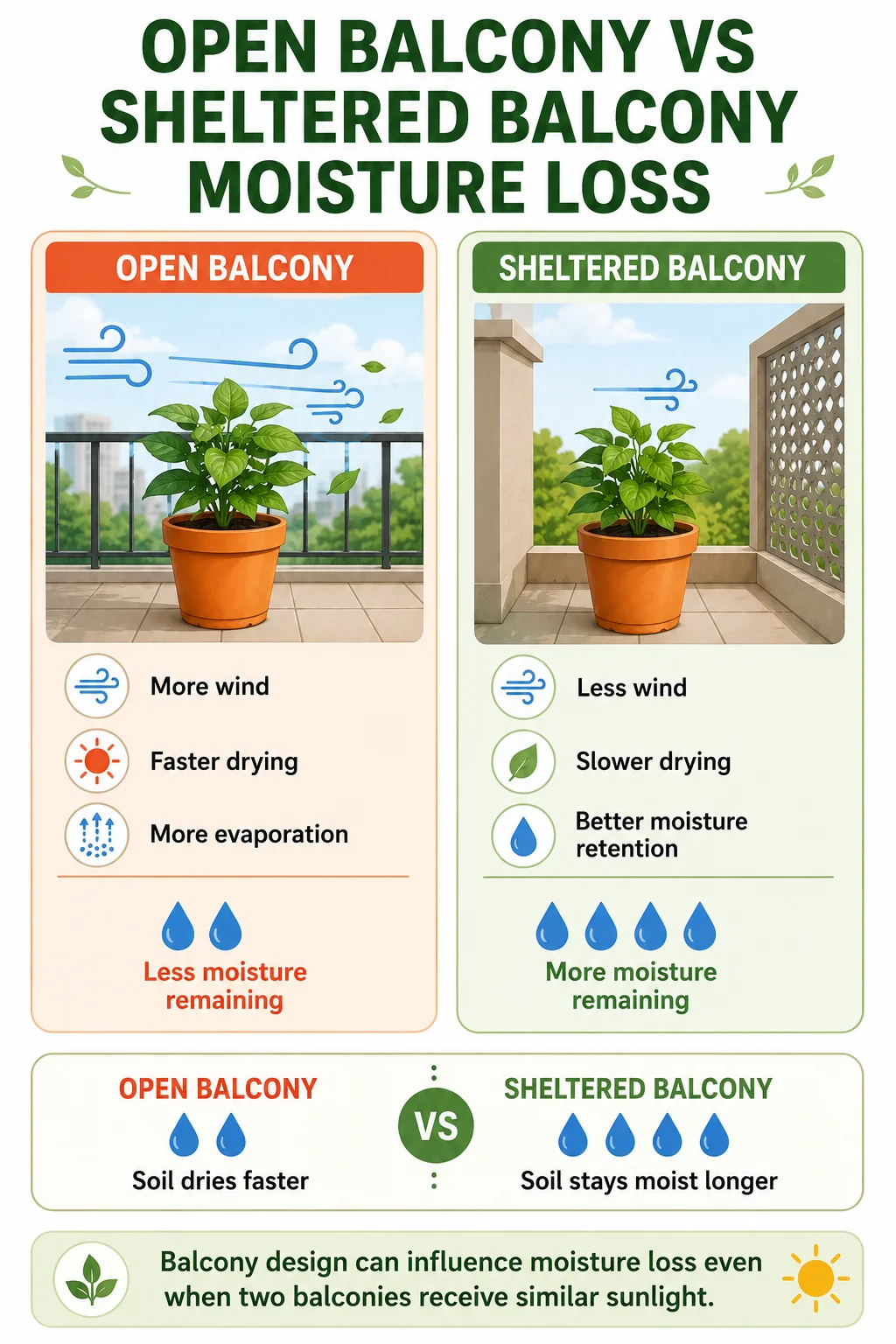
An open balcony often dries plants faster than a sheltered balcony because it receives more moving air. The difference may not be obvious at first, especially if both balconies receive a similar amount of sunlight.
A sheltered balcony may have side walls, screens, nearby structures, or a covered layout that slows airflow. This can help pots hold moisture longer, although very enclosed balconies may create other issues such as poor airflow or trapped heat.
An open balcony near a corner, railing, or upper floor may experience more drying. The plant is not only exposed to sun from above, but also to air movement around the pot and leaves.
If wind is a regular part of your balcony conditions, the article What Are the Best Plants for a Windy Balcony? may help you understand why some plants cope better with exposed air than others.
Small Containers Lose Moisture Quickly
Small pots are common on balconies because they save space, reduce weight, and are easier to move. They can work well, but they also dry faster than larger containers.
The reason is simple: small pots hold less soil. Less soil means less moisture storage. When the plant uses water or the balcony environment pulls moisture away, the pot has a smaller reserve to rely on.
This becomes more noticeable during warm weather, windy days, or periods of active growth. A small herb pot that stayed moist in mild weather may dry by morning once the plant grows larger or the balcony becomes hotter.
Some balcony gardeners notice that moisture problems become more manageable once they understand how their containers, balcony exposure, and soil all work together. Our article How to Keep Soil Constantly Moist on a Balcony explores why moisture consistency often depends on the entire growing setup rather than watering alone.
Small containers are not wrong for balcony gardening. They just respond quickly to weather and plant demand.
Morning Sun vs Afternoon Sun
Morning sun usually warms balcony pots more gently. The air is cooler, hard surfaces are less heated, and plants often lose moisture more slowly.
Afternoon sun can be stronger because the balcony has already collected heat during the day. By late afternoon, walls, railings, tiles, and containers may all be warm at the same time.
This is why plants on west-facing or afternoon-sun balconies may dry faster overnight. The soil can enter the evening already warm and partly depleted of moisture.
A plant may look fine in the early evening, but the remaining warmth inside the pot can continue reducing moisture before morning.
Larger Plants Use More Water
Sometimes the balcony has not changed much, but the plant has. As plants grow, they usually produce more leaves, roots, flowers, and fruit. All of that growth increases water demand.
A container that seemed large enough when the plant was young may become less forgiving later. This is common with tomatoes, chillies, cucumbers, flowering annuals, herbs, and leafy plants during active growth.
When a plant becomes bigger, it can use moisture faster than expected. The soil may still be technically suitable, but the water reserve may no longer last as long as it did earlier in the season.
This is one reason overnight drying can feel sudden. The plant may have slowly grown into a higher-demand stage without the change being obvious day by day.
Wind Can Keep Working Overnight
Many people connect drying soil with hot sun, but wind can dry balcony plants even when the temperature feels mild. This is because moving air encourages moisture to leave plant leaves and exposed potting mix.
On higher balconies or open building corners, airflow can continue through the night. The balcony may feel cool, but the plant may still be losing moisture.
This is one of the reasons balcony plants can seem dry by morning even after a cooler night. The drying force was not only heat. It may have been steady airflow across the container and leaves.
Practical Insights
When balcony plants dry out overnight, it helps to look at the whole growing situation rather than only the watering routine.
- Small pots usually dry faster than deeper containers.
- Open balconies often lose moisture faster than sheltered balconies.
- Afternoon sun can leave pots warm after sunset.
- Mature plants often use more water than young plants.
- Wind can dry plants even when the night feels cool.
- Hard balcony surfaces can add reflected heat around containers.
Common Misunderstandings
Overnight drying can feel like a watering failure, but balcony moisture loss is often more complex than that. These misunderstandings are common among small-space gardeners.
- Dry soil in the morning does not always mean the plant was ignored.
- More water is not always the only answer.
- Cool nights do not always stop moisture loss.
- Two balconies in the same building can dry at different speeds.
- Small pots may dry quickly even with careful watering.
- Garden-bed advice does not always match balcony container conditions.
Local & Seasonal Context
In many Australian balcony settings, overnight drying becomes more noticeable during warm, dry, or windy periods. Summer heat can speed up moisture loss, but wind can also be a strong factor during cooler seasons.
Coastal balconies may deal with regular drying breezes. Urban balconies may experience reflected heat from concrete, glass, and nearby buildings. In humid areas, plants may still dry quickly if the container is small or the balcony is exposed.
This is why there is no single rule for every balcony. A shaded Brisbane balcony, a windy coastal balcony, and a hot west-facing apartment balcony may all need to be understood differently.
Balcony Haven Note: I have noticed that balcony pots often tell the story of the space around them. One plant may dry quickly because the pot is small, while another may dry because the balcony catches wind at night. This is why I like looking at the whole balcony first instead of assuming the problem is only watering.
Frequently Asked Questions
Can balcony plants dry out overnight even after watering?
Yes, balcony plants can dry out overnight even after watering if the pot is small, the balcony is windy, or the container stayed warm after a hot day. The drying may have started earlier and continued through the night.
Why is my balcony soil dry by morning?
Balcony soil may be dry by morning because containers have limited moisture storage. Wind, warm pots, reflected heat, and active plant roots can all reduce moisture before the next day begins.
Does wind make balcony plants dry faster?
Yes, wind can make balcony plants dry faster by moving moisture away from leaves and exposed soil. This can happen during the day or overnight, especially on open balconies.
Do small balcony pots dry out faster?
Small balcony pots usually dry faster because they hold less soil and less stored moisture. They can still work well, but moisture changes happen more quickly than in larger containers.
Is dry soil in the morning always bad for balcony plants?
Not always. Some plants tolerate short dry periods better than others. The plant’s leaves, growth, and overall condition often give more useful clues than the soil surface alone.
Final Thoughts
When balcony plants dry out overnight, the cause is usually not one simple mistake. Moisture may be leaving the pot because of heat, wind, small containers, plant growth, and the way balcony surfaces hold warmth after sunset.
Understanding these patterns can make balcony gardening feel less confusing. Instead of seeing dry soil as failure, it can be seen as information about how the balcony behaves.
Every balcony has its own moisture rhythm. Once that rhythm becomes easier to notice, it becomes much easier to understand why plants dry quickly and what conditions matter most in your own small-space garden.
Leave a Reply