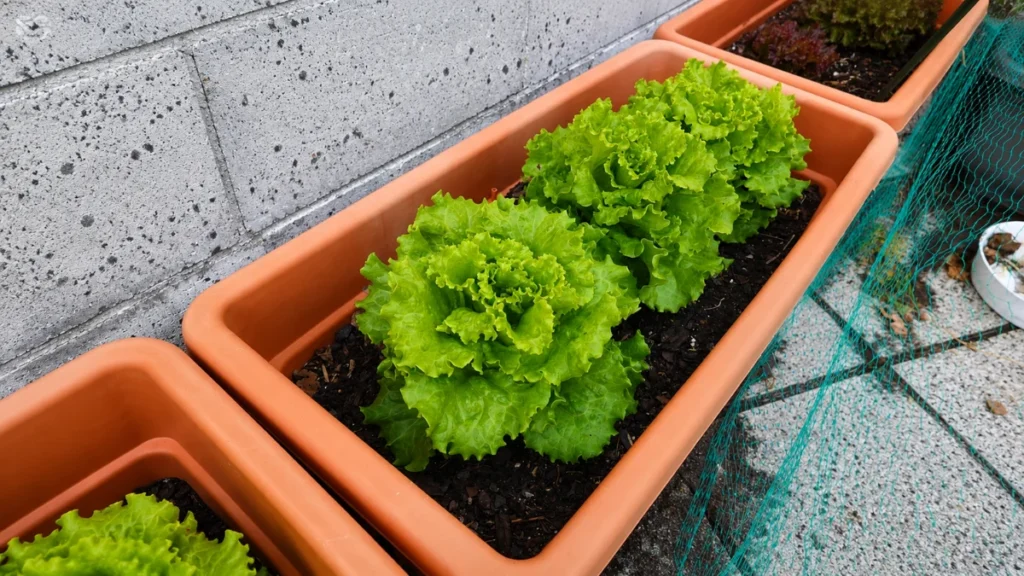
Balcony vegetable pots often create confusion because many vegetables appear small above the soil while quietly needing far more root space underneath. On balconies, this becomes even more noticeable because containers dry faster, heat up differently, and have stricter size and weight limits than normal backyard gardens.
Many balcony vegetables grow best when the soil depth matches how their roots naturally spread and store moisture. Smaller herbs and leafy greens may stay comfortable in shallow containers around 15–20 cm deep, while tomatoes, cucumbers, beans, and deeper-rooting vegetables usually perform more steadily in pots closer to 30–45 cm deep. The best soil depth for balcony vegetable pots is often less about “bigger is always better” and more about creating enough stable root space for moisture, airflow, temperature balance, and plant support.
A lot of balcony gardening advice mixes backyard raised-bed logic with apartment container growing. That is partly why people hear completely different opinions online. Some guides focus only on root size, while others ignore how balconies trap reflected heat, lose moisture quickly through wind, or limit container weight.
This article explains why soil depth behaves differently on balconies, why some vegetables struggle in shallow pots even when they initially look healthy, and how container depth quietly affects moisture stability, growth rhythm, and long-term plant stress.
Balcony Reality Changes How Soil Depth Behaves
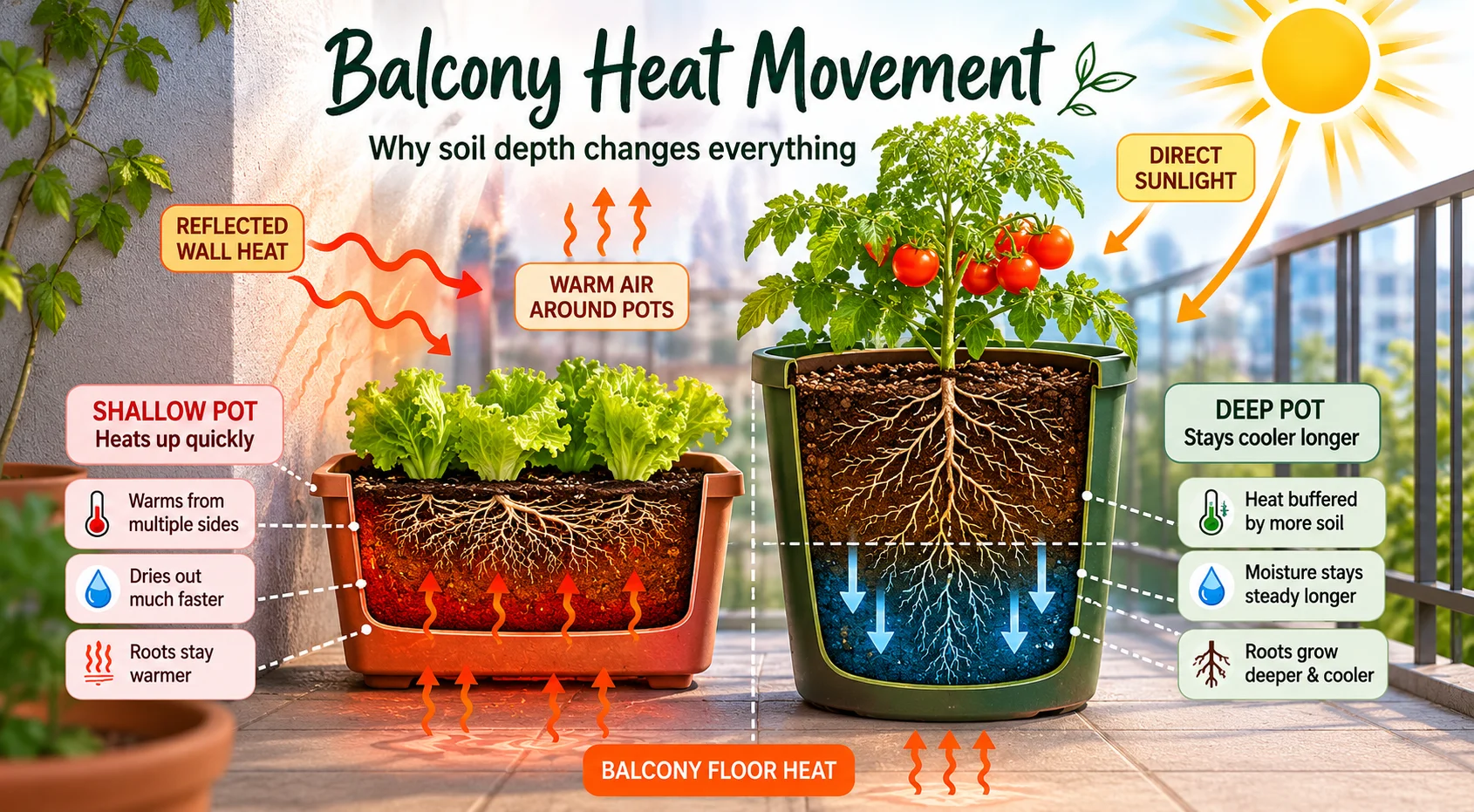
On a normal backyard garden bed, roots can slowly explore cooler layers underneath the surface. Balcony containers cannot do that. The entire root system is trapped inside one limited space that heats, cools, dries, and drains much faster.
This is why shallow balcony vegetable pots often behave differently from shallow ground beds. Even when the soil surface looks moist, the lower half of a small pot may already be warming up dramatically during hot afternoons. On balconies surrounded by walls, concrete, railings, and reflective windows, this effect becomes stronger.
Shallow containers also experience quicker moisture swings. A pot that feels perfectly balanced in the morning may become dry and warm only a few hours later. This is one reason vegetables sometimes appear healthy for weeks before suddenly slowing down, drooping, or producing smaller harvests.
Weight matters too. Many apartment gardeners intentionally choose smaller pots to reduce strain on the balcony floor or to save walking space. That makes sense practically, but it also changes how stable the soil environment becomes over time.
This is partly why deeper balcony pots often feel “easier” even when the plant itself does not technically need enormous roots. The extra soil volume creates a slower, more buffered environment.
What Most Gardening Advice Misses About Balcony Containers
Many gardening articles talk about minimum soil depth as if roots only care about physical space. But balcony vegetables are also responding to temperature consistency, moisture rhythm, airflow around roots, and how quickly nutrients wash through the container.
A lettuce plant in a shallow backyard bed may perform completely differently from lettuce in a shallow black plastic balcony pot exposed to afternoon heat and dry wind.
Another thing often overlooked is root behaviour itself. Roots do not simply grow downward like a straight carrot shape. In containers, many vegetable roots spread sideways searching for cooler and more stable zones. Extremely narrow or shallow balcony pots can quietly limit this natural spreading pattern.
This becomes especially noticeable with climbing vegetables. Cucumbers, tomatoes, and beans may appear vertically successful because the vines keep growing upward, while the roots underneath are becoming increasingly stressed in a cramped soil zone.
Some balcony gardeners mistake this for watering problems, nutrient problems, or sunlight problems when the deeper issue is actually unstable root space.
If your balcony soil dries extremely quickly during warm weather, this article on Balcony Soil Drying Out Too Fast (What Actually Helps) may also help explain why shallow containers often behave differently in apartment environments.
Shallow Pots vs Deep Pots for Balcony Vegetables
Leafy Greens Usually Handle Shallower Soil Better
Vegetables like lettuce, spinach, rocket, baby bok choy, and many herbs often tolerate shallower balcony containers more comfortably than fruiting vegetables.
Their root systems usually stay lighter and faster-growing, and many of them naturally complete their growing cycle relatively quickly. Because of this, shallow-to-medium soil depth can still feel stable enough for them.
But even leafy greens may struggle when balconies receive strong reflected heat, pots become narrow and overcrowded, containers dry unevenly, or afternoon wind pulls moisture out rapidly. This is why two people using the exact same pot depth can experience completely different results depending on balcony conditions.
| Vegetable Type | Typical Soil Depth Range | Balcony Behaviour |
|---|---|---|
| Lettuce & leafy greens | 15–20 cm | Usually handles shallower pots better if moisture stays stable. |
| Herbs such as basil, parsley, and coriander | 15–25 cm | Can grow well in smaller pots but may suffer when wind dries the soil quickly. |
| Strawberries | 20–30 cm | Often performs better when roots stay cooler and moisture remains steady. |
| Beans & peas | 25–35 cm | Usually benefits from steadier moisture during climbing and pod growth. |
| Tomatoes | 30–45 cm | Deeper soil usually improves moisture stability and reduces stress cycling. |
| Cucumbers & zucchini | 35–45 cm | Larger roots often struggle when containers are shallow, hot, or cramped. |
| Chillies & eggplants | 30–40 cm | More stable soil often improves fruit production consistency. |
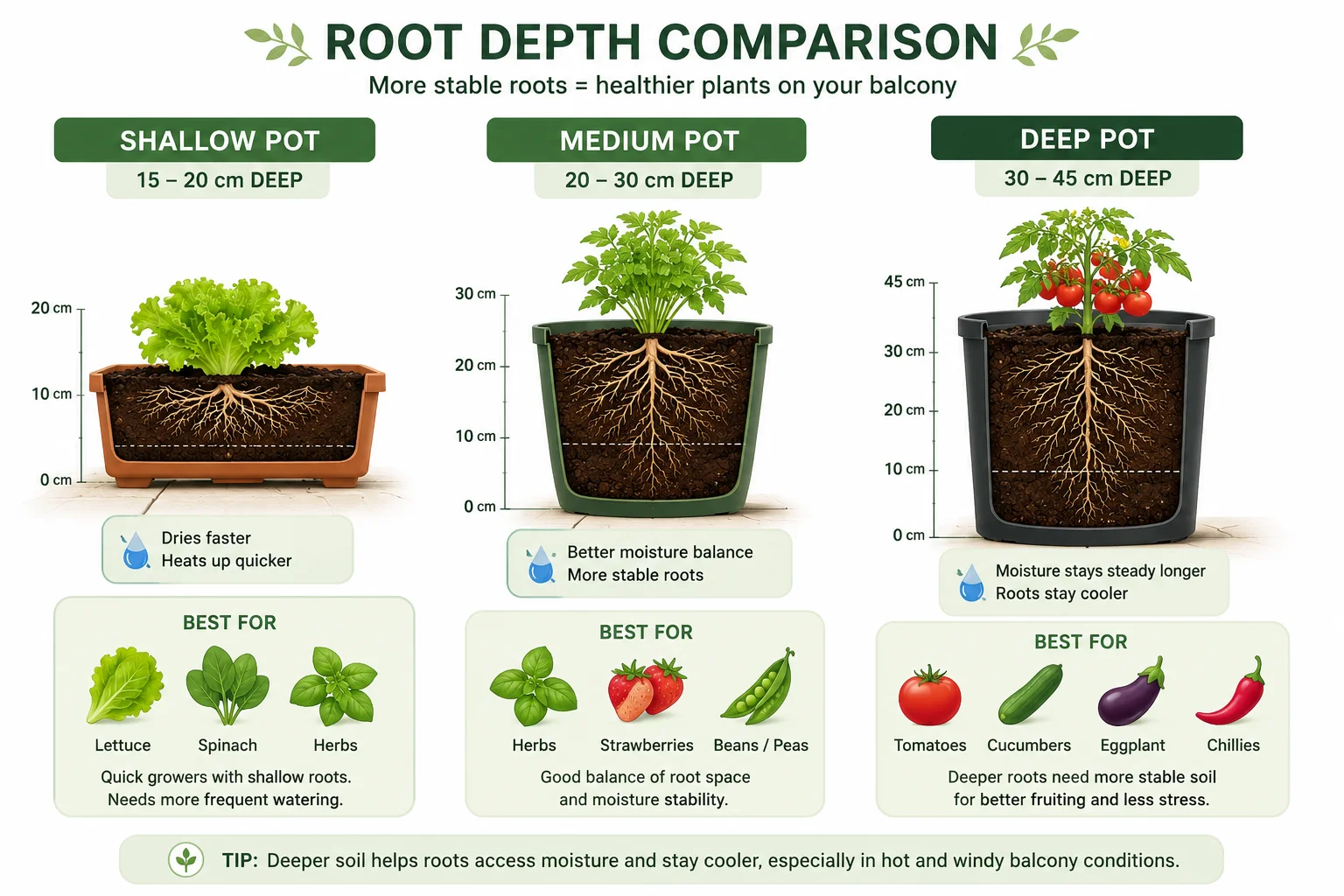
The article Deep vs Shallow Pots for Balcony Veggies explores how different container shapes quietly affect vegetable performance on balconies.
Fruiting Vegetables Usually Prefer More Soil Stability
Tomatoes, cucumbers, eggplants, zucchini, beans, and chillies often respond more positively to deeper soil zones because they are balancing heavier top growth, fruit production, larger water demand, and stronger temperature sensitivity all at the same time.
A tomato plant may survive in a shallow pot, but survival and steady performance are not always the same thing.
One interesting balcony pattern is that shallow tomato containers often create “stress cycling.” The plant repeatedly swings between warm and cool conditions, wet and dry soil, and active growth followed by stress recovery periods. Over time, this can sometimes lead to flower drop, slower fruit swelling, curling leaves, irregular ripening, or weaker flavour.
Deeper soil buffers these swings more gently.
This connects closely with Best Pot Size for Balcony Tomatoes, especially for balconies where space is limited but temperatures rise quickly.
Container Width Quietly Matters Too
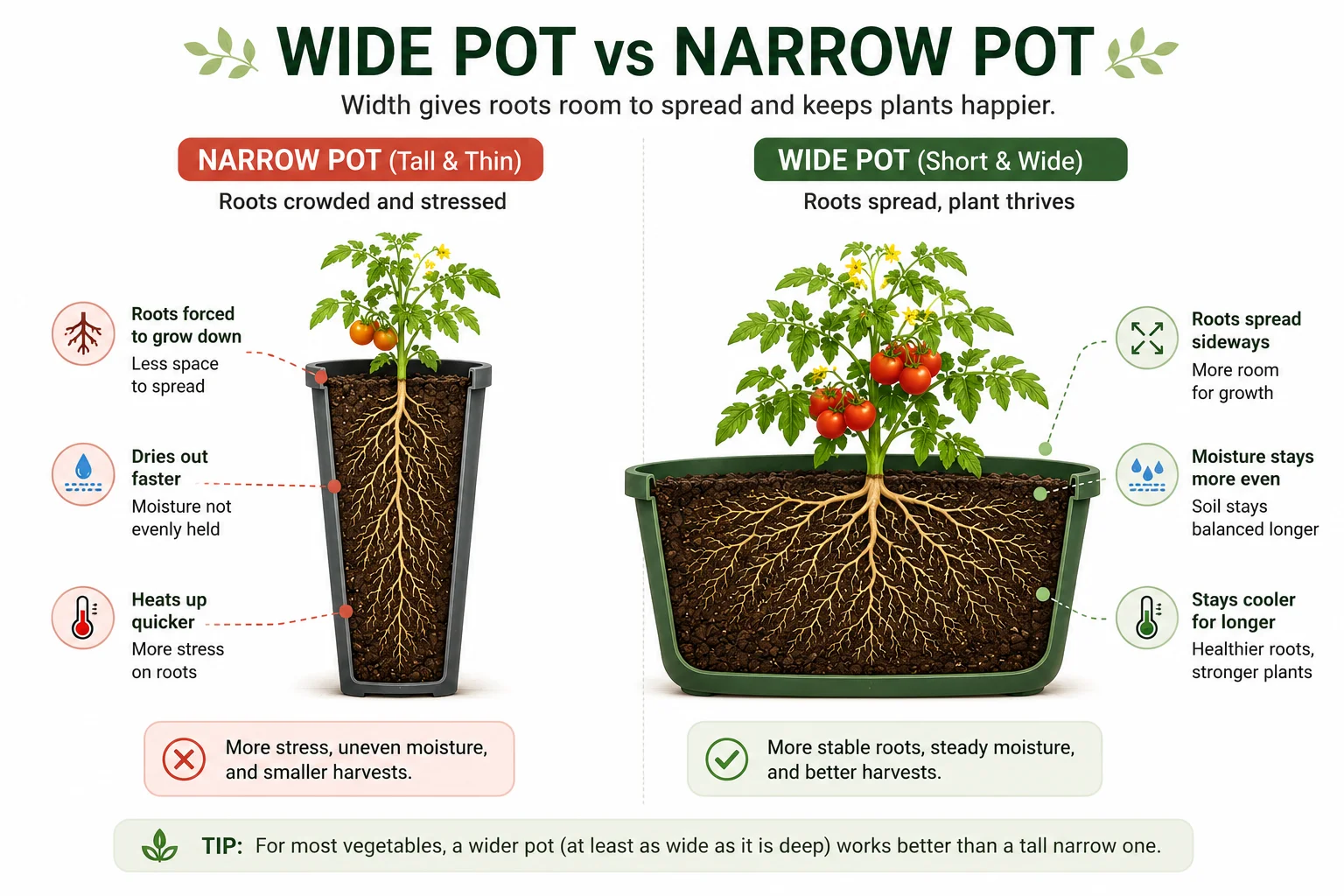
Many people focus only on pot depth, but balcony vegetables often respond to total soil volume rather than depth alone.
A moderately deep wide container may sometimes outperform an extremely deep narrow container because roots gain more sideways breathing space.
This matters especially on balconies where containers sit against hot walls, wind enters mostly from one direction, sunlight reaches only certain corners, or soil dries unevenly throughout the day.
Wide containers also tend to distribute moisture more gradually, reducing sharp wet-dry swings.
Some balcony gardeners unknowingly create root stress by choosing decorative tall narrow pots that look space-efficient but contain surprisingly little stable root area underneath.
Lightweight Balcony Pots Change Soil Behaviour
Balcony safety and weight concerns often push gardeners toward lightweight plastic, fabric, or resin containers. These work well in many situations, but they also change how soil depth behaves.
Thin lightweight pots usually warm up faster, cool down faster, dry faster, and respond more sharply to weather shifts compared to thicker materials.
This means a 20 cm soil depth in a ceramic pot may behave very differently from 20 cm in a thin plastic grow bag sitting in direct afternoon sun.
That difference becomes even more noticeable in Australian summers or west-facing balconies.
The article Lightweight Pots for Apartment Balconies explains how different materials quietly influence balcony growing conditions.
Practical Insights About Soil Depth on Balconies
Balcony vegetable pots often become more stable when the soil volume changes temperature slowly, roots are not pressed tightly against hot container walls, and moisture remains more even between waterings.
Containers also tend to perform more predictably when airflow can still reach the lower root zone gently and the container shape matches the vegetable’s natural growth style instead of forcing roots into cramped narrow spaces.
Very shallow containers may still work temporarily for quick-growing greens, but larger fruiting vegetables usually become less predictable when root space stays restricted for long periods.
Common Misunderstandings About Balcony Pot Depth
Many balcony gardeners assume deeper roots automatically create taller plants or that vegetables fail only because of watering mistakes. Others focus entirely on depth while overlooking total soil volume and container shape.
Another common misunderstanding is assuming balcony vegetables behave the same way as garden-bed vegetables. On balconies, reflected heat, wind tunnels, enclosed walls, and rapid drying can magnify small container limitations much faster than people expect.
Decorative pots can also be misleading. Some containers appear large from the outside while offering surprisingly little usable root space underneath once drainage layers and narrowing shapes are considered.
Local & Seasonal Context for Australian Balconies
In many Australian apartment balconies, especially during warmer months, container depth affects temperature stability almost as much as moisture retention.
Balconies facing west or surrounded by reflective buildings often experience strong late-afternoon heat buildup. In these conditions, shallow vegetable pots may heat from multiple directions at once — from above, from the container walls, and from reflected surfaces underneath.
Cooler southern regions may experience a different issue where shallow pots cool rapidly overnight, slowing root activity even when daytime temperatures feel comfortable.
This is one reason the same vegetable can behave differently between Brisbane, Melbourne, Perth, or coastal apartment balconies.
Balcony Haven Note: I’ve noticed that balcony vegetables sometimes appear perfectly healthy above the soil while quietly struggling underneath in containers that are simply too shallow for stable root conditions. On some balconies, a slightly deeper pot changes moisture rhythm more than watering frequency itself. I’ve also seen two balconies grow the same vegetable very differently simply because one container stayed cooler and more insulated through the afternoon heat.
Frequently Asked Questions
Can vegetables still grow in shallow balcony pots?
Yes, many vegetables can still grow in shallow balcony containers, especially fast-growing greens and herbs. But growth stability often changes depending on heat, wind, and how quickly the container loses moisture.
Why do deep pots sometimes grow healthier balcony vegetables?
Deeper containers usually create slower temperature and moisture changes around the roots. That extra stability often reduces stress during hot afternoons or windy weather.
Are fabric grow bags considered deep enough?
Some grow bags provide excellent root depth, but thinner fabric sides may dry faster on exposed balconies. The soil environment can behave differently compared to thicker ceramic or resin pots.
Do roots always grow straight downward in pots?
Not necessarily. Many vegetable roots spread sideways searching for cooler, more stable soil zones. Container width often matters more than people expect.
Why do shallow balcony pots sometimes overheat quickly?
Balconies often reflect heat from walls, railings, windows, and flooring surfaces. Smaller soil volumes warm up faster because there is less insulated root space underneath.
Final Thoughts
The best soil depth for balcony vegetable pots is usually the depth that creates a calmer and more stable root environment rather than simply the deepest container possible.
On balconies, vegetables are not only reacting to root space. They are also responding to heat buildup, moisture swings, airflow, container material, and how quickly the soil environment changes throughout the day.
Small differences in container depth can quietly influence how relaxed or stressed a balcony vegetable feels over time. And because every balcony creates its own microclimate, the same pot may behave completely differently between one apartment and another.
Leave a Reply