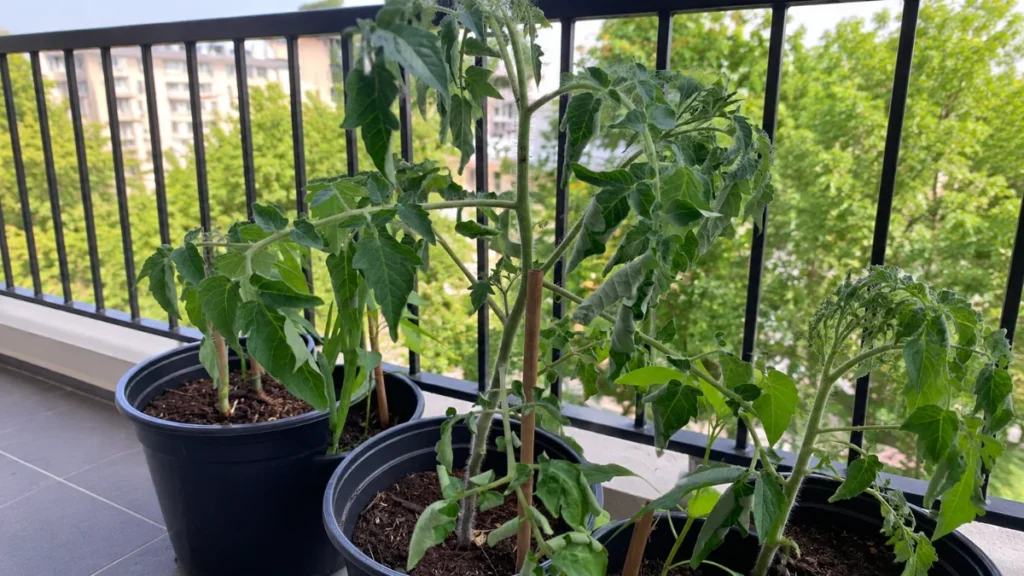
Seeing balcony plants wilting even with wet soil can feel confusing because the pot already looks watered. The leaves may hang down, the stems may soften, and the soil may still feel damp when you touch it. For many balcony gardeners, this is when the problem starts to feel unfair.
A balcony plant can wilt in wet soil when the roots are struggling to take up water properly. This can happen when the potting mix is too soggy, compacted, low in air, overheated, or affected by root stress. The plant may have water around its roots, but the roots may not be healthy or comfortable enough to move that water up to the leaves.
This problem is common in small balcony containers because pots behave differently from garden beds. A balcony pot can be wet at the bottom, hot on the outside, dry near the edges, and low in air around the roots all at the same time.
This is why two similar plants sitting only a short distance apart can behave differently. One pot may dry quickly because it gets more afternoon sun, while another may stay damp because it is shaded by a wall, railing, or neighbouring pot.
This article explains why wet soil does not always mean a plant is safe, how balcony conditions make wilting more likely, and how to read the signs without panicking or guessing.
Why Wet Balcony Soil Can Still Lead to Wilting
Balcony plants live in a much smaller root space than plants growing in the ground. This means every small change inside the pot matters more. A little too much water, a blocked drainage hole, a compacted potting mix, or a very hot pot wall can affect the whole root area quickly.
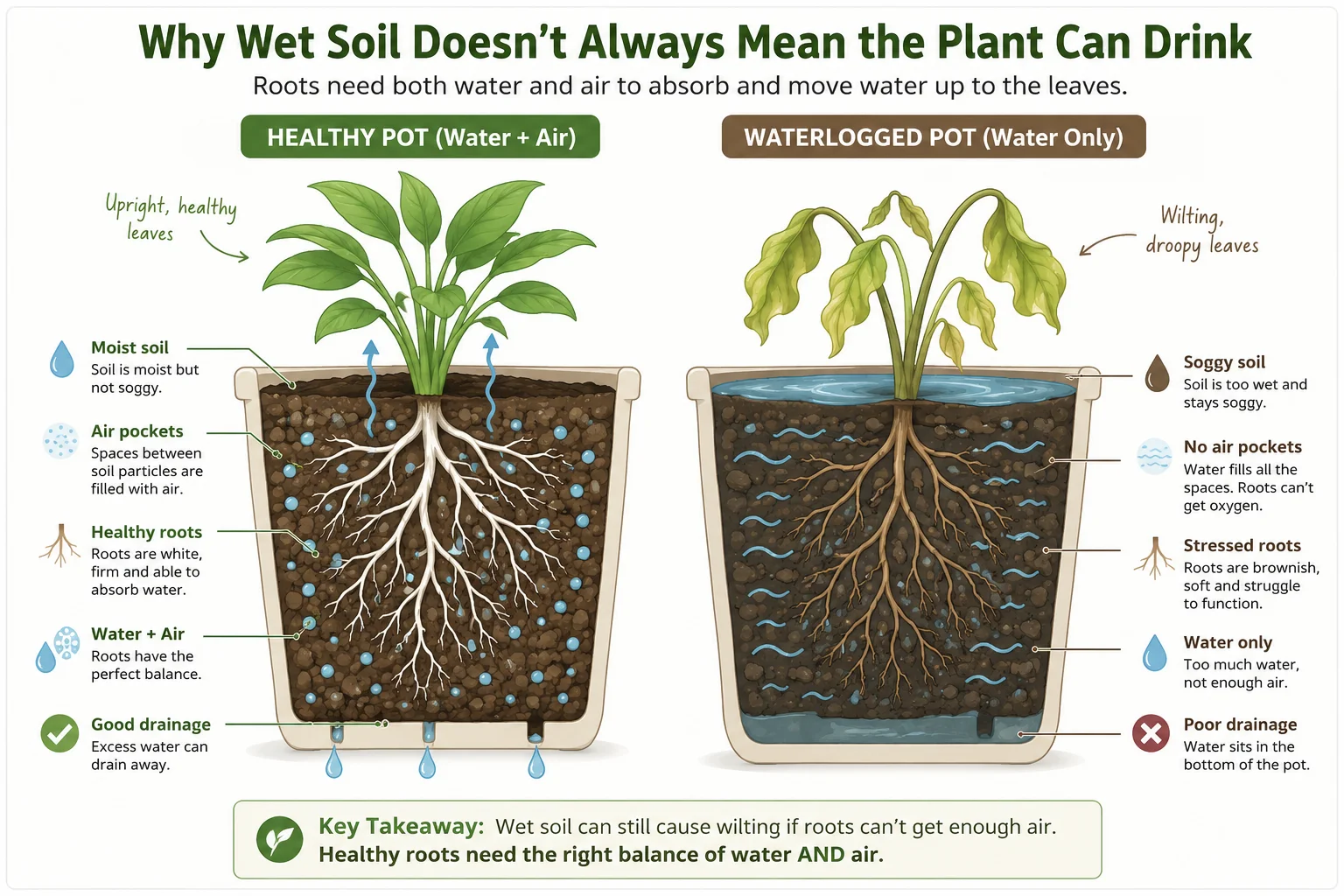
In a garden bed, extra water can often move away into the surrounding soil. In a balcony container, the water has fewer places to go. If the potting mix holds too much moisture, the air spaces between soil particles can fill with water. Roots need both moisture and air. When there is water but not enough air, the plant can still wilt.
This is one reason balcony plants wilting even with wet soil should not be treated as a simple watering problem. It is often a root-zone problem. The leaves show the symptom, but the real issue may be happening inside the pot.
Balconies also add stress from wind, reflected heat, hot paving, glass railings, and uneven sunlight. A plant may be sitting in wet soil while its leaves are being dried by wind or heated by reflected sun. That mixed signal is very common in apartment gardening.
What Most Watering Advice Misses
Most basic gardening advice says to water when the soil feels dry. That can be useful, but it does not explain what to do when the soil is already wet and the plant still looks thirsty.
The problem is that many guides are written for gardens, patios, or larger outdoor spaces. Balcony pots are more restricted. They may have less airflow around the potting mix, less soil depth, stronger heat from hard surfaces, and less room for roots to recover from stress.
Another thing many guides miss is that wet soil is not always evenly wet. The top may feel damp, while the bottom may be waterlogged. Or the centre may stay soggy while the outside edge dries quickly from heat and wind. A balcony pot can have several moisture zones in one small container.
Why Wet Soil Does Not Always Mean the Plant Can Drink
A plant does not simply drink water because water is nearby. The roots need to be healthy enough to absorb water and move it up through the stems. If the roots are stressed, damaged, too hot, too cold, or sitting in soggy soil with little air, water uptake slows down.
This is why a plant can look wilted even when the pot feels wet. The leaves are losing water faster than the roots can replace it. From the outside, it looks like thirst. Inside the pot, it may be a problem with root function.
Wet potting mix can also become heavy and low in oxygen when it stays wet for too long. This can happen after repeated watering, heavy rain, or poor drainage. If this continues, root rot may develop, but wilting can appear before serious rot is obvious.
For a deeper look at this related problem, the guide on root rot in small balcony pots explains how wet potting mix can start affecting roots when the container stays soggy for too long.
Common Balcony Causes of Wilting in Wet Soil
The most common reason is waterlogged potting mix. This happens when water stays around the roots for too long and pushes air out of the mix. The plant has water, but the roots are not working well enough to use it.
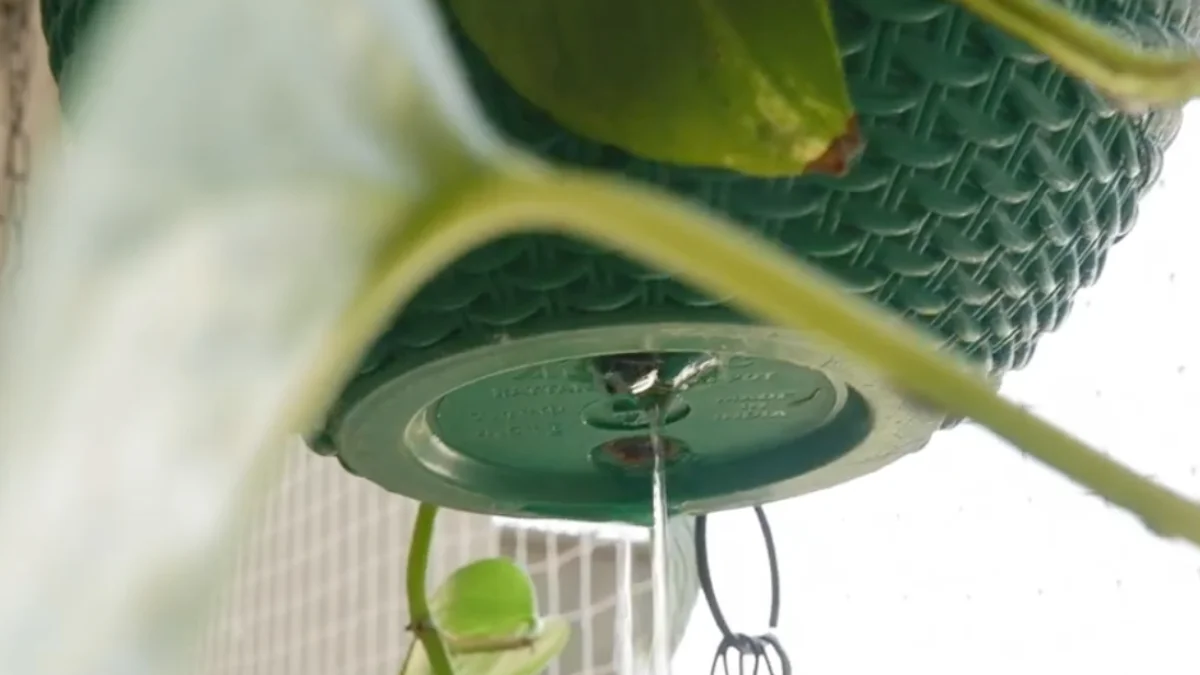
Poor drainage can make this worse. Some balcony pots have small drainage holes, blocked holes, saucers that hold water, or decorative outer pots with no drainage. Even when the top of the soil looks normal, the bottom of the pot may be sitting wet.
Compacted soil is another common cause. Over time, potting mix can become dense, especially in containers that have been watered many times or reused without refreshing. When the mix becomes hard, water and air do not move through it easily. The article on why balcony soil becomes hard and compact explains why this happens more often in pots than many beginners expect.
Heat can also cause confusing wilting. On balconies with strong afternoon sun, glass, concrete, metal railings, or pale walls, a pot can heat up quickly. The soil may still be wet, but the leaves may wilt because the plant is losing moisture faster than the roots can move it. This is closely related to the problem explained in why balcony plants wilt in the afternoon sun.
Wind makes the problem even more confusing. Wind can dry leaves quickly while the potting mix remains damp. This often happens on higher balconies, corner balconies, and balconies between buildings. The plant may look thirsty, but adding more water can make the root zone wetter without solving the leaf stress.
What the Wilting Pattern Can Tell You
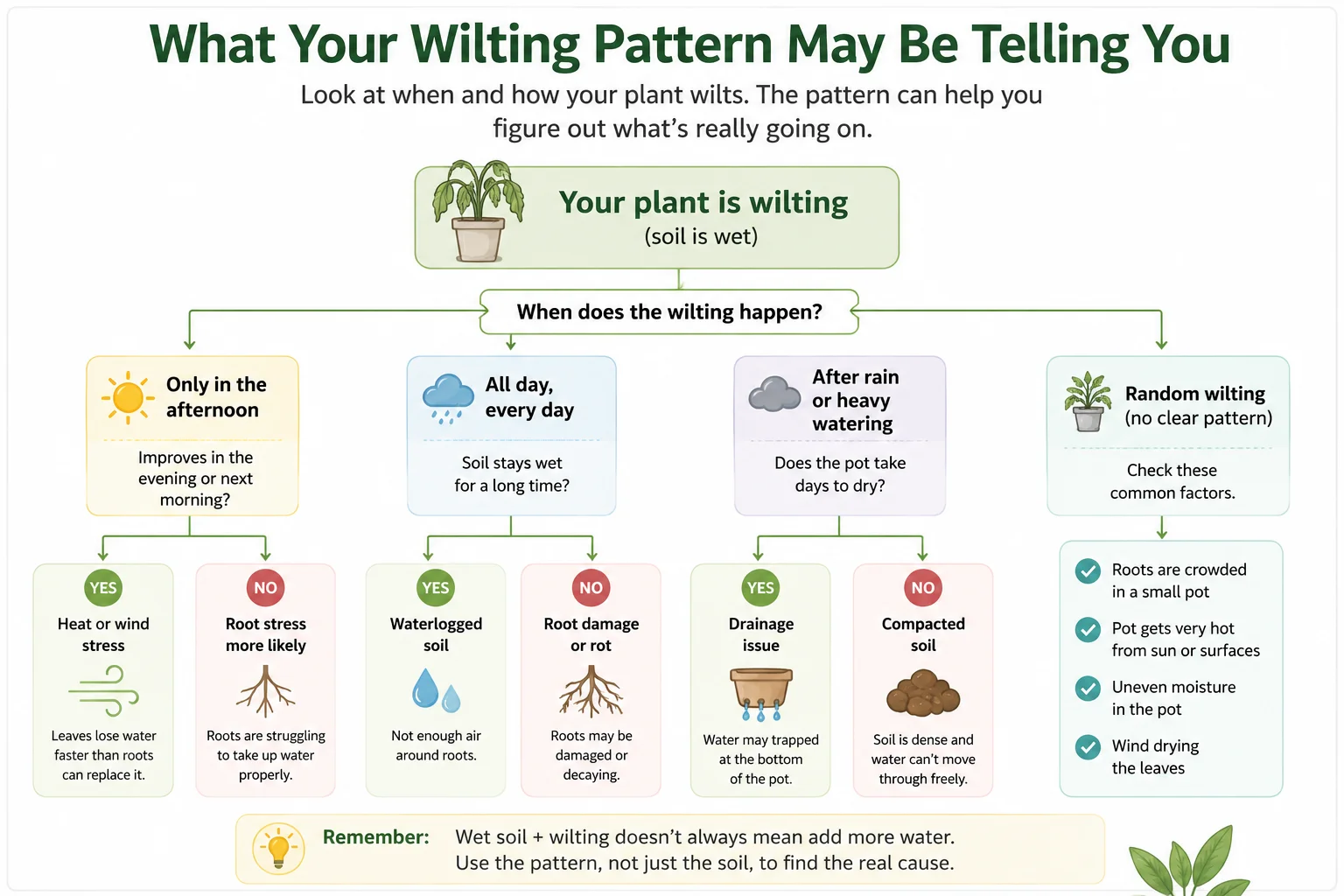
The timing of the wilt often gives better clues than the soil surface alone. A plant that wilts only during the hottest part of the day but looks better in the evening may be reacting to heat or wind stress. A plant that stays wilted all day, even in mild weather, may have a deeper root or drainage problem.
Wilting after rain can suggest that the pot has stayed too wet. This is especially likely when the pot is in a saucer, has blocked drainage, or sits in a covered corner where airflow is poor. A plant may look worse after rain not because it needs more water, but because the root zone has become too wet for too long.
If only one plant is wilting while others nearby look fine, the issue may be specific to that pot. The container size, drainage holes, soil mix, root crowding, or plant condition may be different. Balcony gardeners often place pots close together, but each pot can still behave like its own tiny climate.
Quick Signs to Compare
The table below can help separate common balcony causes. These are not strict rules, but they give a useful starting point when the soil feels wet and the plant still looks unhappy.
| What You Notice | What It May Suggest on a Balcony | Why It Happens |
|---|---|---|
| Soil is wet and leaves wilt all day | Root stress or waterlogged potting mix | The roots may not be absorbing water well, even though moisture is present. |
| Plant wilts in the afternoon but improves later | Heat, wind, or reflected sun stress | The leaves may be losing water faster than the roots can replace it during hot hours. |
| Soil stays soggy for several days | Poor drainage or compacted mix | Water is not moving through the pot quickly enough. |
| Wilting started after heavy rain | Too much moisture around the roots | Rain may have filled the pot and reduced air around the roots. |
| Leaves are yellowing as well as wilting | Possible longer-term root stress | The plant may be struggling to take up water and nutrients properly. |
| Only one pot is affected | Container-specific problem | That pot may have different drainage, soil, roots, or exposure. |
Drainage is especially important in small containers. If water keeps collecting at the bottom of the pot, this guide on drainage tips for small balcony containers may help explain why some pots stay wet longer than expected.
Practical Insights for Balcony Gardeners
When a balcony plant wilts in wet soil, the most useful thing is to slow down and read the whole situation, not just the top of the potting mix.
- Wet soil can still be low in air around the roots.
- Afternoon wilting is often different from all-day wilting.
- A saucer full of water can keep the bottom of the pot too wet.
- Wind can dry leaves while the soil remains damp.
- Compacted potting mix can hold water but still limit root comfort.
- One struggling pot does not always mean the whole balcony setup is wrong.
These small differences matter because balcony gardening is very local. The same plant may behave differently near a railing, beside a wall, under a roof, or behind glass.
Common Misunderstandings
The biggest misunderstanding is thinking that wilting always means the plant needs more water. Sometimes that is true, but when the soil is already wet, more water may make the root zone less comfortable.
- “Wet soil means the plant is hydrated.” The roots still need to be able to absorb the water.
- “Wilting always means drought.” Heat, wind, root damage, and poor drainage can also cause wilting.
- “Only dry balconies have watering problems.” Covered or shaded balconies can also struggle when pots stay wet too long.
- “Root rot is the only cause.” Root rot is possible, but early root stress can happen before serious rot develops.
- “All pots dry the same way.” Pot size, material, soil depth, wind, and sun exposure all change drying speed.
If your balcony has the opposite problem and soil dries out too quickly, the article on balcony soil drying out too fast explains how heat and wind can create a different kind of moisture stress.
Australian Balcony and Seasonal Context
In many Australian apartments, this problem can appear after weather changes. A warm spell after rain can be especially confusing. The potting mix may still be wet from rain, but the leaves may suddenly wilt when heat and reflected sun return.
Summer balconies can also heat containers quickly, especially west-facing balconies, enclosed balconies, and spaces with concrete floors or glass panels. In cooler months, the same pot may stay wet for much longer because evaporation slows down. That means the same watering habit can behave differently across the year.
This is why balcony plants often need observation more than a fixed watering schedule. The pot, plant, weather, and balcony position all work together.
Balcony Haven Note: I have noticed that wet soil can be misleading in balcony pots, especially after rain or after several cool days. The top of the pot can look harmless, while the bottom stays much wetter than expected. This is why I like comparing the wilting pattern with the balcony conditions before assuming the plant simply needs more water.
Frequently Asked Questions
Why are my balcony plants wilting even with wet soil?
Balcony plants can wilt in wet soil when their roots are not absorbing water properly. This often happens because the potting mix is too wet, compacted, low in air, too hot, or affected by root stress.
Should I water a wilted plant if the soil is already wet?
If the soil is already wet, more water may not help. The wilt may be coming from poor root function, heat stress, wind stress, or drainage problems rather than a lack of water.
Can wet soil cause a plant to look thirsty?
Yes. Wet soil can still make a plant look thirsty if the roots cannot take up water well. This can happen when the soil holds too much water and not enough air around the roots.
How can I tell if it is heat stress or root stress?
Heat stress often appears during the hottest part of the day and may improve later. Root stress is more likely when the plant stays wilted all day, the soil stays soggy, or yellowing leaves appear with the wilt.
Can balcony wind make plants wilt even when pots are wet?
Yes. Wind can pull moisture from leaves faster than the roots can replace it. This can make the plant wilt while the soil still feels damp or wet.
Does wilting in wet soil always mean root rot?
No. Root rot is one possible cause, but not the only one. Wilting in wet soil can also come from temporary root stress, compacted soil, poor drainage, hot pots, or strong wind.
Final Thoughts
Balcony plants wilting even with wet soil can feel strange at first, but it makes more sense when you look at the roots, not just the leaves. The plant may have water nearby, but the roots may not be comfortable enough to use it well.
Small balcony containers can change quickly. A pot can become too wet after rain, too hot in afternoon sun, or too compacted over time. These conditions can all lead to the same visible symptom: a plant that looks thirsty while sitting in damp soil.
The next time a balcony plant wilts even though the soil feels wet, it helps to pause before adding more water. The pot, the weather, the timing of the wilt, and the way the plant recovers can often reveal more than the soil surface alone.
Once the pattern becomes clearer, the problem feels less mysterious and much easier to manage. Balcony gardening does not need perfect watering every time. It mostly needs careful observation, small adjustments, and a better understanding of how each pot behaves in its own little balcony space.
Leave a Reply