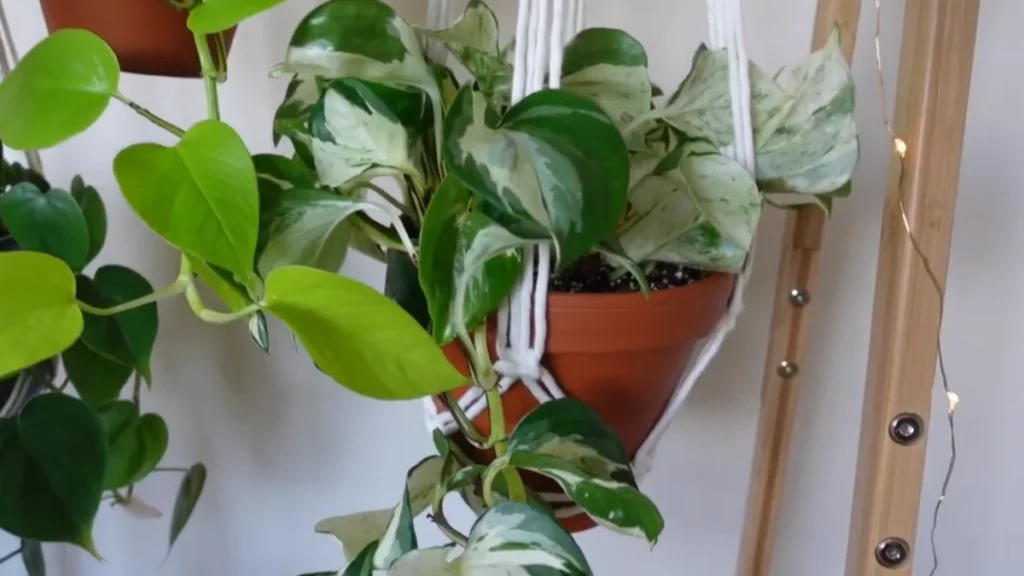
Hanging planters on a balcony can make a small outdoor space feel fuller, greener, and more useful without taking up much floor area. But balcony hanging setups need more care than garden hooks, pergolas, or backyard fences because balconies deal with weight limits, wind movement, drainage problems, rental rules, and neighbours below.
You can hang planters on a balcony safely by using lightweight rail hooks, over-rail planter boxes, vertical tension systems, or approved wall-mounted supports. The safest setups use light planters, controlled drainage, balanced weight, and secure placement so wind, wet soil, and balcony rules do not turn a simple plant display into a problem.
The best way to approach hanging planters is not to ask, “Where can I fit more plants?” but “Where can this planter stay stable when it is wet, windy, and fully grown?” That small shift makes the setup more realistic for apartment balconies.
This guide explains how to hang planters on a balcony in a safer, lighter, and more balcony-friendly way, especially if you rent, have limited space, or want to avoid drilling into walls and ceilings.
Why Balcony Hanging Planters Need Extra Care
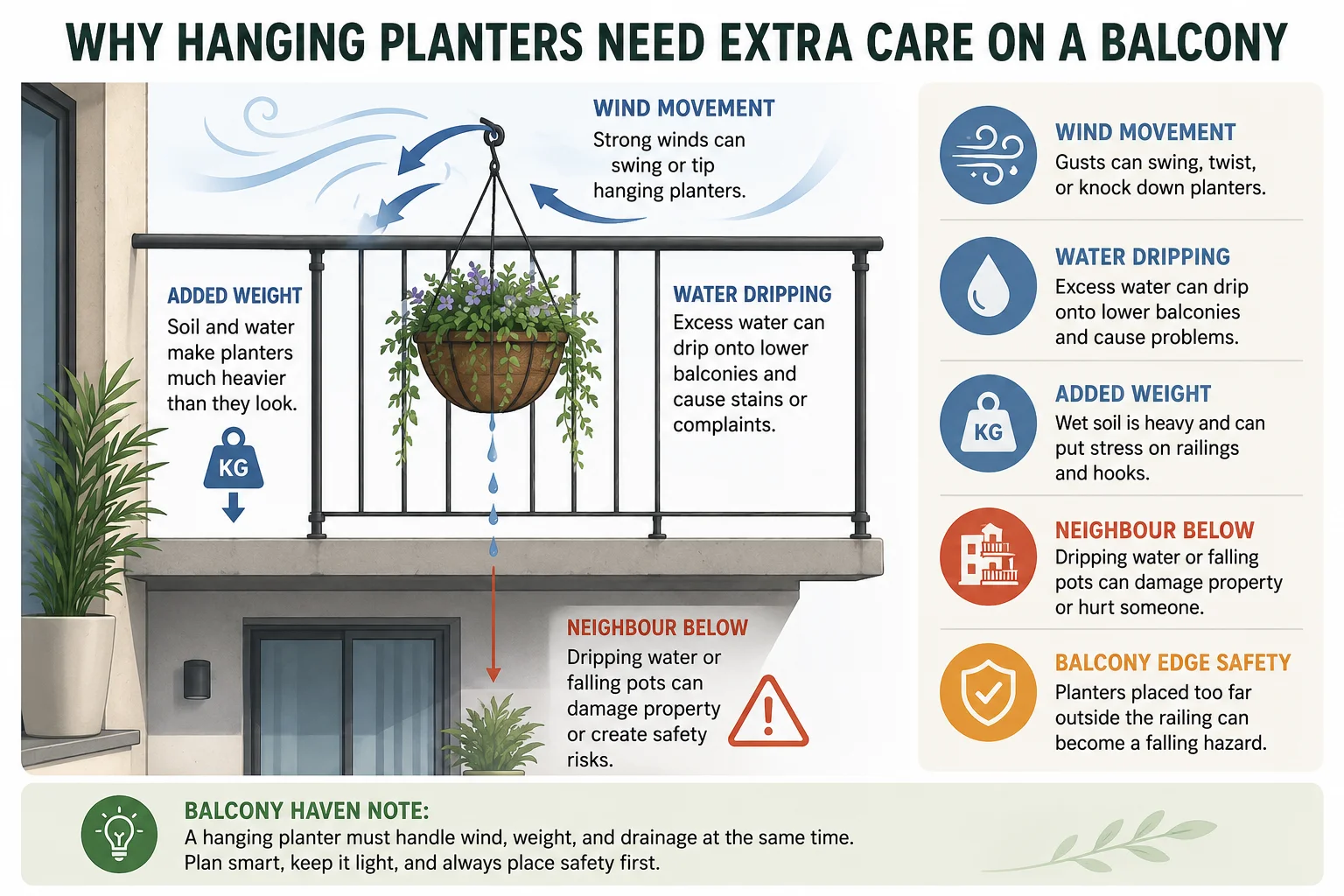
Balconies are not the same as backyard gardens. A hook that feels safe on a garden fence may not behave the same way on a balcony railing exposed to wind, vibration, and constant weather changes.
The biggest difference is that balconies are shared vertical spaces. A falling pot is not just a broken planter. It can damage property, land on a lower balcony, or create a safety risk. This is why balcony hanging setups need to be lighter, more controlled, and more carefully placed than normal outdoor hanging baskets.
Wind also behaves differently on balconies. Even if the weather feels calm at street level, wind can move faster between apartment buildings, around corners, and through railing gaps. A hanging planter that looks stable on a still day may swing or twist during a storm.
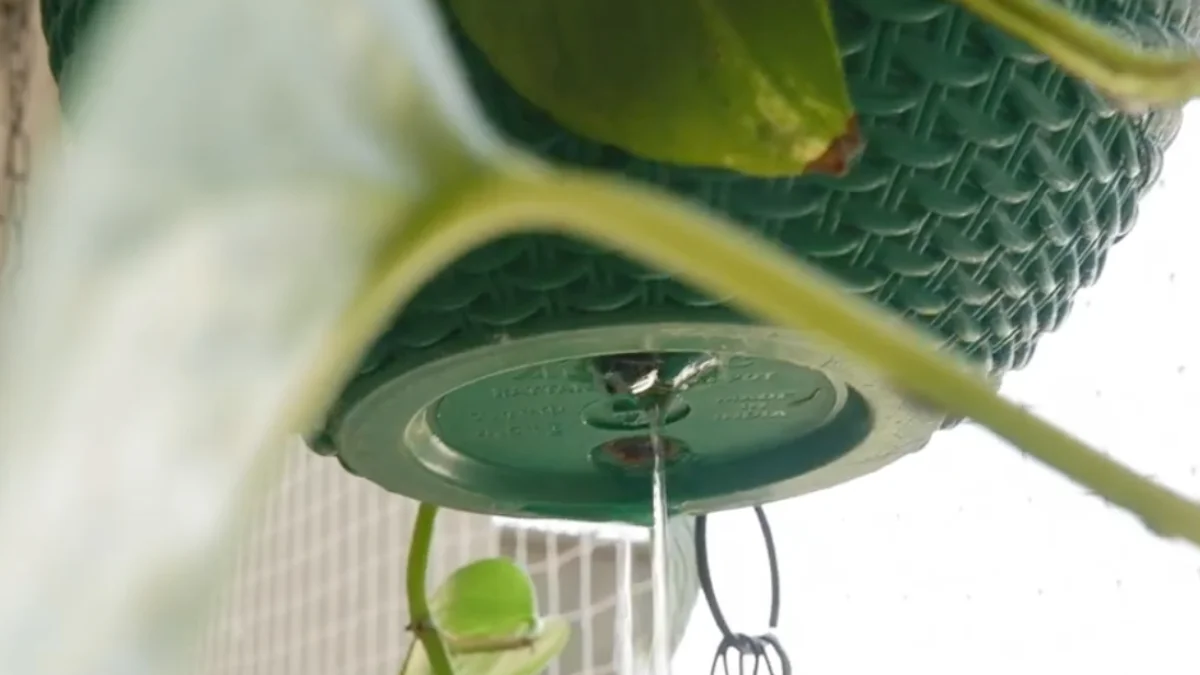
Water is another issue. Hanging planters often drain directly downward, which can annoy neighbours or stain balcony surfaces. If dripping has already been a problem in your setup, this article on How to Stop Water Dripping on Lower Balconies explains why balcony drainage needs more control than normal garden watering.
What to Check Before Hanging Planters
Before buying hooks or planters, check what your balcony can realistically support. This is especially important if you rent or live in an apartment with body corporate, strata, or building rules.
Start with the structure. A balcony railing may look strong, but some railings are designed mainly as safety barriers, not as places to hold repeated downward weight. Privacy screens, decorative panels, and thin metal frames may also look useful but may not be suitable for hanging anything heavy.
Also check whether your balcony rules allow planters to hang outside the railing. Some buildings do not allow anything to sit beyond the balcony edge because of safety and appearance rules.
Before hanging anything, ask yourself these questions:
- Is the planter inside the balcony boundary?
- Will water drip onto a lower balcony?
- Will the planter swing in strong wind?
- Can I remove the setup without damaging the building?
- Will the planter become much heavier after watering?
- Can I still access the plant safely for watering and trimming?
If any answer feels uncertain, start smaller. A single light planter is much easier to test than a full hanging garden.
Best Ways to Hang Planters on a Balcony
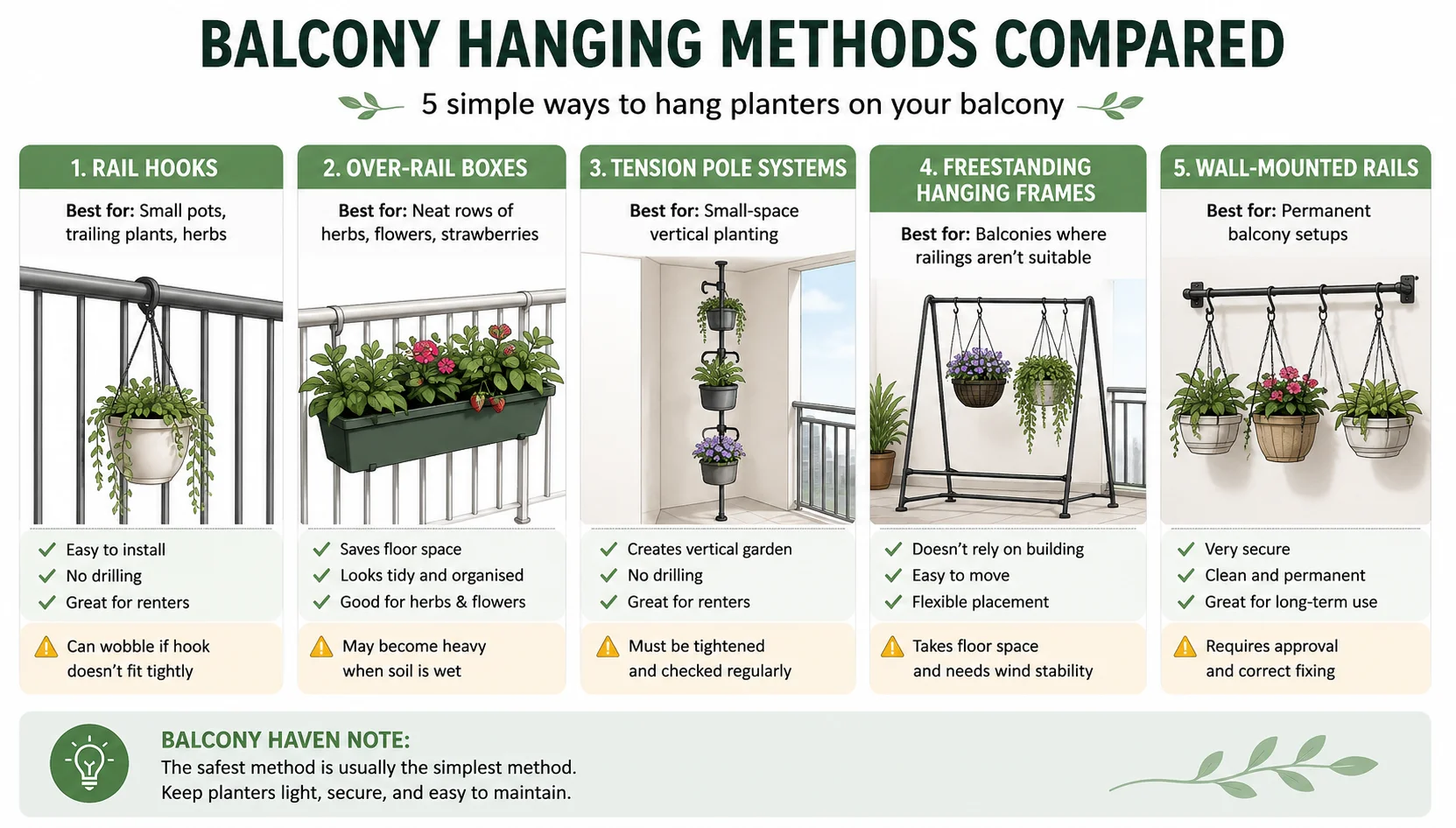
1. Rail Hooks
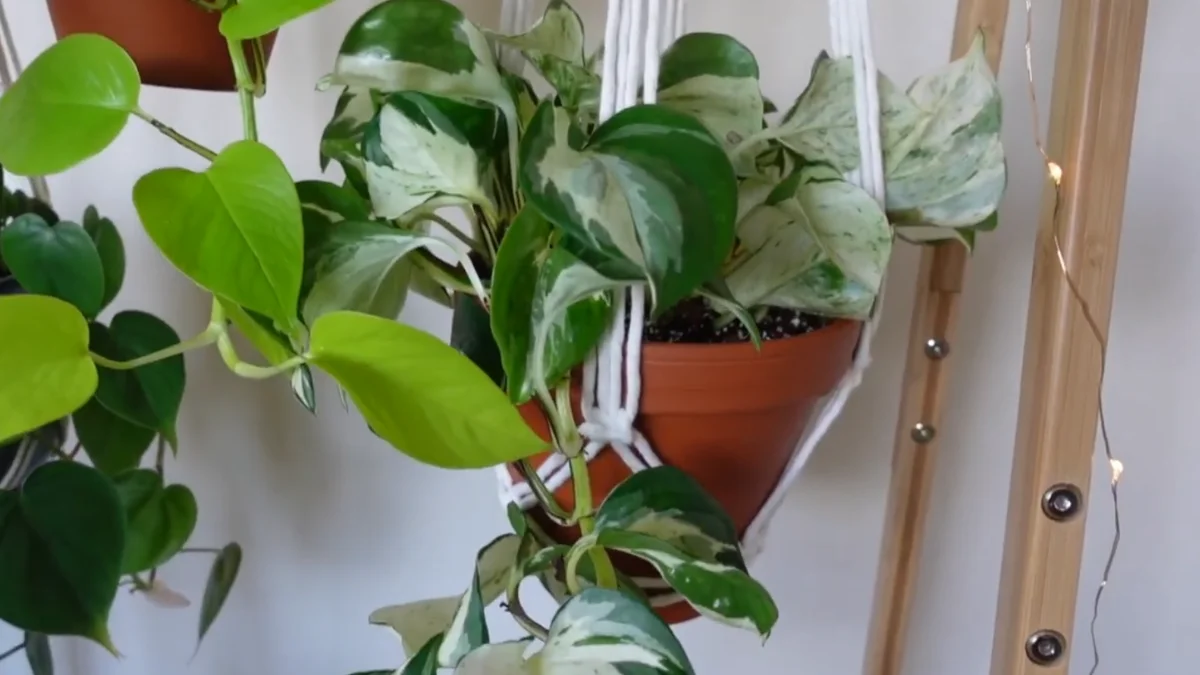
Rail hooks are one of the simplest renter-friendly options. They sit over the railing and hold a small hanging pot or basket without drilling. They work best when the hook fits tightly, the planter stays light, and the setup does not hang too far outside the balcony.
Choose hooks with a wide contact area instead of thin narrow hooks. A wider hook spreads pressure more evenly and is less likely to wobble. Rubber or silicone padding can also reduce scratching and movement.
2. Over-Rail Planter Boxes
Over-rail planter boxes are useful when you want a neat row of plants without using floor space. They usually sit over the balcony railing with the weight balanced on both sides.
These can work well for herbs, flowers, strawberries, and compact trailing plants. However, they should not be overloaded with deep soil or heavy plants. Wet soil can become surprisingly heavy, especially after rain.
3. Vertical Tension Pole Systems
Vertical tension pole systems are useful for renters because they usually fit between the balcony floor and ceiling without screws. They create a vertical growing column where small planters can be clipped or hung at different heights.
This setup is often better than hanging everything from the railing because the weight is transferred vertically between the floor and ceiling. Still, it must be installed firmly and checked regularly.
4. Freestanding Hanging Frames
A freestanding hanging frame can be a safer choice if you do not want to rely on railings, walls, or ceilings. These frames sit on the balcony floor and hold hanging baskets from a supported structure.
The advantage is that the planter is still “hanging,” but the weight is supported by the frame rather than the building surface. The disadvantage is that the frame takes up floor space and may still need protection from wind.
5. Approved Wall-Mounted Rails
If you own your apartment or have approval to drill, wall-mounted rails can create a tidy and secure hanging system. But this should only be done on suitable structural surfaces, not thin panels, decorative cladding, or weak plasterboard.
For renters, removable systems are usually the safer path.
Balcony Hanging Planter Options Compared
| Hanging Method | Best For | Main Caution | Renter Friendly? |
|---|---|---|---|
| Rail hooks | Small pots, trailing plants, herbs | Can wobble if the hook does not fit tightly. | Yes |
| Over-rail planter boxes | Neat rows of herbs, flowers, strawberries | May become heavy when soil is wet. | Usually yes |
| Vertical tension pole | Small-space vertical planting | Must be tightened and checked regularly. | Yes |
| Freestanding hanging frame | Balconies where railings are not suitable | Needs floor space and wind stability. | Yes |
| Wall-mounted rail | Permanent balcony setups | Requires approval and correct fixing. | No, unless approved |
Weight and Drainage Matter More Than Looks
The most attractive hanging planter is not always the best balcony planter. On balconies, weight and drainage often matter more than style.
A ceramic hanging pot may look beautiful, but it can become too heavy once it is filled with wet potting mix and a mature plant. Lightweight plastic, resin, coir-lined baskets, and fabric-style hanging pockets are usually easier to manage.
This is where planter material makes a real difference. If you are unsure which containers stay practical after watering, Lightweight Pots for Apartment Balconies can help you compare materials before choosing a hanging setup.
Drainage needs the same attention. A planter should drain well enough to protect roots, but not so freely that water falls onto lower balconies. Built-in saucers, drip trays, self-watering inserts, or careful watering can help reduce problems.
| Planter Type | Balcony Suitability | Why It Matters |
|---|---|---|
| Plastic or resin hanging pot | Good | Lightweight and easier to manage after watering. |
| Coir-lined basket | Good with care | Light and breathable, but can dry quickly in wind. |
| Ceramic hanging pot | Use carefully | Attractive but often too heavy for balcony hanging. |
| Deep metal planter | Use carefully | Can heat up quickly and become heavy with wet soil. |
| Self-watering rail planter | Very useful | Helps reduce drying and uncontrolled dripping. |
Best Plants for Balcony Hanging Planters
The best plants for balcony hanging planters are usually compact, shallow-rooted, flexible, and not too heavy when mature. Plants that trail naturally often look better in hanging planters because they soften railing edges and make the space feel greener without needing large containers.
Good choices include strawberries, thyme, oregano, mint in controlled containers, trailing flowers, compact herbs, and some leafy greens. Small chilli plants may also work if the basket is stable and the balcony is not too windy.
Be careful with large fruiting vegetables in hanging planters. Tomatoes, cucumbers, and zucchini can become heavy, thirsty, and difficult to support. If you are thinking specifically about tomatoes, Can You Grow Tomatoes in Hanging Balcony Baskets? is a better guide for understanding the limits before trying it.
Wind exposure should also influence plant choice. A delicate trailing plant may look beautiful in a shop, but it may struggle if your balcony acts like a wind tunnel. For exposed balconies, Protecting Balcony Pots from Strong Winds is useful because hanging planters need even more wind awareness than floor pots.
Different Balcony Setups Need Different Hanging Methods
A covered balcony, open balcony, narrow balcony, and windy balcony should not use the exact same hanging setup.
On a covered balcony, vertical tension poles and hanging frames may work well because there is often an overhead surface and less direct rainfall. On an open balcony, wind and rain exposure become more important, so low-profile rail planters may be safer than swinging baskets.
Small balconies usually benefit from vertical systems because they keep the floor clear. Narrow balconies often do better with one tidy row of rail planters rather than multiple hanging layers that make the space feel cramped.
Windy balconies need the most caution. Avoid long chains, loose baskets, and anything that can swing freely. Shorter hangers, rail-mounted boxes, and secure clips usually work better.
Where Hanging Planters Work Best on a Balcony
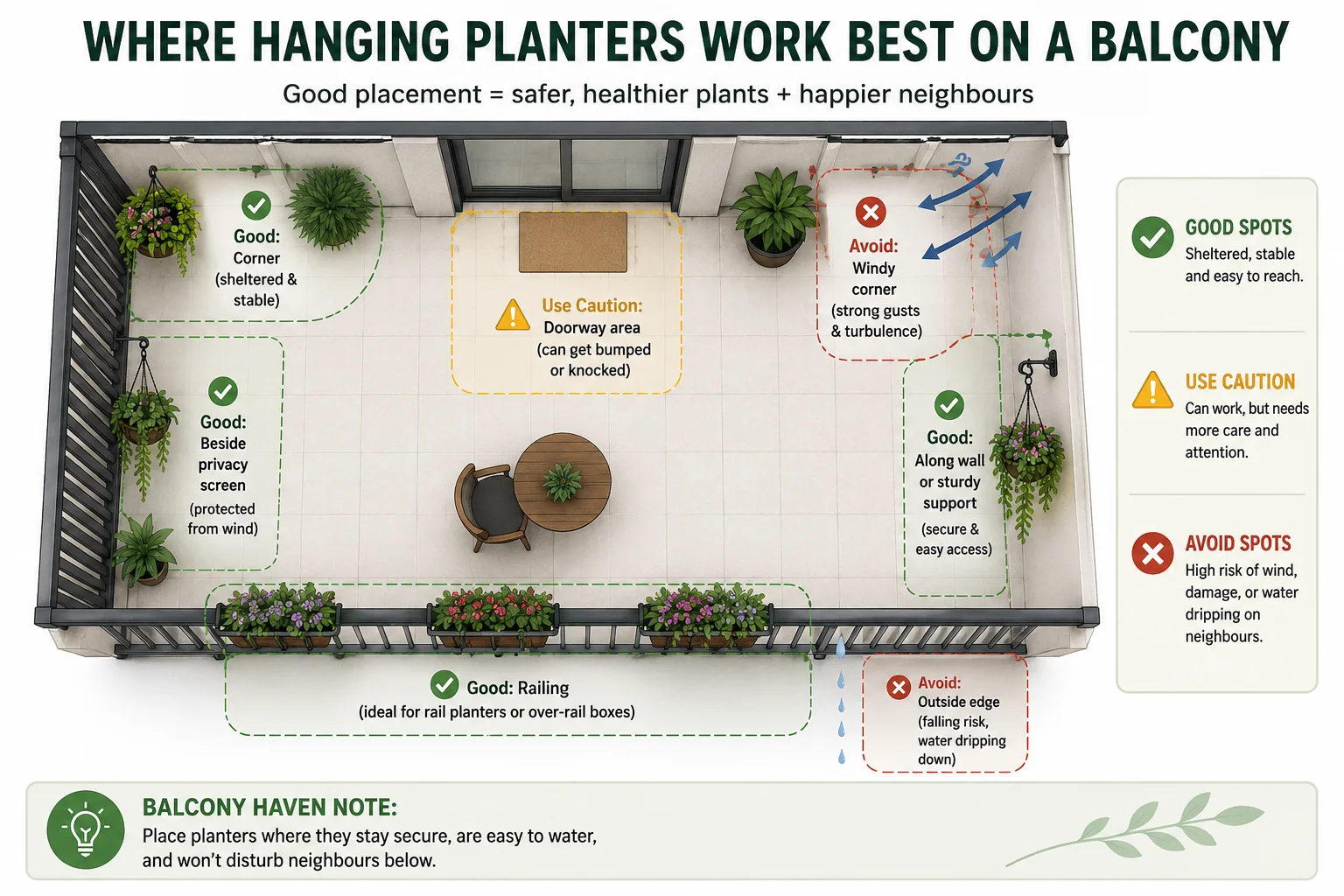
Placement can make a hanging planter safer, easier to water, and less likely to cause problems. A good hanging location should feel stable, reachable, and protected enough that the planter is not constantly swinging or dripping where it should not.
Railing areas often work well for shallow rail planters, especially when the planter sits securely and does not extend too far beyond the balcony edge. Balcony corners can also work well when they are sheltered from strong wind and easy to reach.
Privacy screens and side areas may suit lightweight clip-on planters, but only if the screen is strong enough and the planter does not block airflow. Doorways need more caution because hanging plants can get bumped, brushed, or overwatered when people move in and out.
The least suitable place is usually an exposed outer edge where the planter can catch wind, drip freely, or become hard to access safely.
Common Mistakes to Avoid
Most balcony hanging planter problems happen because people copy normal garden ideas without adjusting them for apartment conditions.
One common mistake is hanging too much weight from one railing section. Another is using decorative pots that become too heavy after watering. Some gardeners also forget that plants become heavier and more uneven as they grow.
Another mistake is letting hanging planters drip freely. Even if the plant is healthy, uncontrolled dripping can create stains, neighbour complaints, and slippery surfaces.
It is also risky to rely on suction hooks outdoors. Heat, moisture, dust, and surface changes can weaken suction over time. They may hold for a while and then suddenly fail.
Finally, avoid hanging planters where you cannot reach them safely. If you need to lean dangerously over the railing to water or trim the plant, the setup is not practical.
Seasonal Care for Hanging Balcony Planters
Hanging planters often dry faster than floor pots because air moves around the sides and underneath the container. In summer, this can mean more frequent watering, especially for small baskets and coir-lined planters.
In cooler or wetter months, the opposite can happen. Hanging planters may stay damp for longer if the plant is growing slowly and evaporation is lower. This is why checking the soil before watering is better than following a fixed schedule.
After storms or strong wind, inspect hooks, clips, rails, and planter balance. A setup that was safe last month may loosen slightly over time. Small checks prevent bigger problems later.
It also helps to rotate hanging planters occasionally so one side does not become heavier, leggier, or more exposed than the other.
Balcony Haven Note
Balcony Haven Note: I still see hanging planters as one of those balcony ideas that can be beautiful when done carefully, but risky when rushed. On my own balcony, strong wind would make me start with just one lightweight test planter before committing to a full hanging setup. I would rather test the wind, water movement, and weight first than fill the railing with plants and discover the problems later.
Frequently Asked Questions
Can I hang planters on a rental balcony?
Yes, but removable options are usually safest. Rail hooks, over-rail planter boxes, freestanding frames, and vertical tension poles are often better than drilling into walls or ceilings. Always check rental and building rules first.
What is the safest way to hang planters on a balcony?
The safest method is usually a lightweight planter on a secure rail hook, over-rail planter box, or stable freestanding frame. The planter should stay inside the balcony boundary, drain in a controlled way, and not swing freely in wind.
Can I hang planters outside the balcony railing?
Only if your building allows it and the setup is secure. Many apartments restrict items hanging outside railings because of safety, appearance, and falling-object risks.
Do hanging planters dry out faster?
Often yes. Air moves around the sides and bottom of hanging planters, so small baskets can dry faster than floor pots during warm or windy weather.
Are ceramic hanging pots safe on balconies?
They can be used carefully, but they are often heavier than ideal. Plastic, resin, or lightweight self-watering planters are usually more practical for balcony hanging setups.
What plants are best for hanging balcony planters?
Compact herbs, strawberries, trailing flowers, small leafy greens, and shallow-rooted plants usually work best. Large vegetables need more caution because they become heavier and need more water as they grow.
Final Thoughts
Hanging planters can be one of the easiest ways to add more plants to a balcony without sacrificing valuable floor space. Whether you use rail hooks, over-rail planter boxes, vertical systems, or freestanding frames, the goal is not simply to fit more plants into a small area. The goal is to create a balcony garden that remains safe, stable, attractive, and easy to maintain throughout the year.
When learning how to hang planters on a balcony, start small and focus on safety first. Choose lightweight containers, pay attention to wind exposure and drainage, and test how your balcony responds before expanding your setup. A well-planned hanging planter system can help transform even a compact apartment balcony into a greener, more inviting outdoor space while keeping your plants, neighbours, and property protected.
Leave a Reply