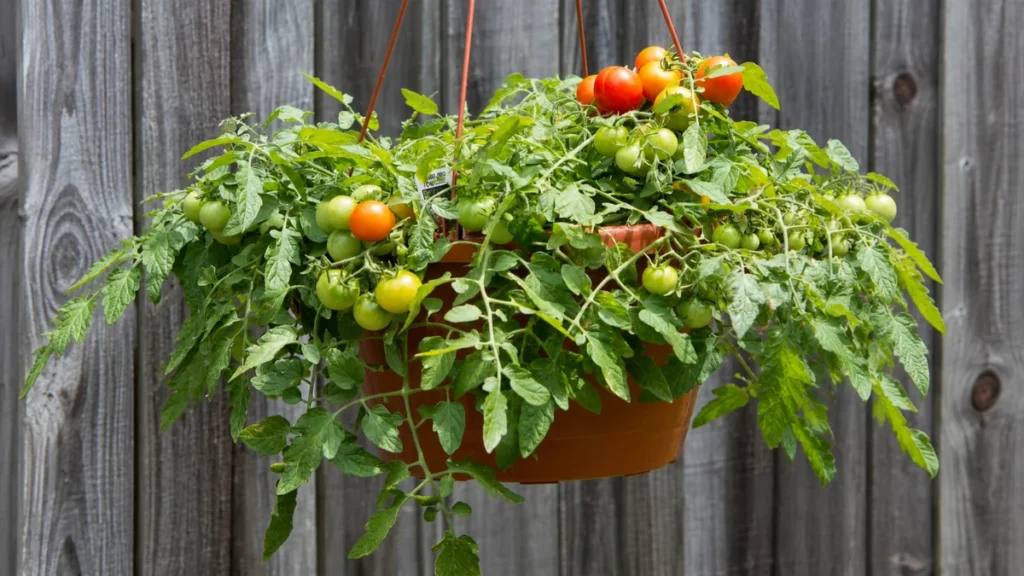
Hanging baskets often look like a smart way to grow food on a balcony when floor space is limited. Tomatoes are one of the first plants many balcony gardeners think about, especially because small cherry tomatoes look cheerful, useful, and possible even in a compact apartment space. But can you grow tomatoes in hanging balcony baskets?
Yes, you can grow tomatoes in hanging balcony baskets, especially compact cherry, tumbling, and patio tomato varieties. The main challenge is not whether tomatoes can grow in hanging baskets, but whether the basket can provide enough root space, steady moisture, safe weight support, and protection from balcony wind and heat. Hanging basket tomatoes can work well on some balconies, but they behave differently from tomatoes grown in deeper balcony pots.
The confusion usually comes from seeing perfect-looking hanging tomato baskets online. Those photos rarely show how quickly the basket dries, how much it moves in the wind, or how hot the root zone becomes when the container is exposed from all sides.
This article explains what actually happens when tomatoes grow in hanging balcony baskets, why some baskets succeed while others struggle, and why the variety, basket size, airflow, sun exposure, and root space all matter more than the idea of “hanging” itself.
Balcony Reality Changes Hanging Tomato Baskets
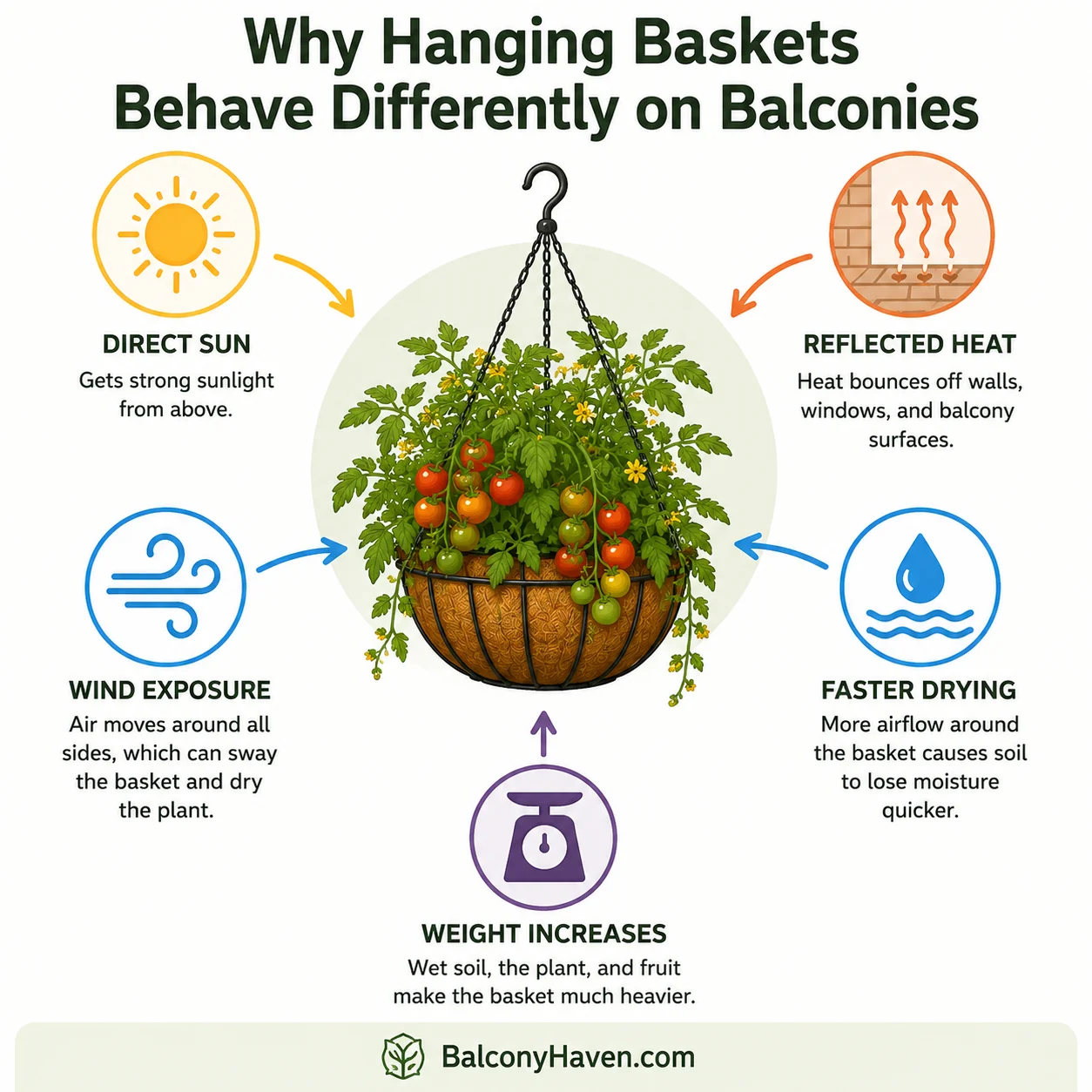
A hanging tomato basket on a balcony does not behave like a normal pot sitting on the ground. Once the basket is suspended, air can move around the sides, bottom, and top of the container. This makes the growing environment more exposed than many people expect.
Balcony wind can also be stronger than garden wind. Between apartment buildings, air often moves through narrow spaces like a tunnel. A basket that looks calm in the morning may sway regularly in the afternoon, especially if it hangs near a railing or open corner.
Heat behaves differently too. A hanging basket can receive direct sun from above while also absorbing reflected heat from walls, windows, balcony tiles, concrete, and nearby railings. The plant may look fine above the basket while the roots underneath are warming up quickly.
Weight is another hidden part of the story. Dry potting mix, wet potting mix, roots, stems, leaves, fruit, and the basket itself all add up. A small tomato plant may look light early on, but a mature hanging basket tomato can become much heavier after watering and fruiting.
What Most Advice Misses About Hanging Basket Tomatoes
Many tomato-growing guides talk about hanging baskets as if the only question is whether the plant can physically fit inside the container. But tomatoes are not only reacting to space. They are also reacting to moisture rhythm, temperature swings, root comfort, airflow, and movement.
In a garden, tomato roots often stay more insulated because the soil volume is larger and cooler. In a hanging balcony basket, the root zone is smaller, lighter, and more exposed. This means the plant can move from comfortable to stressed much faster.
Another overlooked detail is that hanging baskets change the plant’s energy use. A tomato in a still, heavy pot can focus more energy on growing, flowering, and fruiting. A tomato in a moving basket may also respond to sway, wind, and uneven drying. The effect is not always dramatic, but on exposed balconies it can quietly influence how steadily the plant grows.
Hanging Basket vs Standard Balcony Pot
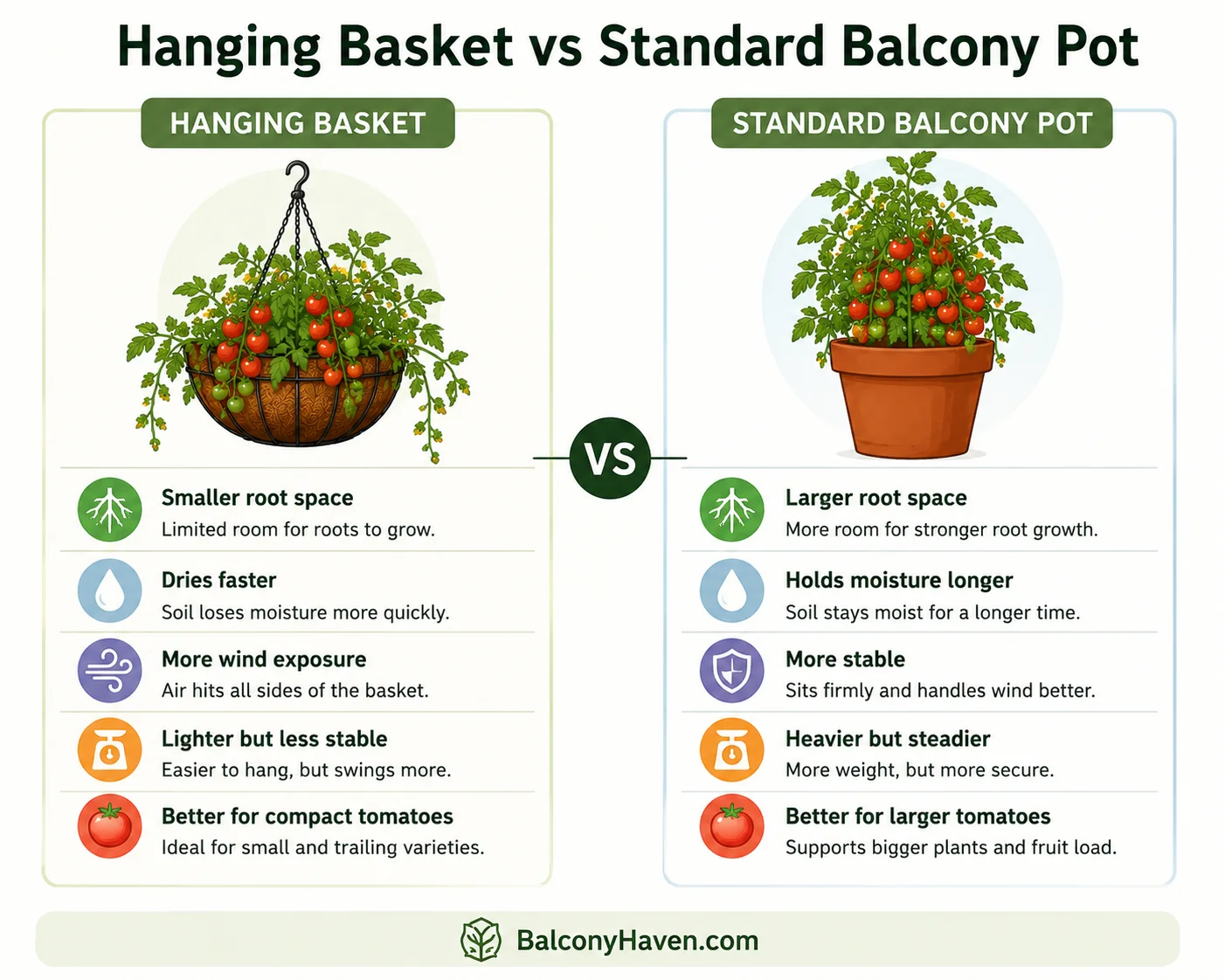
The easiest way to understand hanging basket tomatoes is to compare them with standard balcony pots. Both can grow tomatoes, but they create different root environments.
| Growing Setup | What Usually Changes | Balcony Tomato Effect |
|---|---|---|
| Hanging basket | More exposed to wind and air on all sides | Soil may dry faster and roots may warm quickly. |
| Standard balcony pot | Sits more steadily on the floor or stand | Often provides better stability for taller or heavier tomato plants. |
| Hanging basket | Usually has less soil volume | Better suited to compact tomato varieties. |
| Standard balcony pot | Can be deeper and wider | Often supports larger roots and steadier fruit growth. |
| Hanging basket | Weight increases after watering and fruiting | Needs secure support and careful placement. |
| Standard balcony pot | Weight stays supported from below | Usually easier for heavier tomato varieties. |
Small Tomato Varieties vs Large Tomato Varieties
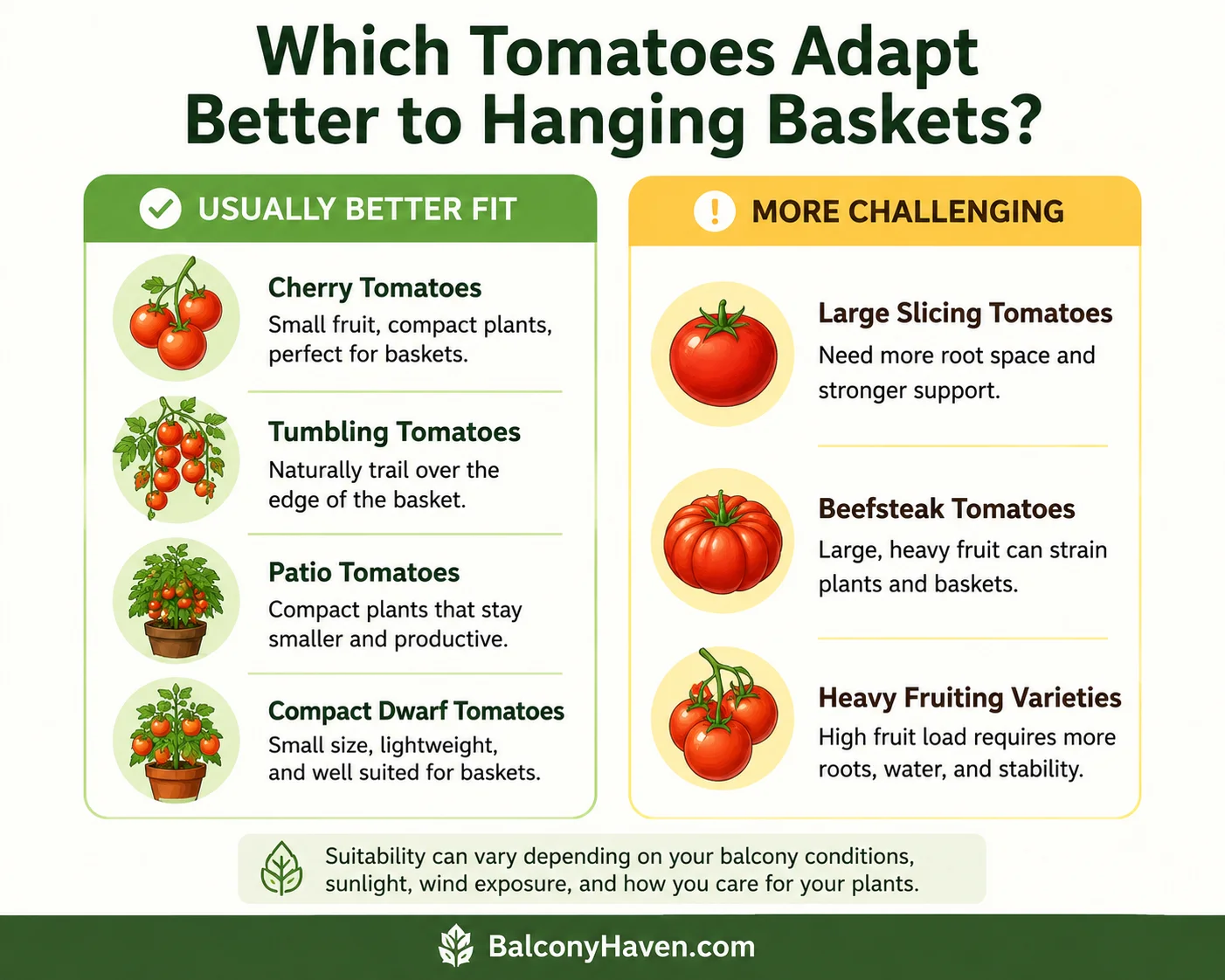
The tomato variety often matters more than the hanging basket itself. Small cherry tomatoes, tumbling tomatoes, and compact patio tomatoes usually adapt better because their fruit is lighter and their growth habit is less demanding.
Large slicing tomatoes and beefsteak tomatoes can sometimes grow in baskets, but they usually push the limits of root space, water demand, and weight support. The plant may stay alive, but staying alive is not the same as growing comfortably.
This is why many successful hanging tomato basket displays use varieties that naturally trail, cascade, or stay compact. Their shape already suits the basket instead of fighting against it.
| Tomato Type | Basket Suitability | Why It Matters |
|---|---|---|
| Cherry tomatoes | Usually suitable | Small fruit places less strain on stems and basket support. |
| Tumbling tomatoes | Usually suitable | Natural trailing growth works well with hanging baskets. |
| Patio tomatoes | Often suitable | Compact growth can suit smaller balcony spaces. |
| Dwarf tomatoes | Sometimes suitable | Depends on basket size, root volume, and fruit weight. |
| Large slicing tomatoes | More challenging | Often needs more root space and steadier support. |
| Beefsteak tomatoes | Usually difficult | Heavy fruit and strong growth often exceed basket limits. |
If you are growing tomatoes because your balcony is small, the article Can You Grow Tomatoes on a Tiny Balcony? also explains how space changes tomato choices even when the plant is not in a hanging basket.
Sunny Balconies vs Shaded Balconies
Tomatoes usually need good light to flower and fruit well, but hanging baskets make the sunlight question more complicated. A sunny balcony may give the plant enough light above the basket while also heating the root zone too strongly below it.
This is especially noticeable when baskets hang near walls, glass doors, metal railings, or light-coloured balcony flooring. The plant may be receiving both direct sunlight and reflected heat at the same time.
On shaded balconies, the basket may stay cooler and hold moisture longer, but tomato growth may slow if the plant does not receive enough bright light. In this situation, the basket may be comfortable for the roots but less helpful for flowering and fruiting.
This is why the answer is not simply “more sun is better.” For hanging basket tomatoes, the best balcony position is often the one that gives useful light without turning the basket into a hot, drying container by afternoon.
If your balcony pots become very hot during warmer weather, this article on Overheating Balcony Pots in Summer may help explain why container exposure can matter as much as sunlight.
Wind Exposure and Hanging Tomato Baskets
Wind affects hanging tomato baskets in two main ways. First, it moves the basket. Second, it dries the plant and potting mix faster.
A small amount of movement may not be a problem. But regular swaying can place extra pressure on stems, flowers, and fruit clusters. Young tomato stems may bend, flowers may dry out faster, and small fruit may be exposed to repeated movement during windy periods.
Wind also removes moisture from leaves and soil. Because hanging baskets usually hold less potting mix than deeper containers, the change can happen quickly. A basket that feels moist in the morning may become much drier later in the day, especially on a balcony with strong airflow.
This is one reason hanging basket tomatoes may perform well on sheltered balconies but struggle on high, open, or corner balconies.
Root Space Is Usually the Real Limitation
The hidden part of the tomato plant often explains the visible result. Above the basket, the plant may look leafy and healthy. Underneath, the roots may be trying to find enough space, moisture, and cooler pockets inside a small container.
Tomatoes are naturally active plants. They grow stems, leaves, flowers, roots, and fruit at the same time. In a hanging basket, all of that growth depends on a limited root zone.
This does not mean hanging tomato baskets fail. It simply means the plant’s final size and fruit production may be shaped by the root space more than many people expect.
For larger tomato plants, root restriction can show up as slower growth, smaller harvests, flower drop, curling leaves, or fruit that develops unevenly. For compact tomato varieties, the same basket may feel much more suitable.
The article Best Pot Size for Balcony Tomatoes goes deeper into how tomato roots and container size affect balcony growing performance.
Why Hanging Basket Tomatoes May Taste Sweet
Some balcony gardeners notice that hanging basket tomatoes can taste especially sweet. This does not happen because hanging baskets automatically improve flavour. It often happens because smaller containers can slightly change the plant’s water rhythm.
When a tomato plant grows with less excess water and slightly more controlled root space, the fruit may sometimes develop a more concentrated flavour. This is not guaranteed, and it can easily turn into stress if the basket dries too much.
This is one of the more interesting parts of growing tomatoes in hanging balcony baskets. The same restriction that limits plant size may sometimes help create smaller, sweeter fruit when the balcony conditions stay balanced.
Practical Insights
Hanging tomato baskets usually work best when the plant, basket, and balcony conditions match each other. The goal is not to copy a garden setup, but to understand what the basket changes.
- Compact tomato varieties usually suit hanging baskets better than large tomato varieties.
- Hanging baskets often dry faster than standard balcony pots.
- Wind can affect both moisture loss and basket movement.
- Root space often limits plant size and fruit consistency.
- Reflected balcony heat can warm the basket from several directions.
- Wet potting mix and fruit can make baskets much heavier over time.
Common Misunderstandings
Many people assume that a hanging basket is simply a pot placed higher in the air. On balconies, it is more complicated because the basket becomes exposed to wind, heat, movement, and drying from more sides.
Another misunderstanding is thinking that any tomato variety can adapt if the basket looks big enough. Some varieties naturally fit the hanging basket style, while others want deeper roots, stronger support, and more stable moisture.
There is also confusion around sunlight. Tomatoes need light, but hanging baskets can overheat when strong sun combines with reflected balcony heat. This is why two sunny balconies can produce very different tomato results.
Some gardeners also mistake root restriction for watering failure. The plant may be watered regularly, but if the root zone is too small, too hot, or too exposed, the tomato may still struggle to grow steadily.
Local & Seasonal Context
In many Australian balcony settings, hanging tomato baskets can face strong seasonal pressure during warmer months. Summer sun, dry wind, and reflected heat from apartment surfaces can make small baskets dry faster than expected.
Brisbane and other warm, humid areas may create fast growth but also faster moisture swings. Coastal balconies may deal with stronger wind exposure. Cooler southern balconies may have slower growth in shoulder seasons, especially if the basket receives limited direct light.
This is why the same hanging basket tomato setup may succeed beautifully on one balcony and struggle on another. The basket is only one part of the growing environment.
Balcony Haven Note: I have noticed that hanging baskets can make a balcony feel more useful because they open up growing space above the floor. But they also reveal the balcony’s wind, heat, and drying patterns much faster than normal pots. One basket may thrive in a sheltered corner while the same plant struggles near an exposed railing, which is why hanging tomato baskets often need to be judged by the balcony, not just the tomato variety.
Frequently Asked Questions
Can cherry tomatoes grow in hanging balcony baskets?
Yes, cherry tomatoes are often one of the better tomato types for hanging balcony baskets because the fruit is small and the plant is usually easier to support than larger tomato varieties.
Do hanging tomato baskets need a lot of sun?
They usually need bright light to fruit well, but too much direct heat around the basket can dry the roots quickly. The best result often comes from useful sunlight without extreme reflected heat.
Why do hanging basket tomatoes dry out so fast?
Hanging baskets are exposed to air on more sides than standard pots. Wind, sun, and smaller soil volume can all make the potting mix lose moisture quickly.
Can large tomatoes grow in hanging baskets?
Large tomatoes can sometimes grow, but they are usually more difficult in hanging baskets because they need more root space, stronger support, and steadier moisture than compact tomato varieties.
Are hanging tomato baskets good for tiny balconies?
They can be useful for tiny balconies because they free up floor space. However, the basket still needs safe support, enough light, and a position that is not too windy or hot.
Final Thoughts
Growing tomatoes in hanging balcony baskets is possible, but it works best when the setup matches the plant’s natural limits. Small, compact, and tumbling tomato varieties usually make more sense than large, heavy-fruiting types.
The real question is not only whether tomatoes can grow in a hanging basket. It is whether the balcony can provide enough light, root comfort, moisture stability, wind protection, and safe support for the basket as the plant becomes heavier.
When those conditions line up, hanging basket tomatoes can become a smart and space-saving way to grow food on a balcony. When they do not, the plant may still grow, but it may show stress faster than a tomato in a deeper, steadier balcony pot.
Leave a Reply