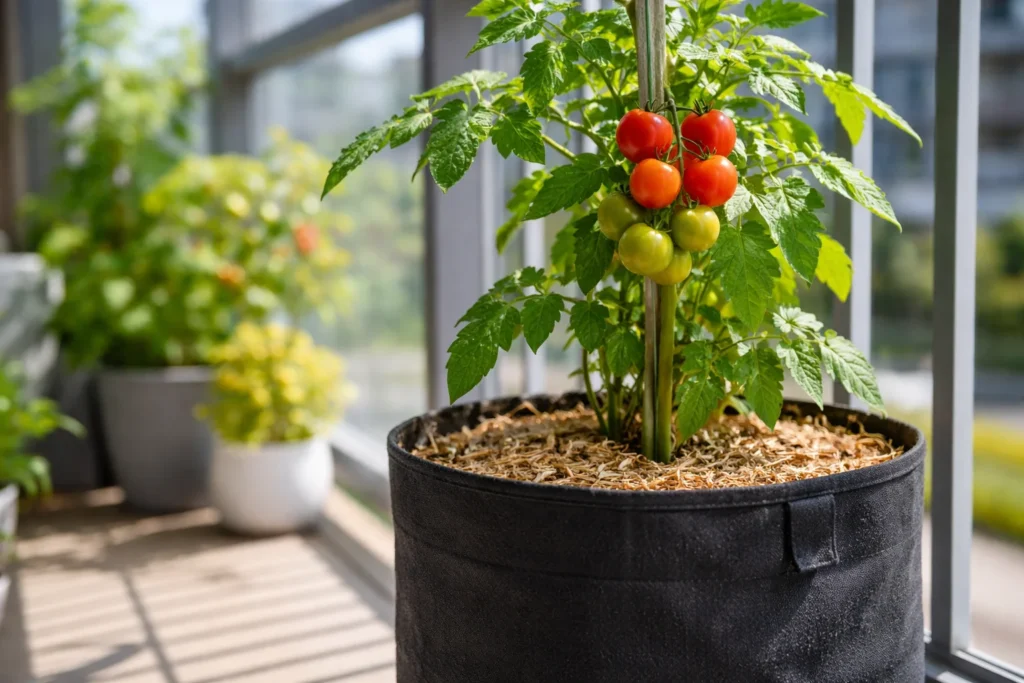
Choosing a tomato pot can feel simple until the plant starts wilting, drying out too quickly, or growing leaves without many tomatoes. Balcony tomatoes are different from garden tomatoes because every root, every drop of water, and every bit of soil is limited by the container.
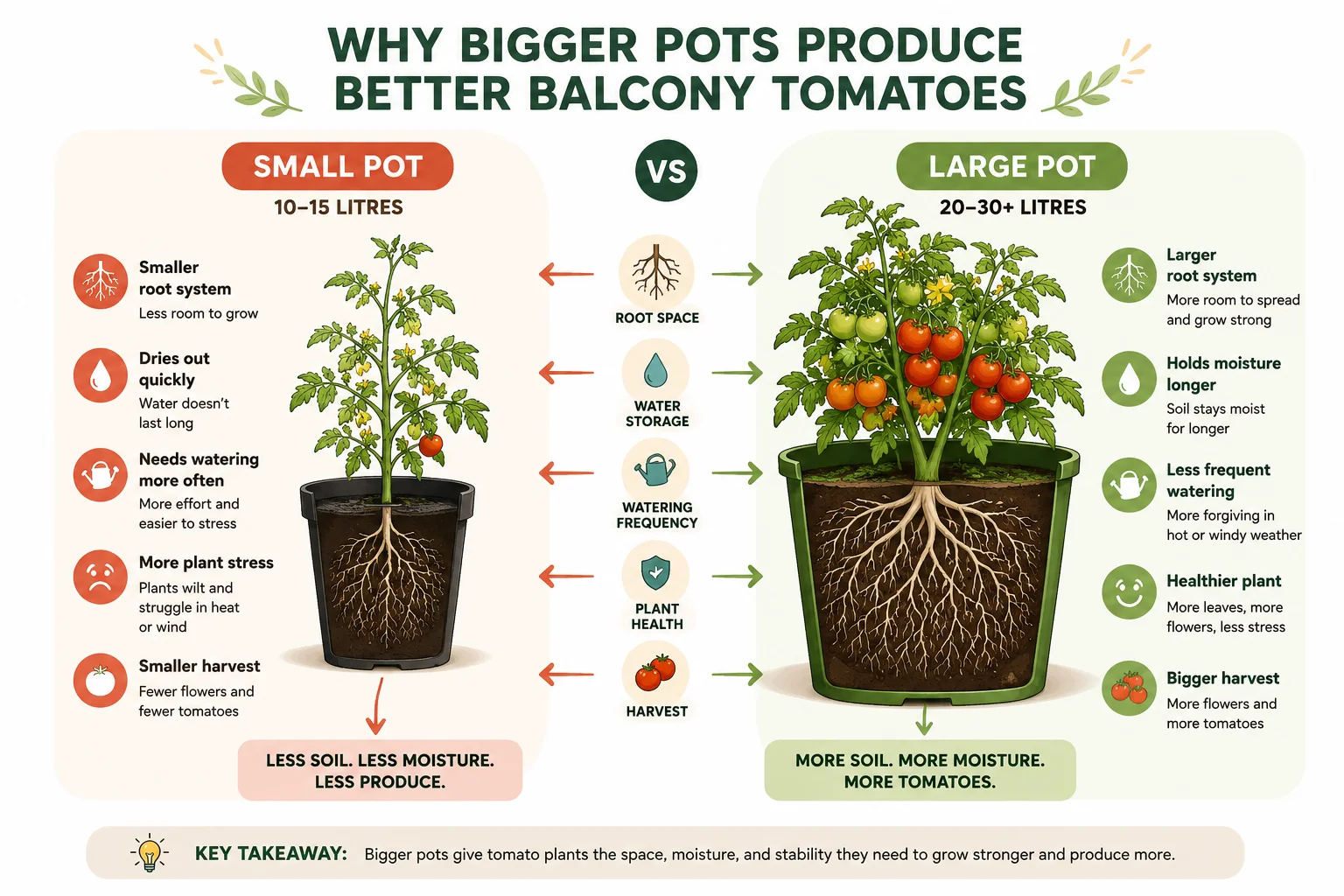
The best pot size for balcony tomatoes is usually 20–30 litres per plant, with a depth of around 30–40 cm. Smaller pots can grow compact cherry tomatoes for a short time, but they dry out faster and give roots less room. Larger pots are often easier to manage on hot, sunny, or windy balconies because they hold more moisture and keep tomato plants more stable.
Many balcony tomato problems are blamed on watering, sunlight, or fertiliser, but the pot itself is often part of the problem. A tomato plant in a small container has less soil to draw from, so it can become stressed much faster than a tomato growing in the ground.
This article explains what pot size works best for balcony tomatoes, how deep the pot should be, when a larger pot is worth using, and how balcony conditions change what your tomato plant needs.
Why Pot Size Matters More on Balconies
A tomato plant growing in a garden bed can spread its roots into surrounding soil. A tomato plant growing on a balcony cannot do that. It only has the soil inside the pot, so the size of that pot has a big effect on how steady the plant feels.
This matters because balcony pots often dry out faster than garden soil. Sun can heat the sides of the container, wind can pull moisture from leaves and soil, and reflected heat from walls or concrete can make the pot warmer than expected.
When the pot is too small, the plant has less room for roots and less stored moisture. This can make watering feel like a constant job, especially during warm weather.
This is why pot size is not only about how big the tomato plant looks above the soil. It is also about how much root space, moisture buffer, and stability the plant has below the soil.
Best Pot Size for Balcony Tomatoes
For most balcony gardeners, a 20–30 litre pot is the most realistic starting point for one tomato plant. It gives the roots enough space to grow while still being manageable on an apartment balcony.
As a simple rule, most balcony gardeners will have fewer watering problems when they choose a slightly larger pot rather than the smallest container a tomato can survive in.
A smaller pot may work for compact cherry tomatoes, but it usually needs closer attention. A larger pot can work even better if the balcony is hot, sunny, windy, or exposed.
The best pot size for balcony tomatoes also depends on the type of tomato you want to grow. Compact patio and cherry varieties are easier in containers than large indeterminate tomatoes that keep growing taller through the season.
If you are growing tomatoes in a very small space, this guide on can you grow tomatoes on a tiny balcony may help you decide what is realistic before choosing a container.
Tomato Pot Size Comparison
The table below gives a simple way to compare tomato pot sizes for balcony growing. These are practical ranges rather than strict rules because every balcony has different light, wind, heat, and space.
| Pot Size | Best For | Balcony Difficulty | What to Expect |
|---|---|---|---|
| 10–15 litres | Small cherry tomatoes or short-term growing | Harder | Dries quickly, needs close watering, and may produce a smaller harvest. |
| 20–30 litres | Most compact balcony tomato plants | Easier | Good balance of root space, moisture storage, and balcony practicality. |
| 30–40 litres | Sunny, windy, or warmer balconies | Reliable if weight is safe | Holds moisture longer and gives roots more room during hot weather. |
| 40 litres or more | Larger tomato varieties or very exposed balconies | Best for space and weight-tolerant balconies | More stable for bigger plants, but heavier and harder to move. |
Can Tomatoes Grow in Small Pots?
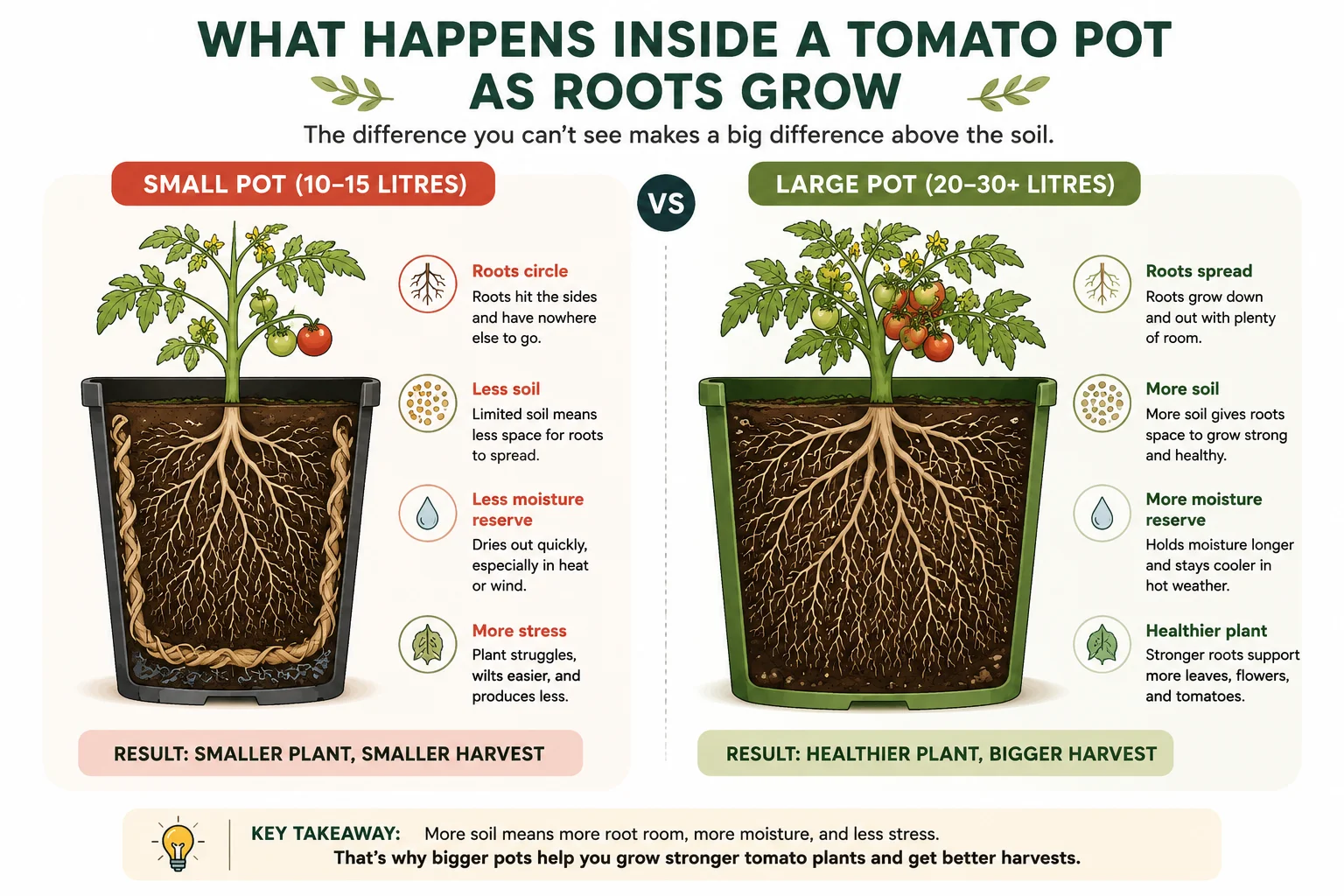
Tomatoes can grow in small pots, but that does not always mean they will grow well. A 10–15 litre pot may support a compact cherry tomato, especially in mild weather or on a sheltered balcony.
The problem is that small pots leave very little room for error. They dry out quickly, heat up faster, and hold fewer nutrients. On a hot balcony, the plant may look fine in the morning and wilt by afternoon.
Small pots can be useful when space is very limited, but they usually suit smaller tomato varieties rather than larger plants. They also work better when the gardener is able to check moisture often.
If small containers are your only option, hanging baskets may be another possible route for compact types. This article on can you grow tomatoes in hanging balcony baskets explains when that setup works and when it becomes difficult.
Why 20–30 Litre Pots Work Well
A 20–30 litre pot is usually the sweet spot for balcony tomatoes because it gives the plant more root space without becoming too large for apartment living.
This size holds more potting mix than a small container, so moisture does not disappear as quickly. It also gives roots more room to spread, which helps the plant stay steadier during warm or windy weather.
For beginners, this size is often more forgiving. Watering still matters, but the plant is less likely to swing from wet to dry as fast as it would in a very small pot.
A pot in this range is especially useful for patio tomatoes, bush tomatoes, and many compact cherry tomato varieties. It is large enough for healthy growth but still practical for renters and apartment gardeners.
When Larger Pots Are Worth It
Larger pots are worth considering when the balcony is hot, windy, or exposed. These conditions make containers dry out faster, so extra soil volume can help keep moisture more stable.
A 30–40 litre pot can make a noticeable difference during summer because it holds more potting mix around the roots. This does not remove the need for watering, but it gives the plant a larger moisture reserve.
Larger pots can also support bigger tomato plants more comfortably. This is helpful if you are growing a taller variety or using a strong stake or cage for support.
The trade-off is weight. A large pot filled with moist potting mix can become heavy. For balconies, this is why many gardeners choose lightweight containers instead of heavy ceramic or concrete pots.
Do Tomatoes Need Deep or Wide Pots?
Tomatoes usually benefit more from depth than shallow width. A pot around 30–40 cm deep gives roots more room to grow downward and helps the plant access moisture more evenly.
A wide pot can help with stability, especially if the plant becomes tall or is exposed to wind. But a shallow decorative planter is usually not the best choice for tomatoes because the roots can run out of space quickly.
The ideal tomato pot is both deep enough for roots and wide enough to stay stable. If you have to choose between a shallow wide pot and a deeper container, the deeper container is usually more useful for tomato growth.
For a broader comparison of container depth, the article on deep vs shallow pots for balcony veggies explains why some vegetables struggle when their root zone is too shallow.
How Many Tomato Plants Per Pot?
For most balcony setups, one tomato plant per pot is the easiest and most reliable choice. Tomato plants need root space, water, nutrients, and airflow. When two plants share a small container, they often compete for all of these.
Even if two young tomato seedlings look small at first, they can quickly fill the pot once they start growing. Crowded roots can make the container dry out faster and may also reduce fruit production.
Two compact tomato plants may work in a very large container, but it is usually less forgiving than giving each plant its own pot. For balcony gardeners, separate pots also make it easier to move, rotate, or replace one plant if needed.
Best Pot Materials for Balcony Tomatoes
The material of the pot matters because balconies often have weight limits, strong sun, and limited space. The best material is not always the prettiest one. It is usually the one that suits your balcony conditions.
| Pot Material | Good Points | Possible Problems | Best Balcony Use |
|---|---|---|---|
| Plastic pots | Lightweight, affordable, easy to move | Can heat up in strong sun | Most apartment balconies and renters. |
| Fabric grow bags | Lightweight, good drainage, root-friendly | Can dry faster in wind or heat | Sunny balconies where weight matters. |
| Terracotta pots | Attractive and breathable | Dries quickly and can be heavy | Sheltered balconies with mild conditions. |
| Ceramic pots | Stable and decorative | Often heavy and harder to move | Small plants or balconies where weight is not a concern. |
For apartment gardeners who need lighter options, this guide on lightweight pots for apartment balconies may help when comparing practical container choices.
Signs Your Tomato Pot Is Too Small
A tomato plant does not always show pot stress immediately. It may look healthy while young, then start struggling once roots fill the container and the weather gets warmer.
Common signs that the pot may be too small include:
- The soil dries out very quickly after watering.
- The plant wilts often, especially during warm afternoons.
- Lower leaves turn yellow even when watering seems regular.
- Growth slows while the plant still looks crowded.
- Roots circle the bottom of the pot or appear near drainage holes.
- The plant flowers but produces fewer tomatoes than expected.
These signs can also have other causes, so pot size is not the only thing to check. But if a tomato plant keeps drying out quickly in a small container, the pot may be limiting how well the plant can cope.
Yellowing leaves can also be linked to watering, nutrients, and root stress. This article on yellow leaves on balcony tomatoes explains those possible causes in more detail.
How Balcony Conditions Change Pot Size Needs
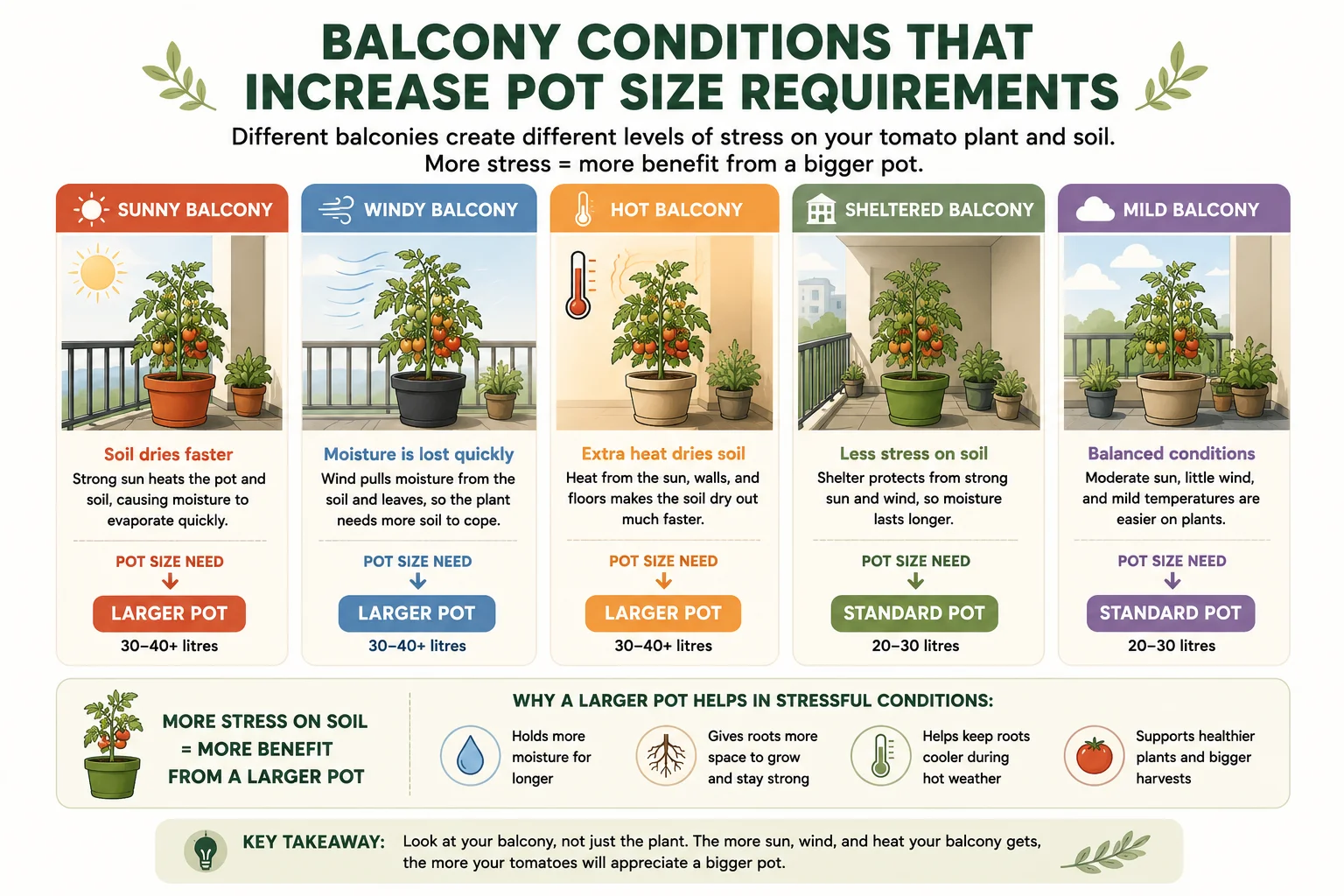
The same tomato pot may behave differently on two balconies. A sheltered balcony with morning sun may keep moisture longer, while a windy balcony with afternoon heat may dry the same pot much faster.
This is why pot size advice should be adjusted to the balcony, not only the tomato variety. A 20 litre pot may work well in a mild, protected space, while a 30–40 litre pot may be more useful on a hot or exposed balcony.
| Balcony Condition | Pot Size Pressure | Useful Pot Direction |
|---|---|---|
| Sunny balcony | Soil dries faster | 30 litres or more is often easier. |
| Windy balcony | Moisture leaves soil and leaves quickly | A larger, stable pot helps reduce stress. |
| Hot balcony | Roots can heat up and dry quickly | 30–40 litres may be more forgiving. |
| Sheltered balcony | Moisture lasts longer | 20–30 litres is often enough for compact plants. |
| Very small balcony | Space and weight are limited | Choose compact varieties and avoid oversized containers. |
If your balcony often dries pots very quickly, this guide on why balcony plants dry out overnight may help explain how wind, heat, and container size work together.
Practical Tips for Growing Tomatoes in Balcony Pots
Tomatoes become easier to manage when the pot size, soil, drainage, and support work together. The container does not need to be perfect, but it should give the plant enough room to stay steady.
- Use one tomato plant per container where possible.
- Choose a pot with drainage holes at the bottom.
- Use quality potting mix instead of garden soil.
- Support the plant early with a stake, cage, or balcony-safe support.
- Place the pot where the plant receives the strongest suitable light.
- Check moisture more often during hot, windy, or dry weather.
Good drainage is especially important because tomatoes dislike sitting in waterlogged soil. This article on drainage tips for small balcony containers explains how drainage affects potted plants in small spaces.
Common Balcony Tomato Pot Mistakes
Most tomato pot problems come from choosing a container that works for the balcony space but not for the plant. A pot may fit neatly in a corner but still be too shallow, too small, or too heavy once filled.
- Using a small decorative pot for a full-size tomato plant.
- Growing several tomato plants in one container.
- Choosing a heavy pot that becomes hard to move after watering.
- Using a shallow planter because it looks stable.
- Forgetting that wind and heat make pots dry faster.
- Choosing large tomato varieties for a very limited balcony.
These mistakes are common because many tomato guides are written for gardens, patios, or raised beds. Balcony growing has smaller margins. The container needs to support the plant while also fitting the space safely.
Australian Balcony Considerations
In many Australian apartments, tomato pots deal with strong light, hot surfaces, dry wind, and sudden weather changes. These conditions can make small containers more difficult than they first appear.
A balcony tomato in Brisbane, Sydney, Perth, or another warm area may need more moisture support than the same plant in a cooler, more sheltered place. This does not always mean using the biggest possible pot, but it does mean thinking about heat and drying speed.
During warmer months, a slightly larger pot can make the plant easier to manage because the soil does not dry out as quickly. On a small balcony, that extra size still needs to be balanced with space, weight, and safety.
Balcony Haven Note: I have noticed that tomatoes in larger containers tend to cope better with changing balcony conditions than tomatoes in smaller pots. Smaller pots can look fine early on, but they often show stress sooner when the weather becomes hotter or windier. This can vary from balcony to balcony, but pot size seems to make a real difference once the plant starts growing strongly.
Frequently Asked Questions
What size pot is best for tomatoes in Australia?
For most Australian balcony conditions, a 20–30 litre pot is a good minimum for one compact tomato plant. A 30–40 litre pot may be easier in hot, sunny, or windy balcony spaces.
Is a 10 litre pot big enough for tomatoes?
A 10 litre pot is usually too small for most tomatoes. It may grow a compact cherry tomato for a short time, but it dries quickly and gives roots little room, especially during warm weather.
Do tomatoes grow better in deep pots?
Tomatoes usually grow better in pots with good depth because their roots need room below the soil. A depth of around 30–40 cm is a practical target for balcony tomatoes.
Can I grow two tomato plants in one pot?
Two tomato plants can share a very large container, but one plant per pot is usually easier on a balcony. Separate pots reduce competition for water, nutrients, root space, and airflow.
Are grow bags good for balcony tomatoes?
Grow bags can work well for balcony tomatoes because they are lightweight and drain well. They may dry faster than solid pots, so they need closer moisture checks in hot or windy conditions.
Can tomatoes grow on a balcony without a large pot?
Tomatoes can grow in smaller pots if the variety is compact and conditions are mild. However, larger pots usually make watering easier and help the plant stay healthier for longer.
Final Thoughts
Choosing the right pot size for balcony tomatoes is one of the simplest ways to make the plant easier to manage. A bigger container gives the roots more space, holds moisture longer, and helps the plant cope with heat and wind.
For most balcony gardeners, 20–30 litres per plant is a realistic starting point. Smaller pots can work for compact tomatoes, but they need more attention. Larger pots can be helpful when the balcony is sunny, hot, windy, or exposed.
The best choice is not only about the tomato plant. It is also about your balcony’s light, heat, wind, space, and weight limits. When the pot matches both the plant and the balcony, growing tomatoes in containers becomes much more predictable and enjoyable.
Leave a Reply