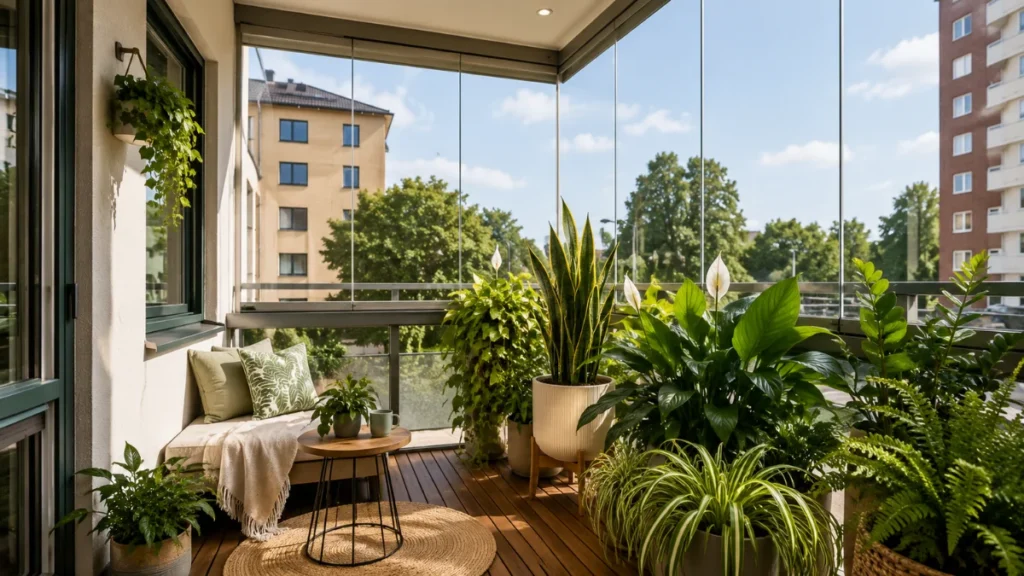
Balconies with no airflow can be difficult for plants because the space often feels still, warm, and slightly damp after watering. This is common on enclosed balconies, semi-enclosed balconies, balconies with high side walls, and apartment balconies surrounded by nearby buildings.
The plants that usually grow best on balconies with no airflow are plants that handle still air, gentle humidity, and slower-drying pots. Good options include snake plant, ZZ plant, peace lily, pothos, cast iron plant, spider plant, Chinese evergreen, ferns, and some shade-tolerant herbs in brighter spots.
The main challenge is not only the lack of breeze. It is what still air does to the balcony microclimate. Leaves may stay damp longer, potting mix may dry more slowly, and crowded pots can trap moisture between plants.
This article explains what plants grow best on balconies with no airflow, why some plants cope better than others, which plants may struggle, and how to think about plant choice in a still balcony space.
How to Tell If Your Balcony Has Poor Airflow
Not every balcony with poor airflow is completely enclosed. Some open balconies also receive very little breeze because of nearby buildings, high side walls, glass panels, or their position within the apartment complex.
Your balcony may have limited airflow if you notice several of these signs:
- Leaves stay wet for a long time after watering or rain.
- Potting mix remains damp much longer than expected.
- There is rarely a noticeable breeze, even on windy days.
- The balcony feels humid or stuffy during warm weather.
- Plants are surrounded by walls, glass panels, or closely spaced buildings.
If these situations sound familiar, choosing plants that tolerate sheltered conditions will usually give you better long-term results.
Why Balconies With No Airflow Feel Different
A balcony with no airflow behaves differently from an open garden. In a garden, moving air helps leaves dry after rain, watering, or humid weather. On a still balcony, moisture can sit around the plant for longer.
This does not mean plants cannot grow there. It simply means the balcony favours different types of plants. Plants that enjoy sheltered, humid, and gentle conditions often cope better than plants that naturally prefer dry, open, breezy spaces.
Still balconies can also change quickly through the day. A balcony may feel cool and damp in the morning, then warm and trapped by midday if sunlight hits the walls, floor, or glass. This is especially common on enclosed balconies or balconies with nearby buildings blocking wind.
Containers make this more noticeable. A plant in a pot depends on a small amount of soil, limited drainage space, and the exact conditions around that pot. If the air is still, the potting mix may stay wet longer than expected, especially in shaded corners.
If your balcony also receives limited light, this guide on gardening on balconies with no direct sun may help you compare the light side of the problem as well.
What Most Plant Advice Misses
Most plant advice talks about sun, water, and soil. Those things matter, but they do not fully explain what happens on a balcony with little or no airflow.
In a regular garden bed, air can move around the plant from many directions. On a balcony, the plant may sit beside a wall, behind a glass panel, under a roof, or between other pots. This changes how quickly leaves dry and how long moisture stays around the plant.
This is why some common “easy plants” still struggle on balconies. The plant may not be difficult, but the balcony may be too still, too crowded, too damp, or too shaded for that plant’s natural habits.
It is also why a plant that grows well on one balcony may fail on another balcony in the same suburb. Small balcony microclimates matter. A few metres of difference can change light, heat, drying speed, and airflow.
A Simple Balcony Example
Imagine two neighbours growing the same peace lily.
The first balcony is open to the breeze, so the leaves dry quickly after watering and the potting mix loses moisture at a steady pace.
The second balcony is enclosed with glass panels and surrounded by nearby buildings. Even though it receives similar light, the air stays much calmer. After watering, the leaves remain damp for longer, and the potting mix takes extra time to dry.
Neither balcony is necessarily better. They simply create different growing conditions. Once you understand how your own balcony behaves, choosing suitable plants becomes much easier.
What Makes a Plant Suitable for Low-Airflow Balconies?
The best plants for balconies with no airflow usually share a few helpful traits. They are not always the same type of plant, but they tend to handle still, sheltered spaces better than plants that need dry, moving air.
Plants with thicker leaves often cope better because they do not rely as much on constant air movement to stay balanced. Many indoor-style foliage plants also suit sheltered balconies because they are used to calmer conditions.
Plants with open growth can also help. Very dense plants can trap moisture inside their own leaves, especially after watering or rain. On a balcony with poor airflow, dense foliage may stay damp for too long.
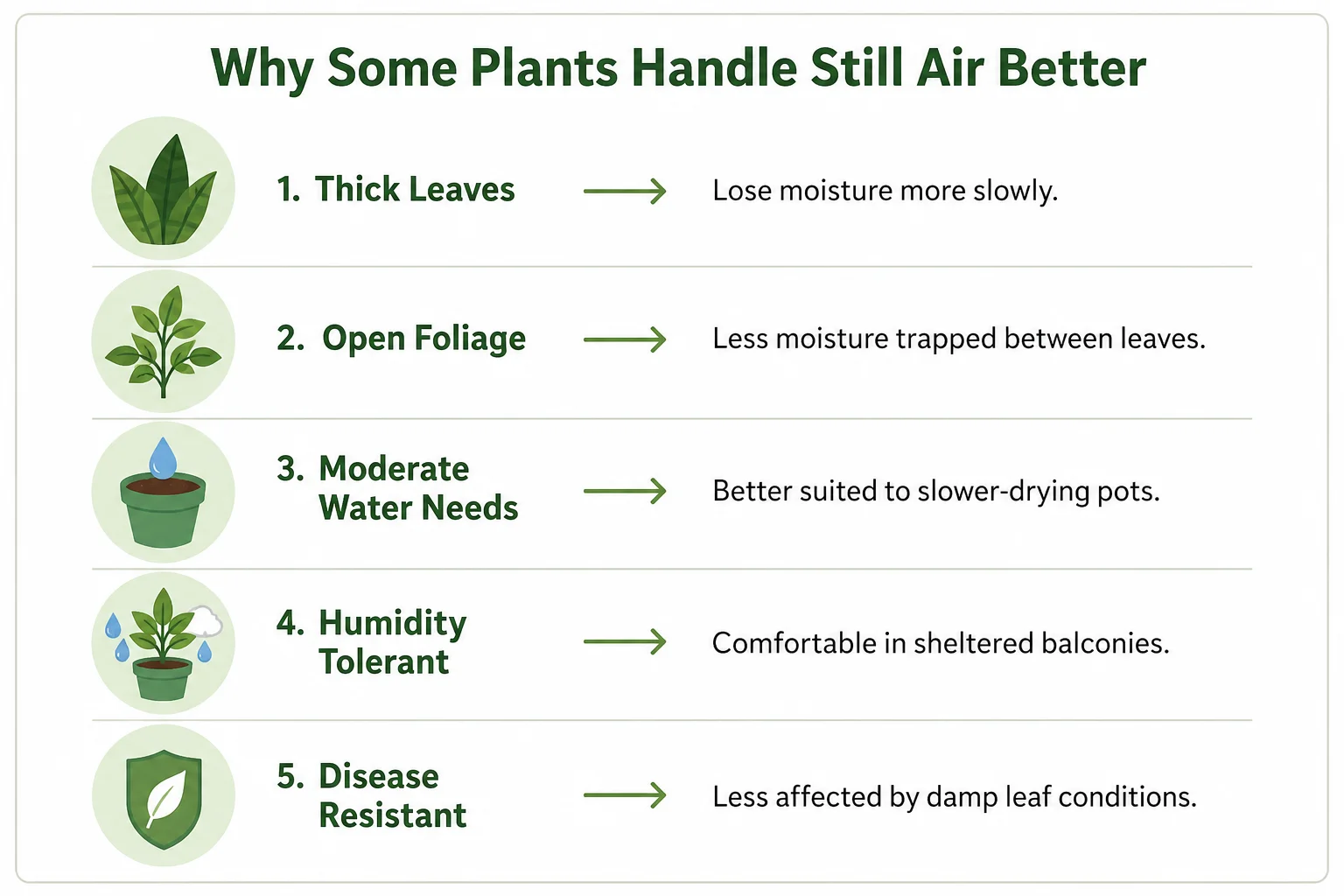
The most suitable plants are usually those that handle gentle humidity, slower drying soil, and sheltered conditions without quickly developing leaf problems.
Best Plants for Balconies With No Airflow
The table below gives a practical starting point. These plants are not perfect for every balcony, but they are more realistic choices for still-air balconies than plants that need dry, breezy conditions.
| Plant | Why It Suits Low Airflow | Best Balcony Light | Beginner Friendly? |
|---|---|---|---|
| Snake plant | Handles still air, dry spells, and sheltered spots well. | Bright shade to indirect light | Yes |
| ZZ plant | Very tolerant and slow-growing, so it does not overcrowd quickly. | Low to bright indirect light | Yes |
| Peace lily | Likes sheltered, humid conditions when protected from harsh sun. | Bright shade | Yes, with careful watering |
| Pothos | Adaptable, forgiving, and suitable for hanging or trailing pots. | Low to medium light | Yes |
| Cast iron plant | Tolerates shade, still air, and slower balcony conditions. | Shade to bright shade | Yes |
| Spider plant | Handles sheltered balconies and grows well in smaller containers. | Bright indirect light | Yes |
| Chinese evergreen | Comfortable in calm, protected, lower-light spaces. | Low to bright indirect light | Yes |
| Boston fern | Enjoys humidity and sheltered conditions if it does not dry out badly. | Bright shade | Medium |
| Bird’s nest fern | Handles humid, shaded balconies better than many dry-air plants. | Bright shade | Medium |
| Philodendron | Often grows well in still, protected, bright shade conditions. | Bright indirect light | Yes |
If your balcony is semi-enclosed rather than fully still, this article on what plants grow well in a semi-enclosed balcony may also be useful because those spaces often sit between indoor and outdoor conditions.
Foliage Plants That Usually Cope Best
Foliage plants are often the safest starting point for balconies with no airflow. They do not need to spend as much energy producing flowers or fruit, so they can often cope better with imperfect balcony conditions.
Snake plant and ZZ plant are useful for beginners because they grow slowly and do not need constant attention. They are also less likely to become dense and messy quickly, which helps in small balcony corners.
Pothos and philodendron can work well if the balcony has bright shade and protection from harsh afternoon sun. Their trailing growth makes them useful for shelves, wall planters, or hanging pots where floor space is limited.
Peace lily and Chinese evergreen can suit sheltered balconies, especially where the light is bright but not direct. They prefer more even moisture than snake plant or ZZ plant, so the potting mix should not stay soggy.
Ferns are a good choice when the balcony is humid and shaded. Boston fern and bird’s nest fern often enjoy still, sheltered air more than dry, windy spaces. The main challenge is keeping the pot evenly moist without turning the soil heavy and wet.
Can Flowering Plants Grow Without Much Airflow?
Some flowering plants can grow on a balcony with little airflow, but they need more care in plant choice. Flowers often need good light and healthy leaves to keep blooming. In still air, dense flowering plants may become more prone to damp leaves and fungal problems.
Peace lily is one of the more realistic flowering options because it naturally suits sheltered, bright shade conditions. Begonias may also work in bright shade if the balcony is not too wet and the pots drain well.
Impatiens can suit shaded, sheltered balconies, but they may struggle if the balcony stays too damp and crowded. Good spacing matters more in still air because leaves do not dry as quickly.
If your balcony is shaded as well as still, the guide on best plants for shaded apartment balconies can help you choose plants that do not rely on strong direct sun.
Herbs and Edibles for Still Balconies
Herbs and edible plants are a little trickier on balconies with no airflow. Many popular herbs come from sunny, open conditions. They may grow poorly if the balcony is still, humid, and shaded.
Mint can cope better than many herbs because it handles moisture and partial shade. It is better grown in its own pot because it spreads strongly in small containers.
Parsley and chives may also grow in bright shade or gentle morning light. They are more realistic than woody Mediterranean herbs in a still, damp balcony space.
Basil can grow in warm sheltered balconies, but it still needs enough light and careful watering. If the balcony is still and humid, basil can become soft, weak, or prone to leaf problems.
Rosemary, lavender, sage, and thyme are less ideal for no-airflow balconies because they prefer brighter, drier, breezier conditions. They may survive in some bright balconies, but they are less forgiving when air movement is poor.
For balcony herb setups, this guide on the best soil mix for balcony herb gardens may help because soil that drains well becomes even more important when the air is still.
Plants That May Struggle Without Airflow
Some plants are not impossible on a still balcony, but they are more likely to struggle. The issue is usually not the plant itself. It is the combination of still air, slower drying leaves, warm corners, and damp potting mix.
| Plant | Why It May Struggle | When It Might Still Work |
|---|---|---|
| Lavender | Prefers dry, sunny, breezy conditions and dislikes damp foliage. | Only in very bright, open, well-drained balcony spots. |
| Rosemary | Can struggle when air is still and soil stays wet too long. | May work in full sun with excellent drainage. |
| Sage | Soft leaves may stay damp in still, humid spaces. | Better in brighter balconies with some air movement. |
| Tomatoes | Dense foliage can trap humidity and increase leaf problems. | May work if the balcony is bright, open, and not crowded. |
| Cucumbers | Large leaves and climbing growth can trap moisture in still air. | Possible with strong light, spacing, and careful watering. |
| Zinnias | Often prefer stronger sun and better airflow around leaves. | More realistic on open, sunny balconies. |
Plants that need dry air are not bad choices in general. They are simply less suited to balconies where air barely moves. If your balcony is also hot, the article on plants that grow best on balconies that get reflected heat may help you separate heat stress from airflow problems.
Different No-Airflow Balcony Types
Not every low-airflow balcony is the same. A glass-enclosed balcony, a covered balcony, and a balcony blocked by nearby buildings can all feel still, but the plant problems may be different.
A glass-enclosed balcony may trap heat and humidity. A deep covered balcony may stay cooler and darker. A balcony between tall buildings may receive reflected light but very little breeze. These small differences affect which plants grow well.
Building design also plays an important role. A balcony recessed into the building often receives less natural airflow than one that projects outward. Likewise, balconies facing internal courtyards or positioned between neighbouring apartment blocks may feel much calmer than balconies facing open streets or parks. Even within the same apartment complex, these small differences can noticeably affect how quickly leaves and potting mix dry.
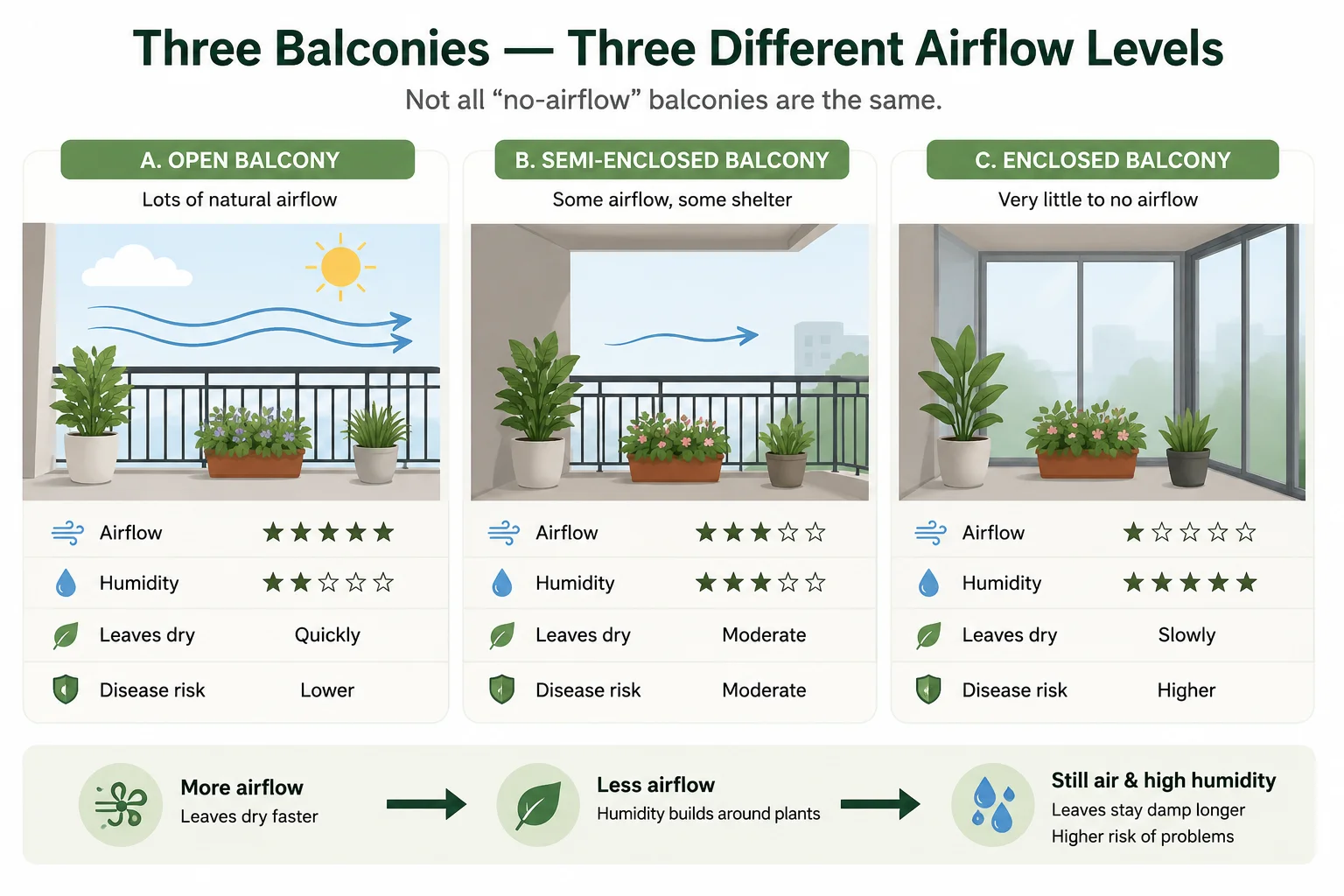
This is why plant selection works better when you think about the whole balcony, not only the plant name. A peace lily might love one still balcony but suffer on another if strong afternoon heat builds behind glass. A snake plant might handle the same heat better, but it may not enjoy cold, wet soil in winter.
Practical Insights for Choosing Plants
When choosing plants for balconies with little or no airflow, the most helpful approach is to match the plant to the balcony’s drying speed, light, and humidity.
- Choose plants that handle sheltered, humid, or indoor-like conditions.
- Be cautious with plants that naturally prefer dry, breezy spaces.
- Use pots with drainage holes because still air slows drying.
- Give leafy plants enough space so moisture does not sit between leaves.
- Place humidity-loving plants in shaded bright spots, not harsh trapped heat.
- Expect slower drying after rain, watering, or humid weather.
This does not mean the balcony needs to be perfect. It just means plant choice matters more when the air is still.
Common Misunderstandings
Balconies with no airflow can create confusing plant problems because the symptoms may look like watering, sunlight, or soil issues. Sometimes those things are involved, but the still air changes how they show up.
- “No wind means plants will be safer.” Still air can protect plants from damage, but it can also hold moisture around leaves for longer.
- “Indoor plants can all go outside.” Some indoor-style plants suit sheltered balconies, but outdoor heat, cold, and direct sun still matter.
- “If the soil is wet, the plant has enough water.” Wet soil can still cause stress if roots do not get enough air.
- “More plants will make the balcony healthier.” Too many pots close together can trap humidity and reduce light.
- “All herbs like balconies.” Many herbs prefer sun and airflow, so still balconies favour only some herb types.
If plants are wilting even when the potting mix feels wet, this may be linked to root stress rather than thirst. This article on balcony plants wilting even with wet soil explains that problem in more detail.
Seasonal Considerations for Australian Apartments
In many Australian apartments, still balconies can feel very different across the year. During warm months, a low-airflow balcony may become humid and hot, especially if glass, concrete, tiles, or nearby walls trap heat.
In cooler months, the same balcony may stay damp for longer after watering because there is less heat and less moving air to dry the potting mix. This can make root problems more likely in plants that prefer dry conditions.
This seasonal shift is one reason hardy foliage plants are often more reliable than delicate flowering plants or Mediterranean herbs. They usually cope better with the slow changes between warm, humid, cool, and damp balcony periods.
Balcony Haven Note: I have noticed that still balconies often look easier for plants because there is no strong wind, but the pots can stay damp much longer than expected. In small spaces, even one crowded corner can feel different from the railing side.
Frequently Asked Questions
What plants grow best on balconies with no airflow?
Snake plant, ZZ plant, pothos, peace lily, cast iron plant, spider plant, Chinese evergreen, philodendron, and ferns are some of the better choices. They usually handle still, sheltered balcony conditions better than plants that need dry moving air.
Is no airflow bad for balcony plants?
No airflow is not always bad, but it changes the growing conditions. Leaves may stay damp longer, soil may dry more slowly, and crowded pots may become more prone to problems. Plant choice and spacing become more important.
Can herbs grow on a balcony with no airflow?
Some herbs can grow, especially mint, parsley, and chives in bright shade or gentle light. Herbs like rosemary, lavender, thyme, and sage usually prefer brighter, drier, breezier conditions, so they may be less reliable in still air.
Do low-airflow balconies cause mould?
They can make mould more likely if pots stay wet, leaves stay damp, or plants are crowded. This does not happen on every balcony, but still air can slow drying and create conditions where mould and fungus are easier to notice.
Are indoor plants good for balconies with no airflow?
Some indoor-style plants are good choices because they are used to calmer air and indirect light. However, they still need protection from harsh sun, cold nights, heavy rain, and overheating near glass or concrete.
Can vegetables grow on balconies with no airflow?
Some leafy vegetables may grow in bright still balconies, but fruiting vegetables are more challenging. Tomatoes, cucumbers, and similar plants often need strong light and good leaf drying to stay healthy in containers.
Final Thoughts
What plants grow best on balconies with no airflow depends on more than the plant name. The best choices are usually plants that handle sheltered air, gentle humidity, slower drying pots, and indirect light.
Snake plant, ZZ plant, pothos, peace lily, cast iron plant, spider plant, Chinese evergreen, philodendron, and ferns are all realistic starting points for many still balconies. They are not perfect for every space, but they match the conditions better than plants that prefer dry, sunny, breezy places.
A balcony with no airflow is not a failed gardening space. It simply has its own microclimate, and understanding that microclimate is often the key to choosing plants that grow with less effort and fewer problems. Rather than trying to grow every type of plant, focus on those that naturally suit sheltered conditions. With the right choices, even a calm, enclosed balcony can become a healthy, attractive space that is enjoyable to care for throughout the year.
Leave a Reply