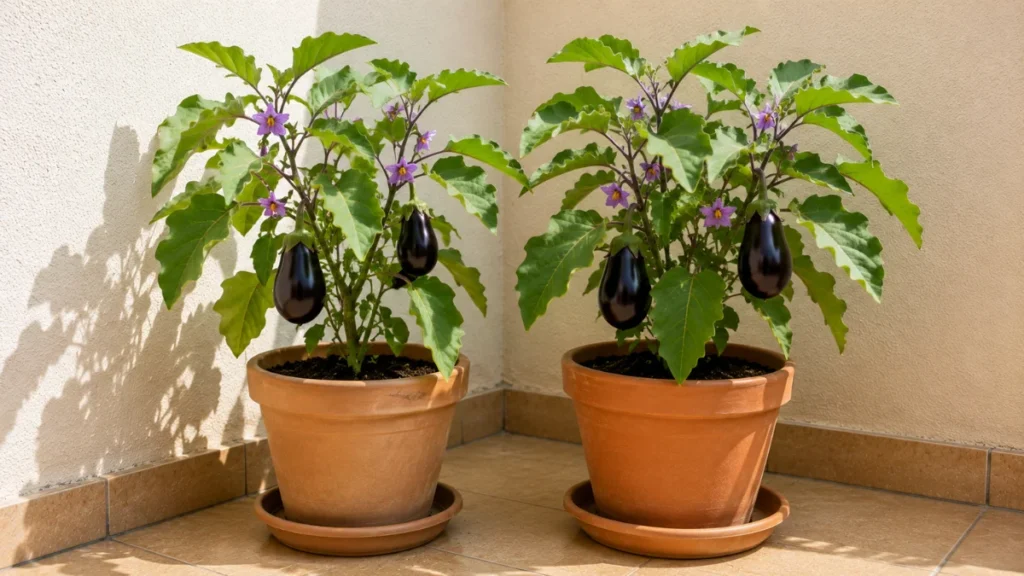
Balconies that get reflected heat can be difficult places to grow plants because the heat does not only come from the sun. It can also bounce back from concrete floors, pale walls, glass doors, nearby buildings, metal railings, and paved areas below.
The plants that usually cope best with hot reflected balcony conditions are rosemary, thyme, oregano, sage, lavender, aloe vera, portulaca, gazania, geraniums, chilli plants, eggplants, and some cherry tomatoes. These plants tend to handle strong light, warm containers, dry air, and short periods of heat stress better than leafy greens or moisture-loving plants.
This is why a plant labelled “full sun” can still struggle on a balcony. Full sun in a garden bed is not the same as full sun beside a warm wall, hot floor, and container that heats from every side.
This article explains what plants grow best on balconies that get reflected heat, why some plants cope better than others, where to place them, and what to watch for when your balcony feels hotter than the weather forecast.
Why Reflected Heat Makes Balcony Gardening Harder
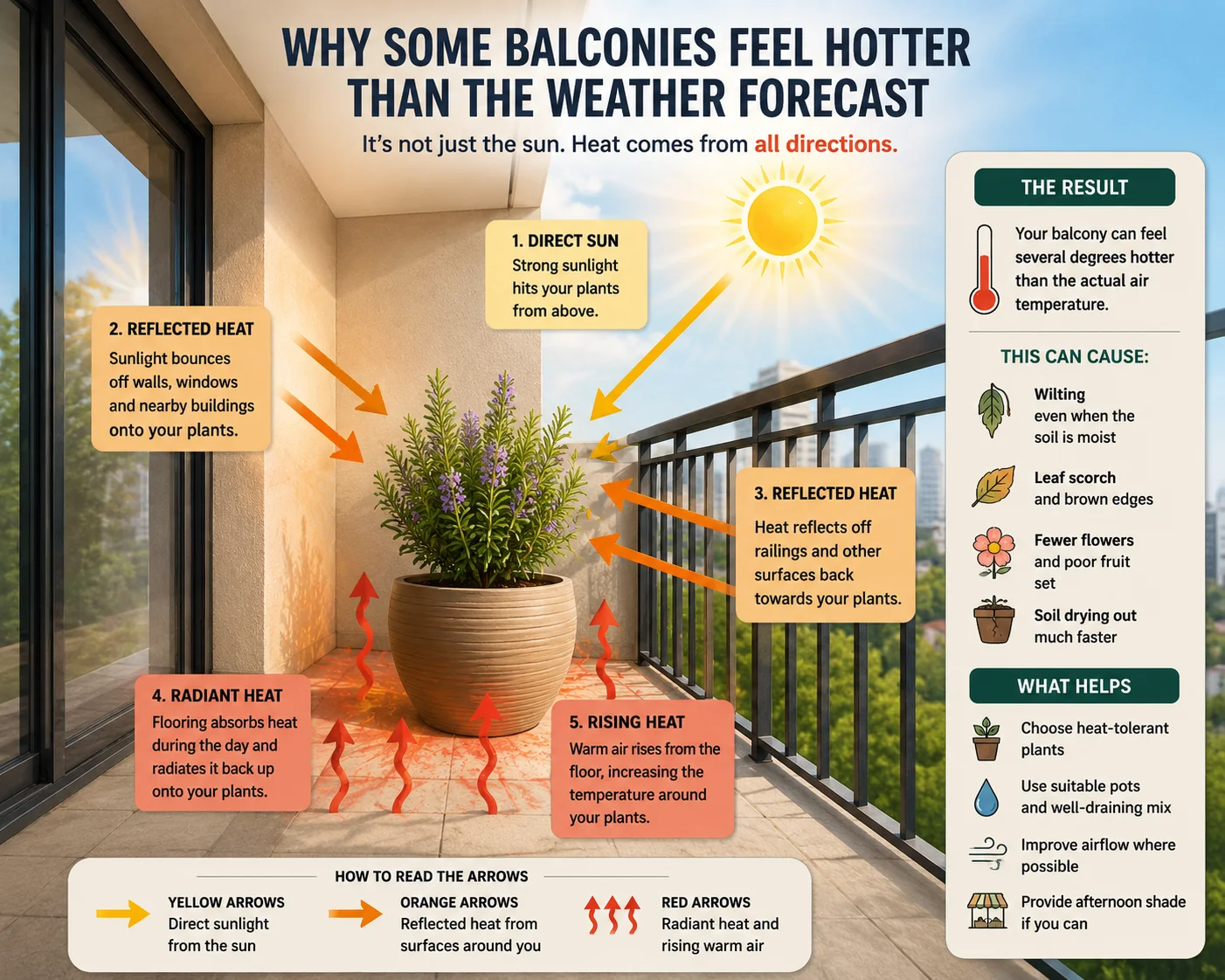
Reflected heat happens when sunlight hits hard surfaces and bounces warmth back towards your plants. On balconies, this often comes from concrete floors, brick walls, glass doors, white or pale walls, nearby windows, and metal railings.
This can make a balcony feel much hotter than the actual air temperature. The weather forecast may say one thing, but your plant may be sitting in a warmer pocket of air surrounded by hot surfaces.
Containers make this more noticeable. A plant in the ground has a larger soil area around its roots. A balcony plant is sitting in a pot, and the pot itself can warm up quickly from the sides, base, and surface.
This is why reflected heat can cause plants to wilt, scorch, drop flowers, or dry out faster than expected. If your plants often look stressed in the afternoon, this article on why balcony plants wilt in the afternoon sun may also help explain what is happening.
What Most Plant Advice Misses About Hot Balconies
Many plant labels say “full sun” or “drought tolerant,” but those words do not always explain how the plant will behave on a balcony.
A plant may handle full sun in a garden bed because its roots are protected by deeper soil. The same plant may struggle in a small balcony pot beside a hot wall. The leaves may cope with sunlight, but the roots may become too warm or the soil may dry too quickly.
This is one reason balcony gardeners sometimes feel confused. They may choose the right type of plant, but the balcony microclimate still adds extra pressure.
Reflected heat is not only about choosing tough plants. It is also about understanding where the heat comes from, how long it stays, and how containers change the growing conditions.
Best Plants for Balconies That Get Reflected Heat
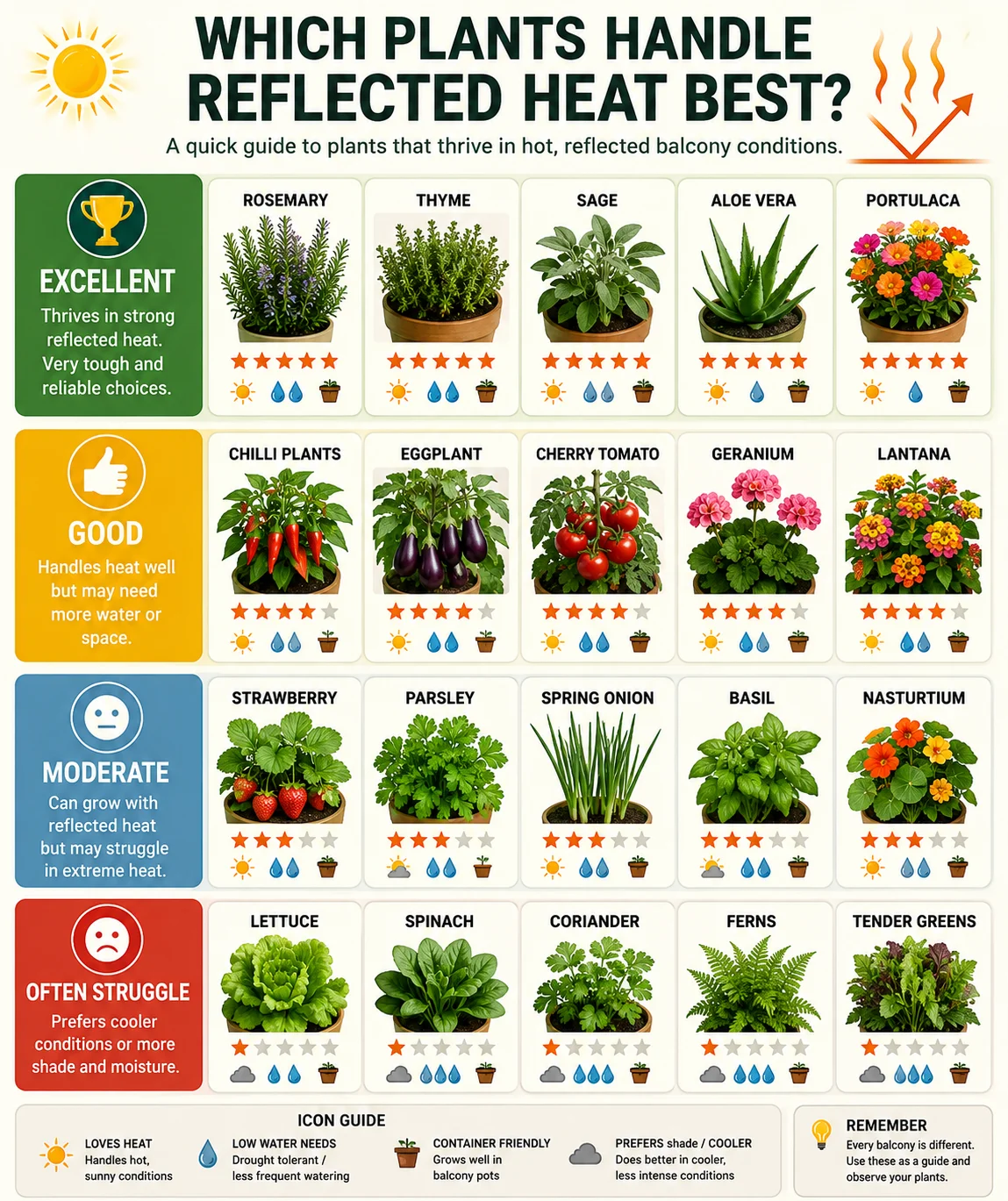
The best plants for reflected heat are usually plants with one or more of these traits: firm leaves, woody stems, silver or small leaves, thick moisture-storing leaves, or a natural ability to cope with dry sunny conditions.
The table below gives a simple overview of plant choices that are more realistic for balconies with reflected heat.
| Plant | Heat Tolerance | Best Balcony Use | Realistic Expectation |
|---|---|---|---|
| Rosemary | Very high | Sunny pots, hot corners, cooking herb | One of the most reliable herbs for hot reflected balconies. |
| Thyme | Very high | Small pots and shallow containers | Handles dry, warm conditions well if drainage is good. |
| Oregano | High | Herb pots and compact balcony gardens | Usually easier than leafy herbs in hot balcony spaces. |
| Sage | High | Sunny herb containers | Can cope well with warmth but dislikes soggy soil. |
| Lavender | High | Sunny decorative pots | Useful for hot dry balconies if airflow is reasonable. |
| Aloe vera | Very high | Hot dry spots and low-care containers | Stores moisture in its leaves and usually handles dry heat well. |
| Portulaca | Very high | Small sunny pots and railing planters | Excellent for colour in hot, dry, bright balcony areas. |
| Gazania | High | Sunny flower pots | Handles heat better than many soft flowering plants. |
| Chilli plants | High | Edible balcony containers | Can grow well in warmth if watering stays steady. |
| Eggplant | Moderate to high | Larger edible pots | Can enjoy warmth but needs enough root space and water. |
| Cherry tomatoes | Moderate to high | Sunny balcony food gardens | Can grow well, but heat may affect flowers and watering needs. |
For more general hot-balcony plant choices, you may also find drought-tolerant plants for hot balconies useful.
Mediterranean Herbs That Handle Reflected Heat
Mediterranean herbs are often some of the strongest choices for balconies that get reflected heat. Rosemary, thyme, oregano, sage, and lavender naturally suit sunny, dry, open conditions.
These herbs usually have smaller leaves, firmer stems, or a woody growth habit. This helps them lose less moisture than soft leafy herbs such as coriander, parsley, or basil.
Rosemary is especially useful on hot balconies because it can handle dry air and strong light better than many common herbs. If your balcony faces strong afternoon heat, this guide on rosemary care for hot west-facing balconies gives more focused advice.
Thyme is also useful because it stays compact and does not need a very large pot. Oregano can spread more, but it is still much more realistic than many soft herbs when the balcony is hot and bright.
Succulents and Aloe Vera for Hot Balcony Spots
Succulents are useful because they store water in their leaves, stems, or roots. This makes them better suited to hot dry balcony conditions than many soft-leaf plants.
Aloe vera, jade plant, sedum, echeveria, and some agave varieties can work well where reflected heat makes the balcony dry and bright. They are especially helpful for busy gardeners because they do not usually need the same constant watering as leafy plants.
They still need a suitable potting mix and drainage. Reflected heat does not protect a succulent from root rot if the pot stays wet for too long.
Succulents can also be useful in small spaces because many stay compact. If you are comparing options, this article on what succulents can stay outside on a balcony may help.
Flowers That Cope With Reflected Heat
Flowering plants can be harder on hot balconies because flowers often fade quickly in strong heat. But some flowering plants are better suited than others.
Portulaca is one of the strongest choices for reflected heat. It has fleshy leaves, stays low, and often flowers well in bright hot spaces. Gazania is another useful option because it handles sunny, dry conditions better than many soft flowers.
Geraniums can also work well, especially in pots with good airflow. They may need more regular watering than succulents or woody herbs, but they are generally tougher than many delicate flowering plants.
Lantana can handle heat well too, although it may need more space than a very small balcony can comfortably provide. For renters or small-space gardeners, compact varieties are usually more realistic.
Edible Plants That Can Grow in Reflected Heat
Some edible plants actually enjoy warm conditions, but they still need enough root space and steady moisture.
Chilli plants are often a good match for hot balconies because they like warmth and can grow well in containers. Eggplants can also enjoy heat, but they usually need a larger pot than many beginners expect.
Cherry tomatoes can grow well on hot balconies, but reflected heat can sometimes cause flower drop, curled leaves, or fast-drying soil. If tomatoes are part of your balcony garden, this article on growing tomatoes on a tiny balcony may help you choose a realistic setup.
Spring onions and some hardy herbs can also be useful because they do not take much space. They may not be as heat-loving as chilli or rosemary, but they are often easier than leafy greens in a warm balcony spot.
| Edible Plant | Good for Reflected Heat? | Balcony Notes |
|---|---|---|
| Chilli | Yes | Often performs well in warm sunny balcony containers. |
| Eggplant | Yes, with enough pot size | Needs warmth, space, and steady watering. |
| Cherry tomato | Sometimes | Can grow well but may struggle during extreme heat. |
| Rosemary | Yes | Very suitable for hot sunny herb pots. |
| Thyme | Yes | Good for small pots and dry conditions. |
| Lettuce | Usually limited | Often struggles in hot reflected summer conditions. |
| Spinach | Usually limited | Better suited to cooler, gentler balcony conditions. |
| Coriander | Usually limited | May bolt or lose quality quickly in heat. |
Plants That Often Struggle With Reflected Heat
Plants that prefer cooler soil, steady moisture, or gentle light often struggle when reflected heat builds up around them.
Lettuce, spinach, coriander, parsley, many ferns, and moisture-loving shade plants can become stressed quickly in hot balcony conditions. They may wilt, bolt, fade, develop dry edges, or stop growing well.
This does not mean these plants cannot grow on any balcony. It means they are usually better placed in cooler zones, morning sun, bright shade, or seasons when heat is gentler.
If lettuce is one of the plants you want to grow, this guide on whether lettuce can grow on balconies in summer heat explains the issue in more detail.
Where Reflected Heat Is Strongest on a Balcony
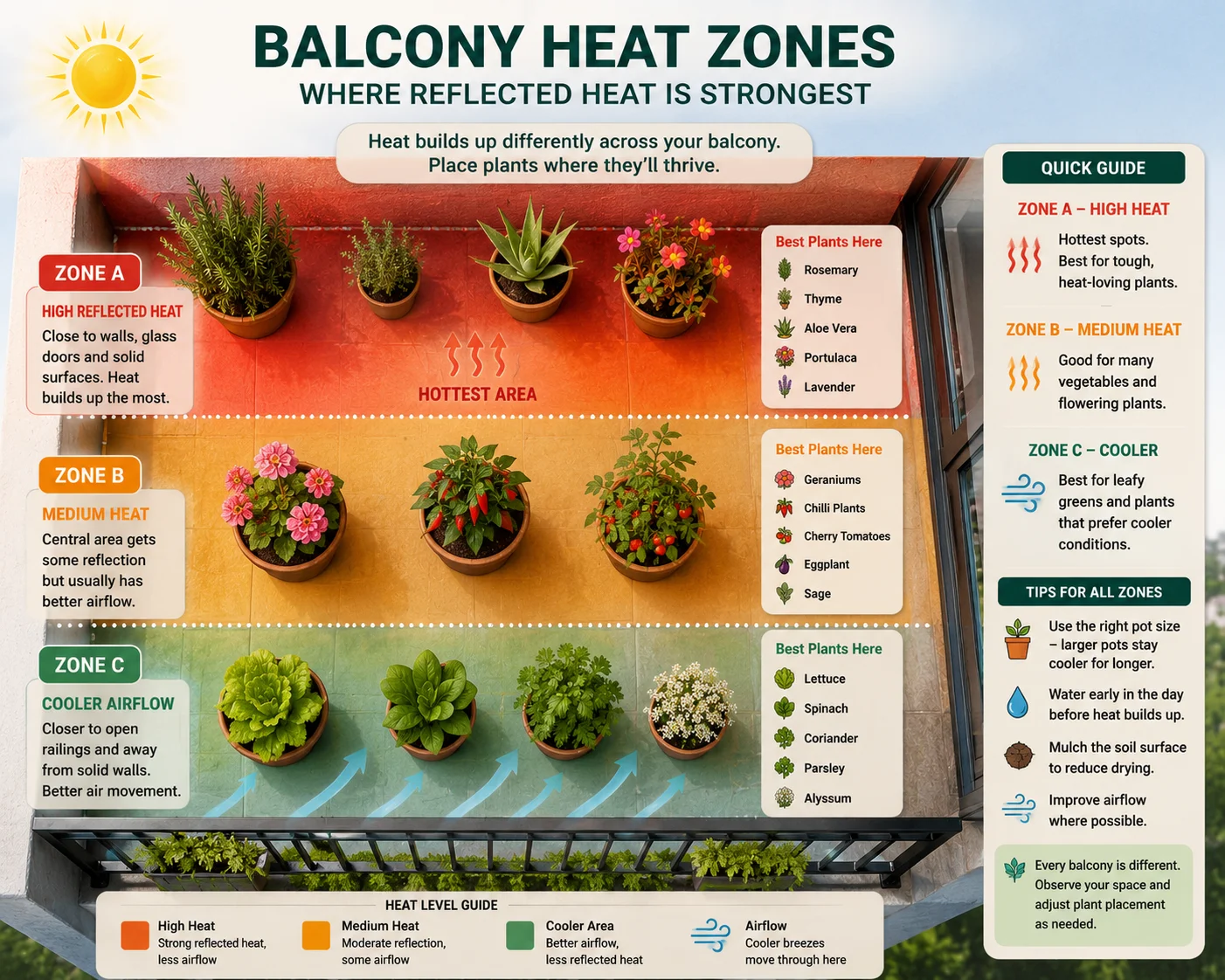
Reflected heat is not usually spread evenly across the whole balcony. Some spots become much hotter than others.
The hottest areas are often close to solid walls, glass doors, pale floors, metal railings, and enclosed corners. These spots can trap warmth and reduce airflow.
The cooler areas are often closer to open railings, shaded edges, or places where air can move through more easily. Even a small difference in placement can change how much stress a plant experiences.
Many balcony gardeners are surprised to find that a pot only half a metre from a wall can feel noticeably different from one tucked into a corner. Reflected heat often creates small hot spots rather than heating the entire balcony evenly.
This is why the same plant may struggle near the back wall but grow better closer to the railing. Balcony gardening often depends on these small microclimates.
Why Pots Matter as Much as Plant Choice
On a balcony with reflected heat, the pot can make a big difference. Small pots dry faster. Dark pots absorb more warmth. Thin plastic pots can heat quickly. Pots placed directly on hot concrete may warm from below.
This means even a heat-tolerant plant can struggle if the container is too small or the soil dries out too quickly.
Larger containers usually give roots more protection because there is more potting mix around them. They also dry more slowly than very small pots. This can be helpful on balconies where heat bounces from several directions.
Watering also becomes more important. If your soil dries too quickly in warm weather, this article on balcony soil drying out too fast gives practical ways to understand and manage it.
Practical Insights for Hot Reflected Balconies
Choosing plants for reflected heat becomes easier when the whole balcony is considered, not only the plant label.
- Woody herbs usually cope better than soft leafy herbs.
- Succulents are useful where heat and dry air are both strong.
- Small pots can make even tough plants struggle.
- Plants near walls and glass may experience more heat stress.
- Afternoon heat is usually harder than morning sun.
- Airflow can make a hot balcony feel less harsh for plants.
Small changes in placement can be just as important as plant choice. A plant may not need a completely different balcony. It may simply need a less intense part of the same balcony.
Common Misunderstandings
Reflected heat can cause plant problems that look like ordinary watering, sunlight, or care mistakes. This is why it often confuses beginners.
- “Full sun” does not always mean a plant can handle hot reflected surfaces.
- Wilting does not always mean the plant needs more water immediately.
- A heat-loving plant can still struggle in a tiny hot pot.
- Leafy greens often dislike reflected summer heat more than fruiting plants do.
- A balcony can stay warm even after direct sun has moved away.
- Two balconies in the same building can behave very differently.
These misunderstandings are common because balcony conditions are more compressed than garden conditions. Heat, wind, light, and pot size all affect the plant at the same time.
Seasonal Context for Australian Balconies
In many Australian apartments, reflected heat becomes most noticeable in late spring, summer, and early autumn. Concrete, tiles, glass, and brick can absorb heat for hours and release it slowly during the afternoon and evening.
This can make a balcony feel harsh even if the plant technically receives a suitable amount of sun. During cooler months, the same balcony may feel much easier for plants because the reflected heat is weaker.
For very hot balcony situations, this article on plants that survive strong afternoon heat is also worth reading because afternoon heat and reflected heat often happen together.
Balcony Haven Note: I have noticed that reflected heat is one of those balcony problems that is easy to miss until plants start looking tired. A balcony can look bright and healthy in the morning, then become much harsher later in the day once the floor and walls warm up. It also explains why the same plant can behave differently only a few metres apart.
Frequently Asked Questions
What plants grow best on balconies that get reflected heat?
Rosemary, thyme, oregano, sage, lavender, aloe vera, portulaca, gazania, geraniums, chilli plants, eggplants, and some cherry tomatoes are usually better choices for balconies with reflected heat.
Can herbs grow on a balcony with reflected heat?
Yes, but woody herbs usually cope better than soft herbs. Rosemary, thyme, oregano, sage, and lavender are more suitable than coriander, parsley, or basil in very hot reflected conditions.
Why do plants wilt on a balcony even when watered?
Plants can wilt from heat stress even when the soil still has moisture. Reflected heat can warm the leaves, pot, and root zone faster than the plant can manage.
Can reflected heat damage plant roots?
Yes. Balcony pots can become much warmer than garden soil, especially when dark containers sit near walls, glass, or concrete. Warm roots can make plants dry out faster, wilt more easily, or slow their growth during hot weather.
Are succulents good for balconies with reflected heat?
Many succulents are good choices because they store moisture and handle dry air well. Aloe vera, jade plant, sedum, echeveria, and some agaves can suit bright hot balcony areas.
Can tomatoes grow with reflected heat?
Tomatoes can grow in warm balcony conditions, but strong reflected heat may cause flower drop, leaf curl, or fast soil drying. Smaller tomato varieties in suitable pots are usually more realistic than large plants in small containers.
What plants should I avoid on very hot reflected balconies?
Lettuce, spinach, coriander, many ferns, and moisture-loving shade plants often struggle in very hot reflected conditions. They usually perform better in cooler spots, gentler seasons, or morning sun.
Final Thoughts
What plants grow best on balconies that get reflected heat depends on more than sun hours. The real issue is how the whole balcony behaves, including walls, floors, glass, wind, container size, and afternoon warmth.
Rosemary, thyme, sage, oregano, lavender, aloe vera, portulaca, gazania, chilli plants, eggplants, and some cherry tomatoes are usually more realistic choices because they can handle warmer, drier balcony conditions better than soft leafy plants.
Once reflected heat is understood, plant choice becomes less confusing. Instead of fighting the balcony, the goal is to match plants to the conditions already there. That makes balcony gardening feel calmer, more practical, and much easier to keep going.
Leave a Reply