
Finding the best vertical garden ideas for tiny balconies usually starts when floor space becomes too crowded. A few pots can quickly turn into a narrow walking path, especially on apartment balconies where every corner matters.
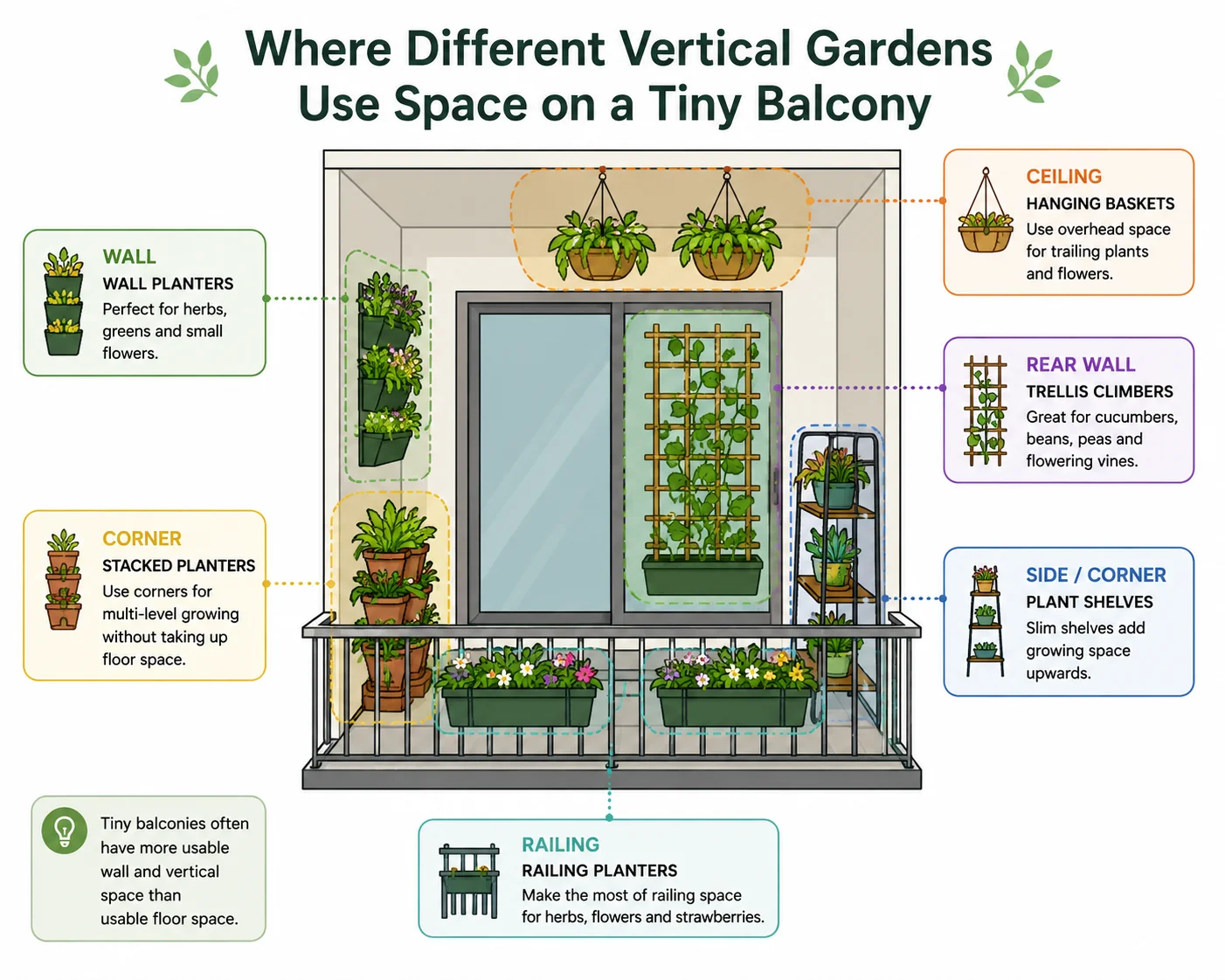
Wall planters, railing planters, stacked planters, hanging baskets, slim plant shelves, and climbing plants can all help maximise growing space on a small balcony. These setups make use of walls, railings, corners, and vertical supports, allowing more plants to fit into limited space without covering the entire floor.
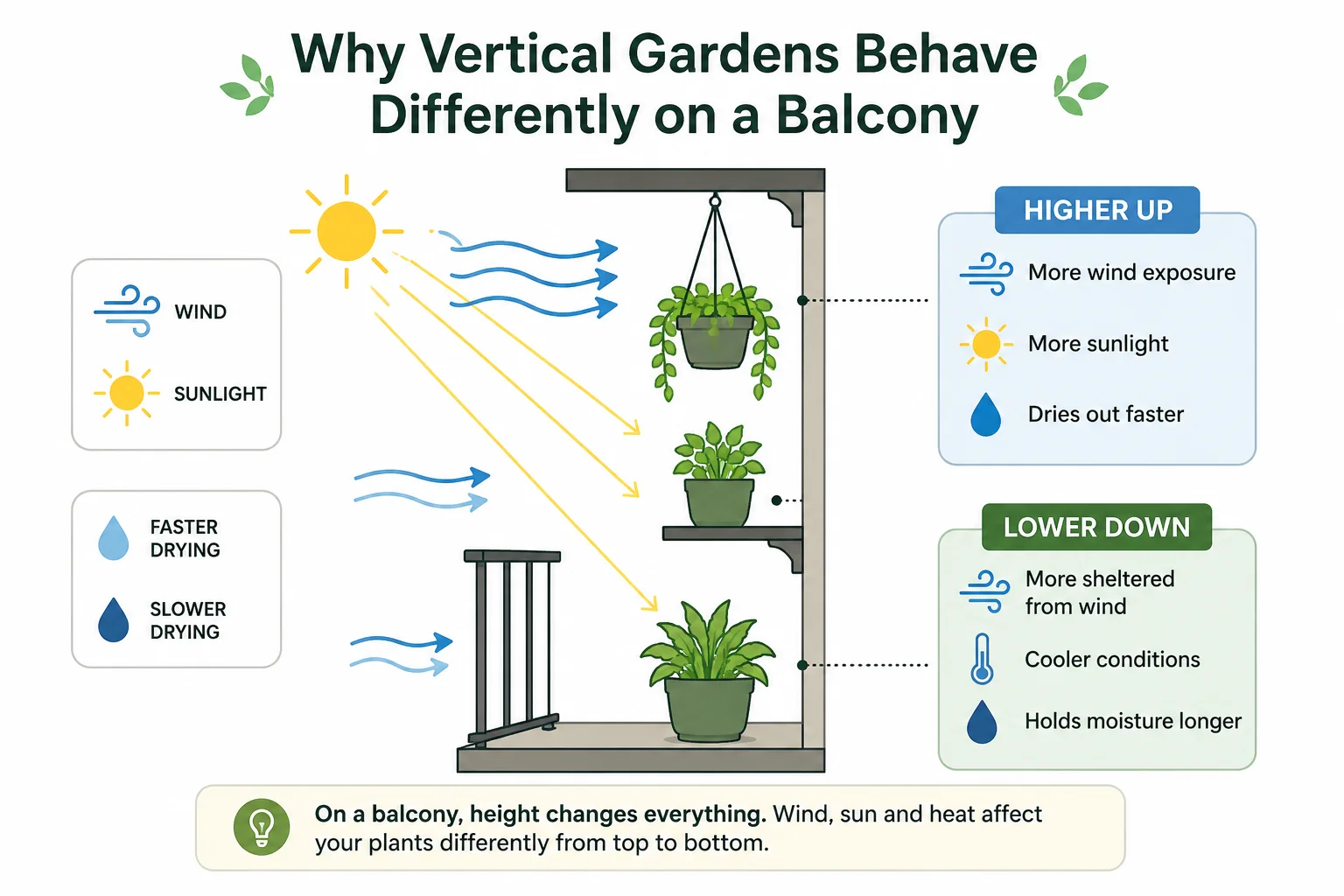
The tricky part is that a vertical garden does not only save space. It also changes how plants experience wind, sunlight, heat, and watering. A planter higher up on a balcony may dry faster than one sitting on the floor. A hanging basket may look beautiful but need more attention during hot or windy weather.
This article explains which vertical garden ideas are realistic for tiny balconies, how different setups behave in real apartment conditions, and how to choose a style that suits your balcony instead of copying a garden idea that only works in a larger outdoor space.
Why Vertical Gardens Behave Differently on Balconies
Vertical gardening sounds simple because the idea is clear: grow upward instead of spreading pots across the floor. On a tiny balcony, this can be very helpful. It can keep the walking path open, make the space feel less cluttered, and allow more plants to fit into a small area.
But balconies are not the same as backyard gardens. A balcony often has stronger wind, reflected heat from walls or glass, limited drainage options, and changing sunlight during the day. These conditions affect vertical gardens more than many people expect.
A planter near the floor may be partly sheltered by the balcony wall. A hanging basket or upper shelf may receive stronger wind and dry out faster. A wall planter may stay warmer if the wall heats up in the afternoon. These small differences can change how often plants need water and which plants cope best.
What Most Vertical Garden Advice Misses
A lot of vertical garden advice focuses on fitting more plants into less space. That is useful, but it is not the whole story for apartment gardeners.
On a balcony, a vertical garden also needs to be easy to water, safe in windy weather, suitable for the available sunlight, and realistic for renters. A large wall of plants may look impressive online, but it may be difficult to manage if the balcony is narrow, exposed, or not allowed to have permanent wall fixtures.
The most useful vertical garden ideas for tiny balconies are usually simple. They use unused space without making daily care harder. A small railing planter, slim shelf, or trellis can sometimes be more practical than a large vertical system that becomes heavy, dry, or awkward to reach.
Wall Planters for Sheltered Balcony Spaces
Wall planters are one of the most space-saving vertical garden ideas for tiny balconies. They use wall space that often stays empty and can hold herbs, small flowers, leafy greens, and compact decorative plants.
This setup usually works best on sheltered balconies where wind is not too strong. A wall can help protect plants from direct gusts, but it can also hold heat during warmer weather. If the wall receives strong afternoon sun, small containers may dry quickly.
Wall planters are useful when floor space is already being used by larger pots. For example, a balcony with tomatoes, dwarf fruit plants, or larger containers may still have wall space available for smaller herbs or flowers.
If you are unsure which part of your balcony receives the best light, this guide on how to measure sunlight on a balcony can help you understand where vertical planters are most likely to work.
Railing Planters for Narrow Balconies
Railing planters are especially useful on narrow balconies because they use the edge of the balcony instead of the floor. They can suit herbs, strawberries, compact flowers, lettuce, and trailing plants.
The main advantage is that railing planters often receive better light than pots placed near the back wall. They may also keep plants at a comfortable height for watering and harvesting.
The main challenge is wind. Railing areas can be more exposed, especially on higher floors or balconies between buildings. A planter that feels stable on a calm day may behave differently during strong wind.
For exposed balconies, our guide on protecting balcony pots from strong winds may help you think about stability before adding more containers to the railing area.
Stacked Planters for Small Balcony Corners
Stacked planters use several growing levels in one small footprint. This makes them useful for tiny balconies where corners are available but floor space is limited.
They can work well for herbs, strawberries, lettuce, violas, alyssum, and other small plants. They are also useful for gardeners who want a neat, organised look without spreading many separate pots around the balcony.
The important thing to understand is that the top and bottom levels may not behave the same way. The top level often receives more sun and wind, while the lower levels may stay cooler and slightly more shaded. This means some plants may grow better on one level than another.
Climbing Plants as Natural Vertical Gardens
Climbing plants are one of the simplest ways to create a vertical garden without adding many separate containers. A single pot with a trellis can grow upward and use height instead of taking over the floor.
This can work well for cucumbers, peas, climbing beans, some small flowering vines, and other plants that naturally grow upward with support. It can also make a tiny balcony feel greener without adding too many pots.
Climbing plants are especially helpful when the balcony receives good sunlight in one narrow area. Instead of spreading plants across the balcony to chase light, one vertical support can make better use of that bright spot.
If you are interested in edible vertical growing, this article on growing cucumbers vertically on a balcony explains how upward growth can help save space in small balcony gardens.
Hanging Baskets and Suspended Planters
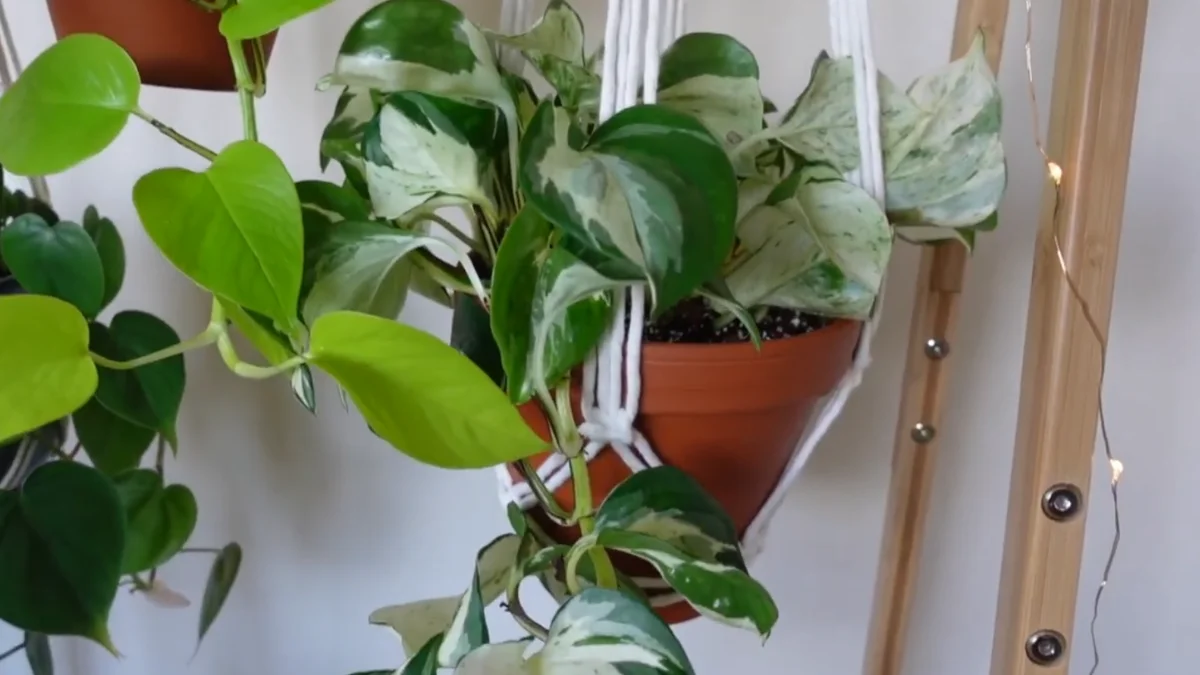
Hanging baskets can make a tiny balcony feel fuller without taking up floor space. They are useful for trailing herbs, flowers, strawberries, and compact decorative plants.
The challenge is that hanging containers often dry faster than lower pots. They are usually more exposed to moving air, and their smaller soil volume can lose moisture quickly in warm weather.
This does not mean hanging baskets are a bad idea. It simply means they work best when the plant choice and watering pattern match the balcony. A hanging basket in a hot, windy position may need tougher plants than one in a cooler, sheltered corner.
If fast drying is already a problem on your balcony, the article on why balcony plants dry out overnight may help explain why some containers lose moisture much faster than expected.
Slim Plant Shelves for Renters
Slim plant shelves are one of the most renter-friendly vertical garden ideas for tiny balconies. They do not usually need drilling, and they can be moved around as sunlight changes through the year.
A narrow shelf can hold herbs, small flowers, succulents, leafy greens, and small nursery pots. It can also help group plants neatly instead of scattering them across the floor.
The main limitation is light. Plants on lower shelves may receive less sunlight than those at the top. If the shelf is placed against a dark wall or deep corner, the lower levels may become too shaded for some edible plants.
For balconies where space and light are both limited, this guide on plants for balconies with limited space and light may help with realistic plant choices.
Vertical Garden Ideas Compared
Different vertical garden systems suit different balcony conditions. The best choice depends on how much light, wind, wall space, and watering access your balcony has.
| Vertical Garden Idea | Best For | Balcony Challenge to Watch | Good Plant Choices |
|---|---|---|---|
| Wall planters | Using empty wall space | Heat from walls and small soil volume | Herbs, begonias, lettuce, small flowers |
| Railing planters | Narrow balconies and better light | Wind exposure and safety | Strawberries, herbs, alyssum, compact greens |
| Stacked planters | Balcony corners and compact layouts | Different light and moisture levels from top to bottom | Herbs, lettuce, strawberries, violas |
| Climbing plants | Growing upward from one pot | Support strength and pot depth | Cucumbers, peas, beans, small vines |
| Hanging baskets | Freeing floor space | Fast drying in heat and wind | Trailing flowers, strawberries, hardy herbs |
| Slim plant shelves | Renters and movable setups | Lower shelves may be too shaded | Succulents, herbs, small leafy plants |
Quick Match: Which Vertical Garden Fits Your Balcony?
Sometimes the easiest way to choose a vertical garden is to start with the balcony problem, not the planter style. A narrow balcony, a windy balcony, and a rental balcony may all need different setups.
| If Your Balcony Is… | Often Worth Considering | Why It Can Help |
|---|---|---|
| Very narrow | Railing planters or wall planters | They use edges and walls instead of taking over the walking area. |
| Windy | Wall planters or low stacked planters | These can stay more sheltered than hanging baskets or exposed railing pots. |
| A rental apartment | Slim plant shelves or freestanding trellises | They are movable and usually avoid permanent wall fixing. |
| Good sun in one small spot | A trellis with climbing plants | One bright area can support upward growth without spreading pots everywhere. |
| Mostly shaded | Wall planters with herbs, greens, or shade-friendly flowers | Small plants can make use of bright shade without needing large containers. |
| Hot and dry | Deeper shelves or larger containers with fewer plants | More soil volume can hold moisture better than tiny vertical pockets. |
This table is only a starting point. The best choice still depends on your own balcony’s light, wind, heat, and how easy the plants are to reach for watering.
Best Plants for Tiny Balcony Vertical Gardens
The best plants for a vertical balcony garden are usually compact, easy to reach, and suited to smaller containers. Large plants can still grow vertically, but they often need deeper pots, stronger support, and more careful watering.
Herbs are often a good starting point because many stay compact and are useful in everyday cooking. Strawberries also suit pockets, railing planters, and stacked systems. Leafy greens can work well if the balcony does not become too hot. Climbing vegetables can be useful when there is enough sun and a strong support.
For edible growing in very small spaces, our guide on best edible plants for tiny balconies may help you compare realistic options.
| Plant Type | Vertical Garden Suitability | Why It Works | Best Setup |
|---|---|---|---|
| Herbs | Very good | Compact, useful, and easy to harvest | Wall planters, shelves, railing planters |
| Strawberries | Very good | Small plants that suit pockets and towers | Stacked planters, railing planters, hanging baskets |
| Lettuce and leafy greens | Good | Can grow in smaller containers with steady moisture | Wall planters, stacked planters, shelves |
| Cucumbers | Good with support | Grow upward and save floor space | Deep pot with trellis |
| Trailing flowers | Good | Soften edges and add colour without using floor space | Hanging baskets, railing planters |
| Tomatoes | Limited to moderate | Need more root space and stronger support | Large floor pot with vertical stake or cage |
Practical Insights Before Choosing a Setup
A vertical garden becomes easier to manage when the setup matches the real conditions of the balcony. These small checks can prevent common problems later.
- Higher planters often face more wind than floor pots.
- Small vertical pockets can dry faster than deeper containers.
- Railing planters may receive better light but also stronger gusts.
- Lower shelves may stay shaded, especially near walls.
- Climbing plants need strong support and enough root space.
- Simple systems are often easier to water and maintain.
Vertical gardening is not only about adding more plants. It is also about keeping the balcony usable, safe, and easy to care for.
Common Mistakes With Vertical Balcony Gardens
Most problems with vertical gardens on balconies come from choosing a setup that looks good but does not suit the balcony conditions.
- Using too many small pockets that dry out quickly.
- Placing delicate plants in windy railing positions.
- Forgetting that upper shelves may dry faster than lower shelves.
- Choosing heavy systems without thinking about weight and stability.
- Blocking too much light from plants below.
- Installing a setup that is difficult to water every day.
A vertical garden should make the balcony easier to enjoy, not harder to manage. If watering, reaching, or moving around becomes difficult, the system may be too complicated for the space.
Seasonal Considerations for Australian Apartments
Australian balconies can change a lot through the year. In warmer months, vertical gardens may dry faster because of heat, wind, and reflected sunlight from walls or glass. Upper containers and hanging baskets often feel this first.
In cooler months, some balconies become shadier, especially if nearby buildings block lower sun angles. A vertical shelf that works well in summer may have dimmer lower levels in winter. This is why movable systems can be useful for renters and beginners.
Balconies in Brisbane, Perth, Sydney, Melbourne, Adelaide, and coastal areas can also behave differently because of humidity, heat, wind, and building design. The best setup is usually the one that can adjust as the balcony changes.
Balcony Haven Note: I have noticed that the most useful vertical gardens are not always the biggest ones. A small wall planter, one strong trellis, or a simple shelf can sometimes make a balcony feel greener without making it harder to move around. Different balconies behave differently, so I find it helpful to think about wind, sun, and watering before filling every empty space with plants.

Frequently Asked Questions
What is the easiest vertical garden idea for a tiny balcony?
A slim plant shelf or railing planter is often one of the easiest starting points because it does not usually need complex installation. These options are simple, movable, and suitable for many renters.
Can renters have a vertical garden on a balcony?
Yes, many renter-friendly vertical gardens use shelves, freestanding frames, stacked planters, or portable trellises. These setups can add growing space without drilling into walls or changing the balcony structure.
Do vertical gardens need more watering?
Some vertical gardens do need more frequent watering, especially small pockets, hanging baskets, and upper shelves. These containers often dry faster because they hold less soil and receive more wind or sun.
What vegetables grow well in a vertical balcony garden?
Leafy greens, herbs, peas, beans, cucumbers, and strawberries can work well in vertical balcony gardens. Larger vegetables may need deeper containers and stronger support.
Are wall planters safe for balconies?
Wall planters can be safe when they are lightweight, secure, and suitable for the balcony rules. Renters may prefer freestanding or removable systems if permanent wall fixing is not allowed.
How do I stop a vertical balcony garden from looking messy?
A simple layout usually helps. Grouping similar pots, leaving some open space, and choosing plants with similar watering needs can make a vertical garden look calmer and easier to maintain.
Final Thoughts
The best vertical garden ideas for tiny balconies are not always the largest or most impressive systems. The most useful ideas are the ones that save space while still matching the balcony’s light, wind, heat, and watering conditions.
Wall planters, railing planters, shelves, hanging baskets, stacked planters, and climbing plants can all work well in the right setting. The key is understanding how each one behaves on a real apartment balcony.
A tiny balcony can still feel green, productive, and comfortable when vertical space is used thoughtfully. Even a few well-placed plants can make the space feel more alive without turning it into a crowded garden.
Many balcony gardeners find that adding just one vertical feature, such as a shelf, trellis, or wall planter, can create noticeably more growing space without making the balcony feel harder to use.
Leave a Reply