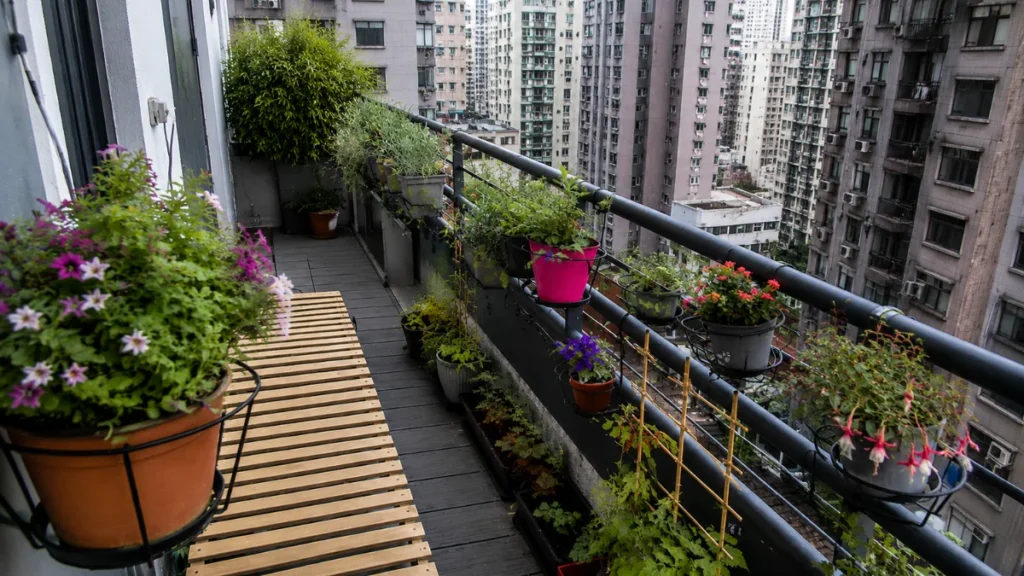
Gardening on balconies with no direct sun can feel confusing at first because many plant guides make sunlight sound like the main requirement for every garden. But a balcony without direct sun is not always useless for plants. In many apartments, it simply means you need to choose plants that enjoy bright shade, softer light, and slower growing conditions.
Gardening on balconies with no direct sun works best when you understand the difference between bright shade, partial shade, and deep shade. Leafy herbs, leafy vegetables, ferns, pothos, peace lilies, snake plants, and other shade-tolerant plants usually have a better chance than sun-loving crops like tomatoes, chillies, cucumbers, and eggplants. The key is to work with the light your balcony already has instead of forcing full-sun plants into a low-light space.
A lot of balcony gardening advice is written for backyards, sunny patios, or open garden beds. Apartment balconies behave differently. Nearby buildings block light, walls reflect brightness, railings create shade lines, and containers dry or stay wet in ways that are not always obvious.
This article explains what you can realistically grow on a balcony with no direct sunlight, how to place plants in the brightest available areas, how to avoid overwatering, and how to build a small balcony garden that feels manageable instead of disappointing.
Why No Direct Sun Does Not Always Mean No Garden
Many people hear “no direct sun” and imagine a dark space where plants cannot grow. But balcony light is more complicated than that.
A balcony may receive no direct sunlight but still get plenty of bright daylight. Light can bounce from nearby walls, pale flooring, glass doors, neighbouring buildings, and open sky. This kind of reflected or indirect light is not the same as full sun, but it can still support many plants.
This matters because many shade-tolerant plants do not need harsh direct sun. Some actually look better when protected from strong afternoon heat, especially in apartments where pots can warm up quickly against concrete, tiles, glass, and metal railings.
The real question is not only “Does my balcony get sun?” A better question is: “How bright does my balcony stay during the day?”
If your balcony feels bright enough to read a book comfortably during the day without turning on a light, you may have more growing options than you think. If it feels gloomy even at midday, then your choices become more limited, but not impossible.
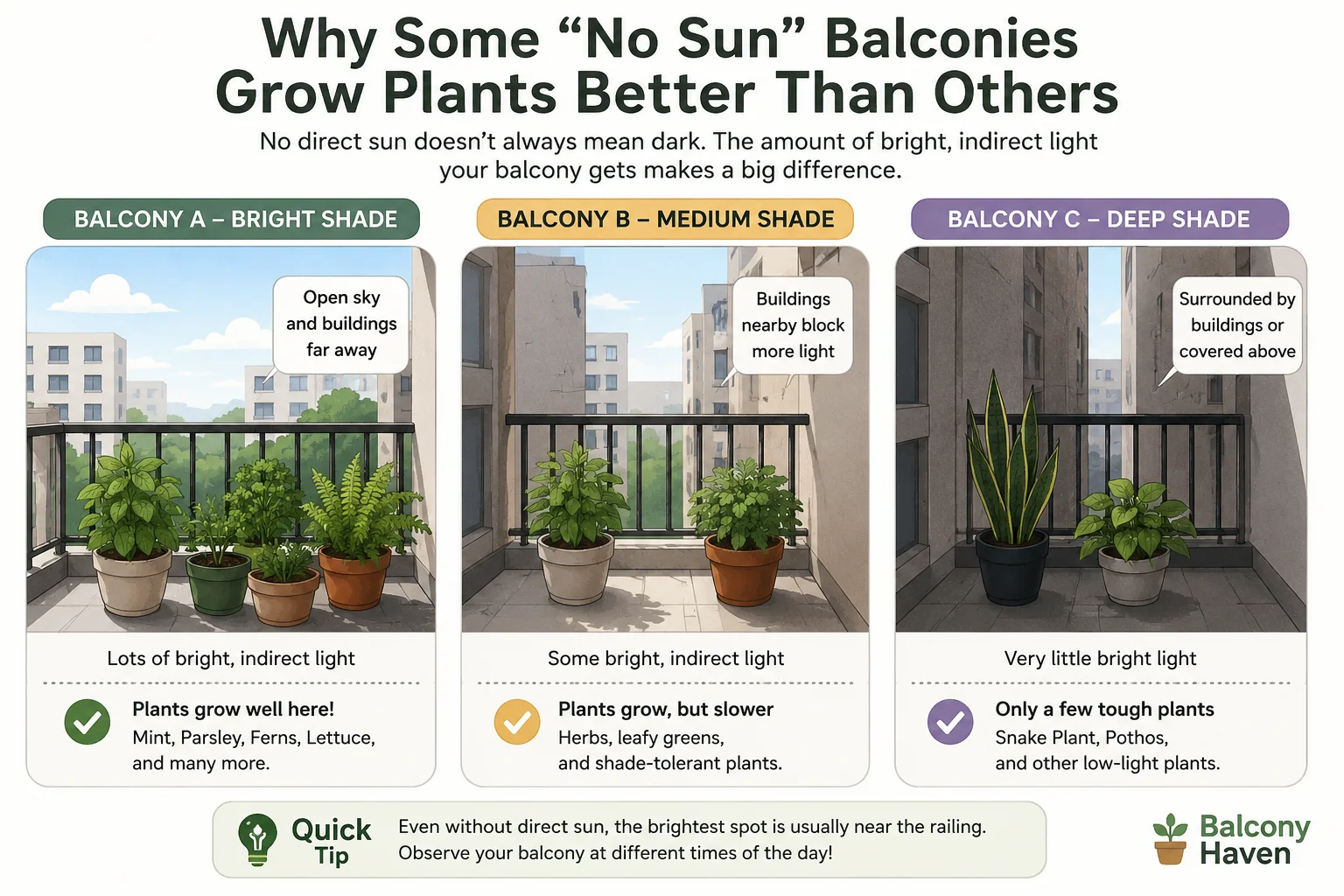
The Three Types of Shade on Balconies
Before buying plants, it helps to understand what kind of shade your balcony has. This one step can prevent many mistakes, especially for beginners.
Not all shaded balconies are the same. Some are bright and open, while others are boxed in by buildings or covered by roofs. The difference changes what plants can realistically grow.
| Shade Type | What It Looks Like on a Balcony | What Usually Works Best |
|---|---|---|
| Bright shade | No direct sun, but the balcony still feels bright for much of the day. | Leafy herbs, leafy greens, ferns, pothos, peace lilies, and many foliage plants. |
| Partial shade | A little gentle morning or late afternoon sun, but shade for most of the day. | Parsley, mint, spinach, lettuce, coriander, and some shade-tolerant flowers. |
| Deep shade | The balcony feels dim because buildings, roofs, or walls block most daylight. | Hardy foliage plants, indoor-style plants, and very realistic expectations. |
This is why gardening on balconies with no direct sun should start with observation rather than shopping. Watch your balcony in the morning, middle of the day, and afternoon. You may discover one area near the railing is much brighter than a corner near the wall.
If you are unsure how much light your balcony receives, this guide on how to measure sunlight on a balcony can help you understand your space more clearly before choosing plants.
Best Plants for Balconies With No Direct Sun
The best plants for a no-sun balcony are usually plants grown for leaves, shape, texture, or greenery rather than fruit.
This is because fruiting and flowering plants usually need more energy from sunlight. Leafy plants can often grow with less light because they are not trying to produce heavy crops.
| Plant | Best Use on a Shaded Balcony | Realistic Expectation |
|---|---|---|
| Mint | Easy leafy herb for pots | Often grows well in bright shade, but keep it in its own container. |
| Parsley | Useful kitchen herb | Can handle lower light, though growth may be slower. |
| Spinach | Leafy edible plant | Often prefers cooler, softer light compared with harsh sun. |
| Lettuce | Small-space leafy crop | Can grow in bright shade, especially in cooler conditions. |
| Ferns | Greenery and texture | Often suitable for shaded balconies if moisture is managed well. |
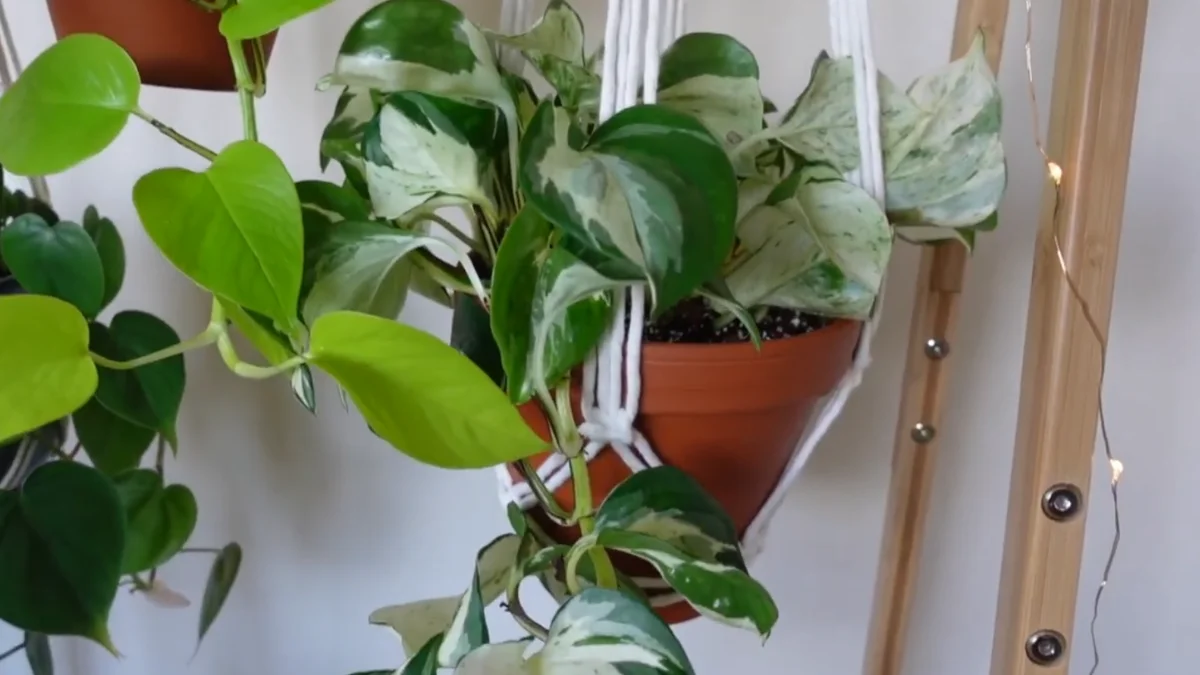
| Pothos | Trailing balcony greenery | Very useful for renters and beginners in bright indirect light. |
| Peace lily | Foliage and occasional flowers | Can suit covered, shaded balconies if protected from strong wind. |
| Snake plant | Low-maintenance container plant | Tolerates low light, but grows slowly. |
For more plant ideas, the article on best plants for shaded apartment balconies is a useful next step because it focuses directly on apartment-style shade.
Where to Place Plants on a No-Sun Balcony
Plant placement matters more on low-light balconies because every small amount of brightness counts.
The brightest area is often near the balcony railing, especially if the railing is open or if light reflects from nearby buildings. The darkest area is often near the back wall, under a deep roof, or in corners blocked by furniture.
Place plants that need the most light in the brightest available spots. Plants that tolerate lower light can sit closer to walls or corners.
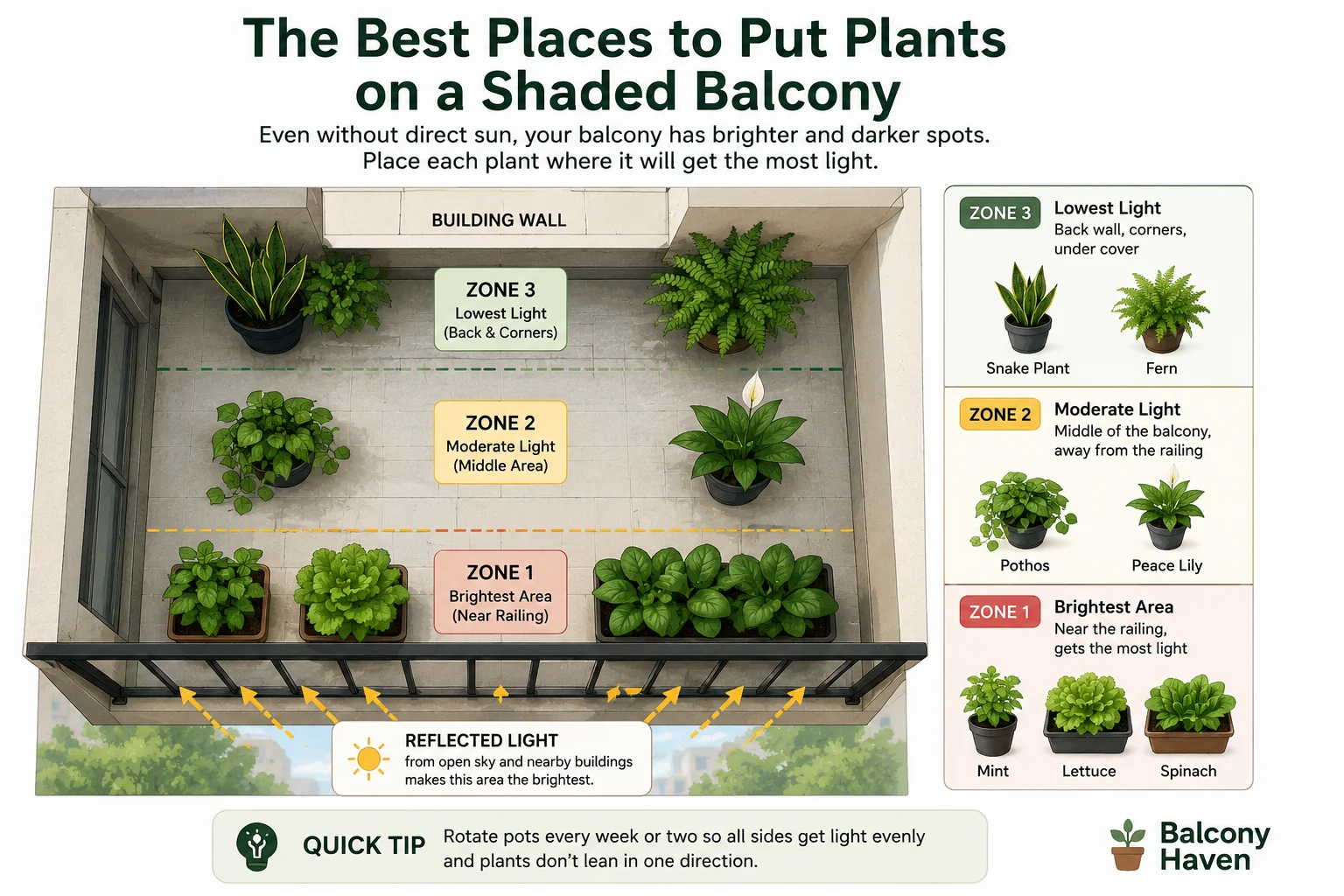
A simple layout may look like this:
| Balcony Area | Light Level | Good Plant Choices |
|---|---|---|
| Near the railing | Usually brightest | Spinach, lettuce, parsley, mint, shade-tolerant flowers. |
| Middle area | Moderate indirect light | Ferns, pothos, peace lily, leafy herbs. |
| Back wall or deep corner | Lowest light | Snake plant, pothos, hardy foliage plants. |
It also helps to keep taller plants behind shorter plants so they do not block the already-limited light. On a small balcony, one badly placed tall pot can shade several smaller containers.
Watering Plants on Balconies With No Direct Sun
Watering is one of the biggest problems in shaded balcony gardens.
Because there is no direct sun, containers often dry more slowly. This can trick beginners into overwatering. A plant may look sad, so the gardener adds more water, but the real problem may be that the roots are sitting in damp soil for too long.
On balconies with no direct sunlight, it is usually better to check the soil before watering instead of watering on a strict schedule.
Push your finger a few centimetres into the potting mix. If the soil still feels damp, wait. If the top layer is dry but the lower soil is still moist, the plant may not need water yet.
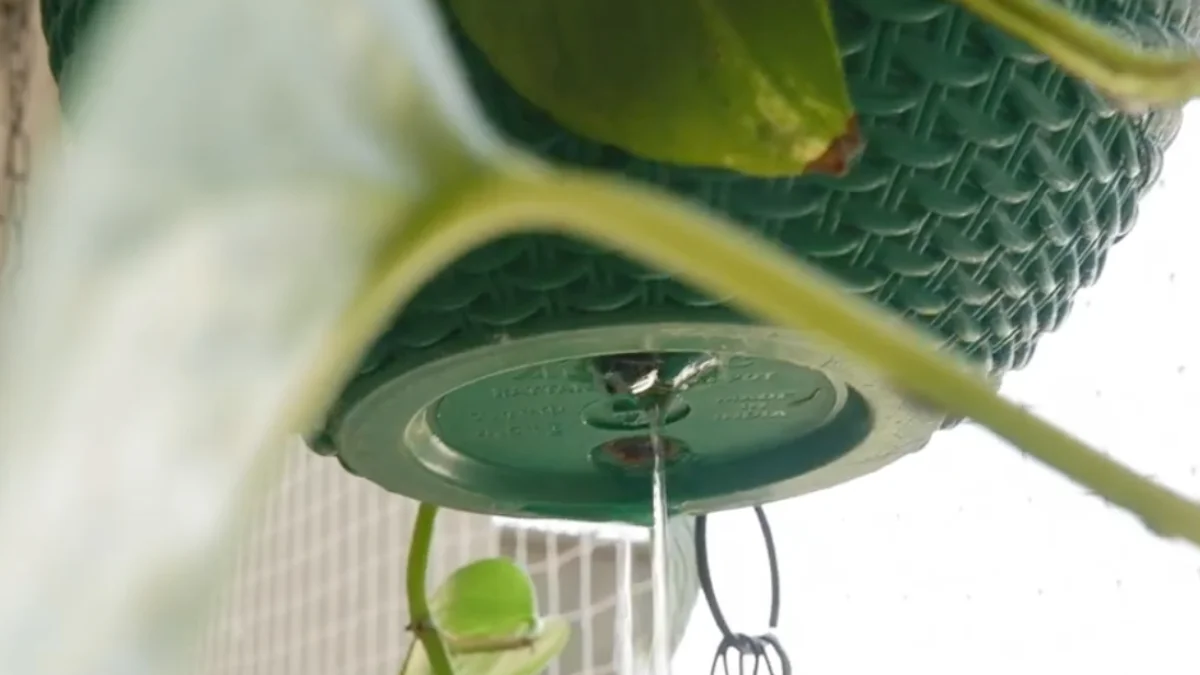
Good drainage is important because shaded pots do not dry as quickly. Containers should have drainage holes, and excess water should not sit trapped at the bottom of decorative pots.
If water management is a problem on your balcony, this guide on drainage tips for small balcony containers explains practical ways to reduce soggy soil issues in small spaces.
Can You Grow Vegetables Without Direct Sun?
You can grow some vegetables without direct sun, but expectations matter.
Leafy vegetables usually have the best chance because they need less energy than fruiting vegetables. Lettuce, spinach, Asian greens, parsley, and spring onions are usually more realistic than tomatoes or cucumbers.
Fruiting vegetables are different. Tomatoes, chillies, cucumbers, eggplants, and zucchini usually need more sun to flower well and produce steady crops. They may grow leaves in shade, but that does not always mean they will produce fruit successfully.
| Plant Type | Chance Without Direct Sun | Why |
|---|---|---|
| Leafy greens | Good in bright shade | They are grown for leaves, not heavy fruit. |
| Soft herbs | Moderate to good | Many can handle gentler light if watering is steady. |
| Ferns and foliage plants | Good | Many naturally prefer shaded or filtered light. |
| Flowering plants | Mixed | Some tolerate shade, but many flower less without brighter light. |
| Fruiting vegetables | Usually difficult | They often need stronger sunlight for flowers and fruit. |
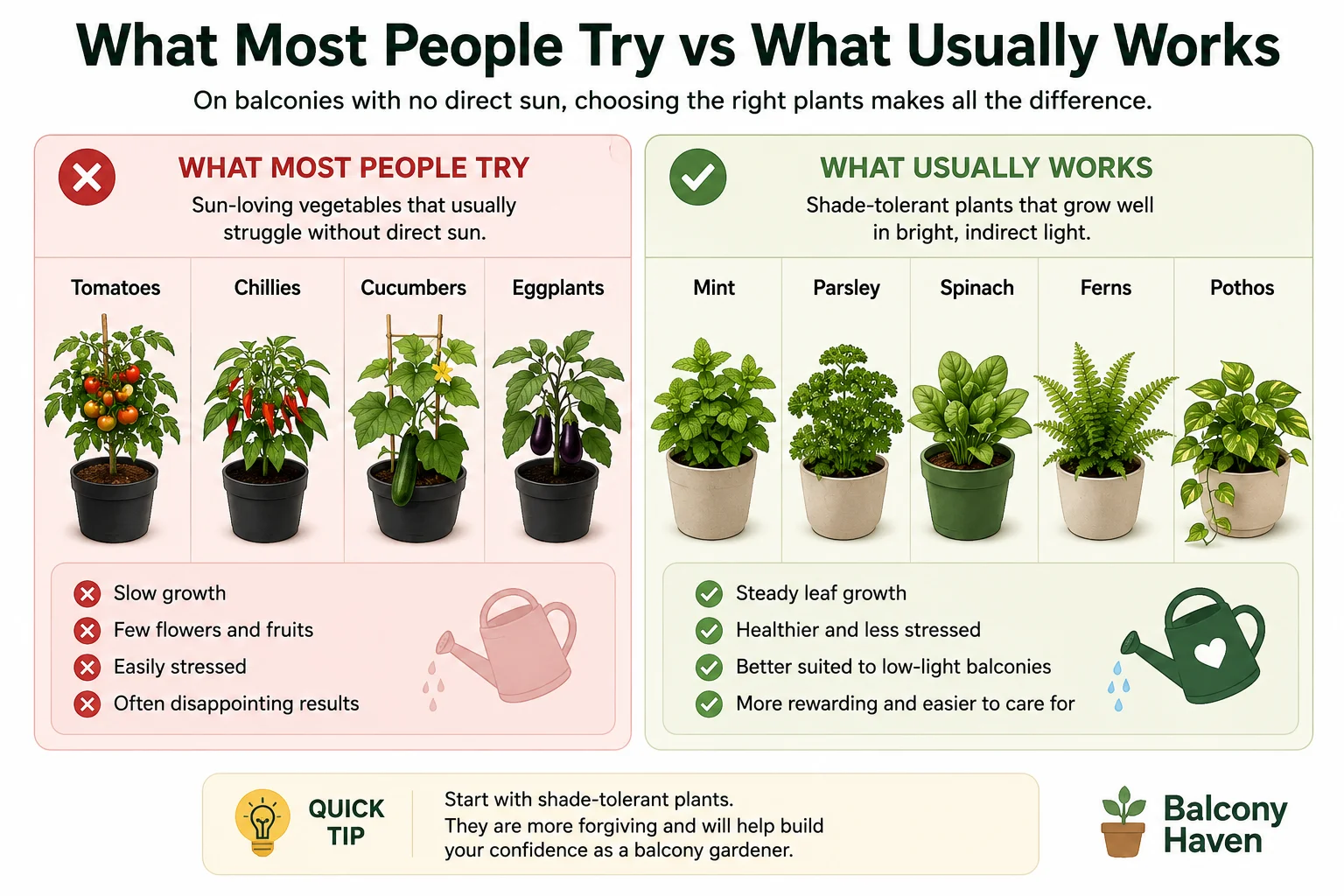
This does not mean you can never try fruiting plants. But if your balcony receives no direct sun at all, it is wiser to start with leafy plants first. They are more forgiving, easier to manage, and better suited to realistic apartment gardening.
Container Tips for Low-Light Balcony Gardens
Containers behave differently on shaded balconies than they do in sunny spaces.
In full sun, pots often dry too fast. In no direct sun, the bigger issue is often soil staying wet for too long, especially if the pot is too large for the plant or if the potting mix is heavy.
For low-light balcony gardening, choose containers that match the plant size. A tiny plant in a very large pot may sit in wet soil longer than it can handle. A bigger leafy plant may need more soil volume to stay steady, but it still needs drainage.
Lightweight pots are useful for renters and apartment dwellers, but make sure they are stable. A shaded balcony can still be windy, especially in higher apartments or open corridors.
Use saucers carefully. They protect lower balconies from dripping water, but they should not leave plant roots sitting in water for long periods.
Practical Tips for No-Sun Balcony Gardening
Gardening on balconies with no direct sun becomes easier when you treat the balcony as its own small environment rather than copying backyard advice.
- Start with two or three shade-tolerant plants before buying many pots.
- Place the most light-hungry plants near the brightest railing area.
- Check soil moisture before watering.
- Use pots with drainage holes.
- Avoid crowding plants because airflow is still important in shade.
- Rotate pots every week or two if plants lean toward light.
- Expect slower growth than you would see on a sunny balcony.
Small changes often matter in shaded spaces. Moving a pot just 30 centimetres closer to the railing can sometimes improve growth more than adding fertiliser.
Common Mistakes on Balconies With No Direct Sun
Most problems in shaded balcony gardens come from wrong expectations rather than lack of effort.
- Trying to grow tomatoes, chillies, or cucumbers in deep shade.
- Watering too often because the plant looks slow.
- Choosing heavy potting mix that stays wet for too long.
- Putting all plants in the darkest corner to keep the balcony tidy.
- Ignoring wind because the balcony is shaded.
- Expecting fast growth from low-light plants.
Slow growth does not always mean failure. In shaded balcony gardening, many healthy plants simply grow more slowly. The goal is steady growth, healthy leaves, and fewer stress problems.
Balcony Haven Note: I have noticed that many no-sun balconies are not as hopeless as they first appear. Some feel dim in one corner but surprisingly bright near the railing, especially when light reflects from nearby walls or windows.
For that reason, I usually think it is worth observing the balcony before giving up on plants. A shaded apartment balcony can still support a calm, green setup when the plant choices match the light instead of fighting against it.
Frequently Asked Questions
Can I garden on a balcony with no direct sun?
Yes, you can garden on a balcony with no direct sun if the balcony still receives enough bright indirect light. Shade-tolerant leafy plants, herbs, ferns, and foliage plants usually have the best chance.
What vegetables grow on balconies with no direct sunlight?
Leafy vegetables such as lettuce, spinach, Asian greens, and spring onions are usually more realistic than fruiting vegetables. Growth may be slower, but they can still work in bright shade.
Why do my shaded balcony plants grow slowly?
Plants use light for energy. When there is no direct sun, growth often slows down. This does not always mean the plant is unhealthy. It may simply be growing at a slower low-light pace.
Do shaded balcony plants need less water?
Often, yes. Pots on shaded balconies usually dry more slowly than pots in direct sun. Always check the soil before watering so the roots do not stay wet for too long.
Can tomatoes grow on a balcony with no direct sun?
Tomatoes may grow leaves in low light, but they usually need stronger sunlight to flower and fruit well. For a no-sun balcony, leafy greens and herbs are usually a better starting point.
Final Thoughts
Gardening on balconies with no direct sun is not about creating a perfect garden. It is about understanding what your balcony can realistically support.
A no-sun balcony may not be the best place for tomatoes, cucumbers, or heavy fruiting crops, but it can still become a useful and peaceful growing space. Leafy herbs, greens, ferns, and foliage plants can make the area feel alive without needing harsh sunlight.
Start small, watch how light moves across your balcony, and adjust slowly. A shaded balcony garden often rewards patience more than force. When you choose plants that match the space, the whole setup becomes easier to care for and more enjoyable over time.
Leave a Reply