Balconies with limited space and light can feel like the hardest places to grow anything. The area is small, the sun doesn’t stay long, and even healthy-looking plants can slowly lose strength without clear reasons. It often feels like something is missing, even when you are doing everything right.
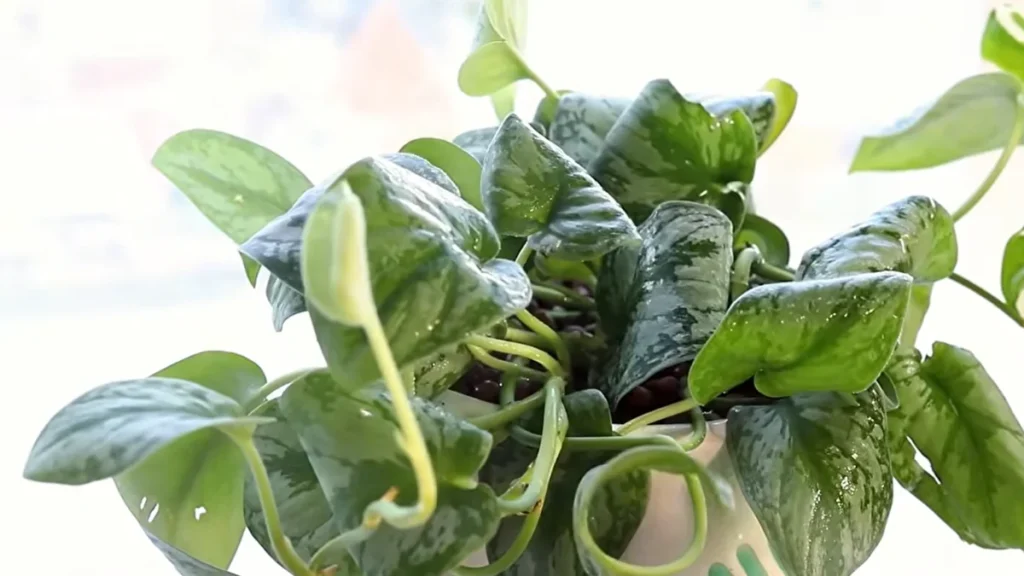
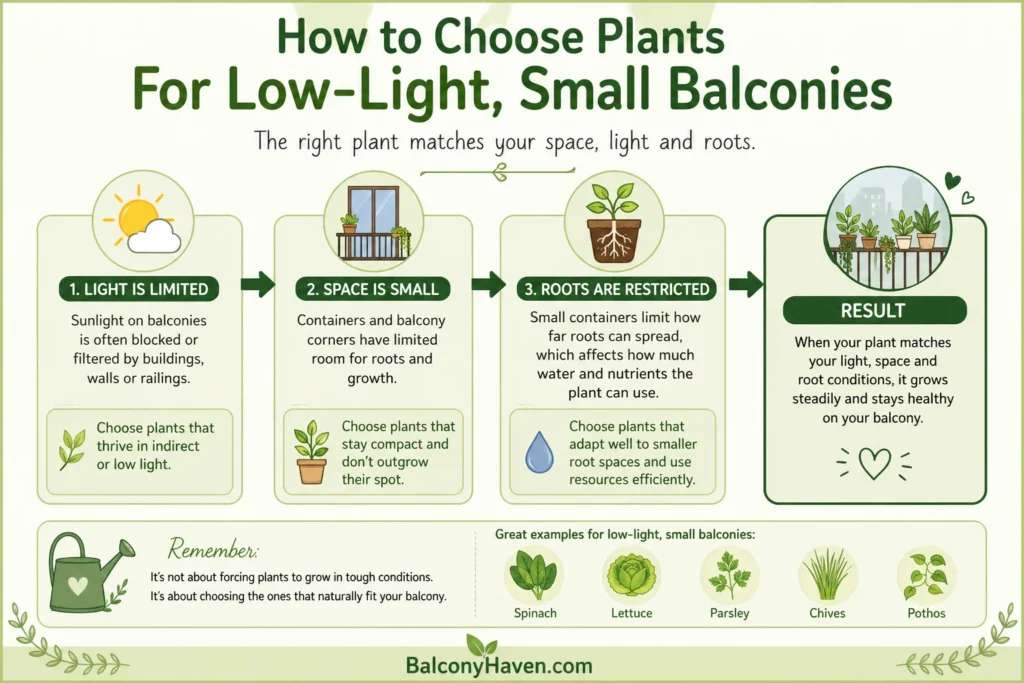
Plants for balconies with limited space and light do exist, but they are not the same types commonly recommended for gardens. The most suitable plants are naturally compact and shade-tolerant, such as leafy greens like spinach and lettuce, soft herbs like parsley and chives, and low-light ornamental plants like pothos. These plants grow steadily without relying on long hours of direct sun, which makes them more stable in small, shaded balcony spaces.
The challenge usually comes from advice that assumes open gardens with full sunlight and unlimited soil space. On balconies, light is filtered, reflected, or blocked, and containers quietly limit how much a plant can grow. These differences change how plants behave over time.
This article will help you understand which plants actually suit these conditions, and why some succeed while others slowly struggle without obvious signs at the beginning.
Table of Contents
Balcony Reality Check (Context Before Advice)
A balcony does not receive sunlight in a steady or predictable way. Even when the sun is visible, nearby buildings, railings, and walls can interrupt its path. This creates short, uneven periods of light rather than consistent exposure throughout the day.
Space adds another hidden layer. Containers restrict how far roots can spread, which limits how much water and nutrients a plant can store. At the same time, airflow between buildings can either dry plants too quickly or leave them in still pockets where moisture lingers longer than expected.
Because of this, a balcony with limited space and light is not a poor growing environment. It is simply a different one, where plants respond better to balance and consistency rather than intensity.
What Most Advice Misses
Most plant advice is built around garden conditions where sunlight is stable and soil space is generous. In those environments, plants have room to recover from stress and adjust naturally over time.
On balconies, that margin for recovery is much smaller. A plant that needs strong sunlight may continue growing for a while in low light, but it slowly weakens because it cannot produce enough energy to sustain itself. Similarly, plants that rely on large root systems may appear fine at first but begin to decline once the container limits become noticeable.
What is often overlooked is that success on a balcony is not about choosing popular or “easy” plants. It is about choosing plants that match the behaviour of the space, especially when light and space are both limited.
Core Explanation: What Actually Works in Limited Space and Light
Plants That Naturally Stay Compact
Some plants remain small not because they are immature, but because that is how they are designed to grow. These plants do not try to expand beyond their environment, which makes them more stable in limited spaces.
Leafy greens such as spinach and small lettuce varieties fit comfortably into this category. They grow within their boundaries and maintain steady development without placing pressure on the container. Herbs like parsley and chives behave in a similar way, staying manageable while continuing to produce usable leaves over time.
Plants That Adapt to Filtered or Indirect Light
Balconies often provide light that is softened or partially blocked, rather than direct and continuous. Plants that can adapt to this type of light tend to perform more reliably.
Instead of depending on strong sunlight, these plants adjust their growth to make use of whatever light is available. Leaf-based plants are especially effective in this environment because they focus on maintaining foliage rather than producing flowers or fruits, which require more energy.
If your balcony receives only a few hours of sunlight, this pattern becomes even more noticeable. A deeper explanation of this can be seen in “Plants for Balconies With 2–4 Hours Sun” , where limited light conditions are explored more closely.
Plants That Grow for Stability Rather Than Output
On balconies with low light, plants that are grown for leaves tend to perform better than those grown for flowers or fruits. This is because leaf growth requires less energy, allowing the plant to remain stable even when light is limited.
Herbs and leafy greens often continue producing usable growth under these conditions, while fruiting plants may struggle to reach full development. For example, basil can survive in shaded spaces, but its growth pattern changes depending on how much light it receives, which is explored further in “Basil Growing Tips for Shaded Balcony” .
Plants That Cope Well With Root Limits
Containers place natural limits on how far roots can spread, and not all plants respond well to this restriction. Some plants require deep or wide root systems, while others are naturally more adaptable.
Plants that cope well with smaller root spaces tend to grow steadily rather than rapidly. They use water more efficiently and maintain a better balance between what is happening above and below the soil. This reduces stress and allows them to remain consistent over time, even in confined spaces.
| Plant Type | Example Plants | Why They Work on Balconies |
|---|---|---|
| Leafy greens | Spinach, lettuce | Need less sunlight, steady growth |
| Compact herbs | Parsley, chives | Stay small, adapt to containers |
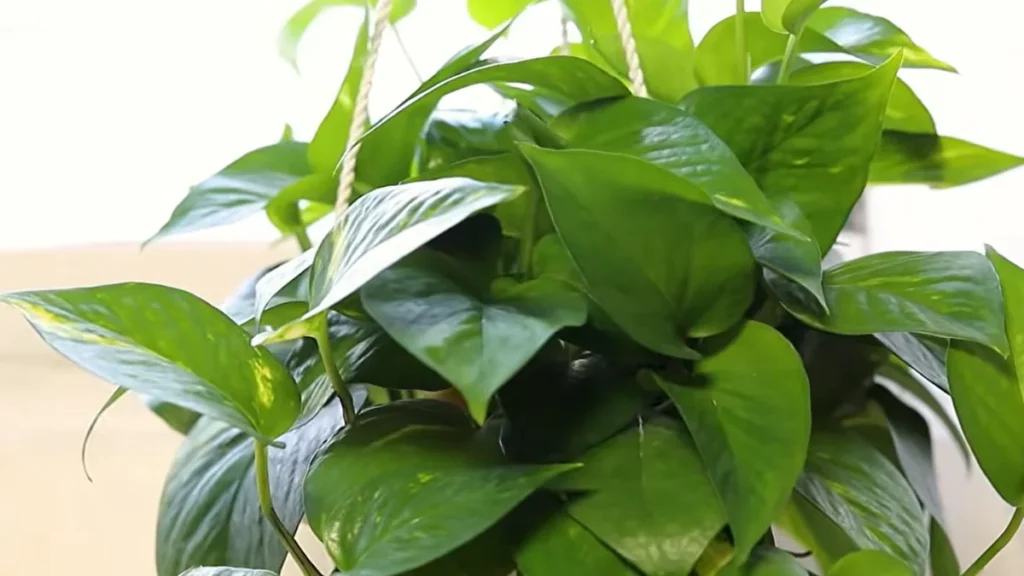
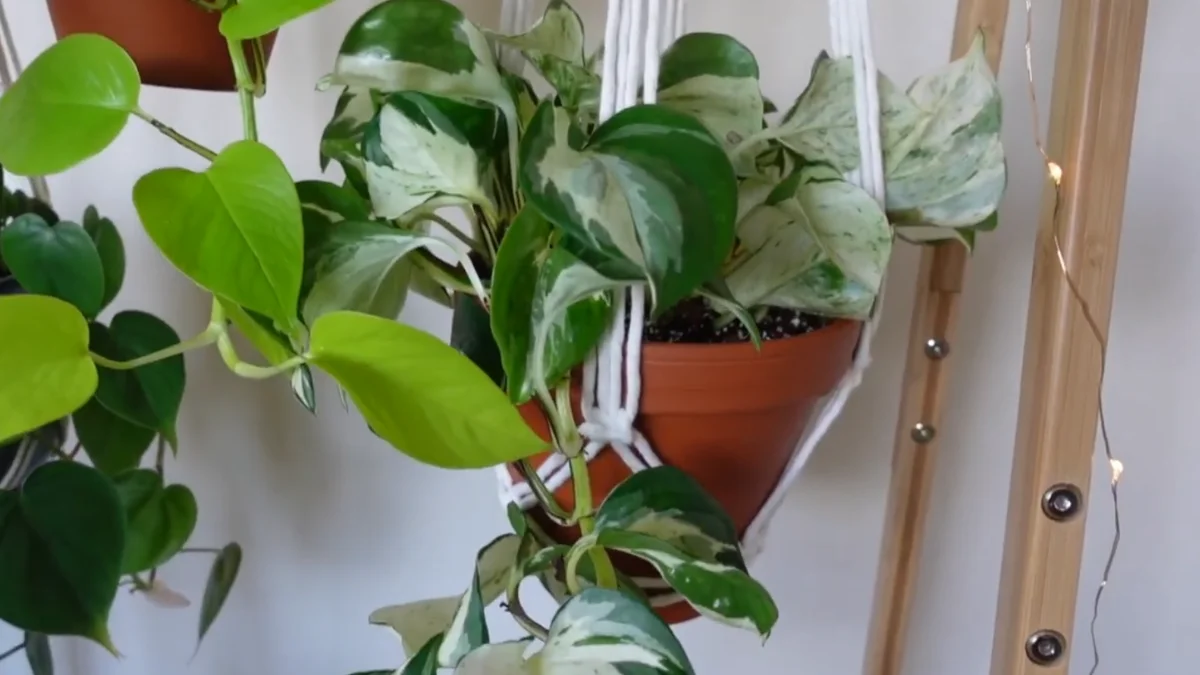
| Soft trailing plants | Pothos | Handle indirect light well |
| Shade-tolerant plants | Some ferns, leafy ornamentals | Adjust to filtered light |
Practical Insights
Even without changing your setup, small observations can quietly improve how plants respond to your balcony:
- Reflected light from walls and surfaces can still support plant growth
- Compact plants often remain healthier longer in limited space
- Leafy plants usually adapt better than fruiting ones in low light
- Container size influences plant behaviour as much as sunlight
- Consistent conditions tend to matter more than strong but short bursts of light
Common Misunderstandings
Many frustrations come from expectations that don’t match how balconies actually behave:
- Low light does not stop growth, but it slows and softens it
- Small pots may look sufficient at first but can limit plants over time
- Not all herbs respond the same way to reduced sunlight
- A plant surviving does not always mean it is growing well
- Increasing water does not replace the role of sunlight
Local & Seasonal Context
In Brisbane and similar climates, balconies can feel shaded while still holding warmth due to reflected heat from surrounding surfaces. This creates a unique combination of low light and moderate temperature, which can suit certain leafy plants more than expected.
Seasonal changes also influence how light enters the balcony. During winter, lower sun angles may allow light to reach deeper into the space. In summer, overhead sun combined with building shade can reduce direct exposure even further.
Because of this, plant behaviour may shift throughout the year without any changes in placement.
Balcony Haven Note
From what I’ve seen across different balconies, two spaces that look almost the same can grow very different plants successfully. One might support leafy greens without effort, while another struggles unless the plants are moved slightly. These differences often come from small changes in light direction and airflow that are easy to overlook at first.
If you want to understand how light actually behaves in your space, How to Measure Sunlight on a Balcony can reveal patterns that are not obvious day by day.
Frequently Asked Questions
Can plants grow well with very little sunlight?
They can grow, but their pace and structure change. Growth becomes slower and more focused on maintaining leaves rather than expanding quickly or producing flowers.
Are flowering plants unsuitable for low-light balconies?
They are not completely unsuitable, but many require stronger light to bloom consistently. Without enough light, they may grow leaves but struggle to produce flowers.
Does using a bigger pot fix limited space?
A larger pot helps with root space, but it does not solve light limitations. Light remains the main factor that determines how much energy a plant can produce.
Why do plants look healthy at first and then decline?
Many plants rely on stored energy at the beginning. Over time, if light and space are not enough, that stored energy runs out, and growth becomes weaker.
Final Thoughts
Growing plants on a balcony with limited space and light is less about finding the perfect plant and more about understanding what your environment naturally supports. Some plants align with these conditions without struggle, while others slowly lose strength even when they seem fine at first.
The encouraging part is that improvement often comes from small observations rather than major changes. Noticing how light moves, how plants respond, and how space affects growth can lead to better outcomes over time.
Every balcony has its own pattern, and once you begin to see it clearly, choosing the right plants becomes a much more natural and confident process.
Happy Balcony Gardening!
Leave a Reply