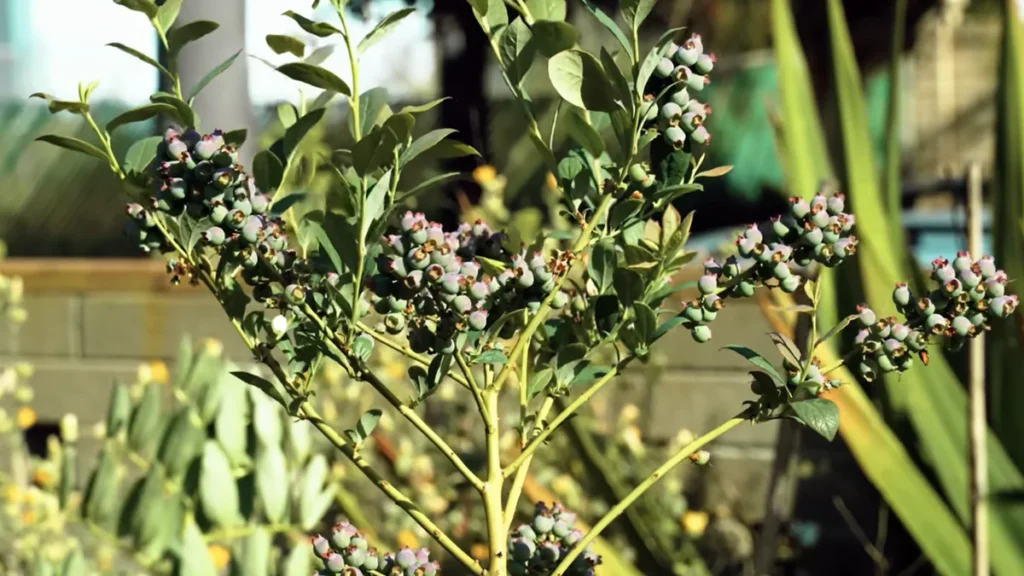
Growing blueberries on a balcony sounds simple at first. The plant stays relatively compact, produces attractive berries, and is often described as “container friendly.” But balcony growers quickly notice that blueberries behave differently once they are exposed to reflected heat, drying winds, shallow pots, and changing light patterns between buildings.
Blueberry bushes can grow successfully on balconies when the conditions stay relatively stable, especially with enough light, acidic soil, and room for roots to spread gradually over time. The challenge is not usually the balcony itself, but how quickly balcony conditions shift compared to a normal garden. Small containers heat up faster, moisture disappears unevenly, and some balconies create hidden stress that blueberry plants react to slowly rather than immediately.
Part of the confusion comes from generic fruit-growing advice that assumes plants are sitting in open ground with cooler root zones and predictable sunlight. Balconies rarely behave that way. One corner may stay cool and shaded, while another reflects heat from walls or glass for hours during the afternoon.
This article explains why some blueberry bushes adapt surprisingly well to balconies while others struggle even when they appear healthy at first. It also explores the balcony-specific conditions that quietly affect fruiting, leaf colour, root health, and long-term growth.
Table of Contents
Balcony Reality Check
Blueberries are often treated like small patio plants, but on balconies they behave more like slow-moving environmental indicators. They react to heat retention, moisture inconsistency, and confined root conditions long before many other edible plants do.
Unlike larger garden spaces, balconies tend to exaggerate temperature changes. Concrete flooring can store heat well into the evening, metal railings reflect warmth onto leaves, and enclosed apartment walls sometimes reduce airflow without reducing heat. Blueberry bushes may survive these conditions, but survival and comfortable growth are not always the same thing.
Container size also changes the way blueberries behave. In a garden, roots can move outward naturally when temperatures rise or moisture shifts. On balconies, the entire root system experiences the same conditions at once. This is one reason some balcony blueberry bushes suddenly stop producing berries after looking healthy for months.
Weight and positioning matter too. Larger blueberry varieties eventually need heavier containers to remain stable and insulated. On smaller balconies, growers sometimes choose lightweight pots to reduce structural weight, but lightweight containers can heat up and dry out faster during warm weather.
What Most Advice Misses
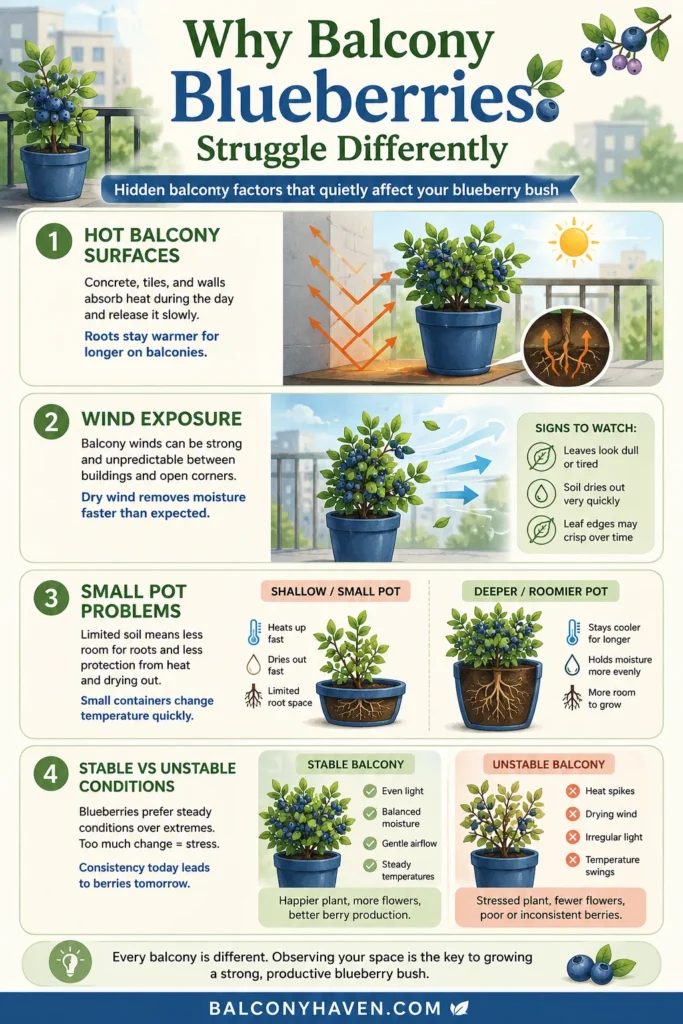
Many blueberry articles focus heavily on soil acidity while overlooking how balcony microclimates affect the plant every single day. Acidic soil matters, but balconies often create a bigger issue first: unstable root conditions.
In backyard gardens, blueberry bushes usually benefit from deeper soil temperatures that change slowly. Balcony containers experience faster warming and cooling cycles, especially in apartments with exposed railings or direct afternoon sun. This means a blueberry plant can receive the “correct” soil type but still behave poorly because the roots never stay comfortable for long.
Another thing many guides overlook is visual stress delay. Blueberries do not always show immediate damage. Some balcony plants continue producing leaves while quietly reducing future fruit production. By the time the plant visibly struggles, the environmental stress may have been building for weeks.
This becomes more noticeable on high-rise balconies where wind behaves unpredictably. Gentle airflow can help reduce fungal problems, but constant dry wind often pulls moisture from blueberry leaves faster than people expect. This is especially common on exposed apartment corners.
Why Some Balcony Blueberries Thrive While Others Stall
Morning Sun Balconies vs Harsh Afternoon Heat
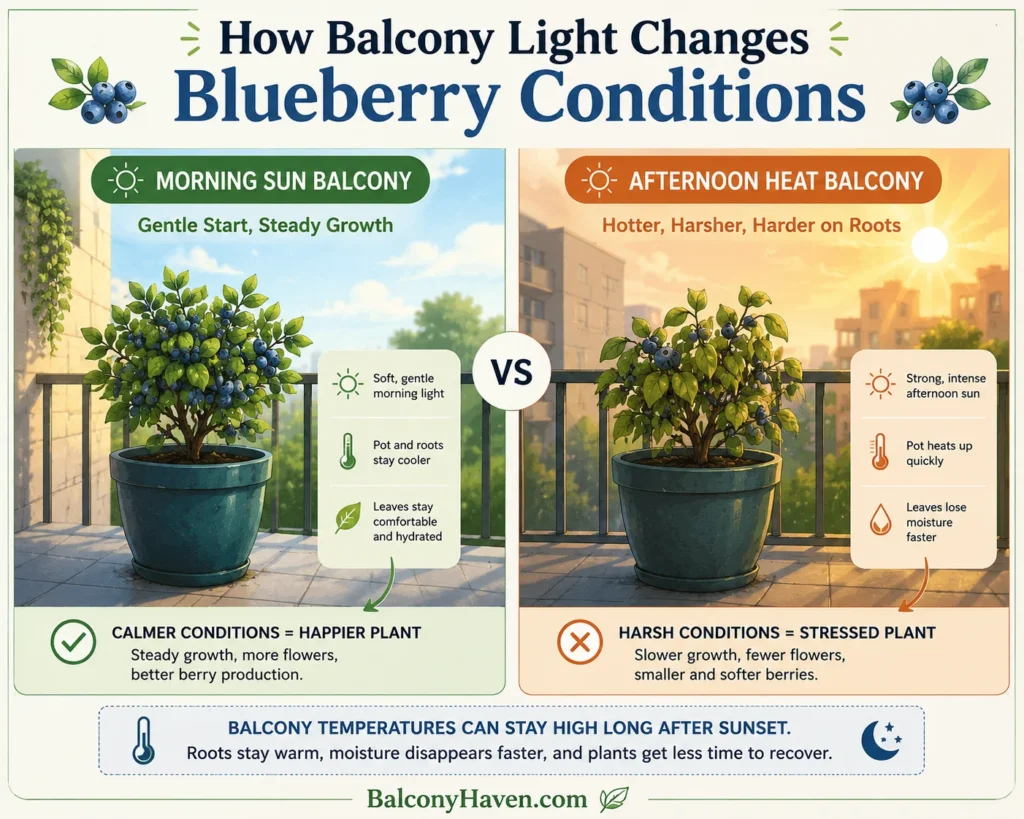
Blueberries generally respond better to steady morning light than intense late-afternoon reflected heat. On east-facing balconies, plants often hold moisture more consistently and experience less leaf stress during summer.
This is one reason softer light conditions sometimes outperform hotter balconies, even when the total sunlight hours are lower. Balcony growers often assume “more sun equals more fruit,” but blueberries tend to value stable conditions over extreme exposure.
Balconies facing strong western sun may still support blueberry bushes, but plants often behave differently there. Leaves can become duller, fruit may soften quickly, and containers lose moisture at a faster rate.
If your balcony already struggles with heat build-up, articles like “Overheating Balcony Pots in Summer” and “Plants That Survive Strong Afternoon Heat” naturally connect with this issue because many balcony problems begin at the root zone rather than the leaves themselves.
Small Balconies vs Open Balconies
Smaller balconies sometimes create better blueberry conditions than large exposed ones. Enclosed spaces can reduce drying winds and soften temperature swings slightly, especially when neighbouring walls create partial protection.
Open balconies behave more like rooftop environments. Wind movement stays stronger, moisture disappears faster, and lightweight containers become less stable over time. Blueberries can still survive there, but they usually react more noticeably to weather changes.
Interestingly, some growers notice their blueberry plants perform best near balcony corners rather than directly beside railings. Corners sometimes create quieter airflow zones where moisture remains more balanced throughout the day.
Lightweight Pots vs Insulated Containers
Blueberry roots prefer relatively stable conditions, which is why container material quietly matters more than many people realise.
Thin plastic pots are easier to move and safer for weight-limited balconies, but they also warm up quickly. Ceramic and thicker containers often buffer temperature changes more effectively, although they increase total balcony weight.
This connects closely with the ideas explored in “Do Plants Grow Better in Plastic or Ceramic Pots?” because container behaviour changes dramatically on balconies compared to gardens. A pot that works perfectly in a backyard may behave completely differently several floors above ground.
Container depth matters too. Blueberries tend to appreciate gradual root expansion rather than cramped shallow growth. This is partly why balcony fruit plants sometimes slow down unexpectedly after their first productive season.
| Balcony Condition | How Blueberries Usually React |
|---|---|
| Thin plastic pots | Faster drying and heat build-up |
| Ceramic containers | More stable root temperatures |
| Open windy balconies | Faster moisture loss |
| Morning sun balconies | Gentler growing conditions |
| West-facing balconies | Higher afternoon root stress |
| Larger containers | More stable moisture levels |
Why Blueberries Sometimes Produce Leaves but Few Berries
One of the more confusing balcony experiences happens when blueberry bushes appear healthy but produce very little fruit. Leaves stay green, branches continue growing, yet berry production remains weak.
On balconies, this often relates to environmental consistency rather than obvious plant failure.
Blueberries quietly respond to:
- sudden moisture swings
- overheating roots
- irregular light exposure
- warm evening temperatures
- constant dry airflow
Because balconies amplify these changes, plants may direct more energy into survival than fruit production without looking visibly unhealthy.
This behaviour is similar to what many balcony growers notice with tomatoes and strawberries, where foliage growth continues even when fruit production slows dramatically.
Practical Insights
Blueberry bushes often behave more predictably on balconies when conditions remain steady rather than extreme.
- Morning light usually creates gentler growing conditions than intense western heat.
- Larger containers tend to stabilise moisture and temperature better over time.
- Wind exposure affects blueberries more gradually than many leafy plants.
- Balcony corners sometimes create calmer growing zones than open railings.
- Reflected heat from walls and floors can affect roots long after sunset.
Common Misunderstandings
Balcony blueberry growing is often misunderstood because advice is borrowed directly from garden planting.
- A healthy-looking blueberry bush is not always a productive one.
- More sunlight does not automatically mean better berry production.
- Small decorative pots may limit long-term root comfort.
- Acidic soil alone does not solve balcony stress conditions.
- Wind damage can appear slowly rather than immediately.
Local & Seasonal Context
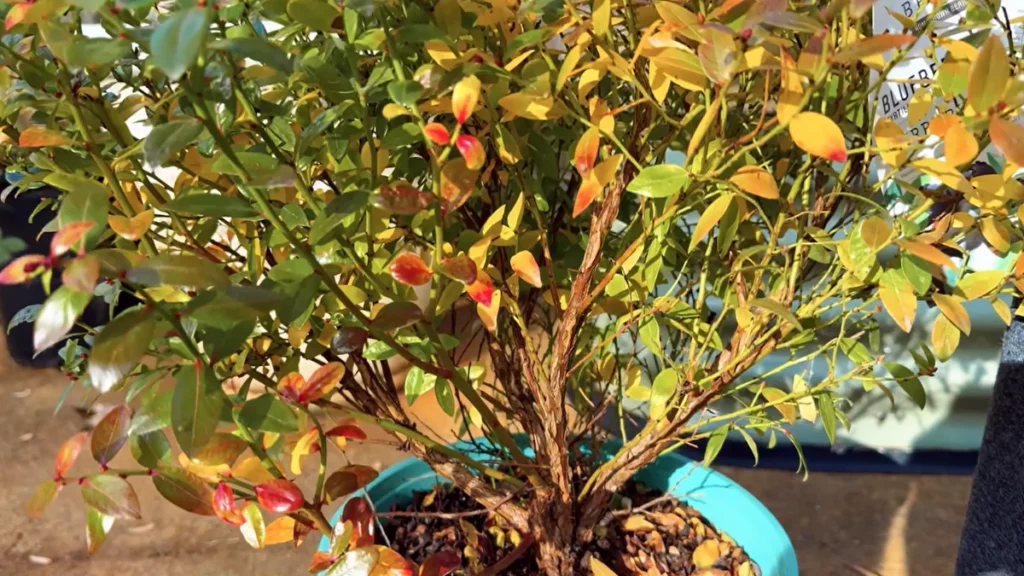
In many Australian balcony settings, blueberries experience the most stress during extended warm periods where evenings remain hot and containers never fully cool down overnight. This is especially noticeable on apartment balconies with concrete flooring or surrounding walls that store daytime heat.
Cooler seasons often produce steadier blueberry growth because moisture remains more balanced and root temperatures stay calmer. Some balcony growers are surprised to see healthier leaves and stronger berry development during milder periods rather than peak summer conditions.
Balcony Haven Note
I’ve noticed blueberry bushes can look completely different from one balcony to another, even within the same apartment building. Some stay compact and productive for long periods, while others struggle quietly despite getting similar sunlight. It often feels less connected to “gardening skill” and more connected to how each balcony handles heat, airflow, and moisture throughout the day. If your balcony already has mixed light conditions, our article on “Plants for Balconies With Limited Space and Light” may help explain why some edible plants adapt more easily than others.
Frequently Asked Questions
Can blueberries stay in pots permanently?
Yes, many blueberry bushes adapt well to containers for long periods, especially dwarf varieties. Balcony conditions usually affect long-term comfort more than the pot itself.
Do blueberry bushes need full sun on a balcony?
They generally prefer good light, but balconies with softer morning sun often create more stable growing conditions than extremely hot afternoon exposure.
Why are my blueberry leaves turning pale?
On balconies, pale leaves can relate to several overlapping factors including root stress, inconsistent moisture, or environmental heat build-up rather than one single issue.
Are blueberries difficult to grow on balconies?
Not necessarily, but they tend to react more noticeably to unstable balcony conditions than many herbs or leafy plants.
Can one blueberry bush produce fruit alone?
Some varieties can produce berries alone, but others perform better with cross-pollination nearby. On balconies, flowering timing and airflow sometimes influence this more than people expect.
Final Thoughts
Blueberry bushes can adapt surprisingly well to balcony life when the environment stays relatively balanced. The plant itself is not usually the biggest problem. Most difficulties come from how balconies handle heat, moisture, airflow, and confined root space differently from normal gardens.
Many balcony growers assume something is “wrong” when blueberries grow slowly or produce fewer berries. In reality, these plants often respond cautiously to unstable conditions rather than failing completely.
Every balcony creates its own small climate. Once that becomes easier to observe, blueberry growth usually starts making much more sense.
Happy Balcony Gardening!
Leave a Reply