Dry balcony air can make healthy-looking plants suddenly struggle without much warning. Leaves become crispy around the edges, herbs lose softness, and some pots seem dry again only hours after watering. This is especially common on apartment balconies where wind, reflected heat, and open exposure quietly remove moisture from both soil and leaves.
Many of the best plants for balconies with dry air conditions are plants that naturally cope with moisture loss and warm airflow more slowly. Rosemary, thyme, lavender, jade plants, aloe vera, geraniums, and portulaca often adapt better because they have thicker leaves, moisture-storing stems, or slower water loss compared with softer tropical plants. On apartment balconies, dry air usually affects plants more through constant airflow and reflected heat than through temperature alone.
Part of the confusion comes from the fact that balcony conditions rarely behave like backyard gardens. Advice written for ground gardens often assumes stable soil moisture, larger root systems, and protection from reflected building heat. Apartment balconies create smaller and more extreme environments, especially several floors above ground.
This article explains why some plants handle dry balcony air better than others, why certain popular plants unexpectedly struggle, and which types of balcony-friendly plants usually remain more stable in dry conditions without turning the space into a constant watering project.
Table of Contents
Balcony Reality Check
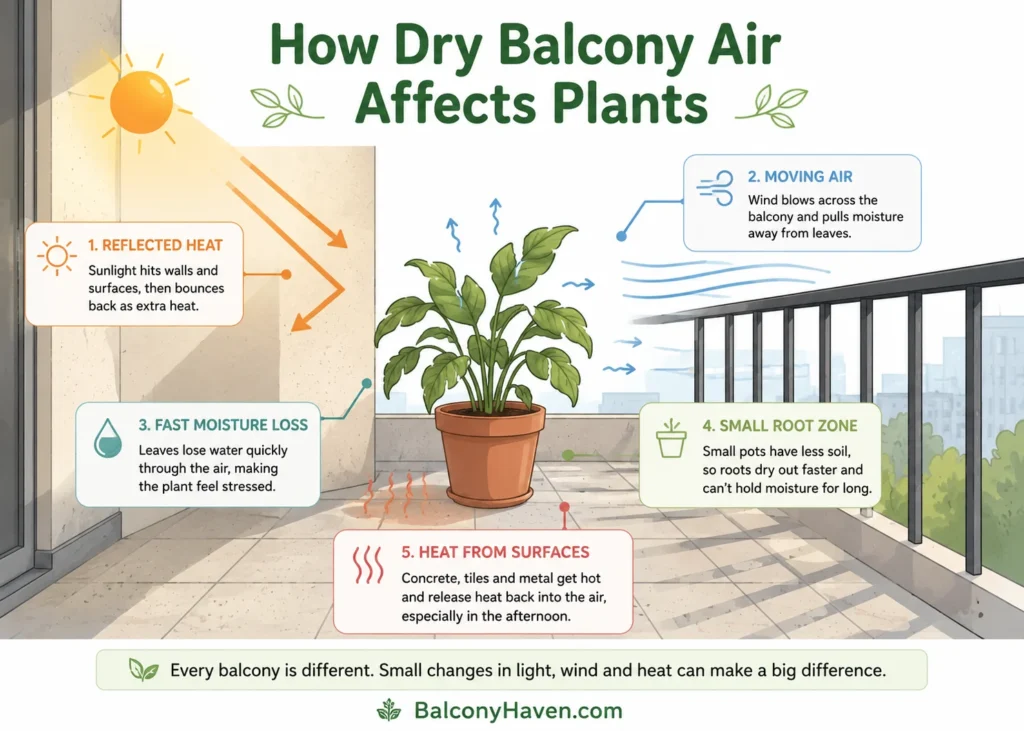
Dry air conditions on balconies are often created by several small things happening together rather than one obvious cause. Wind flowing between buildings removes moisture from leaves faster than many people realise. Concrete walls store heat during the day, then slowly release it back into the space even after sunset. Smaller pots also dry much faster than garden beds because there is less soil holding moisture.
Some balconies feel dry even when the weather forecast says humidity is moderate. This happens because balconies create their own microclimate. Upper-floor balconies, west-facing spaces, and enclosed corners near hot walls often behave very differently from nearby ground gardens.
Container size also changes how plants react to dry air. A plant that survives comfortably in a backyard may struggle on a balcony simply because its roots have less space to stay cool and evenly moist. Lightweight pots can worsen this because they heat up and lose moisture quickly during warmer afternoons.
What Most Advice Misses About Dry Balcony Air
A lot of gardening advice treats dry air and dry soil as the same problem, but they behave differently on balconies. Soil may still contain moisture while leaves continue drying out from constant airflow. This is why some balcony plants appear stressed even when watering seems consistent.
Another overlooked issue is plant texture. Thin-leaf plants often lose moisture faster in dry balcony conditions than thicker or waxier plants. Many tropical-looking plants sold for apartments actually prefer humid indoor environments rather than exposed balconies with moving air.
This is also why balconies with similar sunlight can produce completely different results. One balcony may have gentle morning airflow, while another becomes a heat tunnel during the afternoon. Plants respond to these subtle changes more than many gardeners expect.
Plants With Thick Leaves Often Handle Dry Air Better
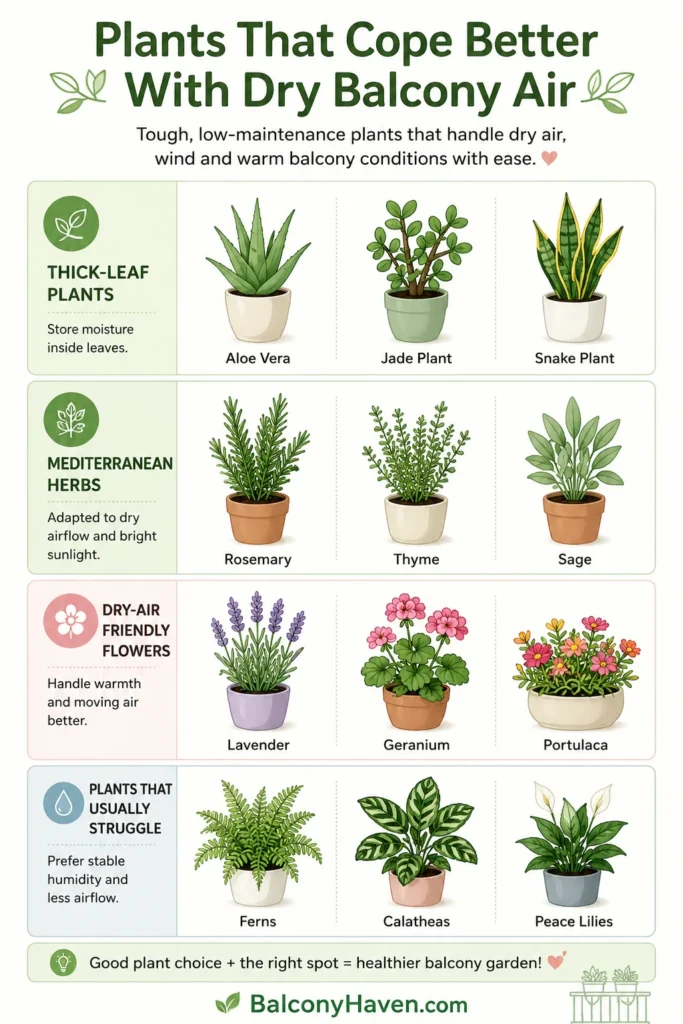
One pattern that appears repeatedly on dry balconies is that thicker-leaf plants usually remain more stable throughout changing weather. Plants such as jade plants, aloe vera, snake plants, and some varieties of peperomia naturally hold moisture inside their leaves for longer periods.
These plants often suit apartment balconies because they react more slowly to sudden dry spells. Their leaves act almost like small water storage systems, which helps them cope with dry air conditions without constant stress.
Succulents are commonly mentioned for dry balconies, but not all succulents behave the same way. Some compact varieties tolerate balconies well, while softer succulents may still struggle if exposed to strong reflected afternoon heat.
Balconies that already experience strong sunlight may also connect well with plants discussed in our article on “Balcony Plants For Full Sun”, where heat exposure behaves differently depending on building layout and container position.
Mediterranean Herbs Often Adapt Better Than Tropical Herbs
Dry balcony conditions often favour herbs that naturally evolved in warmer and drier climates. Rosemary, thyme, oregano, and sage usually handle moving air and lower humidity more comfortably than softer herbs like coriander or basil.
This does not necessarily mean these herbs prefer neglect. Instead, their leaf structures naturally lose moisture more slowly. Rosemary, for example, has narrow leaves designed to reduce moisture loss, which is one reason it frequently survives difficult balcony conditions better than expected.
Meanwhile, herbs with soft leafy growth can struggle even when watered regularly because dry air pulls moisture directly from the foliage itself. This partly explains why basil sometimes becomes weak or floppy on exposed apartment balconies.
Readers noticing similar behaviour may also find useful connections in “Why Balcony Herbs Losing Smell or Flavour?”, where dry conditions can quietly affect leaf oils and plant quality over time.
Some Flowering Plants Handle Dry Air Quietly Well
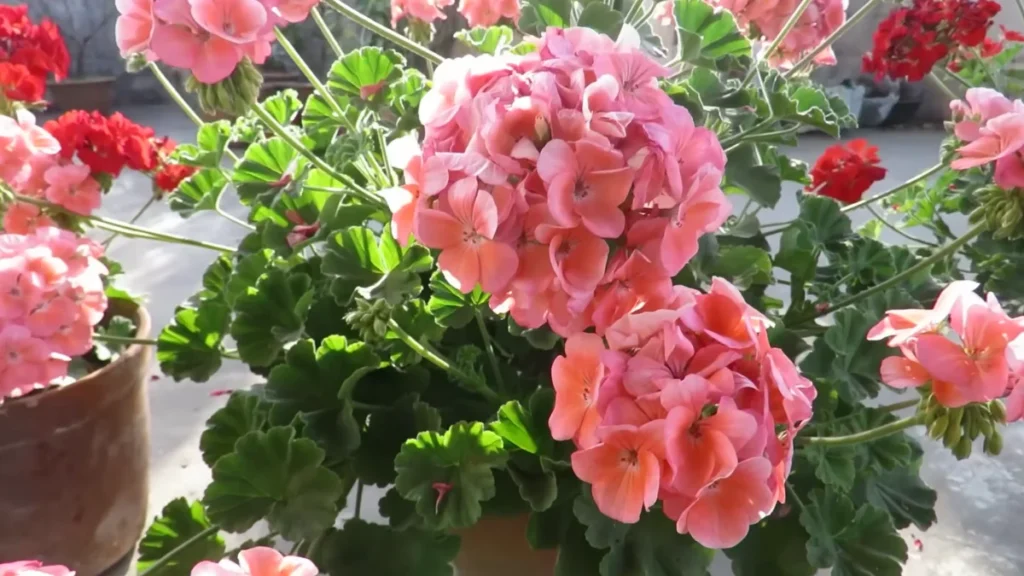
Certain flowering plants cope surprisingly well with balconies that experience dry airflow. Geraniums are one example because they tolerate warmth and occasional dryness without reacting dramatically. Lavender also adapts well to balconies where airflow stays consistent.
Portulaca is another interesting example for dry balcony conditions. Its flowers open strongly in sunlight while the plant itself stores moisture inside fleshy stems and leaves. This makes it more stable during dry weather compared with thinner flowering plants.
However, dry air and strong heat are not always identical. Some flowers manage dry airflow but still struggle when balcony surfaces become excessively hot. This is why plant placement often matters more than plant labels alone.
Balconies exposed to intense afternoon heat may overlap with conditions discussed in “Plants That Survive Strong Afternoon Heat”, especially where reflected warmth continues into the evening.
Plants That Often Struggle in Dry Balcony Conditions
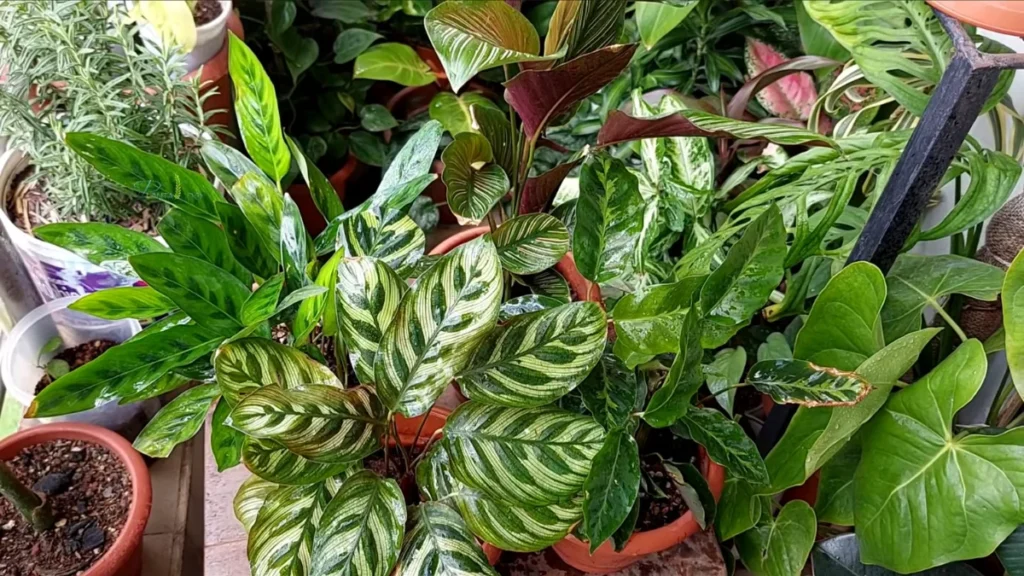
Plants with large soft leaves frequently lose moisture faster than people expect. Ferns, calatheas, peace lilies, and some tropical ornamentals may initially look healthy after purchase but slowly decline once exposed to continuous balcony airflow.
This usually happens because these plants evolved in protected forest-like environments with stable humidity. Apartment balconies rarely provide that kind of moisture stability, especially during Australian summer conditions.
Some climbing plants also react unpredictably in dry air. Their upper leaves may remain exposed to wind while roots stay confined in smaller containers below. This creates uneven moisture stress that becomes difficult to notice early.
The issue is often mistaken for poor watering habits when the real cause is the surrounding air itself.
| Plant Type | Usually Handles Dry Air? | Why |
|---|---|---|
| Rosemary | Yes | Narrow leaves reduce moisture loss |
| Aloe Vera | Yes | Stores water inside leaves |
| Lavender | Yes | Naturally adapted to dry climates |
| Ferns | Often No | Prefer stable humidity |
| Peace Lilies | Often No | Large soft leaves dry quickly |
| Basil | Sometimes Struggles | Soft leaves lose moisture fast |
Practical Insights for Dry Balcony Conditions
Dry balconies often behave more like rooftop environments than backyard gardens. Small differences in airflow and reflected heat can completely change how plants respond.
- Thick-leaf plants usually lose moisture more slowly
- Smaller pots dry out faster than deep containers
- Wind exposure can matter more than temperature alone
- Mediterranean herbs often adapt better than tropical herbs
- Reflective balcony walls quietly increase dryness
- Upper-floor balconies often experience stronger moisture loss
Common Misunderstandings About Dry Balcony Plants
Many balcony gardening frustrations come from assumptions that sound logical but do not fully match apartment conditions.
- Dry soil and dry air are not always the same issue
- Some “indoor plants” dislike exposed balconies
- More watering does not automatically solve dry-air stress
- Full sun plants can still struggle with reflected heat
- Plant labels rarely account for apartment wind tunnels
- Humidity can vary greatly between nearby balconies
Local & Seasonal Context
In many Australian cities, balconies become noticeably drier during warmer months when hot winds combine with reflected building heat. West-facing balconies often experience the strongest moisture loss because afternoon sunlight continues heating walls and railings long after peak temperatures pass.
Coastal balconies can behave differently again. Even when humidity levels are technically higher, salty airflow and steady wind movement may still dry plants surprisingly quickly. Seasonal weather changes often affect balconies more dramatically than backyard gardens because the growing space is smaller and more exposed.
Balcony Haven Note
I’ve noticed that two balconies in the same apartment building can behave completely differently during dry weather. One side may stay fairly stable while another turns into a warm wind tunnel by mid-afternoon. Some of the plants I expected to struggle actually adapted well once the airflow matched their natural growing habits. It also reminded me of how balcony conditions change depending on light exposure, similar to what happens in our article about “Best Plants for East Facing Balconies”, where gentler morning conditions create a very different growing environment.
Frequently Asked Questions
Why do balcony plants dry out faster than garden plants?
Balcony plants usually grow in smaller containers with more exposure to wind and reflected heat. This causes moisture to leave both the soil and leaves faster than in ground gardens.
Are succulents always the best plants for dry balconies?
Not always. Many succulents cope well with dry air, but some softer varieties still struggle with intense reflected heat or heavy afternoon exposure.
Why do some herbs survive dry balconies better than others?
Herbs like rosemary and thyme naturally evolved in drier climates and usually lose moisture more slowly than softer leafy herbs such as basil or coriander.
Can dry air affect flowering plants?
Yes. Dry air can shorten flowering periods, dry leaf edges, or reduce overall plant stability, especially for thin-leaf flowering varieties.
Do enclosed balconies reduce dry air problems?
Sometimes. Semi-enclosed balconies may reduce direct wind exposure, though trapped heat can still create dryness in certain conditions.
Final Thoughts
Finding the best plants for balconies with dry air conditions is often less about choosing “tough” plants and more about understanding how balcony environments quietly remove moisture throughout the day. Wind movement, reflected heat, container size, and leaf texture all shape how plants respond over time.
Many balcony gardeners assume they are doing something wrong when plants struggle in dry air, but balconies naturally create harsher conditions than most garden advice expects. Small environmental differences between buildings, directions, and floors can completely change what thrives.
Once those patterns become easier to notice, balcony gardening usually feels less confusing and far more predictable.
Happy Balcony Gardening!
Leave a Reply