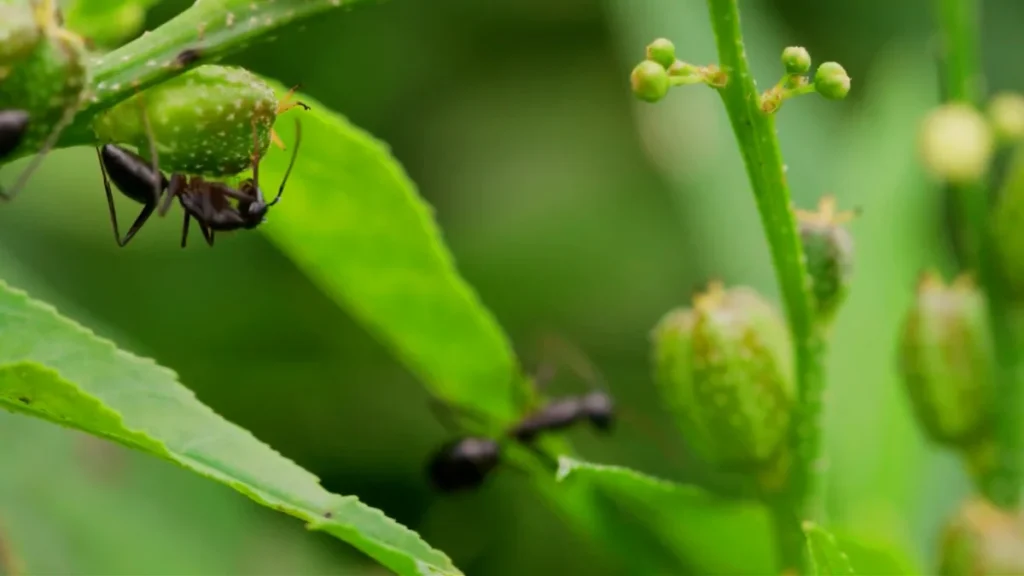
Ants appearing in balcony plant pots can feel confusing because the plants often look healthy at first. Then suddenly, soil starts shifting, tiny trails appear around the rim, and watering behaves differently. On balconies, this tends to happen more often in warm containers where moisture, shelter, and tight spaces create stable conditions for ants to settle unnoticed.
In many cases, stopping ants from getting into plant pots is less about removing the ants themselves and more about understanding what attracts them to balcony containers in the first place. Warm soil, dry pockets, hidden moisture, sheltered pot edges, and even tiny insects living under leaves can quietly encourage ants to settle inside potted plants, especially on balconies where heat and airflow behave differently from ground gardens.
The issue often continues because most gardening advice is written for open backyard gardens rather than elevated apartment balconies. Pots on balconies heat differently, dry unevenly, and stay protected from heavy rain, which changes how ants behave around the soil. Advice that works in garden beds may not fully explain why ants keep returning to containers several floors above the ground.
This article explains why ants enter balcony plant pots, why some containers attract them more than others, and what balcony gardeners often overlook when trying to keep ants away from potted plants naturally. The goal is not perfection, but understanding what makes balcony containers behave differently.
Table of Contents
Balcony Reality Check
Balconies create unusual growing conditions compared to traditional gardens. Concrete floors store heat, railings reflect sunlight, and wind tunnels between buildings can dry out one side of a pot while leaving the other side damp. From an ant’s perspective, this creates small climate zones inside a single container.
Lightweight balcony pots can also warm up very quickly during the day. When the upper layer of soil becomes hot and dry while deeper sections remain cooler, ants sometimes build tunnels between those layers. This explains why some gardeners notice ants even when the surface soil appears completely dry.
Space limitations matter too. On crowded balconies, pots are often grouped closely together, creating shaded pathways between containers. Ants prefer protected movement routes, especially on balconies where open surfaces expose them to heat and wind. Clusters of pots can unintentionally form quiet travel corridors.
Balcony drainage also behaves differently. Water drains faster from raised containers, especially during hot Australian afternoons. Pots that repeatedly cycle between very dry and slightly damp conditions can become more attractive to ants searching for stable nesting pockets.
What Most Advice Misses
Many articles about ants in plant pots focus only on removing the ants themselves. What often gets missed is that ants are usually reacting to the environment already present inside the container. They rarely choose a pot randomly.
In backyard gardens, soil connects to a much larger underground ecosystem. Moisture spreads naturally through surrounding ground, temperatures change more slowly, and heavy rain regularly disturbs insect activity. Balcony pots operate more like isolated islands. Heat, dryness, and shelter become concentrated inside a small space, which changes insect behaviour significantly.
Another overlooked detail is that ants are sometimes attracted to what is living on the plant rather than the soil itself. Small sap-feeding insects can quietly produce sugary residue beneath leaves, and ants may begin visiting the pot to protect those insects. Balcony gardeners sometimes focus entirely on the soil while the real attraction sits higher up on the plant.
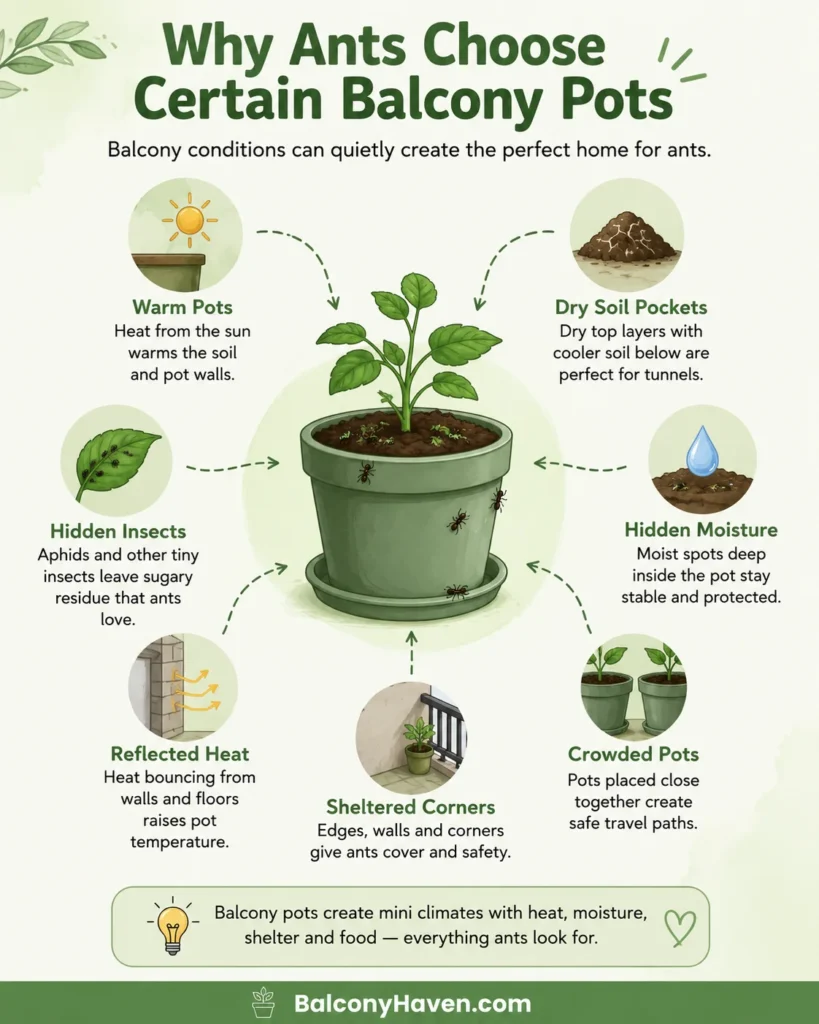
Why Some Balcony Pots Attract More Ants Than Others
Warm Containers Create Stable Hiding Spots
Dark plastic pots often absorb and hold heat longer than ceramic or fabric containers. On balconies with reflected afternoon sun, the inside wall of the pot can stay warm even after sunset. Ants tend to prefer these steady temperatures because they create protected nesting zones.
This becomes more noticeable on west-facing balconies or enclosed apartment balconies where airflow is limited. Heat builds up slowly and remains trapped around the container longer than many gardeners expect.
Balcony Haven Note: I started noticing that ants rarely appeared evenly across all my pots. One container would attract them repeatedly while another nearby stayed untouched for weeks. The difference often seemed connected to how quickly the soil heated up during the afternoon, especially near balcony walls that reflected warmth back toward the pots. It reminded me a lot of the heat patterns discussed in “Overheating Balcony Pots in Summer”, where some containers quietly store far more warmth than others.
Dry Soil Pockets Encourage Tunnelling
Ants often prefer soil that contains both dry spaces and protected cooler layers underneath. Balcony pots can develop this pattern quickly because upper soil dries faster than deeper sections.
This is one reason ants sometimes appear in containers that are still being watered regularly. The watering may reach only parts of the pot while leaving dry pockets around the edges or near compacted soil areas. Ants frequently tunnel through these uneven sections because they remain stable longer than fully moist soil.
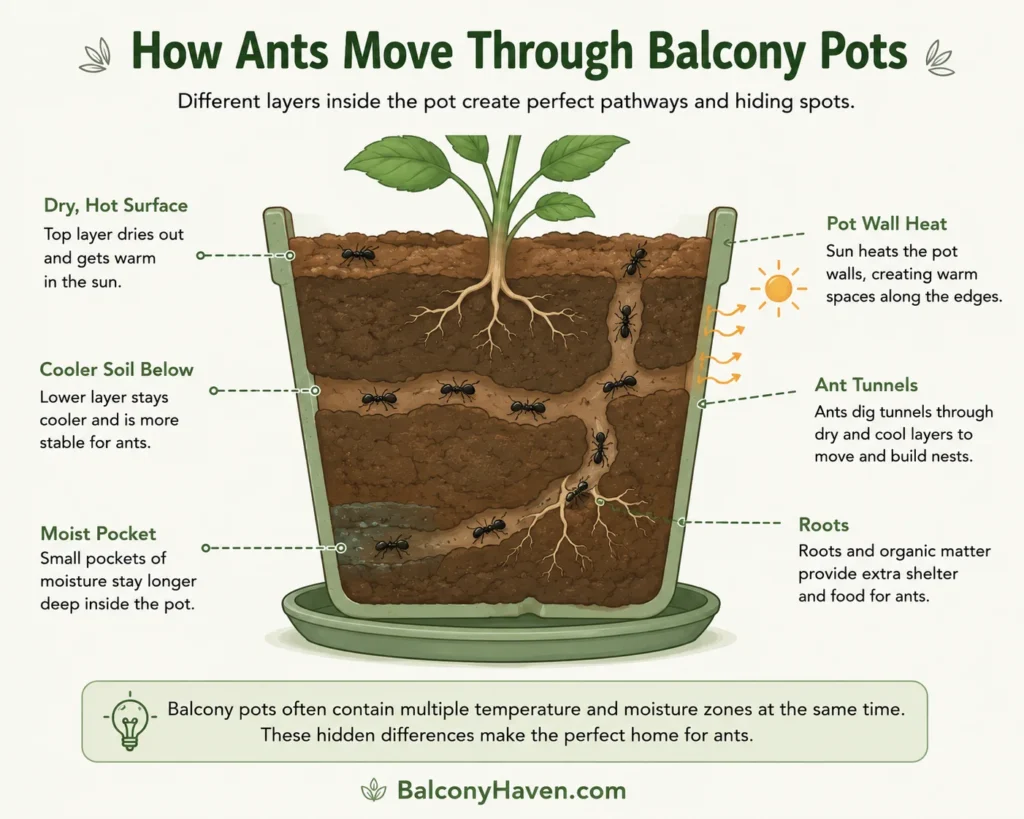
This behaviour becomes more common in narrow balcony planters or lightweight pots exposed to direct wind. Containers losing moisture too quickly can unintentionally create ideal tunnelling conditions.
Related moisture behaviour is also discussed in “Balcony Soil Drying Out Too Fast (What Actually Helps)”, especially where balcony airflow changes how containers retain water.
Hidden Insects Can Quietly Attract Ants
Sometimes the ants are not interested in the soil at all. Aphids, whiteflies, and other tiny sap-feeding insects leave sugary residue that ants collect. Balcony plants with dense leaves or protected corners can hide these insects surprisingly well.
This creates a situation where gardeners remove ants repeatedly, but the ants continue returning because the food source remains on the plant itself. On balconies, reduced rainfall means leaves are naturally cleaned less often than outdoor garden plants, so sugary residue can remain longer.
This is particularly common on herbs, chilli plants, and soft new growth where sap-feeding insects gather quietly underneath leaves.
Similar insect behaviour appears in “White Bugs on Balcony Chilli Plants”, where hidden insects can change the entire behaviour of a balcony container ecosystem.
Pot Placement Can Influence Ant Activity
Pots placed directly against warm walls, corners, or balcony railings sometimes attract more ant movement than containers positioned in open airflow. Ants prefer edges and protected travel routes instead of exposed open surfaces.
On crowded balconies, touching pots can also create hidden bridges between containers. Ants may spread across multiple pots without gardeners noticing where the original activity began.
This is why some balcony gardeners feel like ants are “moving” from pot to pot. In reality, the containers may already be connected through sheltered travel paths.
| Balcony Condition | Why Ants Like It |
|---|---|
| Hot plastic pots | Hold warmth longer |
| Dry soil edges | Easier tunnelling |
| Crowded containers | Protected pathways |
| Hidden sap insects | Food source nearby |
| Enclosed balconies | Stable temperatures |
| Uneven watering | Mixed moisture zones |
Practical Insights
Balcony ant problems often become easier to understand when observing how the container behaves across the full day rather than at one moment.
- Pots with fast-drying edges tend to attract more tunnelling activity
- Warm balcony walls can quietly increase soil temperatures
- Dense plant leaves sometimes hide sap-feeding insects
- Closely grouped pots create sheltered ant pathways
- Lightweight containers often fluctuate in temperature faster
- Enclosed balconies may hold warmth longer after sunset
Common Misunderstandings
Many balcony gardeners assume ants automatically mean the plant is unhealthy, but the relationship is often more complicated than that.
- Ants do not always damage the plant directly
- Wet-looking soil can still contain dry underground pockets
- Balcony pots behave differently from garden beds
- Removing ants alone may not solve the attraction source
- One “problem pot” can influence nearby containers
- Some balcony heat problems are invisible from the surface
Local & Seasonal Context
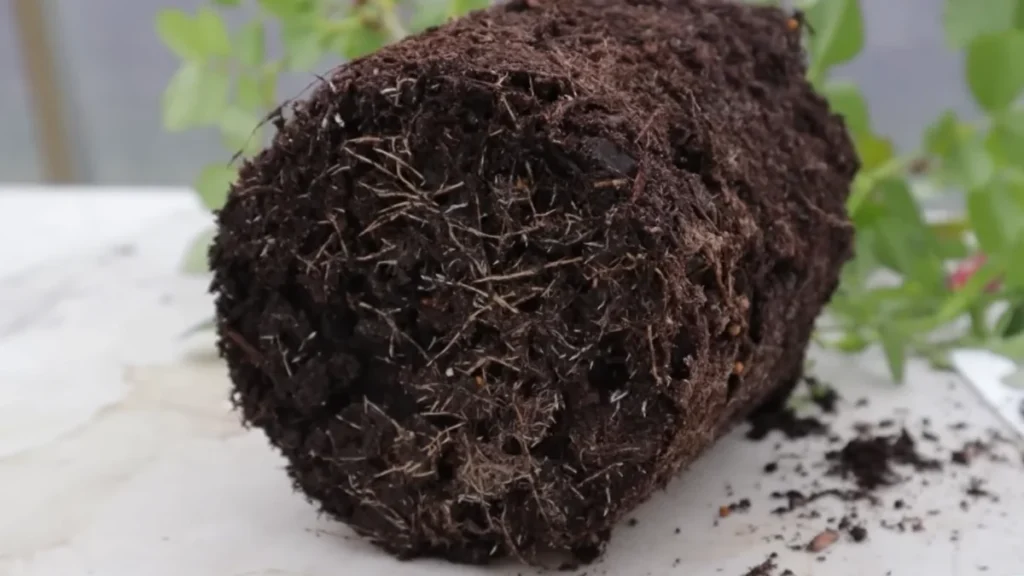
In Australia, ant activity around balcony pots often becomes more noticeable during hotter months when containers dry rapidly between watering cycles. Warm apartment walls, reflective balcony flooring, and afternoon heat can create strong temperature shifts inside small pots.
Coastal balconies sometimes experience different behaviour because humidity slows surface drying slightly, while inland balconies can develop extremely dry soil layers during summer heat. Semi-enclosed balconies may also hold warmth overnight, allowing ant activity to continue longer than expected.
Seasonal rain patterns matter too. Heavy summer storms may temporarily disturb ants, while long dry periods often encourage them to settle deeper inside containers where moisture remains more stable.
Frequently Asked Questions
Are ants in plant pots always harmful?
Not necessarily. Ants sometimes live in pots without causing obvious plant damage. The bigger concern is usually what attracted them to the container environment in the first place.
Why do ants keep returning after watering?
Watering may temporarily disturb the ants without changing the conditions that attracted them. Dry pockets, warmth, or hidden insects can still remain inside or around the pot.
Do certain pot materials attract ants more?
Some lightweight plastic pots warm up faster and create steadier heat conditions inside the soil. This can make them more appealing compared to heavier or cooler containers.
Why are ants only appearing in one pot?
Each balcony pot creates slightly different conditions depending on sun exposure, airflow, soil density, and nearby surfaces. One container may simply provide a more stable environment.
Can crowded balconies increase ant problems?
They can. Closely packed containers create sheltered movement paths that ants often prefer over exposed balcony surfaces.
Final Thoughts
Learning how to stop ants from getting into plant pots often starts with understanding that balcony containers behave differently from traditional gardens. Heat, airflow, narrow spaces, and fast-changing moisture levels can quietly shape the conditions inside each pot.
In many cases, ants are responding to patterns that are not immediately visible from the soil surface. Small temperature differences, hidden insects, or uneven moisture zones can influence why one pot becomes active while another remains untouched.
Balcony gardening is rarely about creating perfect conditions. It is usually about noticing how small environmental details change the behaviour of plants, soil, and even insects over time.
Happy Balcony Gardening!
Leave a Reply