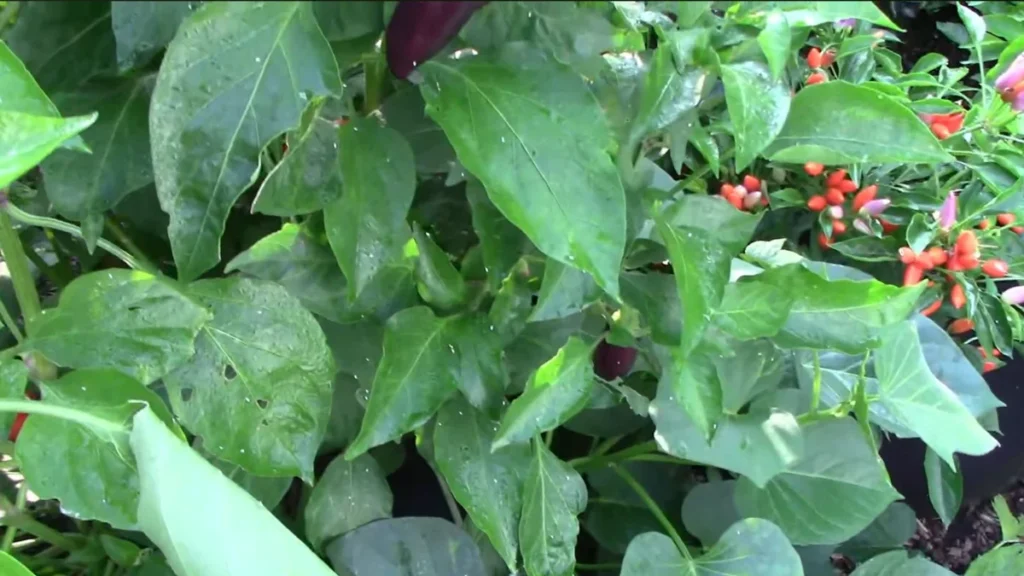
White bugs on balcony chilli plants can be frustrating because they often appear suddenly. One week the plant looks healthy, and the next week the new leaves are curling, the stems look crowded with tiny insects, or the leaves feel sticky when touched.
White bugs on balcony chilli plants are usually aphids, whiteflies, or mealybugs. These small pests feed on plant sap and often appear in warm, sheltered balcony spaces where airflow is limited. Most early infestations can be managed with careful leaf checks, gentle water sprays, wiping, and repeated mild treatments before the plant becomes badly weakened.
The confusing part is that these pests can look similar at first. Some sit quietly on soft new growth, some fly up when the plant is disturbed, and others hide as white cottony clumps in stem joints. The treatment is often similar, but identifying the pest helps you understand what is happening.
This article explains what the white bugs are, why balcony chilli plants attract them, how to tell the difference between common pests, and what simple balcony-friendly fixes usually help.
Why White Bugs Appear on Balcony Chilli Plants
Balcony chilli plants grow in a different environment from chilli plants in open garden beds. They often sit near walls, railings, concrete floors, glass doors, and other hard surfaces that hold heat. This can create a warm little microclimate around the plant.
That warmth is useful for chillies, but it can also help small pests multiply quickly. Aphids, whiteflies, and mealybugs all prefer soft plant growth, sheltered leaves, and places where they are not disturbed often.
Open gardens have wind, rain, birds, beneficial insects, and more natural disturbance. Balconies are usually more protected. A few pests can arrive, settle on soft new growth, and reproduce before the problem becomes obvious.
This is why white bugs on balcony chilli plants are not always caused by poor care. The balcony itself can make the plant more attractive to pests, especially when the space is warm, still, crowded, or protected from rain.
If your chilli plant is also exposed to strong wind, this guide on can chili plants grow on a windy balcony may help you understand the other side of balcony stress. Wind can reduce some pests, but it can also dry plants out and weaken growth when it becomes too strong.
What Most Pest Advice Misses About Balconies
Many pest guides are written for garden beds, greenhouses, or backyard vegetable patches. That advice may still be useful, but it does not always explain why pests behave differently on a balcony.
On a balcony, plants are often closer together because space is limited. Pots may sit against walls or railings. Leaves may touch other plants. Air may move strongly in one corner but hardly move at all in another corner. These small differences can change how quickly pests appear and spread.
Another thing most advice misses is how often balcony plants are checked from the front only. The top of the plant may look fine while aphids, whiteflies, or mealybugs are hiding underneath leaves or in stem joints. By the time the plant looks stressed from a distance, the pest cycle may already be active.
How to Identify White Bugs on Chilli Plants
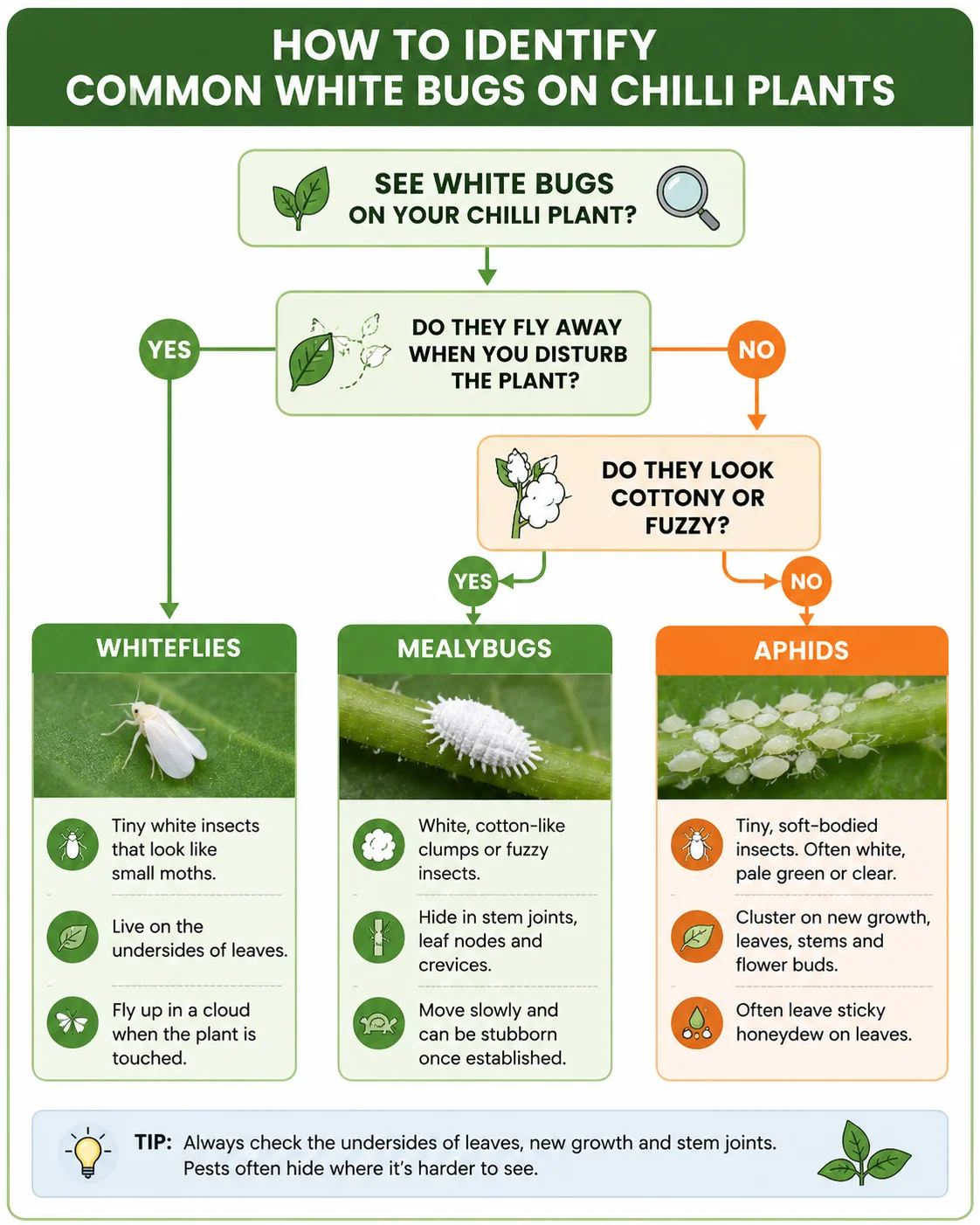
Identification is helpful because different white bugs behave in different ways. Aphids usually cluster on soft new growth. Whiteflies move quickly and fly when disturbed. Mealybugs look more like small white cottony patches than moving insects.
The table below gives a simple way to compare the most common white pests found on balcony chilli plants.
| Pest | What It Looks Like | Where It Usually Hides | Common Sign |
|---|---|---|---|
| Aphids | Tiny soft insects that may look white, pale green, or translucent | New growth, young stems, flower buds, and leaf undersides | Curling leaves, sticky residue, and clusters of small insects |
| Whiteflies | Tiny white flying insects that look like small moths | Undersides of leaves | Small white insects fly up when the plant is touched |
| Mealybugs | White cotton-like clumps or fuzzy insects | Stem joints, leaf nodes, and sheltered crevices | White fuzzy patches and slow-moving insects |
Aphids on Balcony Chilli Plants
Aphids are one of the most common white bugs on chilli plants. They are small, soft-bodied insects that feed by sucking sap from the plant. They often gather on soft new growth because that tissue is easier to pierce.
On a balcony chilli plant, aphids may appear around new leaves, flower buds, young stems, and leaf undersides. They can look white, pale green, yellowish, or almost see-through depending on the type and age of the insect.
Aphid damage often shows up as curled new leaves, sticky residue, slow growth, or distorted young shoots. The sticky residue is honeydew, a sugary waste that can later encourage dark sooty mould on the leaves.
Aphids can build up quickly on balconies because the plant is sheltered. If the plant is in a warm corner with little airflow, the insects may stay protected and continue feeding without much disturbance.
Whiteflies on Balcony Chilli Plants
Whiteflies are easier to notice when the plant is disturbed. If tiny white insects fly up when you touch the chilli plant or move the leaves, whiteflies are likely involved.
They usually live on the undersides of leaves, which makes them easy to miss during a quick check. The adults fly, but the younger stages stay attached to leaves and continue feeding on sap.
Whiteflies can make chilli leaves look pale, weak, sticky, or dusty over time. Like aphids, they can also leave behind honeydew that encourages sooty mould.
Balconies with still air and closely spaced pots can make whiteflies harder to control because they can move between plants easily. If you grow several edible plants together, it helps to check nearby plants too, not only the chilli plant.
Mealybugs on Balcony Chilli Plants
Mealybugs look different from aphids and whiteflies. They often appear as white, fluffy, cotton-like clumps rather than tiny smooth insects. They like protected areas where leaves meet stems or where branches form tight joints.
Mealybugs move slowly, but they can be persistent. Their waxy coating helps protect them from simple sprays, which is why wiping and direct removal are often more useful than spraying alone.
On chilli plants, mealybugs may hide in small crevices where they are hard to see. They can weaken the plant slowly, especially when the infestation is allowed to build up around several stem joints.
Because mealybugs hide well, they are often noticed later than aphids or whiteflies. A plant may look slightly weak before the white cottony patches are obvious.
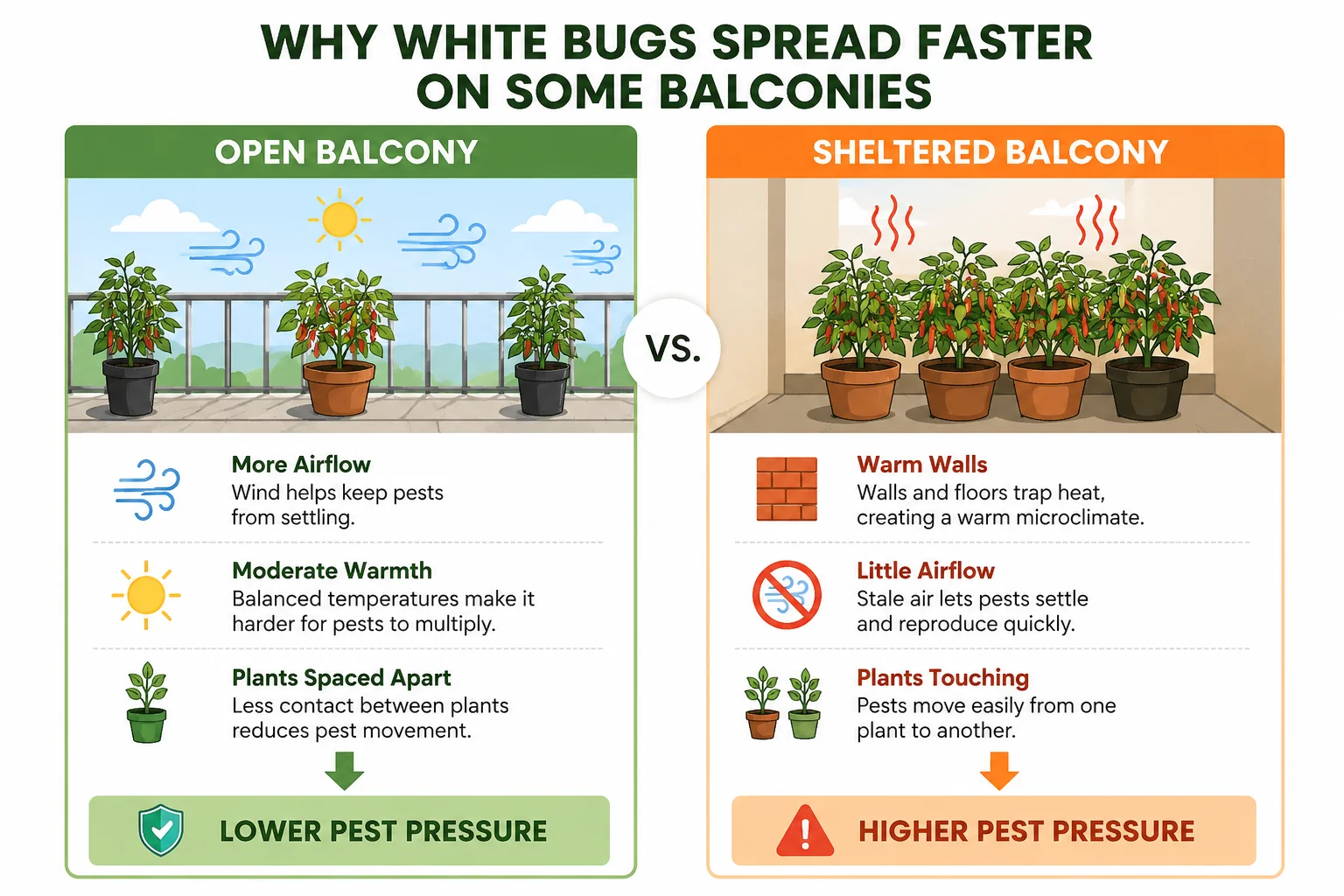
Why White Bugs Spread Faster on Some Balconies
White bugs often spread faster when the balcony gives them warmth, shelter, and easy access to nearby plants. This does not mean every warm balcony will have pests, but it does explain why some outbreaks seem to grow quickly.
When pots are close together, leaves can touch. This gives pests a simple bridge from one plant to another. Chilli plants, tomatoes, herbs, and other soft-leaved balcony plants can all become part of the same pest path.
Airflow also matters. Good airflow does not remove every pest, but it makes the space less still and less comfortable for some infestations. Very still corners can become pest-friendly because insects are not disturbed as often.
If your balcony plants are close together, this guide on balcony pot spacing for airflow may help you think about spacing without wasting limited balcony space.
Check Before Treating the Plant
Before applying any spray, it helps to look closely at the plant. Many balcony pest problems are still small when first noticed, and a careful check can show whether the issue is aphids, whiteflies, mealybugs, or something else.
Look at the undersides of leaves, the tips of new growth, flower buds, and the tight joints where stems meet. These are the places where sap-sucking pests often hide first.
It also helps to check whether ants are present. Ants do not usually cause the white bugs, but they can protect sap-feeding pests because they feed on honeydew. If ants are moving around the plant often, this guide on how to stop ants from getting into plant pots may be useful.
How to Get Rid of White Bugs on Balcony Chilli Plants
Most early infestations do not need harsh treatment. Balcony chilli plants are usually close to living spaces, doors, windows, pets, and edible harvests, so gentle and repeated methods are often more suitable than strong chemical sprays.
A firm spray of water can dislodge many aphids and whiteflies from leaves. This is especially helpful for leaf undersides. It may not remove everything at once, but repeating it every few days can break the pest cycle.
Visible pests can also be wiped off with a damp cloth. This works well for aphid clusters and is especially useful for mealybugs because their waxy coating can make sprays less effective.
Diluted mild soap spray or neem oil may help when applied carefully in the evening, away from harsh sun. Evening application reduces the risk of leaf stress, especially on balconies where reflected heat can make leaves more sensitive.
For a simple balcony approach, these methods are usually the most realistic:
- Rinse leaf undersides with a firm water spray.
- Wipe visible clusters with a damp cloth.
- Remove heavily infested leaves when the damage is limited to a few areas.
- Separate the affected pot from nearby plants for a short time.
- Use mild soap spray or neem oil in the evening if pests keep returning.
- Repeat checks every few days until new growth looks clean.
Consistency matters more than strength. A single strong spray may look effective for one day, but pests often return if eggs, hidden insects, or nearby infested plants are missed.
If the leaves have holes rather than sticky patches or sap-sucking damage, the cause may be different. This article on why plant leaves are getting holes explains chewing pests and other damage patterns that are not the same as aphids, whiteflies, or mealybugs.
Do White Bugs Harm Chilli Fruit?
White bugs usually harm chilli fruit indirectly. They do not always attack the fruit itself, but they weaken the plant by feeding on leaves, stems, and new growth. When the plant loses energy, flowering and fruiting can slow down.
A chilli plant under pest stress may drop buds, produce fewer flowers, grow smaller chillies, or take longer to ripen. Severe infestations can make the plant focus on survival instead of producing more fruit.
The sticky honeydew left behind by aphids, whiteflies, and mealybugs can also lead to sooty mould. This dark coating sits on leaf surfaces and reduces the plant’s ability to use light properly. On balconies with limited sun, that loss of leaf surface can matter even more.
The good news is that chilli plants often recover once pests are controlled. New leaves may grow cleaner, flowers may return, and fruit production can improve gradually if the plant still has enough warmth, light, and healthy roots.
If your chilli plant is growing leaves but not producing well, this guide on balcony plants growing but not producing fruits may help you look at other possible causes beyond pests.
Balcony Conditions That Increase Pest Risk
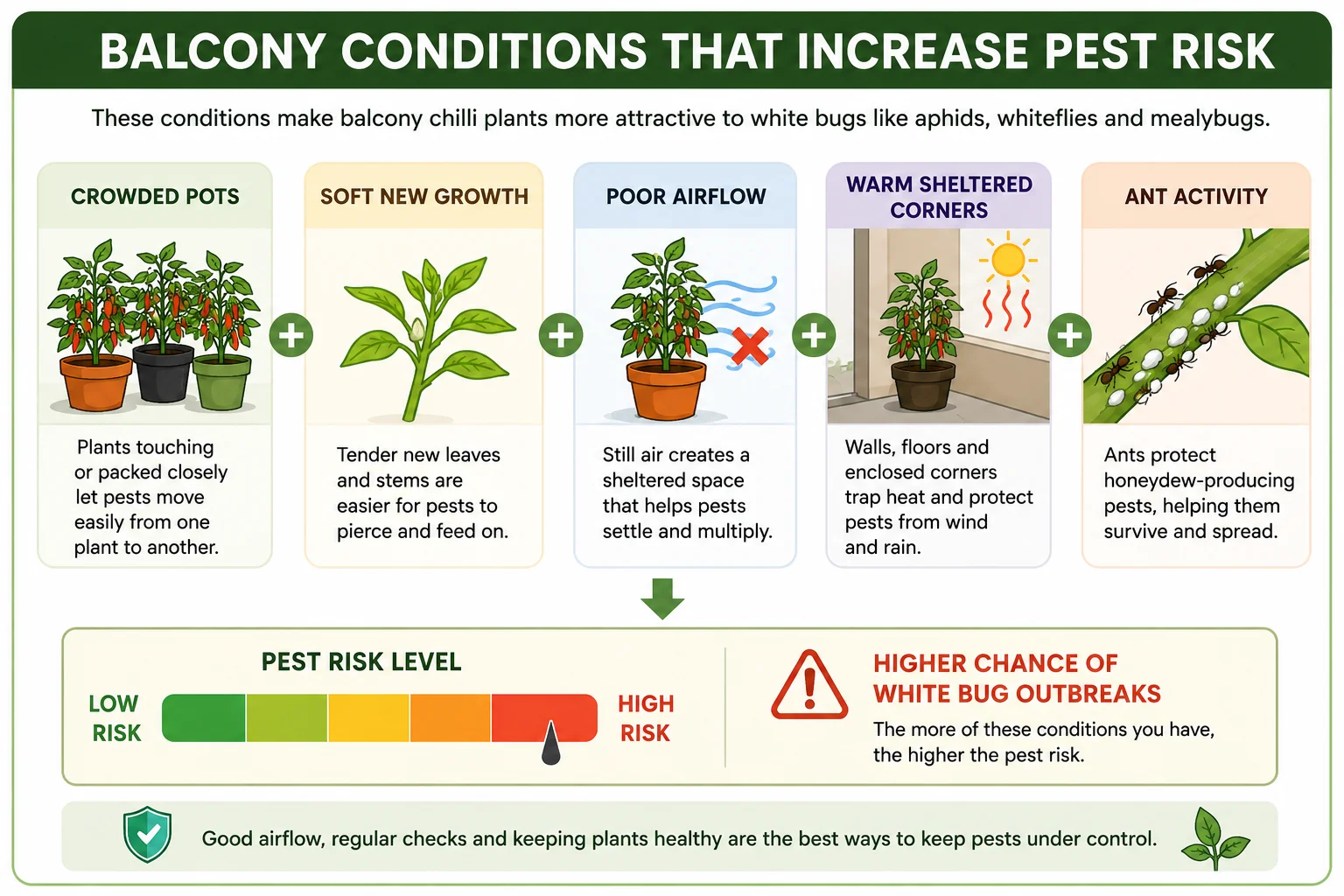
Some balcony conditions make white bugs more likely to appear or spread. These conditions do not guarantee a pest problem, but they can make the plant easier for pests to settle on.
| Balcony Condition | Why It Increases Pest Risk | What It Often Looks Like |
|---|---|---|
| Poor airflow | Still air makes sheltered areas more comfortable for pests. | Leaves stay still, corners feel warm, and insects are not disturbed. |
| Crowded pots | Pests can move from plant to plant when leaves touch. | Several plants packed together in a small space. |
| Soft new growth | Sap-sucking pests prefer tender leaves and stems. | Fresh pale growth, new shoots, and flower buds attract clusters. |
| Too much fertiliser | Heavy feeding can encourage soft growth that pests like. | Fast leafy growth that becomes more pest-prone. |
| Warm sheltered corners | Walls and concrete can hold heat and protect insects from weather. | Pests gather on plants near walls, glass doors, or enclosed corners. |
| Ant activity | Ants may protect honeydew-producing pests. | Ants moving up stems or around pots repeatedly. |
Water stress can also make plant problems harder to read. A chilli plant that is drying quickly may have curled leaves from both pests and moisture stress. If your pots dry out faster than expected, this article on why balcony plants dry out overnight may help explain what is happening in hot or exposed balcony spaces.
Common Mistakes That Make White Bugs Worse
Most balcony pest mistakes are understandable because the problem often starts in hidden places. By the time bugs are obvious, they may already be on several leaves or plants.
- Only checking the top of the leaves instead of the undersides.
- Keeping affected plants tightly grouped with healthy plants.
- Using too much fertiliser and creating soft new growth.
- Waiting until the whole plant looks weak before inspecting closely.
- Spraying once and assuming the pest cycle is finished.
- Ignoring ants around pots and stems.
Another common mistake is using strong sprays during hot parts of the day. Balcony leaves may already be stressed by reflected heat, so adding spray under harsh sun can sometimes damage leaves more than expected.
Gentle repeated control usually suits balconies better. It allows the plant to recover without adding extra stress to leaves, flowers, or young fruit.
Seasonal Context for Balcony Chilli Pests
White bugs often become more noticeable when the weather is warm and chilli plants are actively growing. New shoots, flower buds, and fresh leaves provide the soft growth that sap-sucking insects prefer.
In Australian apartments, pest pressure can feel stronger during warm, humid, or still periods. Covered balconies, enclosed balconies, and spaces with limited airflow may stay warm even when the weather outside feels mild.
Seasonal changes also affect how quickly the plant recovers. A chilli plant with good warmth and light may bounce back faster after treatment. A plant in a shaded, cool, or stressed position may take longer to produce clean new growth.
Balcony Haven Note: I have noticed that pest problems on balcony plants often start quietly underneath leaves before the whole plant looks affected. On some balconies, one warm sheltered corner can behave very differently from the rest of the space. That is why white bugs can feel sudden, even when the plant has been checked casually from the front.
Frequently Asked Questions
What are the tiny white bugs on my chilli plants?
They are usually aphids, whiteflies, or mealybugs. Aphids cluster on soft new growth, whiteflies fly up when disturbed, and mealybugs look like small white cottony patches in stem joints.
Are white bugs on chilli plants harmful?
Yes, they can weaken the plant by feeding on sap. Small infestations are usually manageable, but larger infestations can cause curled leaves, sticky residue, poor flowering, smaller fruit, and slower growth.
Can I eat chillies from a plant with white bugs?
Chillies are usually still usable if the fruit itself is healthy and washed well. The bigger concern is plant health, because heavy pest pressure can reduce flowering and fruit development over time.
Why do white bugs keep coming back after spraying?
They may return because eggs, hidden insects, nearby infested plants, or protected leaf undersides were missed. Repeated gentle checks and treatments usually work better than one strong spray.
Do ants cause white bugs on chilli plants?
Ants do not usually cause the white bugs, but they may protect aphids, whiteflies, or mealybugs because those pests produce honeydew. When ants are active around chilli plants, sap-sucking pests are worth checking for.
Should I remove badly infested chilli leaves?
Removing a few heavily infested leaves can help when the problem is limited. It reduces the number of pests quickly, but the plant still needs follow-up checks because hidden insects may remain elsewhere.
Final Thoughts
White bugs on balcony chilli plants are common because balconies often provide the warmth, shelter, and soft plant growth that sap-sucking pests like. The problem can feel sudden, but it usually starts in hidden places such as leaf undersides, new shoots, and stem joints.
Aphids, whiteflies, and mealybugs can weaken chilli plants, but early infestations are usually manageable with close inspection, gentle cleaning, better spacing, and repeated mild treatment. The goal is not to panic or over-spray, but to break the pest cycle before the plant loses too much energy.
Once the pests are under control, chilli plants often recover well. New growth becomes cleaner, flowering improves, and the plant can return to steady fruiting when the balcony conditions support it.
Leave a Reply