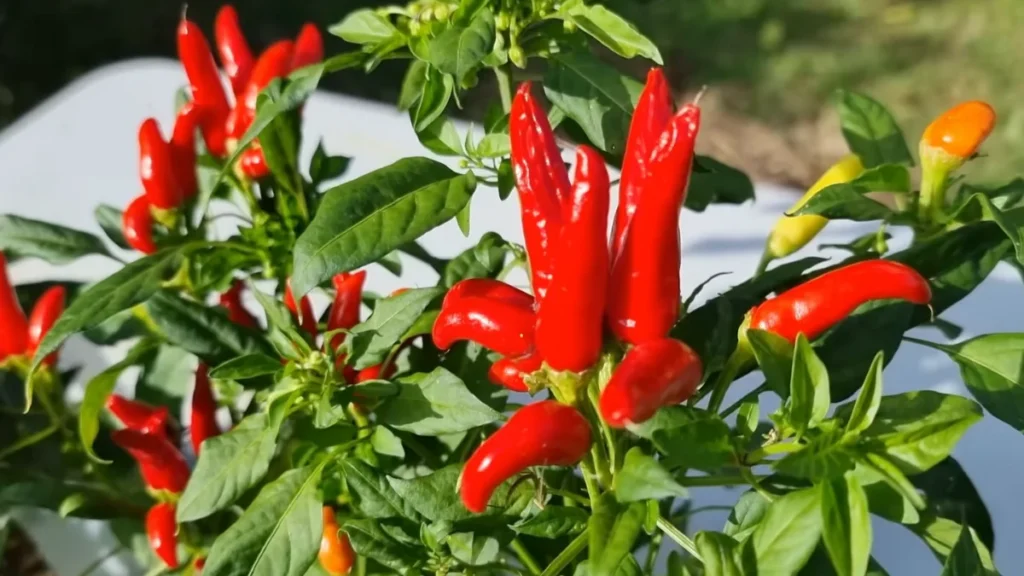
Chilli plants can look strong in a garden, but they often behave differently on a balcony. A plant that grows well in a sheltered backyard may suddenly lean, dry out, drop flowers, or stop fruiting when it sits near an exposed balcony railing.
Chilli plants can grow on a windy balcony if they have enough sunlight, stable moisture, a heavy pot, and some protection from constant gusts. Light airflow is usually fine, but ongoing strong wind can slow growth, damage leaves, dry the soil faster, and reduce fruiting. The goal is not to block all wind, but to soften the strongest exposure so the plant can grow without being shaken all day.
The confusing part is that wind damage is not always obvious at first. A chilli plant may not snap or fall over. Instead, it may grow slowly, lose flowers, curl its leaves, or look thirsty even after watering.
This article explains how wind affects chilli plants, which balcony spots are most exposed, what setups work better, and how to understand whether your balcony can realistically support healthy chillies.
Why Windy Balconies Are Different From Gardens
A windy balcony is not the same as a breezy garden. In a garden, wind usually moves through trees, fences, soil beds, and open space before it reaches the plant. On a balcony, wind can be pushed between buildings, around corners, and through railings with much more force.
This is why some balconies feel calm for people but stressful for plants. A person may only notice wind when standing near the edge, while a chilli plant sits in that same airflow all day. The plant cannot move away from the strongest gusts.
Balcony pots also dry differently from garden soil. A pot is exposed from the top, sides, and sometimes underneath. When wind keeps moving across the leaves and pot surface, moisture disappears faster. The plant may look thirsty even when it was watered recently.
This does not mean chillies are bad balcony plants. It only means their setup matters more in apartments. A small change in position, pot weight, or shelter can make a big difference.
What Most Chilli Growing Advice Misses
Most chilli growing advice is written for gardens, patios, or greenhouses. That advice often focuses on sun, warmth, feeding, and watering. Those things are still important, but they do not explain the full problem on exposed balconies.
On a balcony, wind can quietly affect everything else. It can make watering less predictable, cool the pot at night, shake young stems, and dry flowers before fruit forms. A chilli plant may look like it has a fertiliser problem when the real issue is constant exposure.
This is why adding more fertiliser does not always fix a windy balcony chilli plant. If the plant is using most of its energy to stay upright and replace lost moisture, extra feeding may not solve the underlying stress.
How Wind Affects Chilli Plants Over Time
Light wind is not usually a problem for chilli plants. Gentle airflow can help stems become firmer and may reduce some fungal problems by keeping leaves from staying wet for too long.
The problem begins when wind becomes constant. A chilli plant that is always moving has to spend energy coping with stress instead of putting that energy into leaves, flowers, and fruit. Over time, the plant may grow smaller leaves, develop rough edges, lean to one side, or drop flowers before they become chillies.
This can happen slowly. The plant may not look badly damaged, but it may stay smaller than expected. Flowering may start, then stop. Small fruit may form but not develop strongly.
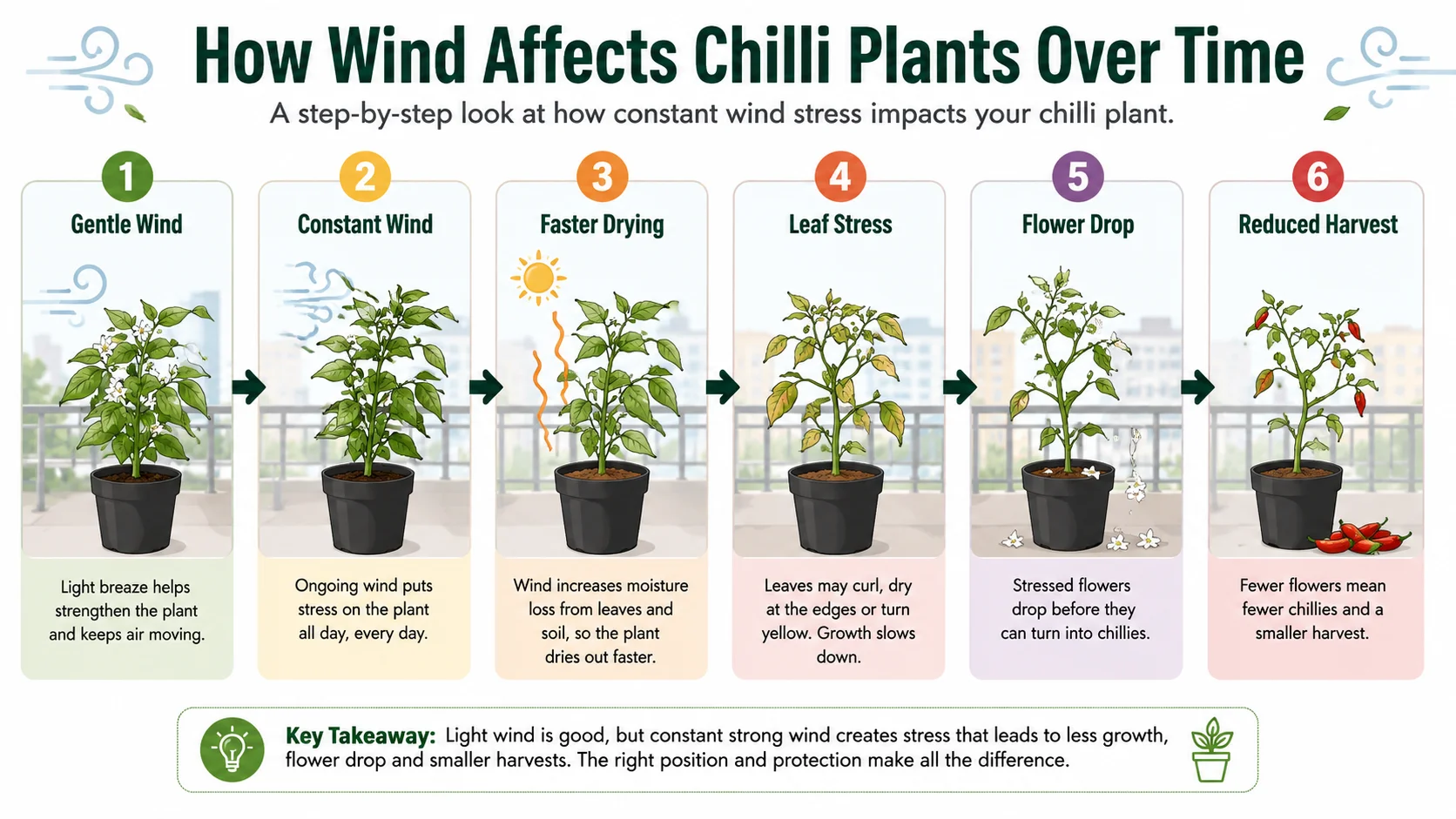
The diagram above shows the usual pattern: gentle wind first, then constant movement, faster drying, leaf stress, flower drop, and weaker fruiting. This gives readers a simple way to understand why wind damage is not always sudden.
Balcony Wind Exposure Zones for Chilli Plants
Where the chilli plant sits on the balcony often matters more than how windy the whole apartment feels. The strongest wind is usually near the open edge, especially beside railings or gaps where air moves freely.
The centre of the balcony is usually less exposed. A wall, side panel, large pot, or corner can soften the wind. This does not remove airflow completely, but it can stop the plant from being pushed from the same direction all day.
A chilli plant near a wall may still receive enough sun while experiencing less wind pressure. On many balconies, moving the pot slightly inward is enough to reduce leaf movement and moisture loss.
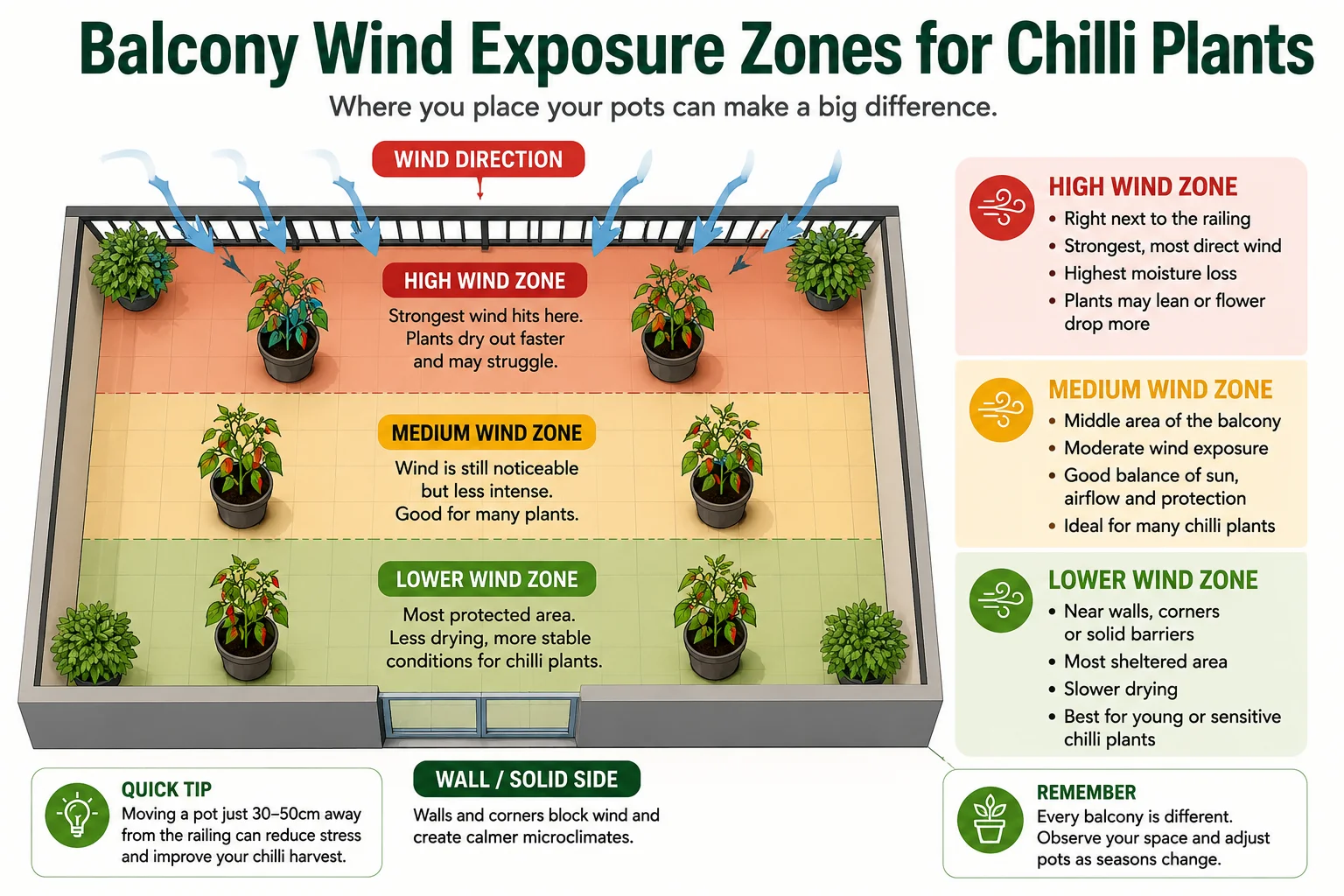
This visual shows three simple zones: railing zone with high wind, middle balcony with medium wind, and wall or corner zone with lower wind. It helps readers see why plant placement matters before they spend money on new products.
If your balcony is exposed most of the day, this related guide on the best plants for a windy balcony may also help you compare other plants that cope better with moving air.
Wind Exposure vs Chilli Plant Performance
While balcony position affects wind exposure, the actual impact on growth depends on how much wind the plant experiences over time. A chilli plant in occasional breeze may grow well, while the same plant in constant railing wind may struggle even with good watering.
The table below gives a simple way to understand how different wind levels usually affect chilli plants in pots.
| Wind Level | Plant Growth | Flowering | Fruiting | What It Usually Means |
|---|---|---|---|---|
| Light breeze | Strong | Usually steady | Usually good | The plant moves gently but is not being pushed around. |
| Moderate wind | Mostly good | May slow during windy spells | Usually possible | The plant can cope better with a heavy pot and some shelter. |
| Strong wind | Slower | More flower drop | Less reliable | The plant may need a calmer position or wind filter. |
| Constant strong wind | Poor or uneven | Often weak | Often reduced | The balcony may need stronger protection before chillies perform well. |
This table is not meant to be exact for every balcony. It simply shows the pattern most balcony gardeners notice: chillies can handle movement, but they struggle when wind becomes the main condition around the plant.
Why Pot Stability Matters So Much
Pot choice matters more on a windy balcony than many people expect. A lightweight pot can shift, shake, or tip during gusts. Even small movement can disturb the roots and make the plant less settled.
A heavier pot gives the chilli plant a steadier base. It also holds moisture more evenly than a very small or thin container. For many balcony chilli plants, a pot around 15 to 25 litres is often more stable than a tiny container.
This does not mean the biggest pot is always best. Very large pots can stay wet too long if the balcony is shaded or cool. The better goal is a pot that is heavy enough to stay put, deep enough for roots, and still suitable for the amount of sun and airflow your balcony receives.
If you are comparing container choices, this guide on deep vs shallow pots for balcony veggies may help explain why root space and pot shape matter for edible plants.
Which Chilli Setups Handle Wind Best?
The strongest chilli setup on a windy balcony is usually not complicated. It combines a stable pot, a calmer position, and enough open airflow so the plant does not sit in still, humid air.
A heavy pot near a wall or side panel usually performs better than a lightweight pot near the railing. The plant still gets outdoor conditions, but it is not exposed to the strongest wind all day.
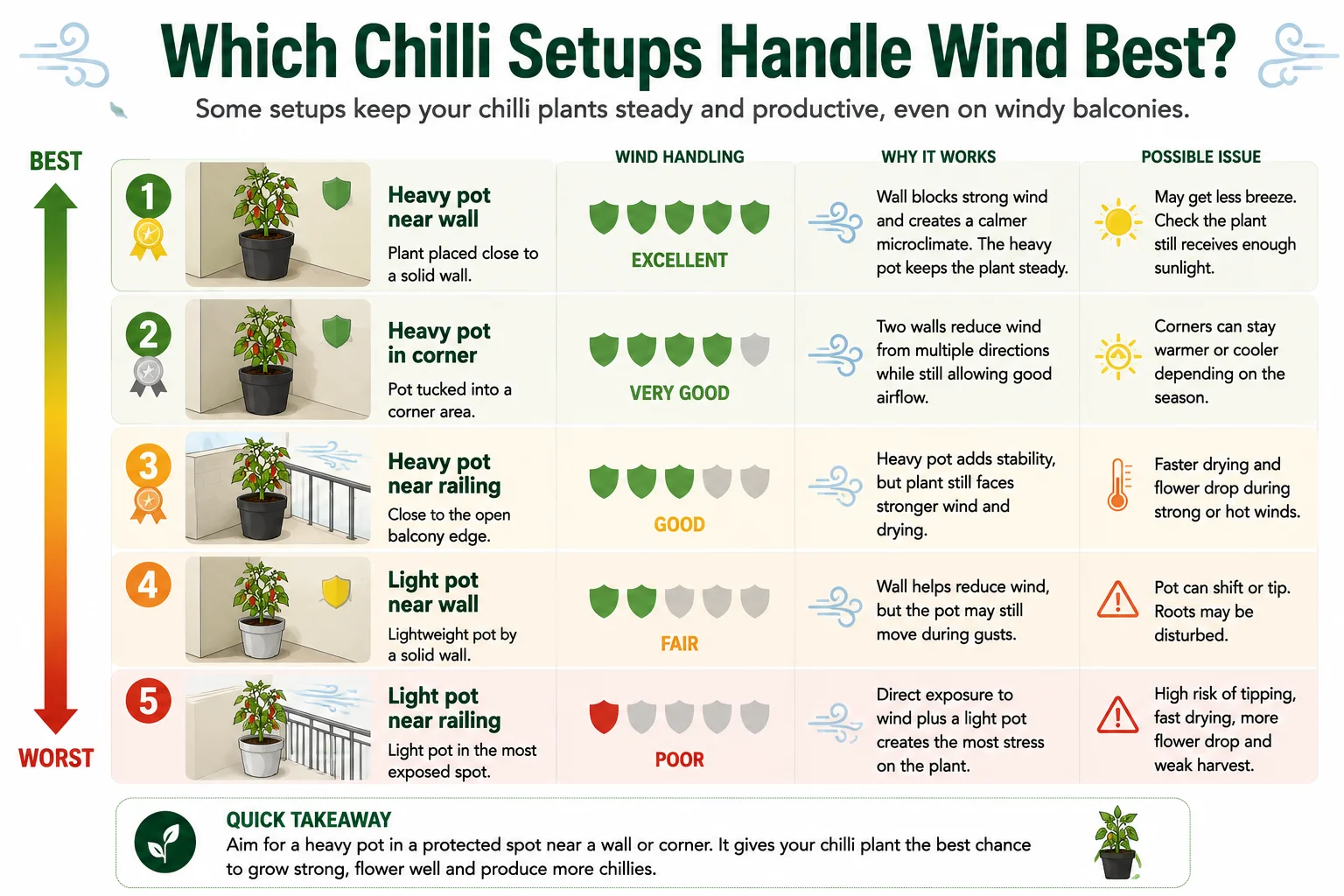
This diagram ranks common setups from strongest to weakest: heavy pot near wall, heavy pot near railing, lightweight pot near wall, and lightweight pot near railing. It gives readers a useful visual comparison without repeating the earlier wind-zone diagram.
| Balcony Setup | Wind Handling | Best For | Possible Issue |
|---|---|---|---|
| Heavy pot near a wall or corner | Excellent | Most windy apartment balconies | May need checking for enough sunlight. |
| Heavy pot near railing | Good | Bright balconies with moderate wind | Leaves and flowers may still dry faster. |
| Lightweight pot near a wall | Moderate | Small balconies with limited space | The pot may still move in gusts. |
| Lightweight pot near railing | Poor | Only very calm balconies | Higher risk of tipping, drying, and root disturbance. |
For exposed balconies where pots might shift or tip, this article on protecting balcony pots from strong winds gives more detail on making container setups safer and steadier.
Which Chilli Varieties Handle Wind Better?
Compact chilli varieties usually cope better on windy balconies than tall, wide, or heavily branched plants. Smaller plants present less surface area to the wind, so they are less likely to lean, split, or dry out too quickly.
Bird’s eye chilli, Thai chilli, and some compact cayenne types can be more practical for exposed balcony spaces. Jalapeños can also work well if the plant is supported and not placed in the strongest wind zone.
Large capsicum-style peppers and big branching chilli plants can be more difficult because their leaves and fruit catch more wind. They may still grow, but they often need more support and a calmer spot.
| Chilli Type | Wind Suitability | Why It May Work or Struggle |
|---|---|---|
| Bird’s eye chilli | High | Usually compact, upright, and easier to support in pots. |
| Thai chilli | High | Often smaller and better suited to containers. |
| Cayenne | Moderate to good | Can grow well if supported before stems become heavy. |
| Jalapeño | Moderate | Can be productive but may need a stable pot and shelter. |
| Capsicum-style peppers | Lower | Larger leaves and heavier fruit can catch more wind. |
This is not a strict rule. A sheltered balcony can grow larger chilli plants, while a very exposed balcony may make even compact chillies struggle.
Why Wind Makes Chilli Plants Dry Out Faster
Wind increases moisture loss from both the soil and the leaves. This is why a chilli plant on a windy balcony may dry out faster than the same plant in a calm courtyard.
The tricky part is that the top of the soil may not tell the full story. Sometimes the surface looks dry because wind has dried it quickly, while deeper soil still holds moisture. Other times, a small pot dries almost all the way through during hot, windy weather.
This is where balcony gardeners often get caught. Watering too little causes stress, but watering too often can keep roots too wet, especially if the plant is in a large pot or cooler position.
If your pots dry out very quickly, this guide on balcony soil drying out too fast explains practical reasons this happens in containers.
Will Wind Stop Chilli Plants From Fruiting?
Wind can reduce fruiting, especially when it affects the plant during flowering. Chilli flowers are small and delicate. If wind keeps shaking the plant, dries the flowers, or stresses the plant during this stage, some flowers may drop before fruit develops.
This does not mean the plant is finished. Once the plant is calmer, better watered, and more stable, it may start flowering again. Many chilli plants recover well when wind stress is reduced early enough.
Flower drop is not always caused by wind. Heat, poor watering patterns, lack of pollination, or plant stress can also play a role. But on exposed balconies, wind is one of the most overlooked reasons.
If your edible plants are growing leaves but not producing much, this related guide on balcony plants growing but not producing fruits may help explain other causes.
Practical Tips for Windy Balcony Chillies
Chilli plants usually respond best to small, steady improvements rather than constant changes. The aim is to reduce the strongest stress while keeping the balcony bright and airy.
- Use a pot that is heavy enough to stay stable during gusts.
- Place the plant slightly back from the railing if that area is harsh.
- Support stems early before they begin leaning or splitting.
- Group pots carefully so plants soften wind for each other.
- Check moisture more often during hot, windy weather.
- Choose compact chilli varieties for very exposed balconies.
The best sign is gentle movement, not constant shaking. A chilli plant does not need a completely still balcony, but it should not look like it is fighting the wind all day.
Common Mistakes on Windy Balconies
Many windy balcony chilli problems come from small setup issues that slowly build up. The plant may survive, but it may not grow or fruit as well as expected.
- Using a very light pot near an open railing.
- Assuming flower drop always means a fertiliser problem.
- Moving the plant too often instead of improving one position.
- Letting young stems grow tall before adding support.
- Watering by routine instead of checking how fast the pot dries.
- Choosing large pepper plants for a very exposed balcony.
These mistakes are common because the plant does not always show wind stress clearly. Sometimes the only clue is slow growth, smaller leaves, or flowers that keep falling.
Windy Balconies in Australia
In Australian apartments, windy balcony conditions can change with the season. Spring and early summer can be tricky because chilli plants may be starting to flower at the same time that balconies experience stronger dry winds.
Coastal apartments and higher-level balconies can also feel more exposed. The wind may be warm and drying in one season, then cool and harsh in another. This is why a chilli plant may grow well for a while, then suddenly slow down when weather patterns shift.
High-rise balconies in cities such as Brisbane, Sydney, Melbourne, Perth, and the Gold Coast may experience stronger airflow than ground-level patios because wind can accelerate around buildings and through open apartment complexes. A balcony that feels only mildly breezy near the door can be much harsher near the railing, especially during dry or stormy weather.
Hot, windy days can be especially stressful because the plant loses moisture faster while also trying to manage heat. In that situation, the balcony setup matters as much as the watering schedule.
Balcony Haven Note: I have noticed that wind problems on balconies are often more about constant pressure than one strong gust. Some chilli plants look weak near the railing but improve when moved only a little closer to a wall or heavier pot. Every balcony has its own wind pattern, so small observations often explain more than general gardening advice.
Frequently Asked Questions
Can chilli plants survive strong wind?
Chilli plants can survive short periods of strong wind, especially when they are mature and supported. Constant strong wind is more difficult because it dries the plant faster, shakes flowers, and slows growth over time.
Should I bring chilli plants indoors on windy days?
Occasional shelter during extreme weather can help, but moving chilli plants in and out too often may create extra stress. A calmer outdoor position is usually more useful than frequent relocation.
Do chilli plants need staking on balconies?
Staking is helpful on windy balconies because it supports stems before they lean or crack. Even compact chilli plants can benefit from light support when they are exposed to regular wind.
Why are my chilli flowers dropping on a windy balcony?
Chilli flowers may drop when the plant is stressed by wind, heat, drying soil, or unstable moisture. On windy balconies, flower drop often happens because the plant is being shaken and dried during a sensitive growth stage.
Are chilli plants better near the wall or railing?
Chilli plants are usually better slightly back from the railing if the balcony is windy. A wall or corner can soften airflow while still allowing enough light if the position is bright.
Can chillies grow on high-rise balconies?
Chillies can grow on high-rise balconies when the pot is stable, the plant receives enough sun, and the strongest wind is softened. Very exposed high-rise balconies may need compact varieties and extra shelter.
Final Thoughts
Can chili plants grow on a windy balcony? Yes, they can, but they need a setup that matches the conditions. Wind does not automatically make chilli growing impossible, but constant exposure can make the plant work harder than it should.
The most helpful changes are usually simple: a heavier pot, a calmer position, early stem support, and more careful moisture checking during windy weather. These changes reduce stress without turning balcony gardening into a complicated project.
A windy balcony is not a reason to give up on chillies. It is a condition to understand. Once the plant is protected from the harshest airflow, chillies can still grow, flower, and produce well in small apartment spaces.
Leave a Reply