
A windy balcony can make gardening feel harder than expected. Plants that looked healthy at the nursery may suddenly struggle once they are exposed to constant airflow. Leaves dry faster, stems move all day, and watering can start to feel like a never-ending task.
The best plants for a windy balcony are hardy, flexible, and drought-tolerant plants such as rosemary, thyme, lavender, sedum, ornamental grasses, sage, and some native or coastal plants. These plants usually cope better with drying air, constant movement, and exposed apartment conditions than soft, delicate plants with large leaves.
Part of the confusion comes from the fact that many gardening guides are written for gardens, patios, or sheltered outdoor spaces. A balcony several floors above the ground can behave very differently. Wind may be stronger, pots may dry faster, and lightweight containers may shift more easily.
This article explains which plants are most realistic for windy balconies, why they cope better, which plants often struggle, and how to think about plant choice when your balcony is exposed to regular wind.
Why Windy Balconies Feel Difficult for Plants
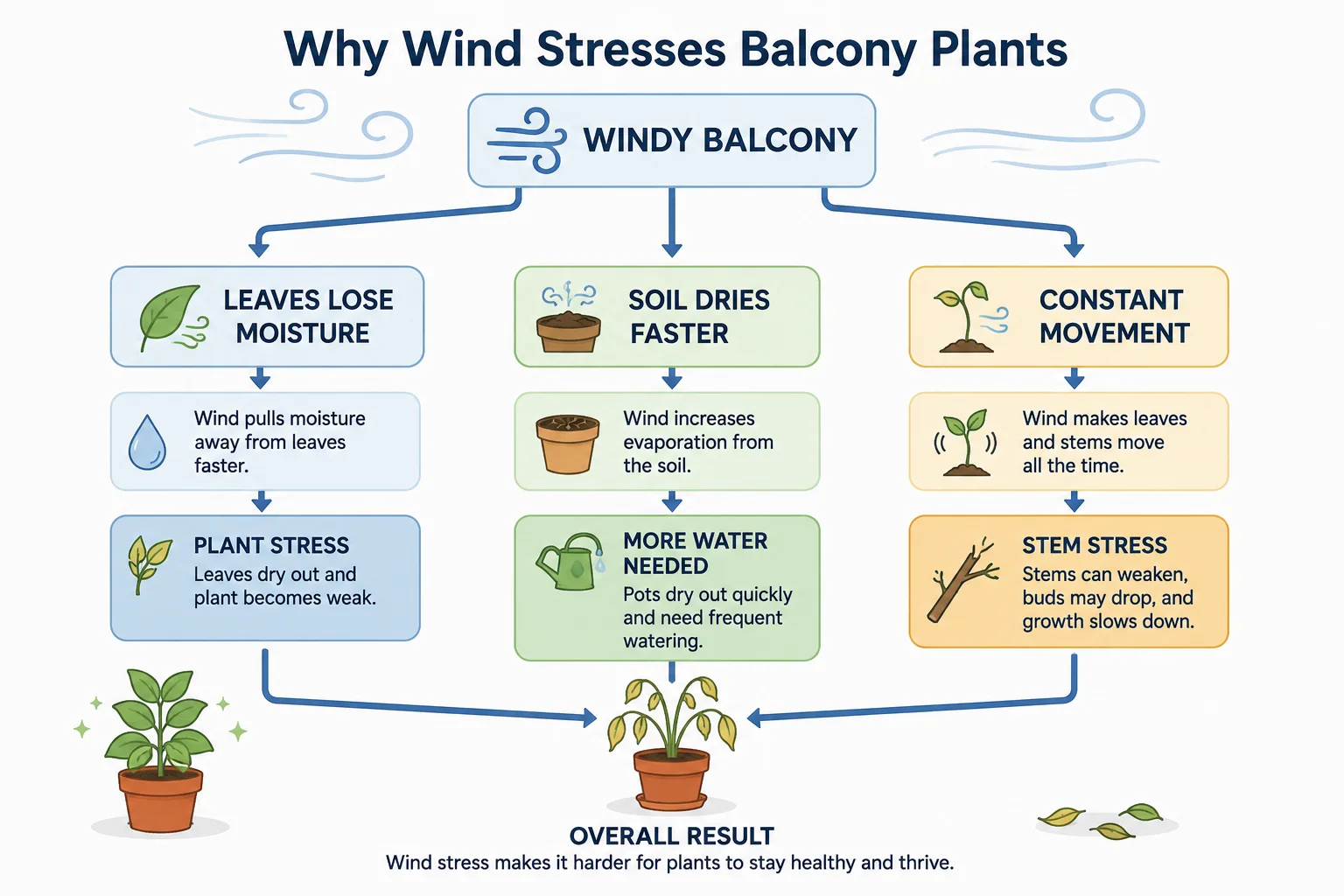
Wind affects balcony plants in more ways than people first notice. The obvious part is movement. Leaves shake, stems bend, and flowers can look unsettled. But the bigger problem is often moisture loss.
Constant airflow pulls moisture from leaves and soil. Even on a mild day, a windy balcony can make plants behave as if the weather is hotter or drier than it really is. This is one reason pots on exposed balconies often dry faster than expected.
Balconies can also create wind tunnels. Surrounding buildings, open railings, and height above the ground can funnel air through a small space. A breeze that feels pleasant to people may feel stressful to plants sitting in the same airflow for many hours.
Container plants have another limit. Their roots can only use the water stored inside the pot. Once that small amount of soil dries out, the plant has fewer reserves than it would have in the ground.
What Most Gardening Advice Misses
Many plant guides talk about sun, soil, and watering, but they often treat wind as a small detail. In a ground-level garden, that may be fine because fences, shrubs, garden beds, and nearby structures naturally soften the wind.
Balconies are different. Some balconies receive regular airflow across the same few pots every day. A plant that performs well in a protected garden bed may struggle simply because its leaves are losing moisture faster than its roots can replace it.
This is why a windy balcony can feel frustrating. The gardener may be watering, feeding, and caring for the plant properly, but the plant may still be poorly matched to the space.
Once wind is treated as part of the balcony microclimate, plant choice becomes easier. The goal is not to find a perfect plant. It is to choose plants with traits that naturally handle exposure.
Best Wind-Tolerant Balcony Plants Comparison
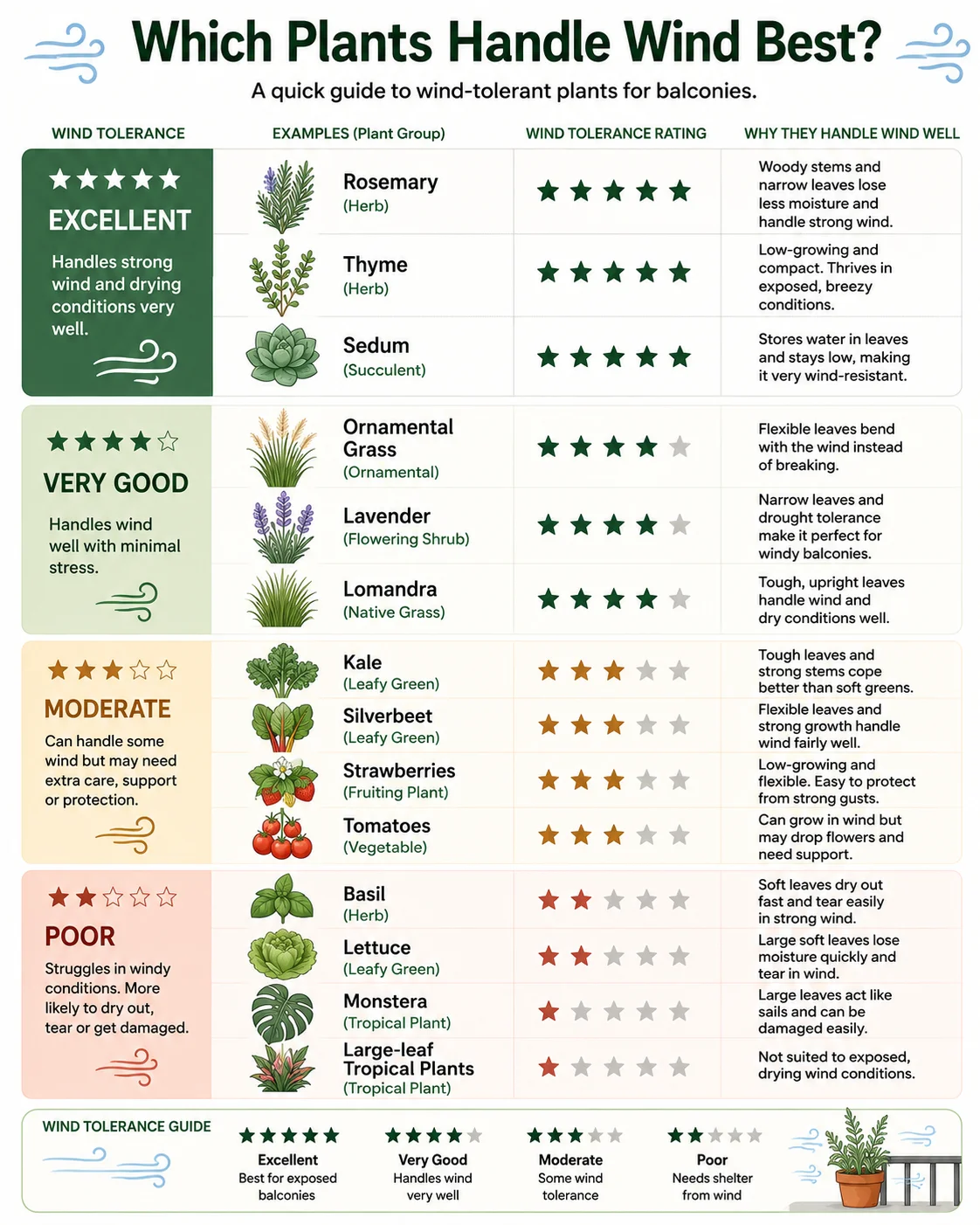
The best plants for a windy balcony usually have smaller leaves, flexible growth, tougher stems, or the ability to handle dry conditions. The table below gives a simple comparison of reliable plant choices for exposed apartment balconies.
| Plant | Wind Tolerance | Water Needs | Why It Works on Windy Balconies |
|---|---|---|---|
| Rosemary | Excellent | Low | Woody stems and narrow leaves help it cope with airflow and dry conditions. |
| Thyme | Excellent | Low | Small leaves and compact growth make it reliable in exposed pots. |
| Sedum | Excellent | Very low | Stores water in its leaves and stays low rather than top-heavy. |
| Lavender | Very good | Low | Narrow leaves and drought tolerance suit bright, breezy balconies. |
| Sage | Very good | Low to moderate | Tough leaves and steady growth help it manage exposed conditions. |
| Ornamental grasses | Very good | Moderate | Flexible blades bend with the wind instead of resisting it. |
| Coastal or native plants | Good to excellent | Varies | Many are naturally adapted to exposure, dry air, and changing weather. |
What Traits Make a Plant Wind-Tolerant?
Instead of only memorising plant names, it helps to understand the traits that make some plants cope better in windy balcony conditions. This makes it easier to judge new plants at the nursery or compare choices later.
- Small or narrow leaves that lose moisture more slowly.
- Flexible stems that bend instead of snapping.
- Compact growth that does not catch the wind too strongly.
- Drought tolerance that helps the plant cope with drying air.
- Tough foliage that does not tear easily.
- A low or balanced shape that stays stable in containers.
These traits matter more than whether a plant is a herb, flower, succulent, native plant, vegetable, or fruiting plant. Windy balconies favour structure and resilience over softness and fast growth.
Best Plants for a Windy Balcony
Rosemary and Thyme
Rosemary and thyme are two of the most dependable choices for windy balconies. Their smaller leaves lose less moisture than broad, soft leaves, and their woody or compact growth handles movement better than delicate stems.
Rosemary is especially useful on balconies that receive both wind and sun. It does not enjoy sitting in constantly wet soil, but it usually handles dry, exposed conditions better than many softer herbs. If your balcony is also hot and west-facing, this guide on rosemary care for hot west-facing balconies may help explain the extra heat side of the problem.
Thyme is useful because it stays low and compact. It does not catch the wind as strongly as taller plants, and it often remains more stable in pots.
Lavender
Lavender naturally suits open, bright, airy places. Its narrow leaves help reduce moisture loss, and its structure usually handles breezy conditions better than many soft flowering plants.
On a windy balcony, lavender often performs best when the pot drains well and the plant receives enough light. It may struggle in deep shade or constantly wet soil, but it can be a strong choice for exposed sunny balconies.
Sedum and Other Succulents
Sedum and many compact succulents are useful because they store water inside their leaves. This gives them an advantage when wind dries the soil surface and pulls moisture from the plant.
Their low growth habit also helps. A compact succulent is less likely to behave like a sail in strong gusts compared with taller, softer plants. For broader succulent options, this article on what succulents can stay outside on a balcony may be a useful next step.
Ornamental Grasses
Ornamental grasses work well because they are designed to move. Instead of fighting the wind, they bend with it. This flexibility helps them avoid the tearing and snapping that can happen with more rigid plants.
They can also make a windy balcony feel more natural because their movement becomes part of the space rather than a sign that something is wrong.
Native and Coastal Plants
Plants that naturally grow in exposed places are often better suited to windy balconies. Some native plants and coastal plants have already adapted to airflow, dry conditions, and changing weather.
Lomandra, dianella, coastal rosemary, and some hardy coastal daisies are examples that may suit exposed balconies, depending on pot size, light, and local climate. These plants are not all the same, but they often share useful traits such as tough foliage, flexible growth, or tolerance of dry air.
For balconies near the coast, wind may also come with salt exposure. In that case, this guide on plants for salty coastal balconies may help you compare plants that handle even tougher conditions.
Can Vegetables and Fruit Grow on a Windy Balcony?
Some vegetables and fruiting plants can grow on a windy balcony, but they are usually not the easiest or most reliable choices. Many edible plants have soft leaves, high water needs, or tall growth that catches the wind. This means they may need more support and shelter than herbs, succulents, grasses, or tough native plants.
Leafy greens are mixed. Lettuce, spinach, and bok choy often struggle because their leaves are soft and lose moisture quickly. Kale and silverbeet are usually more tolerant because their leaves and stems are tougher. They may still need steady moisture, but they often recover better from breezy conditions than softer greens.
Tomatoes can grow on windy balconies, but they are not always ideal for very exposed spaces. Strong wind can dry the pot quickly, shake flowers, and place pressure on stems. A sheltered corner, heavier pot, and steady support usually make them more realistic. If your balcony is small, this guide on growing tomatoes on a tiny balcony may help you decide whether tomatoes suit your space.
Strawberries can be a more realistic fruiting option because they grow low and are easier to protect. They may still dry out in wind, especially in narrow planters, but their low growth means they do not catch gusts as strongly as tall vegetables.
In simple terms, vegetables and fruit can work on some windy balconies, but they usually need more thought. For the easiest starting point, tough herbs, succulents, ornamental grasses, and hardy native or coastal plants are still the stronger choices.
Which Plants Often Struggle on Windy Balconies?
Plants with large, soft leaves often struggle in constant airflow. Their leaves lose moisture quickly and can tear more easily during strong gusts. This does not mean they can never grow on a balcony, but they usually need more shelter than tougher plants.
Basil is a common example. Many people want to grow basil on balconies, but windy conditions can make it difficult. The leaves are soft, the stems are tender, and the plant can dry out quickly when airflow is constant. This is explained more deeply in why basil dies on windy balconies.
Very tall or top-heavy plants can also be more difficult because wind places more pressure on the stems and container. A plant may be healthy, but if the pot is light or the plant catches too much wind, the whole setup can become unstable.
If tipping pots are part of the problem, this guide on protecting balcony pots from strong winds may help with the container side of the issue.
Wind Combined With Heat Creates a Bigger Challenge
Wind alone is not always the full problem. On many Australian balconies, wind combines with strong sun, reflected heat, concrete floors, glass doors, and warm walls. This can make plants dry out much faster than expected.
A plant that handles wind in cooler weather may still struggle when summer heat arrives. Likewise, a plant that tolerates heat may decline if wind keeps pulling moisture from its leaves and potting mix.
This is why many good windy-balcony plants overlap with plants used in hot, dry balcony conditions. If your balcony gets both strong airflow and heat, this article on drought-tolerant plants for hot balconies may help you choose plants that handle both problems at once.
Wind can also explain why some plants seem to dry out very quickly, even after watering. If that sounds familiar, this guide on why balcony plants dry out overnight may help connect the symptoms to the conditions.
Practical Insights for Windy Balconies
Windy balconies become easier to understand when plant choice, pot stability, and moisture loss are all considered together.
- Compact plants usually cope better than tall, top-heavy plants.
- Small leaves often lose less moisture than large, soft leaves.
- Flexible stems usually handle movement better than brittle stems.
- Drought-tolerant plants often adjust better to drying airflow.
- Heavier containers help reduce movement and tipping.
- Plants near railings may face more wind than plants near a back wall.
These are not strict rules, but they help explain why some plants keep looking healthy while others struggle in the same balcony space.
Common Misunderstandings About Windy Balconies
Most windy-balcony problems come from mismatched expectations rather than poor care. A plant can be healthy and still be unsuitable for constant airflow.
- A healthy nursery plant may not suit an exposed balcony.
- More watering does not always fix wind stress.
- Large leaves are not always a sign of toughness.
- Fast-growing plants are not always the most resilient.
- A sheltered balcony and an open balcony can behave very differently.
- Wind can dry plants even when the weather does not feel hot.
Once these differences are understood, plant choice becomes less frustrating. The question becomes less about which plant looks best at the shop and more about which plant suits the balcony’s real conditions.
Local Context: Windy Balconies in Australia
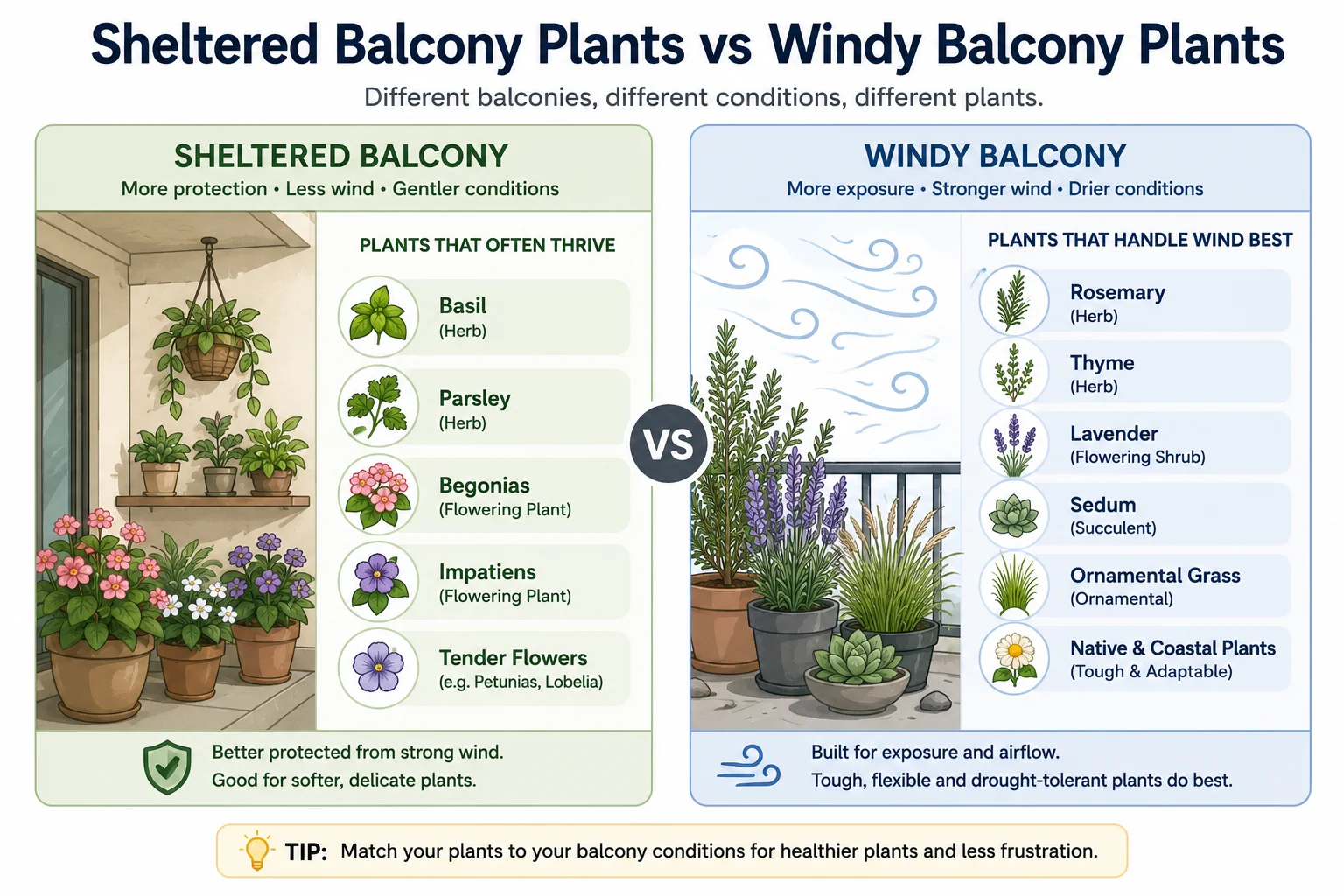
In Australia, windy balconies often deal with more than airflow alone. Heat, strong sun, reflected light, and dry periods can all increase plant stress. Coastal balconies may also experience salt exposure, while high-rise balconies can receive stronger and more constant wind than lower-level spaces.
Balconies above the fifth or sixth floor may feel especially exposed because there are fewer ground-level structures slowing the air down. Wind can also behave differently between buildings, so two apartments in the same suburb may still have very different balcony conditions.
Seasonal changes also matter. A plant may look comfortable in cooler months, then struggle when summer heat and wind arrive together. This does not always mean the plant has suddenly become unhealthy. It may simply be facing a stronger version of the same balcony conditions.
Balcony Haven Note: I noticed that wind is one of the easiest balcony conditions to underestimate. A balcony may look suitable for growing plants, but constant airflow can make soil dry faster, increase plant stress, and change which plants perform well. Paying attention to wind exposure often helps explain why some plants thrive while others struggle.
Frequently Asked Questions
What plants are good for a windy balcony in Australia?
Good plants for windy balconies in Australia include rosemary, thyme, lavender, sedum, sage, ornamental grasses, lomandra, dianella, and some coastal plants. These plants usually handle airflow, drying conditions, and exposed balcony spaces better than soft, delicate plants.
Can tomatoes grow on a windy balcony?
Tomatoes can grow on a windy balcony, but success depends on the level of exposure. Strong, constant wind may dry the pot quickly and place stress on stems, flowers, and fruit. A more sheltered position usually gives tomatoes a better chance.
Are succulents good for windy balconies?
Many succulents are good for windy balconies because they store water in their leaves and often stay compact. Sedum and other hardy succulents can cope well with drying airflow when the pot drains properly.
Why do balcony plants dry out faster in windy weather?
Balcony plants dry out faster in windy weather because airflow removes moisture from both leaves and soil. Even when the weather feels mild, constant wind can make containers lose water more quickly than expected.
Are windy balconies bad for herbs?
Windy balconies are not bad for all herbs. Rosemary, thyme, sage, and lavender often cope well because they have smaller leaves and tougher growth habits. Softer herbs such as basil may struggle more in exposed spaces.
Can leafy greens grow on a windy balcony?
Some leafy greens can grow on a windy balcony, but tougher greens usually perform better. Kale and silverbeet are often more realistic than lettuce or spinach because their leaves and stems cope better with movement and drying air.
Can wind damage balcony vegetables?
Wind can damage some balcony vegetables, especially tall plants or large-leaf crops. It may dry leaves, loosen stems, shake flowers, or make pots unstable. Compact vegetables and sheltered placement are usually more reliable in exposed balcony conditions.
Final Thoughts
A windy balcony can feel difficult at first, but it is often more manageable once the conditions are understood. Wind changes how plants lose moisture, how pots behave, and which plant traits matter most.
The best plants for a windy balcony are usually not the softest or most delicate plants. They are the plants that naturally cope with exposure, movement, and drying air. Rosemary, thyme, lavender, sedum, ornamental grasses, and some native or coastal plants are strong examples.
If your balcony is windy but also shaded or low in direct sunlight, you may find this guide to gardening on balconies with no direct sun helpful because light and wind together can change what plants are realistic.
Over time, the plants that stay upright, keep healthy leaves, and recover after gusty days often reveal what your balcony can support. When plant choice matches the real conditions, a windy balcony can become a stable and enjoyable growing space.

Leave a Reply