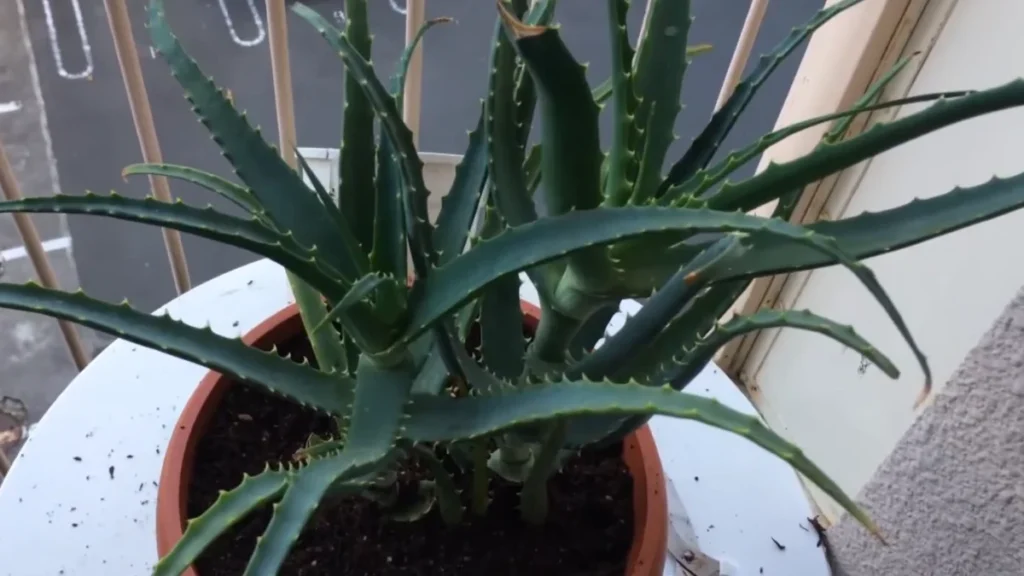
Drought-tolerant plants for hot balconies can make apartment gardening feel much less frustrating. Hot balconies dry pots quickly, reflect heat from walls and railings, and often expose plants to sun and wind at the same time.
Drought-tolerant plants for hot balconies include succulents, rosemary, thyme, sage, lavender, portulaca, gazania, lantana, westringia, grevillea, and dwarf olive plants. These plants usually cope better because they store moisture, lose water slowly, or naturally grow in dry, sunny conditions.
Many balcony gardeners do not lose plants because they forget to care for them. They lose plants because the balcony is harsher than the plant can handle. A plant that looks healthy in a nursery or garden bed may struggle badly once it sits in a hot container beside concrete, glass, or metal railings.
This article explains which drought-tolerant plants are most realistic for hot balconies, why some balconies are hotter than others, what most advice misses, and how to choose plants that can survive heat without constant stress.
Why Hot Balconies Are Hard on Plants
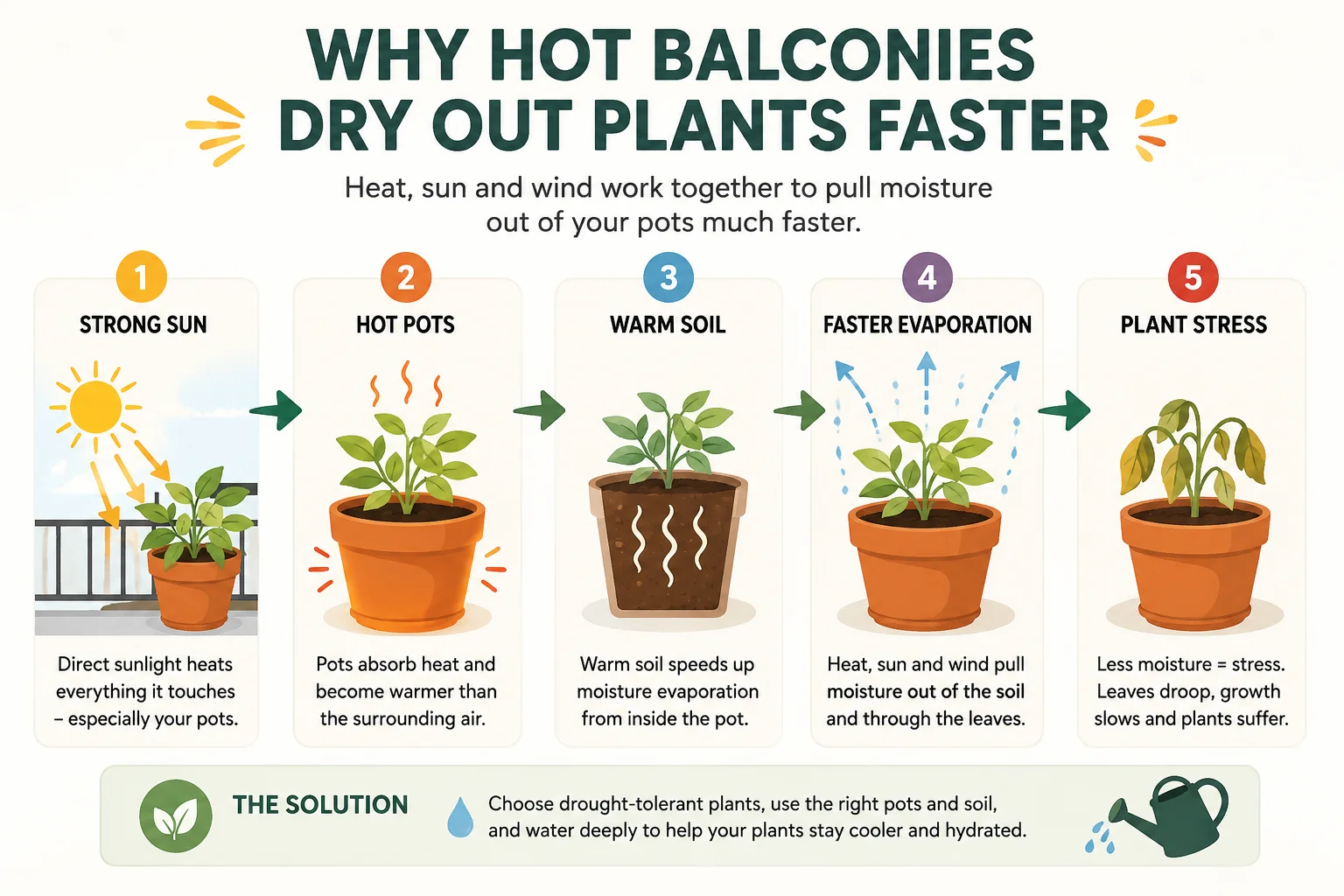
Hot balconies behave differently from ground gardens. A garden bed has more soil, deeper roots, and cooler surrounding earth. A balcony container has limited soil, exposed pot walls, and very little protection from heat.
When sunlight hits a pot for hours, the pot itself can warm up. The soil inside warms too, and moisture leaves the container faster. If wind is also moving through the balcony, the plant can lose water from its leaves while the soil is drying from below.
This is why some plants wilt even when they were watered earlier in the day. The issue is not always poor care. Often, the balcony is creating a faster drying cycle than the plant can handle.
If this problem sounds familiar, the guide on Balcony Soil Drying Out Too Fast (What Actually Helps) explains this drying pattern in more detail.
Why Drought-Tolerant Plants Survive Better
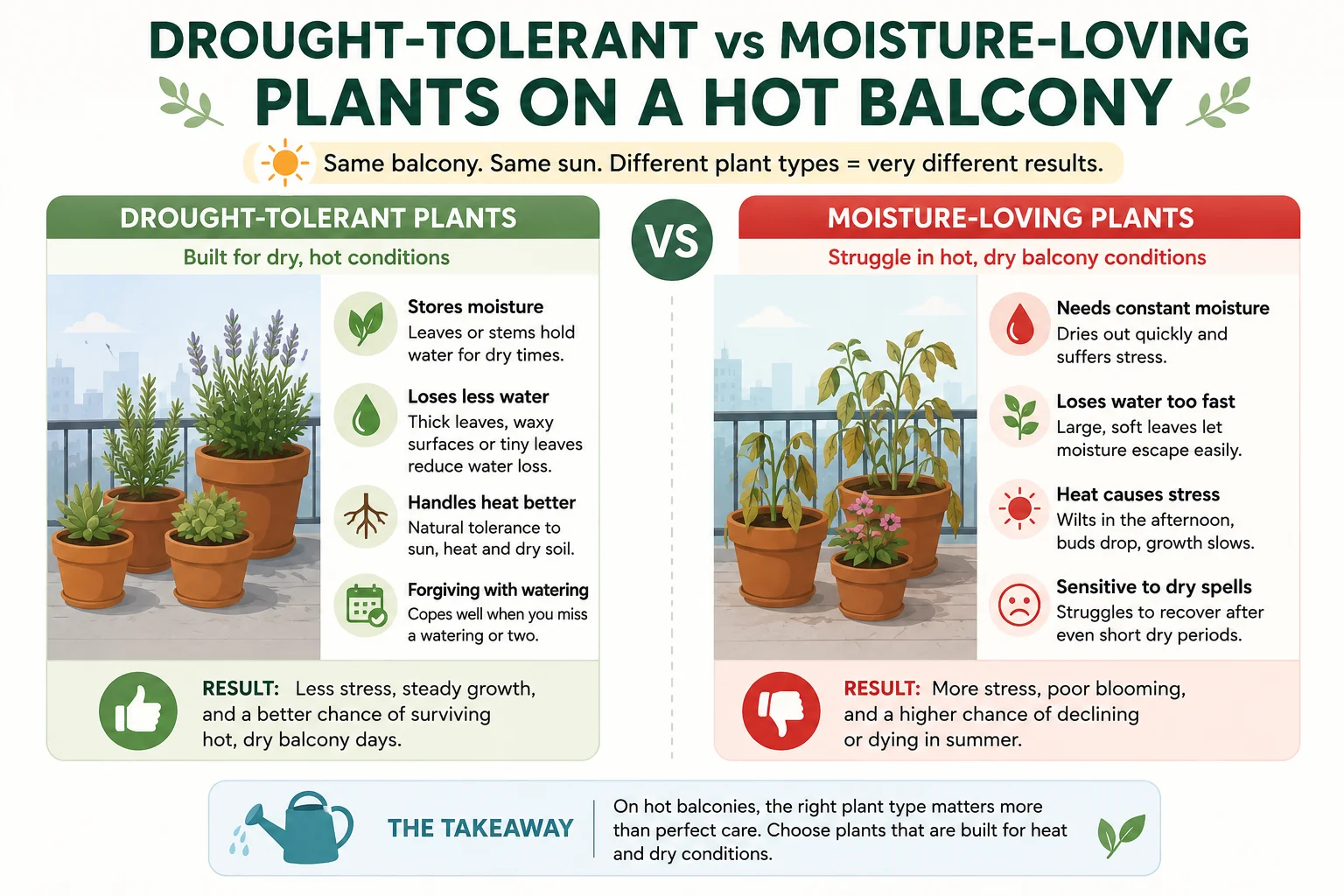
Drought-tolerant plants survive better on hot balconies because they are built to handle dry periods. Some store water in thick leaves. Some have narrow leaves that lose less moisture. Others grow slowly, so they do not demand as much water every day.
This does not mean they can be ignored. Drought-tolerant plants still need water, especially when newly planted or during heatwaves. The difference is that they usually recover better from missed watering and do not collapse as quickly when the soil dries between watering.
Plants from Mediterranean, coastal, rocky, or dry climates often suit hot balconies because they already understand stress. They are not expecting soft garden soil, gentle shade, and constant moisture.
Quick Comparison of Drought-Tolerant Balcony Plants
The table below compares common drought-tolerant plants that can suit hot balcony conditions. The best choice still depends on your balcony size, wind exposure, pot size, and how much direct sun the space receives.
| Plant | Heat Tolerance | Water Needs | Best Balcony Use | Small Pot Friendly? |
|---|---|---|---|---|
| Aloe | Excellent | Low | Sunny corners and small pots | Yes |
| Jade Plant | Excellent | Low | Low-care container display | Yes |
| Echeveria | High | Low | Small decorative pots | Yes |
| Rosemary | Excellent | Low to moderate | Edible herb and structure plant | Yes, if pruned |
| Thyme | Excellent | Low | Small herb pots and edges | Yes |
| Sage | High | Low to moderate | Sunny herb containers | Yes |
| Lavender | High | Low to moderate | Fragrant feature plant | Medium pot preferred |
| Portulaca | Excellent | Low | Colour in hot sunny pots | Yes |
| Gazania | Excellent | Low | Bright flowers in full sun | Yes |
| Lantana | Excellent | Low to moderate | Colour and pollinator interest | Medium pot preferred |
| Westringia | Excellent | Low once established | Compact shrub for exposed balconies | No |
| Dwarf Olive | Excellent | Low once established | Large feature pot | No |
For a broader list of sun-friendly plants, the guide on Balcony Plants for Full Sun can help you compare other options that cope with bright balcony conditions.
Best Drought-Tolerant Plants for Hot Balconies
The best drought-tolerant plants for hot balconies are not just plants that survive without much water. They also need to handle container life, reflected heat, and occasional drying between watering.
This is where plant type matters. Succulents, hardy herbs, tough flowering plants, and compact dry-climate shrubs each solve the hot balcony problem in a slightly different way.
Succulents and Water-Storing Plants
Succulents are often the first plants people think of for hot balconies, and they are popular for a good reason. Their thick leaves or stems store moisture, which gives them a buffer during dry periods.
Aloe, jade plants, echeveria, sedum, and crassula varieties can all work well in sunny balcony spaces. They are especially useful for small balconies because many stay compact and do not need deep containers.
The main risk with succulents is not usually heat. It is wet soil that stays soggy for too long. On a hot balcony, they usually prefer free-draining soil and pots that allow water to move through easily.
If you are interested in this group, the article on What Succulents Can Stay Outside on a Balcony? gives more detail about choosing outdoor balcony succulents.
Hardy Herbs for Hot Balconies
Some herbs are far tougher than they look. Rosemary, thyme, oregano, and sage are especially useful because they naturally come from sunny, dry conditions.
These herbs often dislike being kept constantly wet. In hot balcony pots, they usually prefer soil that dries slightly between watering. This makes them more realistic for busy apartment gardeners who cannot water several times a day.
Rosemary is one of the strongest choices for hot, bright balconies. It can handle sun, warmth, and occasional dry soil better than many leafy herbs. Thyme is another good choice for smaller pots because it stays compact and does not demand much space.
For very hot afternoon spaces, Rosemary Care for Hot West-Facing Balconies is a useful related guide because west-facing balconies often create the strongest heat stress.
Heat-Tolerant Flowering Plants
A hot balcony does not have to mean a balcony with no colour. Some flowering plants are much more heat-tolerant than typical soft bedding flowers.
Portulaca, gazania, vinca, and lantana are useful examples. These plants can cope with strong sun and drying soil better than many flowers that prefer cooler, moist conditions.
Portulaca is especially useful for small containers because it stays low, handles sun well, and brings bright colour without needing constant attention. Gazania is another strong option for sunny balconies because it naturally suits dry, open conditions.
Lantana can work well in larger pots, but it needs enough room and regular shaping so it does not overwhelm a small balcony.
Compact Shrubs for Larger Hot Balconies
Some hot balconies have enough space for compact shrubs. These can help create structure, shade the soil surface, and make the balcony feel more settled.
Lavender, westringia, selected grevillea varieties, and dwarf olive plants can suit hot balconies when the container is large enough. These plants usually need more space than small herbs or succulents, but they can become reliable long-term balcony plants.
The key is matching the shrub to the container size. A plant may be drought-tolerant in the ground but still struggle in a tiny pot because the root zone overheats too quickly.
Not All Hot Balconies Are the Same
One reason hot balcony advice can feel confusing is that not all hot balconies behave the same way. A balcony can be hot because of long sun, strong afternoon heat, reflected light, poor airflow, dry wind, or heat stored in building materials.
A west-facing balcony often feels harsh because the strongest sun arrives later in the day, when the air is already warm. A north-facing balcony may receive longer sun exposure across the day. A glass-railed balcony can reflect extra light and heat back onto pots.
Concrete balconies can stay warm even after sunset because the surface holds heat. High-rise balconies may combine direct sun with stronger wind, which dries soil and leaves faster.
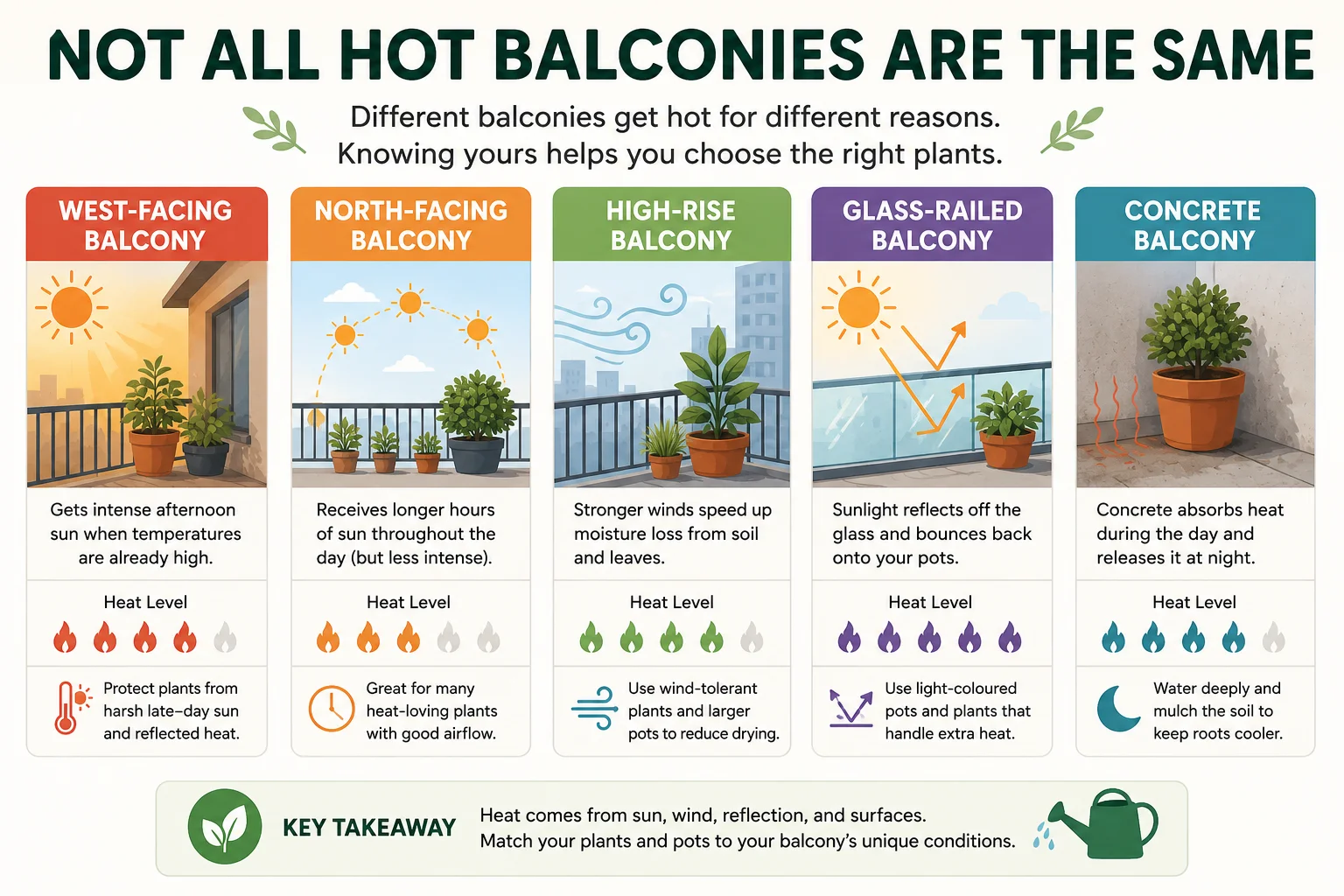
This is why one gardener may succeed with lavender while another struggles with the same plant. The plant name matters, but the balcony microclimate matters too.
What Most Gardening Advice Misses
Most general gardening advice treats sun as the main issue. If a plant likes full sun, it is often described as suitable for any sunny space. But balcony heat is not only about sunlight.
A balcony plant also deals with a smaller root area, warmer pot walls, faster evaporation, reflected heat, and sometimes stronger wind between buildings. These conditions can make a full-sun balcony much harsher than a sunny garden bed.
This is why some full-sun plants still struggle on balconies. They may like sun, but they may not like being trapped in a small, hot container with dry airflow around them.
How to Help Drought-Tolerant Plants Survive Longer
Choosing the right plant is the main step, but the container setup also affects how well drought-tolerant plants cope. Even tough plants can struggle if the pot is too small, too dark, too hot, or filled with soil that behaves poorly.
- Use medium or larger pots where space allows, because they dry more slowly.
- Choose lighter-coloured pots if the balcony receives strong sun.
- Use free-draining potting mix so roots are not trapped in wet soil.
- Water deeply when watering, instead of only wetting the surface.
- Group plants where possible to create small pockets of shade and humidity.
- Place the toughest plants in the hottest spots and gentler plants in protected areas.
Watering still matters, even with low-water plants. The guide on Best Balcony Watering Methods for Beginners may help if your balcony plants dry unevenly or you are unsure whether to water lightly or deeply.
Pot heat also matters. If containers feel very warm to the touch, the article on Overheating Balcony Pots in Summer explains why pots can become a hidden stress point for roots.
Common Mistakes With Drought-Tolerant Plants
Drought-tolerant plants are forgiving, but they are not indestructible. Many problems come from misunderstanding what “drought-tolerant” really means.
- Assuming drought-tolerant means the plant does not need watering.
- Using very small pots that heat and dry too quickly.
- Keeping Mediterranean herbs constantly wet.
- Planting succulents in heavy soil that holds too much moisture.
- Putting newly bought plants straight into harsh afternoon sun.
- Ignoring wind because the plant is labelled as full-sun tolerant.
Another common issue is shallow watering. The top of the soil may look wet, but the deeper root area may remain dry. This can make a plant look stressed even when it was recently watered.
Some hot balconies also keep losing moisture overnight, especially when the pot and surrounding surfaces stay warm after sunset. If that happens, Why Are My Balcony Plants Drying Out Overnight? is closely related to this topic.
Hot Balcony Gardening in Australian Conditions
Australian balconies can become difficult in summer because the heat may last for several days, not just a few hours. Warm nights can reduce the time plants have to recover before the next hot day begins.
In apartments, hard surfaces can hold heat and continue warming the air around pots after direct sun has moved away. This is why some balcony plants still look tired in the evening, even after the sun is no longer hitting them directly.
Wind can also become a major factor. If your balcony is both hot and exposed, the guide on What Are the Best Plants for a Windy Balcony? may help you think about plants that handle both heat and airflow.
Balcony Haven Note: I have noticed that hot balconies often become easier once the plant choice matches the space instead of fighting it. Some balconies need plants that are not only sun-loving, but also comfortable with dry pots, reflected heat, and uneven watering. Results can still vary from one apartment to another, especially where wind, glass, or concrete changes the heat around the plants.
Frequently Asked Questions
What are the best drought-tolerant plants for hot balconies?
The best drought-tolerant plants for hot balconies include aloe, jade plants, rosemary, thyme, sage, lavender, portulaca, gazania, lantana, westringia, and dwarf olive plants. These plants usually cope better with heat, drying soil, and strong sunlight than moisture-loving plants.
Do drought-tolerant plants still need watering?
Yes, drought-tolerant plants still need watering. They can handle dry periods better than many plants, but they still need moisture to grow, especially during heatwaves or when they are newly planted.
Are succulents better than herbs for hot balconies?
Succulents usually handle longer dry periods, while hardy herbs such as rosemary, thyme, oregano, and sage offer edible use as well as heat tolerance. The better choice depends on whether you want low-care display plants or useful kitchen herbs.
What flowering plants survive on hot balconies?
Portulaca, gazania, vinca, and lantana are some of the better flowering choices for hot balconies. They usually cope better with heat and sun than soft flowers that need steady moisture.
Can drought-tolerant plants survive full sun all day?
Many drought-tolerant plants can handle full sun once established, but young plants may still need time to adjust. Full sun on a balcony can be harsher than full sun in a garden because pots, walls, and railings can increase heat around the plant.
Why do drought-tolerant plants still fail on hot balconies?
Drought-tolerant plants can still fail if the pot is too small, the soil stays too wet, the roots overheat, or the plant is exposed to sudden harsh sun before it has adjusted. Heat tolerance helps, but container conditions still matter.
Which drought-tolerant plant is easiest for beginners?
Aloe and rosemary are often among the easiest choices because they handle heat, sun, and occasional watering mistakes better than many other balcony plants.
Final Thoughts
Drought-tolerant plants for hot balconies work best because they match the reality of apartment growing. They are more comfortable with heat, drying soil, and bright exposure than plants that prefer cooler, moister garden conditions.
The best results usually come from combining the right plant with the right pot size, drainage, watering pattern, and placement. A plant does not need to be perfect to survive a hot balcony, but it does need to suit the conditions it is living in.
Once you understand how your balcony holds heat, loses moisture, and exposes plants to sun or wind, plant choice becomes much clearer. With the right drought-tolerant plants, even a very hot balcony can become a calmer and more reliable growing space.
Leave a Reply