Learning how to reuse potting soil for balcony plants can save money, reduce waste, and make balcony gardening feel more manageable. But old potting mix is not always ready to use again straight from the pot. After one growing season, it may be dry, compacted, low in nutrients, full of old roots, or slow to drain.
Old potting mix can often be reused for balcony plants if the previous plant was healthy, the mix does not smell bad, and water still drains through it reasonably well. The safest approach is to remove old roots, check the texture, mix in fresh potting mix or compost, and only reuse it for suitable plants. If the old soil had root rot, severe pests, or disease, it is usually better to replace it.
This matters more on balconies than many people realise. Balcony containers dry out faster in wind, heat up against walls and concrete, and have less natural soil life than garden beds. So reused potting mix needs a little help before it can support healthy roots again.
This guide explains when old potting soil is worth keeping, when it should be replaced, how to refresh it in a small balcony space, and how to avoid the common mistakes that cause tired soil to damage new plants.
Why Reusing Potting Soil Is Different on a Balcony
In a backyard garden, soil has more help. Rain, worms, insects, fallen leaves, and natural soil life slowly improve the ground over time. Balcony pots are different. They are small, closed growing spaces with limited soil volume.
Every time you water a balcony pot, some nutrients wash out through the drainage holes. Every hot day dries the top layer. Every strong wind pulls moisture from the container. Over time, the potting mix becomes less airy and less useful for new roots.
Balcony gardeners also have less space for messy soil jobs. You may not have a garden bed, compost bay, or large outdoor work area. This means any method for reusing soil needs to be simple, clean, and realistic for apartment living.
Weight is another small but important issue. Keeping and refreshing old mix can reduce how many heavy bags of potting mix you need to carry upstairs or through an apartment building. But reused soil still needs to drain well, especially if your balcony already has water limits or neighbours below.
When Can You Reuse Old Potting Soil?
You can usually reuse old potting soil when the previous plant was healthy and the mix still looks and smells normal. It may look tired, but that does not always mean it is useless.
Old potting mix is often worth keeping if it came from finished herbs, seasonal flowers, healthy leafy greens, or vegetables that simply reached the end of their growing season.
| Condition of Old Potting Mix | What It Usually Means | Best Choice |
|---|---|---|
| Previous plant was healthy | The mix is less likely to carry serious problems. | Reuse after refreshing. |
| Soil feels loose and crumbly | The structure is still useful for roots. | Reuse with some fresh material. |
| Contains old fine roots | Normal after a growing season. | Remove larger roots and refresh. |
| Water drains through slowly but still moves | The mix may be starting to compact. | Refresh and improve drainage. |
| Soil is very dry on top | Common in balcony pots exposed to sun or wind. | Check texture before deciding. |
If the soil is only tired, dry, or low in nutrients, it can often be improved. If it is diseased, smelly, or badly infested, it is usually not worth the risk.
When Should You Replace Potting Soil Instead?
Some old potting mix should not be reused for new plants. This is especially true when the previous plant had serious root problems, pest issues, or disease.
For example, if the old plant had root rot, the mix may stay too wet and may carry problems into the next planting. If this has happened before, the guide on Root Rot in Small Balcony Pots can help you understand why wet, tired soil can become risky in containers.
| Problem Found | Reuse or Replace? | Why |
|---|---|---|
| Root rot | Replace | The mix may stay too wet and harm the next plant. |
| Strong sour or rotten smell | Replace | Healthy potting mix should not smell foul. |
| Heavy pest infestation | Replace | Pests may remain in the mix or around old roots. |
| Severe mould or fungus problem | Usually replace | Small pots can keep repeating the same issue. |
| Very hard, dense, and water-repelling soil | Refresh heavily or replace | It may no longer support good root growth. |
If you are unsure, it is often safer to use questionable old soil only in non-food ornamental pots, or replace it completely for vegetables and herbs.
How Potting Mix Changes Over Time in Balcony Pots
Fresh potting mix usually has air spaces between the particles. These small gaps help water move through the pot and allow roots to breathe. Over time, those spaces shrink.
On a balcony, this can happen faster because pots often sit in harsh conditions. A container near a hot wall may heat up every afternoon. A railing planter may dry out quickly in wind. A covered balcony may stay damp longer after watering.
As the mix breaks down, it may become finer, heavier, and slower to drain. This is one reason old potting soil may look normal but still perform poorly.
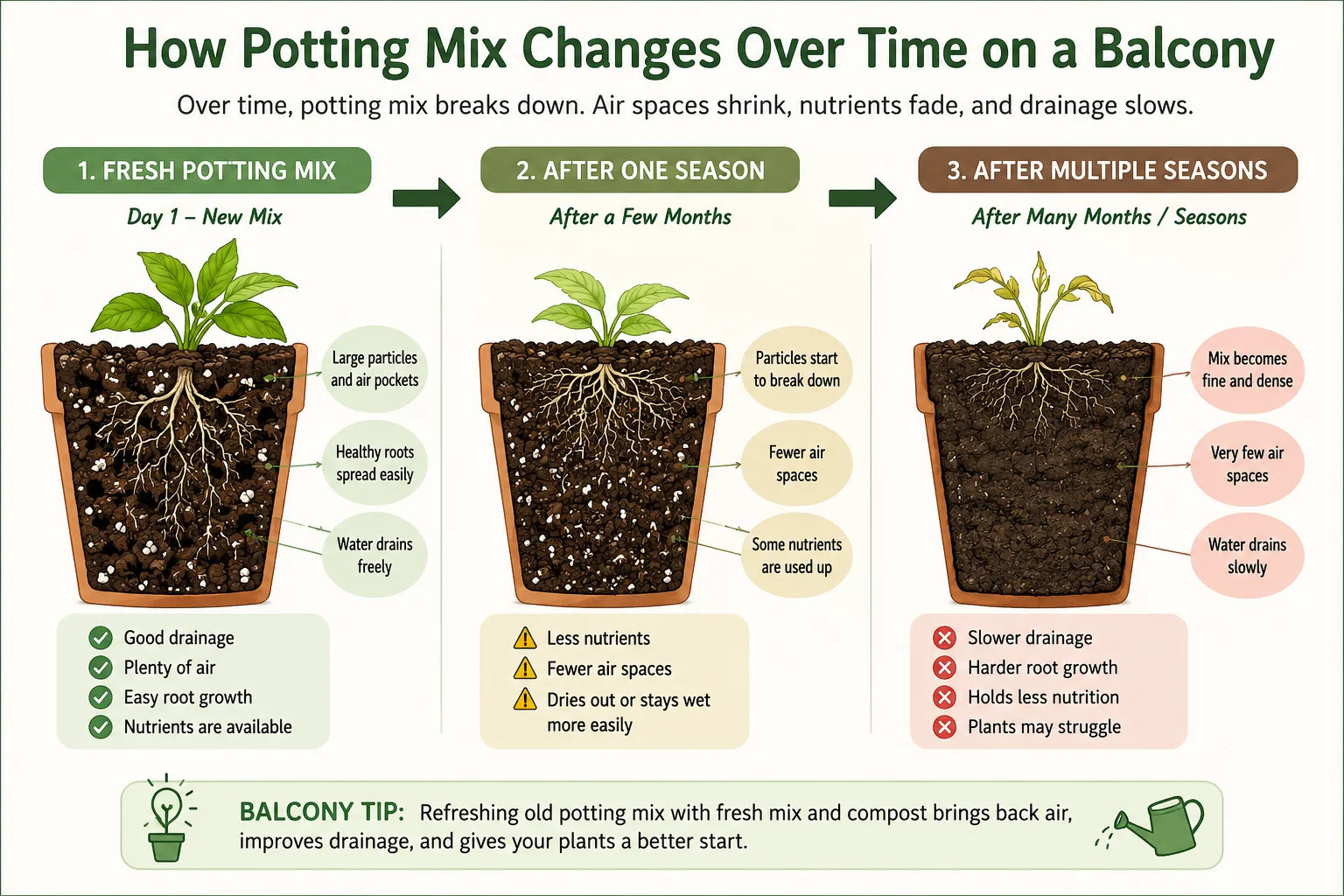
This diagram shows the journey from fresh, airy potting mix to older, compacted mix. It gives readers a clear reason why reused soil needs refreshing rather than being used again without checking.
If your balcony soil often turns hard or dense, you may also find Why Balcony Soil Becomes Hard and Compact Over Time? useful because it explains the compaction problem in more detail.
Step 1: Remove Old Roots and Plant Debris
Before you reuse potting soil, empty the container into a tub, tray, bucket, or large plastic storage box. This keeps the job tidy and stops soil spilling across the balcony floor.
Remove old stems, dead leaves, thick root balls, plant labels, sticks, and any large pieces of debris. You do not need to remove every tiny root, but large root masses should come out because they take up space and can stop new roots from spreading.
Small fine roots can break down over time, but too many old roots make the mix feel crowded. This is common in balcony pots because plants are growing in a limited amount of soil.
If the mix is hard and difficult to break apart, the article on How to Loosen Compacted Soil in Pots Naturally is a helpful next read.
Step 2: Check the Texture and Drainage
After removing old roots, check how the mix feels. Good reused potting mix should still crumble in your hand. It should not feel like sticky mud, heavy clay, or fine powder.
You can also do a simple water test. Put some of the old mix into a pot with drainage holes and water it slowly. If the water moves through at a normal pace, the mix may still be useful. If water sits on the surface for a long time, the mix needs more help or should be replaced.
Drainage matters because balcony pots do not have much room for error. If water stays trapped in a small container, roots can struggle quickly. If you often have drainage problems, Drainage Tips for Small Balcony Containers explains simple ways to reduce soggy soil in small pots.
Step 3: Refresh the Potting Mix Before Planting
This is the most important step. Old potting mix usually needs fresh material added before it can support new plants well.
A simple balcony-friendly mix is to combine old potting mix with fresh potting mix and a small amount of compost or worm castings. You do not need to make it complicated. The goal is to improve structure and add some nutrients back.
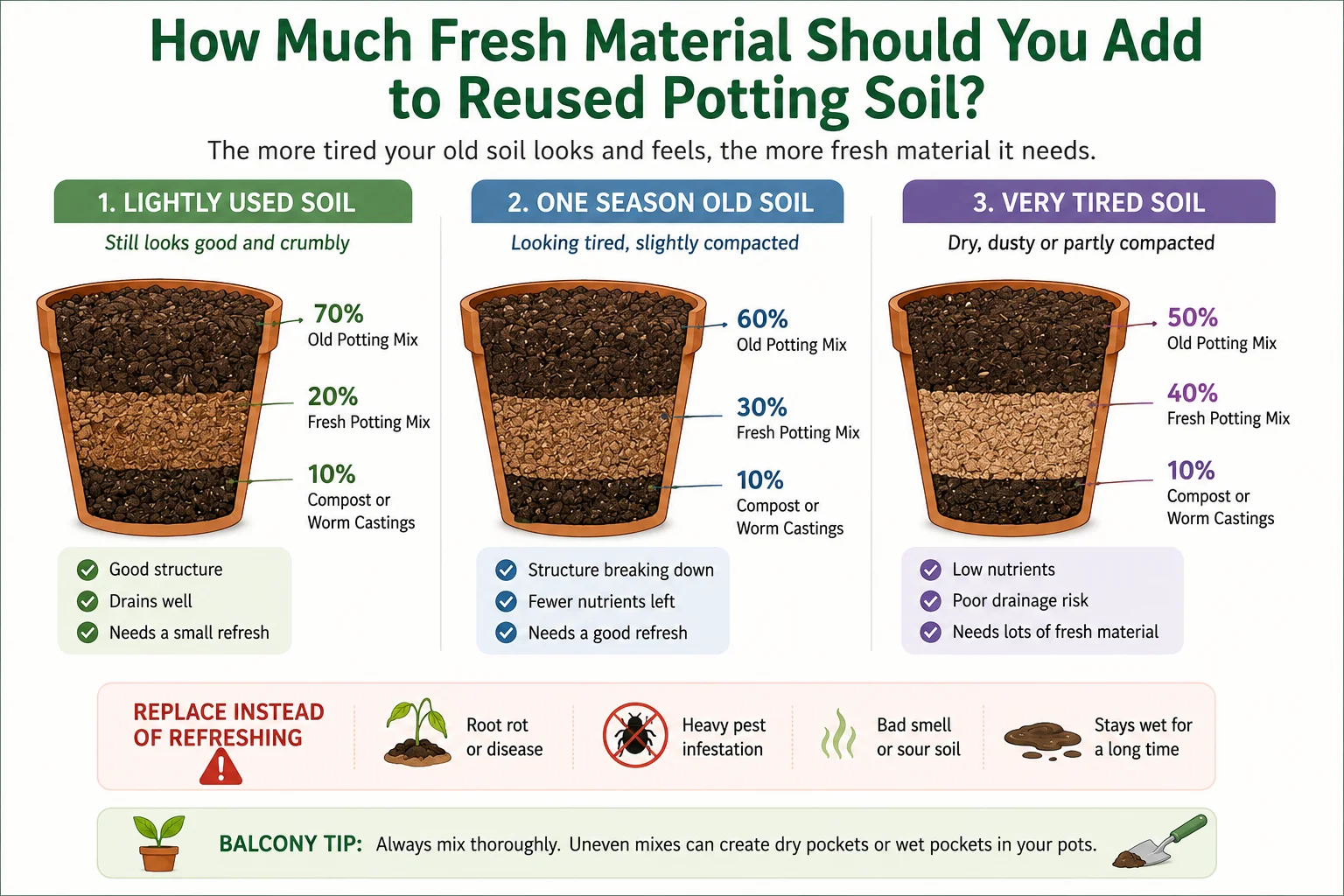
This diagram shows clear refresh ratios for different soil conditions. It gives readers something practical they can copy when standing in front of an old pot.
| Old Soil Condition | Old Potting Mix | Fresh Potting Mix | Compost or Worm Castings |
|---|---|---|---|
| Slightly used and still loose | About 70% | About 20% | About 10% |
| One season old and tired | About 50-60% | About 30-40% | About 10% |
| Dry, dusty, or partly compacted | About 40-50% | About 40-50% | About 10% |
| Very dense or poor draining | Use less or replace | Use mostly fresh mix | Add only if drainage is still good |
For herbs, refreshed potting mix can work well when it still drains properly. If you are growing herbs in containers, Best Soil Mix for Balcony Herb Gardens explains what makes herb soil different from heavy, wet container mixes.
Step 4: Match Reused Soil to the Right Plant
Reused potting soil is not equally suitable for every plant. Some plants are forgiving. Others need stronger, fresher mix to grow well.
Leafy greens, many herbs, and simple flowers can often grow well in refreshed potting mix. Heavy-feeding vegetables such as tomatoes, eggplants, cucumbers, and zucchini usually need more fresh potting mix and regular feeding.
This is because fruiting plants ask more from the soil. They need enough root space, steady moisture, and enough nutrients to support flowers and fruit. If reused soil is weak, they may grow leaves but struggle to produce well.
If you plan to grow tomatoes again, soil volume matters as much as soil quality. The guide on Best Pot Size for Balcony Tomatoes explains why small containers run out of moisture and nutrients faster.
How Much Money Can Reusing Potting Soil Save?
Reusing potting soil can save more than people expect, especially if you have several balcony pots. Even a small balcony can have five to ten containers once you add herbs, flowers, vegetables, and a few larger pots.
If every container is emptied and refilled with brand-new potting mix each season, the cost builds up quickly. It also means carrying more heavy bags through the shop, car park, lift, hallway, or stairs. For apartment gardeners, that effort matters.
Refreshing old potting mix does not mean you never buy new mix again. It means you use fresh material more carefully. Instead of replacing the whole pot, you may only need to replace part of it and improve the rest.
| Balcony Setup | If You Replace Everything | If You Refresh Old Mix |
|---|---|---|
| 2-3 small herb pots | Usually one small bag may be enough. | You may only need a small amount of fresh mix or compost. |
| 5-6 mixed containers | You may need several bags depending on pot size. | You can often stretch fresh mix across more pots. |
| Large tomato or vegetable pots | Can use a lot of potting mix quickly. | Better to refresh only healthy old mix and add fresh material where needed. |
The biggest saving is not just money. It is also less waste, less carrying, and fewer half-used bags sitting around a small balcony or laundry area.
How to Refresh Potting Soil in a Small Balcony Space
You do not need a large work area to refresh potting soil. A storage tub, old washing basket, deep tray, or large bucket can work well.
Place the old mix into the container, remove the big roots, then add the fresh material slowly. Mix by hand using gloves or with a small trowel. If dust rises, lightly mist the mix first so it is easier to handle.
Try not to do this on a windy day. Dry potting mix can blow across the balcony and into corners, drains, or nearby balconies. A calm morning or shaded afternoon is usually easier.
For renters, this method is also useful because it keeps the balcony clean and avoids staining floors. If you are working over tiles, concrete, or painted surfaces, put down an old sheet, cardboard, or mat first.
Practical Tips for Reusing Potting Mix
A few simple habits make reused potting soil more reliable in balcony containers.
- Reuse soil only from plants that were mostly healthy.
- Remove thick old roots before adding new plants.
- Always add some fresh material before replanting.
- Check drainage before planting expensive seedlings.
- Use more fresh mix for vegetables that produce fruit.
- Store unused potting mix in a covered tub or bag.
- Avoid leaving old soil sitting wet in closed containers.
These steps do not need to be perfect. The main idea is to avoid planting straight into exhausted, compacted, or risky soil.
Common Mistakes When Reusing Potting Soil
Most problems happen when old potting soil is reused without checking why the last plant struggled.
- Reusing soil from a plant that had root rot.
- Adding a new plant without removing old root balls.
- Using old mix alone without fresh potting mix or compost.
- Ignoring slow drainage because the soil looks dry on top.
- Using tired soil for heavy-feeding vegetables.
- Letting dry soil blow around the balcony while mixing.
The biggest mistake is assuming old soil is either completely good or completely bad. Often, it sits somewhere in the middle. It may not be good enough on its own, but it may still be useful after refreshing.
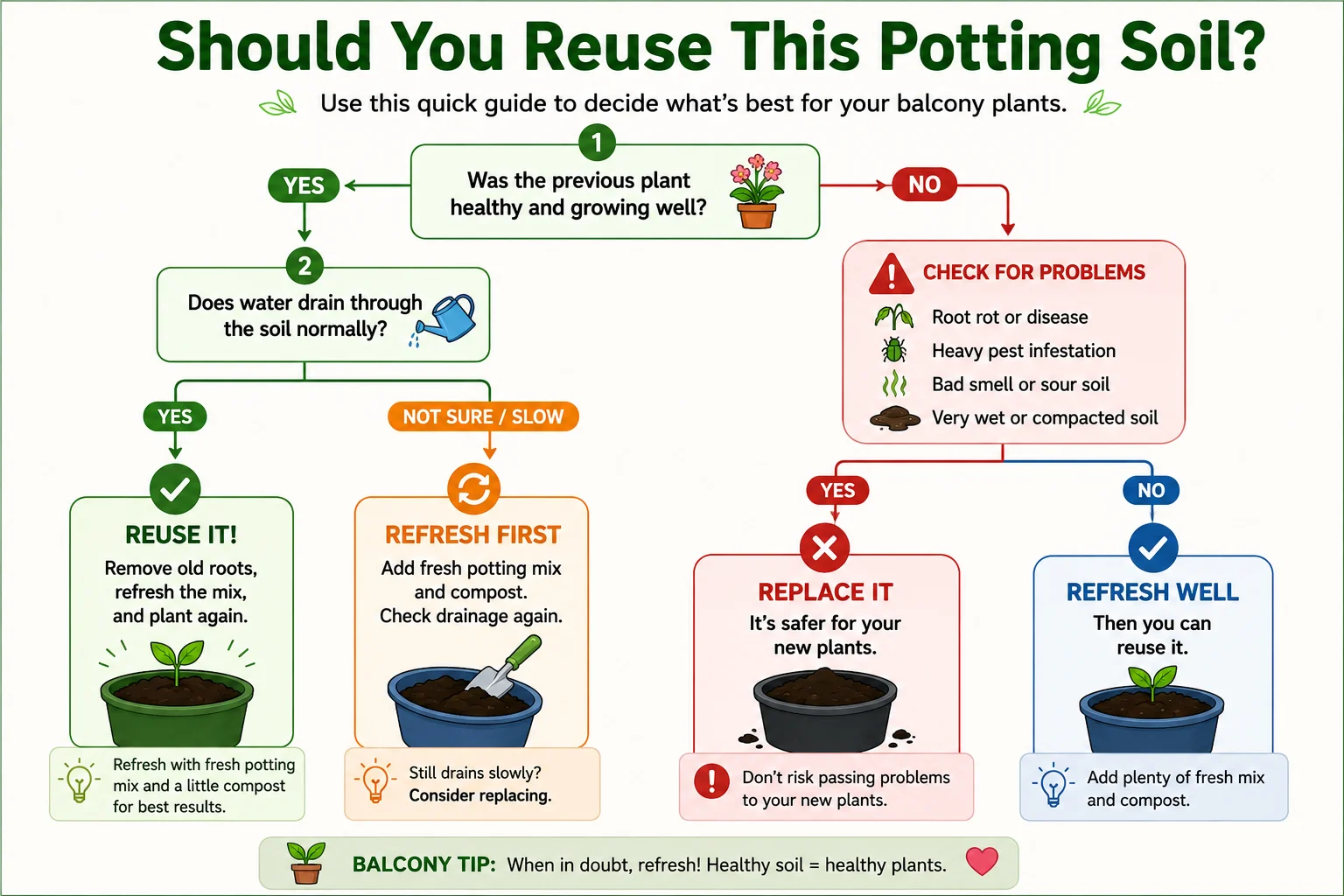
This flowchart helps readers make a fast decision. It guides them from “Was the previous plant healthy?” to “Refresh and reuse” or “Replace the soil”.
Seasonal Timing for Reusing Potting Soil
The best time to refresh old potting soil is usually before planting something new. This might be after removing summer vegetables, before starting herbs, or when changing seasonal flowers.
In warmer months, old balcony soil can dry out quickly while you are working with it. Lightly moist soil is easier to mix than bone-dry soil, but avoid working with soggy mix because it can become heavy and clumpy.
In cooler or wetter periods, pay extra attention to drainage. Reused mix that holds too much moisture may stay wet for longer, especially on covered balconies or shaded apartment balconies.
Hot balcony surfaces can also change how quickly refreshed mix dries out. If your balcony receives strong reflected heat from walls, glass, or paving, this guide on what plants grow best on balconies that get reflected heat may help you understand how heat affects both plants and containers.
Balcony Haven Note: I have noticed that old potting mix often looks worse than it really is after a hot season. Sometimes it only needs old roots removed and fresh material mixed in. But when the soil smells bad, stays wet too long, or feels like a hard block, I would rather start again than keep fighting the same problem.
This is also why I think soil texture matters so much in balcony pots. Once soil becomes too hard and compacted, watering and drainage both become harder to manage.
Frequently Asked Questions
Can I reuse potting soil from last year?
Yes, you can often reuse potting soil from last year if the previous plant was healthy and the mix still drains well. Remove old roots and refresh it with fresh potting mix or compost before planting again.
Can I reuse potting soil for vegetables?
Yes, but vegetables usually need more nutrients than simple flowers or herbs. For tomatoes, cucumbers, eggplants, and other fruiting vegetables, mix in a good amount of fresh potting mix and feed the plant as it grows.
Can I reuse soil from a plant that died?
It depends on why the plant died. If it died from heat, neglect, age, or lack of water, the soil may be reusable. If it died from root rot, disease, or severe pests, it is safer to replace the soil.
Do I need to sterilise old potting soil?
Most balcony gardeners do not need to sterilise old potting soil if the previous plant was healthy. Cleaning out roots and refreshing the mix is usually enough for normal balcony container gardening.
How many times can potting soil be reused?
There is no exact number. Potting soil can often be reused for several seasons if it is refreshed, drains well, and does not come from diseased plants. Once it becomes very dense, smelly, or poor draining, replacement is usually better.
What should I add to old potting soil before reusing it?
Add fresh potting mix and a small amount of compost or worm castings. The exact amount depends on how tired the old mix is, but many balcony gardeners can start with roughly half old mix and half fresh material for a tired container.
Final Thoughts
Reusing potting soil for balcony plants is practical, especially when space, money, and storage are limited. You do not need to throw away every pot of old mix after one season.
The key is to check the soil before trusting it with a new plant. If it came from a healthy plant, still drains well, and can be refreshed with fresh material, it often has more life left in it.
Balcony gardening is about making small, sensible adjustments. When you learn how your potting mix changes over time, you can reuse what is still useful, replace what is risky, and grow with more confidence in a small space.
Leave a Reply