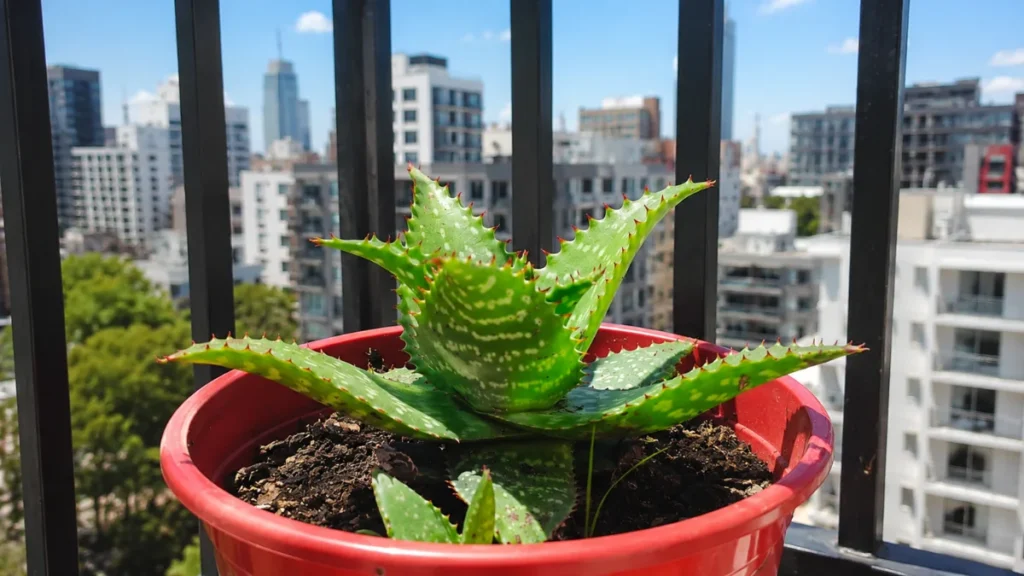
Can I Grow Aloe Vera on a Cold-Facing Balcony? This question often comes up when a balcony feels bright enough for plants, but still stays cool, shaded, windy, or slow to dry after watering. Aloe vera is often described as easy, but balcony conditions can make the answer feel less clear.
Aloe vera can often grow on a cooler balcony if the space still receives bright light, has good airflow, and the pot does not stay wet for too long. It may grow slowly, especially in winter or heavy shade, but slow growth does not always mean the plant is failing.
The confusion usually comes from advice written for warm patios, sunny gardens, or dry outdoor spaces. A balcony is different. Nearby buildings, railings, walls, wind, shade, and container size can all change how aloe vera behaves.
This article explains what really matters when growing aloe vera on a cold-facing balcony, why some plants cope better than others, and how to understand the signs your plant is giving you.
Why Cold-Facing Balconies Feel Different for Aloe Vera
A cold-facing balcony is not always cold in the same way. Some balconies receive bright reflected light but very little direct sun. Others are shaded by nearby buildings, covered by a roof, or exposed to cool wind between apartment blocks.
For aloe vera, this matters because the plant likes warmth, brightness, and soil that does not stay wet for long. A cooler balcony can slow all of these things down. The pot may stay damp for longer. The leaves may grow more slowly. The plant may look still for weeks or months.
This does not mean the balcony is useless for aloe vera. It simply means the plant may behave differently from aloe vera grown in a warm, sunny garden bed or open patio.
If your balcony receives very little direct sun, the ideas in Gardening on Balconies With No Direct Sun may also help you understand how brightness, shade, and reflected light affect plant growth.
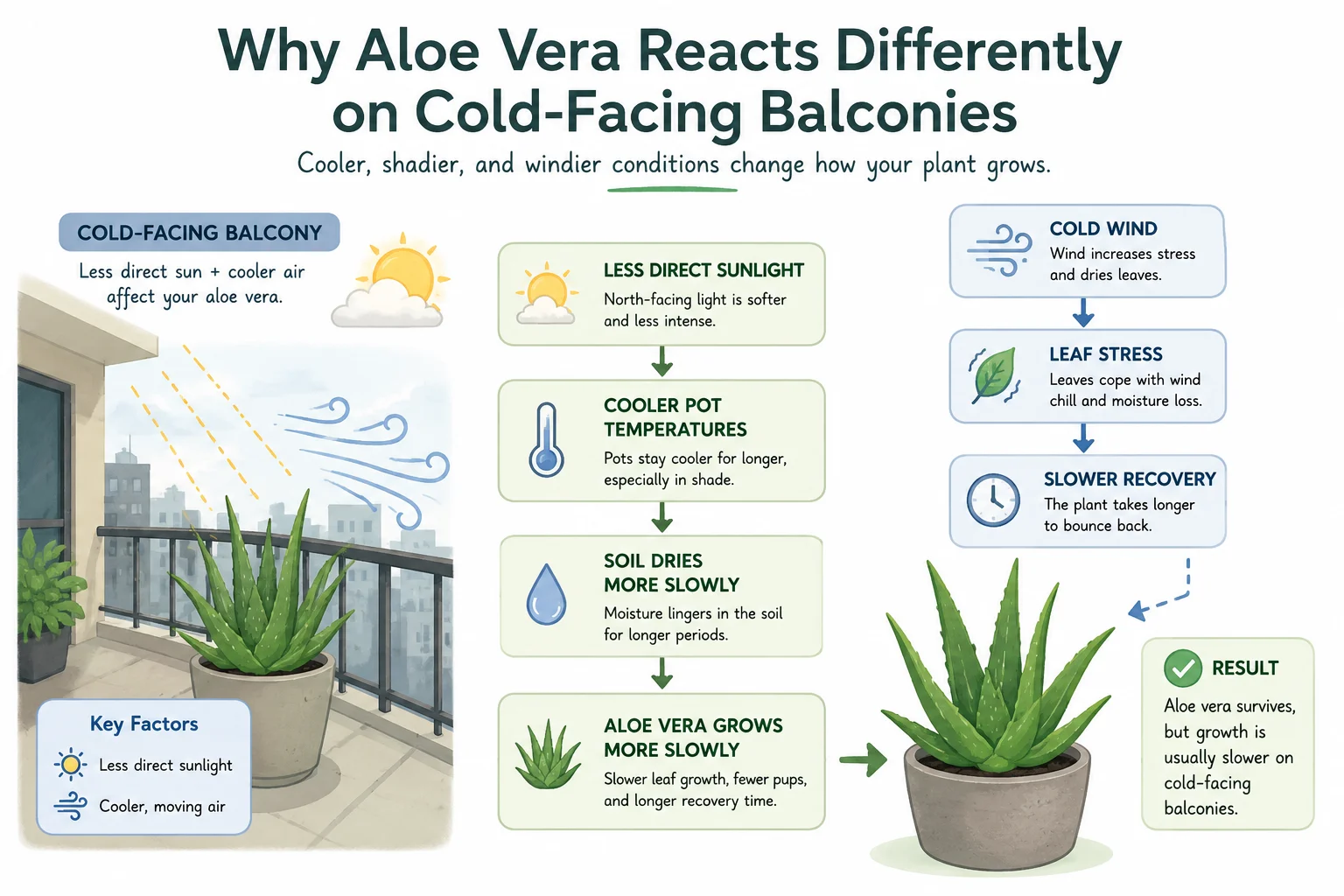
What Most Aloe Vera Advice Misses About Balconies
Most aloe vera advice is simple: give it sun, use well-draining soil, and avoid overwatering. That advice is not wrong, but it often misses the small-space reality of balcony growing.
On a balcony, the plant is not only dealing with sun and water. It is also dealing with a small pot, wind, reflected heat, cold surfaces, shade from walls, and limited places to move the plant. A pot near the railing may receive more light but more wind. A pot near the wall may be warmer but darker.
This is why two people can grow aloe vera on cold-facing balconies and get different results. The direction matters, but the microclimate around the plant often matters more.
Can Aloe Vera Grow on a Cold-Facing Balcony?
Yes, aloe vera can grow on a cold-facing balcony in many cases, especially if the balcony still receives bright indirect light or gentle morning light. It may not grow quickly, but it can stay healthy when the pot, light, and moisture conditions suit it.
The most difficult situation is a balcony that is cold, shaded, windy, and slow to dry. In that kind of space, aloe vera may survive for a while but begin to lose its firm shape, stretch toward light, or develop soft leaves if the roots stay too damp.
Aloe vera usually performs better in the brightest protected part of the balcony rather than the darkest corner. This is similar to many balcony plants discussed in Best Plants for a North Facing Balcony, where light level can matter more than the balcony label itself.
Why Light Matters More Than Direction Alone
A cold-facing balcony may still be bright. This is one of the most overlooked points. A balcony can have no strong direct sun but still receive useful light from open sky, pale walls, windows, and nearby surfaces.
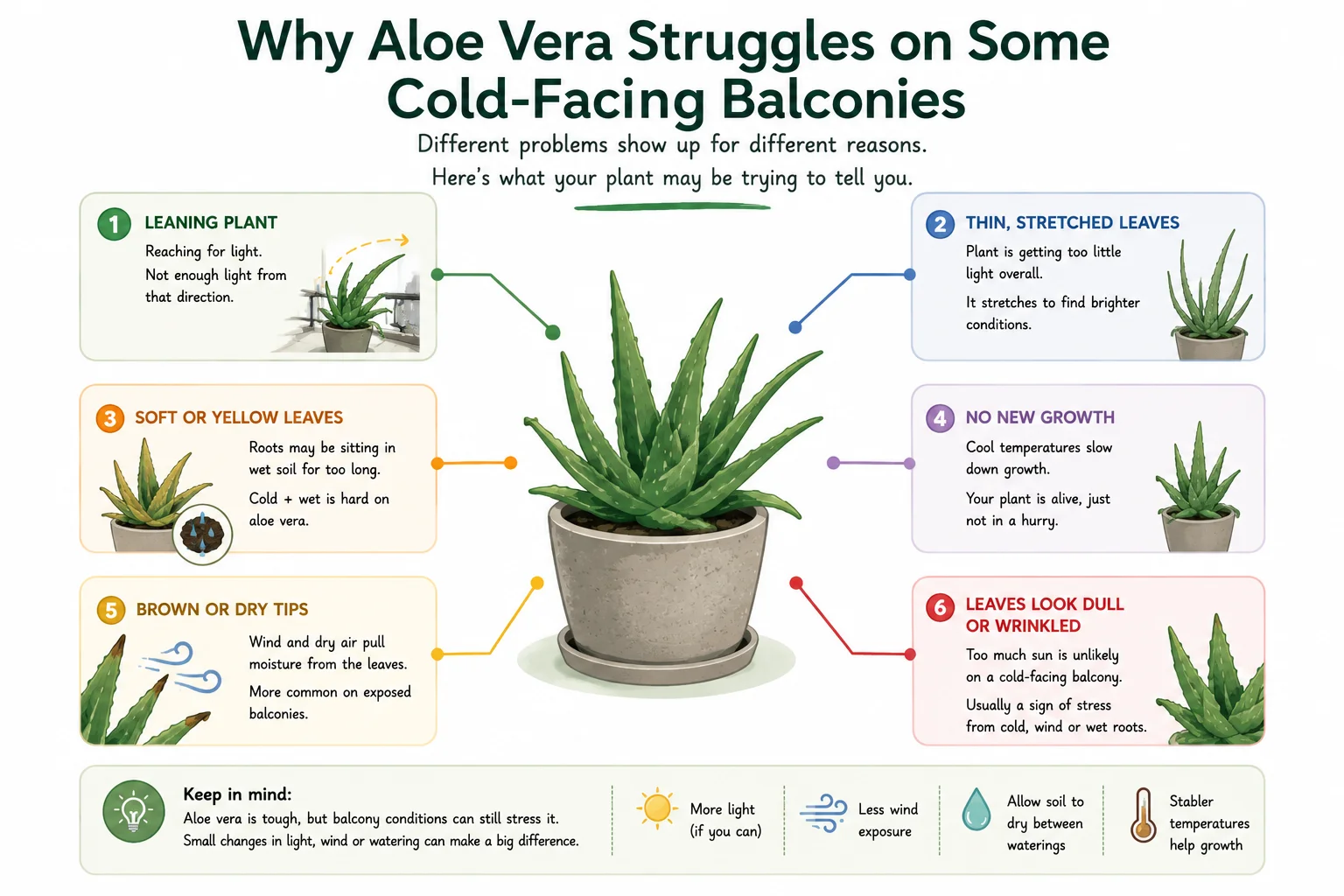
Aloe vera usually needs bright conditions to stay compact and firm. When light is too weak, the plant may begin leaning or stretching. The leaves may become thinner, softer, or less upright.
This is why measuring your actual balcony light is more helpful than relying only on direction. If you are unsure, How to Measure Sunlight on a Balcony can help you understand whether your space is bright shade, partial sun, or deep shade.
Why Cold and Wet Pots Cause Problems
Aloe vera can often cope with cool air better than it can cope with cold, wet roots. This is where balcony pots become important.
In a garden bed, extra moisture can spread through a larger soil area. In a balcony container, the roots are limited to one small space. If that pot stays wet during cool weather, the root area can remain uncomfortable for too long.
This is one reason aloe vera may struggle more in winter or during long cloudy periods. The plant is not using water quickly, the soil dries slowly, and the pot may feel cold for much of the day.
If you have had problems with damp soil in balcony containers, the article on Root Rot in Small Balcony Pots explains why small containers can become risky when moisture stays around the roots for too long.
How Wind Changes Aloe Vera Growth
Wind is easy to overlook because aloe vera looks tough. Its thick leaves make it seem stronger than softer herbs or flowers, but cold wind can still affect how the plant behaves.
On exposed apartment balconies, wind can cool the leaves, dry the pot surface, and stress the plant at the same time. This can create confusing signs. The soil surface may look dry, while the deeper soil remains wet. The plant may look thirsty, but the roots may not actually need more water.
This is why windy balconies need careful observation. The article What Are the Best Plants for a Windy Balcony? explains why elevated balconies often feel harsher for plants than ground-level gardens.
Best Balcony Spots for Aloe Vera
Aloe vera usually has a better chance when it is placed where the balcony gives it brightness without too much cold wind or trapped moisture.
The brightest wall area can work well if light reflects there during the day. A sheltered corner can also help if it is not too dark. The railing area may provide more light, but it can also expose the plant to stronger wind and rain.
This is why the “best spot” is not always the sunniest-looking place. It is the place where brightness, shelter, and pot drying are most balanced.
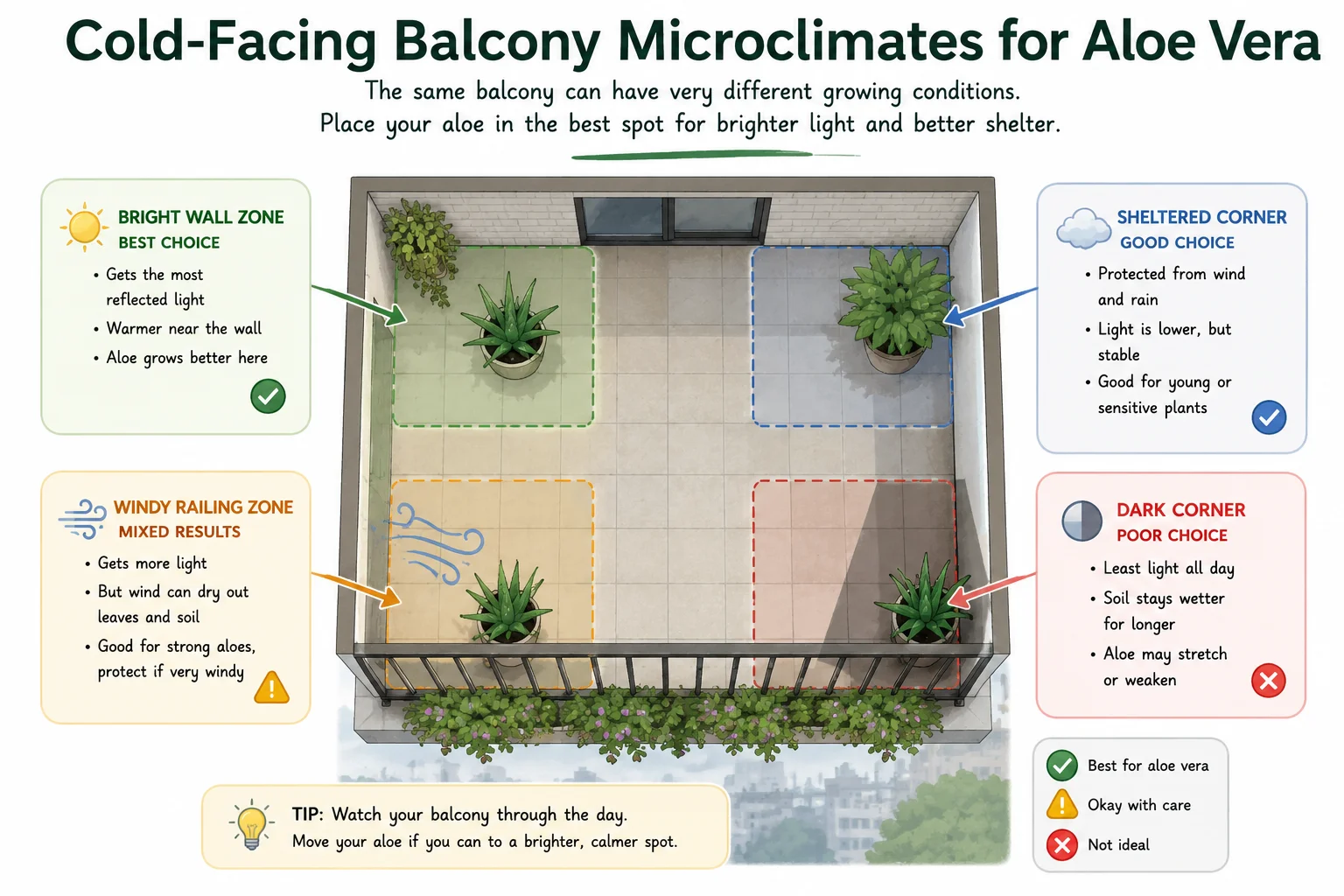
Why Some Aloe Vera Plants Look Healthier Than Others
Two aloe vera plants can grow on similar cold-facing balconies and still look completely different. One plant may receive reflected light from a pale wall, while another sits in a darker corner where the pot stays damp for longer.
Small differences can change the result. A plant near a sheltered wall may stay warmer and steadier. A plant near a railing may get more light but also more cold wind. A pot on cold tiles may dry more slowly than a pot lifted slightly above the floor.
This is why balcony gardeners often get mixed results even when they follow similar advice. The plant is not only reacting to care. It is reacting to the exact spot where it sits.
Aloe Vera Performance in Different Balcony Conditions
The table below shows how aloe vera may behave in common cold-facing balcony situations.
| Balcony Condition | Likely Aloe Vera Response | What It Usually Means |
|---|---|---|
| Bright but cool | Slow but steady growth | The plant may be healthy, just growing at a slower pace. |
| Bright and windy | Firm leaves, but possible stress marks | Light may be fine, but wind exposure may be tiring the plant. |
| Cool and shaded | Very slow growth or leaning | The plant may not be receiving enough usable light. |
| Cold and wet pot | Soft, yellowing, or weak leaves | The roots may be staying damp for too long. |
| Covered but bright | Often better than expected | The cover may protect the plant from heavy rain and cold wind. |
Practical Insights for Balcony Aloe Vera
Growing aloe vera on a cold-facing balcony becomes easier when expectations match the space. The plant may not grow fast, but it can still be worth keeping if the conditions are not too dark or wet.
- Bright indirect light is usually better than a dark sheltered corner.
- Slow growth is common on cooler balconies.
- Cold wet soil is usually more concerning than cool air alone.
- Wind can make the plant look stressed even when light is good.
- Small pots dry differently from large pots, especially in winter.
- Covered balconies can help if they still receive enough brightness.
If you are comparing aloe vera with other drought-tolerant choices, What Succulents Can Stay Outside on a Balcony? may help you think about similar plants for exposed apartment spaces.
Common Misunderstandings
Many problems with aloe vera on cold-facing balconies come from simple misunderstandings rather than poor care.
- Thinking aloe vera needs hot sun all day to survive.
- Assuming slow growth means the plant is dying.
- Watering more because the plant looks inactive.
- Ignoring the difference between surface dryness and deeper soil moisture.
- Keeping the plant in the darkest corner because it looks protected.
- Forgetting that wind can change how cold the plant feels.
Aloe vera is often forgiving, but it still responds to the small details of balcony life. Light, wind, pot size, and drying speed all work together.
Seasonal Context for Australian Balconies
In many Australian apartments, aloe vera may cope outside for much of the year, but winter can change the way a cold-facing balcony behaves. Daylight may feel weaker, pots may dry more slowly, and wind may feel sharper around high-rise or exposed buildings.
A cold-facing balcony in Brisbane may still feel mild enough for aloe vera through much of the year, especially when the plant receives bright reflected light. In Sydney, results can vary depending on wind, apartment height, and how much light reaches the balcony in winter. In Melbourne, Canberra, or Hobart, cooler weather and longer damp periods can make pot drying more important.
Summer can also be different from what people expect. A cold-facing balcony may avoid harsh afternoon heat, but enclosed or covered spaces can still become warm and still. This is why watching the actual balcony conditions through the seasons is more useful than relying on direction alone.
Balcony Haven Note: I noticed that aloe vera can look almost unchanged for a long time on cooler balconies, then suddenly start growing again when light and warmth improve. Some balconies also have one small bright wall or sheltered corner that works much better than the rest of the space. That is why I think cold-facing balconies are worth observing closely before judging them too quickly.
Frequently Asked Questions
Can aloe vera survive on a cold balcony?
Aloe vera can survive on some cold balconies if the space is still bright and the pot does not stay wet for too long. It may grow slowly, especially during cooler months.
Does aloe vera need direct sun on a balcony?
Aloe vera usually prefers bright light, but it does not always need long hours of direct sun. Bright indirect light can be enough on some balconies, although growth may be slower.
Can aloe vera grow on a shaded apartment balcony?
Aloe vera can grow on some shaded apartment balconies if the shade is still bright. Deep shade is harder because the plant may stretch, lean, or stop producing new growth for long periods.
Why is my aloe vera leaning on the balcony?
Leaning often means the plant is reaching toward stronger light. This can happen on shaded or cold-facing balconies where light comes from one side.
Can aloe vera stay outside in winter?
In mild areas, aloe vera may stay outside through winter. In colder or wetter balcony spaces, it may struggle if the pot stays cold and damp for long periods.
Why are my aloe vera leaves soft?
Soft leaves can happen when the plant is stressed by low light, cold conditions, or soil that stays wet too long. On balconies, these issues often happen together.
Final Thoughts
Can I Grow Aloe Vera on a Cold-Facing Balcony? In many cases, yes, but the real answer depends on the small conditions around the plant rather than the balcony direction alone.
Aloe vera usually has the best chance when the balcony is bright, the pot drains well, and the plant is not sitting in cold wet soil for long periods. Slow growth is normal in cooler conditions and does not always mean failure.
The most helpful approach is to read the balcony itself. Notice where light is strongest, where wind is harshest, and where pots dry most slowly. Once those small patterns become clear, aloe vera becomes much easier to understand in a balcony space.
Leave a Reply