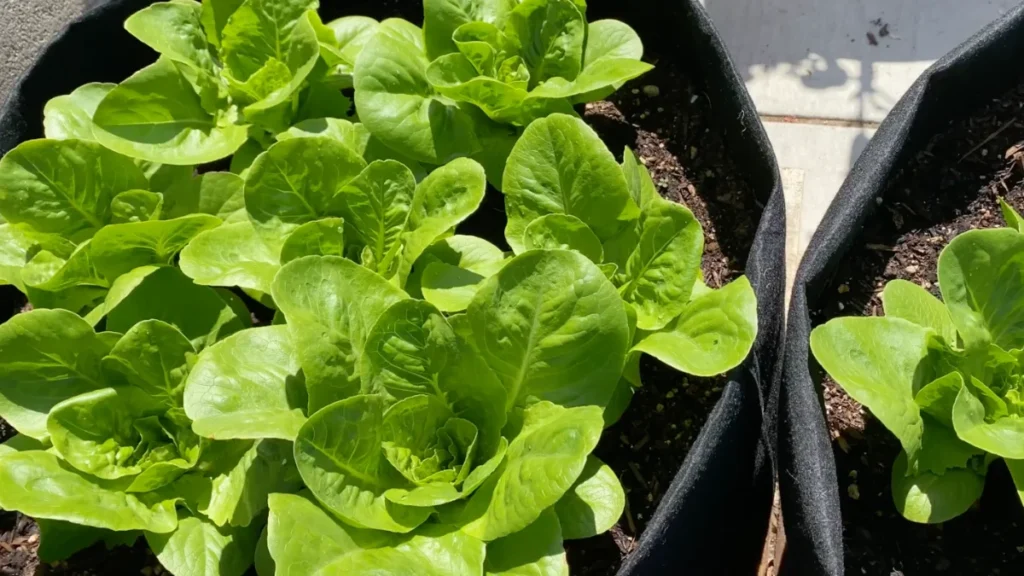
Many balcony gardeners ask whether lettuce can grow on balconies in summer heat because lettuce often looks easy at first. It grows quickly in mild weather, fits small pots, and seems perfect for apartment balconies. Then summer arrives, the potting mix dries faster, the leaves wilt in the afternoon, and the lettuce may suddenly taste bitter or start growing tall.
Can lettuce grow on balconies in summer heat? Yes, lettuce can grow on balconies in summer heat, but it needs cooler placement, steady moisture, and protection from harsh afternoon sun. Lettuce is a cool-season leafy green, so summer balcony conditions can push it into heat stress, bolting, and bitter leaves faster than many gardeners expect.
The problem is not always the lettuce variety. On balconies, heat builds around concrete floors, walls, railings, and small containers. A balcony can feel manageable to a person while the soil inside a small pot becomes too warm for lettuce roots.
This article explains why lettuce struggles on hot balconies, which balcony conditions matter most, what types of lettuce cope better, and when summer lettuce is still worth growing in small spaces.
Why Summer Balcony Lettuce Feels Difficult
Lettuce feels simple in cooler months because it does not need a large plant structure before it gives a harvest. A few healthy leaves can already be useful. This makes it attractive for balcony gardeners who want something edible in a small pot.
Summer changes the situation. Lettuce prefers mild conditions, but balconies often hold heat around the plant. The floor may become warm, walls may reflect sunlight, and railings can heat the air around pots. Even if the balcony is not in full sun all day, the growing area can still become stressful.
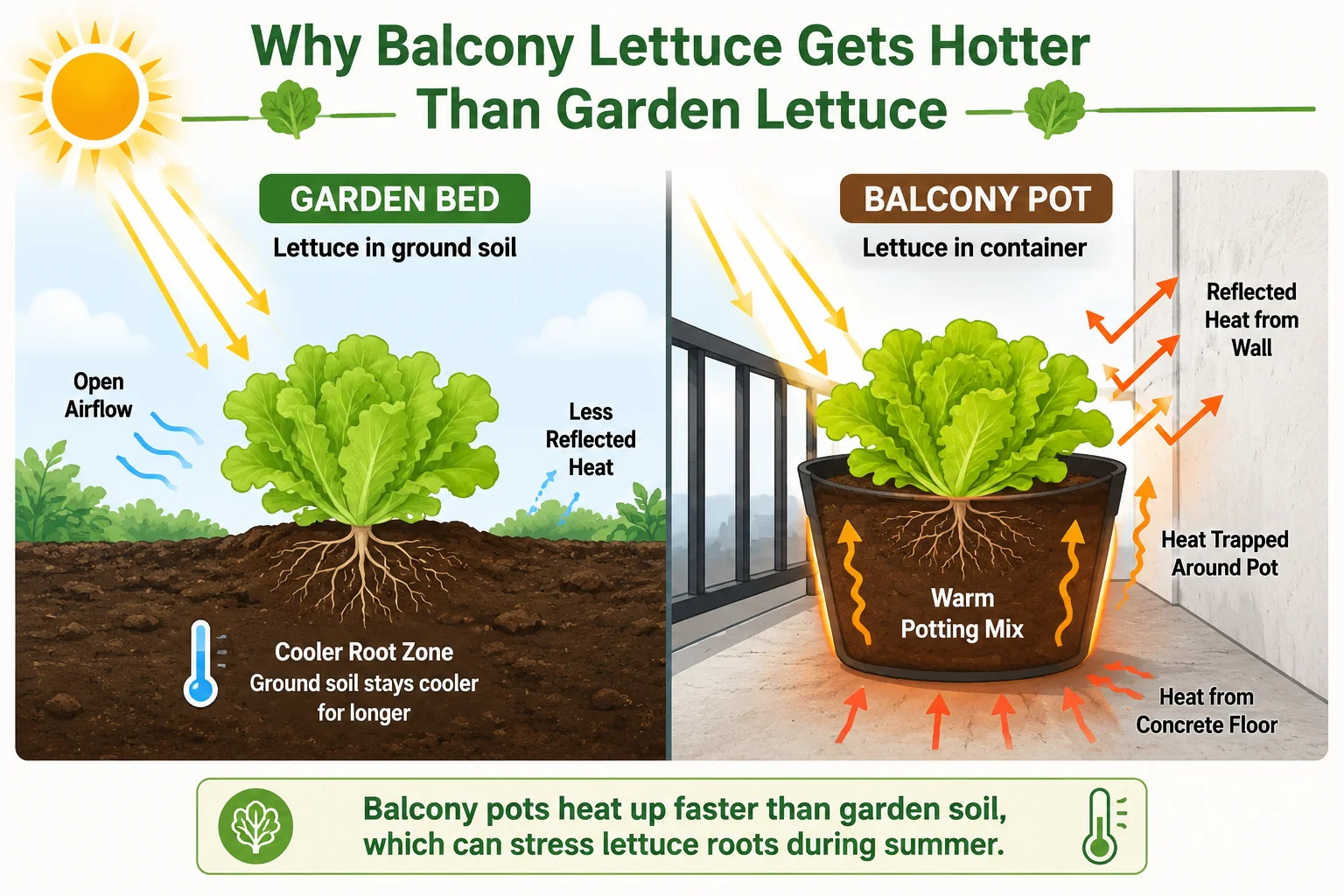
Small containers make this harder. Garden soil in the ground stays cooler for longer, but potting mix in a balcony container can heat and dry quickly. Lettuce roots are shallow and sensitive, so they react fast when the soil becomes warm or unevenly moist.
This is why lettuce may look healthy in the morning but collapse by late afternoon. It is not always a sign that the plant is dying. It often shows that the balcony environment is becoming hotter than the plant can comfortably handle.
What Most Lettuce Advice Misses About Balconies
Many lettuce-growing guides are written for garden beds, raised beds, or larger outdoor spaces. That advice can still be useful, but it often assumes cooler soil, more root space, and better temperature buffering than a balcony container can provide.
On a balcony, lettuce is not only dealing with air temperature. It is also dealing with heat from the pot, the wall, the floor, the railing, and reflected light. These small heat sources add together. A plant that would manage in a garden bed may struggle in a dark plastic pot beside a hot wall.
Another missed point is overnight cooling. Lettuce can recover from a warm day if the pot cools down at night. But some balconies hold heat into the evening, especially enclosed balconies, west-facing balconies, and spaces surrounded by concrete. When the plant does not cool properly overnight, stress builds day after day.
Why Balcony Heat Affects Lettuce So Quickly
Lettuce is mostly grown for tender leaves. Those leaves are useful because they are soft, but that also means they lose water easily in heat. When the plant loses water faster than the roots can replace it, the leaves wilt.
Heat also affects flavour. Lettuce under repeated stress may become bitter. This can happen when the plant dries out too often, grows too slowly in heat, or begins to prepare for flowering and seed production. This flowering stage is called bolting.
Bolting is one of the clearest signs that summer conditions are pushing lettuce past its comfortable range. The plant starts growing taller instead of forming soft harvestable leaves. Once that happens, the leaves often become tougher and more bitter.
If your balcony plants often wilt during the hottest part of the day, the article on why balcony plants wilt in the afternoon sun may help explain the wider heat-stress pattern.
How Different Balcony Conditions Affect Lettuce
Lettuce does not respond only to sun or shade. It responds to the full balcony setup. The same lettuce variety can behave differently depending on container size, wall heat, wind, and how quickly the pot dries.
| Balcony Condition | Effect on Lettuce | What It Usually Means |
|---|---|---|
| Morning sun with afternoon shade | Usually the most forgiving summer position | Lettuce gets useful light before the hottest part of the day. |
| Strong afternoon sun | High risk of wilting, bitterness, and bolting | The plant may receive more heat than it can use. |
| Small shallow pots | Dry quickly and warm fast | Moisture may swing too sharply for lettuce. |
| Larger containers | More stable moisture and temperature | Roots are less likely to heat up quickly. |
| Hot walls or railings nearby | Extra reflected and stored heat | The plant may overheat even when partly shaded. |
| Windy balcony | Faster water loss from leaves and soil | Lettuce may wilt even when the pot was watered earlier. |
| Light shade cloth or filtered shade | Can reduce heat stress | Useful when direct sun is too harsh but the balcony is still bright. |
For balconies where pots dry too quickly, this guide on balcony soil drying out too fast gives more detail about why container soil loses moisture so quickly.
Best and Worst Balcony Locations for Summer Lettuce
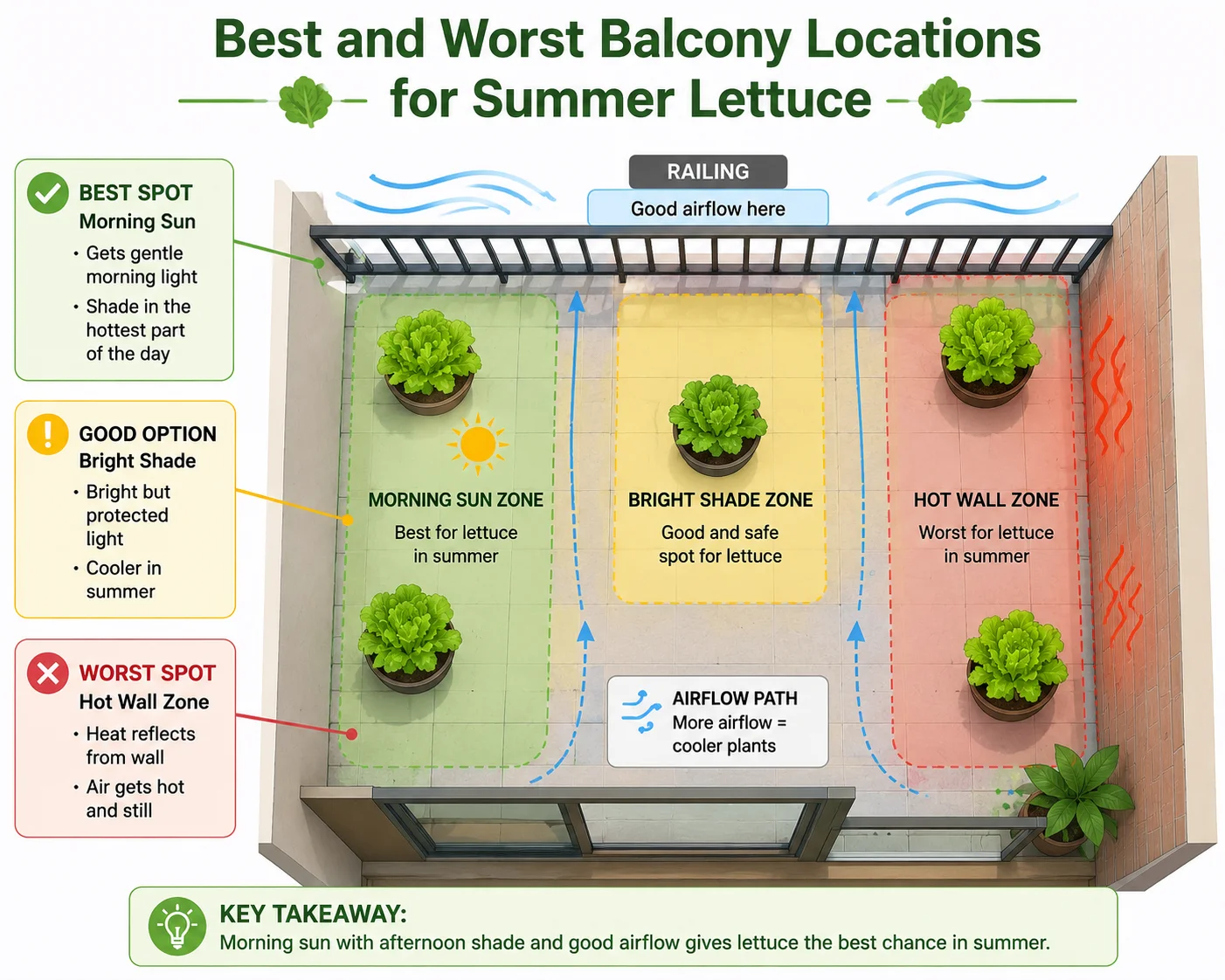
The best place for summer lettuce is usually the brightest cool spot, not the brightest hot spot. This is an important difference. Lettuce still needs light, but strong summer heat can make that light less useful.
A pot near the balcony railing may get better airflow and softer morning light. A pot near a back wall may stay shaded, but the wall can hold heat and reduce airflow. A corner may seem protected, but if it traps heat, lettuce may still struggle.
Morning sun is often easier for lettuce than afternoon sun. Morning light helps growth before the balcony becomes too hot. Afternoon sun, especially on west-facing or exposed balconies, can push leaves and soil into stress very quickly.
If shade is the main problem, the article on cheap shade solutions for balcony plants may help you think about simple ways to soften harsh summer light without making the balcony too dark.
Which Lettuce Types Handle Summer Heat Better?
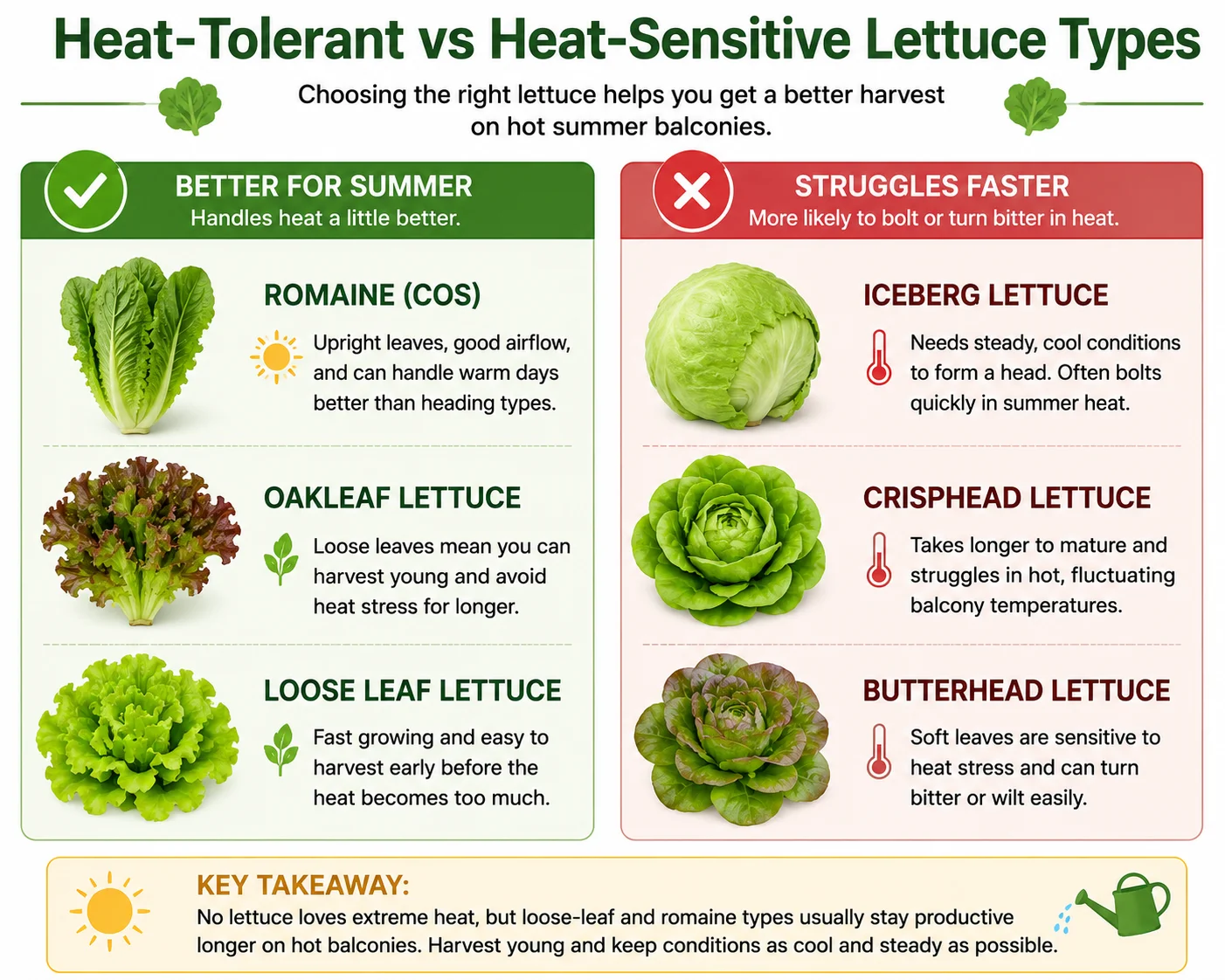
No lettuce becomes a true heat-loving plant, but some types are usually more forgiving than others. Loose-leaf and romaine types often give balcony gardeners a better chance because they can be harvested gradually and may tolerate imperfect conditions better than tight-heading lettuce.
It also helps to see “heat-tolerant” as more flexible rather than heat-proof. A lettuce type may cope a little better with warm conditions, but it can still bolt, wilt, or become bitter if the balcony stays hot for too long.
Crisphead lettuce, such as iceberg-style lettuce, is usually harder in balcony summer heat because it needs more time and steadier conditions to form a proper head. In a hot container, it may struggle before it reaches that stage.
The table below gives a realistic comparison for balcony growing rather than ideal garden conditions.
| Lettuce Type | Summer Balcony Performance | Why It Matters |
|---|---|---|
| Loose-leaf lettuce | Usually one of the better choices | Can be harvested young before heat stress becomes too strong. |
| Romaine or cos lettuce | Often more useful than tight-heading types | Upright growth can suit containers and gradual harvesting. |
| Oakleaf lettuce | Often worth trying in protected bright shade | Loose leaves make it easier to harvest before bolting. |
| Butterhead lettuce | Possible, but more sensitive in heat | Soft leaves can suffer when moisture and temperature swing too much. |
| Crisphead or iceberg lettuce | Usually the hardest option for hot balconies | Needs steadier, cooler conditions for good head formation. |
Signs Your Balcony Lettuce Is Too Hot
Heat stress in lettuce is often easy to see once you know the pattern. The plant may still be alive, but the quality of the leaves changes.
- The leaves wilt most afternoons, even after watering earlier.
- The plant starts growing tall instead of staying leafy and compact.
- The leaves taste bitter, tough, or less fresh.
- Leaf edges become dry, pale, or slightly scorched.
- Growth slows even though the plant is receiving light.
- The soil feels warm and dries out very quickly.
These signs do not always mean the lettuce was grown badly. They often mean the balcony has moved beyond what lettuce enjoys. In summer, the difference between a healthy lettuce pot and a stressed one can be only a few hours of extra heat.
If your pots seem to stay hot long after the sun has moved, this article on overheating balcony pots in summer explains why container temperature can become a hidden problem.
Watering, Moisture, and Hot Balcony Pots
Lettuce prefers steady moisture, but that does not mean soggy soil. This balance is harder on balconies because pots can dry fast on hot days and stay wet too long in shaded corners. Both extremes can stress the plant.
In summer, lettuce often struggles most when the pot moves between very wet and very dry. The leaves may recover after watering, but repeated drying can still affect flavour and growth. This is one reason lettuce may become bitter even when it does not fully die.
Container size matters here. A slightly larger pot usually gives lettuce a more stable root zone than a tiny shallow container. More potting mix means moisture changes more slowly, and the roots are less exposed to sudden heat.
For a deeper look at steady moisture in containers, you may find how to keep soil constantly moist on a balcony helpful, especially if your balcony dries out quickly in warm weather.
When Lettuce May Not Be Worth Growing in Summer
Lettuce can grow on balconies in summer heat, but there are times when it may not be worth forcing. If the balcony receives strong afternoon sun, has very hot flooring, and stays warm at night, lettuce may bolt quickly no matter how careful the setup is.
Very small containers can also make summer lettuce frustrating. If the pot dries within hours, the plant may spend more energy surviving than growing useful leaves. In that situation, a short harvest from young leaves may be more realistic than expecting a long-lasting lettuce crop.
Some balcony gardeners treat lettuce as a shoulder-season crop instead. They grow it in autumn, winter, or spring, then use summer for plants that naturally handle heat better. This is not failure. It is simply matching the crop to the season and the balcony.
If you want edible plants that cope better in small hot spaces, the article on best edible plants for tiny balconies may help you compare other options.
Practical Summer Lettuce Insights
Summer lettuce works best when the goal is to reduce stress, not chase perfect growing conditions. A balcony will rarely behave like a cool garden bed, but small changes can still make lettuce more realistic.
- Morning sun is usually safer than harsh afternoon sun.
- Loose-leaf types are often easier than tight-heading lettuce.
- Larger containers keep moisture and temperature more stable.
- Light shade can help if the balcony is bright but too hot.
- Young leaf harvests are often more realistic than full heads.
- Repeated bitterness usually means the plant is under stress.
The most useful mindset is to grow lettuce as a short, protected crop during summer. It may still provide fresh leaves, but it may not behave like lettuce grown in cooler months.
Common Misunderstandings About Summer Lettuce
Many lettuce problems come from expecting one simple answer. In reality, summer balcony lettuce is affected by several small conditions happening together.
- “More sun means better growth.” Lettuce needs light, but too much hot sun can reduce quality.
- “Wilting always means it needs more water.” Wilting can also happen because the leaves are losing water faster than roots can replace it.
- “Heat-tolerant lettuce can handle any summer balcony.” Heat tolerance helps, but it does not remove the need for cooler placement.
- “Shade means lettuce will be fine.” Shade can help, but deep shade may slow growth too much.
- “Small pots are enough because lettuce has shallow roots.” Small pots may fit the roots, but they can still dry and heat too quickly.
These misunderstandings are common because most lettuce advice focuses on the plant. On balconies, the container and microclimate are just as important.
Summer Balcony Lettuce in Australian Apartments
In many Australian apartments, summer heat can be strong even when a balcony is not fully exposed all day. A north-facing or east-facing balcony may still be manageable in the right position, while a west-facing balcony can become difficult for lettuce during hot afternoons.
Warm nights also matter. If the pot does not cool after sunset, the lettuce may start the next day already stressed. This is one reason the same balcony may grow lettuce well in spring but struggle badly in January or February.
Seasonal timing can make a big difference. Lettuce often feels more reliable when grown before peak heat arrives or after the hottest part of summer has passed. During the hottest weeks, partial harvests and smaller young leaves may be more realistic than large heads.
Balcony Haven Note: I have noticed that lettuce on balconies often struggles less because of one hot day and more because heat keeps building around the pot. Some balconies cool down quickly in the evening, while others hold warmth near the walls and floor for hours. That difference can change how well lettuce grows, even when the same seeds and containers are used.
Frequently Asked Questions
Can lettuce grow on balconies in summer heat?
Yes, lettuce can grow on balconies in summer heat, but it usually needs morning light, afternoon shade, steady moisture, and a container that does not heat too quickly. It may produce smaller harvests than it would in cooler months.
What temperature is too hot for lettuce on a balcony?
Lettuce often starts struggling when hot days continue and nights stay warm. On balconies, the potting mix can become too warm before the air temperature feels extreme, so the container temperature can matter as much as the weather forecast.
Why does balcony lettuce taste bitter in summer?
Balcony lettuce often tastes bitter in summer because of repeated heat stress, drying soil, or bolting. The plant is reacting to stressful conditions rather than focusing on soft leaf growth.
What lettuce grows best in hot balcony conditions?
Loose-leaf lettuce, oakleaf lettuce, and some romaine or cos types are usually more realistic than crisphead lettuce in hot balcony conditions. They can be harvested young before summer stress becomes too strong.
Can lettuce grow in shade on a balcony?
Lettuce can grow in bright shade, especially during summer, but deep shade may slow growth too much. The best position is often bright but protected, such as morning sun with shade during the hottest part of the day.
Should I grow lettuce in summer or wait for cooler weather?
If your balcony stays very hot, cooler weather may give better results. Summer lettuce can still be worth trying for small young leaves, but autumn, winter, and spring are often easier seasons for steady lettuce growth.
Final Thoughts
Lettuce can grow on balconies in summer heat, but it needs more protection than many people expect. The biggest issue is not just sunlight. It is the way heat builds around small pots, hard surfaces, walls, and railings.
Loose-leaf and romaine types usually give balcony gardeners a better chance than tight-heading lettuce. Morning sun, afternoon shade, steady moisture, and larger containers can also make summer lettuce more realistic.
Even then, summer lettuce may be smaller, shorter-lived, or more sensitive than lettuce grown in cooler months. That is normal for a balcony crop. Once you understand how your balcony holds heat, it becomes easier to decide whether lettuce belongs in your summer setup or whether it is better saved for a cooler season.
Leave a Reply