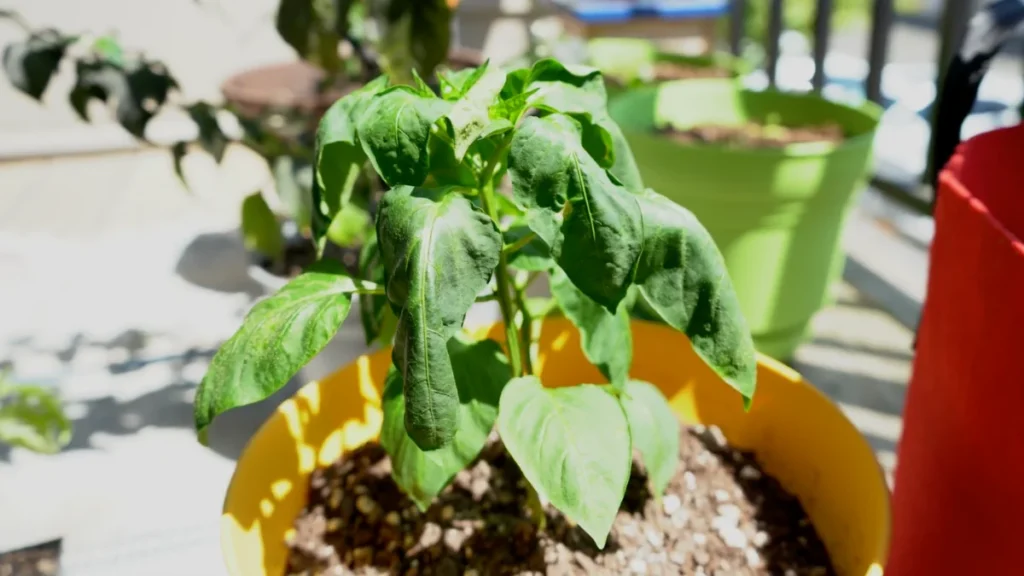
Many balcony gardeners notice the same confusing pattern during warm weather. Plants can look healthy in the morning, then suddenly droop during the afternoon sun. Sometimes the soil still feels damp, which makes the problem even more confusing. The plant may even recover later in the evening, only for the same thing to happen again the next day.
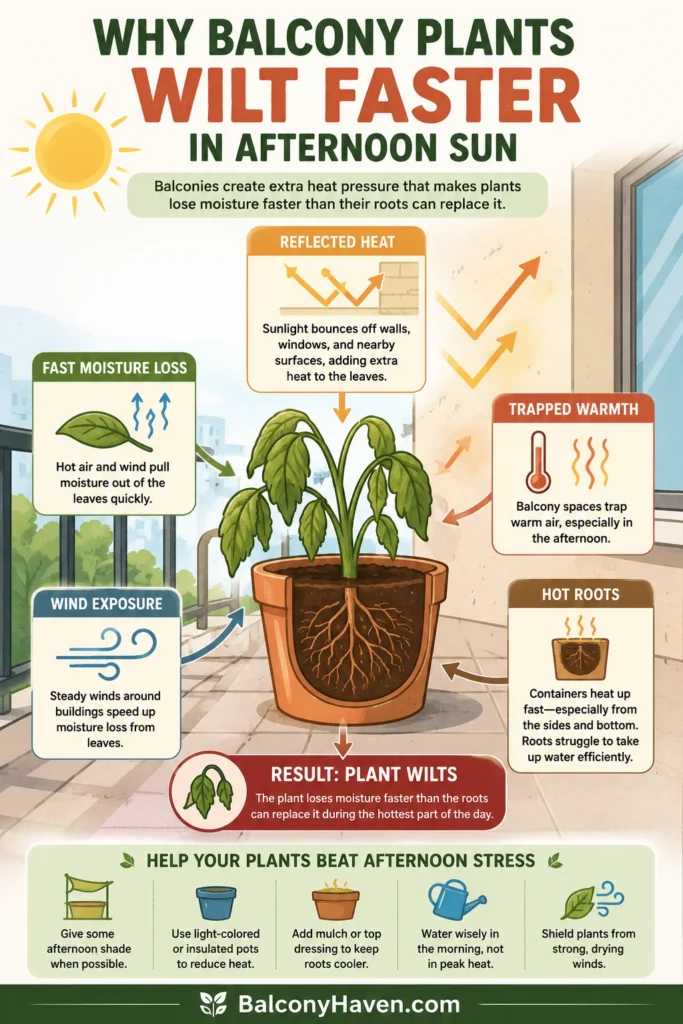
Balcony plants wilt in the afternoon sun because balcony conditions often make plants lose moisture faster than their roots can replace it during the hottest part of the day. Containers heat quickly, reflected sunlight increases leaf temperature, and apartment balconies trap warmth differently from normal gardens. In many cases, the wilt is linked more to heat stress than simple underwatering.
This issue keeps confusing balcony gardeners because most gardening advice is written for open backyard gardens where roots stay cooler in the ground. Balcony plants grow inside containers surrounded by walls, railings, glass, concrete, and reflected heat. These conditions create stress patterns that behave very differently from traditional gardens.
Understanding why balcony plants wilt in afternoon heat is usually less about complicated gardening techniques and more about recognising how apartment balconies change the environment around the plant.
Table of Contents
Balcony Reality Check
Balconies create small growing environments that behave differently from open gardens. Sunlight does not only arrive from above. Heat reflects from walls, windows, balcony floors, neighbouring buildings, and nearby surfaces. Some balconies receive concentrated afternoon brightness that feels much stronger than the actual weather forecast suggests.
Wind also behaves differently around apartment buildings. In some balconies, air barely moves and warmth becomes trapped around the pots for hours. In others, steady airflow pulls moisture from leaves throughout the afternoon. Two balconies only a short distance apart can create very different growing conditions for the same plant.
Container growing adds another layer of stress. In garden soil, roots can spread deeper toward cooler moisture. Balcony roots remain confined inside pots where temperatures rise much faster during sunny afternoons.
What Most Advice Misses
A lot of common gardening advice treats wilting as a direct sign that the plant simply needs more water. That explanation sometimes works in open gardens, but balcony growing is often more complicated.
On balconies, roots may still sit in damp soil while the plant continues wilting in the afternoon sun. This happens because overheated roots temporarily struggle to move enough moisture upward fast enough to support the leaves. The plant behaves as though it is thirsty even when moisture still exists inside the pot.
This is also why some balcony gardeners become confused when pots seem to dry unevenly from one day to another. In smaller containers, heat can change how moisture moves through the potting mix itself, which is partly explored in Balcony Soil Drying Out Too Fast (What Actually Helps).
Another detail many articles overlook is reflected heat. Balcony plants are often exposed to warmth from several directions at once. Afternoon sunlight may bounce from tiled floors, glass railings, or nearby walls directly back onto the leaves. This creates hotter conditions than many gardeners realise.
This is why some balcony gardeners feel confused when a plant receives the “recommended sunlight” but still looks stressed every afternoon.
Why Afternoon Sun Feels Different on a Balcony
Afternoon sunlight behaves differently from morning sunlight because surrounding surfaces have already been warming for several hours. By afternoon, floors, walls, railings, and containers begin releasing stored heat back into the surrounding air.
West-facing balconies often experience this most strongly. Plants may receive direct sunlight while also absorbing warmth rising from below and reflecting from nearby surfaces. Some balconies almost create a small heat-pocket effect where the surrounding air feels warmer around the containers.
This is one reason west-facing balconies often struggle more during summer afternoons, especially when containers absorb heat for several hours continuously. Similar heat behaviour also appears in Overheating Balcony Pots in Summer, where containers themselves become part of the stress around the roots.
This explains why balcony plants sometimes wilt suddenly within only a few hours even after appearing healthy earlier in the day.
Higher apartment balconies can intensify the problem because stronger airflow and drier conditions pull moisture from leaves faster. Meanwhile, enclosed balconies may trap warmth longer into the evening.
Why Wet Soil Can Still Produce Wilted Plants
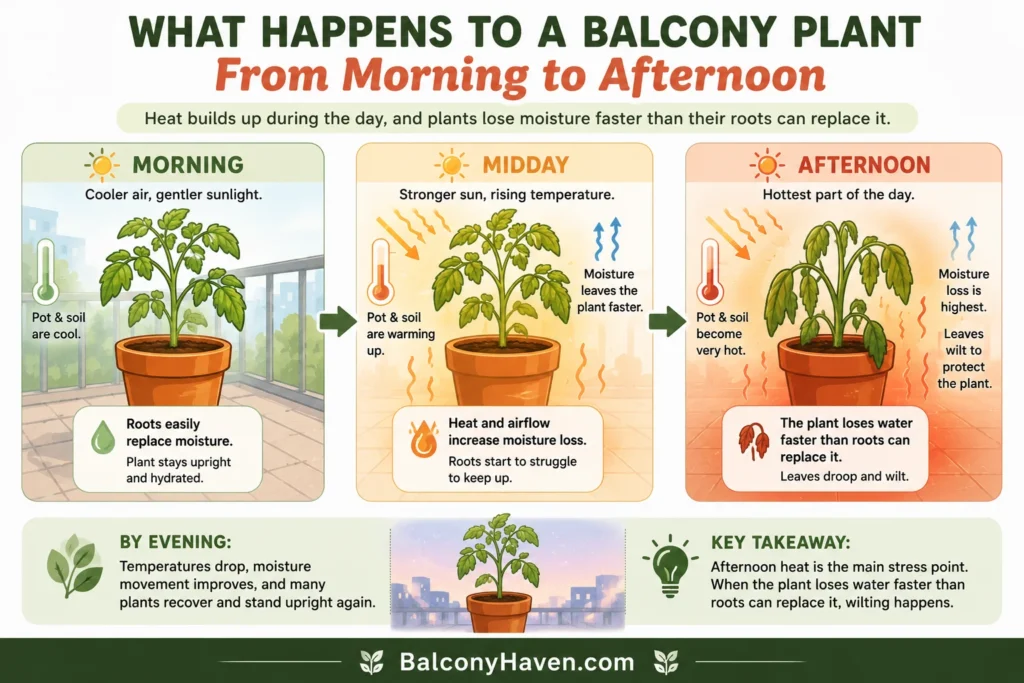
One of the most confusing balcony gardening experiences happens when the soil feels damp but the plant still droops heavily during the afternoon.
This usually happens because root temperature matters just as much as soil moisture. Once roots become overheated, the plant struggles to transport water efficiently through the stems and leaves. The moisture technically exists inside the pot, but the plant cannot move it quickly enough to match the moisture being lost through the leaves.
Large-leaf plants often show this first because broader leaves release more moisture into the air. Tomatoes, cucumbers, basil, strawberries, and leafy greens commonly react this way on hot balconies.
Some plants recover naturally after sunset once temperatures cool again. Others slowly weaken if the same stress repeats day after day.
Small Pots Often Make Afternoon Wilting Worse
Container size affects how quickly balcony plants heat up during the day. Smaller pots hold less soil, which means there is less buffering space protecting roots from rapid temperature changes.
Thin plastic containers often heat quickly under direct afternoon sun. Dark-coloured pots can absorb even more warmth and transfer it directly into the root zone. Balcony flooring can worsen this effect by heating the container from underneath.
This partly explains why some plants appear healthier after being moved into slightly larger containers even when the sunlight stays the same.
Wind Can Increase Wilting More Than Expected
Many balcony gardeners associate wilting only with heat, but wind often plays a surprisingly large role as well.
Air moving between apartment buildings can continuously strip moisture from leaves throughout the afternoon. The balcony may not even feel especially hot, yet the plant still struggles because moisture escapes faster than the roots can replace it.
This is particularly noticeable with herbs and soft-leaf plants. Some plants recover during the evening because airflow weakens once temperatures cool and sunlight disappears.
Practical Insights
Many balcony plants wilt in the afternoon sun because several environmental pressures combine together rather than from one single cause. Reflected sunlight, trapped heat, airflow, root temperature, and container size all influence how quickly moisture moves through the plant during hot afternoons.
Plants growing near glass railings or pale walls often experience stronger reflected heat than gardeners expect. Containers sitting directly on concrete flooring may also warm rapidly underneath the roots.
The position of the containers can also quietly change how much afternoon pressure the plants receive. On some balconies, even small placement changes alter airflow and reflected sunlight noticeably, which is something discussed further in How to Organise Pots for Maximum Sunlight.
This is why balcony gardening often becomes more about observing patterns than following fixed rules.
| Temporary Heat Wilt | More Serious Stress |
|---|---|
| Recovers by evening | Remains wilted overnight |
| Leaves soften temporarily | Leaves become dry or damaged |
| Soil may still feel damp | Soil may become extremely dry |
| Happens during hottest hours | Continues even in cooler periods |
| Growth usually continues | Growth slows noticeably |
Common Misunderstandings
Many people assume wilting automatically means the plant has been underwatered. On balconies, heat stress and reflected warmth can produce very similar symptoms.
Another common misunderstanding is expecting balcony plants to behave exactly like plants growing in open ground. Balcony containers heat faster, dry unevenly, and experience airflow patterns that rarely exist in traditional gardens.
Some gardeners also become confused when a plant recovers at night after looking severely wilted during the afternoon. Temporary heat wilt can appear dramatic even though the plant is still capable of recovering once temperatures cool.
Local & Seasonal Context
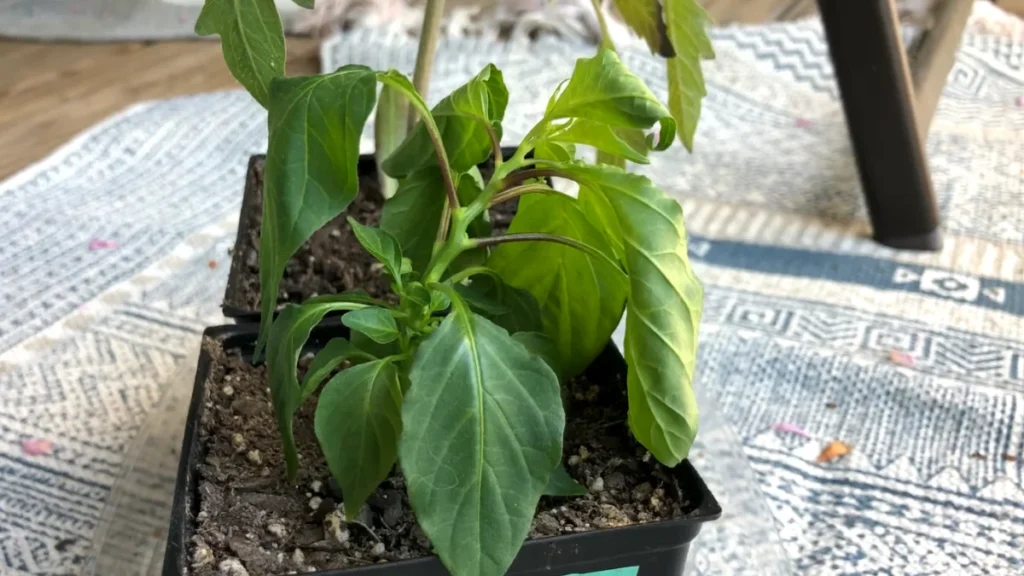
In many Australian apartment balconies, afternoon wilting becomes more noticeable during late spring and summer when surfaces hold heat longer into the evening. West-facing balconies often experience the strongest afternoon pressure because sunlight arrives after walls and flooring have already been warming for hours.
Dry air conditions can also increase wilting speed even when temperatures appear moderate on weather apps.
Balcony Haven Note
I started noticing this more during hotter summer afternoons when some containers wilted much earlier than others, even though they were watered the same way. My chilli plants were usually the first to droop, especially the ones sitting near the balcony wall where the heat seemed to linger longer during the afternoon. What surprised me most was that a few plants actually looked healthier in spots with slightly less direct sun simply because the surrounding surfaces stayed cooler.
Over time, it became easier to see that balcony heat is not only about sunlight hitting the leaves. The flooring underneath the pots, nearby walls, airflow between buildings, and even the type of container all seemed to change how stressed the plants became later in the day. Some afternoons, the balcony itself felt like it was holding heat long after the strongest sunlight had already passed.
Frequently Asked Questions
Can balcony plants recover after wilting in the afternoon?
Many balcony plants recover naturally once temperatures cool later in the evening. Temporary heat wilt often looks dramatic even though the roots are still functioning normally.
Why do balcony plants wilt at the same time every day?
This usually happens because the balcony reaches its hottest period at roughly the same time each afternoon. Walls, floors, and containers release accumulated warmth together during this period.
Does wilting always mean the plant needs more water?
Not necessarily. Some plants wilt because root temperatures become too high, even while moisture still exists inside the container.
Why do balcony plants wilt faster than garden plants?
Balcony roots remain confined inside containers that heat much faster than natural ground soil. Reflected heat and stronger airflow can also increase moisture loss from the leaves.
Final Thoughts
Why do balcony plants wilt in the afternoon sun? In many cases, the answer is connected to how apartment balconies intensify heat, airflow, and root stress in ways that normal garden advice often does not fully explain.
Balcony plants are not only responding to sunlight. They are also reacting to reflected warmth, trapped heat, airflow movement, container temperature, and the structure of the balcony itself. This is why the same plant can behave differently from one balcony to another.
Once these environmental patterns become easier to recognise, afternoon wilting usually feels far less mysterious.
Happy Balcony Gardening!
Leave a Reply