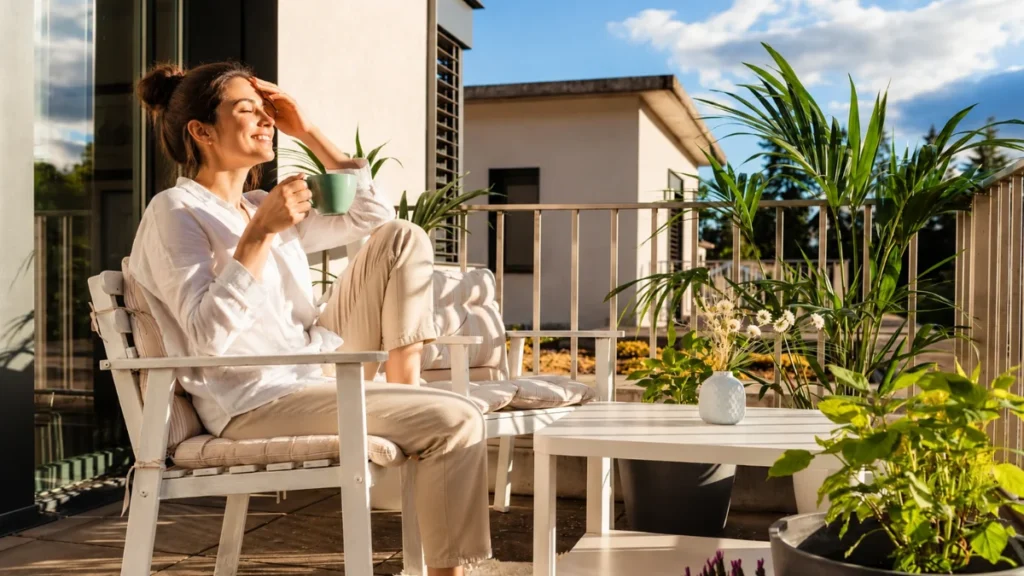
A balcony garden does not always need to be designed around growing as many plants as possible. Sometimes the better goal is much simpler: create a small green space where you actually want to sit. For many apartment dwellers, that means somewhere comfortable for a morning coffee, a quiet breakfast, or ten minutes outside before the day gets busy.
A comfortable coffee balcony usually works best when the seat comes first and the plants support the space around it. Keep the sitting area open, place greenery where you can see it from the chair, use the gentler parts of the balcony for plants that suit those conditions, and avoid filling every free corner with pots. A few well-positioned plants can make a small balcony feel calmer than a crowded collection that constantly needs moving, watering and cleaning.
The useful question is not simply, “Which plants look relaxing?” It is whether your seating position, morning sunlight, wind, containers and plants can comfortably share the same small space. This guide looks at how to create that balance without turning a peaceful balcony into another daily job.
Start With the Morning You Want to Have
When planning a balcony garden for morning coffee and relaxation, it is tempting to start at the nursery.
That is often backwards.
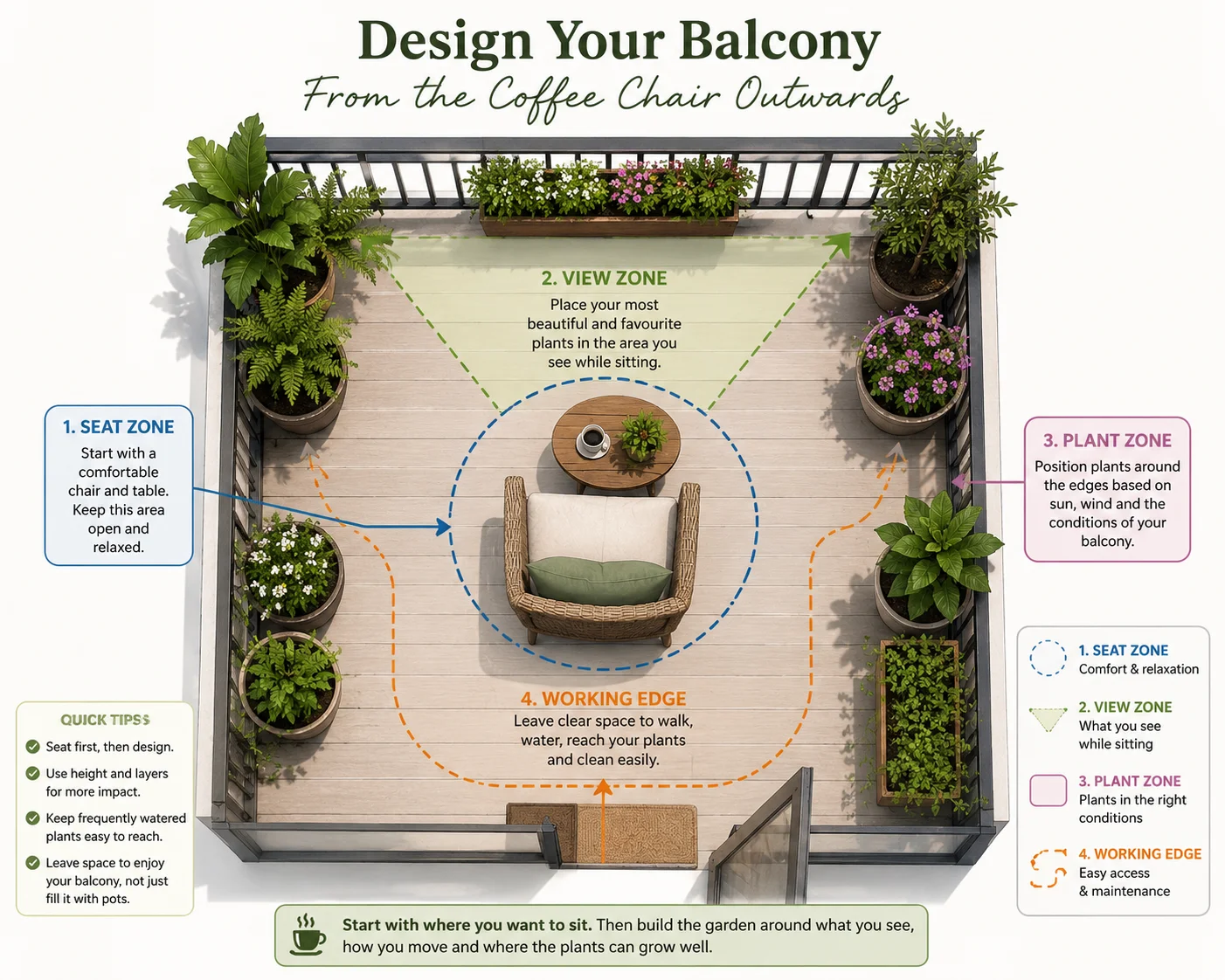
Start with where you want to sit.
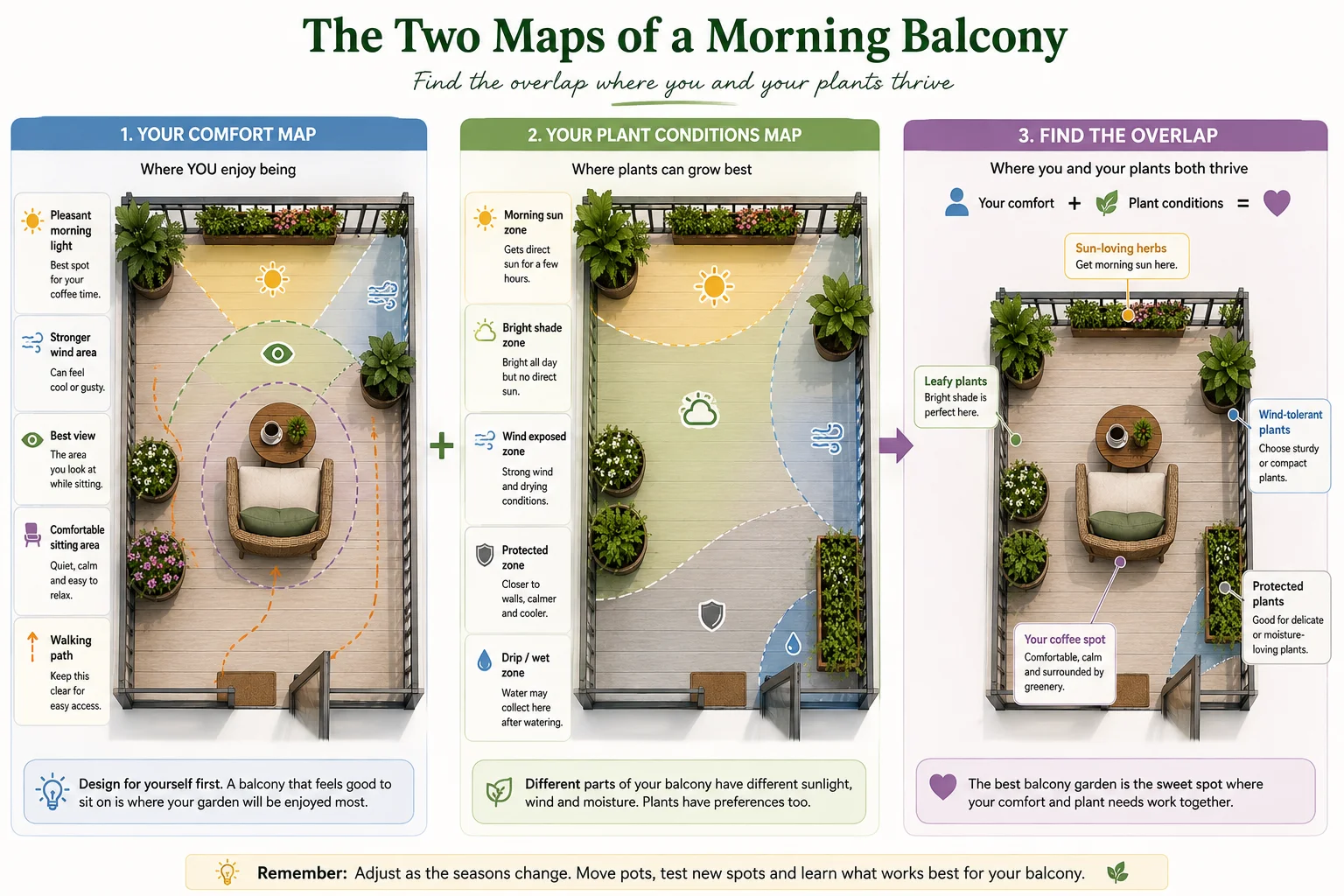
Take a chair outside one morning and notice what happens. Where does the sun reach? Is it pleasant or already too bright? Does wind funnel through one corner? Can you put a cup somewhere safely? Do you look towards plants, a wall, neighbouring buildings or the balcony railing?
This is also the best time to notice whether your planned balcony coffee corner feels comfortable once the sun actually reaches it. Morning sun is often gentler than afternoon sun, but a metal chair, dark tiles, glass balustrade or pale wall can still warm quickly or reflect extra light into the sitting area.
This simple test can tell you more about the layout you need than choosing plants first.
A balcony used mainly for gardening can dedicate almost every useful position to pots. A relaxation balcony needs to share that space with a person.
That means leaving enough room to pull out a chair, walk to the door, water the plants and clean around the pots.
If you are working with a particularly tight area, our guide to how to organise plants in a small balcony can help you use the available space without covering every part of the floor.
Your Balcony Conditions Still Decide What Will Work
A peaceful-looking balcony in a photograph may not work on your balcony.
Morning light can be very different from one apartment to another. An east-facing balcony may receive direct early sunlight and then become shaded. A balcony surrounded by taller buildings might receive only a short beam of direct light. Another may stay bright without receiving much direct sun at all.
That is why morning sun and morning comfort are not exactly the same thing. A balcony can receive useful early light for plants while still feeling too bright, warm or exposed for a long coffee. Reflected light from windows, walls and nearby buildings can also make one part of the balcony feel stronger than another.
If you are not sure what your balcony receives, spend a few mornings watching it before buying plants. You can also use the simple observations in how to measure sunlight on a balcony to understand where direct light actually reaches.
Wind matters just as much.
A seat near the railing may have a beautiful view but also be the windiest place on the balcony. Tall leafy plants placed beside that chair could move constantly, dry quickly or fall towards the sitting area.
There are also weight and drainage limits to consider. Large pots full of wet potting mix become heavy, while water draining from several containers can make a small sitting area messy.
The aim is therefore not to recreate a backyard garden beside a chair. It is to build a small container garden around the conditions your balcony actually gives you.
Build the Garden Around What You See While Sitting
This is one of the most overlooked parts of a relaxing balcony garden. A small balcony retreat usually feels better when the best view is planned from the chair rather than from the doorway.
Plants do not need to surround you completely to create a green feeling.
Instead, sit in your chosen chair and look at the areas that naturally fall into your view. These are your highest-value planting positions.
A medium leafy plant slightly to one side may have more visual impact than six small pots scattered behind your chair. A hanging or trailing plant can bring greenery into your eye line without using floor space. A taller plant near an unattractive wall can soften the background.
Think in layers:
- one taller plant or vertical feature towards the back
- a small group of medium plants around it
- one or two lower or trailing plants near the front
This creates depth without requiring dozens of containers.
If you want the whole area to feel greener rather than simply adding more pots, how to make your balcony feel like a garden explores this idea in more detail.
Choose Plants for the Balcony, Not Just the Mood
There is no single list of “relaxing balcony plants” that will work everywhere.
A fern can look beautiful on a protected, shaded balcony but struggle in strong sun and drying wind. A sun-loving herb may look healthy beside your coffee table on a bright balcony but become thin and weak in deep shade.
Match the plant to the conditions first. Its appearance comes second.
For a balcony receiving gentle early light, you have quite a few options. What potted plants like morning sun? covers suitable choices for balconies that receive their brightest light earlier in the day. This can be especially useful when you want the planting around a balcony seating area to look good without asking shade-loving plants to sit in direct sun.
Here is a simple way to think about plant roles:
| What you want | Plant style to consider | Why it helps |
|---|---|---|
| Green backdrop | Medium leafy plant | Creates visual fullness without many pots. |
| Soft edges | Trailing plant | Breaks up hard railings and container edges. |
| Height | Compact upright plant or climber | Uses vertical space instead of floor space. |
| Scent near the seat | Suitable fragrant herb or flower | Adds another sensory layer. |
| Something useful | Container-friendly herb | Gives the garden a practical purpose. |
| Seasonal interest | Flowering container plant | Changes the look without redesigning the balcony. |
You do not need every category.
Two or three different roles are often enough.
Put Your Most Enjoyable Plants Where You Can Notice Them
Gardeners naturally put plants where the sunlight is best. That makes sense for the plant, but a peaceful balcony garden has another consideration: where you can enjoy it.
The answer is usually a compromise.
For example, the sunniest edge near the railing might be perfect for a herb, while the area beside your chair gets less direct light. Instead of forcing the herb beside the chair, let it grow where conditions suit it and use a shade-tolerant plant closer to your seat.
Your chair, table and flooring deserve the same attention. If a seat becomes hot to touch, glare bounces off nearby glass, or the floor heats your feet quickly, the most comfortable morning position may be slightly farther back even when plants prefer the brighter edge.
This creates a more stable garden because plants are not being asked to live in the wrong conditions just to fit a design.
It also means you spend less time rescuing struggling plants.
Do Not Let Pots Take Over the Floor
A common problem develops slowly.
You buy one plant. Then another. Then a small pot fits between them. A month later, the balcony has become a narrow path through containers.
This can make the garden feel less relaxing even if every individual plant looks good.
Instead of asking, “Can another pot fit here?”, ask:
“Will another pot make this space better?”
Sometimes the answer is no.
Using fewer, slightly larger containers can make the area feel calmer and can also reduce how quickly some pots dry compared with a collection of tiny containers.
Pot choice still needs to suit your plants, balcony structure and ability to move the container. Our guide to how to choose pots for balcony gardening explains the practical differences worth considering.
Vertical space can also help. A secure hanging planter, shelf or climber may add greenery without shrinking the usable floor.
For renters, favour arrangements you can move rather than permanent structures, and check building or rental rules before attaching anything to walls or railings.
Keep Watering Away From Your Coffee Area
A beautiful seating corner becomes much less inviting when the floor is constantly wet.
Think about drainage while planning the layout rather than after all the pots are in place.
Avoid placing containers where drainage water regularly runs underneath your chair or table. Use suitable saucers or trays where appropriate, but do not let pots sit permanently in unwanted standing water.
Also consider the route you take when watering.
If you have to carry a full watering can around chairs, squeeze between pots and reach behind furniture every morning, the layout will quickly become annoying.
Keep frequently watered containers easy to reach.
For balconies without an outdoor tap, how to water plants on a balcony without a hose has practical options for making this easier.
Make the Balcony Pleasant Even When You Are Not Gardening
A morning coffee garden should not depend on everything being freshly watered, flowering and perfectly arranged.
Real balcony plants change.
Leaves drop. Herbs get harvested. Flowers finish. One plant may need pruning while another is growing quickly.
A useful design trick is to make the structure of the balcony pleasant rather than relying only on individual plants.
For example, a simple group of similar pots can still look tidy when one plant is between flowering periods. A strong leafy plant can provide a green background while smaller seasonal plants change in front of it.
Leaving some empty space helps too.
Empty floor is not wasted gardening space when the purpose of the balcony includes sitting and relaxing.
Match the Garden to the Amount of Care You Actually Want
There is an easy trap here: creating such a lush relaxation garden that maintaining it stops being relaxing.
More pots usually mean more individual containers to check. Small pots can dry quickly. Hanging baskets may need more attention because they are exposed to moving air. Plants with very different moisture needs can make watering more complicated.
If you mainly want to enjoy the balcony before work, consider whether you really want to spend that same morning checking twelve different pots.
| Garden style | Plant load | Ongoing effort | Best for |
|---|---|---|---|
| Minimal green corner | 3–5 pots | Lower | Busy people and very small balconies |
| Layered coffee garden | 5–8 pots | Moderate | People who enjoy some regular plant care |
| Lush planted retreat | 8+ pots | Higher | Gardeners who enjoy maintenance as part of the experience |
These numbers are only a rough way to picture the difference. One large demanding plant can require more attention than several easy ones.
If keeping the garden manageable matters to you, how to create a low-maintenance balcony garden looks more closely at reducing unnecessary garden work.
What If Your Balcony Is Windy?
Do not assume morning means calm.
Apartment balconies can funnel wind between buildings, and higher balconies are often more exposed. Even a mild breeze at ground level can feel much stronger around an open balcony edge.
For a coffee area, this affects both plants and comfort.
Try keeping taller plants away from positions where they could lean or fall towards your chair. Low, stable pots may make more sense in exposed areas, while more delicate plants can sit closer to protected walls if the light suits them.
If wind is a regular problem, what are the best plants for a windy balcony? can help narrow down plants better suited to exposed conditions.
You may find that the calmest sitting position and the sunniest plant position are different. That is fine. Your chair and plants do not need to compete for exactly the same spot.
Make Your Morning Balcony Easier to Use
Once the main layout works, small decisions can make the space easier to live with.
- Keep the path from the door to the chair clear.
- Leave enough room around pots to pick up fallen leaves.
- Put thirsty plants somewhere easy to check.
- Group plants with similar watering needs where practical.
- Keep unstable or top-heavy containers away from the sitting area.
- Use vertical space when floor space is more valuable for seating.
- Keep at least one part of the balcony visually simple rather than filling every gap.
The goal is not to make the balcony empty. It is to give the plants and the person using the balcony enough room.
Mistakes That Make a Balcony Less Relaxing
Some balcony garden problems are really layout problems rather than plant problems.
- Buying plants before choosing the seat. You can end up using the most comfortable corner for containers and leaving yourself nowhere pleasant to sit.
- Using too many tiny pots. They can create visual clutter and may need frequent moisture checks.
- Choosing plants only because they look peaceful. Their sunlight, wind and watering needs still have to match the balcony.
- Blocking access to pots. A plant hidden behind furniture becomes harder to water, inspect and clean around.
- Ignoring wind at chair height. A corner can look protected while still receiving uncomfortable gusts.
- Trying to keep every plant beside the seat. Let plants use the positions that suit them and design your view around those positions.
A good balcony does not need to look finished immediately. In fact, leaving one or two spaces empty gives you room to learn how you actually use the area.
Your Morning Balcony Will Change With the Seasons
The comfortable part of a balcony can move through the year.
As the sun angle changes, a chair that receives soft morning light during one season may become shaded or much brighter during another. Nearby buildings, balcony roofs and walls can make these changes surprisingly noticeable.
Plants change as well. A compact plant may become wide enough to crowd the chair. A leafy plant that provided useful screening may become thinner at another time of year.
Treat the layout as adjustable.
Containers are useful for this because some can be moved when conditions or your needs change. You do not have to decide the permanent position of every plant on the first day.
Balcony Haven Note: I think one of the easiest things to overlook with a small balcony garden is that the empty spaces matter too. When I picture a balcony for morning coffee, I would rather have a clear chair, a comfortable view and five plants I can actually enjoy than squeeze another five pots into every available gap. In my experience, that breathing room also makes it easier to notice when a plant is drying out, leaning into a walkway or simply growing larger than expected.
That is also why I like the ideas behind how to create a low-maintenance balcony garden for this type of space. A balcony meant for relaxing feels more useful when caring for the plants does not take over the reason you created the space in the first place.
Frequently Asked Questions
What plants are best around a balcony coffee area?
There is no single best group. Start with the sunlight, wind and heat around the seating area, then choose container plants suited to those conditions. Leafy plants, suitable herbs, compact flowering plants and trailing plants can all work, depending on the balcony.
Is morning sun good for a balcony garden?
Morning sun can be useful because it often reaches plants before the balcony becomes hotter later in the day. However, the number of hours matters, and nearby buildings, walls and railings can create very different light levels within the same balcony.
How many plants do I need to make a balcony feel relaxing?
Probably fewer than you think. One taller plant, several medium plants and a trailing or flowering plant can create a strong green view without filling the entire floor. The arrangement usually matters more than the number.
Can I create a relaxing balcony garden if I rent?
Yes. Pots, movable furniture and non-permanent plant stands can create a flexible setup. Avoid permanent attachments unless they are permitted, and check rental or building rules before hanging anything from walls, ceilings or railings.
What if my balcony is too small for a table and chairs?
Start with the seat. A single compact chair, stool or small bench may be enough. A narrow side table or stable surface for a cup can use much less space than a traditional outdoor dining set. Plants can then be placed vertically or around the remaining edges.
Final Thoughts
A balcony garden for morning coffee and relaxation works best when it is designed as a place to spend time, not simply somewhere to store plants. A calm balcony coffee corner or small balcony retreat should feel comfortable for you while still giving each plant the light, airflow and space it needs.
Start with your chair. Notice the morning sun, wind and view from that position. Then place plants where their needs and your enjoyment can work together. Use height and layers to create greenery without losing the floor, and resist the temptation to fill every remaining gap with another pot.
The result does not need to look like a magazine balcony. If you can walk outside with a cup, sit comfortably, look at healthy plants and enjoy the space without immediately seeing ten jobs that need doing, the balcony is already doing something valuable.
Leave a Reply