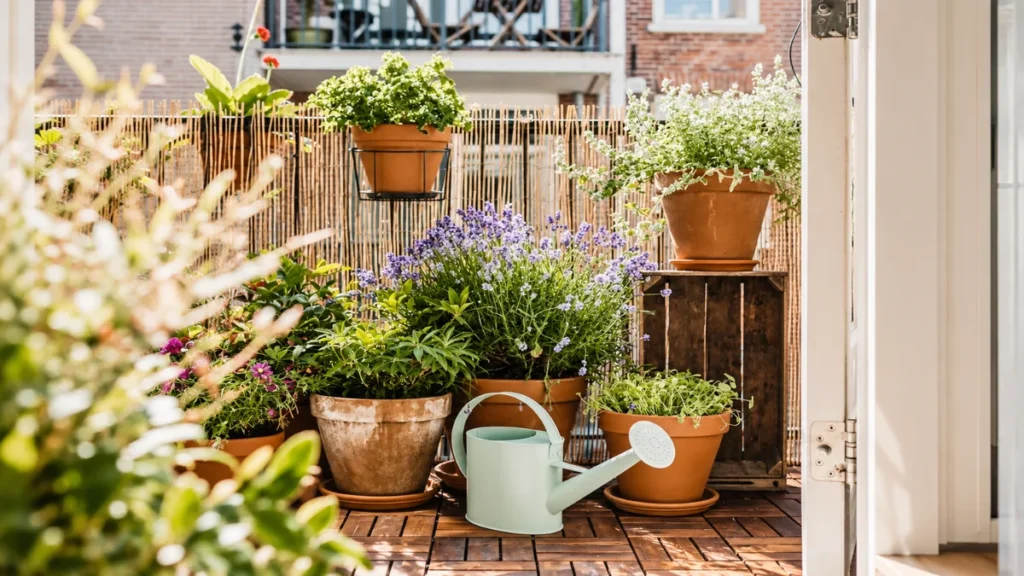
Learning how to water plants on balcony without a hose can feel inconvenient at first, especially when the nearest tap is inside the kitchen or bathroom. Carrying water through an apartment also creates a different problem: you need to give every pot enough water without spilling it across the floor or dripping onto the balcony below.
For most small balcony gardens, the simplest method is to fill a lightweight watering can indoors, carry it outside, and water each pot slowly in two rounds. A bottle, jug, pump sprayer, or self-watering container can also work well, depending on how many plants you have and how quickly their soil dries.
You do not need a hose or a complicated irrigation system to keep balcony plants healthy. What matters more is choosing a method that fits your number of pots, walking distance from the tap, balcony drainage, plant size, and daily routine.
This guide explains how to carry, pour, collect, and manage water safely in a small apartment space. It will also help you avoid common problems such as wetting only the top of the soil, carrying overly heavy containers, leaving water in saucers, or allowing runoff to reach your neighbours.
Which Watering Method Should You Choose?
If you want a quick starting point, match your watering tool to the number and type of containers on your balcony. You can change methods later as your garden grows.
| Your Balcony Setup | Good Starting Method | Why It Usually Works |
|---|---|---|
| One to three small pots | Clean bottle or small jug | Light, simple, and easy to store indoors. |
| Four to ten mixed pots | Small or medium watering can | Provides good control without becoming too heavy. |
| Seedlings or newly planted herbs | Watering can with a rose head or pump sprayer | Gives a gentler flow that is less likely to disturb the soil. |
| Several large vegetable pots | Bucket on the floor with a smaller jug | Reduces trips to the tap while keeping each pour manageable. |
| Busy routine or weekends away | Self-watering containers for thirstier plants | Creates a small moisture reserve between waterings. |
This is only a starting guide. A windy railing planter may need checking more often than a larger pot near a protected wall, even when both contain similar plants.
Why Watering Without a Hose Is Different on a Balcony
In a garden, a hose can reach several plants without moving much water by hand. In an apartment, you may need to fill a container indoors, carry it through a doorway, step around furniture, and avoid spilling water before you even reach the plants.
Balcony pots also lose moisture differently from garden soil. Wind can pull moisture from leaves and potting mix. Sunlight reflected from walls or glass can heat containers. Small pots may dry from the top, sides, and drainage holes within the same day.
At the same time, a shaded or covered balcony may dry slowly. Watering every pot with the same amount can leave one plant thirsty and another sitting in wet soil.
Drainage creates another balcony-specific limit. Excess water cannot simply soak into the ground. It may collect on tiles, stain the floor, run under furniture, or drip through gaps onto a lower balcony.
This is why the best hose-free watering setup is not necessarily the one that carries the most water. It is the one that gives you enough control to water the soil properly without making the process heavy, messy, or difficult to repeat.
Choose a Watering Method That Fits Your Balcony
The right watering tool depends mainly on how many containers you have, how large they are, and how far you need to carry water. A one-litre bottle may be enough for three herbs, but it becomes tiring when you have several large vegetable pots.
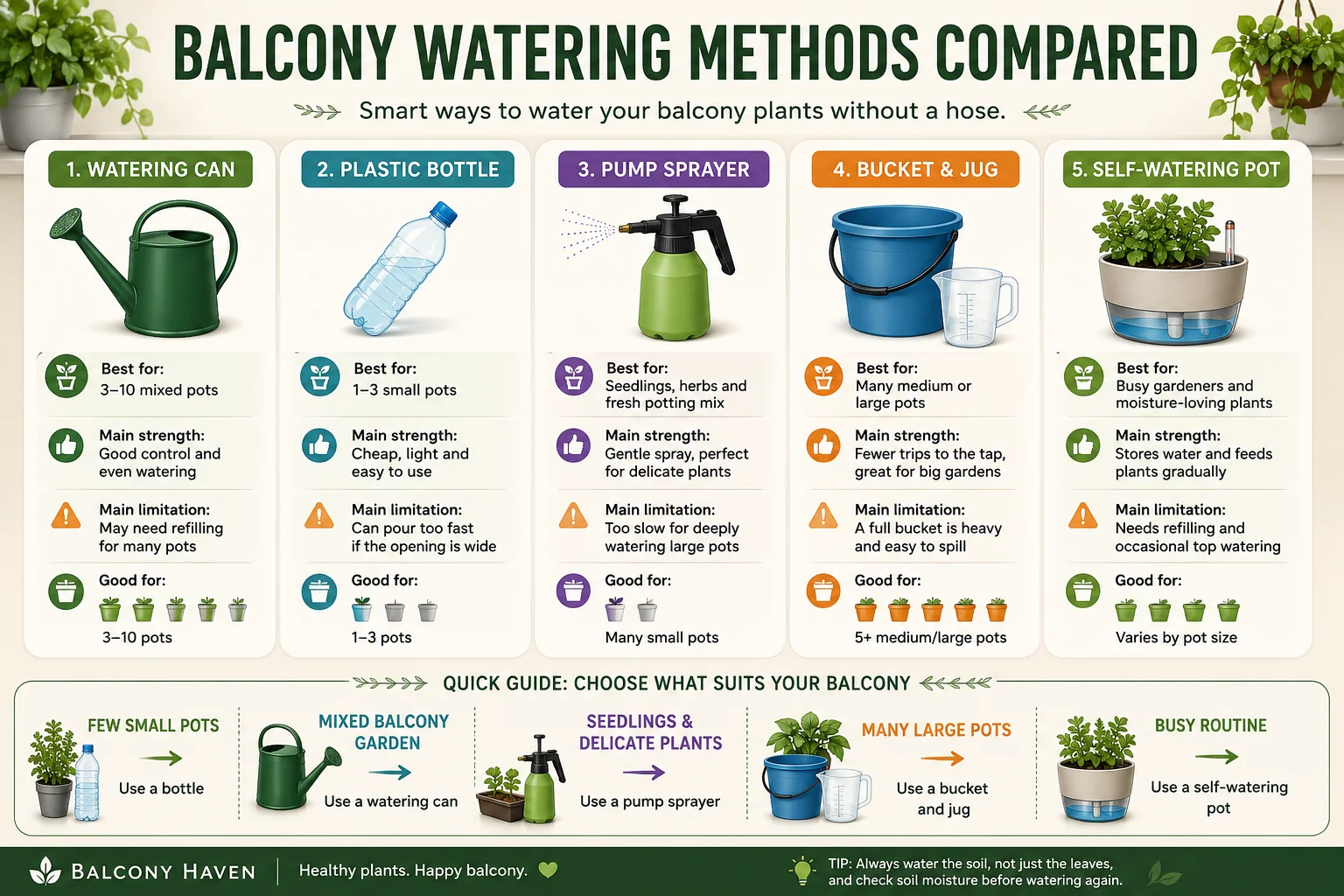
This diagram compares a watering can, bottle, pump sprayer, bucket and jug, and self-watering pot. It shows which method suits a few small pots, a mixed balcony garden, delicate seedlings, several large containers, or a gardener who cannot water every day.
| Watering Method | Best For | Main Advantage | Watch Out For |
|---|---|---|---|
| Small watering can | Most balconies with a few mixed pots | Easy to control and carry | May need several refills for large gardens. |
| Plastic bottle | One to three small pots | Cheap, light, and easy to store | A wide opening can pour too quickly. |
| Jug or measuring jug | Large pots close to the doorway | Easy to fill and measure | Water may splash without a narrow spout. |
| Pump sprayer | Seedlings, fresh potting mix, and delicate herbs | Provides a gentle flow | Too slow for deeply watering large pots. |
| Bucket and small jug | Many medium or large pots | Reduces repeated trips to the tap | A full bucket can be heavy and easy to spill. |
| Self-watering container | Busy gardeners and moisture-loving plants | Stores water for gradual use | Still needs checking and occasional top watering. |
If you are still deciding between basic tools, Best Balcony Watering Methods for Beginners explains how common watering options behave in real container gardens.
Use a Watering Can for Most Everyday Watering
A small or medium watering can is usually the most practical choice for watering balcony plants without a hose. It gives you more control than an open bucket and directs water closer to the potting mix than a wide jug.
For apartment use, a watering can holding about two to five litres is often easier to manage than a very large garden can. It may require an extra trip to the tap, but it is less likely to hurt your wrist, splash water indoors, or become difficult to pour accurately.
A long narrow spout is helpful when pots sit behind other containers or under thick leaves. A removable rose head can be useful for seedlings, but a normal open spout is often faster for established plants.
Choose a can that fits easily beneath your indoor tap. Some attractive watering cans are too tall for a kitchen sink or too wide to fill without splashing. A practical shape matters more than appearance when you use it several times each week.
I have also found that a narrow spout makes a noticeable difference when several containers are close together. It lets you reach the soil beneath leaves without moving every pot or pouring water across the foliage.
Carry Water Safely Through Your Apartment
The safest container is not always the largest one. Water is heavy, and a full can can become awkward when you need to open a sliding door or step over a balcony threshold.
Fill the container only to a level you can carry comfortably with one hand. Leaving a little empty space near the top also prevents water from sloshing over the sides while you walk.
If the route from your tap to the balcony is long, place a washable mat or small tray near the doorway. This catches occasional drips before they spread across indoor flooring.
For a balcony with many plants, carrying one huge bucket is not always efficient. Two lighter trips may take slightly longer, but they are easier to control and less likely to create a large spill.
- Keep the walkway between the tap and balcony clear.
- Do not carry more water than you can pour steadily.
- Use a container with a strong handle and balanced shape.
- Open the balcony door before lifting a heavy container.
- Keep a cloth near the doorway for small spills.
Water Each Pot Slowly in Two Rounds
One of the most useful ways to water balcony pots is to divide the water into two smaller pours. The first pour moistens the upper potting mix. After a short pause, the second pour can move more evenly into the root zone.
This matters because very dry potting mix can pull away from the sides of a container. When water is poured quickly, it may run through the gap between the soil and pot wall, then leave through the drainage holes without properly wetting the centre.
Start by pouring slowly around the surface rather than emptying all the water beside the plant stem. Move the spout around the pot so the whole root area receives moisture.
Wait about 20 to 60 seconds, depending on the pot size. Then add the second round. This short pause gives dry potting mix time to absorb the first amount instead of allowing everything to rush straight through.
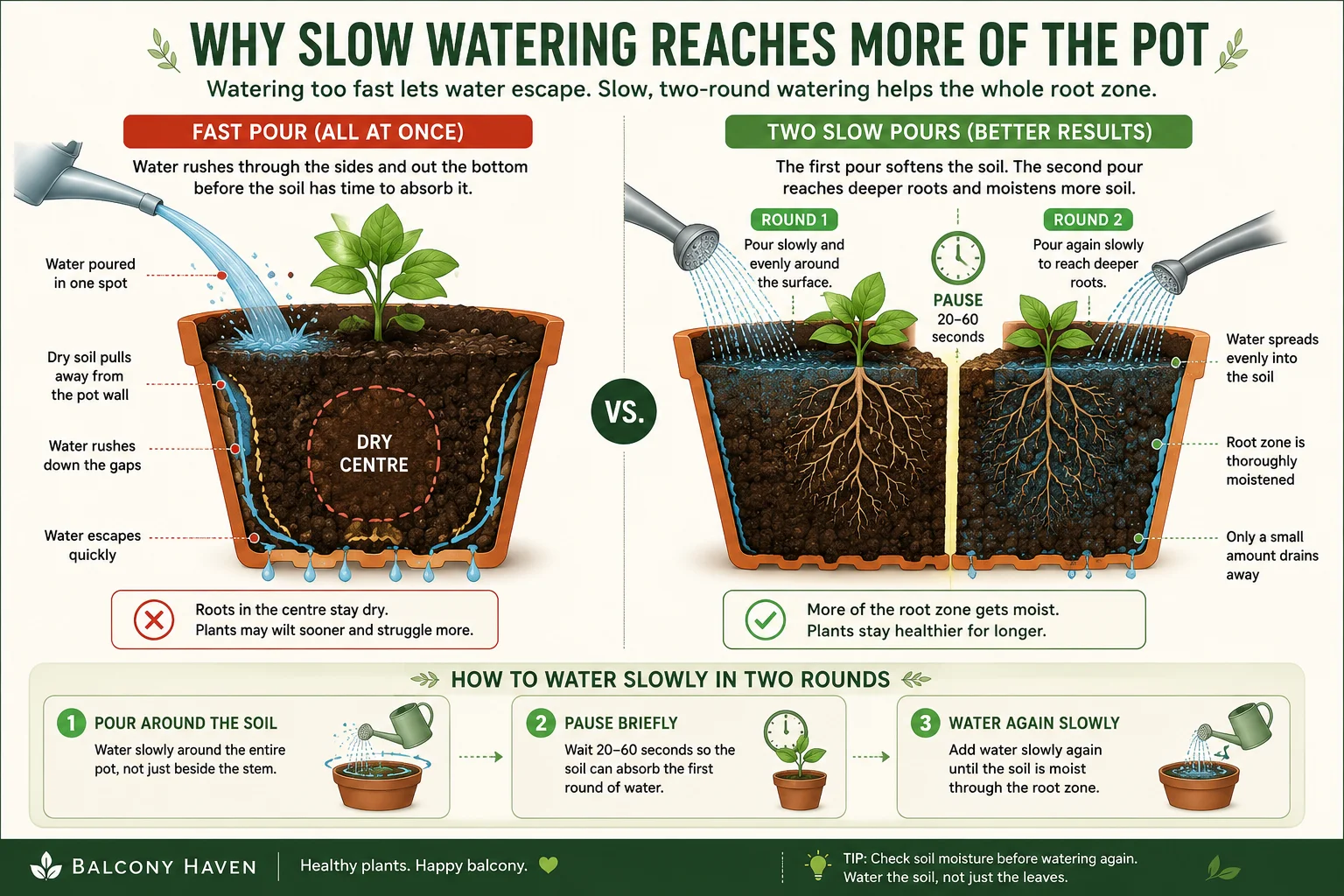
This diagram shows what can happen inside a dry balcony pot. A fast pour may travel down cracks near the container wall while the centre stays dry. Two slower pours give the potting mix more time to absorb moisture across the root zone.
I have noticed that this two-round method is especially useful for pots that have been missed for a day or exposed to strong heat. The first small pour may seem to disappear quickly, while the second spreads more evenly once the dry mix has started absorbing water again.
Check Whether Water Reached the Root Zone
A wet surface does not always mean the whole pot has been watered. A light splash can darken the top centimetre of soil while roots lower in the container remain dry.
After watering, push a clean finger a few centimetres into the potting mix if the plant and pot size allow it. The soil below the surface should feel evenly damp rather than dusty and dry.
For deeper containers, a wooden skewer can provide a simple check. Push it into the potting mix away from thick roots, leave it briefly, then remove it. Damp soil may darken the wood or cling slightly to it. A completely clean, dry skewer can suggest that water did not move very far down.
Pot weight is another useful clue. With time, you may notice that a properly watered container feels heavier when gently lifted or tilted. This is often more reliable than watering according to a fixed daily schedule.
The goal is not to make every pot permanently wet. It is to wet the active root area, then allow the plant and potting mix to use that moisture at a pace that suits the plant.
Manage Drainage and Runoff
Drainage is necessary, even when you are trying to keep the balcony floor dry. A container without drainage may appear tidy at first, but water can collect around the roots where you cannot see it.
Place suitable saucers or trays under pots to catch the first small amount of runoff. The saucer should be wide enough to sit securely beneath the drainage holes, but it should not become a permanent pool of water.
If water collects in a saucer and remains there after the soil has drained, empty it when practical. This is especially important on shaded or covered balconies, where water evaporates slowly.
For large pots, water in smaller stages so the tray has time to collect runoff without overflowing. You may discover that the plant needs less water than you were pouring, or that very dry soil needs a slower first round.
The guide on How to Stop Water Dripping on Lower Balconies offers more ways to control runoff while still allowing container drainage.
It is also helpful to understand the difference between safe drainage and soil that stays soaked. Drainage Tips for Small Balcony Containers explains how pot holes, trays, and potting mix work together.
Watering a Balcony With Many Pots
When the number of plants grows, repeatedly walking to the tap can become the hardest part of balcony watering. A simple refill station can make the job easier without installing a hose.
One option is to carry a partly filled bucket to the balcony, place it on a stable floor area, and use a smaller jug to water each pot. This reduces trips while keeping the pouring container light.
Do not place a full bucket on a table, railing, plant stand, or unstable stool. Keep it on the floor where it cannot easily fall. Avoid leaving open water where young children or pets can reach it.
Another approach is to group plants according to their water needs. Thirsty vegetables and herbs can sit in one accessible area, while rosemary, succulents, and plants that prefer drier soil can sit elsewhere.
This does not mean every plant in a group will need exactly the same amount. It simply makes it easier to check similar containers without moving back and forth across a narrow space.
| Balcony Setup | Practical Watering Approach | Why It Works |
|---|---|---|
| Two to four small pots | One small watering can or bottle | Fast to fill, carry, and store. |
| Five to ten mixed pots | Medium watering can with one or two refills | Provides control without becoming too heavy. |
| Several large vegetable pots | Stable bucket on the floor with a small jug | Reduces repeated trips while keeping each pour manageable. |
| Narrow balcony | Long-spout watering can | Reaches pots without moving every container. |
| Mixed dry and moisture-loving plants | Group pots by general watering needs | Reduces accidental overwatering. |
| Balcony used only on weekends | Self-watering pots for thirstier plants | Provides a moisture reserve between visits. |
Watering Small Pots, Herbs, and Seedlings
Small containers are easy to water, but they are also easy to overwater or miss completely. A strong pour can disturb seedlings, expose roots, splash potting mix onto the floor, or send most of the water over the edge.
A small watering can with a rose head, squeeze bottle, narrow-spout bottle, or pump sprayer can provide better control. A sprayer is particularly useful when seeds have recently germinated and the root system is still close to the surface.
However, misting is not enough for established herbs in normal pots. Mist can wet leaves and the very top of the soil without supplying meaningful moisture to deeper roots. Once seedlings become established, gradually switch to slower, deeper watering.
Railing planters and hanging pots may also dry faster because wind reaches more sides of the container. Check them separately rather than assuming they behave like pots sitting on the protected balcony floor.
Options for Busy Balcony Gardeners
If carrying water every day is difficult, the solution may be to help the pot hold and distribute moisture more steadily rather than trying to carry larger amounts at once.
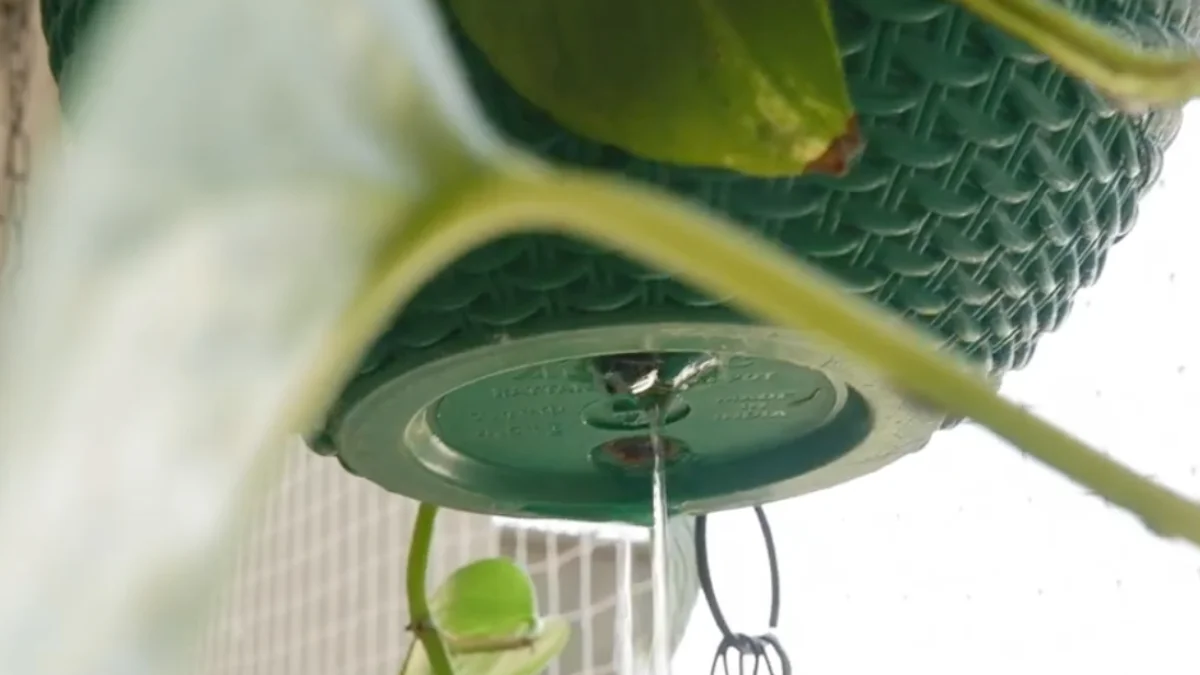
Self-watering pots have a reservoir below the potting mix. Water moves upward as the plant and soil need it. They can be useful for leafy greens, basil, mint, and some fruiting vegetables, especially during warm weather.
They still need attention. The reservoir must be refilled, drainage outlets must remain clear, and the potting mix should occasionally be watered from above. A self-watering pot can also stay too damp in cool, shaded conditions.
For a closer look at how reservoirs work, read Best Self-Watering Pots for Balconies.
A layer of suitable mulch can also slow surface drying. This may reduce how often you need to carry water, although mulch cannot correct an undersized pot, compacted soil, or a container baking against a hot wall.
Watering spikes and inverted bottles can help temporarily, but their flow can be uneven. One bottle may empty in a few hours while another releases almost nothing. Test any slow-release method while you are still home rather than relying on it for the first time before going away.
Common Apartment Watering Situations
No-hose balcony watering looks different depending on the apartment, balcony position, and way the space is used. These common situations may help you adjust the basic method.
If You Live on a High Floor
Higher balconies can be much windier than the ground-level weather suggests. Pots near the railing may dry faster, and water from a wide spout can blow onto leaves or the floor.
Use a narrow-spout watering can and bring the spout close to the soil. Check exposed railing planters separately from containers protected by walls or furniture.
If You Only Grow a Few Herbs
A large watering can may be unnecessary for two or three herb pots. A small can, bottle, or kitchen jug may be enough, provided you pour slowly and check whether the water reaches below the surface.
Keep in mind that basil and mint may use water faster than rosemary or thyme, even when the pots sit beside each other.
If You Are Away Most Weekends
Self-watering pots may help with plants that prefer even moisture. Mulch, slightly larger containers, and moving vulnerable pots away from strong afternoon heat can also reduce rapid drying.
Test the setup before leaving. Avoid assuming an inverted bottle or watering spike will release water at the correct rate without checking it first.
If Your Balcony Faces Hot Afternoon Sun
West-facing and strongly sun-exposed balconies can heat pot walls and dry small containers quickly. Water earlier in the day when possible, and pay special attention to dark pots, grow bags, and hanging baskets.
If a pot becomes dry again very quickly, the long-term answer may be a larger container, more shelter, mulch, or a different plant position rather than simply adding more water every evening.
If You Rent and Cannot Install Irrigation
A portable setup is usually more practical than a fixed system. Lightweight watering cans, trays, self-watering pots, and a floor-level bucket station can all be used without drilling, plumbing, or changing the building.
Portable tools are also easier to clean, rearrange, and take with you when moving house.
Adjust for Hot, Sunny, or Windy Balconies
A watering method that works in mild weather may not keep up during hot or windy conditions. Wind can dry leaves and potting mix even when the air temperature does not feel extreme. Afternoon sun and reflected heat can also warm pot walls long after the brightest sunlight has passed.
On these balconies, check the potting mix earlier in the day rather than waiting for severe wilting. Plants in small dark pots, hanging baskets, fabric grow bags, and railing planters often need attention first.
I have noticed that pots nearest an exposed railing can dry sooner than pots placed closer to the building wall. The difference may not be obvious until the weather becomes warmer or windier.
If the soil is repeatedly dry soon after watering, carrying more water is not always the best long-term answer. The pot may be too small, the potting mix may repel water when dry, or the container may be exposed to too much heat and wind.
Balcony Soil Drying Out Too Fast explains how pot size, material, sun, wind, and potting mix can shorten the time between waterings.
For plants that prefer steady moisture, How to Keep Soil Constantly Moist on a Balcony provides practical ways to reduce rapid drying without leaving roots waterlogged.
Troubleshooting Hose-Free Balcony Watering
If watering feels difficult or plants still appear thirsty, the problem may be the way water is moving through the container rather than the amount you carry from the tap.
| What You Notice | What May Be Happening | What to Try |
|---|---|---|
| Water runs straight through the pot | Dry potting mix may have pulled away from the container wall. | Water slowly in two rounds, with a short pause between pours. |
| The top looks wet but the plant still wilts | Only the surface may be moist while deeper roots remain dry. | Check below the surface with a finger or wooden skewer. |
| Water repeatedly spills onto the floor | The flow may be too fast, or the saucer may be too small. | Use a narrower spout, smaller pours, and a wider collection tray. |
| The plant dries out again within a day | The pot may be too small, exposed to heat, or losing moisture in wind. | Consider a larger pot, mulch, shade, or a more protected position. |
| The pot stays wet for several days | The balcony may be shaded, cool, covered, or poorly ventilated. | Wait longer before watering and check drainage and soil moisture. |
| Leaves droop soon after watering | The soil may already be too wet, or water may not be spreading evenly. | Check deeper moisture before adding more and make sure drainage holes are clear. |
| A bottle empties too quickly | The opening may be too large or the soil may not control the flow. | Test a smaller opening or use a self-watering pot designed for steady release. |
Not every wilted plant needs more water. Checking the soil first can prevent a dry-looking plant from being watered again when its roots are already sitting in damp potting mix.
Practical Hose-Free Watering Tips
A few small changes can make apartment watering faster and less messy without turning it into a complicated system.
- Keep the watering can near the indoor tap rather than outside in harsh sun.
- Water the potting mix rather than pouring over the entire plant.
- Use two slower pours when soil has become very dry.
- Start with the thirstiest or fastest-drying pots.
- Move hard-to-reach containers before they become too heavy.
- Keep saucers visible so you can notice standing water.
- Use a smaller container instead of overfilling a large one.
These habits do not remove every watering trip, but they make each trip more useful. The aim is to deliver water where the roots can absorb it rather than simply getting the surface wet.
Common Watering Mistakes
Most hose-free watering problems are not caused by the lack of a hose. They happen because water is carried, poured, or managed in a way that does not match the pot.
- Pouring too quickly: Water escapes through cracks or over the pot edge before the root zone becomes moist.
- Using only a spray bottle: Misting may not supply enough water for established plants.
- Carrying an overly full bucket: A heavy container is harder to control and more likely to spill.
- Watering every pot equally: Pot size, plant type, wind, and sunlight change how much water each container needs.
- Leaving saucers full: Roots may remain in overly wet soil after the plant has received enough.
- Waiting for every plant to wilt: Repeated severe wilting can stress plants, especially vegetables and soft herbs.
Another common mistake is assuming that water leaving the drainage holes proves the whole pot is wet. In very dry soil, water may travel down one narrow path and leave most of the root ball untouched.
Seasonal Watering Changes
Balcony watering should respond to conditions rather than a fixed calendar. In warm, dry, or windy weather, pots may need checking more often. During cool, humid, or cloudy periods, the same containers may stay moist for much longer.
Summer usually makes small pots, hanging baskets, railing planters, grow bags, and dark containers dry fastest. Watering earlier in the day gives plants time to absorb moisture before the hottest part of the afternoon. Evening watering can also work when necessary, but avoid leaving leaves and balcony floors needlessly wet overnight in poorly ventilated spaces.
During cooler weather, lift or check the pot before automatically watering. A surface that looks dry can hide damp soil below, particularly in deep containers on covered balconies.
Balcony Haven Note: I have noticed that using a smaller watering can can sometimes make watering feel easier, even when it means an extra refill. It is simpler to carry, easier to aim between leaves, and less tempting to pour too much water into one pot just to empty the can.
Frequently Asked Questions
What can I use instead of a hose to water balcony plants?
A small watering can is usually the easiest option. For a few pots, you can also use a bottle or jug. A pump sprayer suits seedlings, while a bucket and small jug can reduce trips when you have several large containers.
Can I water balcony plants with a plastic bottle?
Yes. A clean plastic bottle can work well for one or two small pots. Pour slowly because a wide bottle opening may release water too quickly. A small hole in the lid can provide more control, but it may be too slow for large containers.
How do I water balcony plants without making a mess?
Use a container you can carry comfortably, leave some empty space at the top, and pour slowly. Place suitable saucers beneath pots, water in smaller rounds, and stop before the tray overflows. Keep a washable mat or cloth near the balcony doorway for small drips.
How can I water many balcony plants without a tap outside?
You can carry a partly filled bucket to the balcony and use a smaller jug to water individual pots. Keep the bucket on a stable floor area. Grouping plants by general water needs can also make the routine faster.
Should water come out of the bottom of every pot?
A small amount of drainage can show that water has moved through the container, but it is not necessary to create heavy runoff every time. Very dry soil may also allow water to escape around the sides while the centre remains dry, so check the moisture below the surface.
Are self-watering pots useful when there is no balcony hose?
Yes, they can reduce how often you need to carry water for plants that prefer steady moisture. They still need refilling and checking, and they may stay too wet on cool or shaded balconies.
Final Thoughts
Understanding how to water plants on balcony without a hose becomes easier when you match the tool to the size of your garden. A bottle may be enough for a few herbs, a watering can suits most mixed balconies, and a bucket with a small jug can help when you have several large pots.
The way you pour matters just as much as the container you use. Slow watering in two rounds gives dry potting mix time to absorb moisture and helps more water reach the roots instead of escaping around the sides.
There is no need to build a complicated watering system before you begin. Start with a container that feels comfortable to carry, watch how each pot behaves, manage the runoff, and adjust as the weather changes.
Balcony plants do not need a hose. They need water delivered steadily, safely, and deeply enough for the roots to use it.
Leave a Reply