Creating a balcony garden that does not demand constant attention can be harder than it sounds. Pots dry faster than garden beds, wind can pull moisture from leaves, hard balcony surfaces can become surprisingly hot, and even plants sitting only a metre apart may need different care.
The easiest way to keep a balcony garden low-maintenance is to grow fewer plants that genuinely suit your conditions, use pots that do not dry out too quickly, and group plants with similar water and sunlight needs. Keep frequently watered pots easy to reach and use sheltered positions to reduce unnecessary stress from wind and heat. The goal is not a garden that needs no care, but one that does not create avoidable work.
A low-maintenance balcony garden usually comes from better decisions at the beginning rather than clever shortcuts later. Choosing the right plant for the right part of the balcony can reduce repeated watering, moving, pruning, replacing, and troubleshooting.
This guide explains how to create a low-maintenance balcony garden around the sunlight, wind, heat, space, and watering conditions you actually have. It also looks at the small setup choices that can quietly make a balcony garden much easier or harder to manage.
Why Balcony Gardens Become High-Maintenance
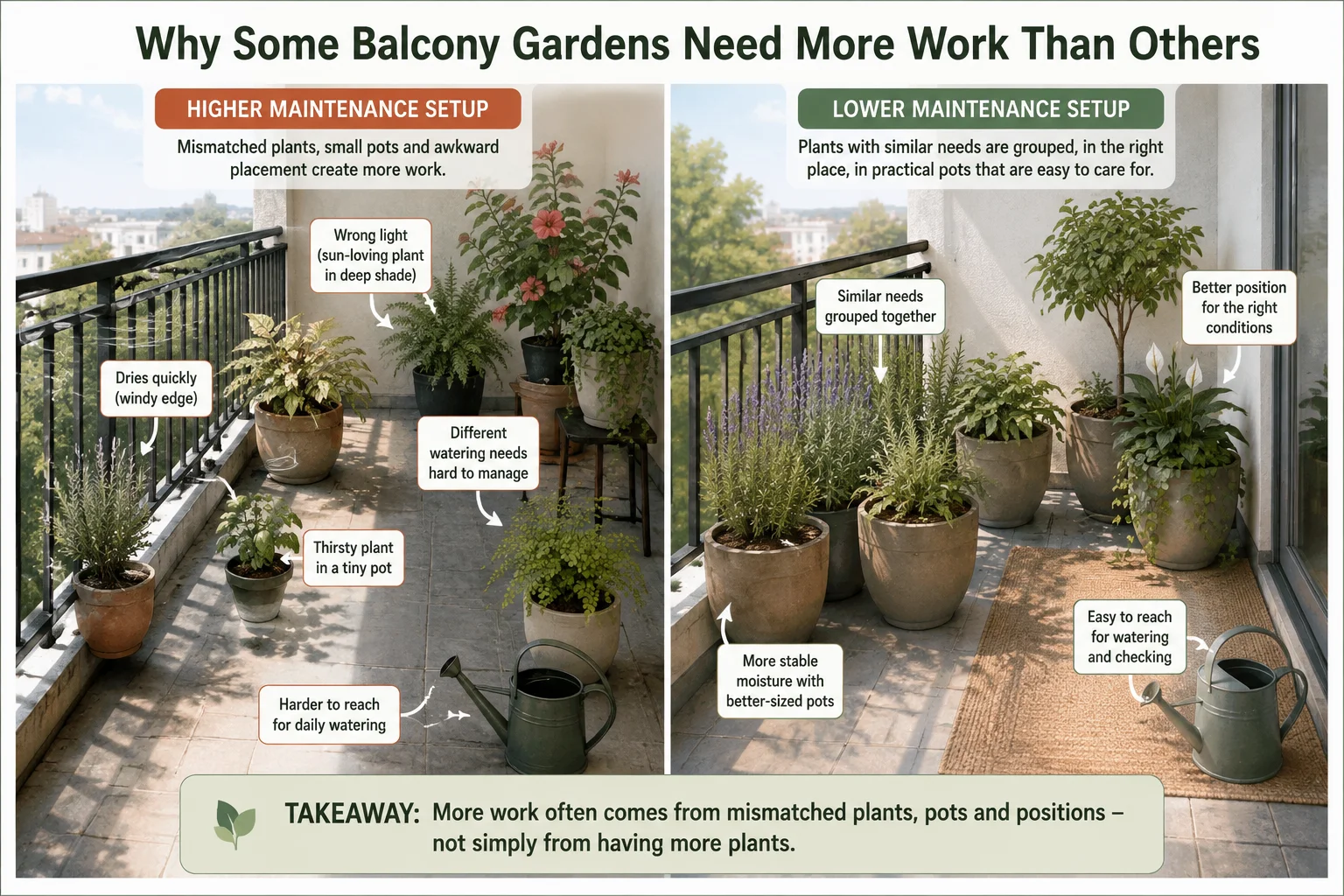
A plant does not become high-maintenance simply because it needs regular care. Problems usually start when the plant, pot, position, and balcony conditions do not work well together.
For example, a plant that normally handles dry conditions may still need frequent watering when it is growing in a very small pot beside a hot glass railing. A plant that prefers steady moisture may become difficult to manage when exposed to strong wind for most of the day.
Balcony gardening also concentrates plants into a small area. Every extra pot means another container to water, inspect, clean around, and sometimes move. Ten tiny pots can easily create more work than four larger, well-positioned containers.
This is why learning how to create a low-maintenance balcony garden is mostly about reducing unnecessary differences between plants and reducing the conditions that make them struggle.
Start With Your Balcony Conditions
Before choosing plants, spend some time looking at how your balcony behaves during a normal day.
Sun direction is important, but it is only part of the picture. Notice where the balcony becomes hottest, where wind enters, where rain reaches, which corners stay protected, and which areas remain shaded for most of the day.
Two parts of the same balcony can behave very differently. A pot beside the railing may receive more sunlight and wind, while another pot near the apartment wall may stay sheltered and moist for much longer.
If you are unsure how much direct light your space receives, our guide on how to measure sunlight on a balcony can help you work out the brighter and shadier parts of your space.
Also consider weight and drainage. Large containers can make watering easier because they generally hold moisture longer, but potting mix becomes heavy when wet. Water also needs somewhere safe to drain without creating a mess or dripping onto neighbours below.
A Simple 5-Step Way to Start
If you are starting from an empty balcony, you do not need to plan every plant at once. These five decisions are enough to create a simpler starting point.
- Observe the balcony first. Notice the main sunny, shaded, windy, hot, and sheltered areas.
- Choose one or two groups of plants. Look for plants with similar sunlight and watering needs instead of collecting many completely different types.
- Choose practical pots. Give plants enough root space without filling the balcony with unnecessarily large or heavy containers.
- Place each group where it naturally fits. Use the balcony conditions instead of choosing positions only for appearance.
- Make watering easy before adding more plants. Keep frequently checked containers within easy reach and see how the first group behaves before expanding.
This simple order prevents a common balcony problem: buying many attractive plants first and then trying to make the space suit all of them afterwards.
Reduce the Number of Different Plant Needs
One of the easiest ways to accidentally create a high-maintenance balcony is to grow many plants that all want different conditions.
You might have one plant that prefers constantly moist soil, another that likes to dry between watering, one that needs protection from afternoon heat, and another that needs the brightest position available. Even if none of those plants is particularly difficult, caring for them together becomes complicated.
A simpler approach is to create small groups of plants with similar needs.
You might keep drought-tolerant sun lovers together in one brighter area, for example, while plants that prefer gentler light and steadier moisture stay together in a more sheltered section.
This does not mean every plant needs exactly the same watering. It simply reduces the number of completely different conditions you need to remember.
Choose Low-Maintenance Plants That Suit Your Balcony
It is tempting to search for a list of low-maintenance balcony plants and choose from that. The problem is that a plant only feels low-maintenance when your balcony suits it.
A supposedly easy plant that prefers full sun may become surprisingly demanding on a shaded balcony. You may keep moving it towards the light, worrying about slow growth, or trying to encourage it to perform in conditions it does not enjoy.
The same thing can happen with shade-loving plants placed in strong afternoon sun or delicate plants exposed to constant balcony wind.
Instead of asking only whether a plant is easy to grow, think about whether it naturally fits the conditions you already have.
- Does it suit the amount of sunlight your balcony receives?
- Can it tolerate your normal wind exposure?
- Will it fit into a practical container as it grows?
- Can you easily provide the amount of water it needs?
- Will it need regular moving or protection to stay comfortable?
If you are still deciding what to grow, our guide to the easiest plants for beginners can help narrow down practical choices.
For exposed apartments, it is also worth looking specifically at plants that grow well on windy balconies. Choosing plants that already tolerate your conditions is usually easier than continually protecting plants that do not.
Choose Pots That Make Watering Easier
Small pots save space, but they can also make a balcony garden much more demanding.
A small container holds less potting mix, which means there is less moisture available around the roots. In warm sunlight or drying wind, that small amount of soil can lose water quickly.
This does not mean every plant should go into the largest pot possible. Oversized containers can stay wet for too long, become unnecessarily heavy, and take up valuable balcony space.
A more useful approach is to choose a container that gives the plant enough root space while still being practical for the balcony.
Pot material matters too. Different materials heat up, cool down, and lose moisture differently, while drainage holes affect how quickly excess water can escape. Our guide on how to choose pots for balcony gardening explains these trade-offs in more detail.
If you already have pots that seem to become dry much faster than expected, it may help to look at why balcony soil dries out too fast. The cause is not always simply that you are watering too little.
Make Watering Simple to Maintain
Watering is usually the most repeated job in a balcony garden, so a genuinely low-maintenance garden should make this job easy.
Keep plants that need frequent checking somewhere you can reach comfortably. If you need to move chairs, squeeze behind furniture, or lift other pots every time you water, even a small collection of plants can start to feel like work.
Grouping plants with similar moisture needs can also simplify the process. Instead of remembering many separate routines, you can check a group of pots at the same time and water only those that need it.
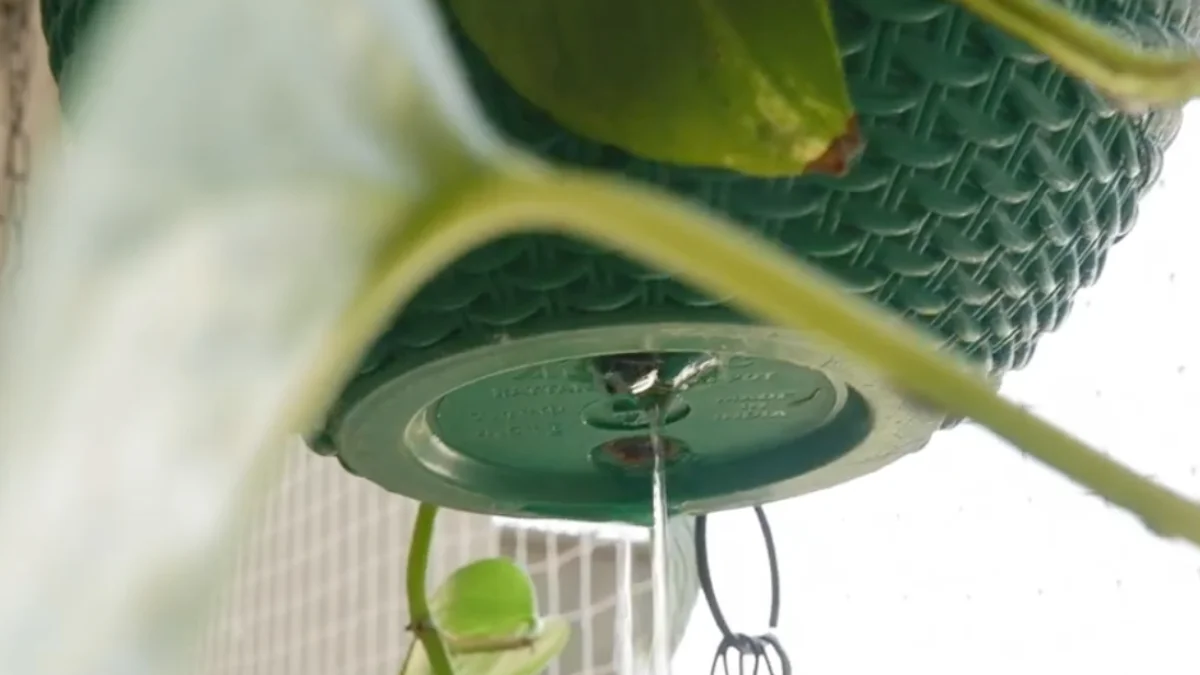
Self-watering containers can be useful for some balcony plants because they hold a reserve of water beneath the potting mix. They are not automatically better for every plant, but they can reduce how quickly certain containers need attention. Our guide to self-watering pots for balconies explains where they tend to be most useful.
If you do not have an outdoor tap, build your setup around a watering method that is easy to repeat. A watering can or refillable container may be simpler than installing something complicated that you eventually stop using. You can also see our practical options for watering balcony plants without a hose.
Use Plant Positioning to Reduce Work
Plant placement can quietly reduce maintenance without requiring any new equipment.
Imagine three pots sitting separately across a hot, windy balcony. Each container is exposed to moving air and surrounding heat from several directions. Bringing suitable plants into a loose group can create a slightly more sheltered area around them.
A taller plant may also provide some protection for a smaller plant behind it, while neighbouring foliage can reduce how exposed the surfaces of nearby pots feel.
This does not mean pushing every container tightly together. Crowded leaves can reduce airflow and make it harder to inspect or water individual pots.
The goal is organised shelter rather than crowding.
If floor space is limited, our guide on how to organise plants on a small balcony looks at practical ways to arrange containers without making the space difficult to use.
Watch for Hidden Heat and Wind Zones
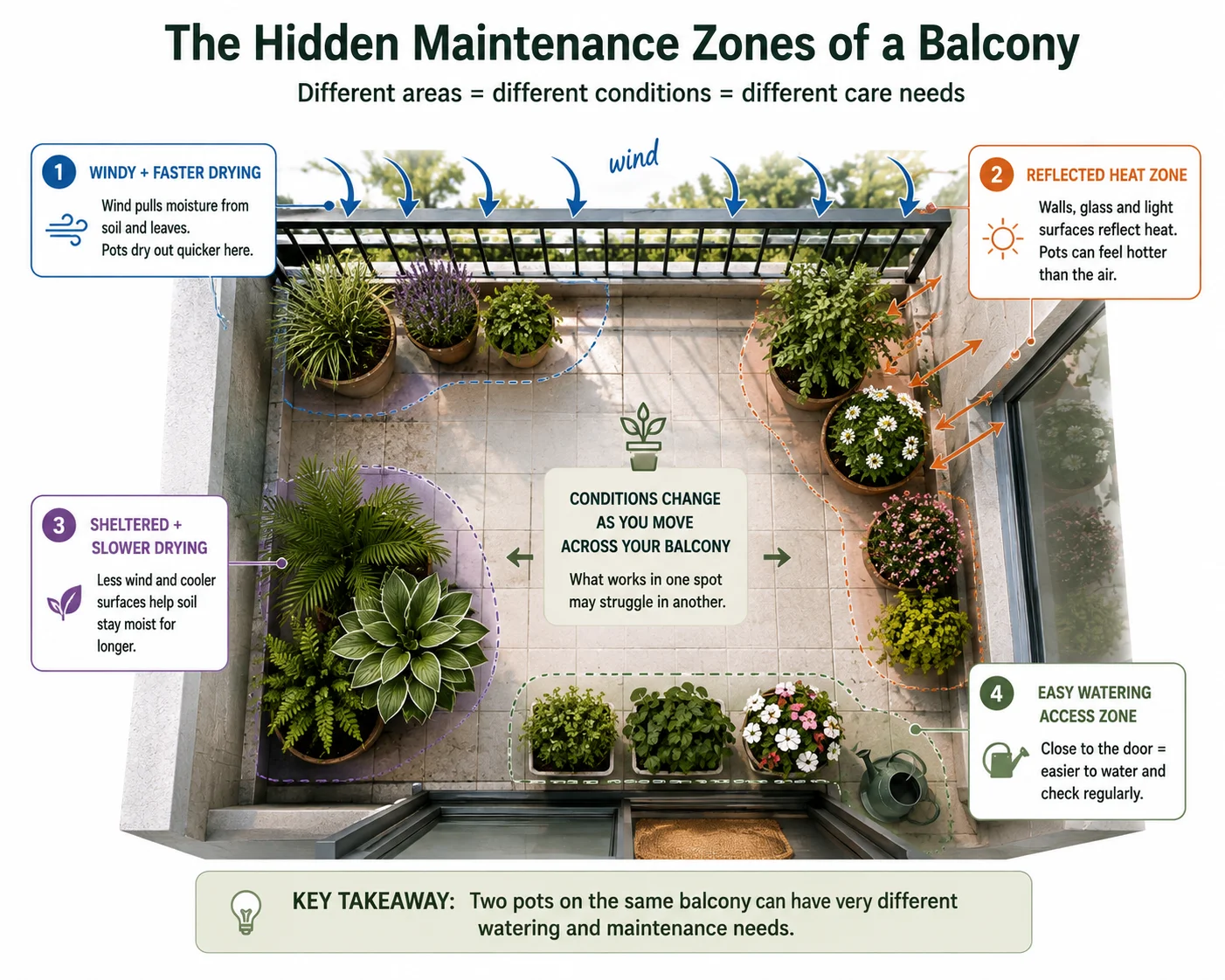
A balcony does not have one single growing condition. It often contains several small microclimates.
The railing edge may be windy and fast-drying. A corner beside a glass door may be sheltered but receive reflected heat. A position against the apartment wall may stay cooler and hold moisture much longer.
These differences can explain why one pot needs water frequently while another nearby container still feels damp.
Reflected heat is especially easy to overlook. Glass, pale walls, tiles, and other hard surfaces can send extra warmth towards plants even when the amount of direct sunlight seems reasonable.
If you notice this happening, our guide on plants for balconies that receive reflected heat explains why some plants cope better than others.
Low-Maintenance Balcony Setup Comparison
There is no single balcony layout that works everywhere, but some setup choices tend to create more repeated work than others.
| Balcony Decision | Often Creates More Work | Usually Easier to Manage |
|---|---|---|
| Plant selection | Plants with very different light and water needs | Plants suited to similar balcony conditions |
| Containers | Many very small pots | Fewer appropriately sized pots |
| Placement | Plants placed wherever there is empty space | Plants grouped by sun, wind, and moisture needs |
| Watering | A different routine for every container | Similar plants checked together |
| Access | Pots hidden behind furniture or other containers | Frequently checked plants within easy reach |
| Weather exposure | Delicate plants in exposed positions | Plants matched to sheltered or exposed zones |
The easier option is not always the one with the least equipment or the fewest plants. It is the setup that creates fewer repeated problems.
Adjust the Setup to Your Balcony Type
A low-maintenance garden on a sheltered balcony can look very different from one on an exposed high-rise balcony.
Hot and sunny balconies: Choose plants that genuinely tolerate the heat and sunlight available. Avoid relying heavily on tiny containers that can dry quickly during hot weather.
Windy balconies: Use naturally sheltered areas where possible and choose stable pots and plants that tolerate regular movement. Constantly relocating delicate plants is rarely low-maintenance.
Shaded balconies: Choose plants that can live comfortably with the available light rather than moving sun-loving plants around throughout the day.
Tiny balconies: Resist filling every free surface with a container. A smaller number of healthy plants can still create a green balcony while leaving enough room to reach and care for them.
Rental balconies: Portable pots, movable plant stands, and freestanding supports can make the garden easier to rearrange without relying on permanent fixtures.
Practical Ways to Reduce Balcony Garden Work
Once the main setup is working well, a few small habits can make everyday balcony gardening easier.
- Keep thirsty plants where you can see them. Changes in leaves or soil are easier to notice before the plant becomes badly stressed.
- Leave access to every pot. Watering one container should not require moving several others.
- Check soil instead of relying only on a calendar. Wind, heat, and cloudy weather can change how quickly pots dry.
- Leave some empty space. It makes plants easier to inspect, clean around, and rearrange.
- Use saucers where they solve a drainage problem. Avoid leaving plants sitting in collected water when they prefer freely draining soil.
- Add new plants slowly. This makes it easier to notice how much extra work each new container actually creates.
Low-maintenance gardening is often less about doing everything faster and more about removing jobs that never needed to exist in the first place.
Common Low-Maintenance Balcony Garden Mistakes
Some balcony setups look simple at first but create repeated work once the plants begin growing.
- Buying plants first and trying to find a suitable position afterwards.
- Using many tiny pots because they seem convenient in a small space.
- Watering every container at the same time even when they dry at different rates.
- Ignoring wind because the balcony does not look especially exposed.
- Filling every available corner with another plant.
- Placing frequently watered pots where they are awkward to reach.
Another common mistake is assuming low-maintenance means choosing plants that need almost no water. A drought-tolerant plant in the wrong position can still require more attention than a thirstier plant growing happily in a suitable microclimate.
The relationship between the plant and the balcony usually matters more than the label attached to the plant.
Expect Maintenance to Change With the Weather
A low-maintenance balcony garden will not require exactly the same care throughout the year.
During hot or windy weather, containers may lose moisture much faster. Plants near exposed railings or reflective surfaces may suddenly need closer attention even if they were easy to manage during milder weeks.
During cooler or wetter periods, soil can remain moist for much longer. Continuing the same watering routine can then create the opposite problem.
This is why a simple garden still benefits from observation. Rather than following one fixed schedule all year, check what the soil and plants are doing and adjust when conditions change.
A good low-maintenance setup makes those adjustments smaller and easier. It does not remove seasonal changes completely.
Balcony Haven Note: I think one of the easiest things to overlook is how much the layout itself changes the amount of work a balcony garden creates. Two balconies can have the same number of plants, but the one with easier access, better-sized pots, and plants grouped around similar conditions can feel much simpler to look after.
I also would not worry about making the whole balcony low-maintenance at once. Watching which pots repeatedly need extra attention can show where the setup is working against you. Sometimes changing one pot or moving one plant is more useful than redesigning everything.
Frequently Asked Questions
What are the best plants for a low-maintenance balcony garden?
The best choices are usually plants that already suit your balcony’s sunlight, wind, heat, and available space. A plant that naturally enjoys your conditions will generally need less moving, protection, and troubleshooting than one that struggles there.
How many plants should a low-maintenance balcony garden have?
There is no ideal number. A useful starting point is an amount you can comfortably reach, water, and observe. On a small balcony, a few healthy plants in practical containers can be easier to manage than many tiny pots while still creating plenty of greenery.
Are self-watering pots good for low-maintenance balcony gardens?
They can be helpful for plants that prefer steady moisture, especially when ordinary pots dry quickly. They are not automatically suitable for every plant, so the plant’s moisture needs and the design of the container still matter.
Can I make my existing balcony garden lower maintenance?
Yes. Look for the plants that repeatedly dry out, wilt, need moving, or are difficult to water. These problem areas often reveal where changing the pot, plant position, or plant itself could make the garden easier to manage.
Do I need an automatic watering system?
Not necessarily. For a small number of easy-to-reach containers, watering by hand may be simpler. Automatic systems are most useful when they solve a real watering problem rather than adding another piece of equipment to maintain.
Can a low-maintenance balcony garden still grow vegetables and herbs?
Yes, although edible plants often need more regular watering and harvesting than hardy ornamental plants. Choosing compact crops suited to your sunlight and using practical containers can still keep the garden manageable.
Final Thoughts
Learning how to create a low-maintenance balcony garden is mostly about removing unnecessary work. Choose plants that match your conditions, use containers that give their roots enough space, group similar needs together, and make frequently checked pots easy to reach.
You do not need to solve every balcony problem by adding more equipment. Often the most useful improvement is noticing why one plant keeps demanding attention and changing the condition that is causing the problem.
A balcony garden will always need some care, and its needs will change as the weather changes. But when the plants, pots, and positions work together, caring for the garden can become a much smaller and more enjoyable part of your week.
Leave a Reply