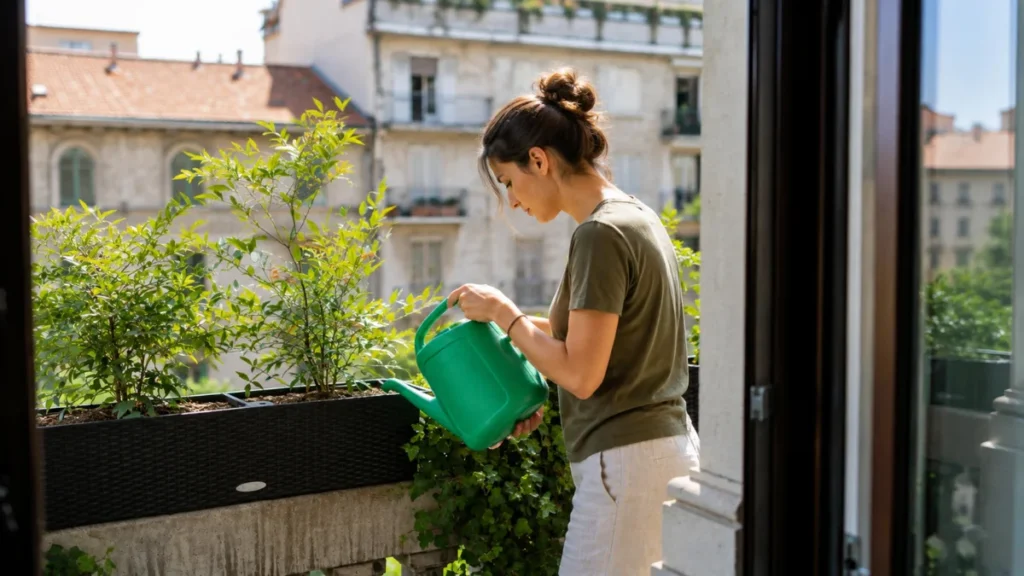
Soil washing out of balcony pots can become frustrating quickly. A little potting mix may seem harmless at first, but repeated watering or heavy rain can leave muddy marks across tiles, collect near drains, or send dirty water towards the edge of the balcony.
The simplest way to keep soil inside balcony pots is to control how water moves through them. Cover large drainage holes with suitable mesh, leave some space between the soil and the pot rim, water gently instead of flooding the surface, and use a saucer or tray to catch small amounts of runoff. The aim is to hold the soil back without stopping excess water from draining.
The best solution depends on where the soil is actually escaping. It may be washing through drainage holes, spilling over the rim, being splashed out by rain, or blowing from the surface when the potting mix becomes very dry.
This guide explains how to prevent soil from washing off your balcony, why it happens, and how to fix the cause without creating drainage problems for your plants.
Why Soil Escapes From Balcony Pots
Soil escaping from a pot is much more noticeable on a balcony than in a garden. In the ground, loose soil and water can spread into the surrounding area. On balcony tiles, everything stays visible.
Balcony containers also experience conditions that can make soil movement worse. Wind can dry and lift loose pieces of potting mix. Heavy rain can splash the surface. Strong sun and reflected heat can dry small pots quickly, while watering a very dry container can sometimes send water rushing straight through it.
Drainage creates another challenge. You need excess water to leave the container, but you do not want large amounts of potting mix leaving with it.
On apartment balconies, runoff also matters because water may travel towards balcony edges, drains, neighbouring areas, or apartments below. If this is part of the problem, our guide on how to stop water dripping on lower balconies looks at ways to manage the water itself.
First, Find Out Where the Soil Is Escaping
Before changing your pot or buying anything, watch what happens the next time you water. Where the soil appears usually tells you more than the mess itself.
Most balcony soil loss happens in one of four places: through the drainage holes, over the pot rim, from the dry surface in strong wind, or from rain splashing directly onto exposed potting mix.
| What You Notice | Likely Cause | What Usually Helps |
|---|---|---|
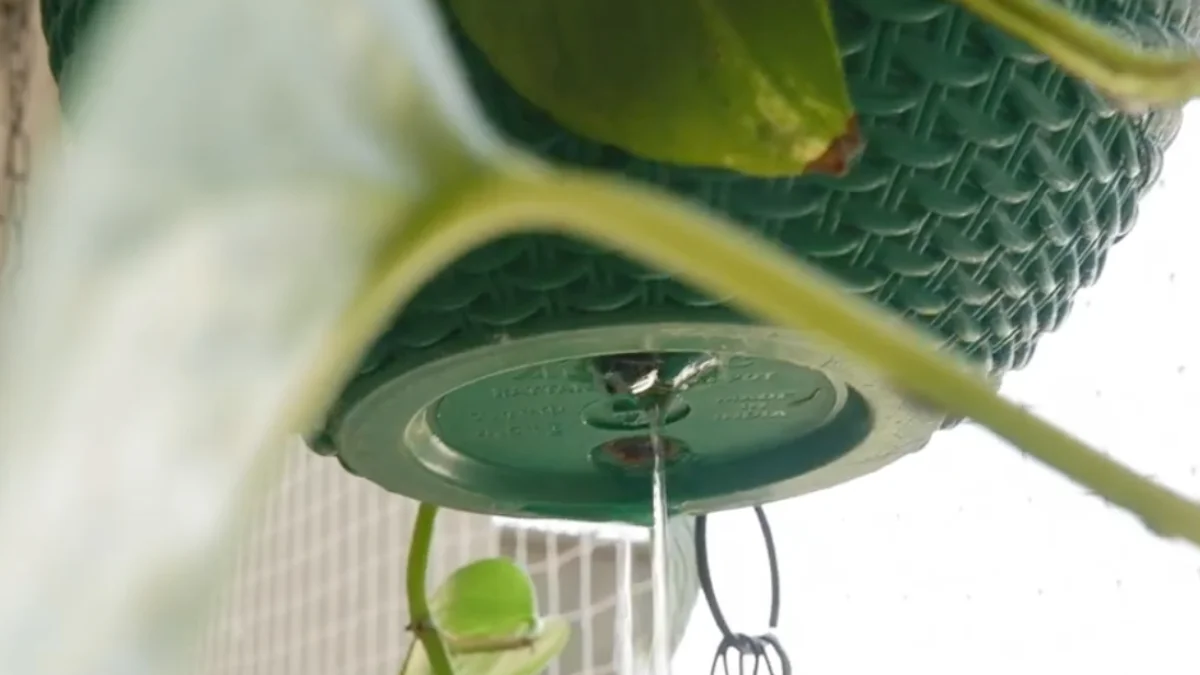
| Muddy water coming from underneath the pot | Fine potting mix is escaping through large drainage holes | Cover the hole with suitable mesh while keeping drainage open |
| Soil spilling over the rim while watering | The pot is too full or water is being added too quickly | Leave watering space below the rim and slow the flow of water |
| Dry pieces of potting mix scattered nearby | Wind is lifting loose material from the soil surface | Reduce wind exposure or lightly protect the surface |
| Soil appears after storms | Heavy rain is splashing or flooding the surface | Reduce direct rain impact and check drainage |
| Water suddenly pours through a very dry pot | The soil is not absorbing the water evenly | Water slowly in stages rather than all at once |
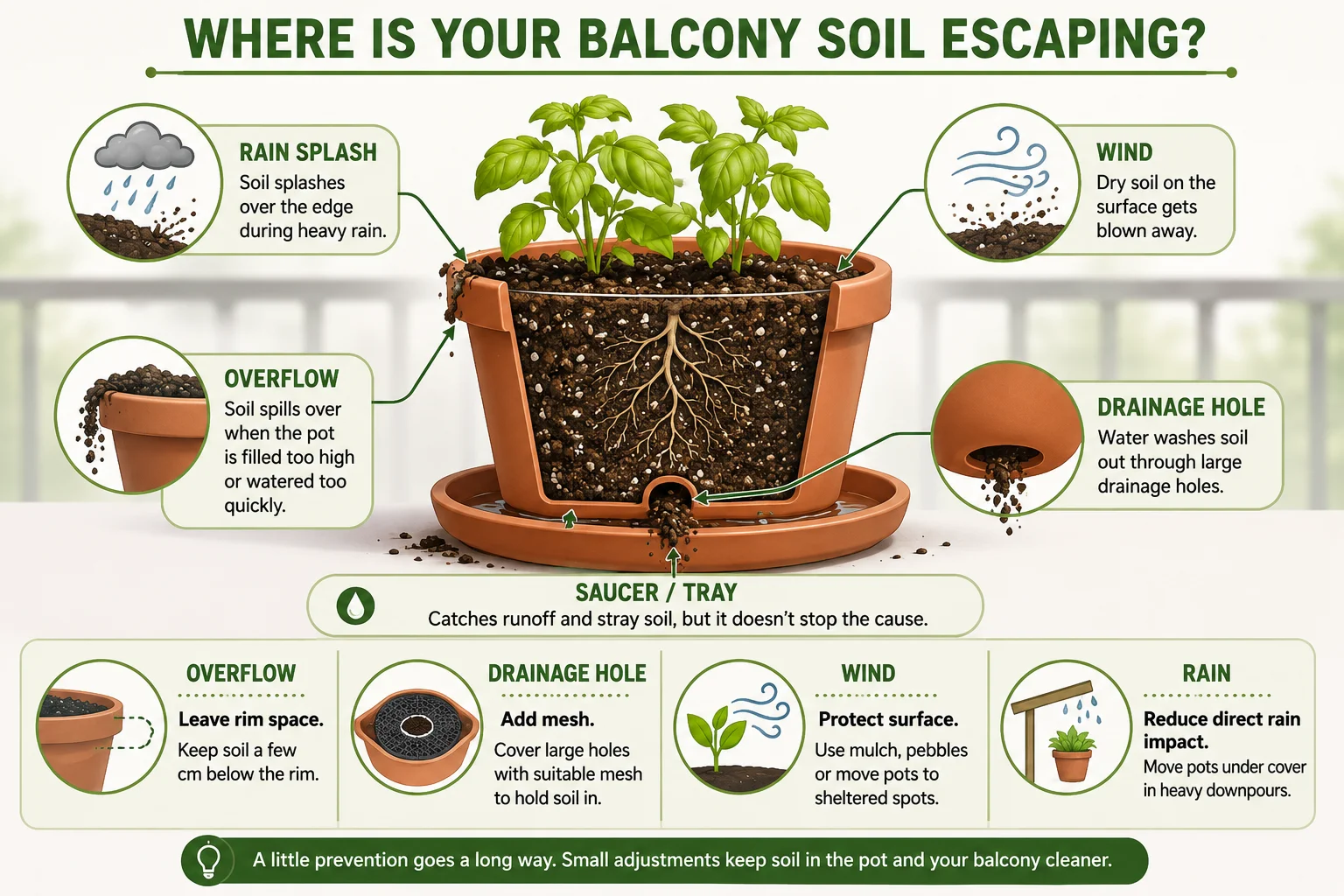
This is why there is no single fix for every messy balcony pot. A drainage-hole problem needs a different solution from wind blowing dry soil across the floor.
Stop Soil Washing Out Through Drainage Holes
If potting mix is coming from underneath the container, look at the drainage holes first. Some pots have openings large enough for fine pieces of mix to fall through or be carried out with water.
A small piece of suitable mesh placed over the drainage opening inside the pot can help. It should hold back most of the potting mix while still allowing water to pass through freely.
The important part is keeping the drainage hole open. Completely sealing it may solve the balcony mess while creating a much bigger problem around the roots.
Healthy container drainage still matters because roots need a balance between moisture and air. If you are unsure how your pot should drain, our guide to drainage for small balcony containers explains this in more detail.
Do You Need Rocks in the Bottom of the Pot?
A thick layer of stones or gravel is not usually needed just to stop potting mix coming through a drainage hole.
Balcony containers already have limited space for roots. Filling a noticeable part of the pot with stones reduces the amount of potting mix available without directly fixing the opening where soil is escaping.
If the drainage hole is the problem, covering that opening with something that lets water through is a more direct approach.
Leave Watering Space Below the Pot Rim
Soil washing over the top of balcony pots is often caused by something very simple: the container has been filled too close to the rim.
Water needs a little temporary space while it soaks into the potting mix. When soil reaches almost to the top, even a normal amount of water can rise over the rim and carry loose pieces with it.
You do not need to leave a large empty section. The useful idea is simply to avoid having the potting mix level with the very top edge.
This becomes especially helpful with small containers, where even a small amount of water can fill the space above the soil quickly.
Water Slowly Instead of Flooding the Pot
How quickly you water can matter almost as much as how much water you use.
Potting mix cannot absorb an unlimited amount of water instantly. If a large volume is poured into a small container at once, water may pool on top, carry soil over the edge, or move fine material towards the drainage holes.
Try watering across the soil surface rather than pouring everything into one spot. If the pot is very dry, add a smaller amount first, give it a little time to soak in, and then continue.
This can make a noticeable difference on hot and windy balconies where potting mix may become very dry between waterings.
If getting water to your balcony is part of the challenge, our article on how to water plants on a balcony without a hose covers practical watering options for apartment spaces.
Use Saucers and Trays as a Second Line of Defence
A saucer can be very useful, but it is better thought of as a catcher rather than the main solution.
If a small amount of potting mix or muddy water escapes during normal drainage, a saucer can keep it from spreading across the floor. For several small pots, one larger waterproof tray may sometimes be easier to clean than many individual saucers.
However, if large amounts of soil leave the pot every time you water, catching the mess does not solve the reason it is happening.
It is also worth checking whether water remains in the saucer for a long time. Some plants tolerate moisture better than others, but constantly leaving the bottom of a container in collected water can make the lower soil stay wetter than intended.
Protect Loose Soil From Wind and Heavy Rain
Sometimes watering is not the main cause at all.
An exposed balcony can experience surprisingly strong wind, especially around building corners or upper floors. When the surface of a pot becomes very dry, lightweight pieces of potting mix can be lifted and scattered across the balcony.
A light suitable surface covering can help hold loose material in place. The aim is not to bury the soil under a thick layer, but to reduce how easily the surface moves.
Placement can be just as useful. A pot sitting directly beside an exposed railing may receive much stronger wind than another container only a short distance away. Moving the pot behind a larger container or farther from the exposed edge may reduce the problem.
If wind is affecting more than just the soil, our guide to protecting balcony pots from strong winds looks at ways to manage pots in exposed balcony conditions.
Heavy rain creates a different problem. Large drops can strike exposed soil hard enough to splash fine particles over the rim, while wind-driven rain may enter a covered balcony from an angle you normally do not need to consider.
Watch Very Dry or Compacted Potting Mix
One of the less obvious causes of balcony runoff happens when potting mix becomes extremely dry.
Dry soil can shrink slightly away from the sides of the container or become difficult to wet evenly. When water is poured onto it, some of that water may follow the easiest path available rather than slowly spreading through the root area.
This can create a confusing situation: plenty of water comes from the drainage holes, yet parts of the soil inside remain surprisingly dry.
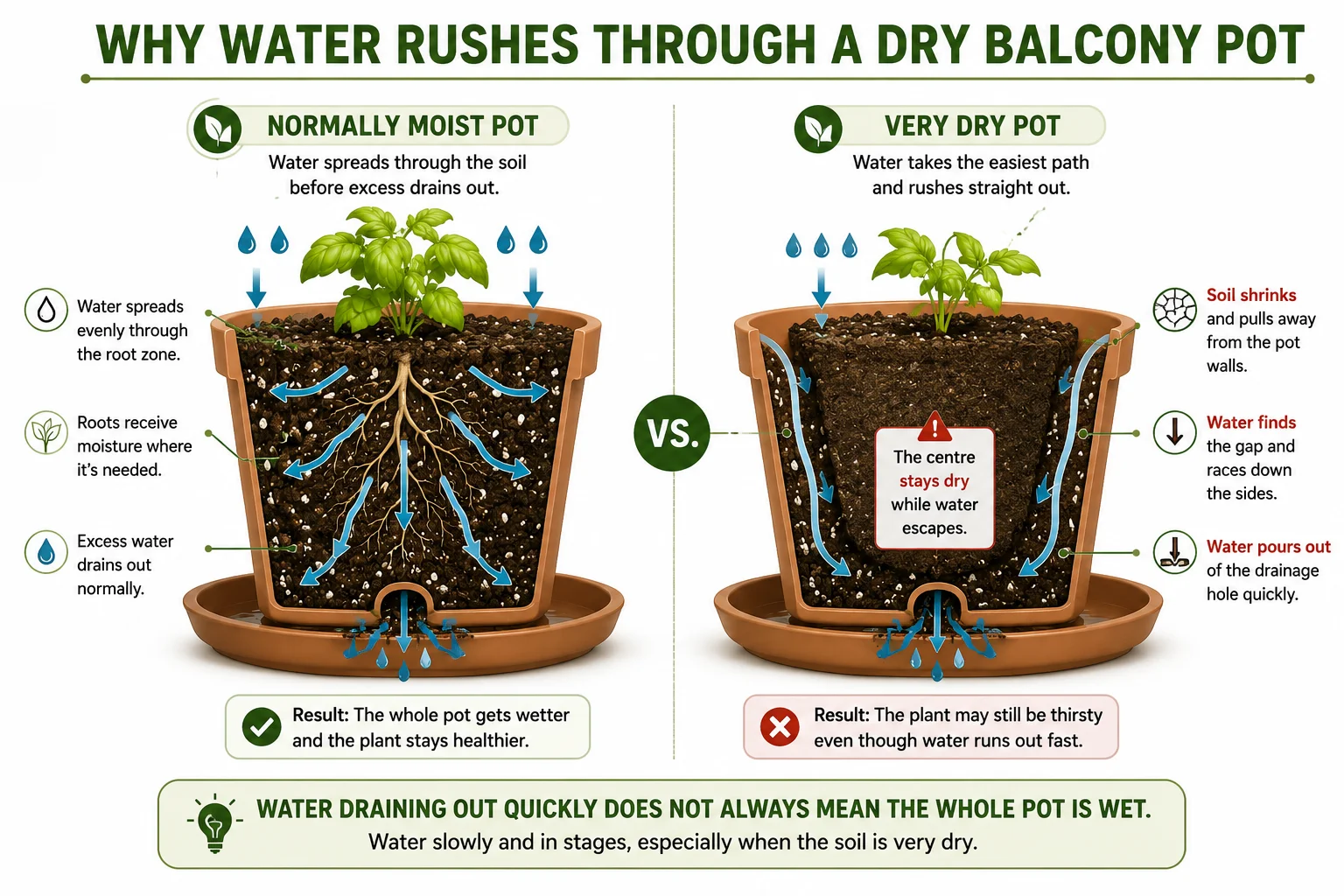
This is why slower watering can work better after a pot has dried heavily. A small first watering gives the mix a chance to begin absorbing moisture before more water is added.
Older potting mix can also change over time. Repeated wetting, drying and settling may make parts of it harder and more compact. If that sounds familiar, our guide on how to loosen compacted soil in pots naturally may help.
It is also useful to understand why balcony soil becomes hard and compact over time, especially when an older container behaves differently from a recently planted one.
What to Do During Heavy Balcony Rain
A balcony pot that drains neatly during normal watering can behave very differently during a strong storm.
Rain may enter the container faster than the soil can absorb it. If water begins rising towards the rim, check whether the drainage holes are clear and whether anything underneath the pot is preventing water from leaving.
If the problem is rain hitting the soil directly and splashing it out, a more sheltered position may help where your balcony layout allows it. Sometimes moving a container only a short distance farther under cover can reduce the impact noticeably.
That does not mean every balcony plant needs protection from rain. Some plants and containers cope well with wet weather. The concern here is repeated soil loss or a pot becoming overwhelmed during heavy rain.
Our guide to plants that can handle heavy rain on a balcony looks more closely at how different plants respond to rainy balcony conditions.
Choose Pots That Make Runoff Easier to Control
Container design can make soil runoff either easier or harder to manage.
A pot with enough height above the soil is easier to water without overflowing. Drainage holes should allow excess water out without being so open that loose potting mix easily falls through them.
Very small pots may also need more attention because they dry quickly. On a hot balcony, this can create a repeated pattern of very dry soil followed by a large amount of watering, which increases the chance of water finding quick paths through the mix.
If you are replacing containers anyway, our article on how to choose pots for balcony gardening compares practical factors such as size, material and drainage.
A Simple Setup for Cleaner Balcony Watering
You usually do not need an elaborate system to stop potting soil washing across a balcony. A few small controls working together are often enough.
| Part of the Setup | What It Helps With | What to Avoid |
|---|---|---|
| Drainage-hole mesh | Holds back loose potting mix while water drains | Using material that seals the hole |
| Space below the pot rim | Gives water time to soak in before overflowing | Filling soil right to the top edge |
| Gentle watering | Reduces splashing and sudden soil movement | Pouring a large amount into one spot at once |
| Saucer or tray | Catches small amounts of runoff and escaped soil | Allowing the pot to remain in deep water unnecessarily |
| Light surface protection | Reduces wind movement and rain splash | Piling material thickly against plant stems |
| Better pot placement | Reduces exposure to strong wind or driving rain | Assuming every position on the balcony has the same conditions |
The important idea is balance. Water still needs to leave the pot, but it should leave without carrying noticeable amounts of soil with it.
Practical Tips for Keeping Soil on the Balcony
Once you have fixed the main cause, a few small habits can make balcony watering much cleaner.
- Water very dry pots in two passes. A smaller first amount can help the potting mix start absorbing moisture before you continue.
- Check underneath containers occasionally. Roots, soil or debris can change how drainage holes behave over time.
- Pick up loose soil instead of sweeping it into drains. Small amounts can gradually collect in drainage areas.
- Watch the most exposed pots first. Wind and rain problems often affect only one part of a balcony.
- Look at the runoff. Slightly coloured drainage water is different from visible pieces of potting mix leaving every time you water.
- Try a simple adjustment before buying more equipment. Slower watering or moving the container slightly may solve the problem.
Small balcony spaces can actually make observation easier. Because the pots are close together, you can often notice that one particular container is behaving differently from the others.
Common Mistakes When Trying to Stop Soil Runoff
The biggest mistake is trying so hard to stop the mess that drainage gets restricted. Keeping the balcony clean is useful, but the plant still needs excess water to leave the container.
- Blocking drainage holes completely. This keeps soil inside but can also keep too much water around the roots.
- Filling pots right to the rim. Water has no temporary space to collect while soaking into the mix.
- Using a saucer as the only solution. It catches the result without fixing why so much soil is escaping.
- Flooding very dry soil. Water may race through gaps instead of wetting the whole root area.
- Adding a thick layer of rocks to every container. This reduces useful soil space without necessarily solving the real problem.
- Treating every balcony pot the same. A sheltered herb pot and a large container beside an exposed railing may behave very differently.
If soil is repeatedly becoming extremely dry between waterings, our article on balcony soil drying out too fast looks at some of the conditions that can cause it.
Balcony Haven Note: I tend to see soil on the balcony floor as a useful clue rather than only a cleaning problem. Soil directly underneath a pot makes me think about drainage, soil around the rim points more towards overflow or splash, while small dry pieces spread farther away make wind worth considering. Even on a small balcony, different pots can behave quite differently depending on where they sit.
Frequently Asked Questions
How do I stop soil coming out of drainage holes?
If the drainage openings are large, place a piece of suitable mesh or pot screen over them inside the container. It should hold back loose potting mix while still allowing water to drain freely.
Can I put mesh over drainage holes in plant pots?
Yes. Mesh can work well when the holes are large enough for potting mix to escape. The important part is choosing something that lets water through rather than sealing the drainage opening.
Why does soil wash over the top of my pot when I water?
The pot may be filled too close to the rim, or water may be entering faster than the potting mix can absorb it. Leaving some room below the rim and watering more gently usually makes this easier to control.
Why does water run straight through my pot but the soil still feels dry?
Very dry potting mix can shrink or develop quick pathways around the edges of the container. Water may travel down these areas and leave through the drainage holes before the middle of the pot has absorbed enough moisture.
How do I stop potting mix blowing around my balcony?
Check whether the surface is becoming extremely dry and whether the pot sits directly in a strong wind path. A light suitable surface covering or moving the pot to a slightly more sheltered position can help reduce loose material being lifted.
Should I put rocks in the bottom of pots to stop soil escaping?
A deep layer of rocks is generally unnecessary for this problem and takes away space that could hold potting mix and roots. If soil is escaping through a large drainage opening, dealing with the opening directly is usually more useful.
Final Thoughts
Learning how to prevent soil from washing off your balcony is mostly about understanding where the soil is moving and why. You do not need to make the container watertight. You simply want the potting mix to stay around the roots while excess water can still drain safely.
If soil comes through the bottom, look at the drainage openings. If it spills over the top, check the soil level and watering speed. If dry pieces appear farther away, wind may be the main problem. And if it only happens during storms, rain exposure may explain more than your normal watering routine.
A few crumbs of potting mix after gardening are normal. The useful goal is a balcony setup where everyday watering and ordinary weather do not repeatedly carry noticeable amounts of soil out of your containers.
Leave a Reply