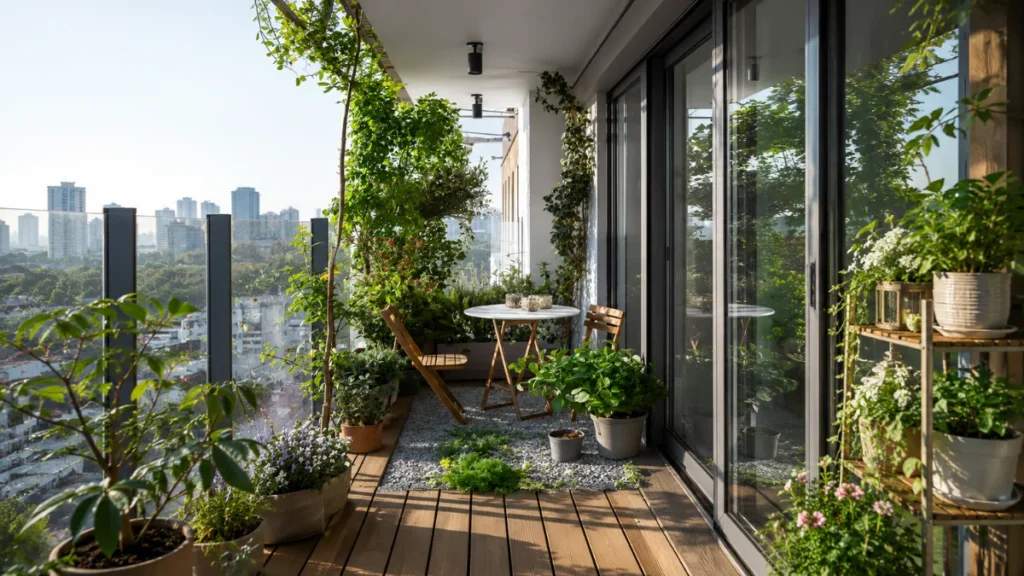
Learning how to make your balcony feel like a garden is less about filling every spare centimetre with pots and more about making the space feel connected, layered, and alive. Balconies have hard floors, railings, walls, wind, reflected heat, and limited room, so a setup that works in a backyard can feel awkward when copied into an apartment.
A balcony usually feels more like a real garden when plants are arranged at several heights, grouped into small clusters, and used to soften bare walls, railings, corners, and floor space. Start with one tall or climbing plant, add fuller plants through the middle, then finish with low or trailing plants. This creates depth without needing dozens of pots.
The biggest mistake is treating each plant as a separate decoration. A row of unrelated pots may still look like storage, even when every plant is healthy. A more natural garden feeling comes from allowing the plants, containers, and empty spaces to work together.
This guide explains how to make your balcony feel like a garden using realistic plant placement, container choices, vertical space, texture, shade, and simple details. It also covers wind, heat, sunlight, watering, rental limits, and the small microclimates that affect how a balcony garden actually works.
Why Some Balconies Still Feel Like a Collection of Pots
A balcony can have plenty of plants and still not feel like a garden. This usually happens when every pot sits on the floor, each plant has a similar height, and large gaps separate one container from the next.
The plants may be attractive on their own, but the eye reads them as separate objects. In a garden bed, leaves overlap, plants rise and fall at different heights, and the ground is partly hidden. Those small connections create depth and make the space feel established.
Balconies also contain many hard surfaces. Concrete floors, glass panels, metal railings, brick walls, air-conditioning units, and neighbouring buildings can remain visually stronger than the plants. A balcony starts to feel greener when foliage interrupts those hard lines rather than sitting neatly below them.
This does not mean covering every surface. Some open space is useful for walking, watering, airflow, and enjoying the balcony. The aim is to make the empty space feel intentional rather than unfinished.
Collection of Pots vs a Balcony That Feels Like a Garden
The difference is often easier to see when the same features are compared side by side. A balcony does not need more plants in every case; it usually needs stronger connections between the plants already there.
| Collection of Pots | Garden-Like Balcony | Why the Difference Matters |
|---|---|---|
| Most plants sit at the same height | Plants rise through high, middle, and low layers | Mixed heights create depth and help the eye move through the space. |
| Pots are spaced evenly around the edges | Plants are arranged in two or three useful groups | Groups read as planted areas instead of separate decorations. |
| Walls, railings, and corners remain visually dominant | Climbers, trailing plants, and fuller foliage interrupt hard lines | Softened edges make the balcony feel calmer and greener. |
| Many unrelated pot colours and shapes compete for attention | One or two colours or materials repeat through the setup | Repetition helps different plants feel connected without making every pot match. |
| Empty floor looks accidental or unfinished | Open space is kept for walking, seating, and care | Useful empty space strengthens the planted areas instead of weakening them. |
Understand the Balcony Before You Decorate It
Before adding more plants, spend a few days noticing how the balcony behaves. Look at where direct sun reaches, where the strongest wind enters, which corner stays damp, and which wall becomes hot in the afternoon. These details affect both plant health and where a garden-style arrangement will work.
A sunny railing may be ideal for herbs and flowering plants but too exposed for soft-leaved shade plants. A sheltered back corner may look perfect for a tall plant, yet receive too little light. The most attractive placement will not last if the plant is uncomfortable there.
It also helps to check how much room you need for the door, chairs, laundry, pets, or regular movement. For a new setup, the guide on how to start a balcony garden from scratch can help you work through the basic space, light, and container decisions first.
Weight matters as well. Large pots, wet potting mix, storage benches, and water-filled planters become heavier than they appear. Lightweight containers can make rearranging easier, especially for renters or anyone still learning which parts of the balcony suit different plants. This guide to lightweight pots for apartment balconies explains some practical options.
Choose the Garden Feeling You Want
A balcony feels more settled when the plants share a loose theme. This does not require matching every pot or buying one style of plant. It simply means deciding what kind of atmosphere you are trying to create.
A leafy retreat may use ferns, climbers, broad leaves, and soft green shades. An edible balcony may combine herbs, compact vegetables, strawberries, and flowering companion plants. A bright garden may focus on colourful flowers, patterned foliage, and lighter containers.
Choosing a general direction makes later decisions easier. Instead of buying any plant that looks attractive at the nursery, you can ask whether it suits the balcony conditions and supports the feeling you want.
For a small space, two or three repeating features are enough. You might repeat one pot colour, one leaf shape, and one flowering colour. Repetition helps separate plants look like part of one garden without making the setup feel overly planned.
How to Make Your Balcony Feel Like a Garden With Three Plant Layers
The most useful way to make a small balcony feel deeper is to arrange plants in three visual layers: high, middle, and low. This uses the full height of the balcony rather than asking the floor to hold the entire garden.
The upper layer may include a climber on a trellis, a tall narrow plant, a hanging basket, or a plant raised on a secure stand. The middle layer is usually made from the fuller plants that carry most of the colour and leaf volume. The lower layer includes compact pots, low herbs, small flowers, or trailing plants that spill towards the floor.
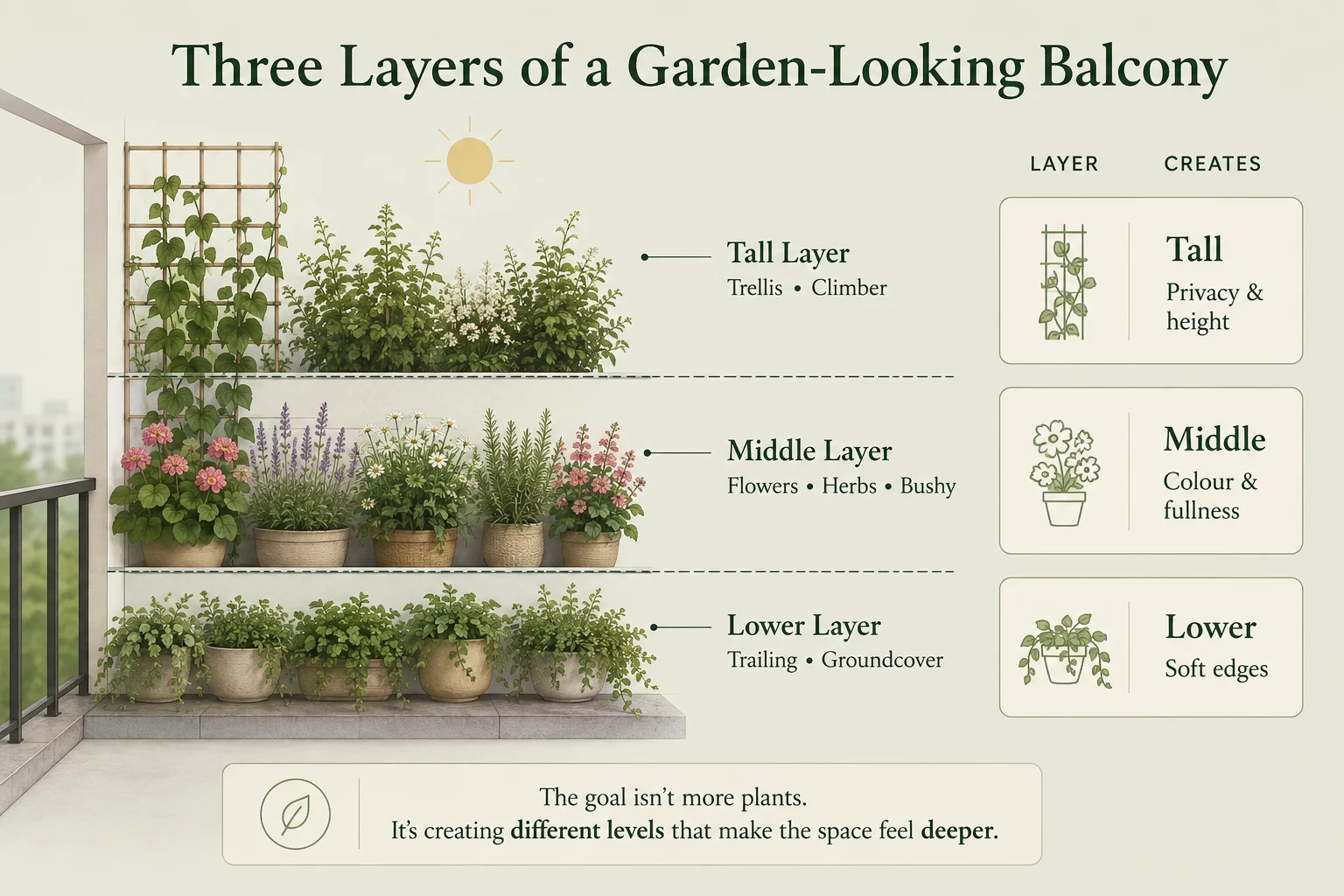
These layers do not need to cover the whole balcony. One layered corner can create a stronger garden feeling than plants spread thinly along every wall. On a tiny balcony, a narrow trellis, one medium planter, and a trailing pot may be enough to create the effect.
Vertical planting is particularly useful where the floor must remain open. The article on vertical garden ideas for tiny balconies includes options that can add height without turning the balcony into a crowded wall of pots.
Group Plants Instead of Spreading Them Apart
Plants often look fuller when arranged in groups of two, three, or five rather than evenly spaced around the balcony. A group creates one stronger green area, while scattered pots can make the space feel unfinished.
Try grouping plants that enjoy similar light and watering conditions. A sun-loving herb should not be pushed into shade simply because it looks good beside a fern. The arrangement has to work for the plants as well as the person looking at them.
Vary the height inside each group. One plant can sit directly on the floor, one can be raised slightly, and one may trail from a shelf or railing planter. Keep enough room between leaves for air to move, especially on humid, enclosed, or sheltered balconies.
Grouping does not mean packing pots tightly together. Crowded foliage can trap moisture, hide pests, and make watering difficult. The guide on balcony pot spacing for airflow is useful when you want a lush look without creating a damp, still pocket around the plants.
Soften Hard Balcony Edges
One reason a backyard feels like a garden is that plants soften fences, soil edges, paths, and corners. On a balcony, the strongest hard lines are usually the railing, floor, wall, and ceiling.
Trailing plants can soften the edge of a shelf or planter. Climbers can break up a plain wall or privacy screen. A bushy plant placed near a corner can make the corner feel less sharp. Even a narrow outdoor mat beneath a small plant group can visually join the pots and reduce the amount of bare floor competing for attention.
Be careful with anything attached to a railing or wall. Hanging planters need to be secure, suitable for the building, and positioned so water or loose items cannot fall below. Renters should check their lease or building rules before drilling, attaching screens, or hanging anything outside the railing. This guide on how to hang planters on a balcony safely covers the practical side.
Softening an edge does not always require another plant. A simple timber-look plant stand, natural-coloured pot, or small watering can kept neatly near the group can support the garden feeling without adding more care work.
Choose Containers That Make the Space Feel Connected
Containers take up a large amount of visual space on a balcony, so their shape and colour affect the overall feeling almost as much as the plants.
You do not need matching pots. In fact, a balcony can feel more relaxed when containers vary slightly. However, too many unrelated colours, finishes, and shapes may make the area feel busy. A simple approach is to repeat one or two colours while mixing pot sizes.
Larger pots can make a setup feel calmer because they reduce the number of separate objects. They also hold moisture longer and give roots more room. However, they cost more, weigh more, and may stay too wet in shade. Smaller pots are easier to move but dry quickly and can make the floor look cluttered when there are too many of them.
The right balance depends on the plant, the balcony, and how often you can water. The article on how to choose pots for balcony gardening explains how drainage, pot material, depth, weight, and exposure affect container choice.
| Container Approach | How It Changes the Space | Practical Consideration |
|---|---|---|
| A few medium and large pots | Creates a calmer, more established look | Heavier and harder to move once watered |
| Many small pots | Adds variety but can feel cluttered | Dries faster and requires more individual watering |
| Repeated pot colours | Helps different plants feel connected | Does not require every container to match |
| Raised pots and stands | Adds height and makes lower plants easier to see | Must remain stable in wind and during watering |
| Railing or hanging planters | Uses upper space and softens hard edges | Needs secure installation and controlled drainage |
Match the Design to Sun, Wind, and Heat
A garden-like balcony should still be designed around its microclimate. Plant placement that looks beautiful for one week can become frustrating if leaves scorch, pots fall over, or soil dries before you return home.
On a hot west-facing or reflective balcony, use the toughest plants near the exposed edge and place more delicate plants behind them where they receive some shelter. Pots near glass, pale walls, or metal may become much hotter than the air temperature suggests.
On a windy balcony, tall plants can act like sails. Choose broad, stable pots, keep top-heavy plants away from exposed corners, and secure containers where needed. The guide on protecting balcony pots from strong winds can help you create height without making the arrangement unsafe.
Shaded or covered balconies often dry slowly. A lush grouped arrangement may hold even more moisture around the pots, so check the soil before watering rather than watering every plant on the same schedule. On hot balconies, the opposite may happen: small containers can dry much faster than larger ones, even within the same group.
Light also changes across a balcony. The railing may receive direct sun while the back wall remains shaded. Measuring those differences before arranging the final layout can prevent repeated moving later. This guide on how much sun a balcony garden needs explains how to read those patterns more realistically.
Ideas for Tiny, Narrow, and Rental Balconies
A tiny balcony does not need a miniature version of a large garden. It usually works better when one area becomes the main green feature and the rest remains useful.
On a narrow balcony, keep the walking line clear and build upwards along one side. Use slim planters, wall-supported trellises where permitted, or plants raised at different heights. Avoid placing pots along both sides if this makes watering and movement awkward.
On a rental balcony, use freestanding items that can move with you. A narrow ladder-style shelf, portable trellis fixed inside a heavy pot, plant stand, or grouped containers can create structure without drilling into walls.
For a balcony that must also hold a chair or small table, treat the seating area as part of the garden rather than something separate. Place the main plant group where it is visible from the chair and from inside the apartment. This can make a small garden feel present even when you are not standing outside.
For more placement ideas, the guide on how to organise plants on a small balcony looks more closely at access, sunlight, plant height, and usable floor space.
Which Changes Make the Biggest Difference?
You do not need to rebuild the whole balcony at once. The table below shows which changes usually create the strongest visual improvement and what they ask from the gardener.
| Change | Visual Effect | Cost or Effort | Best For |
|---|---|---|---|
| Add one tall plant or climber | Creates height and reduces the empty-wall feeling | Low to medium | Balconies where every plant currently sits low |
| Group scattered pots | Creates a fuller and more intentional green area | Free | Balconies with plants spread around the edges |
| Raise one or two containers | Adds layers without buying more plants | Low | Small balconies with limited floor space |
| Add a trailing plant | Softens shelves, planters, and hard lines | Low | Railing planters, shelves, and raised pots |
| Repeat pot colours | Makes mixed plants look more connected | Low if changed gradually | Balconies that feel visually busy |
| Create one strong planted corner | Builds a garden focal point without crowding the whole balcony | Low to medium | Renters and very small spaces |
Why These Changes Create a Garden Feeling
A garden feeling does not come from plant numbers alone. It comes from several small design choices working together: height, grouping, texture, softened edges, and less disconnected empty space.
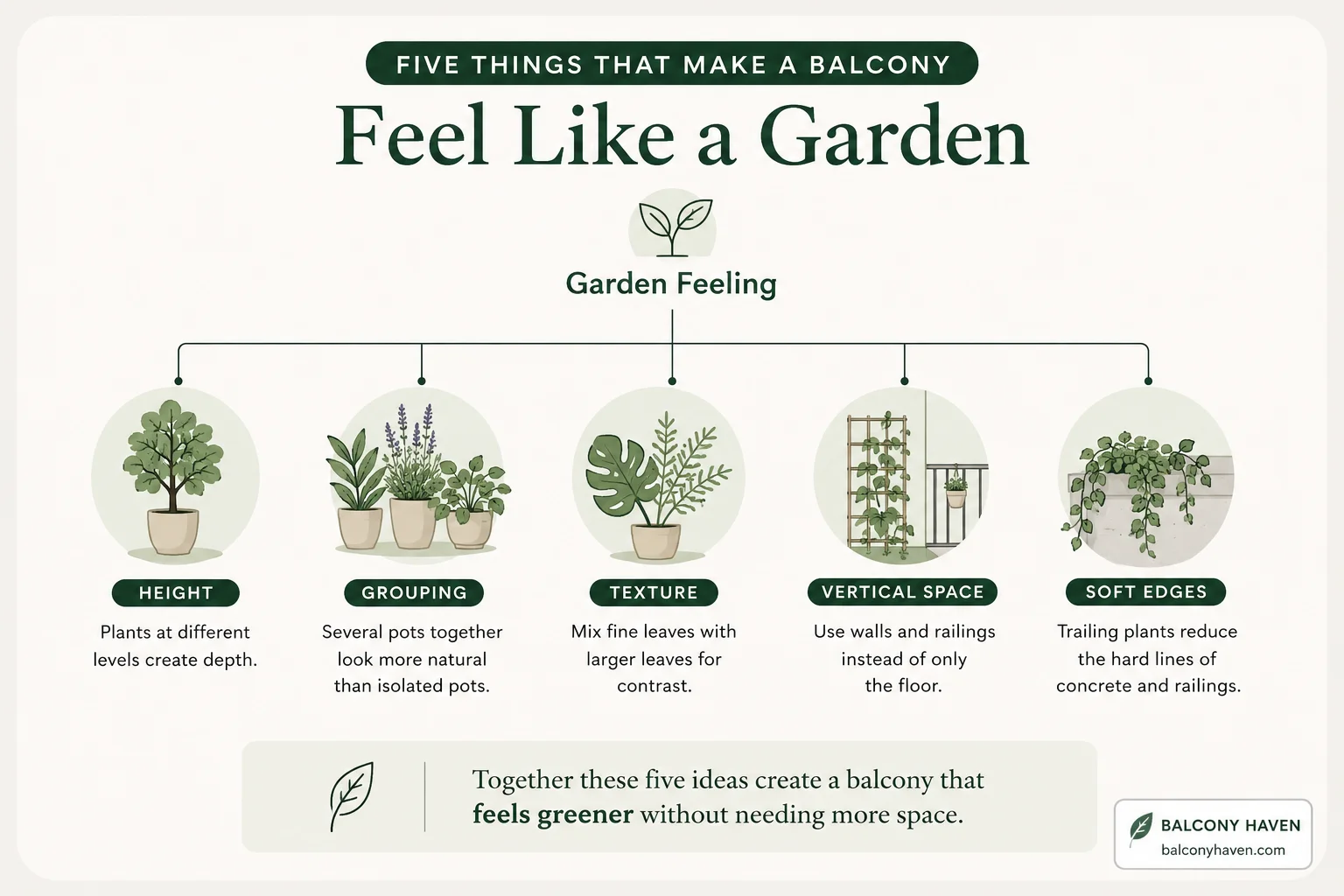
Height gives the eye more to explore. Grouping makes individual pots read as one planted area. Different leaf shapes create texture even when everything is green. Climbers and hanging plants use space above the floor, while trailing leaves soften shelves, railings, and container edges.
These details are why a balcony with six well-placed plants can sometimes feel greener than a balcony with fifteen scattered pots. The plants are not only present; they are shaping the space.
Remember this: A balcony feels like a garden when the plants connect with each other and shape the space—not simply when more pots are added.
Common Mistakes That Make a Balcony Feel Less Like a Garden
Most balcony styling problems are not serious. They usually come from adding items one at a time without checking how the whole space works together.
- Keeping every plant at floor level, which makes the arrangement look flat.
- Spreading pots evenly around the balcony instead of creating a few stronger groups.
- Buying more plants before improving the placement of the plants already there.
- Using so many small pots that watering becomes tiring and the floor feels cluttered.
- Blocking access to doors, drains, taps, or plants that need regular care.
- Choosing a layout for appearance while ignoring wind, sun, heat, drainage, or weight.
Another common mistake is trying to hide every visible wall or floor surface. A balcony needs breathing room. Open space can make the planted areas feel stronger, provided it looks deliberate and remains useful.
Let the Balcony Change With the Seasons
A balcony garden will not look the same throughout the year. Growth may become fuller in warm weather, slow during cooler months, or move towards the light as the sun angle changes.
Instead of expecting a fixed display, allow the arrangement to shift. Move a flowering pot into the brightest position when it needs more light. Bring a heat-sensitive plant behind a tougher one in summer. Replace a finished seasonal plant with a pot that adds fresh foliage or colour.
This gradual adjustment often makes a balcony feel more like a real garden because real gardens are never completely still. They change, leave gaps, fill out, and need small decisions rather than one perfect setup.
Balcony Haven Note: I have noticed that the balconies that feel most garden-like are not always the ones with the most plants. A small group with one tall plant, one full middle plant, and something trailing often feels more settled than many pots placed separately around the floor.
Frequently Asked Questions
How do I make a small balcony look lush?
Use plants at different heights, group pots together, and add one trailing or climbing plant to soften hard edges. A single layered corner usually looks lusher than small pots spread across the entire balcony.
How many plants do I need to make a balcony feel like a garden?
There is no fixed number. Even four to six plants can create a strong garden feeling when they vary in height and are arranged as one connected group. The suitable number depends on the balcony size, available light, weight limits, and how much plant care you can manage.
Can I create a balcony garden without drilling into walls?
Yes. Freestanding plant shelves, heavy pots with trellises, secure plant stands, grouped floor containers, and movable screens can add height and structure without drilling. Renters should still check building rules before attaching anything to railings.
Should all my balcony pots match?
No. Pots can vary in shape and size, but repeating one or two colours or materials can help the balcony feel connected. Matching every pot is less important than choosing containers that suit the plants and remain safe in the space.
How can I make a balcony garden feel private?
A tall plant, climber, freestanding trellis, or grouped foliage can soften exposed areas and create partial screening. Avoid blocking all airflow or light, and make sure any tall feature is secure in wind.
What is the cheapest way to improve a balcony garden?
Rearrange the plants you already own. Group scattered pots, raise one container on a stable stand, move a trailing plant to an edge, and place the strongest plant group where it can be seen from indoors. These changes can improve the space without buying more plants.
Final Thoughts
Knowing how to make your balcony feel like a garden starts with seeing the balcony as one small living space rather than a place to store separate pots. Height, grouping, texture, and softened edges usually make a bigger difference than simply adding more plants.
Work with the sunlight, wind, heat, drainage, and room you actually have. Build one useful planted area first, then adjust it as you learn which plants are happiest there.
A balcony does not need to look full or perfect to feel peaceful and green. When the plants suit the conditions and the arrangement feels connected, even a small apartment balcony can begin to feel like its own garden.
Leave a Reply