Covered balconies can feel confusing when choosing plants. The space often looks bright enough during the day, yet some plants slowly become weak, stretched, or pale after a few months. This usually happens because balcony light behaves differently once roofs, walls, and nearby apartment buildings begin shaping the environment.
The best plants for covered balconies with light are usually plants that naturally handle bright indirect light, filtered daylight, or gentle morning sun rather than intense full-day exposure. Herbs, leafy greens, compact flowers, and many foliage plants often adapt better to these conditions than large fruiting vegetables that depend on stronger sunlight.
Part of the confusion comes from how covered balconies soften the environment. The roof reduces harsh heat and heavy rain, which helps some plants, but it also lowers the amount of usable sunlight reaching the leaves. A balcony can feel bright for people while still being relatively low-light for certain plants.
This article explains why some plants quietly thrive in covered balconies while others struggle over time, even when the space appears healthy and bright at first glance.
Table of Contents
Balcony Reality Check
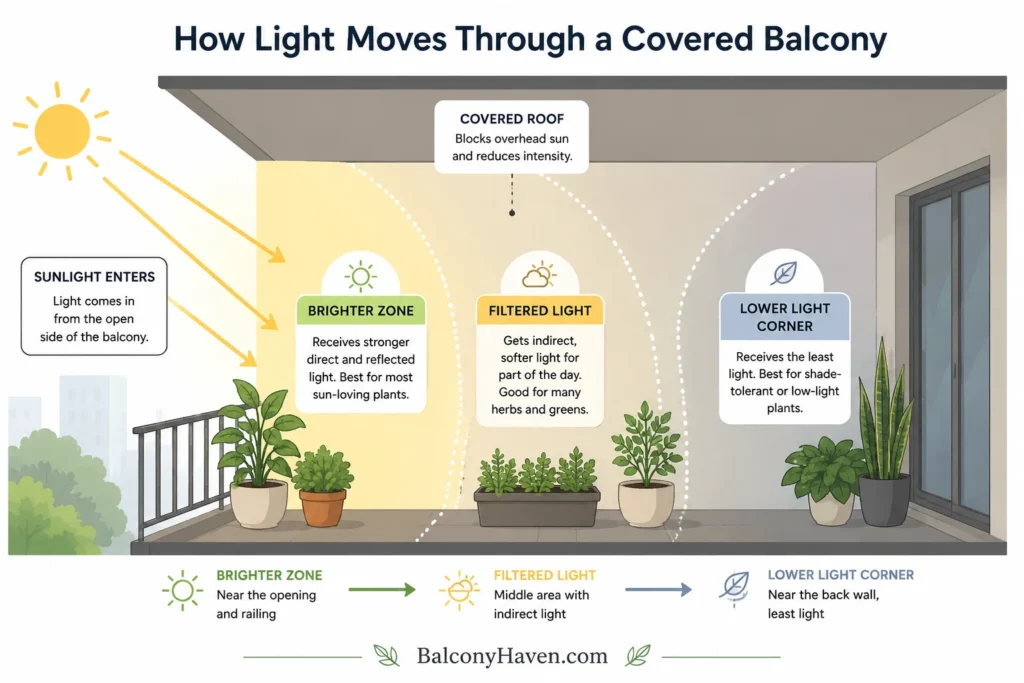
Covered balconies rarely behave like open gardens, even when they receive several hours of daylight. Apartment spaces create unusual growing conditions because sunlight enters from angles instead of directly overhead for most of the day. Nearby buildings can block lower sun angles, balcony roofs reduce exposure, and enclosed railings sometimes soften usable light more than expected.
Another thing that changes on balconies is airflow. Some covered balconies stay calm and protected, while others become wind tunnels between apartment buildings. Plants respond differently depending on how trapped or exposed the balcony feels throughout the day.
Containers also change how plants experience these conditions. Pots heat and cool faster than garden soil, roots dry differently, and moisture behaves unevenly once plants are grouped together in smaller spaces. This is one reason balcony plants often behave differently from the same plants grown in backyards.
What Most Advice Misses
A lot of general gardening advice assumes plants are growing in open outdoor conditions where sunlight moves freely across the entire space. Covered balconies rarely behave that way.
Many plant labels simply say “full sun” or “partial shade” without explaining how apartment buildings affect actual light intensity. A covered balcony may technically receive several hours of daylight while still providing much less usable energy than an open backyard garden.
This is why some plants survive for long periods without truly thriving. Large fruiting plants may continue growing leaves while slowly producing weaker stems, fewer flowers, or slower growth over time. The problem is often not poor care, but a mismatch between the plant and the balcony environment itself.
One thing many balcony gardeners notice later is that different parts of the same balcony can behave almost like separate growing zones. Plants near the front railing sometimes grow fuller and healthier simply because more usable light reaches them throughout the day.
I started paying closer attention to this after reading How to Measure Sunlight on a Balcony, because it explained why balconies that look equally bright can still create very different growing conditions from one corner to another.
Why Herbs Often Adapt Better
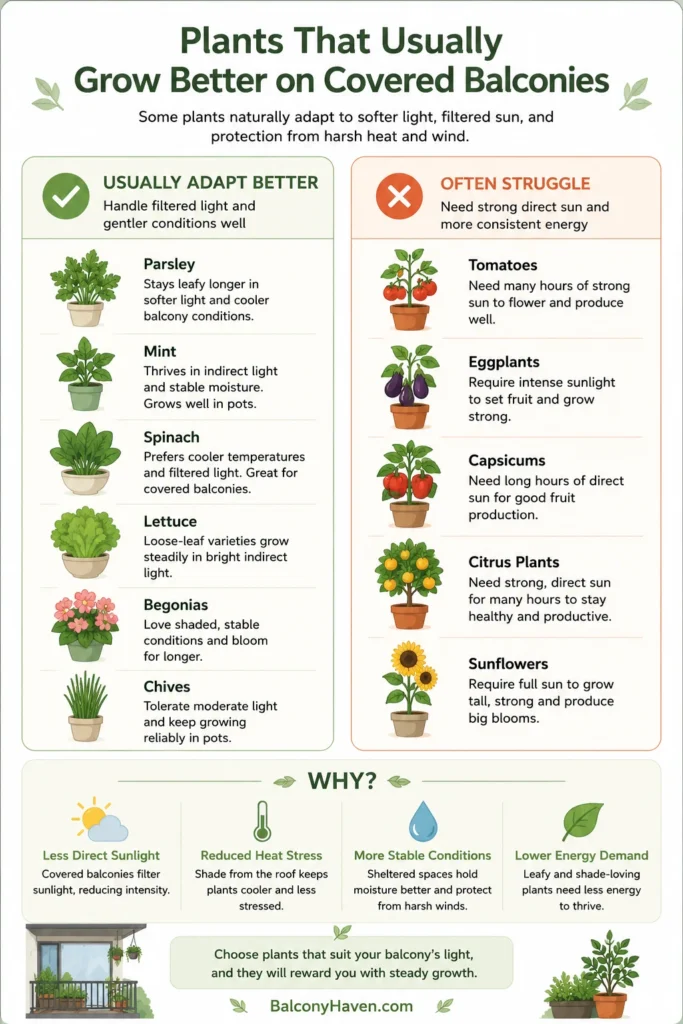
Herbs are usually some of the most reliable plants for covered balconies because many naturally tolerate gentler conditions better than large fruiting vegetables. Plants like parsley, mint, coriander, and chives often continue producing steady leafy growth even when direct sunlight becomes limited for part of the day.
Parsley often struggles more from intense heat than from softer light. Covered balconies sometimes help it remain leafy longer because the roof reduces harsh afternoon exposure. Coriander behaves similarly, especially during warmer months when strong heat can cause rapid bolting.
Mint also adapts comfortably to indirect light and stable moisture conditions, although it can spread aggressively once established. Chives tend to remain surprisingly dependable in semi-covered spaces because they tolerate moderate light without needing intense direct sun.These herbs also fit naturally into smaller balcony containers without creating heavy shade over surrounding plants.
Herbs also tend to reveal balcony light conditions more clearly than many larger plants. Some varieties remain fuller and healthier for much longer once they are protected from harsh exposed heat and moved into gentler filtered light, especially in balconies receiving only shorter periods of direct sun. This is often easier to notice in conditions similar to herbs growing with only a few hours of sunlight.
| Plant Type | Usually Handles Covered Balconies Well? | Why They Adapt Better |
|---|---|---|
| Herbs | Yes | Often tolerate gentler filtered light |
| Leafy Greens | Yes | Need less intense sunlight |
| Flowering Shade Plants | Usually | Prefer softer stable conditions |
| Fruiting Vegetables | Often struggle | Require stronger direct sunlight |
| Citrus Plants | Limited success | Need long hours of concentrated light |
| Succulents | Depends on brightness | Some become stretched in lower light |
Why Leafy Greens Usually Perform Well
Leafy greens are often one of the safest choices for covered balconies with light because they generally require less direct sunlight than fruit-producing plants. Many leafy vegetables evolved to grow during cooler or milder seasons rather than under intense summer exposure.
Spinach is a good example because it often appreciates protection from harsh afternoon heat. Covered balconies can help the leaves stay softer while reducing heat stress during warmer periods. Lettuce also tends to adapt well to bright indirect light, especially loose-leaf varieties that continue producing outer leaves steadily over time.
Asian greens such as bok-choy and pak-choi often remain tender and less bitter once protected from strong exposed sunlight. Spring onions also work well in covered balconies because they require relatively little space and tolerate moderate light conditions comfortably.
Why Some Flowering Plants Prefer Covered Balconies
Not all flowering plants depend on constant direct sunlight. Some actually perform better once harsh afternoon exposure becomes softer and more stable.
Begonias and impatiens are common examples because they naturally tolerate bright indirect light while continuing to flower steadily. In exposed balconies, these plants sometimes fade quickly once leaves and petals begin overheating during summer.
Fuchsias also tend to appreciate cooler and more protected balcony environments, especially in apartments where direct western sun becomes intense later in the day. Peace lilies behave similarly because they naturally adapt to filtered light conditions and stable moisture.
Another thing many balcony gardeners notice is that flowering plants in covered spaces sometimes keep their blooms longer because the environment becomes less stressful overall.
This softer environment is also why some flowering plants surprisingly perform better in partially shaded balconies than in fully exposed spaces. Flowers that struggle with harsh heat often keep their colour and blooms longer once the balcony light becomes more filtered and stable, especially in conditions similar to flowers that grow well with partial shade.
Why Fruiting Plants Often Struggle Quietly
Large fruiting plants usually require much more energy than leafy plants because flowering and fruit production place heavier demands on the plant. Tomatoes, capsicums, eggplants, and citrus plants often continue surviving in covered balconies while slowly becoming weaker over time.
This can feel confusing because the plant still looks alive. Leaves continue appearing, stems keep growing, and the plant may even seem healthy at first glance. But over time, growth often becomes thinner, flowering reduces, and fruit production stays inconsistent.
Many apartment balconies simply cannot provide enough concentrated sunlight for these plants to remain strong long term, especially once surrounding buildings or balcony roofs reduce exposure further.
Practical Insights
Covered balconies usually reward observation more than strict gardening rules.
- Plants near balcony openings often receive noticeably stronger usable light
- Pale walls and light-coloured pots can reflect extra brightness onto leaves
- Covered balconies usually reduce moisture loss compared to exposed balconies
- Large fruiting plants often weaken slowly before obvious signs appear
- Leafy plants generally tolerate stable filtered light better than flowering vegetables
Common Misunderstandings
A lot of balcony plant frustration comes from assumptions that sound logical but do not fully match apartment growing conditions.
- Bright balconies are not always high-light balconies for plants
- “Full sun” labels often assume open backyard conditions
- A plant surviving is not always the same as thriving
- Covered balconies can still become surprisingly hot during summer
- Small containers usually increase stress faster in reduced light conditions
Local & Seasonal Context
In many Australian apartments, covered balconies become especially helpful during hotter months because the roof softens harsh afternoon heat. Herbs and leafy greens often remain healthier longer once intense sun exposure becomes less direct.
During hotter periods, covered balconies sometimes become more useful than fully exposed balconies because the roof softens harsh afternoon heat before it reaches the containers. This becomes especially noticeable in balconies dealing with limited space and light conditions, where softer protection can sometimes help plants remain healthier for longer.
Winter can behave differently. Lower sun angles sometimes allow sunlight to reach deeper into covered balconies, especially in north-facing or east-facing apartment layouts. Some balconies that feel too shaded during summer may actually become more productive during cooler seasons.
Humidity also changes how plants behave across regions. Coastal balconies often hold moisture longer, while drier inland balconies may still dry containers surprisingly quickly once warm winds begin moving through apartment gaps.
Balcony Haven Note
One thing that became easier to notice over time was how uneven covered balcony light can actually be. A balcony may look equally bright across the whole space during the day, yet some plants quietly grow fuller and healthier simply because they sit closer to the railing or receive slightly better reflected light.
The difference often becomes clearer after plants are moved around between different balcony spots. Leaves near brighter openings sometimes stay thicker and stronger, while plants closer to walls or shaded corners may continue growing more slowly even though the overall balcony still appears bright to the eye.
FAQ
Can vegetables grow on covered balconies with light?
Some vegetables grow reasonably well in covered balconies, especially leafy greens and herbs. Fruiting vegetables usually require stronger and more direct sunlight to remain productive over time.
Why do plants become leggy on covered balconies?
Plants often stretch toward available light when usable sunlight becomes limited. This usually creates thinner stems and wider gaps between leaves.
Are covered balconies good during summer?
Covered balconies can help reduce harsh afternoon heat, especially during Australian summers where exposed containers sometimes overheat quickly.
Do flowering plants need full sun on balconies?
Not all flowering plants require intense direct sunlight. Some flowering plants naturally adapt better to filtered or indirect light conditions.
Final Thoughts
Covered balconies with light often grow plants better than many people initially expect, but the plants that succeed are usually the ones suited to softer and more stable conditions rather than intense direct sun.
A lot of balcony gardening confusion comes from trying to apply open-garden expectations to apartment spaces that behave very differently. Once the balcony itself is understood properly, plant choices usually start making much more sense.
Small differences in reflected brightness, airflow, container placement, and sunlight direction can quietly shape how plants grow over time. Observation often matters more than perfection because every balcony develops its own unique conditions.
Happy Balcony Gardening!
Leave a Reply