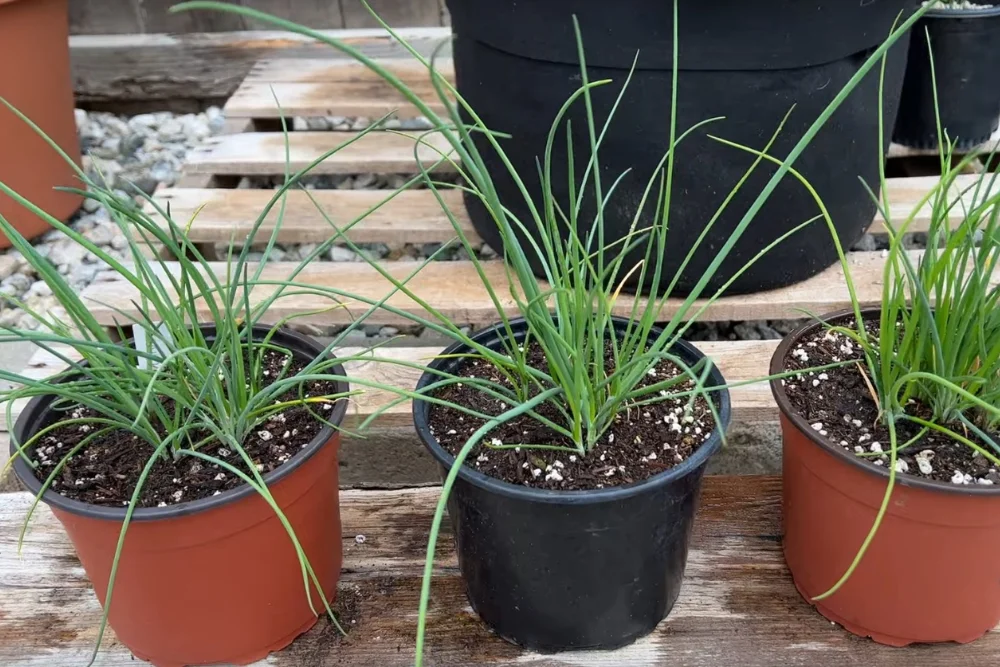
Growing herbs on a balcony with limited sunlight can feel confusing because many herb guides talk about full sun as if every home has it. In real apartments, sunlight is often blocked by walls, roofs, nearby buildings, balcony railings, or the direction the balcony faces.
The best herbs for balconies with 3 hours of sun are soft, leafy herbs such as mint, parsley, chives, coriander, and lemon balm. These herbs usually cope better with partial sun than woody herbs because they can grow useful leaves with steady light, bright shade, and short periods of direct sun. Three hours of sun may not suit every herb, but it is enough for many balcony herbs when the plant choice matches the space.
A lot of balcony herb problems come from choosing plants that need more light than the balcony can give. The plant may stay alive, but it may grow slowly, stretch toward the light, lose smell, or produce fewer usable leaves.
This article explains which herbs are most realistic for balconies with around three hours of direct sun, why some herbs handle this light better than others, where to place them, and which common mistakes make low-sun herb gardens harder than they need to be.
Why 3 Hours of Sun Can Still Grow Herbs
Three hours of sun can sound too low when compared with normal garden advice. Many herb labels say full sun, and that can make a balcony with short sunlight feel unsuitable before anything is planted.
Balconies behave differently from open garden beds. A herb may receive three hours of direct sun, but it may also receive bright indirect light from the open sky, reflected light from nearby walls, and extra brightness from pale balcony floors or building surfaces.
This extra light does not replace strong all-day sun for every herb, but it can support leafy herbs that do not need intense heat to stay useful. Mint, parsley, chives, coriander, and lemon balm often care more about steady light and moisture than long hours of harsh sun.
This is why a balcony with three hours of morning sun can sometimes grow herbs better than a hotter balcony with long afternoon sun. The gentler light supports leaf growth without pushing the plant into heat stress.
If your balcony sits between shade and sun, the guide on plants for balconies with 2–4 hours sun may also help you compare other realistic plant choices for the same light range.
What Most Herb Advice Misses About Balconies
Most herb advice is written for gardens, patios, or raised beds where plants have more open sky, deeper soil, and stronger airflow. Balcony herbs live in a smaller and more uneven space.
One side of the balcony may receive direct light while the back wall stays dim. A railing planter may be bright and exposed, while a pot near the door may receive almost no direct sun. The same balcony can have several small microclimates within only a few metres.
This can make two pots of the same herb behave differently. A parsley pot near the railing may receive enough brightness to stay productive, while another parsley pot only one metre away against a wall may grow slower, lean toward the light, or stay smaller. The plant may not be different. The small balcony position may be different.
Another thing common advice misses is heat reflection. A balcony with only three hours of sun can still become warm if sunlight hits tiles, glass, brick, or metal railings. This means the question is not only “How many hours of sun?” but also “How strong, warm, and open is that light?”


Balcony Haven Companion App
Havener
Find plants suited to your balcony
Tell Havener about your location, balcony direction, sunlight and wind exposure. The app will suggest plants that better match your growing conditions.
- Personalised plant suggestions
- Pot-size and soil guidance
- Designed for iPhone and iPad
Best Herbs for Balconies With 3 Hours of Sun
The most reliable herbs for a balcony with three hours of sun are usually leafy herbs rather than woody Mediterranean herbs. They are grown mainly for leaves, and many can stay productive in partial sun if the balcony is bright enough.
| Herb | Suitability for 3 Hours Sun | Best Balcony Position | Container Size | What to Expect |
|---|---|---|---|---|
| Mint | Excellent | Bright edge or gentle morning sun | Medium pot | Lush leafy growth if soil stays lightly moist. |
| Parsley | Excellent | Bright partial sun near railing | Medium pot | Slow but steady leaf growth. |
| Chives | Very good | Open bright spot with airflow | Small to medium pot | Upright green growth with regular light. |
| Coriander | Good | Cool morning sun or bright shade | Medium pot | Useful leaves, especially before hot weather. |
| Lemon Balm | Excellent | Partial sun or bright sheltered area | Medium pot | Soft growth and steady leaves in moderate light. |
Soil also matters in low-sun herb containers because slower growth usually means slower water use. A loose, draining mix helps herbs stay healthy without staying soggy for too long. This is where the article on best soil mix for balcony herb gardens can support the setup side of the same topic.
Best Herbs by Balcony Light Level
Not every balcony with limited sun is the same. Some receive only bright shade, while others receive a short but clear window of direct sun. Matching herbs to the real light level gives a more realistic picture than simply asking whether herbs need full sun.
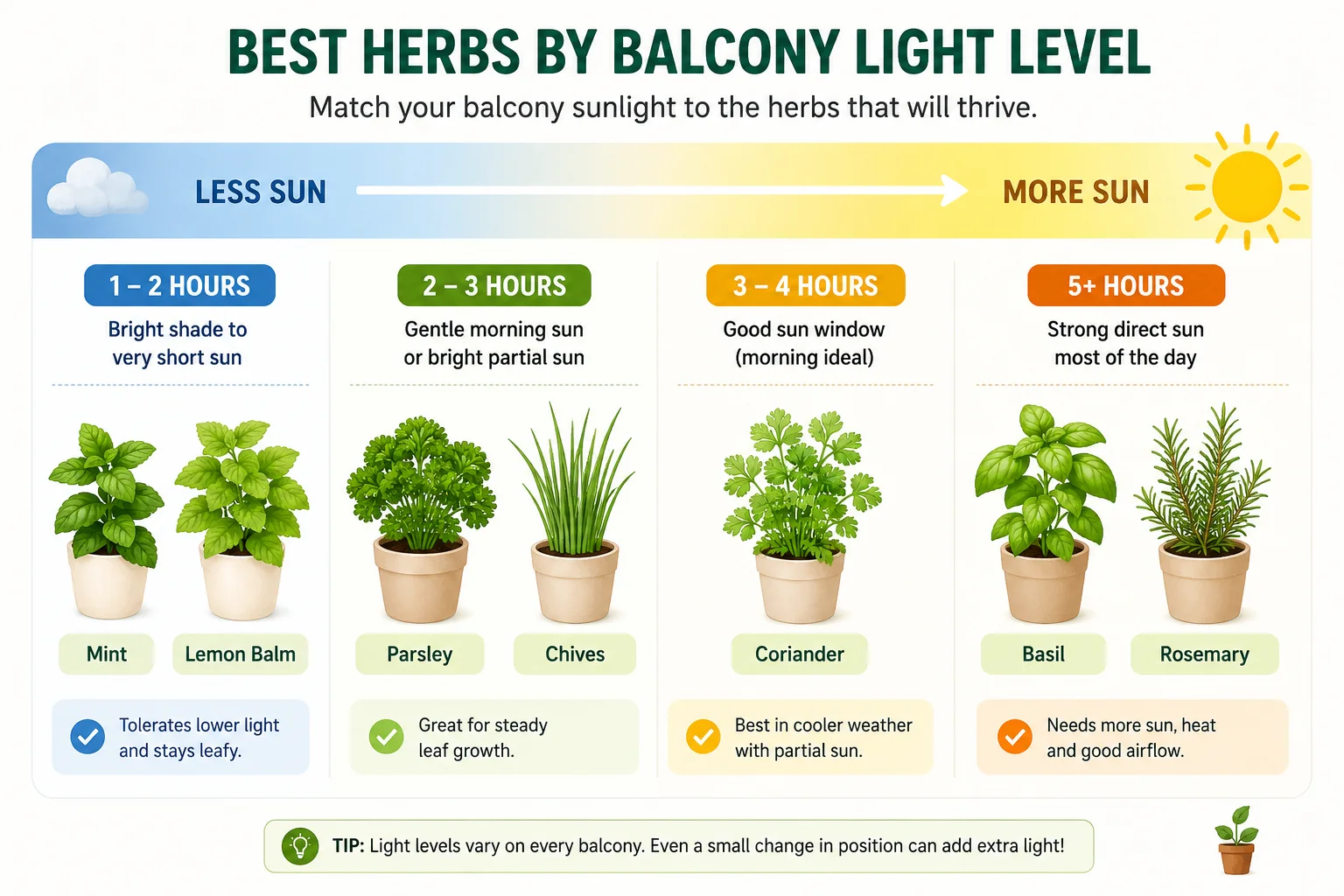
A simple way to think about it is that mint and lemon balm are more forgiving in lower light, parsley and chives are strong choices around the three-hour range, and coriander often works best when the light is bright but not too hot. Herbs such as basil, rosemary, thyme, and oregano usually need stronger light to perform well.
If your balcony receives morning light rather than afternoon heat, the guide on what potted plants like morning sun may help you understand why gentler sunlight often suits leafy plants better.
Mint
Mint is one of the most forgiving herbs for balconies with around three hours of sun. It naturally handles partial sun well and often stays softer and greener when it is not exposed to long, hot sunlight.
On a balcony, mint usually grows best when it receives steady brightness and does not dry out completely. It can cope with short direct sun, especially in the morning, but it may wilt or look tired if the pot becomes too hot.
Mint also suits container growing because pots help control its spreading roots. In open ground, mint can move quickly, but on a balcony it is easier to keep contained. If your mint grows too strongly in a small pot, this guide on mint spreading in small balcony pots explains why that happens and how balcony containers change its behaviour.
Parsley
Parsley is a strong choice for a balcony with three hours of sun because it grows steadily rather than dramatically. It does not usually rush like basil or coriander, but it can produce useful leaves for a long time when light and moisture are consistent.
On low-sun balconies, parsley may grow slower than it would in brighter conditions. This is not always a problem. Slower parsley can still be healthy if the leaves stay green, firm, and upright.
Parsley often suits balconies because it dislikes harsh drying conditions. A bright balcony edge with gentle sun is usually better than a hot wall position where the pot dries too quickly.
Chives
Chives are useful for small balconies because they do not need a large pot, do not take up much space, and can grow in partial sun. Their narrow leaves allow them to fit into corners, railing planters, or small grouped herb containers.
With around three hours of sun, chives usually grow upright and green if they receive enough brightness for the rest of the day. They may not grow as thickly as they would in stronger light, but they are still one of the more realistic herbs for limited sun.
Chives also handle regular trimming better than many delicate herbs. Light harvesting can encourage fresh growth, although very low light may slow the plant down between harvests.
Coriander
Coriander can be tricky because it prefers cool conditions but still needs enough light to grow well. This makes it surprisingly suitable for some balconies with around three hours of sun, especially when that sun comes in the morning.
In hot full sun, coriander often bolts quickly and sends up flowers before producing many leaves. A balcony with shorter sunlight can slow that process and give the plant a better chance to stay leafy for longer.
The main challenge is timing. Coriander may perform better during cooler parts of the year, or in a bright balcony spot that avoids strong afternoon heat. For more specific help, the article on coriander growing tips for humid balconies can help if your balcony is warm, humid, or slow to dry.
Lemon Balm
Lemon balm is another good herb for partial sun because it naturally tolerates gentler light. It does not need the same intense sun as rosemary or thyme, and it often stays soft and leafy in bright shade or short sun.
On a balcony with three hours of sun, lemon balm usually grows best when the pot is not allowed to dry out completely. Like mint, it can look healthier when protected from harsh heat.
Its citrus scent may be softer in low light than in brighter conditions, but the plant can still be useful and attractive. It is a good option when the goal is a leafy, calming herb rather than a strong Mediterranean cooking herb.
Where Herbs Grow Best on a Balcony With 3 Hours of Sun
Placement can change the result more than many beginners expect. A herb placed near the railing may receive stronger light than the same herb placed against the back wall, even on the same balcony.
The brightest area is often near the open edge of the balcony, where light from the sky can reach the plant even after direct sun has passed. Corners, deep shelves, and spaces behind furniture are usually much dimmer.
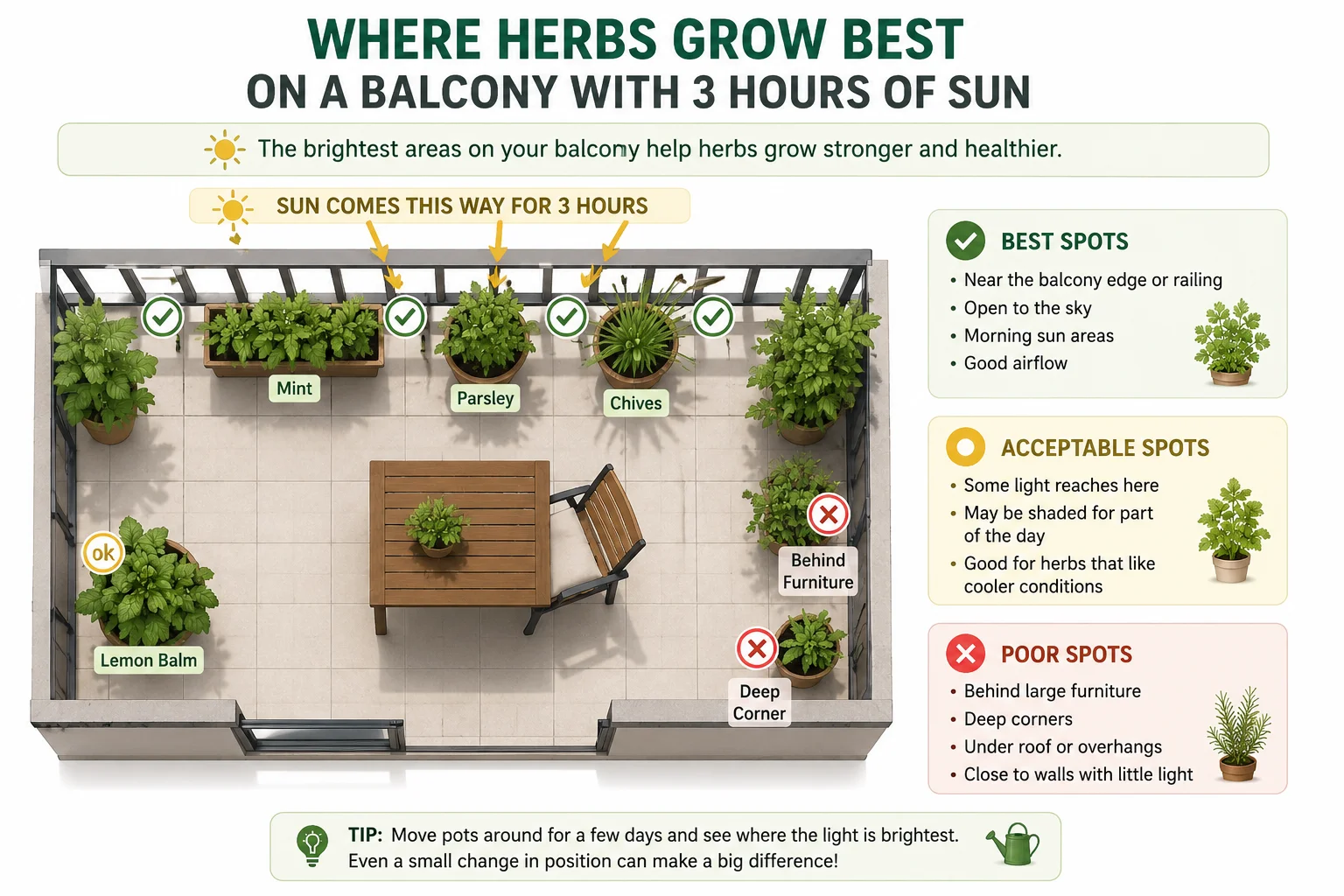
Railing planters, open shelves, and small stands can help herbs reach better light without taking up too much floor space. This matters on small balconies where the best light may only touch one narrow area.
If your balcony is very limited in both space and light, the guide on plants for balconies with limited space and light may help you compare other compact plant options that suit similar conditions.
Which Herbs Struggle With Only 3 Hours of Sun?
Some herbs can survive with three hours of sun but still struggle to grow well. This is common with herbs that prefer strong light, dry air, and warmer conditions.
| Herb | Why It May Struggle | What You May Notice | Better Balcony Condition |
|---|---|---|---|
| Basil | Usually needs more warmth and light for strong growth. | Leggy stems, pale leaves, weak flavour. | Bright morning sun or longer gentle sun. |
| Rosemary | Prefers strong sun, airflow, and drier conditions. | Slow growth, weak stems, damp soil problems. | Sunny, open, warm balcony. |
| Thyme | Likes bright sun and fast-draining dry soil. | Thin growth or poor scent. | Hotter bright balcony with good drainage. |
| Oregano | Usually develops better flavour in stronger sun. | Soft, stretched growth and lighter flavour. | More direct sun and good airflow. |
Basil is the herb many balcony gardeners try first, but it is not always the easiest choice for three-hour sun balconies. It may need a brighter spot than mint or parsley. If basil is your main herb, this article on basil growing tips for shaded balcony may be more useful than treating basil like the other partial-sun herbs.
Why Some Herbs Grow Well With Only 3 Hours of Sun
The difference between herbs is often linked to how they grow. Leafy herbs are usually grown for soft leaves, while woody herbs often come from brighter, drier places where strong sun helps develop compact growth and stronger oils.
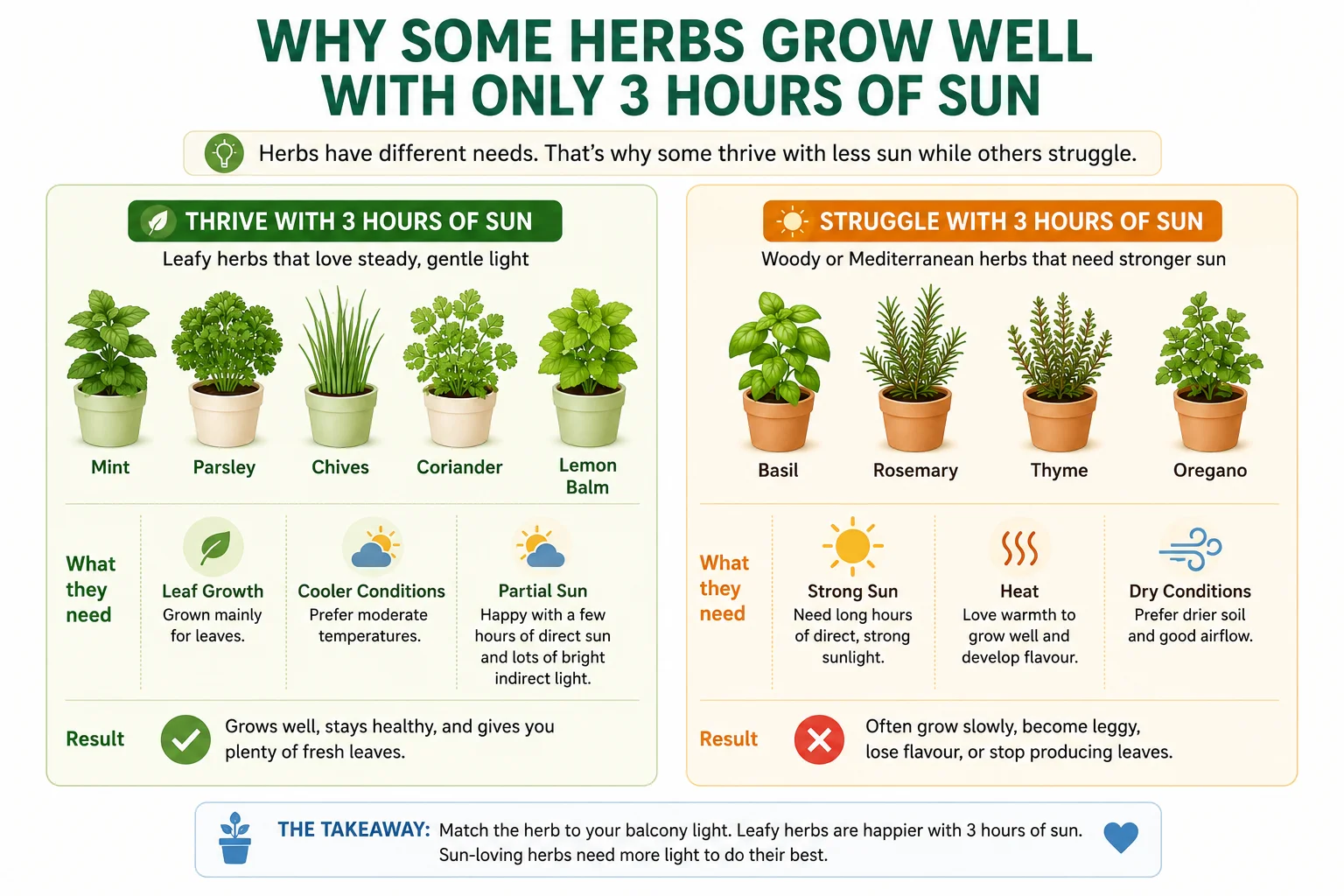
Mint, parsley, chives, coriander, and lemon balm can still produce useful leaves in partial sun because they are not relying on long, hot sunlight in the same way as rosemary or thyme. They may grow slower, but slower growth can still be productive in a balcony herb garden.
Woody herbs are different. Rosemary, thyme, oregano, and sage often need more sun to stay compact, fragrant, and strong. In too much shade, they may survive but lose the qualities people grow them for.
This also explains why some herbs lose smell or flavour on balconies. Light, heat, watering, and plant stress all affect the strength of the leaves. If your herbs look healthy but smell weaker than expected, the guide on why balcony herbs lose smell or flavour may help explain what is happening.
Best Herbs by Balcony Direction
Balcony direction can affect how three hours of sun feels. Morning sun, soft shade, and hot afternoon light are not equal, even when the number of sun hours looks similar.
| Balcony Direction | Common Light Pattern | Better Herb Choices | What to Watch |
|---|---|---|---|
| East-facing balcony | Gentle morning sun | Mint, parsley, chives, coriander | Usually one of the easiest light patterns for leafy herbs. |
| North-facing balcony | Bright shade or softer light | Mint, lemon balm, parsley, chives | Growth may be slower if the balcony is deeply shaded. |
| South-facing balcony | Cooler light or seasonal sun changes | Parsley, chives, mint, lemon balm | Results depend heavily on building shade and open sky exposure. |
| West-facing balcony | Hotter afternoon sun | Coriander in cooler months, parsley, chives, mint in protected spots | Heat and dry pots may matter more than the number of sun hours. |
This table is only a starting point because nearby buildings, roof cover, glass doors, railings, and wind can change the real conditions. If you are unsure how much sun your balcony actually receives, the guide on how to measure sunlight on a balcony can help you compare direct sun, bright shade, and indirect light more clearly.
Practical Insights for Low-Sun Balcony Herbs
Herbs in limited sunlight usually benefit more from consistency than intensity. The goal is not to turn a shaded balcony into a full-sun garden, but to make the best use of the light already available.
- Leafy herbs usually suit three-hour sun balconies better than woody herbs.
- Morning sun is often easier for herbs than harsh afternoon sun.
- Bright indirect light still helps, especially near open balcony edges.
- Slow growth is normal in partial sun and does not always mean failure.
- Wet soil becomes a bigger risk when herbs grow slowly.
- Small placement changes can make a large difference on balconies.
Watering also changes in low-sun spaces. Herbs may not dry out as quickly as they would in full sun, especially if the balcony is covered or protected from wind. If the potting mix stays damp for too long, roots can become stressed even when the plant looks thirsty.
Common Misunderstandings About Herbs and Sunlight
Many low-sun herb problems are caused by confusing survival with good growth. A herb may stay alive in three hours of sun, but that does not mean it will grow strongly, smell rich, or recover quickly after harvesting.
- Thinking all herbs need the same amount of sun.
- Assuming three hours of sun is useless for edible plants.
- Choosing basil or rosemary before easier leafy herbs.
- Overwatering because growth looks slow.
- Keeping pots too far back from the balcony edge.
- Expecting full-sun flavour from herbs grown in partial sun.
These misunderstandings are common because herb labels are short and balcony conditions are detailed. A label might say “full sun”, but it cannot explain whether your balcony has reflected light, morning sun, roof shade, hot tiles, wind exposure, or a bright open edge.
Seasonal Context for Balcony Herbs
Balcony light changes through the year. A balcony that receives three hours of sun in one season may receive less or more at another time, depending on sun angle, nearby buildings, and roof coverage.
In warmer months, three hours of morning sun may be enough for leafy herbs and may even protect them from heat stress. In cooler months, the same balcony may feel dimmer and slower because the sun is weaker and daylight hours are shorter.
This is one reason herb growth can change without anything being “wrong”. The balcony may simply be moving through a different light and temperature pattern.
Balcony Haven Note: I have noticed that herbs often respond more to the pattern of light than the number of sun hours alone. A bright balcony edge with short morning sun can grow better herbs than a darker corner that technically gets the same amount of direct sun. Results can still vary a lot between balconies because nearby walls, railings, roofs, and wind all change the growing space.
Frequently Asked Questions
What herbs need the least amount of sunlight?
Mint, parsley, chives, and lemon balm are some of the better herbs for lower sunlight. They still need brightness, but they usually cope better with partial sun than herbs such as rosemary, thyme, and basil.
Can basil grow with only 3 hours of sun?
Basil can sometimes survive with three hours of sun, but it may grow slowly, stretch toward the light, or lose flavour. It usually performs better with stronger brightness, warmth, and a protected position.
Can herbs grow with only morning sun?
Yes, many leafy herbs grow well with morning sun because it is gentler and less drying than afternoon sun. Mint, parsley, coriander, chives, and lemon balm can all suit morning-sun balconies when the rest of the day is still bright.
Are herbs slower to grow in partial sun?
Herbs are often slower in partial sun because they receive less energy for fast growth. This is normal, and slower growth can still be healthy if the leaves stay green, firm, and useful.
Can I grow multiple herbs in one balcony container?
Multiple herbs can share one container if they have similar light and water needs. Mint is usually better in its own pot because it spreads strongly, while parsley, chives, and coriander can be easier to manage together in a larger planter.
Why do herbs become pale in low light?
Pale leaves can happen when herbs are not receiving enough usable light, when soil stays too wet, or when the plant is growing weakly. On balconies, it is often a sign that the herb needs a brighter position rather than more fertiliser.
Final Thoughts
Balconies with three hours of sun can still grow useful herbs when the plant choices are realistic. Mint, parsley, chives, coriander, and lemon balm are better suited to partial sun than many woody or heat-loving herbs.
The main difference is expectation. A three-hour sun balcony may not produce fast, bushy herb growth like a full-sun garden bed, but it can still support steady leaves for regular small harvests.
If you only have three hours of sun, the most reliable approach is to choose herbs that naturally tolerate partial sunlight rather than trying to force full-sun herbs to succeed. When the herb, pot, soil, and placement match the balcony’s real light pattern, growing herbs becomes less frustrating.
Instead of chasing perfect full sun, it is often more helpful to work with the brightest part of the balcony and choose herbs that are comfortable there. That is where low-sun balcony herb gardening becomes simpler, calmer, and more predictable.
Leave a Reply