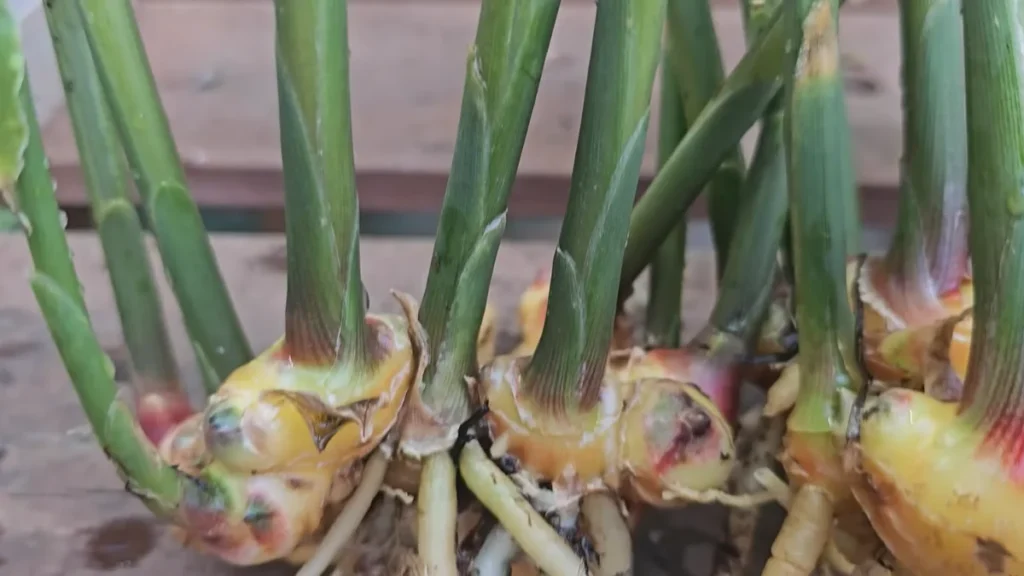
If you’ve ever held a piece of ginger in your kitchen and wondered whether it could grow on your balcony, you’re not alone. Ginger looks simple, stays hidden underground, and is often labelled as a “tropical plant,” which makes balcony gardeners unsure where it really belongs. So can I grow ginger in a balcony container?
Yes — ginger can grow in a balcony container, but not in the way most garden advice describes. It doesn’t behave like leafy herbs or fast vegetables, and success on a balcony depends less on technique and more on how your space manages warmth, moisture, and patience.
The confusion comes from mixed advice. Many guides assume open garden soil, steady ground temperatures, and long growing seasons. Balconies work differently, and ginger reacts to those differences more than most edible plants.
This article explains what ginger actually needs to grow in a container on a balcony, why it often disappoints apartment gardeners, and what conditions quietly make the difference — without turning this into a step-by-step growing guide.
Table of Contents
Balcony Reality Check
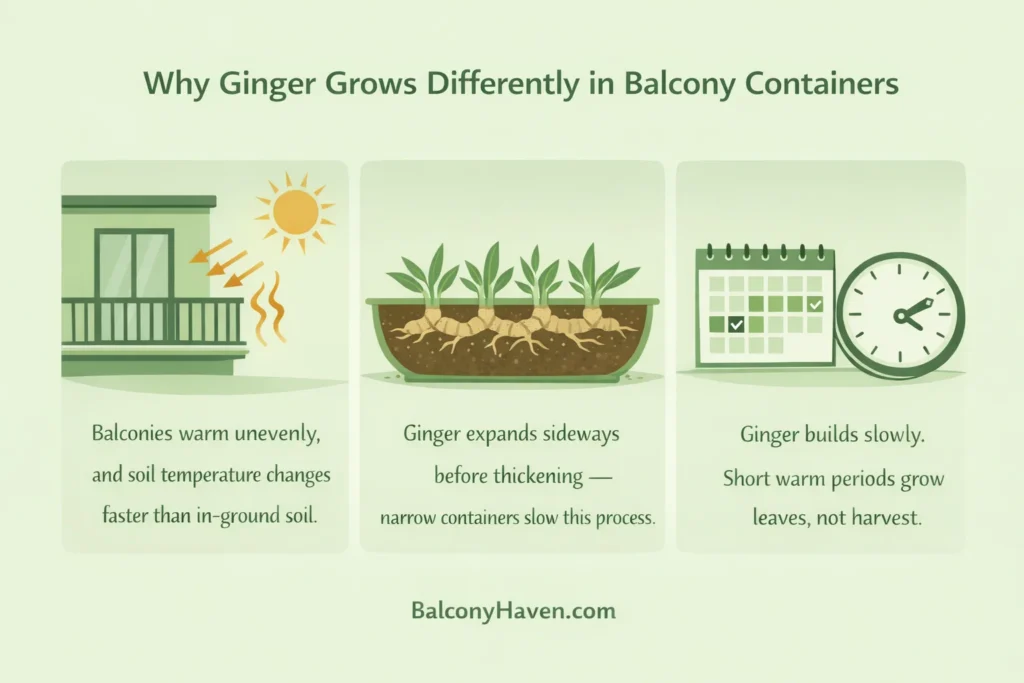
Balconies heat up and cool down faster than gardens. Pots are lifted off the ground, surrounded by air, and exposed to reflected heat from walls and railings. At the same time, wind strips moisture away from containers long before roots can use it.
Ginger grows underground, but it is very sensitive to what happens above the soil. On a balcony, the soil temperature swings more sharply, moisture doesn’t stay consistent, and growth slows if conditions aren’t steady. This doesn’t mean ginger can’t grow — it means it grows on balcony time, not garden time.
Another quiet limitation is space. Ginger spreads sideways before it grows tall. Narrow or deep-only containers restrict how rhizomes expand, even if the plant above looks healthy.
What Most Advice Misses
Most ginger-growing advice focuses on sprouting, planting depth, or fertilising. What it rarely explains is that ginger is a storage plant, not a quick-harvest one. Its real growth happens slowly and invisibly.
In gardens, ginger benefits from warm soil that stays warm for months. On balconies, soil warmth is often interrupted — hot days followed by cool nights, shaded mornings followed by intense afternoon heat. Ginger responds to this by pausing growth rather than pushing through it.
Another missed detail is that ginger doesn’t rush. It builds mass quietly, and when conditions fluctuate too much, it survives rather than thrives. This is why many balcony gardeners end up with leaves but very little ginger underground.
How Ginger Behaves in Balcony Containers
Small vs Open Balconies
On enclosed or semi-enclosed balconies, warmth is more stable. Ginger tends to grow more steadily because temperature swings are smaller. Open balconies experience sharper shifts, which slows rhizome development even if leaves look healthy.
Morning Sun vs Afternoon Sun
Ginger prefers warmth without stress. Morning sun warms the soil gently, while strong afternoon sun can overheat containers and dry soil unevenly. On balconies with harsh afternoon exposure, ginger often survives but stays small.
Container Width Matters More Than Depth
Ginger expands sideways before thickening. Tall, narrow pots limit this movement. Wider containers allow rhizomes to spread naturally, even if the plant above remains modest in size.
Practical Insights (Without Turning This Into a Guide)
Ginger tends to do better on balconies when:
- Soil temperature stays relatively steady across day and night
- Containers don’t dry out completely between watering cycles
- Space allows horizontal growth underground
- Expectations match slow, seasonal progress rather than quick harvests
These aren’t rules — they’re patterns observed across many balcony setups.
Common Misunderstandings About Balcony Ginger
- “Big leaves mean big ginger”
Leaf growth doesn’t always reflect underground growth in containers. - “More sun equals faster growth”
Too much direct heat often slows ginger down rather than helping it. - “If it grows herbs, it will grow ginger”
Ginger behaves very differently from basil, mint, or coriander. - “Failure means wrong technique”
In many cases, it’s the balcony environment, not the gardener.
Local & Seasonal Context
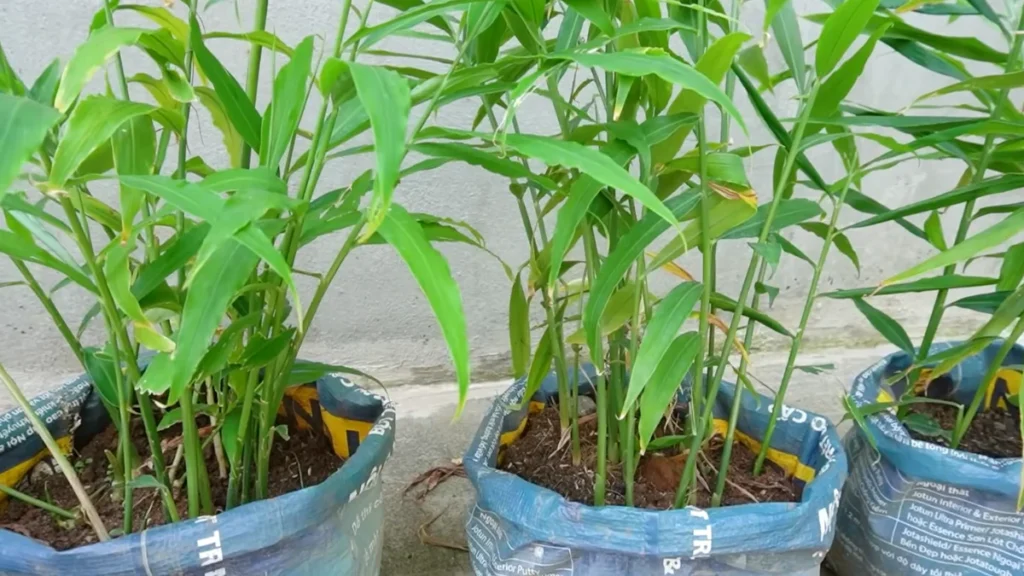
In warmer Australian regions, ginger can stay active longer on balconies, but container soil still cools faster than ground soil. In cooler months, ginger often pauses growth without showing obvious signs above the surface.
This dormancy is normal. On balconies, ginger follows temperature more closely than daylight, which is why growth may stall even when conditions look fine.
Balcony Haven Note
On my own balcony, I’m not planting ginger this time. Living in a rented apartment, I prefer plants that grow and finish within a shorter window, and ginger took around eight months to fully mature in containers, with even baby ginger needing about five months. While it often stayed healthy above the soil, progress underground was slow and varied from season to season, which didn’t quite suit how I currently use my balcony space.
If you’re growing ginger alongside other edibles, it helps to understand how balconies affect soil behaviour overall. Issues like moisture loss and container limits show up in other plants too, which is why posts like “Balcony soil drying out too fast” and “Deep vs shallow pots for balcony veggies” often explain ginger struggles indirectly — even when ginger isn’t mentioned at all.
FAQs
Can ginger grow indoors on a balcony?
It can survive, but without enough warmth and light, growth is usually very slow and limited. In cooler indoor conditions, ginger often focuses on staying alive rather than storing energy in the rhizome.
How long does ginger take to grow in a container?
Much longer than most vegetables. On balconies, it often takes a full warm season just to build noticeable rhizome size. Short warm spells may produce leaves, but consistent warmth over time is what allows the rhizome to thicken.
Why does my ginger look healthy but produce little harvest?
Leaf health doesn’t guarantee underground growth. Temperature stability and container space matter more than appearance. Ginger can look productive above the soil while quietly pausing its real growth below the surface.
Does ginger die back in winter on balconies?
Often it goes dormant rather than dying. Growth usually pauses until warmth returns. This pause is a protective response to cooler soil, not a sign that the plant has failed.
Final Thoughts
Growing ginger in a balcony container is possible, but it works best when expectations shift from speed to observation. Ginger rewards steady conditions, patience, and realistic assumptions about how balconies behave.
If your ginger grows slowly, it doesn’t mean you’ve failed. It means the plant is responding honestly to its environment. On balconies, understanding that response matters far more than following perfect instructions.
Leave a Reply