Overview
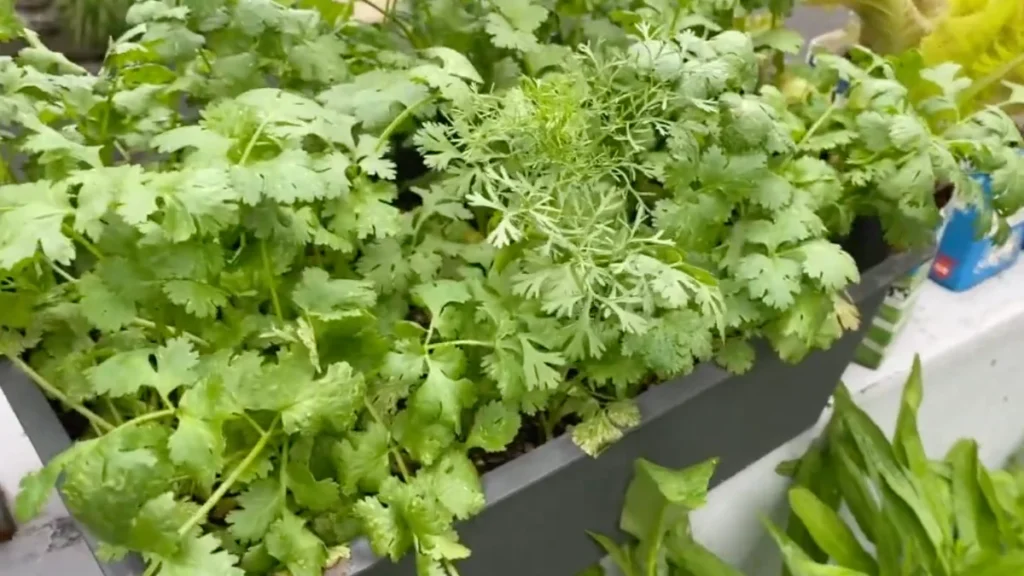
Coriander is one of those herbs that feels easy at first but quickly becomes frustrating on apartment balconies. The leaves grow fast, then suddenly turn weak, leggy, or bolt into flowers, especially in warm and humid weather. Many balcony growers assume they are watering wrong or that coriander just “doesn’t like balconies.”
Coriander growing tips for humid balconies focus on managing moisture, airflow, and heat rather than feeding the plant. In warm, humid conditions, coriander struggles because damp soil and still air stress the roots and leaves, often causing early bolting. Small changes in pot size, spacing, and balcony placement usually make a bigger difference than fertiliser or frequent watering.
When these issues are ignored, coriander often bolts early, develops soft stems, or becomes bitter before you get a proper harvest. This can feel discouraging, especially when other herbs on the same balcony seem fine.
The good news is that coriander can grow well on apartment balconies, even in humid climates. This article explains why humidity affects coriander so strongly and shows practical, balcony-friendly ways to grow healthier plants without turning your space into a full garden setup.
Table of Contents
Understanding the Reality of Humid Apartment Balconies
Apartment balconies behave differently from ground gardens, especially in humid areas. Warm air tends to linger between buildings, and moisture stays trapped around pots, walls, and railings. Even when the sun exposure looks reasonable, the air often feels heavier and doesn’t dry out as quickly.
For coriander, this matters because it prefers cool roots, gentle airflow, and consistent but not soggy soil. On many balconies, humidity increases leaf softness and speeds up flowering, particularly when combined with reflected heat from concrete or glass.
Space and weight limits also affect pot size and placement. Smaller pots heat up faster and stay wet longer after watering, which creates stress at the roots. These are not mistakes by the grower — they are common apartment constraints that simply need to be worked with.
Choosing the Right Pot Setup for Coriander in Humid Conditions
Smaller Pots and Why They Struggle
Very small pots dry unevenly on balconies. The surface may look dry, while the lower soil stays damp for days. In humid weather, this often leads to weak root growth and fast bolting.
Coriander grown in these conditions tends to look healthy for a short time, then collapse or flower early without producing many usable leaves.
The Most Reliable Pot Size for Humid Balconies
For most apartment balconies, a medium pot with enough depth for airflow in the soil works best. This type of pot balances moisture without staying wet too long and gives roots space to stay cooler.
Unglazed or breathable materials help slightly, but drainage and depth matter more than the pot material itself.
When Larger Pots Help
If your balcony stays warm day and night, slightly larger containers can stabilise soil temperature. The extra volume slows down heat spikes and prevents roots from sitting in constant moisture, which is common in humid climates.
Light and Placement: Less Heat, More Balance
Coriander does not need intense sun, especially in humid conditions. On apartment balconies, too much direct afternoon sun combined with humidity pushes the plant into survival mode.
Balconies with morning sun and light afternoon shade tend to produce softer, longer-lasting leaves. Areas near walls that trap heat often cause coriander to bolt faster, even if the light level seems ideal.
Placing coriander where it receives brightness without heat buildup is usually more effective than chasing full sun exposure.
Watering Coriander Without Encouraging Rot or Bolting
Humidity changes how coriander responds to water. Soil dries slower, but leaves lose moisture quickly in warm air. This can make watering feel confusing.
Instead of frequent watering, coriander does better with steady moisture and good drainage. Letting excess water escape quickly helps roots breathe, which slows stress and flowering.
Overwatering in humid air is one of the most common reasons coriander fails on balconies, even when the plant looks thirsty from above.
Practical Coriander Growing Tips for Humid Balconies
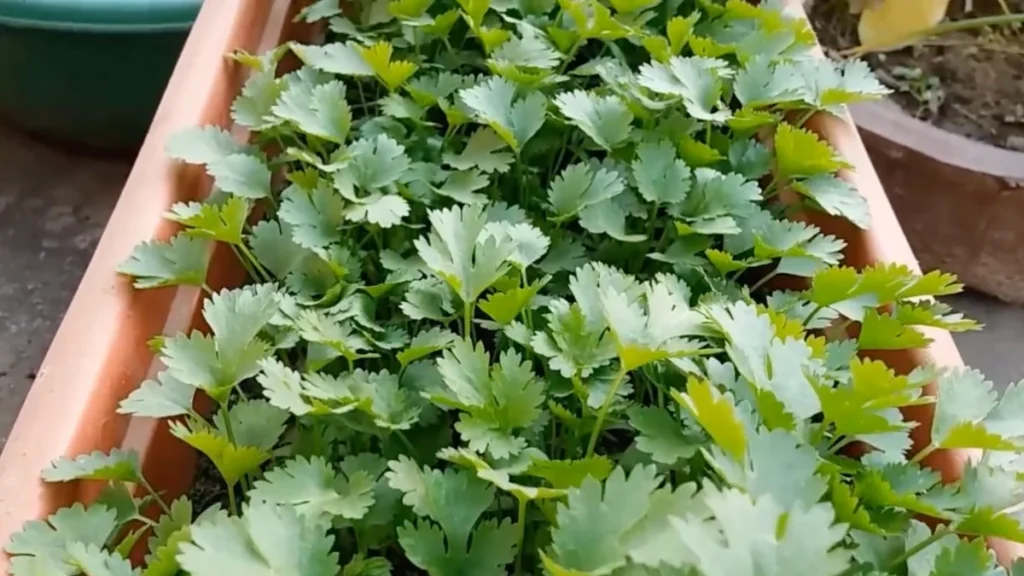
These tips focus on managing conditions rather than forcing growth:
- Use pots with clear drainage holes to prevent moisture buildup
- Avoid overcrowding seedlings, as dense growth traps humidity
- Position pots where air can move freely around the leaves
- Harvest outer leaves early to reduce stress on the plant
- Expect shorter harvest windows during warmer months
Each of these helps coriander stay in leaf-growing mode for longer instead of rushing into flowering.
Common Mistakes Balcony Growers Make With Coriander
Even experienced balcony gardeners run into these issues:
- Planting coriander too late in warm seasons
- Using shallow containers that overheat
- Watering on a schedule instead of checking soil moisture
- Keeping coriander in full afternoon sun during humid weather
- Letting plants crowd each other in narrow planters
These mistakes are easy to make and usually come from treating coriander like tougher herbs such as basil or mint.
Growing Coriander Through Humid Seasons
In humid regions, coriander often grows best during cooler transition periods rather than peak summer. Autumn and early spring usually produce stronger plants with slower bolting.
During very humid months, coriander can still grow, but expectations need to shift. Harvesting smaller amounts more often tends to work better than aiming for large, long-lasting plants.
Balcony Haven Note
On an average apartment balcony, I’ve noticed that coriander and other soft herbs tend to react more to humidity, airflow, and heat buildup than to how often they’re watered. When warm air stays trapped around the pots, growth changes quickly, especially during humid periods. This can vary from one balcony to another depending on layout, exposure, and surrounding buildings.
If humidity has been affecting more than just coriander on your balcony, Balcony plants for tropical humidity explains how warm, moist air impacts different plant types and why some herbs cope better than others. This article helps put coriander’s behaviour into a broader balcony-climate context.
Frequently Asked Questions
How do you grow coriander on a balcony?
Coriander grows best on balconies when planted in well-draining pots, placed away from strong afternoon heat, and grown during cooler parts of the season. Managing airflow and moisture matters more than fertilising or frequent watering.
How do you grow coriander in hot and humid weather?
In hot, humid weather, coriander needs reduced heat exposure, steady soil moisture, and space between plants. These conditions help slow bolting and keep leaves usable for longer.
What is the secret to growing coriander?
The key to growing coriander is avoiding stress. Heat, humidity, and crowded roots trigger early flowering. Stable conditions and gentle harvesting usually produce better results than intensive care.
Can coriander grow in rainy or wet seasons?
Coriander can grow during rainy seasons if drainage is excellent and pots are not waterlogged. Without good drainage, roots weaken quickly and plants fail early.
Final Thoughts
Growing coriander on an apartment balcony in humid conditions can feel tricky, but the challenge is usually environmental rather than personal. Coriander reacts quickly to heat, moisture, and airflow, which makes it less forgiving than many other herbs.
By working with your balcony’s natural conditions instead of pushing for perfect growth, coriander becomes easier to manage. Shorter growing windows, smaller harvests, and better placement often lead to more reliable results.
Every balcony behaves differently, especially in humid climates. Paying attention to how your space holds heat and moisture over time is often the most helpful step toward growing coriander successfully.
Happy Balcony Gardening!
Leave a Reply