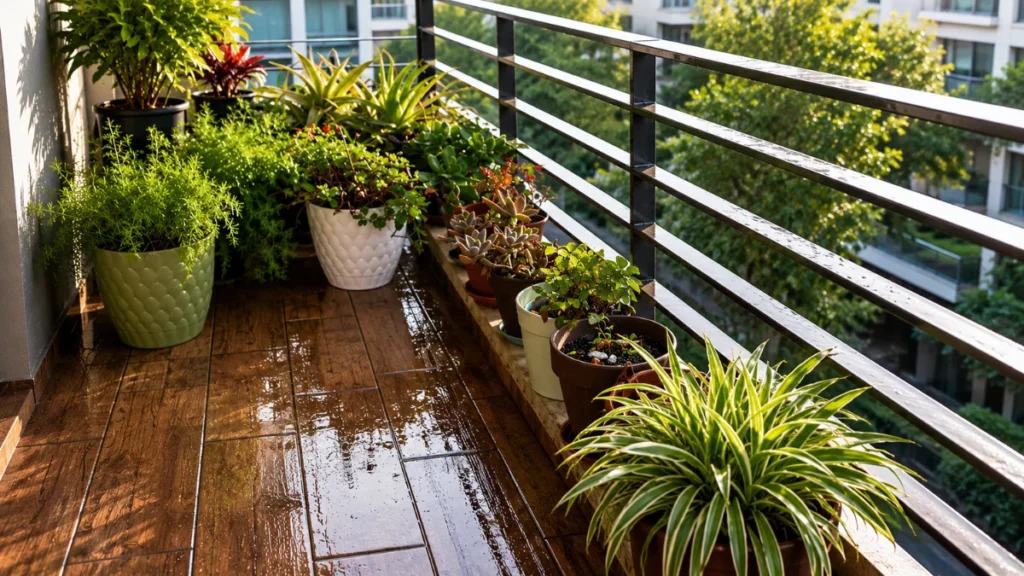
Balcony plants for tropical humidity can be confusing because humid weather often looks plant-friendly at first. The air feels warm, plants grow quickly, and pots may stay moist for longer. But on an apartment balcony, humidity can also trap moisture, slow drying, and make some plants decline even when they seem to be getting enough care.
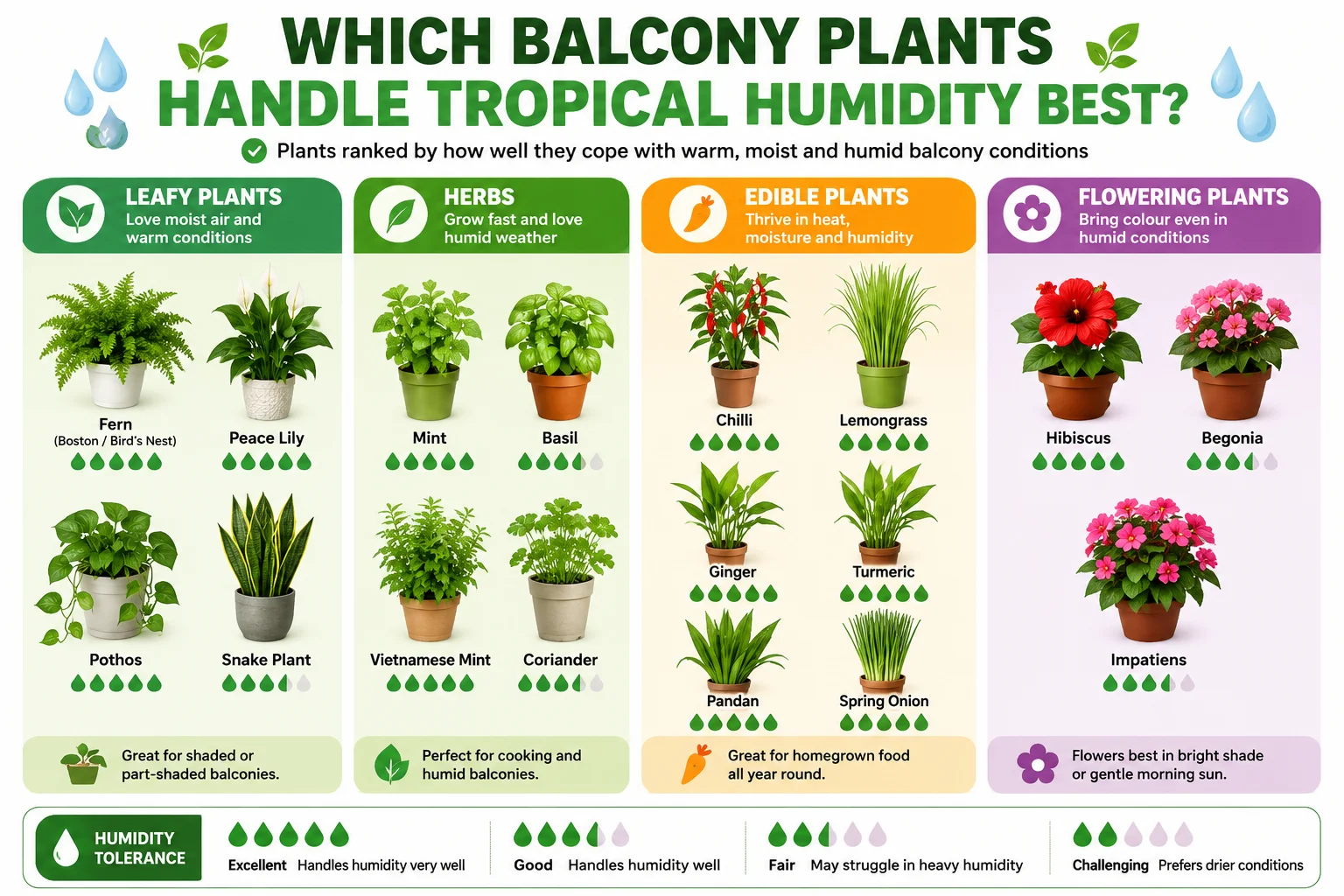
Plants that handle warm, moist balcony conditions best include ferns, peace lilies, pothos, hibiscus, mint, basil, chilli, lemongrass, ginger, turmeric, pandan, spring onions, and snake plants. These plants are usually more suitable for humid apartments because they can cope with moist air, warm nights, and slower-drying pots better than dry-climate plants.
The main problem is not humidity by itself. The problem is humidity combined with small containers, limited airflow, warm concrete, heavy rain, and pots that stay wet for too long. This is why a plant can look healthy one week, then suddenly show yellow leaves, fungus, soft stems, or root stress after a wet spell.
This article explains which plants are more realistic for humid balconies, why some apartment balconies stay damp longer than others, and how to choose plants that work with tropical conditions instead of fighting them.
Why Tropical Humidity Feels Different on Balconies
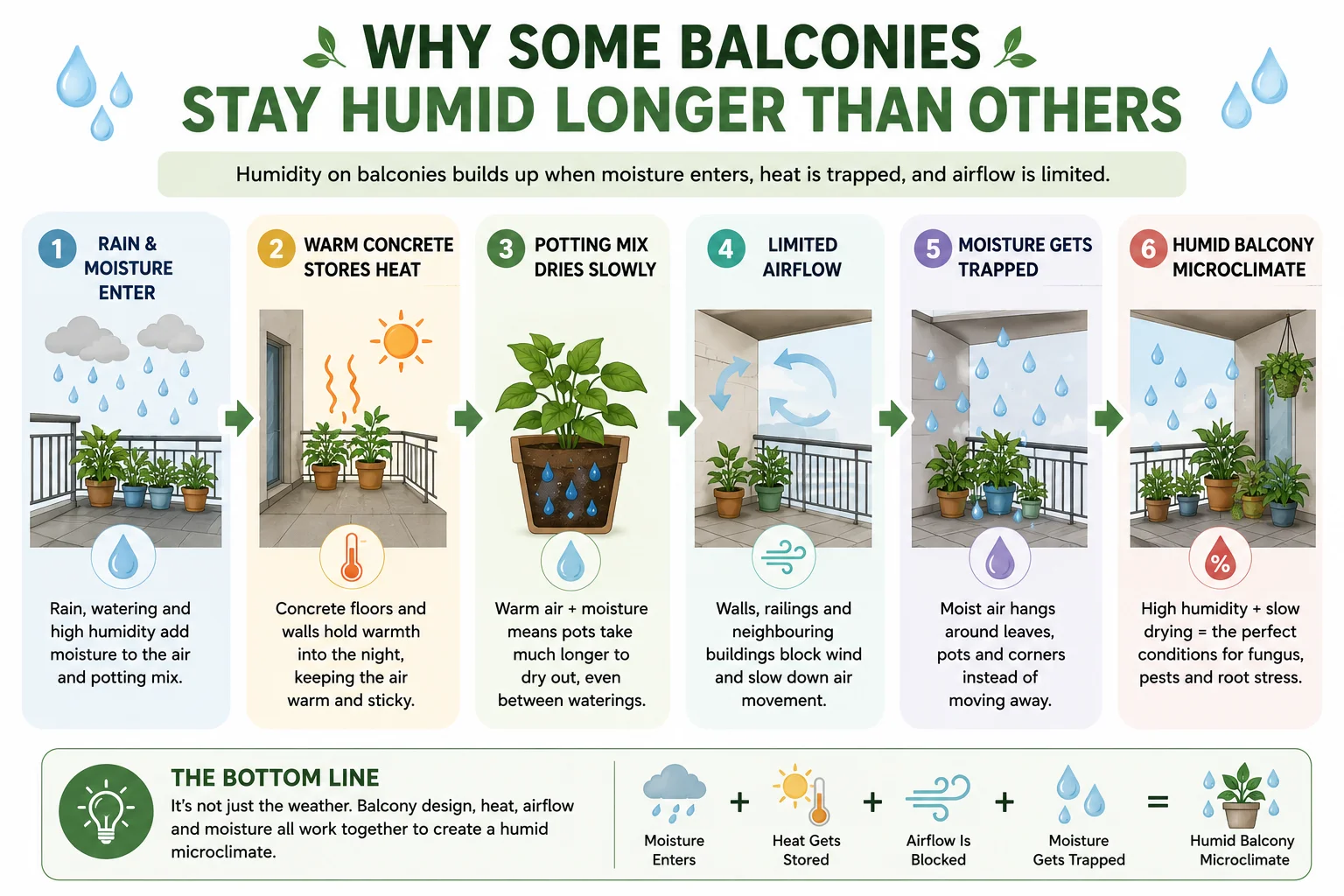
Tropical humidity behaves differently on balconies than it does in open gardens. In a backyard, moisture can spread through open air and soil can dry from several directions. On a balcony, the same moisture often becomes trapped between walls, railings, floors, and nearby buildings.
Concrete floors and walls can hold warmth into the evening. When nights stay warm and the air stays damp, potting mix dries much more slowly. A pot that looks fine in the morning may still be wet underneath the surface the next day.
This matters because plant roots need both moisture and air. Humid weather can make the leaves feel comfortable, but soggy potting mix can still stress the roots. This is why tropical balcony gardening is often less about watering more and more about choosing plants that tolerate warmth, moisture, and slower drying.
What Most Humidity Advice Misses
A lot of gardening advice says tropical plants love humidity. That is partly true, but it does not always explain the balcony side of the problem. A plant may enjoy humid air around its leaves while still struggling if the pot stays waterlogged.
Another missed point is airflow. Humid balconies with gentle airflow can be much easier for plants than enclosed balconies where air hardly moves. Two people can grow the same plant in the same suburb and get different results because one balcony dries after rain while the other stays damp for days.
Advice written for garden beds also assumes deeper soil, more space, and better natural drainage. Small balcony pots do not behave that way. They heat up faster, cool down faster, dry unevenly, and can become too wet or too dry depending on pot size, exposure, and rain direction.
Best Balcony Plants for Tropical Humidity
The best balcony plants for tropical humidity are usually plants that already suit warm, moisture-rich conditions. Some are leafy tropical plants. Some are flowering plants. Others are herbs and edible plants that grow strongly in warm weather as long as their pots drain properly.
The table below gives a quick comparison of realistic balcony plants for humid apartments.
| Plant | Best Balcony Light | Humidity Tolerance | Best Use on a Balcony |
|---|---|---|---|
| Boston fern | Bright shade | High | Hanging baskets and sheltered corners |
| Bird’s nest fern | Bright shade to filtered light | High | Leafy tropical feature plant |
| Peace lily | Shade to bright shade | High | Covered balconies and shaded spaces |
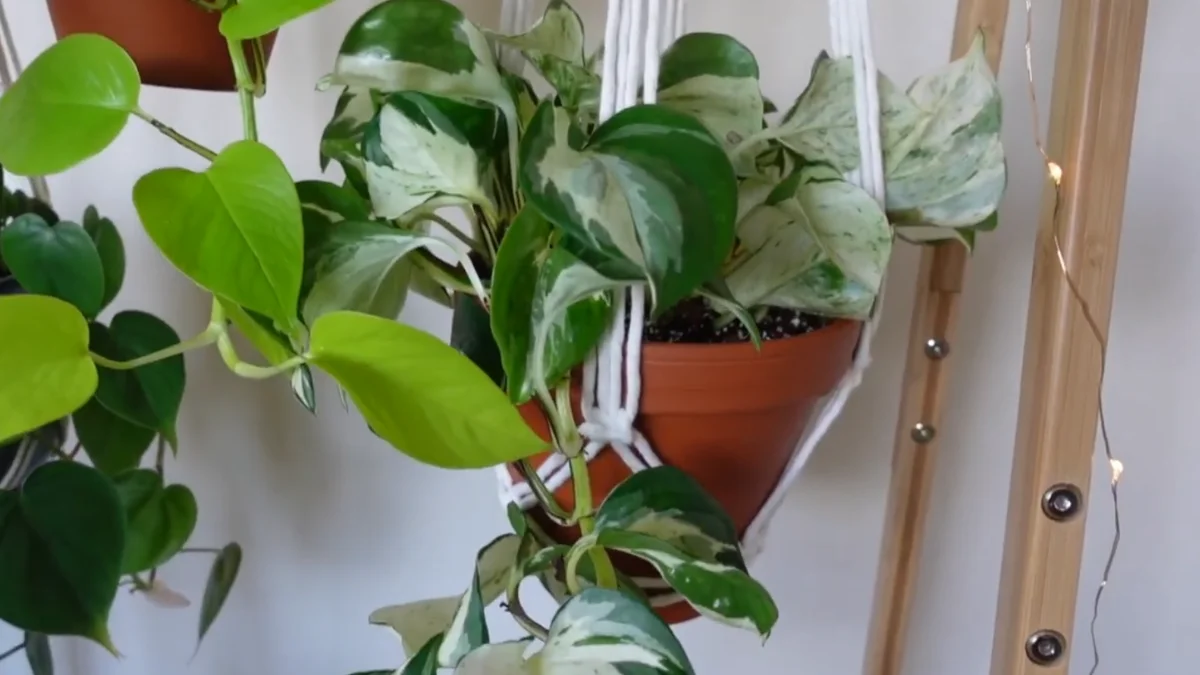
| Pothos | Shade to bright indirect light | High | Trailing pots and vertical spaces |
| Hibiscus | Full sun to bright light | High | Flowering feature plant |
| Mint | Morning sun to partial shade | High | Easy edible herb in its own pot |
| Basil | Morning sun or bright light | Medium to high | Warm-season herb |
| Chilli | Full sun to strong bright light | Medium to high | Fruit-producing edible plant |
| Lemongrass | Full sun | High | Tall edible grass for sunny balconies |
| Ginger | Bright shade to filtered light | High | Warm, sheltered edible container |
| Snake plant | Bright shade to partial sun | Medium | Low-care plant for covered spaces |
If your balcony also receives heavy rain, this guide on what plants can handle heavy rain on a balcony is a useful next read because rain and humidity often create problems together.
Leafy Plants That Handle Moist Air Well
Ferns are among the most reliable leafy plants for humid balconies. Boston ferns, bird’s nest ferns, and maidenhair ferns naturally suit moist air and filtered light. They often look better on humid balconies than in dry indoor rooms because the leaf edges are less likely to crisp.
Peace lilies and pothos also handle humid apartment conditions well. They are useful for covered balconies, shaded corners, and spaces where the air stays moist but the sun is not harsh. Their leaves can stay healthy in bright shade, which makes them more realistic than many full-sun ornamentals.
Snake plants can also work, especially on covered balconies where the pot is protected from constant rain. They tolerate humidity in the air, but they still prefer a pot that drains well. In a very wet balcony setup, they are better placed away from direct rain.
Flowering Plants for Humid Balconies
Hibiscus is one of the strongest flowering choices for warm, humid balconies with enough sun. It suits tropical conditions, handles heat better than many softer flowers, and can grow well in a large pot with good drainage.
Begonias and impatiens can work well in humid balconies that have bright shade or soft morning light. They are especially useful where full sun is too strong or where the balcony is sheltered. Their roots are not deep, so potting mix and drainage still matter.
The main difference between these flowering plants is light. Hibiscus usually needs stronger sun to flower well, while begonias and impatiens are more useful for shaded humid balconies. Matching the plant to both humidity and light gives a better result than choosing by humidity alone.
If your balcony is shaded as well as humid, this article on best plants for shaded apartment balconies may help you compare more options for lower-light spaces.
Herbs and Edibles That Like Warm Humidity
Many edible plants struggle when humidity comes with poor airflow, but some are well suited to warm balcony conditions. Mint, basil, Vietnamese mint, lemongrass, ginger, turmeric, pandan, spring onions, and chilli can all be realistic choices in humid apartments.
Mint is one of the easiest herbs for humid balconies, but it spreads strongly and is usually better kept in its own pot. Basil can grow quickly in warm humidity, although it may become weak if airflow is poor or if the soil stays wet for too long.
Chilli plants often grow well in tropical and subtropical conditions when they receive enough sun. Pots can actually help because they give more control over drainage during long wet periods. If your balcony is windy as well as humid, this article on can chilli plants grow on a windy balcony explains what changes when wind becomes part of the growing conditions.
Ginger and turmeric are useful for warm, bright shade. They do not need the same exposed full sun as chilli or lemongrass, which makes them helpful for balconies that are humid but not extremely sunny.
What Plants Are Good for Hot and Humid Balconies?
Hot and humid balconies need plants that can handle two stresses at once. The air may be moist, but the pot can still overheat. Leaves may enjoy humidity, but roots can struggle if warm soil stays wet for too long.
For sunny hot balconies, hibiscus, chilli, lemongrass, basil, pandan, and snake plants are more realistic than plants that prefer cool, dry air. These plants can handle warm conditions better, especially when the pot is large enough and drains well.
For shaded hot balconies, peace lilies, pothos, ferns, ginger, turmeric, and Vietnamese mint may be more suitable. They do not need harsh direct sun, but they still benefit from bright light and enough spacing so leaves do not stay wet all day.
Hot balconies can also create reflected heat from walls, tiles, and glass. If your balcony gets strong reflected heat, this article on what plants grow best on balconies that get reflected heat can help you separate humidity problems from heat stress.
Which Balcony Setups Stay Wet Longest?
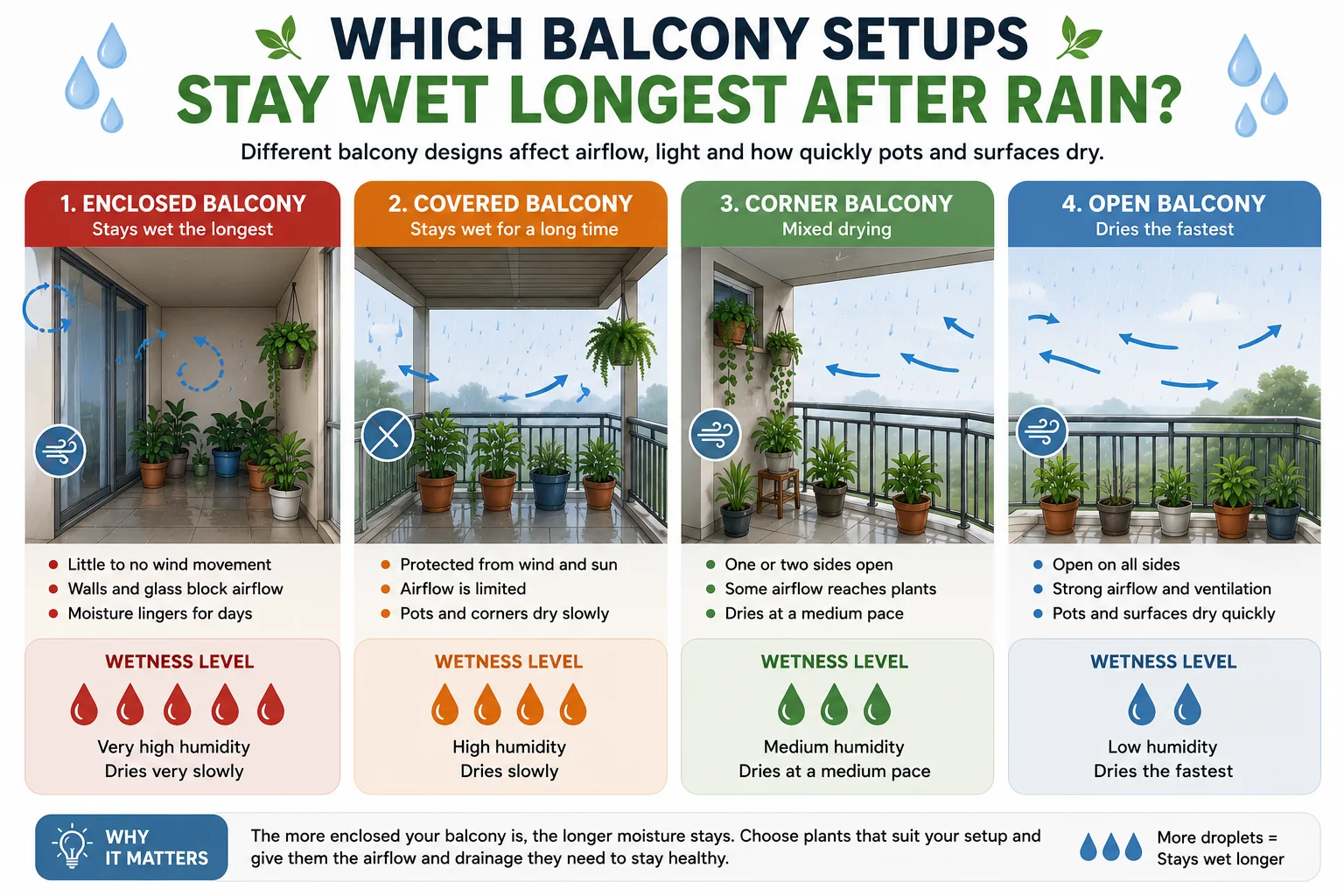
Some humid balconies stay wet longer simply because of their shape. A balcony with deep side walls, a roof above it, or glass balustrades may hold moisture longer than an open balcony with steady airflow.
This is why the same plant can succeed on one balcony and struggle on another. The plant list matters, but the balcony layout also changes how quickly leaves and potting mix dry after rain.
| Balcony Setup | How It Usually Behaves in Humidity | Plant Choice Risk |
|---|---|---|
| Enclosed balcony | Air moves slowly and moisture can linger after rain. | Higher risk of fungus, soggy pots, and weak airflow. |
| Covered balcony | Protected from some rain, but shaded areas may dry slowly. | Good for leafy tropical plants if pots are not overwatered. |
| Corner balcony | One side may trap moisture while the open side dries faster. | Mixed conditions can affect plants in different corners. |
| Open balcony | Better airflow, but more exposure to wind and direct rain. | Lower humidity buildup, but plants may need stronger stems. |
Airflow is especially important in humid spaces. This guide on balcony pot spacing for airflow explains why tight plant spacing can make moisture problems worse in small balcony gardens.
Plants That Often Struggle in Tropical Humidity
Some plants can survive short humid periods but become harder to grow when warm moisture continues for weeks. Rosemary, lavender, many succulents, and other dry-climate plants often prefer faster drying, stronger airflow, and less moisture around their roots.
These plants are not impossible on a humid balcony, but they need better drainage and a more open position than tropical plants. A covered, airy balcony may support them, while a damp enclosed balcony may cause them to yellow, rot, or grow weak.
Succulents are especially easy to overestimate in humid apartments. They may look tough, but many prefer dry air and quick-drying pots. If your balcony is humid and shaded, tropical leafy plants are usually more forgiving than desert-style plants.
Practical Tips for Growing Plants in Tropical Humidity
Growing plants in tropical humidity becomes easier when the setup supports drying, airflow, and plant choice without trying to remove humidity completely.
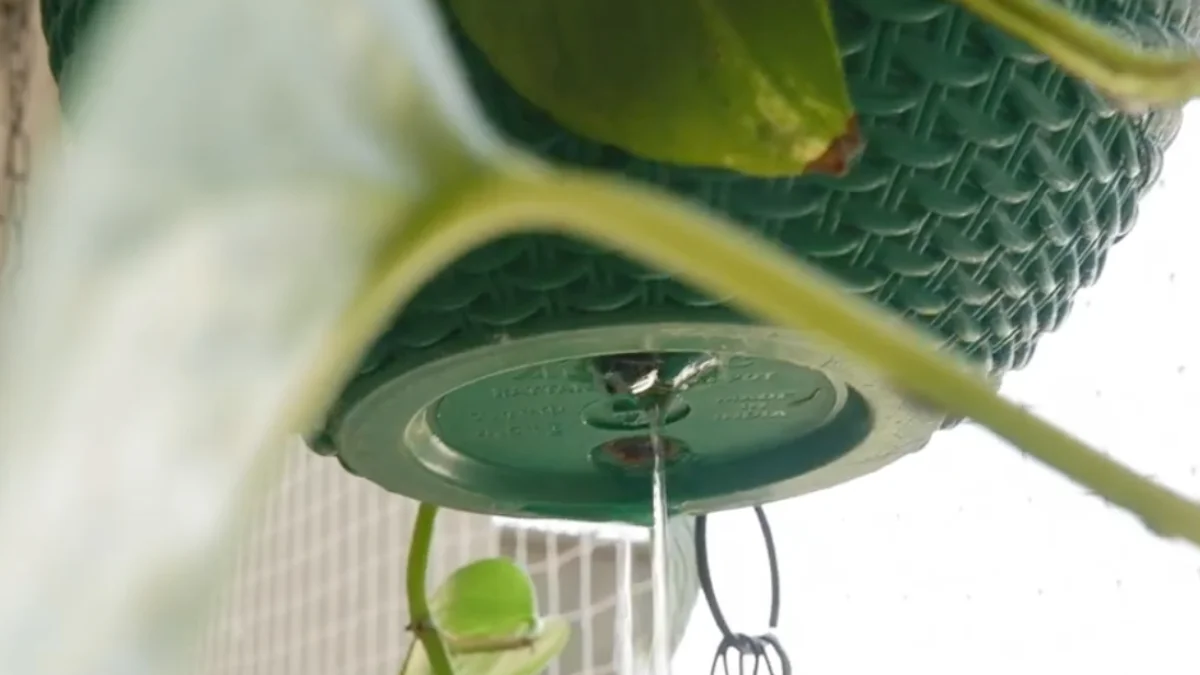
- Use pots with drainage holes so water can leave after rain.
- Raise pots slightly so air can move underneath.
- Choose tropical or moisture-tolerant plants for the dampest areas.
- Keep dry-climate plants in the brightest, airiest part of the balcony.
- Space pots so leaves are not constantly touching.
- Check potting mix before watering because humid pots dry slowly.
Drainage is one of the biggest differences between a healthy humid balcony and a soggy one. If your pots often stay wet, this guide on drainage tips for small balcony containers may help you understand the container side of the problem.
Common Mistakes on Humid Balconies
Most humid balcony problems come from treating the space like a normal garden bed. The climate may be tropical, but the growing space is still small, raised, exposed, and container-based.
- Choosing dry-climate plants because the balcony looks sunny.
- Watering on a fixed schedule even when potting mix is still damp.
- Using decorative outer pots that hold water at the bottom.
- Grouping too many plants tightly together in a still corner.
- Assuming yellow leaves always mean the plant needs more water.
- Ignoring fungal growth on soil because the plant still looks healthy.
Fungal growth and root problems are common when moisture lingers. If you notice white or fuzzy growth on the soil surface, this article on fungus growing on balcony pot soil explains why it happens and when it matters.
Tropical Balcony Gardening in Australia
In northern and coastal parts of Australia, humid balcony conditions can change quickly during the wet season. Plants may grow fast after rain, but pots can also stay wet for longer than expected. This is common in places where warm nights, heavy showers, and still air happen together.
In subtropical areas, humidity may not be constant all year, but it can still affect balconies during warm, stormy periods. Covered apartments, glass railings, and tiled floors can hold moisture even after the weather clears.
This is why tropical humidity is not only a plant-selection question. It is also about how each balcony holds heat, shade, airflow, and rain. A plant that thrives in Cairns, Brisbane, Darwin, or a coastal apartment may still need different placement depending on whether the balcony is open, covered, or enclosed.
Balcony Haven Note: I have noticed that humid balconies can make plants grow very fast at first, but the real test often comes after several wet days in a row. Some pots stay damp much longer than expected, especially near walls or in corners. In my view, plant choice and drainage work together, because a humidity-loving plant can still struggle if its pot never gets a chance to breathe.
Frequently Asked Questions
What potted plants do well in full hot sun and humidity?
Hibiscus, chilli, lemongrass, basil, pandan, and snake plants are some of the more realistic potted plants for full hot sun and humidity. They still need good drainage because humid air does not protect roots from soggy potting mix.
Can indoor plants survive on humid balconies?
Many indoor plants can survive on humid balconies if they are protected from harsh direct sun and heavy rain. Pothos, peace lilies, and ferns often enjoy humid air, but they usually do better in bright shade or covered positions.
Is high humidity bad for all balcony plants?
High humidity is not bad for all balcony plants. Tropical plants often enjoy moist air, while dry-climate plants may struggle if the balcony has poor airflow or pots stay wet for too long.
Do humid balconies need less watering?
Humid balconies often need less frequent watering because moisture evaporates more slowly. The surface may look dry while the lower potting mix is still damp, so checking the soil matters more than following a fixed watering routine.
Why do plants get fungus in humid balcony pots?
Fungus often appears when potting mix stays damp, airflow is low, and organic material sits on the soil surface. It is common in humid balconies, especially after rain or repeated watering.
Are self-watering pots good for humid balconies?
Self-watering pots can work for thirsty plants, but they are not ideal for every humid balcony. In wet or enclosed spaces, they may keep the potting mix too moist for plants that prefer drying between waterings.
Final Thoughts
Tropical humidity does not have to make balcony gardening difficult. It simply changes which plants are more realistic and which problems are more likely to appear. Plants that enjoy warm, moist air usually cope better than plants that depend on dry soil and strong airflow.
Ferns, pothos, peace lilies, hibiscus, mint, chilli, lemongrass, ginger, turmeric, pandan, and spring onions give apartment gardeners a strong starting point. They are not perfect for every balcony, but they match humid conditions better than many dry-climate plants.
The most useful approach is to work with the balcony’s natural conditions. When plant choice, drainage, airflow, and placement all match the space, humid balcony gardening becomes much more predictable and much less frustrating.
Leave a Reply