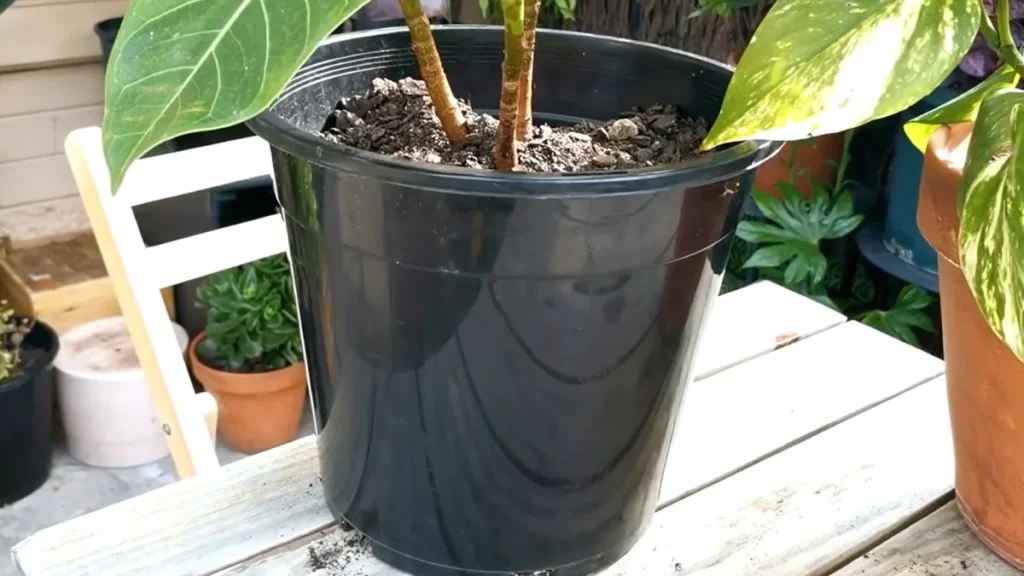
This question usually comes up when a plant looks healthy in one pot but struggles in another, even though everything else seems the same. On a balcony, small changes like pot material can feel more noticeable because plants are already dealing with heat, wind, and limited soil space. So, do plants grow better in plastic or ceramic pots?
Plants do not grow better in plastic or ceramic pots by default. Plastic pots hold moisture longer, while ceramic pots dry faster, so growth depends on how each material interacts with your balcony’s heat, wind, and watering conditions.
The confusion happens because most gardening advice is based on ground soil or backyard conditions, where temperature and moisture stay more stable. On a balcony, reflected heat, stronger airflow, and exposed containers change how water and temperature behave, making pot material more influential than expected.
This article explains what actually happens inside plastic and ceramic pots on a balcony, and why neither is automatically “better.” Instead, the difference comes down to how each material responds to your specific environment and how that affects your plant over time.
Table of Contents
Balcony Reality Check: Pots Behave Differently Above Ground
On a balcony, pots are not protected by surrounding soil like they are in a garden. They sit exposed to sun, wind, and temperature changes from all sides.
In the afternoon, surfaces like walls and tiles reflect heat back toward your pots. This can cause the soil inside to warm up faster than expected. At the same time, wind moves more freely between buildings, pulling moisture out of containers much quicker than in a backyard.
Because of this, the pot itself becomes part of the growing environment. It is no longer just a container — it controls how quickly water disappears, how hot the roots get, and how stable the soil stays throughout the day.
This is why choosing between plastic and ceramic pots feels confusing. You are not just choosing a material — you are choosing how your plant experiences your balcony.
What Most Advice Misses About Pot Materials
Most gardening advice compares plastic and ceramic pots as if they behave the same everywhere. But that assumption breaks down on balconies.
In gardens, the ground helps regulate temperature and moisture. Even if a pot dries quickly, roots can sometimes extend into cooler surrounding soil. On a balcony, that safety net does not exist.
Another common assumption is that “breathable” pots are always better. While ceramic pots do allow more airflow, that same feature can become a problem on windy or hot balconies where moisture is already disappearing too fast.
Plastic pots are often described as basic or inferior. But on balconies, their ability to hold moisture can actually create more stable growing conditions — especially when combined with strong sun or limited watering time.
Plastic Pots: Stable Moisture, Slower Changes
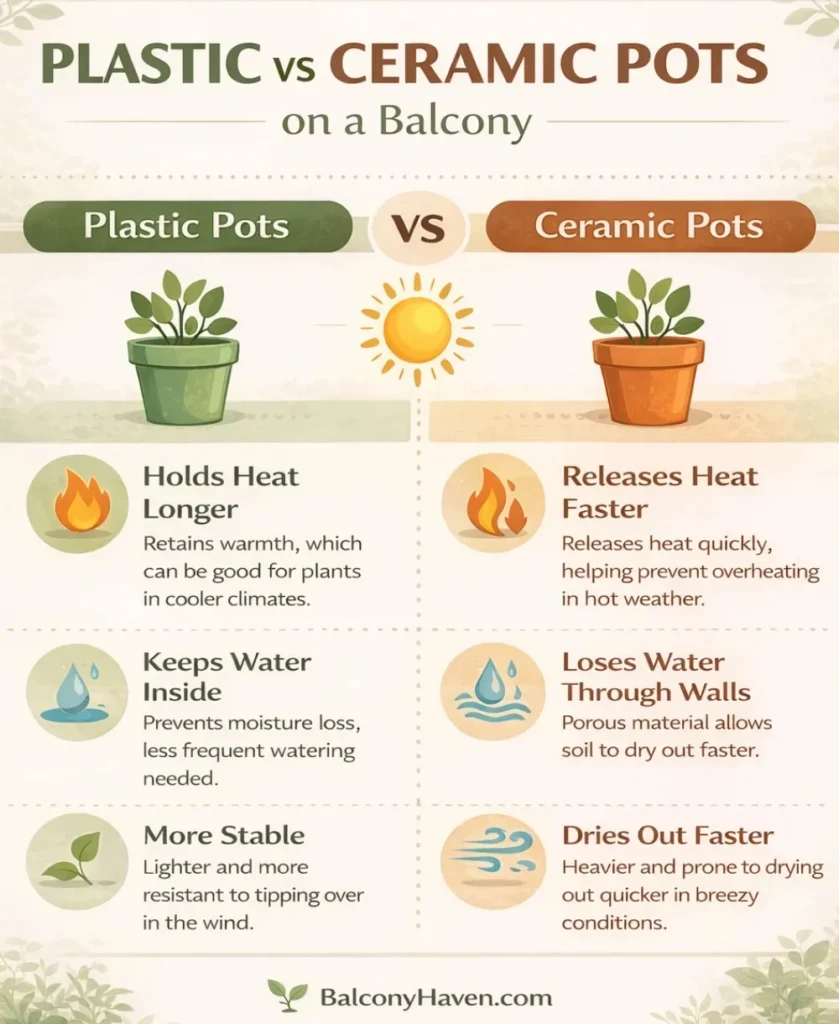
Plastic pots tend to hold water for longer because they are non-porous. Water stays inside the soil instead of escaping through the pot walls.
On balconies, this creates a more stable environment. The soil dries out more slowly, which helps roots stay consistently hydrated even when wind or heat increases during the day.
However, this same stability can also trap heat. On a hot, west-facing balcony, plastic pots can warm up and hold that heat longer into the evening. This can stress roots if the soil does not cool down overnight.
Plastic pots are often lighter as well, which makes them easier to move — but also more affected by wind. This connects closely with how container weight impacts balcony setups, as explored in Lightweight Pots for Apartment Balconies.
Ceramic Pots: Faster Drying, Faster Cooling
Ceramic pots, especially unglazed ones, allow water to slowly pass through their walls. This means the soil inside dries faster compared to plastic.
On a balcony, this can be helpful in humid or low-airflow spaces, where excess moisture might otherwise build up. The pot “breathes,” allowing roots to avoid staying constantly wet.
At the same time, ceramic pots react quickly to temperature changes. They heat up during the day but also cool down faster than plastic once the sun moves away.
The challenge is that this faster drying can become too extreme. On balconies with strong sun or wind, ceramic pots can lose moisture before plants have time to absorb it, which often leads to stress. This is closely related to the issue explained in Balcony Soil Drying Out Too Fast (What Actually Helps).
Small Balconies vs Open Balconies
On smaller balconies surrounded by walls, heat tends to build up and stay trapped. In these spaces, plastic pots can hold both moisture and heat, which may create a warmer root environment for longer periods.
On more open balconies with strong airflow, ceramic pots can dry out very quickly. The combination of wind and porous material speeds up moisture loss beyond what most plants can handle.
This is why two people using the same pot type can have completely different results — even if they are growing the same plant.
Morning Sun vs Afternoon Sun
Balconies with gentle morning sun usually experience slower drying. In these conditions, ceramic pots can perform well because moisture loss is gradual rather than extreme.
Balconies exposed to strong afternoon sun behave differently. Heat builds rapidly, and evaporation speeds up. In this situation, plastic pots often provide more stable moisture levels throughout the day.
Understanding your sunlight pattern plays a big role here, especially when considering how heat affects containers, as discussed in Overheating Balcony Pots in Summer.
Root Behaviour Inside Different Pots
| Factor | Plastic Pots | Ceramic Pots |
|---|---|---|
| Moisture retention | Holds water longer | Dries out faster |
| Heat behaviour | Retains heat longer | Heats and cools faster |
| Wind impact | More stable moisture | Faster drying in wind |
| Root environment | More consistent | More variable |
| Balcony suitability | Better for hot, windy spaces | Better for mild or humid spaces |
What happens above the soil is only part of the story. Inside the pot, roots respond differently depending on the material.
In plastic pots, roots often grow evenly because moisture stays consistent. In ceramic pots, roots may grow toward areas where moisture remains longer, which can create uneven growth patterns if drying happens too quickly.
This difference is subtle, but over time it can affect how plants develop — especially in small containers where root space is limited.
Practical Insights
These observations help explain how pot choice affects plant growth on balconies:
- Plastic pots keep moisture more stable throughout the day
- Ceramic pots allow faster drying and airflow
- Heat stays longer in plastic, but ceramic changes temperature faster
- Wind increases the differences between both materials
- Balcony size and exposure matter more than the pot itself
Common Misunderstandings
Many frustrations come from simple assumptions that do not match balcony conditions:
- “Ceramic is always better because it breathes”
- “Plastic causes root problems by default”
- “All pots behave the same if the soil is good”
- “Dry soil always means the plant needs more water”
- “Heavy pots are always safer on balconies”
These ideas often come from garden-based advice rather than real balcony environments.
Local & Seasonal Context
In Australia, especially in places like Brisbane, summer heat can make pot material more noticeable. Afternoon sun combined with reflected heat can cause rapid moisture loss, particularly in ceramic pots.
During cooler months, the difference between plastic and ceramic becomes less extreme. Moisture stays longer overall, and temperature swings are smaller, which reduces the impact of pot material.
Seasonal shifts do not change which pot is “better,” but they do change how strongly each material affects plant growth.
Balcony Haven Note
On my current balcony, I’ve noticed that the same herb can behave completely differently depending on the pot. My plastic pots stay evenly moist, while my ceramic ones feel dry much sooner — especially on windy days. But on calmer weeks, the ceramic pots actually seem more balanced.
That’s also why understanding how quickly soil dries matters more than the pot itself — something I’ve seen again and again when dealing with fast-drying containers on balconies.
FAQ
Do plants grow faster in plastic or ceramic pots?
Plants do not consistently grow faster in either pot type. Growth depends more on moisture stability, temperature, and how well the pot matches the balcony environment.
Are ceramic pots better for root health?
Ceramic pots can help prevent excess moisture, but on balconies they can also dry out too quickly. Root health depends on balance, not just airflow.
Why do my plants dry out faster in ceramic pots?
Ceramic allows water to escape through the pot walls. Combined with wind and sun, this speeds up moisture loss more than most people expect.
Do plastic pots overheat more easily?
Plastic can hold heat longer once warmed, especially in strong sun. However, overheating depends more on balcony exposure than material alone.
Final Thoughts
Plants do not grow better in plastic or ceramic pots by default. What matters is how each pot responds to your balcony’s heat, wind, and sunlight.
On balconies, small differences become bigger. A pot that works well in one corner may struggle in another, even within the same space.
Instead of focusing on which material is “better,” it helps to notice how your pots behave throughout the day. That awareness often makes a bigger difference than the pot itself — and leads to more stable, healthier plants over time.
Happy Balcony Gardening!
Leave a Reply