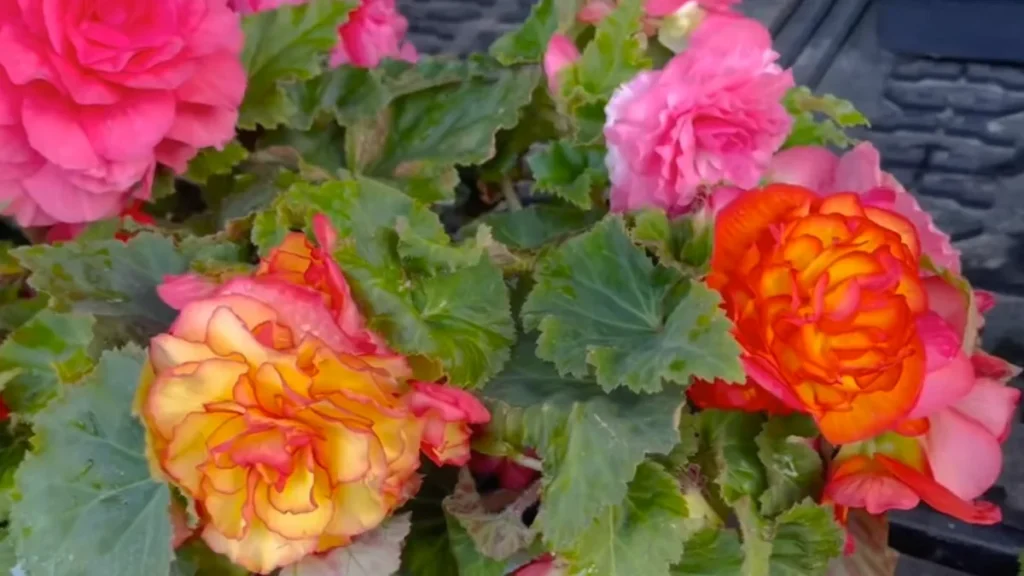
Balcony gardeners often struggle with flowers because partial shade can feel unpredictable. One part of the balcony might get gentle morning sun, while another stays shaded for most of the day. Unlike garden beds, balconies don’t allow plants to adjust gradually through surrounding soil and airflow. So, what flowers do well with partial shade on a balcony?
Flowers that do well with partial shade on balconies include impatiens, begonias, fuchsias, torenia, and lobelia. These plants can bloom with 2–4 hours of gentle sun or bright indirect light and adapt well to containers, making them reliable choices for shaded or partly shaded apartment balconies.
This guide helps you choose flowers that actually cope with partial shade on balconies, not just plants labelled “shade-tolerant” for gardens. You’ll learn which flowers adapt best to limited light, how to set them up in containers, and what mistakes usually stop them from flowering.
This article focuses on flowering plants only, not herbs or vegetables, and avoids full-shade or full-sun garden advice that doesn’t translate well to apartment balconies.
Table of Contents
Balcony-Specific Constraints That Affect Flowering
Balconies create a very different growing environment compared to open gardens. Partial shade on a balcony often means short bursts of sun, reflected light from nearby buildings, and uneven exposure across the space.
Container depth limits root growth, which affects how much energy a plant can store for flowers. Wind can dry pots faster, while solid balcony floors trap heat, stressing roots even when light levels are low. Drainage is also more controlled, so moisture-sensitive flowers can struggle if conditions aren’t balanced.
These constraints explain why some “shade flowers” survive but never bloom on balconies.
How Partial Shade Affects Flower Choices on Balconies
Partial shade on a balcony usually means 2–4 hours of direct sun, often in the morning or late afternoon. In most cases, this light level supports leaf growth well but limits heavy flowering plants.
Flowers that perform best are those that:
- flower steadily rather than all at once
- tolerate filtered or indirect light
- don’t rely on long sun exposure to set buds
Plants that need intense midday sun may grow leaves but produce few or no flowers in these conditions.
Flowers That Do Well With Partial Shade on Balconies
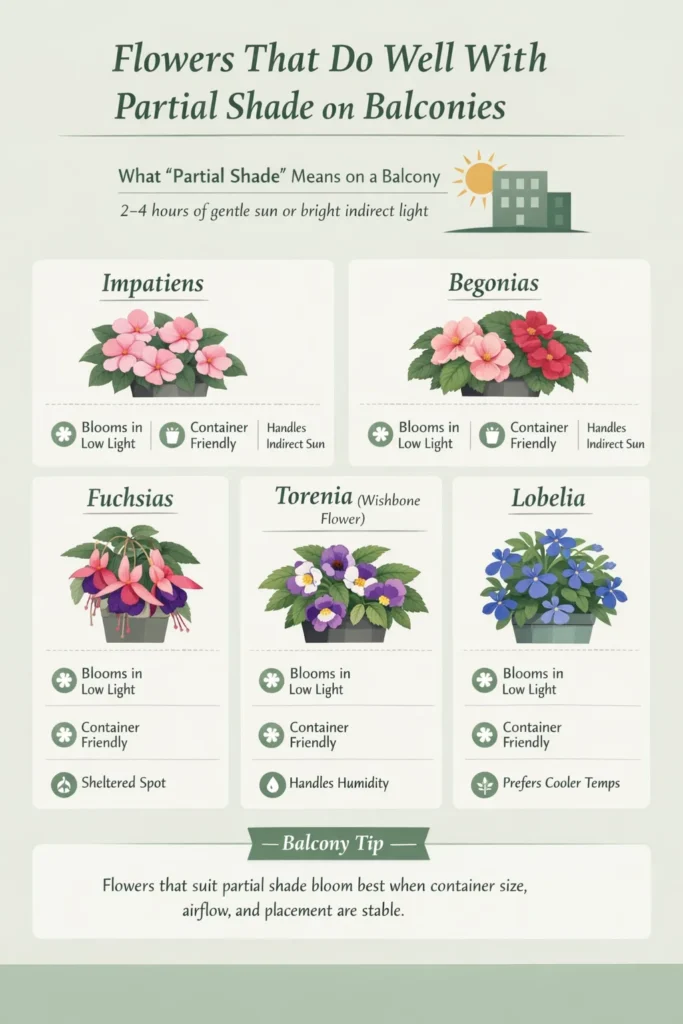
Impatiens
Impatiens are one of the most reliable flowering plants for partially shaded balconies. They bloom consistently with minimal direct sun and adapt well to containers.
They prefer evenly moist soil and sheltered positions where wind doesn’t dry pots too quickly. On balconies, they perform best in medium-sized containers that buffer temperature changes.
Begonias
Begonias handle partial shade exceptionally well and flower without needing strong sunlight. Both fibrous and tuberous varieties work well in balcony containers.
They tolerate indirect light and reflected brightness, making them suitable for shaded balconies that still feel bright during the day.
Fuchsias
Fuchsias are well-suited to balconies with gentle morning sun and afternoon shade. Their hanging flowers perform best when protected from strong wind and heat.
They benefit from consistent watering and slightly larger pots that keep roots cool.
Torenia (Wishbone Flower)
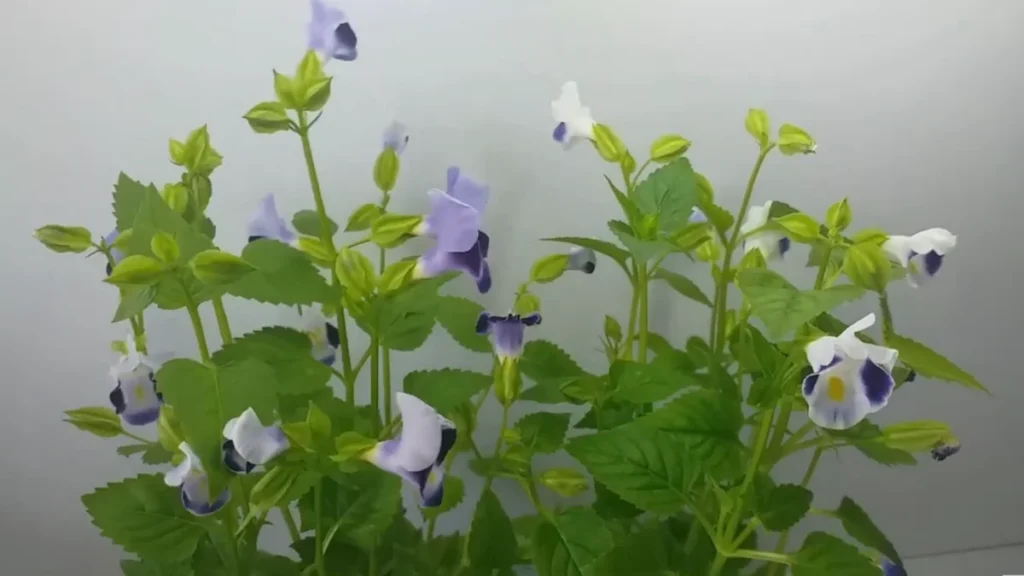
Torenia flowers reliably in partial shade and tolerates humid balcony conditions better than many flowering plants. It produces colourful blooms without requiring long sun exposure.
This makes it suitable for balconies shaded by nearby buildings or overhangs.
Lobelia
Lobelia grows well in partial shade, especially in cooler conditions. It works best in narrow planters or hanging baskets where airflow is good but sun exposure is limited.
On hot balconies, it benefits from shade during the warmest part of the day.
Choosing Containers That Support Flowering
Container choice matters more in partial shade because roots need stable conditions to support blooms.
In most cases:
- medium-depth pots hold moisture better than shallow containers
- lighter-coloured pots reduce heat stress
- drainage holes are essential to prevent root problems
Flowers grown in cramped or overheating containers often focus on survival rather than blooming.
Adjusting Placement for Better Light Use
On balconies, small placement changes can significantly affect flowering. Moving pots closer to the balcony edge often increases indirect light without adding heat stress.
Raising containers slightly off the floor improves airflow and reduces temperature buildup. Even shaded balconies usually have brighter zones created by reflected light from walls or railings.
Flowers placed in these zones often bloom more consistently than those kept fully tucked into corners.
Practical Tips for Balcony Flowers in Partial Shade
Flowers in partial shade benefit from gentle optimisation rather than strict rules.
- Rotate pots every one to two weeks for even light exposure
- Avoid fertilising heavily, as excess nitrogen encourages leaf growth
- Water consistently but allow slight drying between waterings
- Shelter flowers from strong afternoon wind
- Remove spent blooms to encourage steady flowering
Small adjustments usually produce better results than changing plants frequently.
Common Mistakes That Reduce Flowering
Many balcony flowers fail to bloom due to setup issues rather than plant choice.
- Using pots that are too small
- Treating partial shade as full shade
- Overwatering due to cooler conditions
- Placing plants directly on hot concrete
- Expecting heavy flowering in very low light
Correcting these issues often improves flowering without replacing plants.
Seasonal Considerations for Partial Shade Balconies
In warmer months, partial shade can protect flowers from heat stress, helping them bloom longer. In cooler seasons, the same light level may slow growth, especially on south-facing or heavily shaded balconies.
Flowering is often strongest during mild weather when light, temperature, and moisture stay balanced. Adjust expectations slightly across seasons rather than forcing growth with fertiliser.
Balcony Haven Note
When growing flowers in partial shade on an apartment balcony, I’ve noticed that they tend to perform better when their conditions are stabilised rather than pushed into more sun. Paying attention to container size, airflow, and placement often makes a bigger difference to flowering than changing plant varieties.
If your balcony receives very limited direct sun, especially on a north-facing side, some flowers cope better than others. Flowers That Grow on North-Facing Balconies looks more closely at flowering plants that thrive with mostly indirect light and explains how light direction affects blooming on apartment balconies.
Frequently Asked Questions
Can flowers bloom without direct sunlight on a balcony?
Some flowers can survive without direct sun, but most need at least filtered or indirect light to bloom consistently.
How many hours of sun count as partial shade on a balcony?
Partial shade usually means around 2–4 hours of direct sun, often outside peak midday heat.
Do shaded balconies need fertiliser for flowers to bloom?
Light feeding helps, but too much fertiliser often increases leaves rather than flowers in low light.
Are hanging baskets better for partial shade balconies?
Hanging baskets can work well if they receive bright indirect light and aren’t exposed to drying wind.
Final Thoughts
Choosing flowers for a partially shaded balcony is less about finding “shade plants” and more about understanding how balconies handle light differently from gardens. Flowers that bloom steadily, tolerate indirect light, and adapt well to containers tend to perform best.
If your balcony offers limited sun, focus on stable conditions rather than forcing growth. With the right placement and expectations, partial shade can still support colourful, long-lasting blooms.
Happy Balcony Gardening!
Leave a Reply