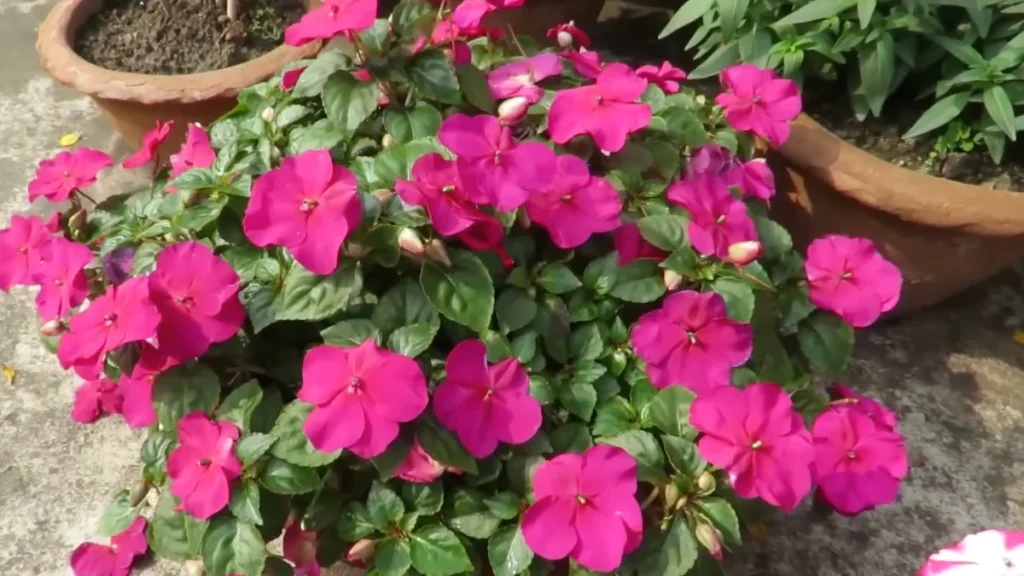
Flowers that grow on north-facing balconies can feel confusing at first because many flower guides are written for sunny garden beds, open patios, or bright outdoor spaces. A north-facing balcony is different. It may look bright during the day, but the light is often softer, cooler, and more indirect than many flowering plants prefer.
Flowers that grow on north-facing balconies include impatiens, begonias, fuchsias, lobelia, violas, pansies, torenia, alyssum, bacopa, and cyclamen. These flowers usually do best in bright shade, filtered light, or gentle partial shade rather than long hours of hot direct sun. The key is choosing flowers that naturally handle lower light instead of forcing full-sun flowers into a shaded balcony space.
A lot of disappointment comes from choosing flowers that need more sun than the balcony can provide. Some plants may grow healthy leaves but produce very few flowers. Others may stretch, drop buds, or stop blooming after the first few weeks.
This article explains which flowers are most realistic for north-facing balconies, why some north-facing balconies bloom better than others, which flowers are worth trying, and which common mistakes make shaded balcony flowers struggle.
Why North-Facing Balconies Feel Tricky for Flowers
A north-facing balcony often feels like it should be easy for plants because it may still look bright during the day. But brightness and direct sunlight are not the same thing.
In many apartments, light reaches the balcony after bouncing off walls, windows, nearby buildings, pale flooring, or open sky. This reflected light can still help plants grow, but it is usually weaker than direct sun. For flowers, this matters because blooming takes more energy than leaf growth.
This is why some flowers grow leaves on a north-facing balcony but do not bloom much. The plant may be alive and healthy, but it may not be receiving enough light to keep forming buds.
North-facing balconies also tend to stay cooler and hold moisture longer than hotter west-facing or full-sun spaces. This can be helpful for shade-loving flowers, but it can also create problems if pots stay wet for too long.
How Much Light Does a North-Facing Balcony Actually Receive?
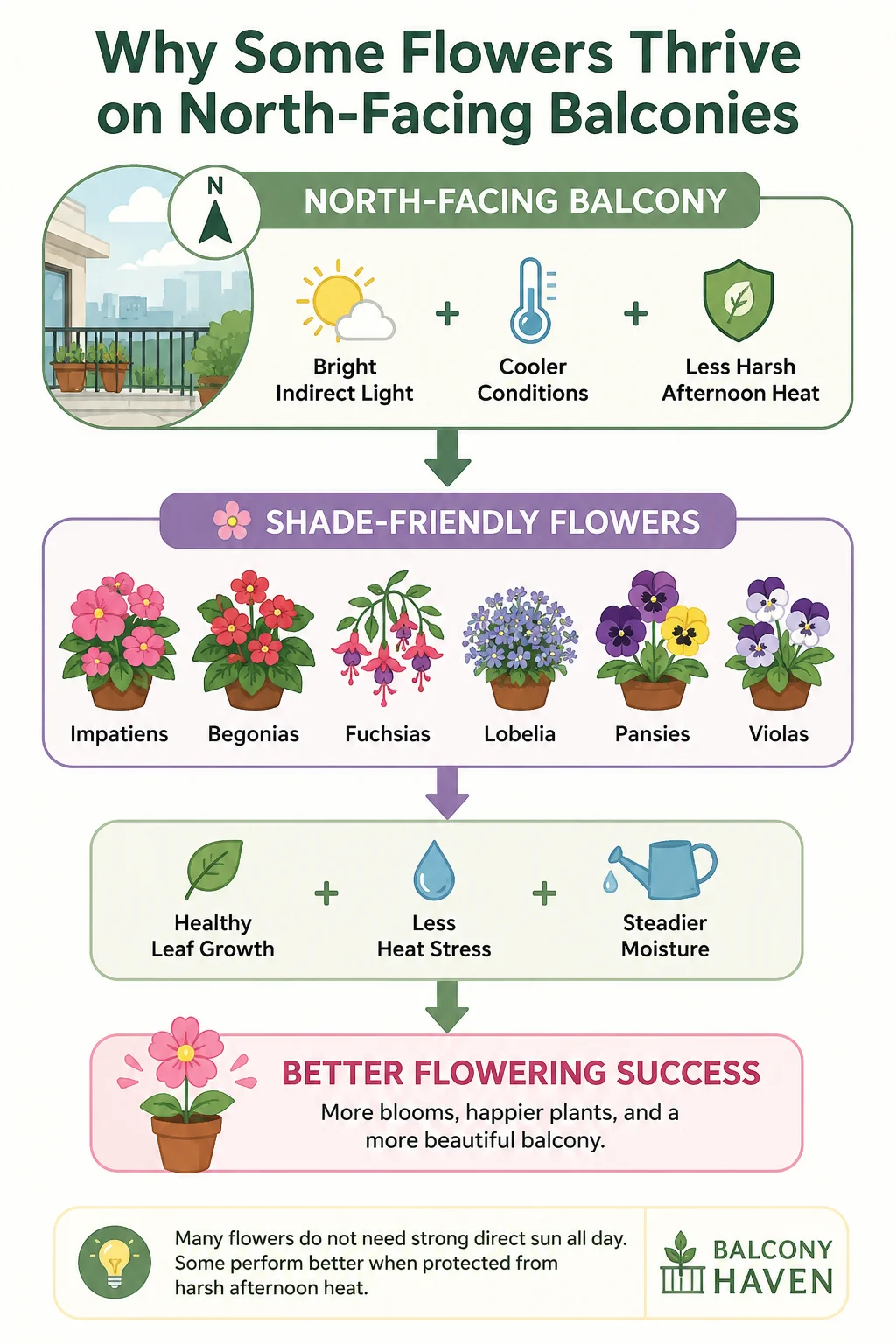
Not all north-facing balconies receive the same amount of light. This is one reason advice about shaded balcony flowers can feel mixed.
An open north-facing balcony with a clear view of the sky may receive strong bright shade for much of the day. A balcony surrounded by tall buildings may feel much dimmer, even if it technically faces the same direction. A covered balcony with a deep roof may receive even less usable daylight.
This difference changes what flowers can realistically do. A bright north-facing balcony may support regular flowers from impatiens, begonias, lobelia, and pansies. A darker north-facing balcony may still grow plants, but flowering may be slower, lighter, or more seasonal.
If you are unsure about your light level, this guide on how to measure sunlight on a balcony can help you understand whether your balcony has bright shade, partial shade, or deep shade.
Best Flowers That Grow on North-Facing Balconies
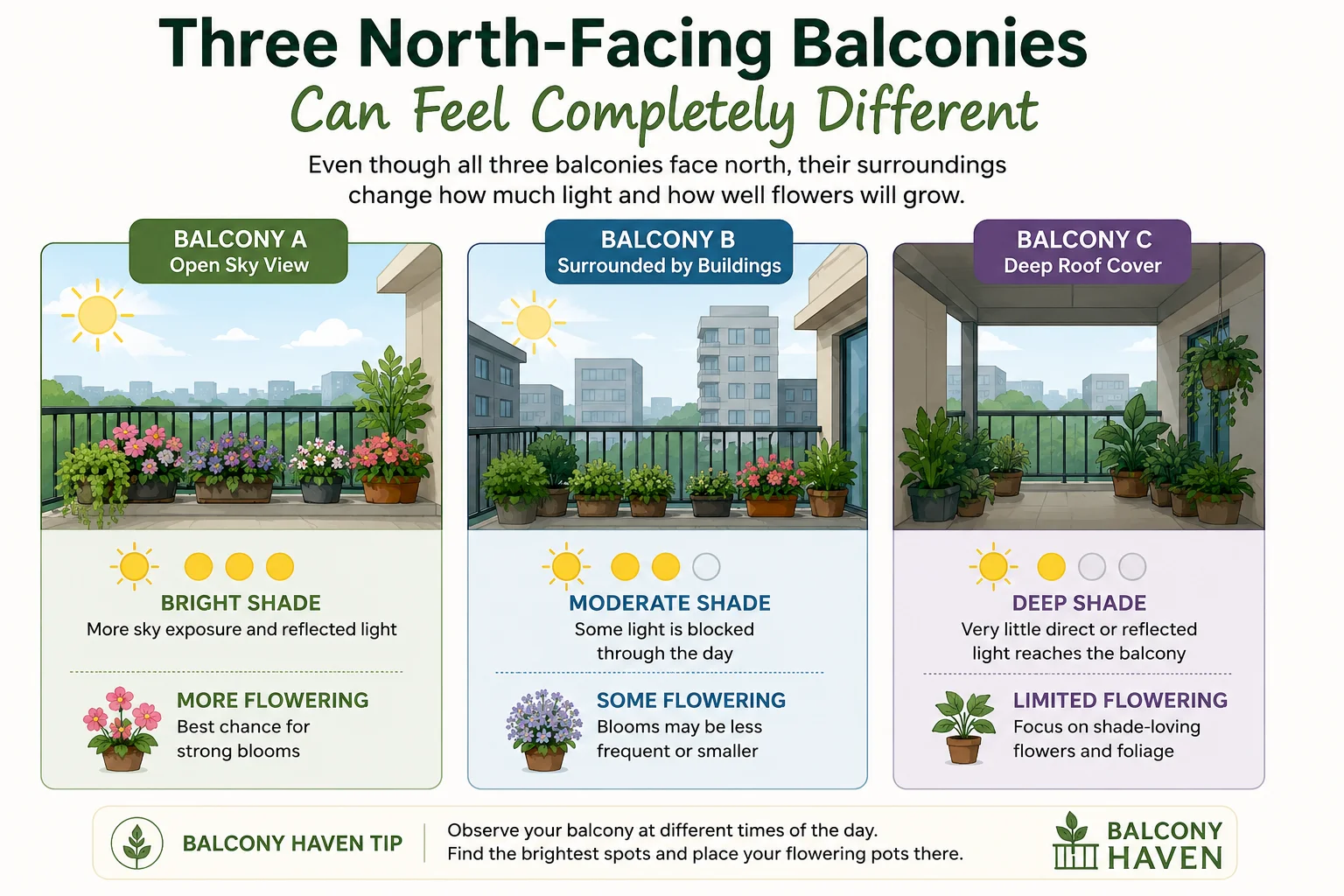
The best flowers for north-facing balconies are usually flowers that can bloom in bright shade or filtered light. They may not flower as heavily as they would in ideal conditions, but they are much more realistic than sun-loving plants.
The table below gives a simple comparison of shade-friendly flowers that are worth considering for small balcony containers.
| Flower | Best Balcony Light | Best Use | Realistic Expectation |
|---|---|---|---|
| Impatiens | Bright shade | Colourful pots and small containers | One of the most reliable flowering choices for shaded balconies. |
| Begonias | Bright shade to gentle partial shade | Containers, corners, and sheltered spots | Often flowers well if soil drains properly and airflow is reasonable. |
| Fuchsias | Cool bright shade | Hanging baskets and sheltered balconies | Can flower beautifully in cooler, protected conditions. |
| Lobelia | Bright shade | Hanging baskets and railing planters | Useful for soft trailing flowers in small spaces. |
| Violas | Bright shade to partial shade | Small pots and compact planters | Good for cooler months and gentle balcony conditions. |
| Pansies | Bright shade to partial shade | Cool-season balcony colour | Can bloom well when heat is not too strong. |
| Torenia | Bright shade | Small pots and mixed containers | A useful option for shade where impatiens or begonias are not preferred. |
| Alyssum | Bright shade to gentle sun | Edges of pots and shallow planters | May flower lightly in shade, but usually performs better with brighter conditions. |
| Bacopa | Bright shade to soft sun | Trailing containers and hanging baskets | Can work in bright sheltered balconies, but may slow down in deeper shade. |
| Cyclamen | Cool bright shade | Seasonal colour in pots | Better as a cool-season option rather than a year-round flowering plant. |
For broader plant options beyond flowers, the article on best plants for a north facing balcony is a useful next step because it looks at leafy plants, herbs, and other shade-tolerant choices.
Impatiens and Begonias: The Most Reliable Choices
Impatiens are often one of the easiest flowers to start with on a north-facing balcony. They are naturally comfortable in bright shade and do not need long hours of direct sun to look colourful.
They work well in small balcony pots because they stay compact, fill space quickly, and give visible colour without needing a large container. The main thing to watch is moisture. Impatiens like steady moisture, but they do not enjoy sitting in soggy soil for long periods.
Begonias are another strong choice because they handle shaded balcony conditions well. Wax begonias and many fibrous begonias are especially useful for apartment balconies because they can manage lower light and still provide colour through flowers and leaves.
Begonias can also feel more forgiving than many full-sun flowers. Their thicker leaves help them cope with slower drying soil, although drainage still matters.
Fuchsias, Violas, Pansies, and Lobelia for Cooler Balconies
Fuchsias can be excellent on north-facing balconies that are cool, bright, and sheltered from harsh wind. Their hanging flowers suit balcony baskets, railing planters, and corners where the plant can trail gently.
They may struggle if the balcony becomes hot and still during summer, especially if airflow is poor. But in cooler months or milder conditions, fuchsias can be one of the most attractive flowering choices for shaded apartments.
Violas and pansies are useful for smaller pots, especially when the weather is cooler. They do not need the same strong sun as many summer flowers, and their compact size suits narrow balcony planters.
Lobelia is helpful when you want flowers that soften the edge of a pot or hanging basket. It usually prefers bright shade rather than deep shade, so it is best placed in the brightest part of the balcony.
Other Shade-Friendly Flowers Worth Trying
Some flowers are not always the first recommendation for north-facing balconies, but they can still be worth trying when the balcony has enough bright shade.
Torenia is one useful option because it is often grown for shaded or partly shaded spaces. It can suit small pots and mixed containers where strong direct sun is limited.
Alyssum and bacopa may also work in bright shade, especially near railings or open edges where reflected light is stronger. They may not flower heavily in deep shade, but they can still add softness to containers when conditions are suitable.
Cyclamen is better treated as a seasonal flower. It can look beautiful in cool shaded spots, but it is not usually a year-round flowering answer for every balcony.
If your balcony is shaded in a more general way rather than strictly north-facing, this article on best plants for shaded apartment balconies may help you compare more shade-tolerant plant choices.
Do Flowers Need Direct Sun to Bloom?
Many flowers do need some direct sun to bloom strongly, but not all flowers need full sun. Shade-tolerant flowers can bloom in indirect light if the balcony is still bright enough.
The important difference is flower quantity. A plant that blooms in bright shade may produce fewer flowers than it would in ideal light. The flowers may also appear more seasonally instead of constantly.
This does not mean the plant is failing. On a shaded balcony, success often looks like steady growth, healthy leaves, and modest flowering rather than nonstop colour.
When a flowering plant grows plenty of leaves but produces no flowers, the balcony may not be bright enough for that particular plant. The plant is using the available light to survive and grow, but not enough energy is left for strong bud formation.
Shade-Loving Flowers vs Sun-Loving Flowers
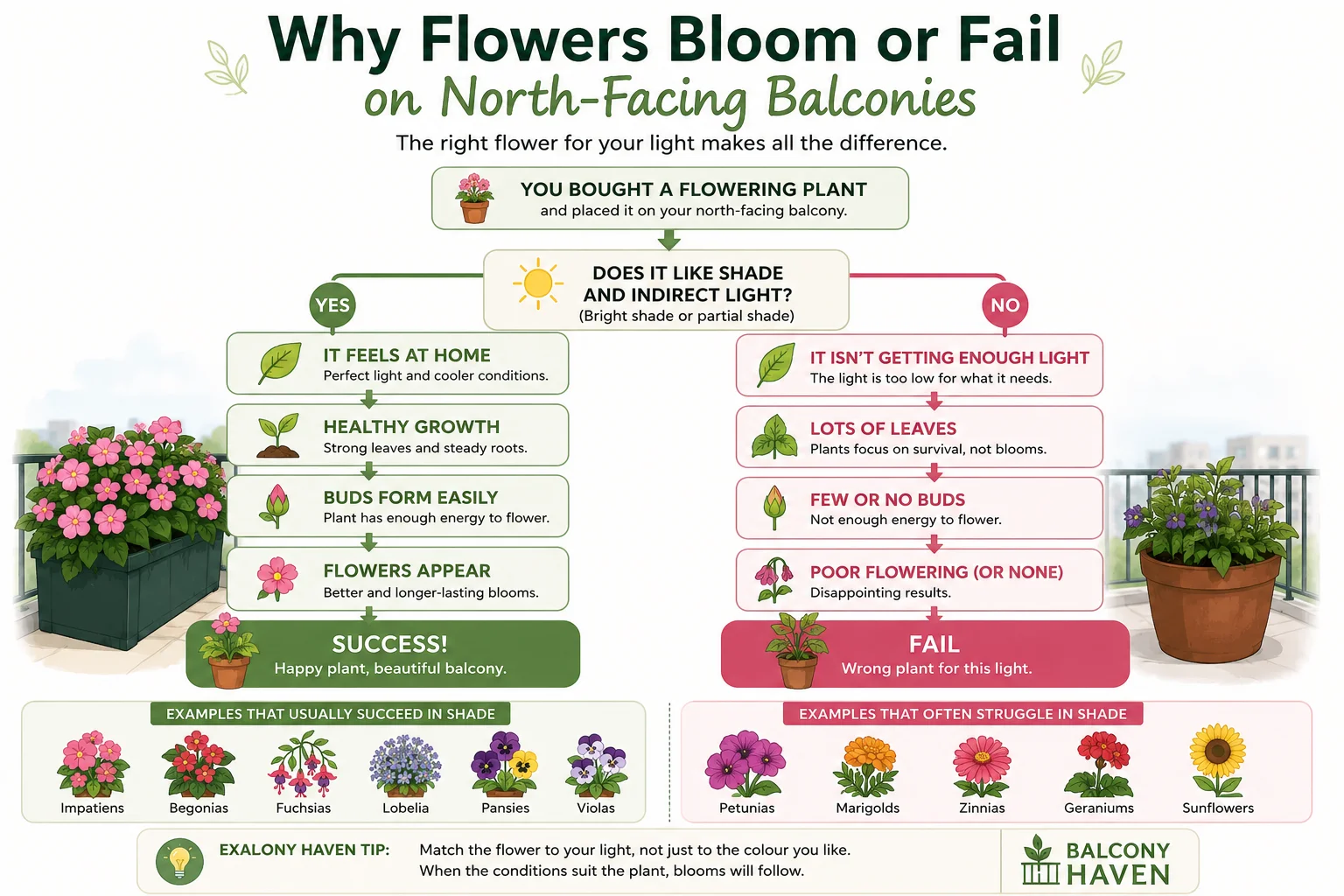
One of the most common reasons flowers struggle on north-facing balconies is that the plant itself is not suited to the light. The care may be fine, but the flower may simply need more sun.
| Flower Type | Examples | What Usually Happens on a North-Facing Balcony |
|---|---|---|
| Shade-loving or shade-tolerant flowers | Impatiens, begonias, fuchsias, lobelia, violas, pansies, torenia | More likely to grow and bloom in bright shade or filtered light. |
| Sun-loving flowers | Petunias, marigolds, zinnias, geraniums, sunflowers | May grow leaves but often flower poorly without stronger sunlight. |
| Seasonal shade-friendly flowers | Cyclamen, pansies, violas | Often perform better in cooler months rather than hot periods. |
This is why matching the flower to the balcony matters more than simply buying colourful plants at the garden centre. A flower that looks healthy in a sunny nursery may behave very differently once placed on a shaded apartment balcony.
Practical Tips for Flowering on North-Facing Balconies
Flowering on a north-facing balcony becomes easier when the setup supports the light and moisture conditions already there.
- Choose flowers known for bright shade or partial shade.
- Place flowering pots in the brightest part of the balcony.
- Use containers with drainage holes so soil does not stay wet too long.
- Avoid overcrowding because shaded balconies still need airflow.
- Rotate pots occasionally if plants lean strongly toward light.
- Expect slower or more seasonal flowering than a sunny balcony.
Small placement changes can make a noticeable difference. A pot near the railing may receive more usable light than the same pot tucked against a back wall or shaded corner.
Common Mistakes With Flowers on Shaded Balconies
Most problems with flowers on north-facing balconies come from mismatched expectations. The balcony may still support flowers, but not every flowering plant will behave well there.
- Choosing full-sun flowers because they look colourful at the nursery.
- Expecting nonstop blooms in a low-light balcony space.
- Watering too often because the plant looks slow.
- Using oversized pots that stay wet for too long.
- Putting flowering pots in the darkest corner of the balcony.
- Ignoring wind because the balcony is shaded.
Slow flowering does not always mean poor care. Sometimes the plant is simply receiving enough light to stay alive, but not enough to flower strongly.
If your flowers are growing leaves but not blooming, this guide on what to do if my plant is not flowering may help explain other possible causes beyond light.
Seasonal Considerations for Australian Apartments
In Australian apartments, north-facing balconies can change noticeably across the year. Spring and autumn often feel more forgiving because temperatures are mild and light levels are easier for many shade-tolerant flowers to handle.
Winter may slow growth because daylight is weaker and shorter. Some cool-season flowers may still perform well, but growth can be slower. Summer can also be mixed. A north-facing balcony may avoid the harshest afternoon sun, but heat can still build up if airflow is limited or the balcony is enclosed.
This is why flowering may come and go through the year. A north-facing balcony can be flower-friendly, but it still has seasons, airflow patterns, and small microclimates that affect results.
Balcony Haven Note: I have noticed that shaded balconies can be more useful for flowers than they first appear, especially when the space still feels bright during the day. Some north-facing balconies are dim near the back wall but much brighter near the railing, so results can vary even within the same small space.
Frequently Asked Questions
What flowers grow best on a north-facing balcony?
Impatiens, begonias, fuchsias, lobelia, violas, pansies, torenia, and cyclamen are some of the better choices for north-facing balconies. They usually handle bright shade better than full-sun flowers.
Can flowers bloom without direct sunlight?
Yes, some flowers can bloom without direct sunlight if the balcony still receives enough bright indirect light. Flowering may be lighter or more seasonal, but shade-tolerant plants can still produce colour.
Can petunias grow on a north-facing balcony?
Petunias usually prefer more direct sun than most north-facing balconies provide. They may survive in bright shade, but they often flower less strongly than impatiens, begonias, or other shade-tolerant flowers.
Are hanging baskets suitable for north-facing balconies?
Hanging baskets can work on north-facing balconies if they are placed where the light is brightest. Fuchsias, lobelia, bacopa, and some begonias can suit hanging baskets in bright shade.
Why do my balcony flowers grow leaves but not flowers?
This often happens when the plant receives enough light to grow leaves but not enough energy to form many buds. It can also happen when the plant is too shaded, overwatered, or not suited to the balcony conditions.
What flowers grow in shade all year?
Very few flowers bloom heavily in shade all year. On a north-facing balcony, it is more realistic to expect seasonal flowering from shade-tolerant plants rather than constant colour every month.
Final Thoughts
Flowers that grow on north-facing balconies succeed when they are matched to the light, not forced into the wrong conditions. A shaded balcony may never behave like a sunny garden bed, but that does not mean it cannot have colour.
Impatiens, begonias, fuchsias, lobelia, violas, pansies, and other shade-friendly flowers give apartment gardeners more realistic options. The results may be softer and more seasonal than full-sun flowers, but they can still make a balcony feel alive and welcoming.
The most useful approach is to observe how bright the balcony really is, choose flowers that enjoy gentler light, and adjust slowly. When the plant choice matches the balcony, flowering becomes less frustrating and much more predictable.
Leave a Reply