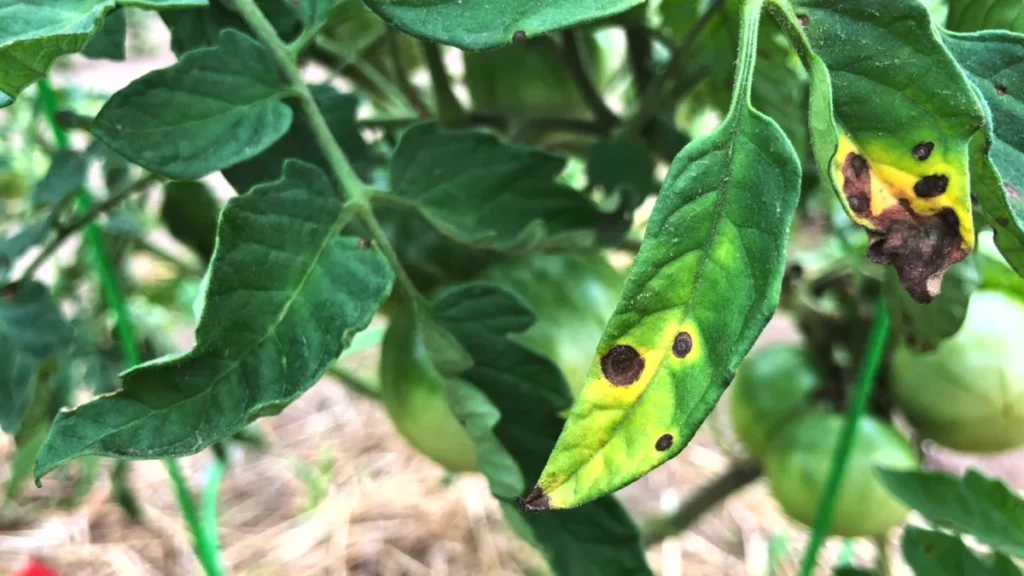
What Apartment Gardeners Should Know
Tomatoes are one of the most popular plants for balcony gardening. They grow well in containers, produce generously in small spaces, and give apartment dwellers the satisfaction of harvesting real food at home. That’s why it can feel alarming when healthy green tomato plants suddenly start developing yellow leaves — especially when space, sunlight, and growing conditions are already limited on a balcony. If you’re growing tomatoes in pots on a small balcony, this problem is far more common than most gardeners realise.
Yellow leaves on balcony tomatoes are usually caused by watering stress, nutrient imbalance (especially nitrogen or magnesium), limited root space, or reduced sunlight common in apartment setups. Unlike garden-grown tomatoes, balcony tomatoes react faster to small mistakes because pots dry out quicker, roots are confined, and reflected heat or wind adds extra stress.
Understanding why tomato leaves turn yellow on balconies is the key to fixing the problem properly — without overwatering, over-fertilising, or giving up too soon.
Why Yellow Leaves Are More Common on Balcony Tomatoes
Balcony tomatoes live in a very different environment compared to garden tomatoes. In a backyard, roots can spread freely, soil stays cooler, and moisture levels are more stable. On a balcony, everything is intensified.
Containers heat up faster. Wind dries out soil quickly. Sun exposure may be limited or uneven. Because of this, yellow leaves often appear earlier and progress faster on balcony tomatoes than they would in a garden bed.
The important thing to remember is that yellow leaves are a symptom, not the problem itself. Once you understand what the plant is reacting to, the fix is usually simple.
Normal vs Problematic Yellowing
Before panicking, it helps to know that not all yellow leaves are bad news.
Older tomato leaves at the very bottom of the plant often turn yellow and die off naturally as the plant focuses energy on new growth and fruit. This is especially common once flowering and fruiting begin.
However, yellowing becomes a concern when:
- Multiple leaves turn yellow at once
- Yellowing spreads upward quickly
- Leaves look pale, weak, or drop prematurely
- Growth slows or flowers fall off
On balconies, these signs usually point to stress, not disease.
Watering Issues: The #1 Cause on Balconies
In balcony gardening, watering mistakes are the most common reason tomato leaves turn yellow.
Pots dry out much faster than garden soil, especially on sunny or windy balconies. Many apartment gardeners respond by watering more often — sometimes too often.
Overwatering suffocates tomato roots by pushing air out of the soil. When roots can’t breathe, they can’t absorb nutrients properly, and leaves start turning yellow.
Underwatering causes a similar symptom. When soil dries out completely, roots become stressed and shut down nutrient uptake, leading to pale, yellow leaves.
On balconies, this usually isn’t about how much you water — it’s about how fast the pot dries out.
A practical balcony rule is this:
Water deeply, then wait until the top 3–5 cm of soil feels dry before watering again. Tomatoes prefer a wet-dry cycle rather than constant moisture.
Nutrient Deficiencies in Container Tomatoes
Balcony tomatoes rely entirely on the nutrients available inside their pots. Once those nutrients are used up or washed away, yellow leaves appear quickly.
The most common nutrient issues are:
- Nitrogen deficiency: Older leaves turn pale yellow, starting from the bottom. Growth looks thin and weak.
- Magnesium deficiency: Yellowing appears between leaf veins while veins stay green.
- Iron deficiency: New leaves turn yellow first, often caused by poor nutrient absorption rather than lack of iron itself.
On balconies, nutrient problems often happen not because gardeners forget to fertilise — but because frequent watering flushes nutrients out of pots faster than expected.
Using a tomato-specific fertiliser every 1–2 weeks during active growth usually prevents this issue.
Pot Size and Root Stress
Tomatoes are heavy feeders with extensive root systems. When grown in small containers, they become root-bound quickly.
Root-bound tomatoes struggle to absorb water and nutrients efficiently, even if you water and fertilise correctly. Yellow leaves are often the first visible sign. Even with perfect watering and fertilising, tomatoes can still turn yellow if their roots simply have nowhere to go.
As a general guideline:
- Cherry tomatoes need at least 20–25 litres
- Larger varieties need 30–40 litres or more
If yellowing keeps returning despite good care, the pot may simply be too small for the plant’s stage of growth.
Sunlight Limitations on Balconies
Tomatoes need at least 6 hours of direct sunlight per day to stay healthy. Many balconies only receive morning sun or filtered light due to nearby buildings.
Insufficient light reduces photosynthesis, which causes leaves to lose their rich green colour and turn yellow over time. This often happens gradually rather than suddenly.
If sunlight is limited, choosing dwarf or cherry varieties and positioning pots in the brightest available spot makes a noticeable difference.
Heat and Wind Stress
Balconies create microclimates. Concrete, glass railings, and walls reflect heat, raising temperatures far above ambient levels. At the same time, wind funnels through high-rise spaces and dries plants out quickly.
Heat stress causes yellowing along leaf edges, curling, or leaf drop. Wind stress weakens stems and increases water loss, which worsens nutrient uptake.
Providing partial shade during extreme heat and using heavier pots to stabilise plants helps reduce this stress.
When Yellow Leaves Are Not a Disease
Many balcony gardeners worry that yellow leaves mean pests or disease. In reality, true tomato diseases are less common on balconies than in gardens because airflow is usually better.
If leaves are yellow but not spotted, mouldy, or distorted, the cause is almost always environmental rather than infectious.
Removing severely yellowed leaves is fine, but avoid stripping the plant aggressively. Healthy leaves are still needed for photosynthesis and fruit development.
How I Fix Yellow Leaves on My Balcony Tomatoes
In practice, fixing yellow leaves usually involves small adjustments, not dramatic changes.
I focus on:
- Checking soil moisture before watering
- Feeding lightly but consistently
- Ensuring pots are large enough
- Maximising sun exposure
- Protecting plants from extreme heat and wind
Within one to two weeks, new growth usually emerges greener and stronger — even if older yellow leaves don’t fully recover.
Key Takeaway for Apartment Gardeners
Yellow leaves on balcony tomatoes are not a failure — they’re feedback. Container tomatoes communicate stress quickly, and once you understand what they’re reacting to, the solution is usually straightforward.
Balcony gardening isn’t about perfection. It’s about responding early, adjusting conditions, and letting plants recover in their own time. With the right balance of water, nutrients, space, and light, balcony tomatoes can stay green, productive, and surprisingly resilient.
Happy Balcony Gardening!
Leave a Reply