Growing vegetables on a balcony can feel uncertain because containers behave very differently from garden soil. Pots dry faster, wind moves through buildings, and sunlight can change sharply depending on the direction of the balcony. Because of these conditions, some vegetables that grow easily in gardens struggle once they are moved into small containers.
You can grow spring onions in balcony pots because they have shallow roots, tolerate partial sunlight, and do not require large containers. A pot around 15–20 cm deep with light, well-draining soil is usually enough for them to grow well. With steady watering and simple spacing, spring onions can produce repeated harvests even in small apartment balcony containers.
What makes spring onions especially suitable for balconies is their natural growth habit. Unlike many vegetables that need deep soil and wide spacing, spring onions grow mostly upward while keeping their roots compact. This allows several plants to grow together in the same container without needing much space.
This guide explains how spring onions behave in balcony pots, how to choose the right container and soil, and which small adjustments help them grow steadily in apartment environments.
Table of Contents
Balcony-Specific Constraints
Balcony gardening always comes with limits that garden soil does not have. Containers restrict root space, which means vegetables that normally spread underground may struggle in pots. Fortunately, spring onions have a compact root system that naturally fits shallow containers.
Weight is another consideration in apartment gardening. Soil becomes heavy when wet, especially in ceramic containers. Many balcony gardeners prefer lighter pots because they are easier to move and place safely. If you are unsure about container choices, the guide Lightweight Pots for Apartment Balconies explains which materials work best in apartment settings.
Wind can also affect plant growth on balconies. Buildings often create wind tunnels that dry soil quickly and bend taller plants. Spring onions usually tolerate these conditions better than many vegetables because their leaves are narrow and flexible rather than broad and heavy.
Drainage matters as well. Balcony containers must drain water effectively because there is no surrounding soil to absorb excess moisture. Poor drainage can cause problems like fungus or root rot in small pots.
How to Grow Spring Onions in Balcony Pots
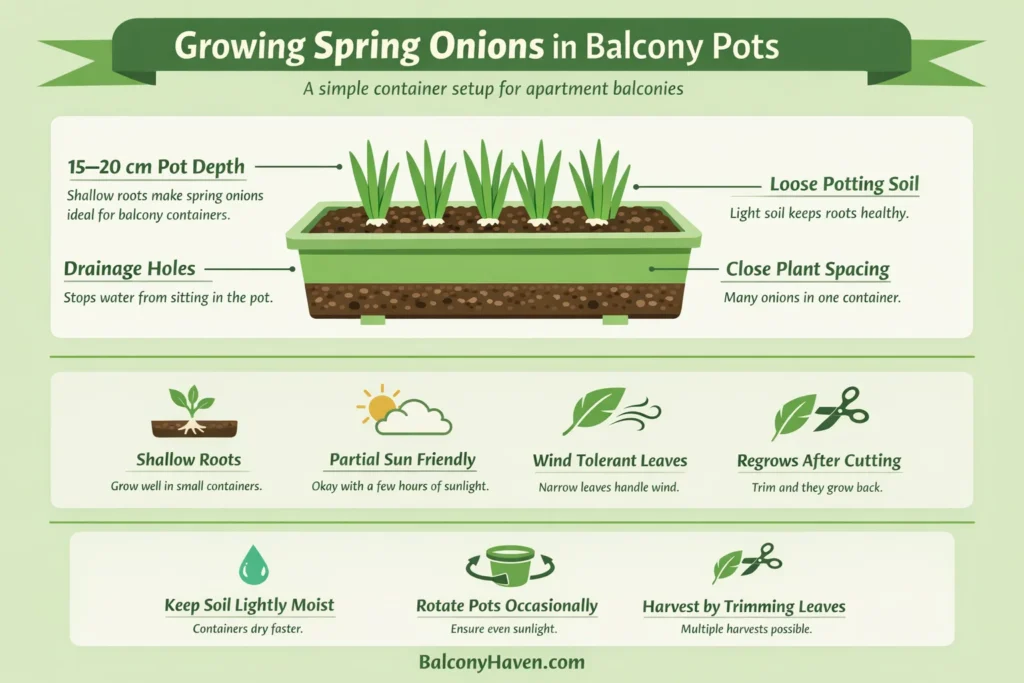
Spring onions adapt naturally to containers because their growth focuses mostly above the soil. Their roots stay relatively shallow, so they do not need deep containers to grow well.
Choosing the Right Pot
| Container Type | Recommended Depth | How Many Spring Onions |
|---|---|---|
| Small round pot | 15 cm | 4–6 plants |
| Medium container | 18–20 cm | 8–12 plants |
| Long balcony planter | 15–20 cm | 12–20 plants |
| Window box | 15–20 cm | 15+ plants |
In most balcony gardens, spring onions grow comfortably in containers about 15–20 cm deep. While depth matters slightly, container width is often more important. Wider containers allow several plants to grow together without competing for space.
Long planters and window boxes often work particularly well because they allow rows of spring onions to grow side by side.
Soil That Works for Balcony Containers
Soil used in balcony pots should stay light and loose rather than dense. Heavy garden soil often compacts inside containers and prevents roots from spreading properly.
A light potting mix combined with compost usually works best. This keeps the container weight manageable while allowing roots to grow freely. If you want a deeper explanation of soil blends suitable for balcony containers, the guide Best Soil Mix for Balcony Herb Gardens explains how to create a lighter growing mix.
Planting Spring Onions
Spring onions can be grown either from seeds or from the white root ends of store-bought onions.
Seeds take slightly longer to grow but allow you to produce more plants. The seeds are usually scattered across the soil surface and lightly covered with soil.
Many balcony gardeners prefer planting leftover kitchen bulbs because they grow faster. The white root section can simply be placed into soil while leaving the green leaves above the surface.
Spacing Plants in Containers
Unlike larger vegetables, spring onions do not require wide spacing. They grow mostly upright rather than spreading outward. Because of this, several plants can grow close together in the same container.
Leaving a small gap between plants helps airflow and reduces competition for nutrients, but containers can still hold many spring onions without becoming crowded.
Options and Variations for Different Balconies
Balcony environments vary widely between apartments. Some balconies receive full sun, while others receive only a few hours of light.
Small balconies often benefit from narrow planters placed along railings or against walls. This allows plants to grow without taking up valuable floor space.
Balconies with limited sunlight can still grow spring onions successfully. Even a few hours of direct sunlight often supports steady growth. If your balcony receives only partial sunlight, you may find useful ideas in Best Herbs for Balconies With 3 Hours of Sun, which explains how edible plants adapt to lower light levels.
Wind exposure can also vary depending on building height and surrounding structures. Placing containers close to walls or corners often reduces wind stress while still allowing enough airflow for healthy growth.
Practical Tips for Growing Spring Onions on a Balcony
Spring onions grow easily in containers, but a few small habits often make them grow faster and stay healthier.
- Trim leaves regularly instead of pulling the whole plant
- Keep soil slightly moist rather than letting it dry completely
- Rotate containers occasionally so plants receive even sunlight
- Plant several small batches instead of one large container
- Use trays under pots to prevent water dripping to lower balconies
These simple habits help maintain steady growth and allow continuous harvesting.
Common Mistakes Balcony Gardeners Make
Spring onions are forgiving plants, but certain mistakes often slow their development in containers.
- Using containers that are too small
- Allowing soil to dry out completely between watering
- Planting the bulbs too deeply into the soil
- Using dense garden soil that compacts in pots
- Ignoring drainage holes in the container
Many beginners assume spring onions grow exactly like garden plants, but container environments behave differently because the roots have limited space.
Timing and Growing Season
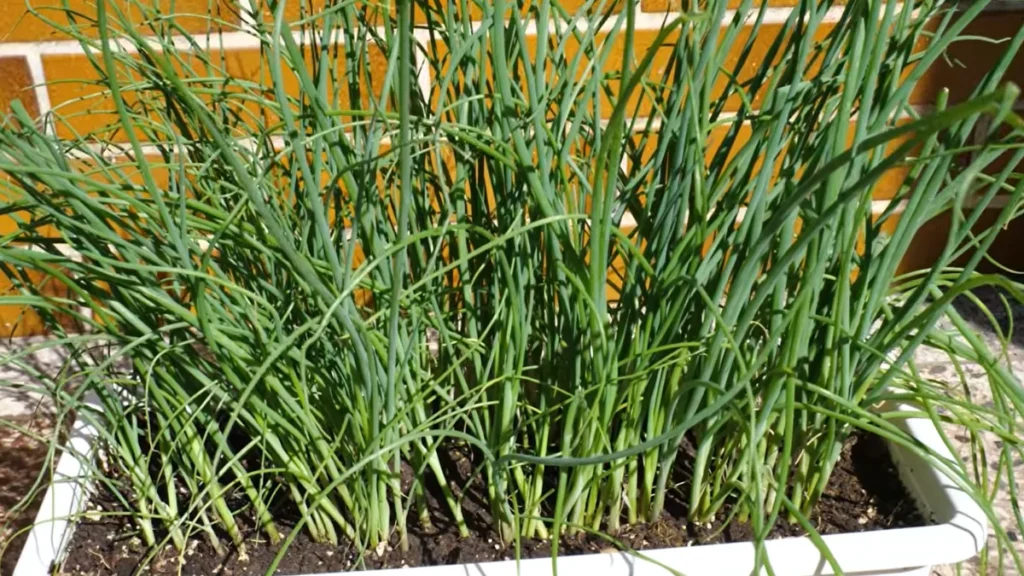
Spring onions are relatively flexible when it comes to growing conditions. Instead of following strict calendar planting dates, balcony gardeners usually focus on temperature and sunlight.
They tend to grow fastest during mild temperatures when the soil stays consistently moist but not overly wet. Because they grow quickly, planting small batches every few weeks often creates a continuous harvest.
This staggered planting method works especially well in balcony spaces where containers are limited.
Balcony Haven Note
I’ve always liked recommending spring onions to beginners because they adapt surprisingly well to balcony life. Even when conditions are not perfect, they often keep growing and producing new leaves.
They also combine well with other compact edible plants. If someone wants to build a small edible setup without overcrowding their space, the article Best Edible Plants for Tiny Balconies shows how several small crops can share the same balcony container area.
FAQ
Can spring onions grow in small balcony pots?
Yes. Because their roots stay shallow, spring onions can grow well in containers around 15–20 cm deep. Wider containers are often better than deeper ones because they allow several plants to grow together without crowding.
How long do spring onions take to grow?
Most spring onions are ready to harvest within about 6–8 weeks, although leaves can often be trimmed earlier. Regular trimming encourages the plant to produce fresh leaves, allowing multiple harvests from the same pot.
Can I regrow spring onions from kitchen scraps?
Yes. The white root end of a spring onion can regrow when planted in soil or even when placed briefly in water before planting. Once new leaves appear, moving the plant into soil usually produces stronger and longer-lasting growth.
Do spring onions need full sunlight?
They grow best with several hours of sunlight but can still grow reasonably well in partial sun. If the balcony receives limited sunlight, placing the container where it gets the brightest part of the day can help maintain steady growth.
Final Thoughts
Spring onions are one of the easiest edible plants to grow on a balcony because their needs naturally match container conditions. Their shallow roots, upright growth, and ability to regrow after trimming make them well suited to small pots and narrow balcony planters.
Once you understand the simple setup — a light soil mix, a container about 15–20 cm deep, and steady watering — spring onions often become one of the most reliable crops in an apartment garden. Even a small container can produce repeated harvests over time.
For many balcony gardeners, spring onions are also the plant that builds confidence. When you see how easily they grow in containers, it becomes much easier to try other compact vegetables and herbs and slowly turn a balcony into a small but productive growing space.
Leave a Reply