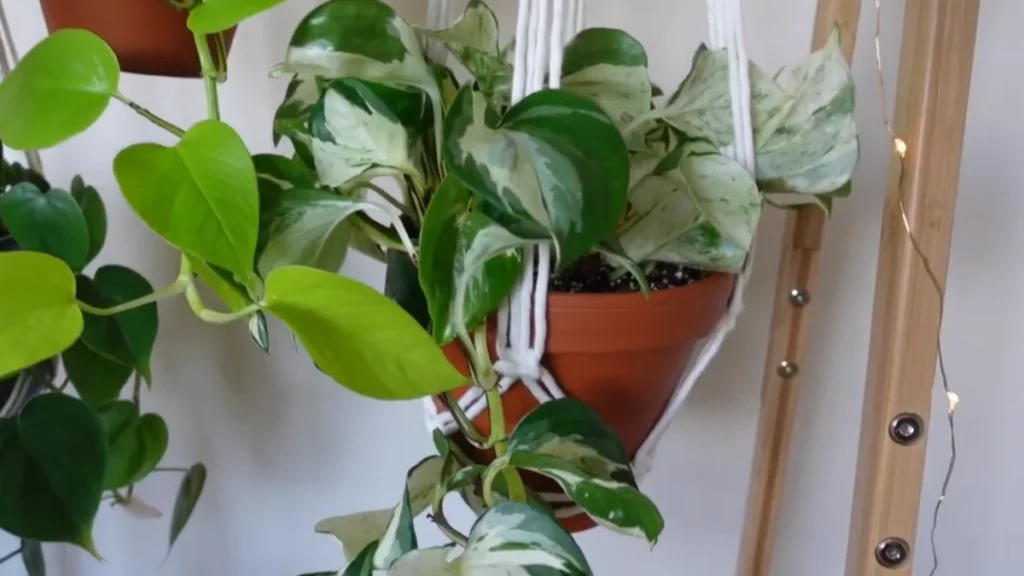
Hanging planters on a balcony sounds simple, but balconies don’t behave like garden pergolas or backyard fences. Weight limits, wind tunnels, rental rules, and water runoff all turn a “cute idea” into something that needs real planning. So how to hang planters on a balcony?
You can hang planters on a balcony by using lightweight rail hooks, removable tension systems, or over-rail planter boxes that don’t require drilling. The safest setups use shallow planters, balanced weight, and controlled drainage to handle wind, weight limits, and water runoff common in apartments.
This guide shows how to hang planters on a balcony safely and sensibly, without drilling holes you’re not allowed to drill or risking pots falling onto neighbours below. It focuses on real apartment balconies, not ideal outdoor spaces, so you can build a setup that lasts.
Table of Contents
Balcony-Specific Constraints You Need to Respect First
Before choosing hooks or planters, it helps to understand what makes balconies different from gardens.
Balconies are built with strict load limits, and that includes railings, ceilings, and side panels. What looks solid may only be decorative. Wind behaves differently too — even gentle breezes at ground level can turn into strong uplift higher up.
Drainage is another issue. Water dripping onto lower balconies is one of the most common complaints in apartments, which is why hanging setups need better control than floor pots. If this has been a challenge for you before, How to Stop Water Dripping on Lower Balconies explains why it happens and what actually helps Published Articles.
All of this affects where, how, and what you can hang — and explains why the methods below prioritise balance and safety over decoration.
What to Check Before Hanging Planters on a Balcony
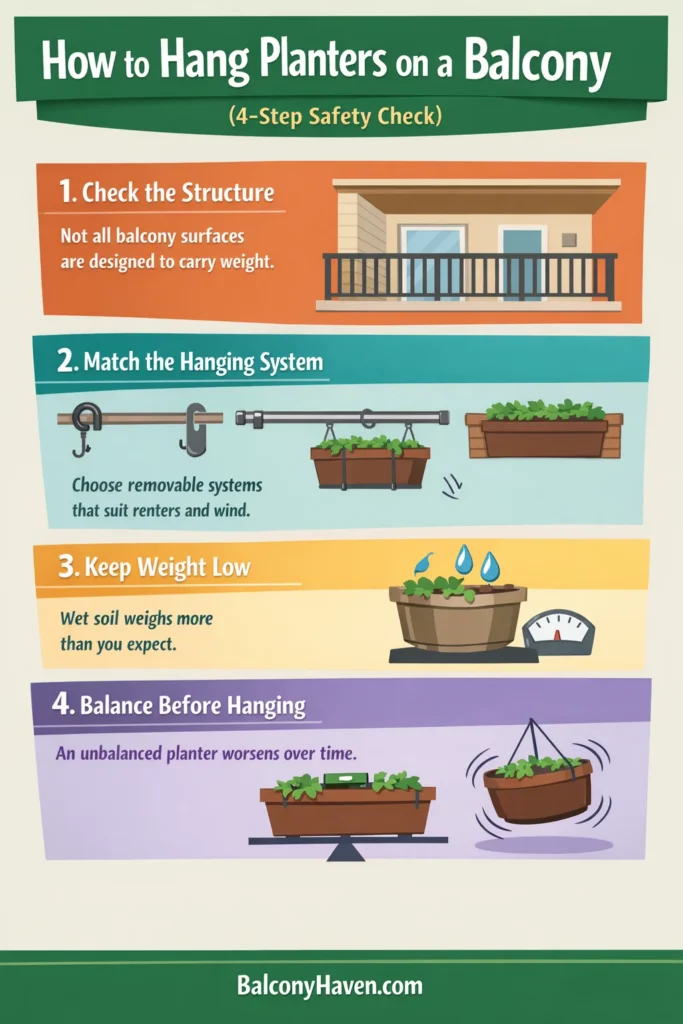
Step 1: Decide What Structure You’re Hanging From
Not all balcony surfaces are equal. The safest hanging method depends entirely on what’s available.
Balcony railing
Railings are the most common option, but they’re also the most misunderstood. Many are designed to hold horizontal force, not downward weight. This means lightweight rail hooks work best, especially for shallow planters or trailing plants.
If your railing gets strong wind, pairing this setup with wind-tolerant plants matters. What Are the Best Plants for a Windy Balcony? breaks this down well Published Articles.
Ceiling or overhead beams
Only suitable if your balcony has a structural concrete ceiling (not plaster or decorative panels). Even then, renters should use removable tension systems rather than drilling.
Side walls or privacy screens
Some balconies include metal or composite privacy panels. These can support clip-on hanging systems, but avoid anything that requires screws unless approved.
Step 2: Choose Hanging Systems That Match Balcony Physics
Garden advice often recommends chains and heavy hooks. Balcony setups need lighter, smarter solutions.
Rail hooks (best for renters)
These sit over the railing without screws and distribute weight evenly. Look for hooks with a flat backing so they don’t wobble in wind.
Tension rods (vertical, not horizontal)
Vertical tension rods between floor and ceiling are surprisingly effective. They turn one hanging planter into a vertical garden spine without touching walls.
Over-rail planter boxes
These hang outside the railing and free up floor space. Use shallow soil and lighter plants to reduce leverage stress.
Avoid suction hooks outdoors — heat and moisture cause them to fail unpredictably.
Step 3: Use the Right Planter (Weight Matters More Than Size)
A large hanging planter filled with wet soil can weigh far more than expected.
On balconies, the safest hanging planters are:
- Plastic or resin (not ceramic)
- Shallow rather than deep
- With built-in drainage trays or liners
This is why lightweight containers matter so much. Lightweight Pots for Apartment Balconies explains which materials actually stay light after watering Published Articles.
Step 4: Balance Plants Before You Hang Them
This step is often skipped — and causes most failures.
Before hanging:
- Water the planter fully
- Let excess water drain
- Hold it by the hook and see if it tilts
If it leans, roots will slowly pull soil to one side, making the problem worse over time. Adding a little extra soil or shifting the plant early prevents this.
Options & Variations for Different Balcony Setups
Small balconies benefit most from rail-mounted or vertical systems, keeping floor space clear.
Narrow balconies work better with single-row hanging rather than staggered layers, which block airflow. If airflow has been an issue before, Balcony Pot Spacing for Airflow explains why crowded setups struggle Published Articles.
Permanent homes can explore wall-mounted rails, while renters should stick to removable systems.
Practical Tips That Make Hanging Planters Last
A few small choices make a big difference:
- Use self-watering inserts to reduce dripping
- Rotate hanging planters weekly for even growth
- Secure hooks with silicone padding to stop metal-on-metal movement
- Keep hanging plants slightly smaller than floor pots
- Check hooks after storms — wind loosens fittings over time
Common Mistakes Balcony Gardeners Make
Most problems come from copying garden setups:
- Hanging ceramic pots that become too heavy
- Ignoring wind direction
- Hanging too many planters from one rail section
- Letting water drip freely
- Assuming ceilings can hold weight
Balcony gardening rewards caution, not shortcuts.
Seasonal Considerations
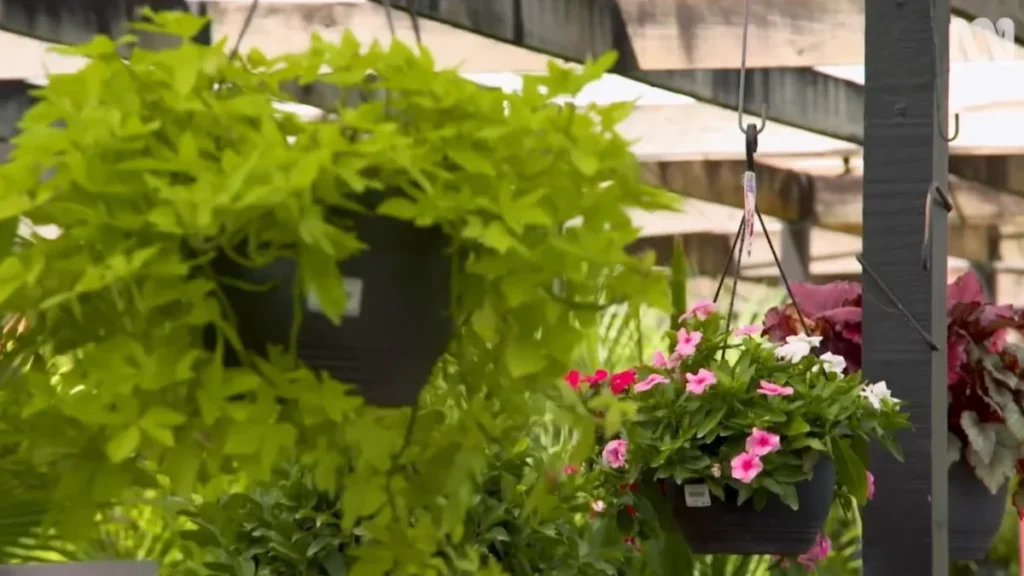
In summer, hanging planters dry faster than floor pots because air moves underneath them. This often leads to over-watering. In cooler months, the opposite happens — hanging pots stay wet longer due to less evaporation.
If your balcony overheats in warmer months, Overheating Balcony Pots in Summer explains how elevation changes temperature behaviour Published Articles.
Balcony Haven Note
On my own balcony, I’m still undecided about using hanging planters. Strong easterly winds hit my space consistently, and I’m not convinced yet that hanging setups would stay stable long-term. For now, I’m observing how the balcony behaves and keeping this as a future experiment — though your balcony conditions may be different, and hanging planters might work well in your case.
Even without using hanging planters yet, thinking about whether they would work has changed how I look at my balcony layout. That’s the same reason I focus on spacing and placement in How to organise plants in a small balcony? — because where plants sit matters just as much as how they’re supported.
Frequently Asked Questions
Can I hang planters on a rental balcony?
Yes, as long as you use removable hooks, rail hangers, or tension systems that don’t require drilling. These options also make it easier to adjust or remove planters if wind or drainage becomes an issue later.
How much weight can a balcony railing hold?
It varies by building. Assume railings are for safety barriers, not heavy loads, and keep planters lightweight. Wet soil can double the weight of a planter, so always factor watering into your setup.
Do hanging plants need more watering?
Often yes in warm weather, because air circulates underneath them and dries soil faster. Checking moisture at the root level, not just the surface, helps avoid over-watering in cooler periods.
What plants work best in hanging planters?
Trailing herbs, strawberries, and shallow-rooted plants adapt best to lighter soil volumes. Plants that tolerate slight drying between watering are usually easier to manage in hanging setups.
Final Thoughts
Hanging planters work best on balconies when they’re treated as part of the overall setup, not just decoration. Rather than filling every available hook, the focus is on placing plants where wind, light, airflow, and weight are actually manageable.
If you’re unsure whether hanging planters suit your space, that’s completely fine. Starting small, observing how your balcony behaves, and adjusting over time is often the safest approach. A thoughtful setup evolves with your conditions — and grows at your pace, not against it.
Happy Balcony Gardening!
Leave a Reply