Growing edible flowers sounds magical, but on balconies it comes with real limits — shallow pots, wind, heat, and very little room for mistakes. Many “edible flower” lists online forget this and recommend plants that sprawl, drop petals everywhere, or struggle in containers. So what are some small edible flowers for balcony?
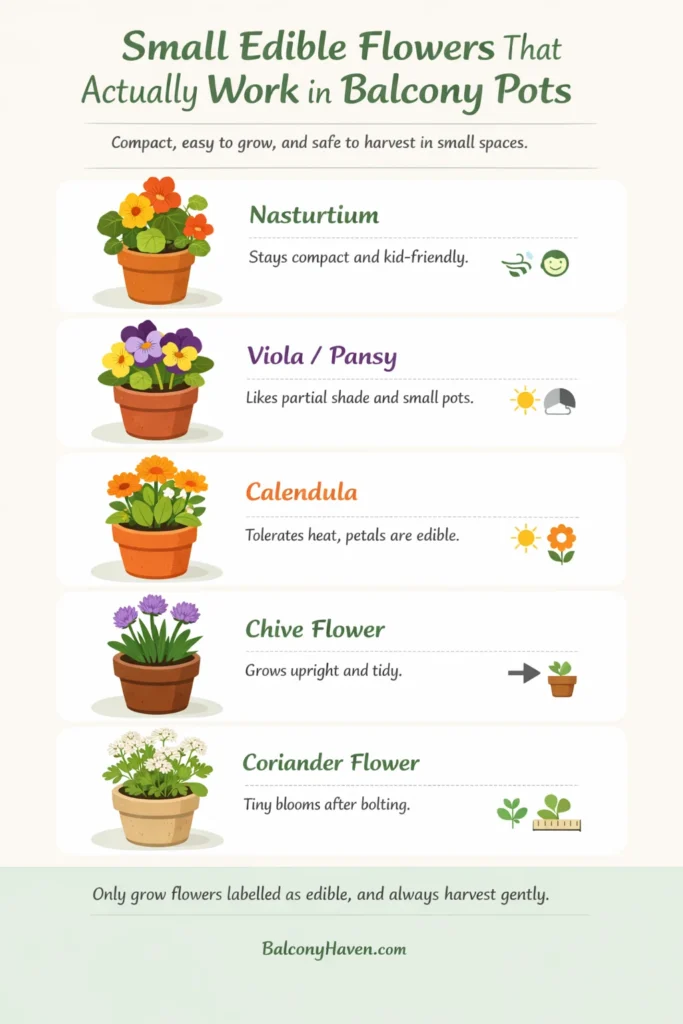
Small edible flowers that grow well on balconies include nasturtiums (compact types), violas or pansies, calendula, chive flowers, and coriander flowers. These plants stay manageable in pots, handle limited space and wind better than larger flowers, and are easy to harvest safely for eating on small balconies.
This guide focuses only on small, well-behaved edible flowers that actually make sense for balconies. You’ll learn which ones stay compact, how they behave in pots, and what makes them safe and fun for kids to grow and taste — without turning your balcony into a mess.
This article won’t cover decorative garden flowers or rare varieties that need large beds. Everything here is chosen specifically for small balconies and containers.
Response Blog Post Template ver2
Table of Contents
Why Edible Flowers Are Trickier on Balconies
Balconies don’t give plants much forgiveness. Pots dry faster, wind shakes delicate stems, and flowers are often exposed to reflected heat from walls and concrete.
Edible flowers add another layer of difficulty:
they must stay healthy, clean, and chemical-free, because they’re going on plates — not just being admired.
That’s why small size matters more than beauty on balconies. Compact flowers are easier to protect, easier to water evenly, and less likely to drop petals into drains or neighbour spaces.
Small Edible Flowers That Actually Work in Balcony Pots
Nasturtiums (Compact Varieties)
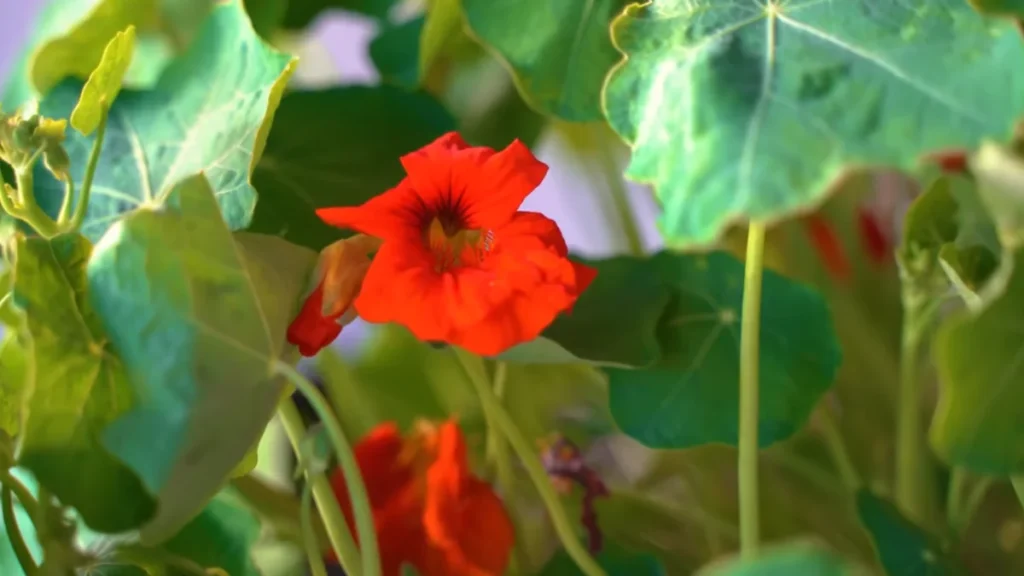
Nasturtiums are one of the most balcony-friendly edible flowers when grown in small pots. Their round leaves shade the soil, helping pots stay cooler, and the flowers taste slightly peppery — like a mild rocket leaf.
On balconies, choose compact or trailing types and let them spill gently over the pot edge rather than climb. Kids love picking the bright flowers, and the leaves are edible too, which makes harvesting feel like a game.
Viola and Pansy
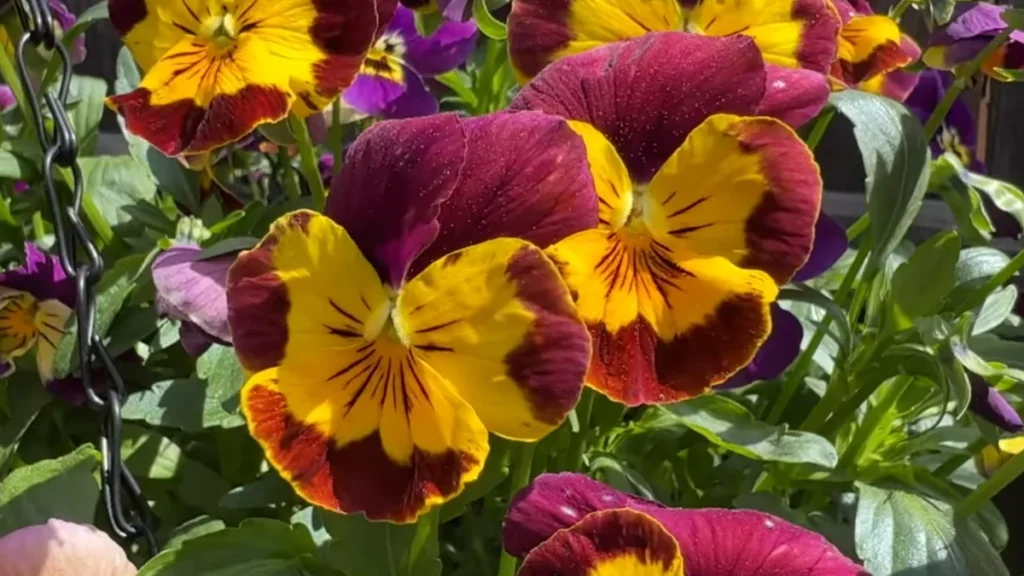
Violas and pansies stay naturally low and tidy, making them perfect for shallow balcony planters. Their flowers are mild and slightly sweet, which works well in fruit bowls or on cupcakes.
These flowers handle partial shade better than most, so they’re ideal for balconies that only get morning sun. They also bounce back quickly after picking, which is great for small spaces.
Calendula (Pot Marigold)
Calendula flowers look bold, but the plant itself stays compact when grown in containers. The petals are the edible part and are often used to add colour rather than flavour.
On balconies, calendula does best in lighter pots with good drainage. It tolerates heat better than many edible flowers and keeps blooming even when conditions aren’t perfect.
Chive Flowers
Chives are already popular balcony herbs, but many people forget their flowers are edible too. The purple blooms have a mild onion flavour and can be pulled apart and sprinkled over meals.
Because chives grow upright and narrow, they’re excellent for tight corners or grouped pots. The flowers appear above the leaves, keeping them clean and easy to harvest.
Coriander Flowers
When coriander bolts in warm weather, most balcony gardeners think they’ve failed. In reality, the small white flowers are edible and surprisingly useful.
These flowers are delicate and mild, perfect for garnishing salads. On balconies, coriander flowers stay small and airy, taking up less space than leafy growth — a hidden bonus for tiny setups.
Choosing the Right Pot Size for Edible Flowers
Edible flowers don’t need deep containers, but they do need stable, well-balanced pots to grow comfortably on balconies. Shallow pots tend to dry out too quickly, while oversized containers often hold moisture longer than small root systems can use.
In most cases, medium-depth pots work best for small edible flowers, especially when the container is wide enough to resist tipping in wind. Lightweight pots can still be used, but they should be weighted at the base or grouped with other pots to improve stability.
When pot depth and width are balanced properly, edible flowers experience less stress and produce healthier, longer-lasting blooms.
Balcony-Friendly Ways to Harvest Edible Flowers
Harvesting edible flowers requires a gentler approach than cutting herbs or vegetables. Rough handling can shorten the blooming period and stress small plants, especially in confined balcony spaces.
For best results, flowers should be picked early in the day when they are fully open and hydrated. Whenever possible, snipping flowers instead of pulling them helps protect stems and encourages new growth. Leaving a few flowers on the plant allows it to continue producing blooms over time.
For children, this process naturally becomes a lesson in patience and care, rather than simply picking everything at once.
Practical Tips for Growing Edible Flowers on Balconies
Edible flowers stay healthiest when the environment is calm and predictable.
- Grow only one or two types per pot
- Avoid splashing soil onto petals when watering
- Shield flowers from strong afternoon wind
- Skip fertilisers right before harvesting
- Rinse gently and dry before eating
These small habits make balcony-grown flowers safer and tastier.
Common Balcony Mistakes with Edible Flowers
Many problems come from treating edible flowers like decorative ones.
- Using treated nursery plants not labelled edible
- Overcrowding different flowers in one pot
- Leaving flowers exposed to heavy rain or wind
- Ignoring heat buildup on concrete floors
- Letting soil dry completely between watering
On balconies, prevention is always easier than recovery.
When Do Edible Flowers Grow Best on Balconies?
Most small edible flowers prefer cooler to mild conditions. On balconies, this usually means spring, early summer, and mild autumn periods.
In hot weather, flowers may bloom faster but for shorter periods. Shaded balconies often get longer-lasting blooms, even if growth is slower.
Balcony Haven Note
On my own balcony, edible flowers taught me to slow down. Unlike herbs, they don’t reward rushing or heavy harvesting — they respond better to light care and observation.
If you’re working with limited space, it helps to think about edible flowers the same way you choose vegetables. I found this became much easier after learning how different edible plants behave on small balconies in Best edible plants for tiny balconies, where size and growth habits matter more than variety.
Frequently Asked Questions
Are all flowers edible if they’re grown organically?
No. Only specific flowers are edible. Always grow varieties that are known to be safe for eating.
Even organic flowers can be harmful if they’re the wrong type, so plant labels matter more than growing method.
Can kids safely grow edible flowers on balconies?
Yes, with supervision. Choose mild-tasting flowers and avoid plants that attract bees near play areas.
Small, soft-petaled flowers are easier for children to handle without damaging the plant.
Do edible flowers need full sun?
Most prefer gentle sun or partial shade, especially on balconies where heat reflects.
Too much direct afternoon sun often shortens bloom time rather than improving flower quality.
Can edible flowers grow indoors near windows?
Some can, but flowering is usually weaker than on balconies with fresh air.
Lack of airflow indoors often leads to leggy plants with fewer usable flowers.
Final Thoughts
Edible flowers don’t need a garden to thrive — they need the right conditions and gentle care. On balconies, smaller flowers are easier to protect, easier to harvest, and far more forgiving than large, showy varieties.
If you start with just one or two compact edible flowers and learn how they respond to your balcony’s light and wind, you’ll quickly build confidence. Growing something you can admire and eat is one of the simplest joys balcony gardening offers — especially when space is limited.
Happy Balcony Gardening!
Leave a Reply