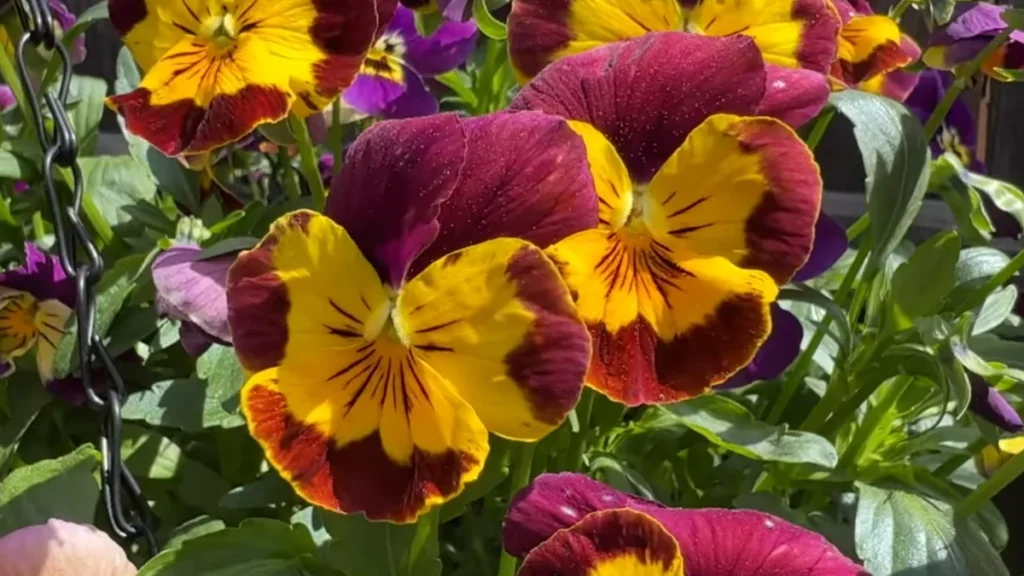
Small edible flowers can sound simple to grow on a balcony, but they need more thought than ordinary decorative flowers. They are not just there for colour. They also need to stay clean, healthy, chemical-free, and easy to harvest from a small container space.
Good small edible flowers for balcony gardens include compact nasturtiums, violas, pansies, calendula, chive flowers, and coriander flowers. These plants suit balcony pots because they stay manageable, do not need large garden beds, and can be harvested lightly for salads, drinks, snacks, or simple garnishes.
The tricky part is that many edible flower lists are written for garden beds, not apartment balconies. A flower that grows beautifully in open soil may sprawl too much, dry out too fast, attract too many pests, or become messy when squeezed into a small balcony pot.
This article explains which small edible flowers are realistic for balconies, how they behave in containers, which parts are commonly eaten, and how to choose flowers that suit your balcony’s light, wind, and space.
Why Edible Flowers Are Different on Balconies
Balconies change how edible flowers grow. A small pot heats up faster than garden soil, dries out faster in wind, and gives roots less space to recover after stress. This matters because edible flowers are often picked regularly, so the plant needs enough energy to keep producing healthy blooms.
There is also a cleanliness issue. Edible flowers are going on food, so they need to be grown in a safer and more controlled way than purely decorative balcony flowers. Soil splash, chemical sprays, dusty railings, pet traffic, and busy street pollution can all matter more when flowers are being eaten.
Size also matters. Large flowering plants may look beautiful, but they can take over a balcony pot, hang into walking space, or drop petals into drains and neighbouring areas. Small, tidy edible flowers are easier to manage and more realistic for apartment gardeners.
If you are planning a very small food-growing setup, this guide on best edible plants for tiny balconies is a useful companion because it looks at edible plants that make sense when space is limited.
What Most Edible Flower Advice Misses
Many edible flower guides focus on what is edible, but not on whether the plant behaves well in a balcony container. This is where beginners can run into trouble. A flower may be safe to eat, but still be awkward for a windy, hot, or shaded balcony.
Balcony gardeners also have fewer backup options than gardeners with open beds. In a garden, a plant can spread, root deeper, and recover from heat more easily. In a balcony pot, the same plant depends on a small amount of soil, limited water storage, and whatever sunlight reaches the balcony.
This is why small edible flowers are usually better than dramatic ones. Compact plants are easier to place, easier to inspect, easier to harvest cleanly, and less likely to turn the balcony into a messy or crowded space.
Small Edible Flowers That Work Well in Balcony Pots
The best edible flowers for balcony gardens are usually compact, easy to recognise, and not too demanding in containers. They should also be simple to harvest without damaging the whole plant.
The table below gives a quick comparison of small edible flowers that are practical for balcony growing.
| Edible Flower | Flavour | Best Balcony Light | Balcony Difficulty | Best Pot Style |
|---|---|---|---|---|
| Compact nasturtium | Peppery and fresh | Sun to partial shade | Easy | Medium pot or railing planter |
| Viola | Mild and slightly sweet | Bright shade to gentle sun | Easy | Small pot or shallow planter |
| Pansy | Mild and soft | Bright shade to partial shade | Easy | Small pot or cool-season planter |
| Calendula | Mild and earthy | Sun to bright light | Easy | Medium pot with drainage |
| Chive flowers | Mild onion | Sun to bright light | Very easy | Small upright herb pot |
| Coriander flowers | Mild herbal | Sun to partial shade | Easy but seasonal | Small herb pot or trough |
This table is a starting point, not a strict rule. A bright open balcony, a sheltered shaded balcony, and a hot enclosed balcony can all change how the same flower behaves.
Nasturtiums for Colour and Peppery Flavour
Nasturtiums are one of the most useful edible flowers for balcony gardens because both the flowers and leaves are edible. The flavour is peppery, similar to a mild rocket leaf, so it suits salads and simple savoury meals better than sweet dishes.
On balconies, compact or trailing nasturtiums are usually easier than large climbing types. A compact plant can sit in a medium pot, while a gentle trailing type can spill over a railing planter without taking over too much floor space.
Nasturtiums also help shade the top of the soil with their round leaves. This can be helpful on warm balconies because exposed potting mix can dry quickly. Even so, very hot afternoon sun can still make leaves wilt or flowers fade faster.
If your balcony receives strong sun and heat, this article on why balcony plants wilt in the afternoon sun may help you understand why edible flowers can look tired even when the soil is not completely dry.
Violas and Pansies for Small Shaded Pots
Violas and pansies are excellent small edible flowers for balcony pots because they stay low, tidy, and easy to harvest. Their flowers are usually mild, which makes them popular for decorating cakes, fruit bowls, drinks, and simple snacks.
They often suit balconies with morning sun, bright shade, or gentler light. This makes them useful for apartment gardeners who do not have a hot full-sun balcony. They are also good for small planters because they do not need deep containers to look attractive.
The main limit is heat. In warm conditions, violas and pansies may slow down, stretch, or stop flowering as well. On cooler balconies, they can last longer and stay neater.
If your balcony receives softer light, you may also find this guide on what flowers do well with partial shade helpful because it explains other flowering choices for gentle light.
Calendula for Bright Petals in Containers
Calendula, often called pot marigold, is useful when you want bright petals from a container plant. The petals are the part most commonly used, often to add colour to salads, soups, rice, or simple dishes.
Although calendula flowers look bold, the plant can stay manageable in pots if it has enough light and drainage. It usually prefers brighter conditions than violas or pansies, so it suits balconies that receive sun or strong bright light for part of the day.
Calendula can handle mild balcony stress better than many delicate edible flowers. However, it still needs airflow and a pot that does not stay soggy. In a cramped or damp corner, the flowers may not stay clean or healthy enough for eating.
Chive Flowers for Tight Balcony Spaces
Chive flowers are one of the easiest edible flower options for small balconies because the plant grows upright and narrow. It does not sprawl much, and it can fit into corners, herb shelves, or grouped pots.
The purple flowers have a mild onion flavour. They can be pulled apart and sprinkled lightly over eggs, potatoes, salads, soups, or savoury dishes. Because the flowers sit above the leaves, they are often easier to harvest cleanly than flowers that grow close to the soil.
Chives are also practical because the plant is useful even before it flowers. The leaves can be used as an herb, and the flowers become a bonus when the plant matures.
Coriander Flowers When Herbs Start to Bolt
Coriander flowers are a good example of a balcony “problem” becoming useful. Many gardeners feel disappointed when coriander bolts, because the leafy stage becomes shorter. But the small white flowers are edible and can still be used as a delicate garnish.
On balconies, coriander often bolts faster in warm weather, small pots, or strong sun. Instead of seeing this as a total failure, the flowers can be treated as part of the plant’s edible stage.
The flowers are light and mild, so they suit salads, herb dishes, and simple garnishes. They do not give the same leafy harvest as fresh coriander leaves, but they can still make the plant useful for longer.
For more detail on this herb in balcony conditions, this guide on coriander growing tips for humid balconies may help explain why coriander changes quickly in warm or humid spaces.
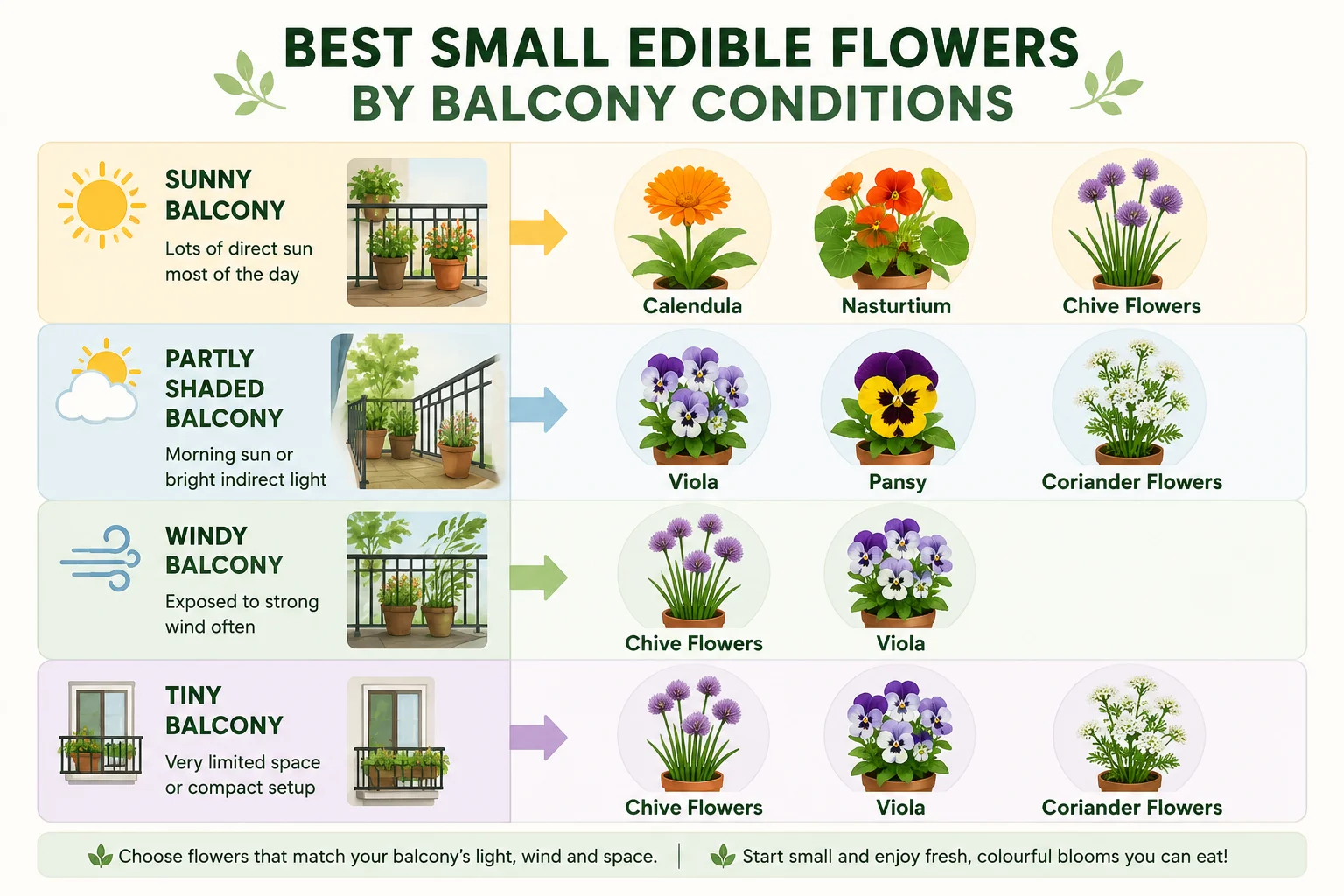
Which Edible Flower Suits Your Balcony?
Choosing the right edible flower becomes easier when the balcony condition comes first. Light, wind, heat, and available space usually matter more than choosing the prettiest flower at the nursery.
| Balcony Condition | Better Flower Choices | Why They Suit That Space |
|---|---|---|
| Sunny balcony | Calendula, nasturtium, chive flowers | They usually handle brighter light better than softer shade flowers. |
| Partly shaded balcony | Violas, pansies, coriander flowers | They can cope with gentler light and do not need harsh afternoon sun. |
| Windy balcony | Chive flowers, violas, compact calendula | Upright or low-growing plants are easier to protect than tall delicate flowers. |
| Tiny balcony | Chive flowers, violas, pansies, coriander flowers | They stay compact and can grow in small pots or narrow planters. |
| Hot balcony floor | Nasturtium in raised pots, calendula in light-coloured pots | They are more likely to cope if the pot is kept away from extreme reflected heat. |
Placement can change results. A pot near the railing may receive more light and airflow than the same pot placed against a warm wall. A low pot on hot concrete may dry faster than one raised slightly on a stand.
If space is your main challenge, this article on how to organise plants in a small balcony may help you think about where edible flowers can sit without crowding herbs and vegetables.
Which Parts of Edible Flowers Can You Eat?
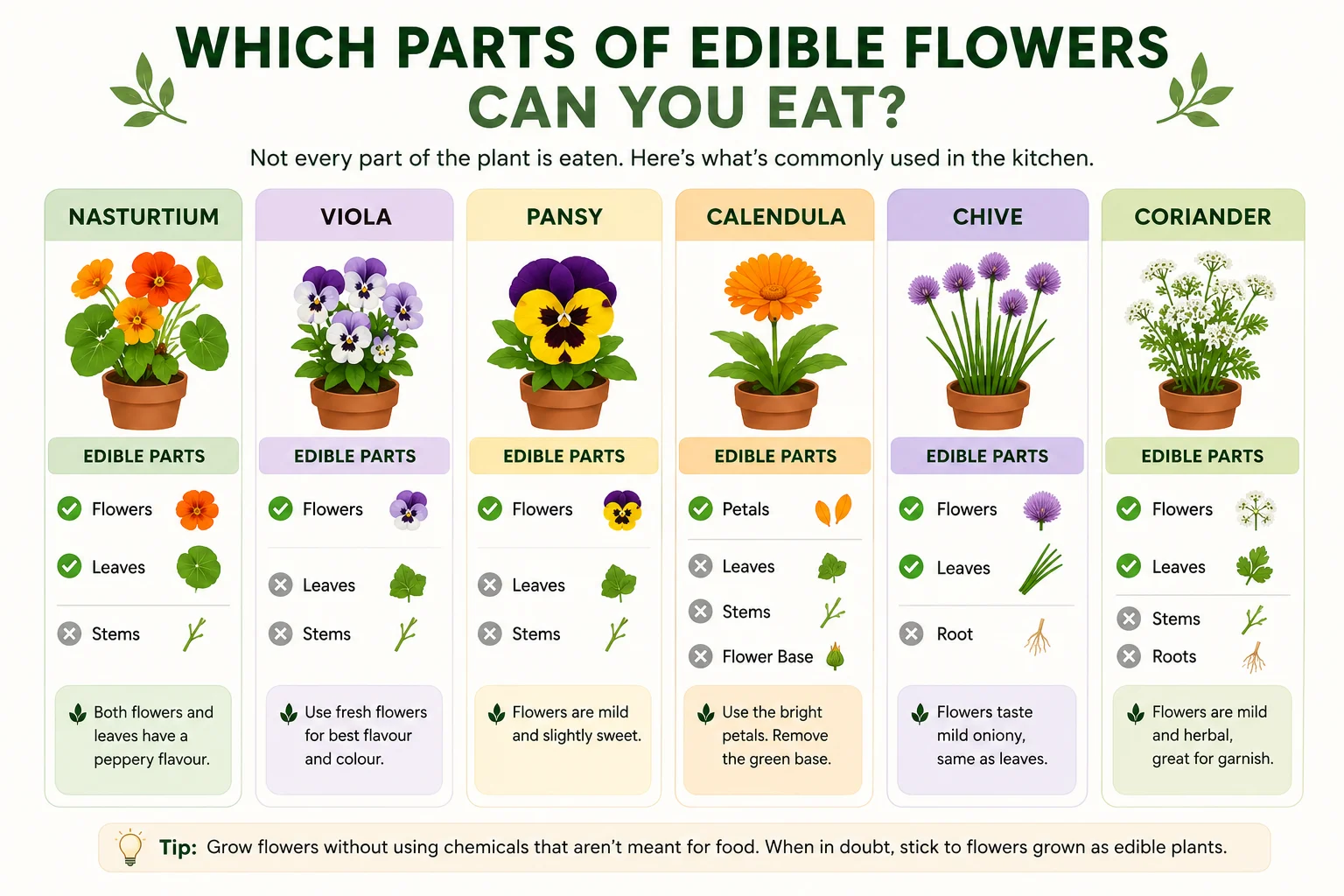
Not every part of an edible flower plant is used in the same way. This is important because “edible flower” does not always mean the whole plant should be eaten freely. For balcony gardeners, it also helps with harvesting because some parts are easier to keep clean than others.
| Plant | Commonly Used Edible Part | Balcony Harvest Note |
|---|---|---|
| Nasturtium | Flowers and leaves | Pick clean flowers and young leaves from plants grown without sprays. |
| Viola | Flowers | Best used fresh because the flowers are soft and delicate. |
| Pansy | Flowers | Useful for decoration, especially when grown away from soil splash. |
| Calendula | Petals | Petals are usually separated from the flower head before use. |
| Chives | Flowers and leaves | Flowers can be pulled apart and used lightly because the flavour is onion-like. |
| Coriander | Flowers and leaves | Flowers are useful when the plant bolts and leafy harvest slows down. |
Only flowers grown as edible plants should be used for food. Decorative nursery flowers may have been treated with sprays or products that are not intended for edible crops, even if the plant variety itself is known to be edible. When in doubt, treat an unknown flower as non-edible until you have positively identified it and confirmed it is commonly recognised as safe to eat.
Choosing Pot Size for Small Edible Flowers
Small edible flowers do not usually need very deep pots, but they do need containers that stay stable and drain properly. A pot that is too shallow may dry out quickly, while a pot that is too large can stay wet for longer than the roots need.
For violas, pansies, chives, and coriander, small to medium pots often work well. Calendula and nasturtiums usually appreciate a little more room because they produce more leaf and flower growth.
Wind is also part of pot choice. A tall light pot can tip easily, especially if the plant catches wind. A wider pot, grouped containers, or a lower planter can make edible flowers feel more secure on an exposed balcony.
For deeper container planning, this guide on deep vs shallow pots for balcony veggies explains how pot depth changes root space, moisture, and plant stress in balcony growing.
Balcony-Friendly Ways to Harvest Edible Flowers
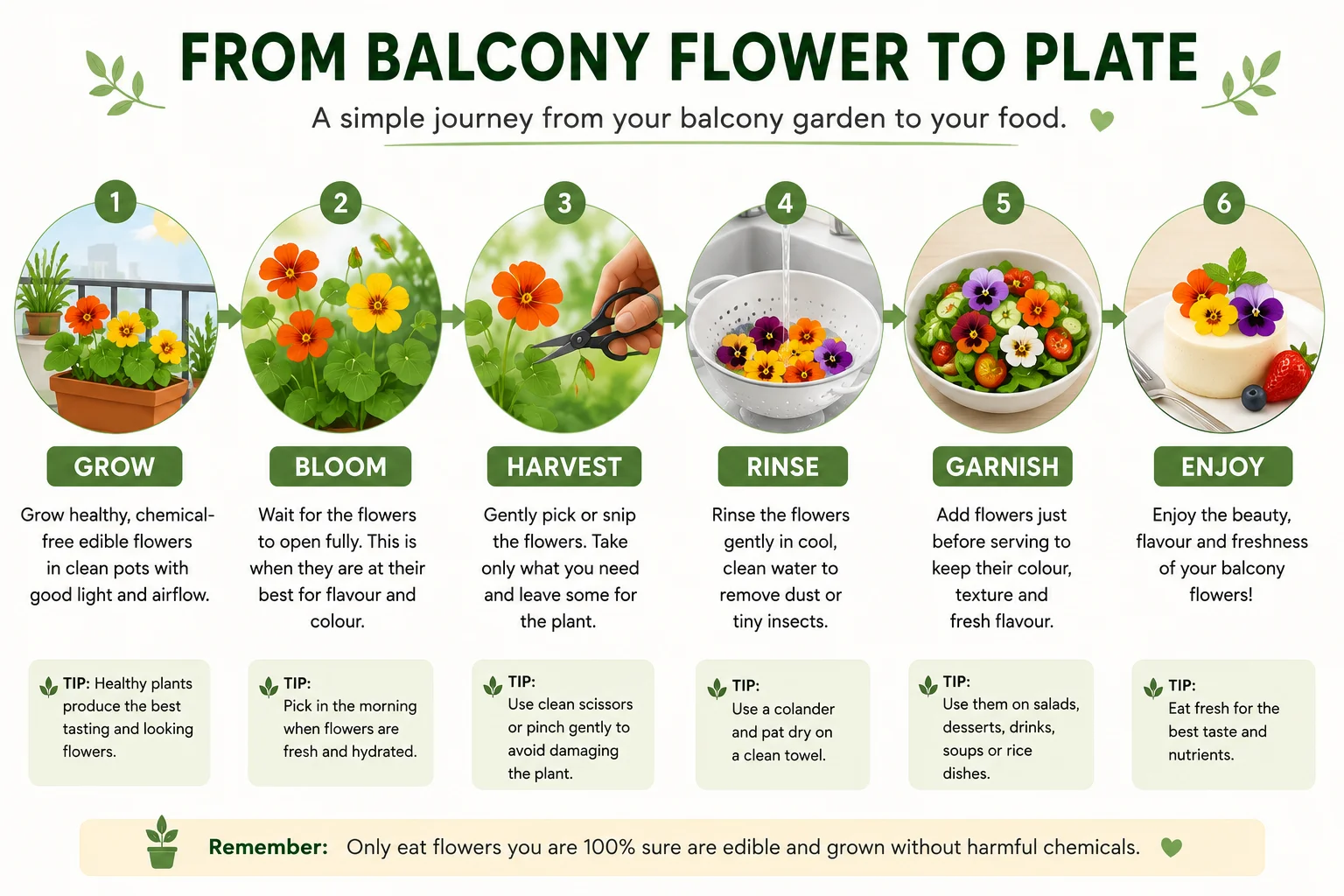
Harvesting edible flowers on a balcony works best when it is gentle and light. Small plants can become stressed if too many blooms are removed at once, especially when they are already dealing with heat, wind, or small pots.
Flowers are usually better picked when they are fresh, open, and dry. Snipping is often kinder than pulling because it avoids tearing stems or shaking the plant. Leaving some flowers behind also helps the plant keep looking attractive and continue its normal growth cycle.
Cleanliness matters more with edible flowers than with many other balcony plants. Flowers close to dusty railings, busy roads, pet areas, or splashing soil need extra care. A gentle rinse and careful drying can help, but good placement is still the first layer of protection.
Practical Tips for Growing Edible Flowers on Balconies
Edible flowers usually grow better when the balcony setup keeps them healthy, clean, and easy to reach.
- Grow only flowers that are known to be edible.
- Use plants or seeds intended for edible growing, not treated decorative flowers.
- Place pots where flowers avoid soil splash and heavy dust.
- Keep plants within easy reach so harvesting does not damage stems.
- Choose compact varieties when floor space is limited.
- Harvest lightly instead of stripping every flower at once.
These small habits make balcony-grown edible flowers more practical. They also reduce the chance of turning a small balcony garden into something crowded, messy, or hard to maintain.
Common Mistakes With Edible Flowers on Balconies
Most problems with edible flowers come from treating them like ordinary decorative plants. The flowers may look pretty, but once they are grown for eating, the growing conditions matter in a different way.
- Buying decorative nursery flowers without checking whether they are safe for eating.
- Growing too many flower types in one small pot.
- Placing edible flowers where soil splashes onto petals during watering.
- Ignoring reflected heat from walls, windows, and concrete floors.
- Using strong sprays near flowers that may later be eaten.
- Letting trailing flowers hang into dusty or high-traffic areas.
Another common misunderstanding is expecting edible flowers to bloom heavily all the time. On balconies, flowering can slow during heat, low light, strong wind, or after heavy picking. That does not always mean the plant has failed.
When Do Edible Flowers Grow Best on Balconies?
Many small edible flowers grow best in mild conditions. Spring and autumn are often easier because the balcony is not too hot, the plants do not dry out as quickly, and flowers last longer after opening.
Summer can still work for some flowers, especially nasturtiums, calendula, chives, and coriander flowers, but hot balcony surfaces can shorten bloom life. Violas and pansies often prefer cooler conditions and may not enjoy strong heat.
Winter depends on the balcony. A sheltered, bright balcony may still support some flowers, while a cold shaded balcony may slow down. In apartments, nearby buildings, wind exposure, and balcony direction can make one balcony feel very different from another.
Balcony Haven Note: I noticed that edible flowers can make a balcony feel more rewarding because they are both useful and beautiful, but they also show small problems quickly. One balcony corner may keep flowers clean and fresh, while another spot may be too dusty, windy, or hot, even when both areas are only a few steps apart.
Frequently Asked Questions
Are all flowers edible if they are grown organically?
No. Organic growing does not make every flower safe to eat. Only flowers that are known to be edible should be used, and they should be grown without products that are not suitable for edible plants.
Can kids grow edible flowers on a balcony?
Yes, edible flowers can be a gentle balcony project for children when an adult chooses the plants and supervises harvesting. Mild flowers such as violas, pansies, and nasturtiums are easier for children to recognise and handle.
Do edible flowers need full sun?
Some edible flowers enjoy sun, but not all need full sun. Violas and pansies can handle gentler light, while calendula and nasturtiums usually prefer brighter balcony conditions.
Can edible flowers grow on a shaded balcony?
Some can grow in bright shade or partial shade, especially violas, pansies, and coriander flowers. Deep shade is harder because flowering needs more energy than leaf growth.
Can I eat flowers from the garden centre?
Only if they are clearly sold as edible or food-safe plants. Many decorative flowers may have been treated for display rather than eating, so seeds or plants intended for edible growing are safer choices.
What is the easiest edible flower for a beginner balcony gardener?
Chive flowers, violas, pansies, and compact nasturtiums are usually some of the easiest options. They stay manageable in pots and are simple to recognise when harvesting.
Final Thoughts
Small edible flowers can work beautifully on balconies when the plant choice matches the space. The best options are usually compact, easy to recognise, and comfortable in pots rather than large garden flowers that need more room.
Nasturtiums, violas, pansies, calendula, chive flowers, and coriander flowers all bring something different. Some add colour, some add flavour, and some make herbs more useful when they start to flower.
The most realistic approach is to start with one or two edible flowers and observe how they behave in your balcony’s light, wind, and heat. When the flowers stay healthy and easy to harvest, a small balcony can feel more colourful, useful, and enjoyable without needing much space.
Leave a Reply