
Why Are Leaves Curling on Balcony Cucumbers?
Cucumber plants are usually fast growers, so it can feel worrying when their leaves start curling instead of spreading out flat. On a balcony, this often shows up suddenly, even when the plant seemed healthy just days earlier.
In most cases, curling leaves on balcony cucumbers happen because the plant is under environmental stress. Heat and dry air can cause leaves to curl as a way to reduce water loss, while inconsistent watering, limited root space in containers, or missing nutrients can add to the problem. Balcony conditions tend to intensify these stresses, especially when pots dry out quickly or roots become crowded.
Most people notice the leaves folding inward, cupping upward, or twisting slightly. It can look like the plant is struggling, particularly when the newest leaves are affected first. This visual change often leads people to worry about disease, even though that is rarely the cause.
The good news is that leaf curl is often reversible once the underlying stress is identified. This article explains why it happens on balconies, what different curling patterns usually mean, and how to reduce the pressure on the plant without overcorrecting.
Table of Contents
Understanding the Balcony Reality for Cucumber Plants
Balconies create growing conditions that are very different from garden beds. Even healthy plants can react strongly to small changes in light, heat, or airflow.
Cucumbers like warmth and sun, but balconies often amplify these conditions. Hard surfaces reflect heat, wind moves faster between buildings, and pots dry out more quickly than soil in the ground. These factors combine to stress leaves first, because leaves are how the plant manages water and temperature.
Containers also limit root space. When roots cannot access steady moisture or nutrients, the leaves respond by curling to reduce water loss. This is a natural protective reaction, not a sign that the plant is dying.
Understanding that balcony stress is common helps explain why leaf curl happens even when you are watering and feeding regularly.
Why Cucumber Leaves Curl on Balconies
Leaf curl is not caused by one single problem. It usually comes from one or more stresses happening at the same time.
| Symptom / Pattern | Likely Cause | What to Do |
|---|---|---|
| Leaves curling upward | Heat stress / direct sun | Move to partial shade / protect from hot sun |
| Leaves curling downward | Overwatering or root stress | Reduce watering; improve drainage |
| Leaves curled and brittle | Underwatering | Water deeply and regularly |
| New leaves distorted | Pests or aphids | Check for insects; treat with safe spray |
| Leaves rolling inward | Wind stress | Provide wind protection |
| Leaves curled with yellowing | Nutrient deficiency | Feed with balanced fertilizer |
| Leaves curling after fertiliser | Fertilizer burn | Flush soil lightly with water |
Heat and Sun Stress
On sunny balconies, cucumber leaves may curl upward along the edges. This helps the plant reduce the surface area exposed to heat.
This type of curling often appears during the hottest part of the day and may ease slightly in the evening. It is common on north- or west-facing balconies where reflected heat builds up quickly.
Inconsistent Watering
Cucumbers need steady moisture. When soil swings between very dry and very wet, leaves often curl as the plant struggles to regulate water flow.
Dry soil can cause leaves to curl inward and feel stiff. Overwatering can also cause curling, especially when roots sit in waterlogged soil and cannot breathe properly.
Wind Exposure
Balcony wind is stronger and more constant than in ground gardens. Wind pulls moisture from leaves faster than roots can replace it.
In windy conditions, cucumber leaves may curl or twist to reduce moisture loss. This often happens even when the soil is damp.
Container and Root Stress
Small pots restrict root growth. When roots hit the container edges or become crowded, water uptake becomes less efficient.
Leaf curl caused by root stress often appears alongside slow growth or smaller leaves.
What Overwatered Cucumber Leaves Look Like
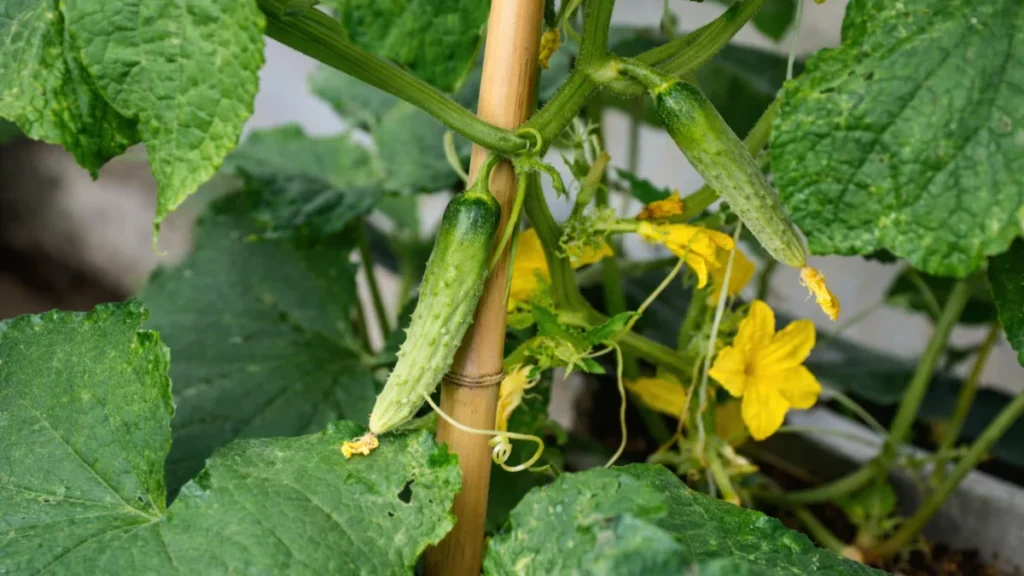
Overwatered cucumber plants show different signs than underwatered ones, even though both can cause curling.
Leaves affected by too much water often look soft rather than crisp. They may curl downward, feel heavy, and appear slightly dull or pale.
If the soil stays wet for long periods, roots may begin to suffocate. This limits nutrient uptake and can lead to yellowing alongside curling.
On balconies, overwatering is common when pots lack drainage or when watering is done daily without checking soil moisture.
Does Overwatering Cause Leaf Curl?
Yes, overwatering can cause leaf curl, but it usually comes with other signs.
When roots sit in saturated soil, oxygen levels drop. The plant responds by reducing leaf function, which can include curling, drooping, or slowed growth.
Leaf curl from overwatering often develops gradually rather than suddenly. The soil usually feels wet below the surface, even days after watering.
This is why drainage is just as important as watering frequency on balconies.
How to Stop Cucumbers From Curling on a Balcony
Fixing leaf curl is about reducing stress, not forcing growth.
Adjusting Watering Habits
Check soil moisture with your finger before watering. The top few centimetres should feel slightly dry, not bone dry or soggy.
Water deeply but less often, allowing excess water to drain freely. Consistency matters more than volume.
Managing Heat Exposure
During extreme heat, leaves may curl even with perfect watering. Temporary shade during peak afternoon sun can help reduce stress.
Moving pots slightly away from reflective walls can also lower leaf temperature.
Reducing Wind Stress
Placing cucumber pots near a wall or barrier helps reduce constant airflow. Even partial wind shelter can make a noticeable difference.
Grouping pots together can also limit direct wind exposure.
Checking Container Size and Drainage
Cucumbers grow quickly and need room. Small pots dry faster and stress roots sooner.
If roots are crowded or drainage holes are blocked, leaf curl is more likely to persist.
Practical Tips to Reduce Leaf Curl
Small changes often work better than drastic ones.
- Use pots with multiple drainage holes
- Water early in the morning rather than midday
- Avoid letting pots sit in saucers of water
- Watch how leaves behave at different times of day
- Adjust one factor at a time rather than everything at once
Common Mistakes That Make Leaf Curl Worse
Many well-intended fixes increase stress instead of reducing it.
- Watering more frequently without checking soil moisture
- Moving plants repeatedly between sun and shade
- Fertilising heavily when leaves show stress
- Ignoring wind exposure on higher balconies
- Using very small containers for fast-growing vines
Seasonal and Australian Balcony Conditions
In Australian summers, balconies heat up quickly. Concrete, tiles, and nearby walls store and reflect heat, often raising leaf temperatures higher than the surrounding air. This can cause cucumber leaves to curl as the plant tries to limit moisture loss.
During heatwaves, temporary leaf curl is common, even in healthy plants. Leaves may appear tightly curled in the afternoon and relax again later in the day once temperatures drop, which usually indicates short-term stress rather than lasting damage.
Humidity also plays a role. Dry summer air pulls moisture from leaves faster, increasing the chance of curling. This effect is often stronger on exposed balconies than in ground gardens.
Balcony Haven Note
With a fairly typical apartment balcony, I’ve noticed that curling leaves on balcony cucumbers often come down to wind exposure, heat buildup, and limited container space rather than the cucumber variety itself. Small, realistic changes in the growing setup tend to reduce leaf stress more effectively than trying to create ideal conditions. This can vary from one balcony to another depending on layout and exposure.
If your cucumber leaves are curling due to wind exposure, you may also find protecting balcony pots from strong winds helpful. That article looks at how airflow affects container plants and how small positioning changes can reduce stress without blocking light.
Frequently Asked Questions
Why are my cucumber plant leaves curling?
Cucumber leaves curl as a response to stress. On balconies, this is usually caused by heat, wind, inconsistent watering, or limited root space rather than pests or disease.
What do overwatered cucumber leaves look like?
Overwatered leaves often curl downward, feel soft, and may look pale or slightly yellow. The soil usually stays wet below the surface for long periods.
How do I stop my cucumbers from curling?
Reducing stress is key. Improve drainage, water consistently, protect plants from strong wind, and manage extreme heat exposure.
Does overwatering cause leaf curl?
Yes. Overwatering limits oxygen to roots, which affects leaf function. Curling from overwatering usually develops alongside slow growth or yellowing.
Final Thoughts
Curling leaves on balcony cucumbers are usually a response to stress rather than a sign that the plant is failing. On balconies, changes in heat, wind, airflow, and moisture happen quickly, and cucumber leaves often react before other parts of the plant show problems. This early response can actually be helpful, as it signals that something in the environment needs attention.
Instead of looking for a single fix, it helps to think in terms of balance. Balconies rarely offer steady conditions throughout the day, so plants adjust constantly. Watching when the leaves curl, how long it lasts, and whether it improves later can reveal more than making immediate changes.
Every balcony behaves differently, shaped by its direction, height, and surrounding buildings. Learning how your space influences temperature, drying speed, and airflow is part of container growing. Over time, this awareness makes it easier to support healthy growth without forcing ideal conditions that balconies simply do not provide.

Leave a Reply