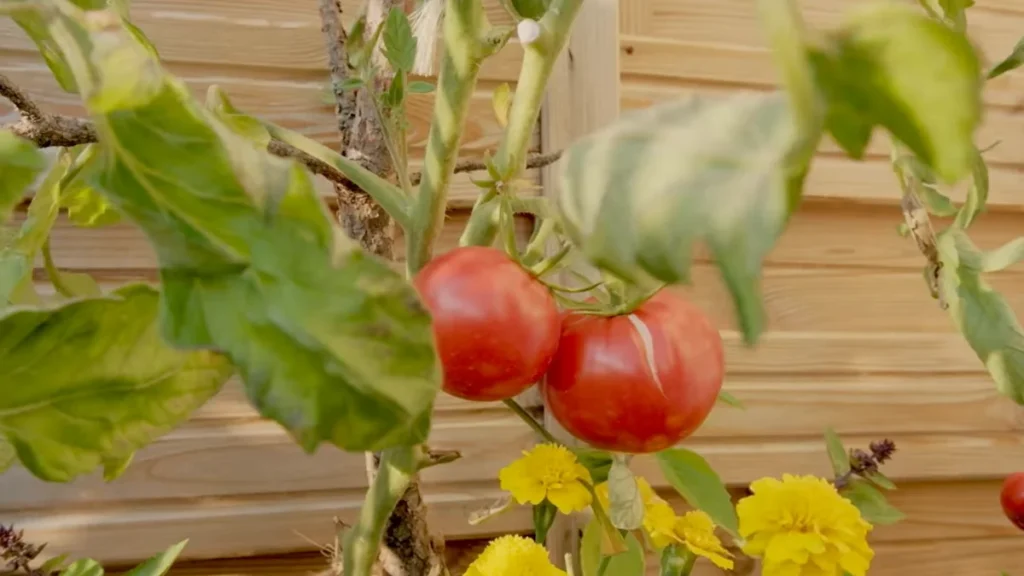
Growing a plant that looks healthy but never produces fruits can feel confusing, especially on a balcony. Leaves keep growing, stems look strong, and everything seems fine — yet no tomatoes, chillies, or strawberries ever appear. On balconies, this happens more often because conditions look “good enough” for growth, but not for fruiting. So why balcony plants growing but not producing fruits?
Plants often grow without producing fruits because they receive enough energy for leaves, but not enough for flowering and fruit development. On balconies, limited sunlight angles, weaker pollination, and restricted root space allow plants to survive and grow — but not complete their full fruiting cycle.
This guide explains what is really happening when plants grow but do not fruit, and how balcony conditions quietly affect that process. Instead of general gardening advice, we focus on the hidden differences between growth and fruiting in small, elevated spaces.
Table of Contents
Balcony-Specific Constraints That Affect Fruiting
Balconies create a very different environment compared to ground gardens, and fruiting is where those differences become most visible.
Light is the biggest limitation. Even if your balcony feels bright, the sunlight may only reach your plants at certain angles or for short periods. This is often enough to keep leaves growing, but not enough to support flowering and fruit production, which require stronger and more consistent energy.
Root space is another quiet limitation. In pots, roots cannot spread freely, which reduces the plant’s ability to store energy. When energy is limited, the plant prioritises survival — producing leaves instead of fruits.
Wind behaves differently as well. Gentle airflow can help pollination, but inconsistent or strong wind can disrupt flower formation or dry plants too quickly. If your balcony is exposed, this can quietly interfere with fruiting without obvious signs, especially in conditions similar to those discussed in What Are the Best Plants for a Windy Balcony?
Finally, drainage and watering are less forgiving in containers. Small changes in moisture can stress the plant just enough to delay or stop fruit production.
The Hidden Gap Between Growing and Fruiting
| Condition | Supports Growth (Leaves) | Supports Fruiting |
|---|---|---|
| Sunlight | Moderate / indirect | Strong direct sun |
| Nutrients | High nitrogen | Balanced / high potassium |
| Root space | Small pots tolerated | Larger pots needed |
| Pollination | Not required | Required |
| Stability | Flexible | Needs consistency |
One of the biggest misunderstandings in balcony gardening is assuming that growth automatically leads to fruiting.
In reality, plants treat these as two separate stages. Growing leaves is a low-risk activity that helps the plant gather energy. Fruiting, on the other hand, is a high-energy process that only happens when the plant feels stable and supported.
On a balcony, conditions often sit in the “middle zone.” Plants receive enough to grow, but not enough to feel confident producing fruits. This is why your plant can look healthy, yet never move to the next stage.
The Real Reasons Your Plants Are Not Producing Fruits
Not Enough Direct Sunlight
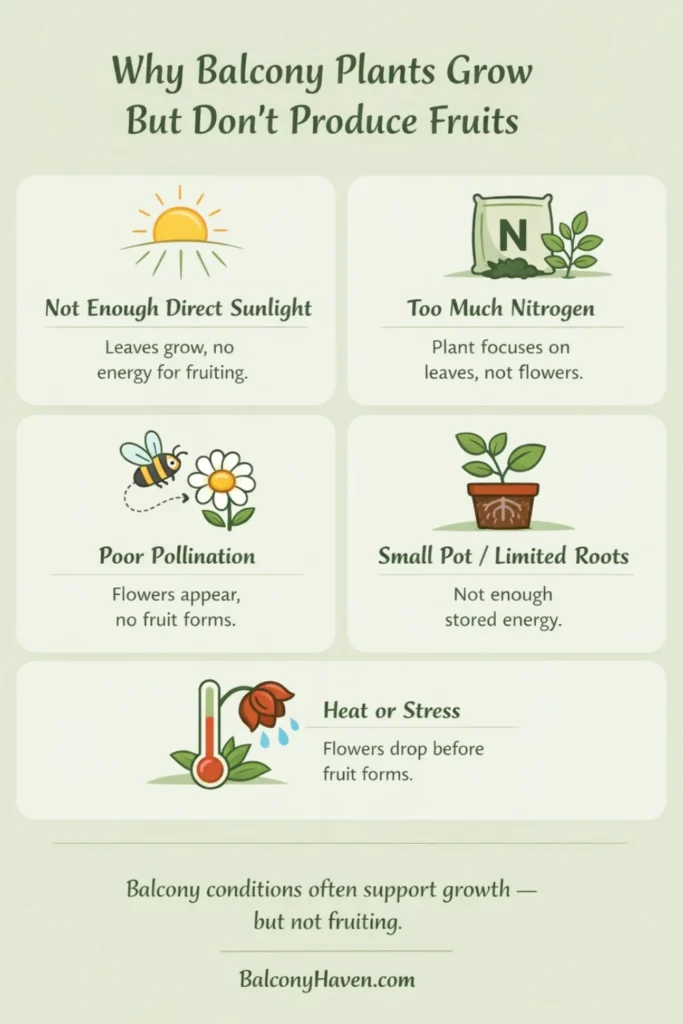
Sunlight is not just about brightness — it is about intensity and duration. Many balconies receive filtered or indirect light, which supports leaf growth but is often too weak for fruiting.
A plant may grow steadily for weeks, but without strong direct sunlight, it may never produce flowers at all. In some cases, flowers form but are too weak to develop into fruits.
If you are unsure how much usable sunlight your balcony gets, it helps to measure it properly rather than guessing. This is where understanding your light patterns, as explained in How to Measure Sunlight on a Balcony, becomes very useful.
Nutrients That Favour Leaves Instead of Fruits
Not all fertilisers support fruiting. Many common mixes are designed to encourage leafy growth, which can unintentionally delay fruit production.
When nitrogen is too high, plants respond by growing faster and producing more leaves. While this looks like healthy progress, it actually shifts energy away from flowering.
On balconies, this happens easily because nutrients build up in pots over time, especially when feeding regularly.
Pollination Is Not Happening Properly
Even when flowers appear, fruit will not form unless pollination happens.
In open gardens, insects and wind naturally handle this process. On balconies, especially in higher floors or enclosed spaces, pollination becomes less reliable. Flowers may bloom normally, then drop off without forming fruits.
This can make it seem like the plant is “failing,” when in reality the final step is simply missing.
Roots Are Quietly Limiting the Plant
Plants in small containers often look healthy above the soil, but below the surface, roots may be restricted.
When roots cannot expand, the plant limits how much energy it uses. Fruiting becomes a lower priority because it requires more resources than the plant can comfortably support.
This is why some plants grow tall and leafy but never produce anything — they are operating within a hidden limit.
Heat and Stress Interrupt the Process
Balconies can create sudden temperature changes, especially in the afternoon. Heat reflecting from walls, railings, and floors can stress plants without obvious signs.
In these conditions, plants may:
- Stop forming flowers
- Drop flowers early
- Delay fruit development
This behaviour is closely related to how plants react to harsh sunlight conditions, similar to what is explained in Why Do Plants Wilt in the Afternoon Sun?.
How Different Balcony Setups Affect Fruiting
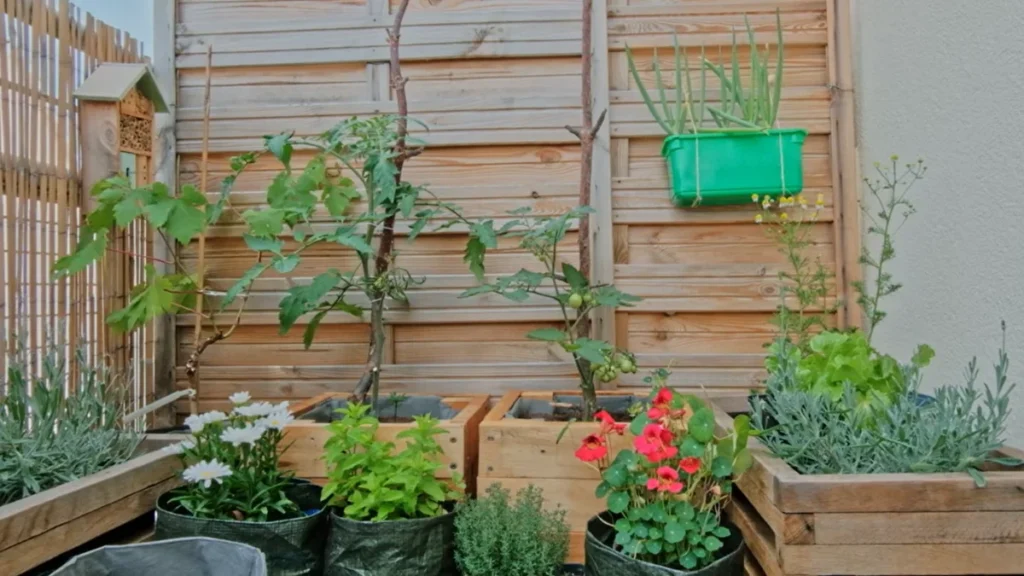
Not all balconies behave the same, and this directly affects fruit production.
A small balcony tends to amplify problems. Pots dry faster, temperatures fluctuate more, and plants compete for limited light. This makes fruiting less consistent, even if plants look healthy.
Larger balconies offer more flexibility. You can move pots to better light positions, create airflow gaps, and adjust layouts more easily.
Balconies with only morning sun often produce slower but more stable growth. In contrast, balconies with strong afternoon sun can support fruiting more effectively, but only if heat stress is managed.
Enclosed balconies tend to reduce pollination. While they protect plants from harsh weather, they can also limit the natural processes needed for fruit formation.
Practical Tips to Help Your Plants Start Fruiting
| What You See | Likely Cause |
|---|---|
| Lots of leaves, no flowers | Too much nitrogen |
| Flowers but no fruit | Poor pollination |
| Flowers dropping | Heat or stress |
| Small plant, slow growth | Root restriction |
| Healthy but no change | Not enough sunlight |
Small adjustments can shift your plants from growing to fruiting without drastic changes.
- Move plants gradually to areas with longer direct sunlight
- Gently shake flowering plants to help pollination
- Use fertilisers that support flowering instead of leaf growth
- Upgrade to slightly larger pots when plants outgrow their space
- Keep watering consistent to avoid stress cycles
These changes work best when combined, rather than applied one at a time.
Common Mistakes That Delay Fruiting
Many balcony gardeners focus on visible growth and miss the hidden signals that affect fruiting.
- Assuming bright space equals enough sunlight
- Using small pots for fruiting plants
- Feeding too often with general fertilisers
- Ignoring airflow and pollination
- Letting soil swing between too dry and too wet
These mistakes do not stop growth, but they quietly prevent the plant from progressing.
Timing and Expectations on a Balcony
Fruiting takes time, and on balconies, it often takes longer than expected.
Plants need stable conditions over time before they commit to producing fruits. Sudden changes in light, temperature, or watering can reset this process, even if the plant looks fine.
Instead of focusing on speed, it helps to focus on consistency. When conditions remain steady, plants are more likely to move from growth into fruiting naturally.
Balcony Haven Note
I’ve noticed that balcony plants can look very healthy while quietly struggling to move forward. They grow leaves quickly, stay green, and give the impression that everything is working — until you realise there are no fruits forming at all.
It reminds me of how tomatoes sometimes drop their flowers before fruiting. The plant isn’t failing — it’s reacting to its environment. Once you start adjusting light, airflow, or even pot positioning, things slowly change in ways that feel almost unexpected.
FAQs
Why do my plants have flowers but no fruits?
This usually means pollination is not happening properly. On balconies, limited insects and airflow can prevent flowers from turning into fruits.
Can plants fruit in partial sunlight?
Some can, but most fruiting plants need strong direct sunlight. Partial light often supports growth but not fruit production.
Does pot size affect fruiting?
Yes. Smaller pots limit root development, which reduces the plant’s ability to produce fruits.
Should I prune my plant to encourage fruiting?
Light pruning can help, but too much pruning can delay fruiting by forcing the plant to regrow leaves.
How long does it take for plants to start fruiting?
It depends on the plant, but balcony conditions often make fruiting slower than in ground gardens.
Final Thoughts
When plants grow but do not produce fruits, it usually means they are missing just one or two key conditions. On balconies, those missing pieces are often subtle — slightly weaker sunlight, limited root space, or reduced pollination.
The good news is that fruiting does not require perfect conditions. It requires the right balance. Once you understand how your balcony behaves, you can make small, thoughtful adjustments that guide your plants toward producing fruits naturally.
In many cases, the shift from growth to fruiting happens quietly — and once it starts, everything begins to feel much more rewarding.
Happy Balcony Gardening!
Leave a Reply